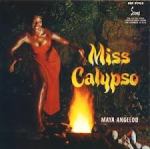
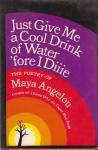
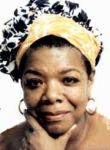
Happy Birthday Dr. Maya Angelou!

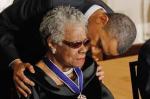
Today we celebrate the legacy of Dr. Maya Angelou on what would be her 87th birthday. To commemorate the spirit and accomplishments of Dr. Angelou, she’s being honored by Oprah Winfrey on April 7th with her own Forever Stamp ceremony  at the Warner Theater in Washington, D.C.
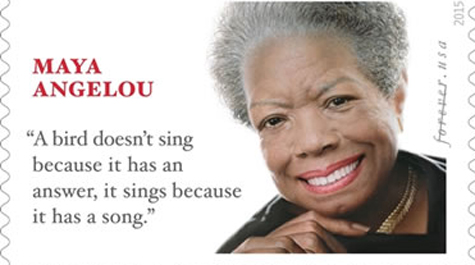
 

maya angelou stamp ps1

Forever Stamp


Joanne Braxton, Professor of English and Africana Studies at William & Mary College is a friend of the Angelou family and was presented with the opportunity to be the project’s consultant by the United States Postal Service. In Braxton’s words: “I answered that it was a sacred work,” she recalled, “and that anyone who did it would be blessed. I was all in.”

The stamp features Atlanta artist Ross R. Rossin’s oil-on-canvas portrait of Angelou with the celebrated author’s quotation: “A bird doesn’t sing because it has an answer, it sings because it has a song.”  In addition, the stamp pane includes a short excerpt from Angelou’s book, Letter to My Daughter, and reads: “Try to be a rainbow in someone’s cloud.”

Rossin is a Bulgarian-American portrait artist known for his large-scale, realist portraits of modern and historical figures including: Abraham Lincoln, George Washington, Andrew Young, Hank Aaron, and Maya Angelou.

What an apropos acknowledgment of Dr. Angelou’s significance and influence in literature, music and art. Her gift was her ability to lift spirits and provoke ideals in our culture. I’m looking forward to purchasing this special recognition that honors her “forever spirit” for years to come.

In honor of Maya Angelou’s birthday, this is a special reposting of my tribute from May 28, 2014 on her passing.


♥♥♥♥♥♥

“Phenomenal Woman” – R.I.P – Dr. Maya Angelou

Renowned Poet, Author, Actress and Director dies at 86.  

May her soul and her spirit forever soar.


A remarkable Renaissance woman who is hailed as one of the great voices of contemporary literature. Credited with a list of plays, movies, and television shows spanning more than fifty years.
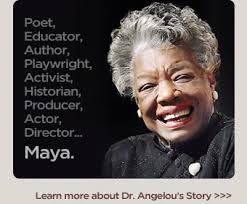
 

Maya Ang

April 4, 1928 – May 28, 2014


Maya Phenomenal woman


R.I.P “Live Long and Prosper”

Leonard nimoy

Leonard Nimoy (March 26, 1931 – February 27, 2015)


Leonard Nimoy, best known for playing the character Spock in the Star Trek television shows and films, died at 83.

Feeling the loss from today’s news of the passing of Leonard Nimoy – forever Mr. Spock.

I am from that generation, the Baby Boomers and yes, James T. Kirk (William Shatner) is my Captain, Uhura (Nichelle Nichols), Bones (DeForest Kelley), Scotty (James Doohan), Chekov (Walter Koenig ) and Sulu (George Takei ) the crew on the Starship Enterprise.

Gene Roddenberry had a vision of a time and space where all races, nationalities and creeds would work together with a common purpose. “…to explore strange new worlds, to seek out new life and new civilizations, to boldly go where no man has gone before.” He set precedence with an African-American woman, and Asian not only a part of the crew, but officers on a Starship.  Roddenberry also tackled issues of class warfare, economics, racism, religion, human rights, sexism, feminism, and the role of technology.

Gene Roddenberry also imagined Spock. Half human, half Vulcan. Although Spock embraces his Vulcan, void of emotion logical side, he at times also has to deal with his less logical, emotional, human side. These are some of his best episodes. My favorite is “Amok Time.” Spock goes straight up “anger man” slamming dishes, changing ship’s course and going into blind “kill mode” against Kirk in the “koon-ut-kal-if-fee” fight. Awesome!

I saw an interview with Leonard Nimoy talking about his stint as The Great Paris on “Mission Impossible” and how that experience made him appreciate the complexity of Mr. Spock. As Paris, his character didn’t have those layers. As Spock, he had to balance keeping that stoic face and rational demeanor with storylines that required his ability to convey love, compassion and occasionally frustration in what I like to call his “Menage a trois” relationship with Kirk and Bones. A much more complicated approach to storytelling than the usual TV fare of 1966.

Thankfully we have the Star Trek series, the movies and his body of work to continue to revisit and enjoy. But the fact still remains, we’ll miss you Spock.

R.I.P –  You’ll forever “Live Long and Prosper” in our hearts.


African-American Oscar History Pt. 2

Last year’s 86th Academy Awards marked a historic night for black filmmakers at the Oscars. It’s the first time a black film – 12 Years a Slave — won best picture; the Academy’s most prestigious award. John Ridley won for Best Adapted Screenplay and Steve McQueen won as Producer.

But, as the 1959 Grammy Award winning vocalist Dinah Washington sang: “What a Difference a Day Makes.”

I’m recognizing and celebrating the accomplishments of Black Artists in Hollywood; especially considering the lack of African-American nominations for this year’s 87th Academy Awards.


 Oscars 2015: No black actors or female screenwriters, directors or cinematographers were nominated.


History

The 12th Academy Awards is historic for being the 1st Oscar nomination for an African-American and 1st Oscar win. Hattie McDaniel accepted her award in 1940 as Best Actress in a Supporting Role for “Gone With the Wind” as the character – Mammy.

hattie

Hattie McDaniel


However, if David O. Selznick (Producer, film studio executive) hadn’t pulled a favor, she might not have been able to deliver her acceptance speech at all. At the time, the Cocoanut Grove nightclub (located in the Ambassador Hotel) was segregated so Ms. McDaniel wasn’t even allowed entrance. Selznick pulled another favor so she could be seated at a table at the very back of the room with her agent. To add insult to injury, Hattie McDaniel wasn’t allowed to speak her own words, the acceptance speech was written by the studio.

Despite all the prejudice, Hattie McDaniel – who at the time was one of the biggest African-American actors in the world -promoted herself for the nomination. After the release of the movie, she placed a stack of outstanding film reviews on O. Selznick’s desk and the rest is history.


First Best Actress Oscar 

In 2002, Halle Berry became the 1st (and to date) only African-American to win the Academy Award for Best Actress. The Oscar was for the film “Monsters Ball”.


Halle Berry 2002 Best Actress

Halle Berry 2002 Best Actress

Dorothy Dandridge – (November 9, 1922 – September 8, 1965) is the 1st African-American actress to be nominated for a Best Actress Oscar in 1954 for her performance in “Carmen Jones.” She has been recognized with a star on the Hollywood Walk of Fame and was married to dancer Harold Nicholas. Check out my previous post on the Nicholas Brothers here.

Dorothy_Dandridge

Dorothy Dandridge

Halle Berry portrayed her life in the HBO biographical film “Introducing Dorothy Dandridge” in 1999.

Halle_Berry Introducing Dorothy Dandridge


Watching Halle’s acceptance speech again while researching this post, I burst into tears reliving her emotion as she tries to process the win and the historical significance of this moment. Looking forward to the acceptance speech of our second Best Actress Oscar Winner.


Halle and Denzel Oscars

Halle and Denzel Oscars

This win also marked the 1st time two African-American performers won in leading role Oscars in the same year (Denzel Washington, Training Day).


oscars 3

Best Supporting Actress

1st to Win: Hattie McDaniel “Gone With the Wind” 1940

Hattie McDaniel 1940 Oscars

Although known as an actress she was a professional singer-songwriter, comedian, stage actress, radio performer, and television star; she was the first black woman to sing on the radio in the U.S. and has two stars on the Hollywood Walk of Fame. In 1975, she was inducted into the Black Filmmakers Hall of Fame and in 2006 became the first black Oscar winner honored with a US postage stamp.

  • Hattie McDaniel was also the oldest African-American actress to win an Academy Award (age 44).

  Finally – 50 Years later the 2nd Winner!

Winner: Supporting Actress – Whoopi Goldberg “Ghost” 1990

  • First African-American actress to receive two acting nominations overall.

  • Second African-American actress to win Best Supporting Actress.

Whoopi oscar

Whoopi Goldberg 1990 Best Supporting Actress

 Winner: Supporting Actress – Jennifer Hudson “Dreamgirls” 2006

jennifer hudson

Jennifer Hudson 2006 Oscar

  •  First African-American actor (male or female) to win an Academy Award for a debut film performance.

  • Youngest African-American actress to win or be nominated for Best Supporting Actress.

  • Youngest African-American actor (male or female) to win an Academy Award (age 25).

  • First African-American actress to win an Academy Award for a musical film.

Oscar

Oldest African-American actress to be nominated for an Academy Award (age 83) – Ruby Dee “American Gangster” 2007.

Ruby Dee

Ruby Dee

For her life and career see my previous post here: Ruby Dee


oscar red

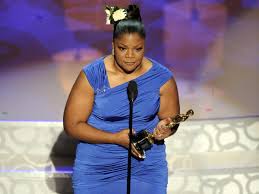
Winner: Supporting Actress – Mo’Nique “Precious” 2009

Mo'Nique

Mo’Nique

  • Second film to feature African-American nominees for both Best Actress and Best Supporting Actress.

Octavia Spencer

Octavia Spencer

Winner: Supporting Actress – Octavia Spencer  “The Help” 2011

  • Third film to feature African-American nominees for both Best Actress and Supporting Actress.

Lupita oscar 1

Winner: Supporting Actress – Lupita Nyong’o  “12 Years a Slave” 2013

  • First black African (Kenyan) actress to be nominated.

  • First black African to win in any category.

  • Second black actor to win for a debut performance.


  Congratulations and Cheers to these exceptional artists!


champagne cheers


We’ve come a long way, but we’ve still got a long way to go.


Souls of 2014

white roses

It’s hard for me to believe we’re at the end of another year. Looking back at 2014 and the artistic souls we’ve lost, I re-live joy, sorrow, wonderment, and childhood. Lost a little of my soul in 2014 but gained a new appreciation for what those souls gave to my life and the lives of others.

This retrospect is a beautiful reminder of the dedication, love and craftsmanship that goes into the creation of a film and the experiences we share sitting in a darkened theater. I love the movies (even built a website to celebrate) and the honesty of great actors.

Thank you so much for sharing your gift.


Souls of 2014 shared here at iheartfilmblog.com

Robin Williams

Ruby Dee

Maya Angelou

Lauren Bacall

white roses star yes

Don’t Be So Mean Grinch!

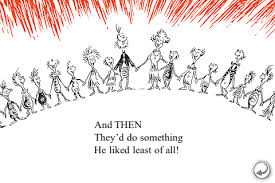
“Every Who down in Whoville liked Christmas a lot,
But the Grinch, who lived just north of Whoville, did not.
The Grinch hated Christmas — the whole Christmas season.
Oh, please don’t ask why, no one quite knows the reason.
It could be, perhaps, that his shoes were too tight.
It could be his head wasn’t screwed on just right.
But I think that the most likely reason of all
May have been that his heart was two sizes too small.”


How the Grinch Stole Christmas


Theodor Seuss Geisel aka Dr. Seuss is one of the most significant authors in American literature. His classic book, “How the Grinch Stole Christmas” has been a lifelong favorite. Known as a children’s author, Dr. Seuss’ cadence and rhyming style (anapestic tetrameter) is both renown and his signature. I believe his gift lies in his ability to convey his philosophy of life in a playful, endearing way. Most of us grew up reading Dr. Seuss and escaping into the wonderful worlds he shared. His other bestselling books bring back precious memories: Green Eggs and Ham, The Cat in the Hat, The Lorax, One Fish Two Fish Red Fish Blue Fish, and Horton Hears a Who!


How the Grinch Dr. Seuss


On December 18, 1966 “How the Grinch Stole Christmas” premiered as a television special and has continued to entertain and touch my life and the lives of countless children both young and old. It relates the tale of the Christmas plot of the mean ole Mr. Grinch to steal the joy of celebration from the residents of Whoville; it’s Seuss’ spiritual lesson for the true meaning of Christmas.


How_the_grinch_stole_christmas_1966_print_ad_premiere

Print ad of Dr. Seuss’ How the Grinch Stole Christmas! 1966

Narrated by the legendary Boris Karloff – also the voice of The Grinch – we are introduced to the world of Whoville and that nasty wasty Grinch.


How the Grinch Boris

Boris Karloff and The Grinch

You’re a foul one, Mr. Grinch.
You’re a nasty, wasty skunk.
Your heart is full of unwashed socks, your soul is full of gunk.
Mr. Grinch!
[spoken] The three words that best describe you are as follows and I quote:
[sung] “Stink! Stank! Stunk!”


In this version of the story, we don’t really know why The Grinch hates Christmas and the residents of Whoville. Just that his heart is 2 sizes too small. However in the Jim Carrey movie version of Dr. Seuss “How the Grinch Stole Christmas,”we see the flashback of The Grinch as a child and how because he looks different: green and hairy as an eight-year-old he is taunted and teased by his classmates.

For his crush, he makes a Christmas present and tries to shave his face but ends up with toilet paper stuck all over. Everyone laughs at him – including his crush – so he storms out the room climbing up to his mountain exile. Not seen for years, he becomes an urban legend. Flashing forward to The Grinch and his now adult classmates it isn’t hard to understand why Whoville isn’t his favorite town and therefore the Whos love of Christmas has become a thorn in his side.


How_the_Grinch_Stole_Christmas_film_poster

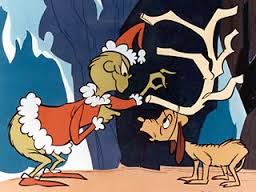
So, The Grinch gets this inspired idea after seeing his dog Max get snow on his face that sort of looks like a beard. The plan becomes to dress up as Santa, sneak into Whoville and rip off all the houses of presents, toys and even a piece of cheese from a mouse. So low down. Hence “stink, stank, stunk!”


How the Grinch Santa outfit

Poor Max wasn’t really down with the plan but was forced to play his part as a reindeer.


Enter my favorite resident of Whoville, Cindy Lou Who. I’ve loved her all my life. Her innocence and open heart is a testament to – as John Lennon once wrote: “All you need is love.”


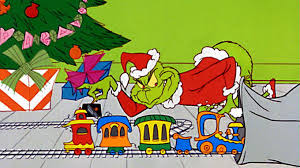
Ah, but not even the innocence of Cindy Lou could discourage The Grinch from following thru with his wicked plan.


How the Grinch stealing presents

However, The Grinch would come to realize that Whoville is no ordinary town. Even without presents, toys or roast beast, Christmas would still come.


How the Grinch Who singing


This timeless message of appreciating what you have in friends and family is a gift often lost in this world of envy and greed. Matthew 16:26 “For what will it profit a man if he gains the whole world and forfeits his soul?” Let’s remember the true meaning of Christmas not only during the holidays but every day of the year.


Merry Christmas!

Boo! Don’t Turn Off the Lights

halloween boo 1

Happy Halloween!


In anticipation of the big day, I thought I’d share some of my Halloween Day viewing quirks. “Boo, Don’t Turn off the Lights” reveals what films I can watch only while it’s still light outside.

My top 2 are Psycho (1960) and Halloween (1978). If you haven’t experienced them you should and here’s why:


Psycho (1960)

Psycho_(1960)

Directed by the “Master of Suspense”, Sir Alfred Hitchcock, it turned the audience perception of a movie plot on its head. There were lines wrapped around the block and absolutely NO ADMISSION after the movie began. Sir Alfred, such a tease. For more on Al, please click here. A previous post tribute.


Starring Anthony Perkins and Janet Leigh, the screenplay is by Joseph Stefano and based on the 1959 novel of the same name by Robert Bloch. To fully appreciate the creepy effect of the film understand that the character of Norman Bates is loosely inspired by the crimes of Wisconsin murderer and grave robber Ed Gein.

Norman Bates

Norman Bates (Anthony Perkins)

I can’t give anything away, but the shower scene is legendary and a reason to watch with the lights on!

Janet Leigh Marion

Marion Crane (Janet Leigh)


Halloween (1978)

Halloween_1978

Directed by John Carpenter and the debut of Jamie Lee Curtis (Janet Leigh’s daughter), this film is inspired by and born from the masterwork Psycho (1960) bringing a fresh, 1978 twist on the horror genre. Void of a lot of blood and gore the focus becomes a child’s question: “What’s the “boogeyman?” and the response, “I believe that was.”

OMG, I add extra lighting when watching this definitive Halloween classic!


The unrelenting Michael Myers character is the scariest psycho of all time! 

Michael myers2007

This quote sums up Michael:

Dr. Sam Loomis: (Donald PleasenceI met him, fifteen years ago; I was told there was nothing left; no reason, no conscience, no understanding; and even the most rudimentary sense of life or death, of good or evil, right or wrong. I met this six-year-old child, with this blank, pale, emotionless face, and the blackest eyes… the devil’s eyes. I spent eight years trying to reach him, and then another seven trying to keep him locked up because I realized that what was living behind that boy’s eyes was purely and simply… evil.

Michael Myers young

6-year-old Michael Myers

The cinematic significance of this film is unlike other slasher movies of the day, the heroine is intelligent and continually devising ways to get away from the killer. Jamie Lee as Laurie is sweet, compassionate and determined to save the kids she’s babysitting and herself from death and live through Halloween night.


Shout out to the first horror “Scream Queen! (for you trivia buffs check-out Wes Craven’s Scream (1996) for a movie reference). Halloween (1978) was the film’s inspiration.

Laurie strong

Laurie Strode (Jamie Lee Curtis)


Halloween’s opening sequence is disturbing and reason for exclaiming:


Boo! Don’t Turn Off the Lights!


If it’s Sunday, breakout the hankies!

Cinema sign

Melodrama Sunday Movie Classics

In my last post I talked about maybe being a little anal about the rules for Saturday and Sunday afternoon movie watching. I shared my rules for Saturday afternoon movie viewing which is B-horror and science fiction. I also shared 3 of my favorite flicks. The Blob (1958), The Incredible Shrinking Man (1957) and The Tingler (1959). (hope you check ’em out)

So, for Part 2 I’m showcasing Sunday and my criteria for some great classic melodrama.

I love melodramas because they can be so over the top and cathartic (think movie therapy) and there’s no better day to indulge than on a lazy Sunday, vegging on the couch, better yet if it’s a rainy day.

According to dictionary.com:

Melodrama – Exaggerated and emotional or sentimental, sensational or sensationalized: over dramatic.

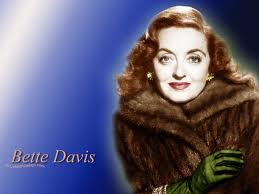
Bette Davis is my favorite Melodrama Diva! Talk about emotional and dramatic, she had those attitudes down pat. With her I find myself either talking back to my TV screen or weeping. (this is why rain helps) So, let’s find out about “The First Lady of the American Screen:

Bette Davis

Bette Davis color

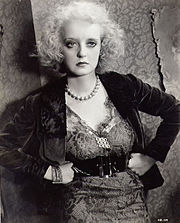
 Ruth Elizabeth Davis (April 5, 1908 – October 6, 1989) known as Bette Davis

Born in Lowell, Massachusetts, Ms. Davis is regarded as one of the greatest actors in cinema history. Bette Davis was the first female president of the Academy of Motion Picture Arts and Sciences and won the Academy Award for Best Actress twice. She was also the first person to receive 10 Academy Award nominations for acting, and was the first woman to receive a Lifetime Achievement Award from the American Film Institute. With more than 100 films, television and theater roles to her credit, in 1999, Davis placed second on the American Film Institute’s list of the greatest female stars of all time.

Bette was known for her no-nonsense, no-holds barred personality and wasn’t afraid to take on unsympathetic character roles. In the RKO film Of Human Bondage (1934), she played such a character as Mildred, the cruel and vicious waitress.  A film adaptation of the 1915 novel of the same name by W. Somerset Maugham. This melodramatic adaptation about a crippled doctor’s destructive and compulsive passion for this coarse waitress was advertised with the tagline on one of its posters: “The Love That Lifted a Man to Paradise…and Hurled Him Back to Earth Again.”

In her 1st major, critically acclaimed part she insisted on looking hideous to depict the ravages of the disease tuberculosis on the human body. She wasn’t nominated for an Oscar but so impressed fellow artists that they insisted she be a write-in on the ballot.

Bette_davis_of_human_bondage

Bette as “Mildred” in Of Human Bondage 1934

A little bit of Mildred’s charm:

 Let’s take a look at her 10 Oscar nominations and 2 wins:

  • 1935: Won for Dangerous, as a self-destructive, alcoholic actress (really a make-up for not winning Of Human Bondage)


  • 1938: Won for Jezebel, as a self absorbed 1850’s southern belle whose insistence on wearing a red-dress to a formal affair (white = chaste) brings scandal and disapproval. Her man “Pres” Henry Fonda was too through with her.


  • 1939: Nominated for Dark Victory, as Judith Traherne, an impetuous, terminally ill Long Island socialite. (yes that’s Bette with a drunken Ronald Reagan) Big time tear-jerker! – Bette’s favorite!  


  • 1940: Nominated for The Letter, as a low-down, adulterous murderer who has absolutely no remorse for blowing her lover away. However, karma is a bitch.


  • 1941: Nominated for The Little Foxes, as Southern aristocrat Regina Giddens – that girl put the cold in cold-blooded.  


  •  1942: Nominated for Now, Voyager, as Charlotte Vale – a dowdy, overweight, spinster, abused by her mother but fights back and achieves a starling transformation in body and spirit. An incredible performance! My absolute favorite Bette Davis role! 

Charlotte on the edge of a well deserved nervous breakdown:


Charlotte’s journey:


  • 1944: Nominated for Mr. Skeffington, as Fanny Skeffington, a woman so conceited that she tries to steal her daughter’s boyfriend, loses her looks after an illness but still has the nerve to treat her husband like dirt and still believe she can have any man – no way. In the end she learns the hard way that “a woman is beautiful when she’s loved and only then.” (too bad it’s after her husband goes blind in a concentration camp)


  • 1950: Nominated for All About Eve, as Margo Channing  an insecure Broadway star challenged by the younger, conniving Eve – “Fasten your seat-belts, it’s going to be a bumpy night.”  It was selected in 1990 for preservation in the United States National Film Registry and was among the first 50 films to be registered.


  • 1952: Nominated for The Star, as Maggie, a washed up actress trying to revive her career. Notably, at this time in Bette Davis’ career, she was struggling for roles despite her body of work. Bette’s ego was blamed.


  • 1962: Nominated for What Ever Happened to Baby Jane?, as the demented Baby Jane Hudson who tortures and terrorizes her sister Blanche (Joan Crawford)  Much like their real life rivalry. This role renewed her success and paved the way for other deranged characters in such films as: Hush, Hush Sweet Charlotte (1964) and The Nanny (1965)

 ♦♦♦♦

Bette continued to perform in film and on television in the 70’s and 80’s. In 1983 at the age of 75 she had a mastectomy as a result of breast cancer. Nine days later she suffered a stroke. Despite her failing health she continued to work until her death in 1989.

This is an in-depth retrospect of “The First Lady of the American Screen”

Enjoy! Don’t forget to bring your hankie.


To Remake or Not To Remake. That is the Question.

I’m on the record saying I hate remakes. If it was genius in the first place, why mess with it? If it stunk, why bring it back? Are you so ego driven Mr. Director that you feel your “version” outshines, oh say, Alfred Hitchcock‘s Psycho? Or Mr. Director, do you so lack creatively that you cop-out and warm over some – why was it made in the first place (Teenage Mutant Ninja Turtles) flick?

That being said, there are those exceptions. Websters’ definition of a remake is: to make again or anew as in a new form or manner. If a film can pay homage and capture the essence of the original but also bring freshness, I consider that film to be a great remake!


This classic has a great remake:


Invasion of the Body Snatchers (1956)


Directed by Don Siegel and Produced by Walter Wanger, the film starred Kevin McCarthy and Dana Wynter. This 1956 sci-fi thriller taps into a hideous nightmare, what if we went to sleep and awoke as a “pod person?” (Our physical self but void of emotion.) This movie in and of itself is an update of the 1950’s fear of space, atomic energy, and aliens. However, instead of giant mutated spiders, this tale is of an invasion from within.


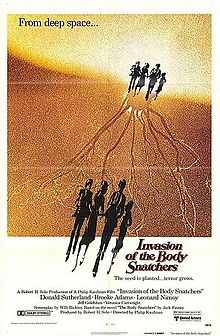
Invasion of the Body Snatchers (1978)

Invasion_of_the_body_snatchers_movie_poster_1978

“From deep space the seed is planted.”

Directed by Philip Kaufman and starring Donald Sutherland and Brooke Adams, this remake ups the ante. It honors the original sense of foreboding but the degree of terror is raised to a pandemic level.

There’s a scene in the original involving a dog that alerts the “pod people” that “Becky” (Dana Wynter) isn’t one of them. In this version they remake the dog scene but takes it to a much freakier place.   Outstanding!

I won’t give away the ending but, holy crap, that was frigging frightening!  Totally fresh update!


A box office success, Invasion of the Body Snatchers was well received by critics and is considered by some (myself included) to be among the greatest film remakes.

To Remake or not to Remake. That is the Question.

In this instance – YES!

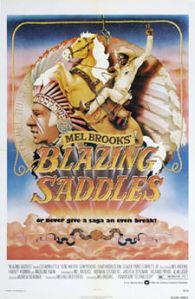
Too”Blazing”Hot?

Blazing Saddles_movie_poster

I’ll never forget the day my boyfriend (now husband) came to me super excited about, in his words, “the funniest movie he’s seen” and there’s another showing in half an hour!.  Okay I say, skeptical, but I’m game.  He couldn’t stop talking about his favorite “moment” – the “campfire and beans scene.”  As the end credits rolled I agreed, this was the funniest movie I’d ever seen and my favorite “moment” was — holy crap — I can’t name just one.  Lili von Shtupp “I’m Tired”, “The sheriff is near” or “Mongo only pawn in game of life.”   Awwh, it’s too hard to pick just one!  Blazing Saddles is probably one of the most quotable movies of all time.

The movie was nominated for three Academy Awards, and is ranked No. 6 on the American Film Institute‘s 100 Years…100 Laughs list.

“Mongo only pawn in game of life”

Mongo


But, I wonder, how would Blazing Saddles be received by audiences today?

This film was released in 1974 but reflecting today on the welcoming scene for Sheriff Bart, it could just as well have been President Obama’s Inaugural Reception.  In the western town of Rockridge the women clutched their purses and the men drew their guns.  A Black Sheriff, no way!  For some, The President’s election and re-election evoked some of those same feelings.  A Black man in the White House, no way!   Yes, it’s 2014 but yes for some, the stereotypes still exist.  There are those who wish the country could go back to the “good ole days” when if you were white it’s alright, but, if you’re black get back.  It’s irrational and built on fear, but racism has always been apart of the fabric of this country.

Mel nig


Directed by: Mel Brooks

Written by: Mel Brooks, Richard Pryor, Andrew Bergman, Norman Steinberg and Al Unger

Songs: Mel Brooks

Starring Cleavon Little
Gene Wilder
Harvey Korman
Slim Pickens
Madeline Kahn
Mel Brooks

It’s a brilliant film!  The writing, the acting, the concept.  And what a concept.  A Black sheriff in an all white 1874 small western town.  What could possibly go wrong?

The film is an in your face satire about racism in the old west as opposed to the Hollywood cowboy myth.  Liberal uses of the N word and plenty of references to black men being sexually”gifted.”  Lili: “Is it true what they say about you people?”  Also, you know black men all want white women.

Lili von Shtupp goes there:


“Where the white women at?”


I’m not really sure how Blazing Saddles would touch people today, but in 1974 I got the feeling that black and white laughed at the jokes and understood their own truth within the satire.   Have the voices of hate overshadowed our ability to laugh and rebuke racism or are the hate filled voices of today outliers?  Is the majority of the country trying to go backwards or are we embracing progress and the commitment it takes?

Harvey Mel

 Blazing Saddle Quotes:

  • Jim: [consoling Bart] What did you expect? “Welcome, sonny”? “Make yourself at home”? “Marry my daughter”? You’ve got to remember that these are just simple farmers. These are people of the land. The common clay of the new West. You know… morons.
  •  Bart: I better go check out this Mongo character.

[Bart reaches for his gun]

Jim: Oh no, don’t do that, don’t do that. If you shoot him, you’ll just make him mad.

  • Mexican Bandit: Badges? We don’t need no stinking badges.
  •  Lili Von Shtupp: Hello, handsome, is that a ten-gallon hat or are you just enjoying the show?

If you have seen the movie give it a revisit and let me know what you think.  Or if you haven’t, check it out and let me know your thoughts in the comments.

Ruby Dee, actress and civil rights activist dies at 91.

Ruby DeeRuby Dee 

October 27, 1922 – June 11, 2014

Screen, stage legend Ruby Dee’s grace, talent and determination epitomized the significance of art and politics in the progress of our society.

Probably best known for her co-starring role in the film A Raisin in the Sun (1961) she was nominated for an Academy Award for Best Supporting Actress for American Gangster (2007) and the recipient of Grammy, Emmy, Obie, Drama Desk, Screen Actors Guild Award and Screen Actors Guild Lifetime Achievement Award.  She also received the National Medal of Arts and the Kennedy Center Honors.  She was married to actor Ossie Davis until his death in 2005.
Lorraine Hansberry – Playwright “A Raisin in the Sun” which highlights the lives of an African American family in racially segregated Chicago.