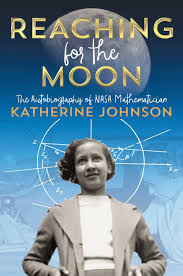
Imagine, a little “colored girl” (the term at the time) born in White Sulphur Springs, Greenbrier County, West Virginia, in 1918, excelling as a mathematician at NASA and charting John Glenn’s Friendship 7 mission in 1962, making him the first American to orbit the Earth; rocketing the United States to the top spot in the race for space.
From an early age, Katherine’s brilliance with numbers was recognized by her parents, Joshua and Joylette Coleman. But, because Greenbrier County did not offer public schooling for African-American students past the eighth grade, the Colemans arranged for 10-year-old Katherine to attend high school at nearby town Institute, West Virginia.
Katherine graduated from high school at 14 and entered West Virginia State College (now West Virginia State University), a historically black college. Taking every math course offered, Katherine graduated summa cum laude at 18 in 1937, with degrees in Mathematics and French.
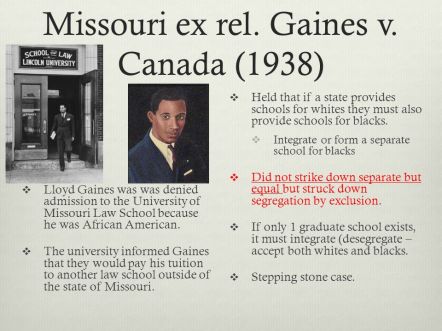
Reading her story I reflected on the importance of the United States Supreme Court ruling Missouri ex rel. Gaines v. Canada (1938). The court held that states that provided public higher education to white students also had to provide it to black students, to be satisfied either by establishing black colleges and universities or by admitting black students to previously white-only universities.
This ruling demonstrates why we must stay vigilant and keep the doors open for everyone, lest we go back in time. Think about it, without Katherine’s expertise at NASA, who knows how the space program would have evolved.
John Glenn, not trusting his life to the new electronic calculating machines, requested Katherine to plot the trajectory for his Friendship 7 mission the old fashioned way, by hand on her desktop mechanical calculating machine.
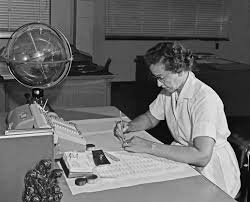
Katherine Johnson calculating at her desk
Katherine remembers:
“If she says they’re good, then I’m ready to go.” John Glenn
John Glenn (July 18, 1921 – December 8, 2016)
Glenn’s flight was a success and marked a turning point in the competition between the United States and the Soviet Union.
Katherine’s skill and accuracy in computerized celestial navigation spanned decades at NASA and were critical to the success of their missions. She calculated the trajectories, launch windows, and emergency back-up return paths for many flights from Project Mercury, including the early NASA missions of John Glenn and Alan Shepard, the 1969 Apollo 11 flight to the Moon, through the Space Shuttle program. Johnson also performed calculations for a planned mission to Mars.
One of the highlights of Katherine’s life was In 2015 when President Obama awarded her the Presidential Medal of Freedom.
Katherine Johnson Presidential Medal of Freedom
Hidden Figures, the 2016 Oscar-nominated biographical drama is an inspiring history lesson about Katherine Johnson, Dorothy Vaughan, and Mary Jackson, 3 brilliant African-American women whose careers represent one of the most remarkable, untold stories in American history.
Jannelle Monae, Taraji B. Henson, Octavia Spencer
I’m a black woman in my 60’s and before this film had never heard of these amazing women and their contributions to our country.
I wept with pride during the final credits at the realization of what they were able to accomplish in a time where their very presence was suspect and their gifts underestimated.
(L-R) Janelle Monae, Katherine Johnson, Taraji B. Henson, Octavia Spencer
I loved the racial mix of the crowd in the theatre and how the white couple next to me drew closer together as Kevin Costner’s character tore down the colored bathroom sign, symbolically standing up for the equality of Katherine and her role on his team.
Katherine Coleman Goble Johnson, an unsung hero of the space agency’s early days, made her transition on February 24, 2020. An inspiring trailblazer, she is integral to our shared American history and I encourage everyone to learn more about the incredible women who prove that we are capable of achieving great feats even when the odds say it’s impossible.
(Prince and Judith Hill.CreditPhotographs by Karrah Kobus/NPG Records, via Getty Images)
Mourning the 1 year passing of music legend Prince, I was amazed to learn about his relationship with the powerhouse singer-songwriter Judith Hill as her confidant and musical collaborator.
Ms. Hill was a contestant on the 2013 season of “The Voice” (the TV singing competition) and later that same year appeared in the Academy Award-winning documentary about backup singers, “20 Feet From Stardom” earning a Grammy for her performance.
(“I was with Prince the last two years of my life,” Judith Hill said. “Now he’s gone, and I realize I was leaning on him a lot,” she said. “And that’s what’s scary. I’m on my own.”Credit: Elizabeth Weinberg for The New York Times)
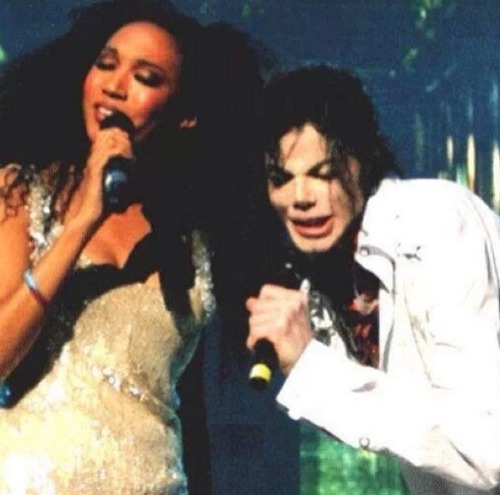
I cheered for Ms. Hill on “The Voice” and was shocked when she didn’t make the cut. Her voice is phenomenal and once before she had been so close to blowing up as a recording star when she was paired as a featured vocalist with Michael Jackson on his ill-fated tour “This is It”. On “The Voice” I thought, maybe this time she’ll get her shot.
And now, with the passing of Prince, Judith would once again be denied the major exposure that could have skyrocketed her to the top of the musical ladder instead of her forever feeling – “20 feet from stardom”.
Judith Hill, Michael Jackson
Here’s a look at the Oscar-winning documentary about the incredible backup singers and the travesty of how their careers have always been “20 Feet From Stardom”.
2014 Academy Award Winner for Best Documentary Feature, “20 Feet From Stardom” is directed by Morgan Neville and inspired by producer Gil Friesen’s quest to reveal the untold stories of the phenomenal voices behind some of the greatest artists in American music.
The Ladies Speak: Lisa Fischer, Darlene Love, Judith Hill
Merry Clayton performed that killer background vocal on The Rolling Stones’ classic “Gimme Shelter”
Millions know their voices, but no one knows their names. I was thrilled when this film was released to showcase these gifted women that for whatever reason remain in the shadows. It’s a sad fact but, nevertheless, they stayed in the game and they are legends!
Both the Oscars and Black History Month are recognized in February which gives me the perfect opportunity to celebrate the accomplishments of Black Artists in Hollywood.
2015 and 2016 were standout years for the lack of Black filmmakers nominated for Oscars. However, 2017 breaks that record and will make African-American Oscar nominee history.
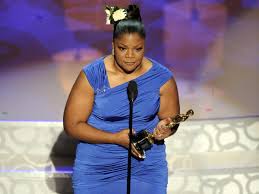
Janelle Monae, Taraji P. Henson, Octavia Spencer “Hidden Figures” (2016)
1. “Moonlight” director Barry Jenkins, 37, is the first African-American filmmaker to be nominated for Best Picture, Best Director, and Best Adapted Screenplay.
2. “Fences” star Viola Davis, 51, is the first Black actress to be nominated for an Oscar three times (Doubt in 2009, The Help in 2012) with her Best Supporting Actress nod.
3. “Arrival” cinematographer Bradford Young, 39, is the first African-American to be nominated for the Best Cinematography award. (Young is the second Black man; British cinematographer Remi Adefarasin was nominated for Elizabeth in 1998.)
Moonlight
4. A Black actor is nominated in all four acting categories for the first time in history:
✨Naomie Harris, Best Supporting Actress, “Moonlight”
5. This is the first time that six African-American actors and actresses have been nominated in total. (The previous record was five in 2005 and 2007.)
6. “Moonlight” editor Joi McMillon is the first Black woman to be nominated for film editing.
7. This is the first time that three Black people have been nominated within a single category (Best Supporting Actress, in this case):
Viola Davis in Fences, Naomie Harris in Moonlight, and Octavia Spencer in Hidden Figures. (Carolyn L. Todd)
Let’s keep up the good work Oscars!
History
✨
The 12th Academy Awards is historic for being the 1st Oscar nomination for an African-American and 1st Oscar win. In 1940, Hattie McDaniel accepted the Oscar for Best Actress in a Supporting Role in “Gone With the Wind” for the character – Mammy.
Hattie McDaniel
However, if David O. Selznick (Producer, film studio executive) hadn’t pulled a favor, she might not have been able to deliver her acceptance speech at all. At the time, the Cocoanut Grove nightclub (located in the Ambassador Hotel) was segregated so Ms. McDaniel wasn’t even allowed entrance. Selznick pulled another favor so she could be seated at a table at the very back of the room with her agent. To add insult to injury, Hattie McDaniel wasn’t allowed to speak her own words, the acceptance speech was written by the studio.
Despite all the prejudice, Hattie McDaniel – who at the time was one of the biggest African-American actors in the world -promoted herself for the nomination. After the release of the movie, she placed a stack of outstanding film reviews on O. Selznick’s desk and the rest is history. (Wikipedia)
First Best Actress Oscar
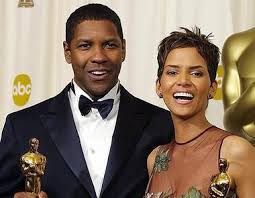
In 2002, Halle Berry became the 1st (and to date) only African-American to win the Academy Award for Best Actress. The Oscar was for the film “Monsters Ball”.
Halle Berry 2002 Best Actress
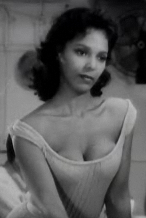
Dorothy Dandridge – (November 9, 1922 – September 8, 1965) is the 1st African-American actress to be nominated for a Best Actress Oscar in 1954 for her performance in “Carmen Jones.” She has been recognized with a star on the Hollywood Walk of Fame and was married to dancer Harold Nicholas. Check out my previous post on the Nicholas Brothers here.
Watching Halle’s acceptance speech again while researching this post, I burst into tears reliving her emotion as she tries to process the win and the historical significance of this moment. Looking forward to the acceptance speech of our second Best Actress Oscar Winner.
Halle and Denzel Oscars
This win also marked the 1st time two African-American performers won in leading role Oscars in the same year (Denzel Washington, Training Day).
Best Supporting Actress
First to Win: Hattie McDaniel “Gone With the Wind” 1940
Hattie McDaniel 1940 Oscars
Although known as an actress she was a professional singer-songwriter, comedian, stage actress, radio performer, and television star; she was the first black woman to sing on the radio in the U.S. and has two stars on the Hollywood Walk of Fame. In 1975, she was inducted into the Black Filmmakers Hall of Fame and in 2006 became the first black Oscar winner honored with a US postage stamp.
Hattie McDaniel was also the oldest African-American actress to win an Academy Award (age 44).
Today we’re celebrating Brando’s 92th birthday. His style, his “method”, his talent. Truly an original. One of the greatest actors of all time!
“Listen to Me Marlon” is the outstanding, award-winning documentary airing on cable’s Showtime about Brando in his own words:
April 3, 1924 – July 1, 2004
Marlon Brando, Jr. was an American actor, film director, and activist. He is hailed for bringing a gripping realism to film acting and is often cited as one of the greatest and most influential actors of all time.
“The Wild One”
Biography’s Documentary on Brando:
Brando is also credited with helping to popularize the Stanislavski system of acting, today more commonly referred to as method acting. A cultural icon, Brando is most famous for his Academy Award-winning performances as Terry Malloy in On the Waterfront (1954) and Vito Corleone in The Godfather (1972), as well as influential performances in A Streetcar Named Desire (1951), The Wild One (1953), Last Tango in Paris (1972), and Apocalypse Now (1979).
Marlon Brando initially gained acclaim and an Academy Award nomination for reprising the role of Stanley Kowalski in the 1951 film adaptation of Tennessee Williams’ play A Streetcar Named Desire, a role that he had originated successfully on Broadway.
“On the Waterfront”
“The Godfather”
The sixties were an artistic bust for Brando but ten years later he made his successful and award-winning comeback with his portrayal of Vito Corleone in Francis Ford Coppola’s “The Godfather”. The studio was opposed to his casting so he had to audition for the role. He improvised with cotton in his mouth to come up with the mumbling sound of The Don. The studio relinquished and the rest is cinema history.
“Superman”
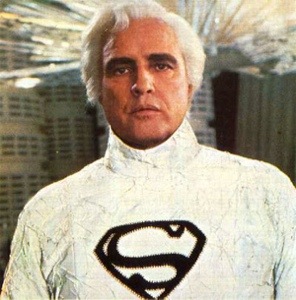
As a result of regaining his box office gravitas with “The Godfather” and “Last Tango in Paris”, Brando became a highly paid character actor with roles in films like “Superman” which according to the Guinness Book of World Records, Brando was paid a record $3.7 million ($14 million in inflation-adjusted dollars) and 11.75% of the gross profits for 13 days’ work.
Brando was ranked by the American Film Institute as the fourth greatest movie star among male movie stars whose screen debuts occurred in or before 1950. He was one of only three professional actors, along with Charlie Chaplin and Marilyn Monroe, named in 1999 by Time magazine as one of its 100 Most Important People of the Century. He died of respiratory failure on July 1, 2004, at age 80. (Wikipedia)
A long time ago in a galaxy far, far away…Women were the driving force behind Hollywood and the movies. This is the third part of a series paying homage to contemporary women filmmakers who broke the glass ceiling and wrote and directed the films that took 86 years from pioneer Lois Weber’s day to achieve. Hollywood is still run by men but these women prove that it may be a man’s world but it would be nothing without a woman or a girl. Thanks, James Brown for the lyric.
In 86 years, only four women have been nominated for the Best Director Oscar. Only one, Kathryn Bigelow, has won.
Women filmmakers nominated for the Best Director:Lina Wertmüller for Seven Beauties (1976), Jane Campion for The Piano (1993), Sofia Coppola for Lost in Translation (2003), and Kathryn Bigelow for The Hurt Locker (2009).
Sofia Coppola was thefirst American woman to ever be nominatedfor Best Director for the 2003 movie, “Lost in Translation.”
◊◊◊◊◊◊
Kathryn Ann Bigelow ( born November 27, 1951) is an American director, producer, and writer. Her films include the vampire Western horror film Near Dark (1987), the action crime film Point Break (1991), the controversial science fiction action thriller Strange Days (1995), the mystery thriller The Weight of Water (2000), the submarine thriller K-19: The Widowmaker (2002), the war film The Hurt Locker (2009), the action thriller war film Zero Dark Thirty (2012), and the short film Last Days of Ivory (2014). The Hurt Locker won the 2009 Academy Award for Best Picture, won the BAFTA Award for Best Film, and was nominated for the 2009 Golden Globe Award for Best Drama.
Kathryn Ann Bigelow
Bigelow’s trilogy of action films — Blue Steel, Point Break, and Strange Days — are looked at by critics as rethinking the conventions of action cinema while exploring gendered and racial politics. In her career, Bigelow has become recognizable as both a Hollywood brand and an auteur.
Married to director James Cameron from 1989-1991, she and Cameron were both nominated for Best Director at the 2010 82nd Academy Awards, which Bigelow won. Yay, Kathryn!
Sofia Coppola
Sofia Carmina Coppola (born May 14, 1971) is an American screenwriter, director, producer, and actress. In 2003, she received the Academy Award for Best Original Screenplay for the comedy-drama Lost in Translation and became the third woman to be nominated for an Academy Award for Best Director. Her nomination for Best Director made her the first American woman in history to be nominated in that category, and the third woman overall, after Lina Wertmüller and Jane Campion. In 2010, with the drama Somewhere, she became the first American woman (and fourth American filmmaker) to win the Golden Lion, the top prize at the Venice Film Festival. Her father is the director, producer, and screenwriter Francis Ford Coppola.
She made her feature film directing debut with The Virgin Suicides (1999). It received critical acclaim upon its premiere in North America at the 2000 Sundance Film Festival and was released later that year. If you haven’t seen it, check it out. It’s brilliant and makes you think about parenting skills or the lack thereof.
◊◊◊◊◊◊
African American Women Filmmakers
Zora Neale Hurston
(January 7, 1891 – January 28, 1960)
Better known for her work as a novelist, Zora Neale Hurston could be, according to an essay by academic Gloria Gibson, the first African-American woman filmmaker. The film footage, which includes Children’s Games (1928), Logging (1928), and Baptism (1929), appears to be from her work as a student of anthropology under the guidance of famed anthropologist, professor, and mentor, Dr. Franz Boas of Columbia University.
A graduate of Barnard College (B.A. in anthropology in 1928) and a Guggenheim fellow, Hurston traveled back to a South similar to her hometown of Eatonville, Florida (one of the first all-black towns to be incorporated in the United States) to capture a variety of short takes of African-American life. Ethnographic in nature, the films reflect a focus of folklorists of that time period who believed that “…cultural performance and beliefs must be expeditiously collected and documented because they would soon be gone forever” (Gloria Gibson).
During a period of financial and medical difficulties, Hurston was forced to enter St. Lucie County Welfare Home, where she suffered a stroke. She died of hypertensive heart disease on January 28, 1960, and was buried at the Garden of Heavenly Rest in Fort Pierce, Florida. Sadly, her remains were in an unmarked grave until 1973 when novelist Alice Walker and literary scholar Charlotte Hunt found an unmarked grave in the general area where Hurston had been buried and decided to mark it as hers.
Our future:
Ava DuVernay – Current/future generation screenwriter/director – She would have been the first black woman nominated for best director in Oscar history, and just the fifth woman, following Lina Wertmüller for Seven Beauties, Jane Campion for The Piano, Sofia Coppola for Lost in Translation, and Kathryn Bigelow for The Hurt Locker. Instead, she’s been added to the list of female directors who have seen their films get nominated while they’ve been snubbed.
Ava DuVernay
Ava Marie DuVernay (born August 24, 1972) is an American director, screenwriter, film marketer, and film distributor. At the 2012 Sundance Film Festival, DuVernay won the Best Director Prize for her second feature film Middle of Nowhere, becoming the first African-American woman to win the award. For her work in Selma, DuVernay is the first black woman director to be nominated for a Golden Globe Award. With Selma, she is also the first black woman director to have their film nominated for the Academy Award for Best Picture.
In 2015, it was announced that DuVernay would be writing, producing, and directing her next project, Queen Sugar which is an upcoming American drama television series, created, directed and executive produced by Ava DuVernay alongside Oprah Winfrey. The series is based on the novel of the same name by Natalie Baszile.The series is set to air on the Oprah Winfrey Network.
Women filmmakers are essential to the stories and voices of Hollywood. We’ve made some progress but we still have a long way to go!
In a previous post I talked about maybe being a little anal about the rules for Saturday and Sunday afternoon movie watching. I shared my rules for Saturday afternoon movie viewing which is B-horror and science fiction. I also shared 3 of my favorite flicks. The Blob (1958), The Incredible Shrinking Man (1957) and The Tingler (1959). (hope you check ’em out)
So, for Part 2 I’m showcasing Sunday and my criteria for some great classic melodrama.
I love melodramas because they can be so over the top and cathartic (think movie therapy) and there’s no better day to indulge than on a lazy Sunday, vegging on the couch, better yet if it’s a rainy day.
According to dictionary.com:
Melodrama – Exaggerated and emotional or sentimental, sensational or sensationalized: over dramatic.
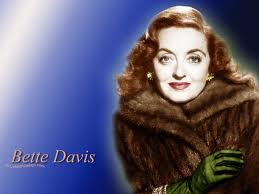
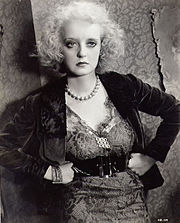
Bette Davis is my favorite Melodrama Diva! Talk about emotional and dramatic, she had those attitudes down pat. With her I find myself either talking back to my TV screen or weeping. (this is why rain helps) So, let’s find out about “The First Lady of the American Screen:
Bette was known for her no-nonsense, no-holds barred personality and wasn’t afraid to take on unsympathetic character roles. In the RKO film Of Human Bondage (1934), she played such a character as Mildred, the cruel and vicious waitress. A film adaptation of the 1915 novel of the same name by W. Somerset Maugham. This melodramatic adaptation about a crippled doctor’s destructive and compulsive passion for this coarse waitress was advertised with the tagline on one of its posters: “The Love That Lifted a Man to Paradise…and Hurled Him Back to Earth Again.”
In her 1st major, critically acclaimed part she insisted on looking hideous to depict the ravages of the disease tuberculosis on the human body. She wasn’t nominated for an Oscar but so impressed fellow artists that they insisted she be a write-in on the ballot.
Let’s take a look at her 10 Oscar nominations and 2 wins:
1935: Won for Dangerous, as a self-destructive, alcoholic actress (really a make-up for not winning Of Human Bondage)
1938: Won for Jezebel, as a self absorbed 1850’s southern belle whose insistence on wearing a red-dress to a formal affair (white = chaste) brings scandal and disapproval. Her man “Pres” Henry Fonda was too through with her.
1939: Nominated for Dark Victory, as Judith Traherne, an impetuous, terminally ill Long Island socialite. (yes that’s Bette with a drunken Ronald Reagan) Big time tear-jerker! – Bette’s favorite!
1940: Nominated for The Letter, as a low-down, adulterous murderer who has absolutely no remorse for blowing her lover away. However, karma is a bitch.
1941: Nominated for The Little Foxes, as Southern aristocrat Regina Giddens – that girl put the cold in cold-blooded.
1942: Nominated for Now, Voyager, as Charlotte Vale – a dowdy, overweight, spinster, abused by her mother but fights back and achieves a starling transformation in body and spirit. An incredible performance! My absolute favorite Bette Davis role!
Charlotte on the edge of a well deserved nervous breakdown:
Charlotte’s journey:
1944: Nominated for Mr. Skeffington, as Fanny Skeffington, a woman so conceited that she tries to steal her daughter’s boyfriend, loses her looks after an illness but still has the nerve to treat her husband like dirt and still believe she can have any man – no way. In the end she learns the hard way that “a woman is beautiful when she’s loved and only then.” (too bad it’s after her husband goes blind in a concentration camp)
1950: Nominated for All About Eve, as Margo Channing an insecure Broadway star challenged by the younger, conniving Eve – “Fasten your seat-belts, it’s going to be a bumpy night.” It was selected in 1990 for preservation in the United States National Film Registry and was among the first 50 films to be registered.
1952: Nominated for The Star, as Maggie, a washed-up actress trying to revive her career. Notably, at this time in Bette Davis’ career, she was struggling for roles despite her body of work. Bette’s ego was blamed.
1962: Nominated for What Ever Happened to Baby Jane?, as the demented Baby Jane Hudson who tortures and terrorizes her sister Blanche (Joan Crawford) Much like their real life rivalry. This role renewed her success and paved the way for other deranged characters in such films as: Hush, Hush Sweet Charlotte (1964) and The Nanny (1965)
♦♦♦♦
Bette continued to perform in film and on television in the 70’s and 80’s. In 1983 at the age of 75 she had a mastectomy as a result of breast cancer. Nine days later she suffered a stroke. Despite her failing health she continued to work until her death in 1989.
This is an in-depth retrospect of “The First Lady of the American Screen”
Last year’s 86th Academy Awards marked a historic night for black filmmakers at the Oscars. It’s the first time a black film – 12 Years a Slave — won best picture; the Academy’s most prestigious award. John Ridley won for Best Adapted Screenplay and Steve McQueen won as Producer.
Steve McQueen-Director/Producer
John Ridley – Screenwriter
Book
But, as the 1959 Grammy Award winning vocalist Dinah Washington sang: “What a Difference a Day Makes.”
I’m recognizing and celebrating the accomplishments of Black Artists in Hollywood; especially considering the lack of African-American nominations for this year’s 87th Academy Awards.
Oscars 2015: No black actors or female screenwriters, directors or cinematographers were nominated.
History
The 12th Academy Awards is historic for being the 1st Oscar nomination for an African-American and 1st Oscar win. Hattie McDaniel accepted her award in 1940 as Best Actress in a Supporting Role for “Gone With the Wind” as the character – Mammy.
Hattie McDaniel
However, if David O. Selznick (Producer, film studio executive) hadn’t pulled a favor, she might not have been able to deliver her acceptance speech at all. At the time, the Cocoanut Grove nightclub (located in the Ambassador Hotel) was segregated so Ms. McDaniel wasn’t even allowed entrance. Selznick pulled another favor so she could be seated at a table at the very back of the room with her agent. To add insult to injury, Hattie McDaniel wasn’t allowed to speak her own words, the acceptance speech was written by the studio.
Despite all the prejudice, Hattie McDaniel – who at the time was one of the biggest African-American actors in the world -promoted herself for the nomination. After the release of the movie, she placed a stack of outstanding film reviews on O. Selznick’s desk and the rest is history.
First Best Actress Oscar
In 2002, Halle Berry became the 1st (and to date) only African-American to win the Academy Award for Best Actress. The Oscar was for the film “Monsters Ball”.
Halle Berry 2002 Best Actress
Dorothy Dandridge – (November 9, 1922 – September 8, 1965) is the 1st African-American actress to be nominated for a Best Actress Oscar in 1954 for her performance in “Carmen Jones.” She has been recognized with a star on the Hollywood Walk of Fame and was married to dancer Harold Nicholas. Check out my previous post on the Nicholas Brothers here.
Watching Halle’s acceptance speech again while researching this post, I burst into tears reliving her emotion as she tries to process the win and the historical significance of this moment. Looking forward to the acceptance speech of our second Best Actress Oscar Winner.
Halle and Denzel Oscars
This win also marked the 1st time two African-American performers won in leading role Oscars in the same year (Denzel Washington, Training Day).
Best Supporting Actress
1st to Win: Hattie McDaniel “Gone With the Wind” 1940
Hattie McDaniel 1940 Oscars
Although known as an actress she was a professional singer-songwriter, comedian, stage actress, radio performer, and television star; she was the first black woman to sing on the radio in the U.S. and has two stars on the Hollywood Walk of Fame. In 1975, she was inducted into the Black Filmmakers Hall of Fame and in 2006 became the first black Oscar winner honored with a US postage stamp.
Hattie McDaniel was also the oldest African-American actress to win an Academy Award (age 44).
Celebrating the accomplishments of Black Artists in Hollywood; especially in light of the lack of African-American nominations for this year’s 87th Academy Awards.
Oscars 2015: No black actors or female screenwriters, directors or cinematographers were nominated.
Our First Best Actor
In 1958, Sidney Poiter became the first black actor to be nominated for an Academy Award in the Best Actor category for “The Defiant Ones.” In 1963, he went on to make history and become the first to win the Oscar for Best Actor in “Lillies of the Field.” I saw the film as a kid and although it was quite popular never expected him to take home the statue.
However, Hollywood did love him. I believe they saw him as non-threatening due to his mild-mannered characterizations. He was quoted as saying he had concerns that he would be seen as a token and never given any substantial roles. Well, his Detective Virgil Tibbs in the film “In the Heat of the Night” sure put that fear to bed. Slapping a white man in racist Mississippi in 1967 was a bold and hand clapping moment in the theater. Poitier was nominated for a Golden Globe for Best Actor and the film won five Academy Awards, including the 1967 award for Best Picture.
Sidney Poiter 1963 Oscar for Best Actor
Oscar Accomplishments:
First African-American nominated for Best Actor award
First black male to win an Oscar
First black actor to win Best Actor
First to receive two acting nominations (Best Actor)
Youngest black actor to win Best Actor (37)
It took 36 years for another win in the Best Actor category, but finally Denzel Washington was recognized by the Academy for his portrayal of Alonso Harris in “Training Day” making him the second black actor to win the Oscar.
1999 also marked the first time two African-American performers won leading role Oscars in the same year. (Halle Berry, “Monster’s Ball“)
Denzel Washington and Halle Berry “Best Actors.”
Denzel Washington has the most nominations for an African-American Actor: Best Actor (4 nominations) and Best Supporting Actor (2 nominations).
Jamie Foxx 2004 Oscar Best Actor
Jamie Foxx was awarded the 2004 Oscar for Best Actor as Ray Charles in the biopic “Ray”. That same year, he was nominated for the Academy Award for Best Supporting Actor for his role in the action film Collateralmaking him the first African-American actor to receive two acting nominations in the same year.
Forest Whitaker Best Actor 2006
Forest Whitaker is the fourth and most recent African-American male to win the Academy Award for Best Actor for his performance as the Ugandan dictator Idi Amin in the 2006 film “The Last King of Scotland.”
New York (AP) Mike Nichols, one of America’s most celebrated directors, died on Wednesday from cardiac arrest. He was married to ABC’s news anchor Diane Sawyer. The family will hold a private service this week; a memorial will be held at a later date.
Dryly urbane, Mr. Nichols had a gift for communicating with actors and a keen comic timing, which he honed early in his career as half of the popular sketch comedy team Nichols and May. In films like “The Graduate,” “Who’s Afraid of Virginia Woolf?” and “Carnal Knowledge” and in comedies and dramas on stage, he accomplished what Orson Welles and Elia Kazan but few if any other directors have: achieving popular and artistic success in both film and theater. He was among the most decorated people in the history of show business, one of only a dozen or so to have won an Oscar, a Tony, an Emmy and a Grammy.
What’s not to love about this film? Starring Robin Williams and Nathan Lane the pairing is perfect and the performances are brilliant!
Here’s the plot:
Meet Armand, Albert and their son Val who’s engaged to Barbara Keeley and the rip-roaring evening when their families meet.
Val’s father, Armand, owns The Birdcage, a drag club in South Beach. His domestic partner is Albert, who appears regularly as “Starina”, the show’s star drag queen. Barbara’s father is ultraconservative Republican Senator Kevin Keeley of Stow, Ohio. He is up for reelection and is also co-founder of the “Coalition for Moral Order”.
Fearing the Keeleys reaction if they learn the truth about Val’s parents, Barbara tells her parents that Armand is a cultural attaché to Greece, that Albert is a housewife, and that they divide their time between Greece and Florida; she also changes the family’s last name from Goldman to Coleman to hide their Jewish background.
What could go wrong?
Based on the 1973 stage play by Jean Poiret and the 1978 French-Italian film la Cage aux Folles co-written and directed by Édouard Molinaro; it starred Ugo Tognazzi and Michel Serrault. In Italian, it is known as Il vizietto. An excellent flick definitely worth checking out.
Love the scene with Renaldo teaching Albin to act “straight.” La Cage vs. Birdcage. What do you think?
(Sorry, no subtitles for the trailer but they are available on the DVD)
The Birdcage pays homage but definitely brings its own attitude and flair.
And Hank Azaria as Agador Spartacus is too hilarious!!!!
In my last post I talked about maybe being a little anal about the rules for Saturday and Sunday afternoon movie watching. I shared my rules for Saturday afternoon movie viewing which is B-horror and science fiction. I also shared 3 of my favorite flicks. The Blob (1958), The Incredible Shrinking Man (1957) and The Tingler (1959). (hope you check ’em out)
So, for Part 2 I’m showcasing Sunday and my criteria for some great classic melodrama.
I love melodramas because they can be so over the top and cathartic (think movie therapy) and there’s no better day to indulge than on a lazy Sunday, vegging on the couch, better yet if it’s a rainy day.
According to dictionary.com:
Melodrama – Exaggerated and emotional or sentimental, sensational or sensationalized: over dramatic.
Bette Davis is my favorite Melodrama Diva! Talk about emotional and dramatic, she had those attitudes down pat. With her I find myself either talking back to my TV screen or weeping. (this is why rain helps) So, let’s find out about “The First Lady of the American Screen:
Bette was known for her no-nonsense, no-holds barred personality and wasn’t afraid to take on unsympathetic character roles. In the RKO film Of Human Bondage (1934), she played such a character as Mildred, the cruel and vicious waitress. A film adaptation of the 1915 novel of the same name by W. Somerset Maugham. This melodramatic adaptation about a crippled doctor’s destructive and compulsive passion for this coarse waitress was advertised with the tagline on one of its posters: “The Love That Lifted a Man to Paradise…and Hurled Him Back to Earth Again.”
In her 1st major, critically acclaimed part she insisted on looking hideous to depict the ravages of the disease tuberculosis on the human body. She wasn’t nominated for an Oscar but so impressed fellow artists that they insisted she be a write-in on the ballot.
Let’s take a look at her 10 Oscar nominations and 2 wins:
1935: Won for Dangerous, as a self-destructive, alcoholic actress (really a make-up for not winning Of Human Bondage)
1938: Won for Jezebel, as a self absorbed 1850’s southern belle whose insistence on wearing a red-dress to a formal affair (white = chaste) brings scandal and disapproval. Her man “Pres” Henry Fonda was too through with her.
1939: Nominated for Dark Victory, as Judith Traherne, an impetuous, terminally ill Long Island socialite. (yes that’s Bette with a drunken Ronald Reagan) Big time tear-jerker! – Bette’s favorite!
1940: Nominated for The Letter, as a low-down, adulterous murderer who has absolutely no remorse for blowing her lover away. However, karma is a bitch.
1941: Nominated for The Little Foxes, as Southern aristocrat Regina Giddens – that girl put the cold in cold-blooded.
1942: Nominated for Now, Voyager, as Charlotte Vale – a dowdy, overweight, spinster, abused by her mother but fights back and achieves a starling transformation in body and spirit. An incredible performance! My absolute favorite Bette Davis role!
Charlotte on the edge of a well deserved nervous breakdown:
Charlotte’s journey:
1944: Nominated for Mr. Skeffington, as Fanny Skeffington, a woman so conceited that she tries to steal her daughter’s boyfriend, loses her looks after an illness but still has the nerve to treat her husband like dirt and still believe she can have any man – no way. In the end she learns the hard way that “a woman is beautiful when she’s loved and only then.” (too bad it’s after her husband goes blind in a concentration camp)
1950: Nominated for All About Eve, as Margo Channing an insecure Broadway star challenged by the younger, conniving Eve – “Fasten your seat-belts, it’s going to be a bumpy night.” It was selected in 1990 for preservation in the United States National Film Registry and was among the first 50 films to be registered.
1952: Nominated for The Star, as Maggie, a washed up actress trying to revive her career. Notably, at this time in Bette Davis’ career, she was struggling for roles despite her body of work. Bette’s ego was blamed.
1962: Nominated for What Ever Happened to Baby Jane?, as the demented Baby Jane Hudson who tortures and terrorizes her sister Blanche (Joan Crawford) Much like their real life rivalry. This role renewed her success and paved the way for other deranged characters in such films as: Hush, Hush Sweet Charlotte (1964) and The Nanny (1965)
♦♦♦♦
Bette continued to perform in film and on television in the 70’s and 80’s. In 1983 at the age of 75 she had a mastectomy as a result of breast cancer. Nine days later she suffered a stroke. Despite her failing health she continued to work until her death in 1989.
This is an in-depth retrospect of “The First Lady of the American Screen”
This site is about how to live our life in a meaningful way by accepting complete surrender to the Almighty with purity of mind and character. It is about the eternal religion of the world i.e. Hinduism which is very liberal to anyone because there are many branches or methods to get the divinity to turn our life into an ever blissful one.
Free listening and free download (mp3) chill and down tempo music (album compilation ep single) for free (usually name your price). Full merged styles: trip-hop electro chill-hop instrumental hip-hop ambient lo-fi boombap beatmaking turntablism indie psy dub step d'n'b reggae wave sainte-pop rock alternative cinematic organic classical world jazz soul groove funk balkan .... Discover lots of underground and emerging artists from around the world.
























 iheartfilm