Macabre the 13th

I really don’t need an excuse to watch the creepy, macabre “What Ever Happened to Baby Jane?” (1962) but on Friday the 13th it just seems apropos.

WHAT-EVER-HAPPENED-TO-BABY-JANE


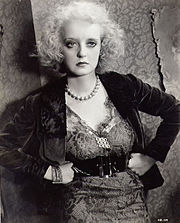
This film showcases not only the destructive rival between two sisters Baby Jane Hudson (Bette Davis) and Blanche Hudson (Joan Crawford) but also the real life, career-long rival between the actresses. That’s at the center of what makes this such a fabulous movie. I can just see Bette’s wheels turning as she relishes her slow, ongoing torture of Joan, her on-screen nemesis.


What ever jane and blanche


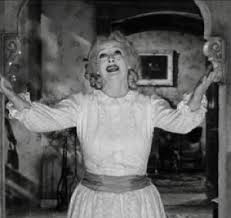
Directed by Robert Aldrich from the novel by Henry Farrell, the story revolves around former child star – Baby Jane Hudson who can’t make the successful transition to film unlike her sister Blanche who spent her childhood in Baby Jane’s shadow. But, because of a car accident, Blanche is left crippled and Jane is begrudgingly forced to take care of her. Emphasis on the begrudging! – The result? – 133 minutes of pure on the edge of your seat, I can’t believe she just did that, sadomasochist Baby Jane Hudson.
What ever i've written a letter

Baby Jane – “I’ve Written a Letter to Daddy”


What ever blanche bird

Blanche Hudson


For full disclosure, I’ve always loved Bette Davis! Check out my previous post, If it’s Sunday, break out the hankies! Bette always sought out challenging roles and wasn’t afraid to “go there.” As a matter of fact, in her first acclaimed film, “Of Human Bondage” she both emotionally and physically portrayed the grotesque nature of her character. She made her appearance “haggish” wanting to express the true physical appearance of someone with tuberculosis.

The success of “What Ever Happened to Baby Jane” re-energized both actresses careers in the 60’s as the “psycho-biddy” subgenre of horror/thriller films featuring psychotic older women came into vogue. Two other movies that followed the trend were Aldrich’s Hush… Hush, Sweet Charlotte and What Ever Happened to Aunt Alice?.

“What Ever Happened to Baby Jane?” was nominated for 5 Academy Awards, winning one for Best Costume Design.

So, on this Friday the 13th if you’re looking for a treat – I recommended spending a little time with the Hudson sisters and find out – “What Ever Happened to Baby Jane?”


What’s Love Got to Do with It?

Angela Bassett’s performance of Tina Turner’s iconic “Proud Mary” in the biopic, “What’s Love Got to Do With It?”(1993) is a tour de force tribute to my favorite “girls rock” musical numbers from films with dynamic female leads.

James Brown may have been the hardest working man in show business, but he wasn’t being physically abused every day by his spouse. Unlike Tina Turner, the hardest working woman in show business who simultaneously raised a family while delivering show stopping, gut wrenching vocals that, at that time, girls weren’t suppose to be able to deliver.


What's Love Got to Do with it poster


Quoting my favorite critic – the late Roger Ebert’s review from 1993 – “…ranks as one of the most harrowing, uncompromising showbiz biographies I’ve ever seen.”

Bassett kills it with her living, breathing and – Whoa, check out those guns – transformation paying homage to the Queen of Rock – Tina Turner!

This is Angela Bassett’s hard work paying off; seamlessly blending Tina’s vocals with a powerful performance of her hard rockin’ hit – “Proud Mary”.

Tina Turner’s (Anna Mae Bullocklife is a testament to her resilience. I’ve been fortunate enough to see her live and believe me she is truly a force of energy “leaving it all on the stage” with every performance.  “Proud Mary” (written in 1969 by singer/songwriter John Fogerty and recorded by his band Credence Clearwater Revival) is one of her most recognizable signature songs.

Tina’s interpretation is worlds away from the original southern rock version. With a completely different arrangement, it opens with Tina teasing that sometimes the audience might like to hear them do a song “nice and easy” but “we never, ever do nothing nice and easy” we always do it “nice and rough”. She further sets up the number by enticing the crowd with they’re going to do the first part “nice” but they’re going to do the finish “rough”.

The song reached #4 on the pop charts on March 27, 1971 and won the Grammy Award for Best R&B Vocal Performance by a Group in 1972.


Tina

Tina lived a life of poverty growing up in Nutbush, TN in the 1940’s, but found solace in the spirit and freeing experience of music and singing in the choir of her Southern Baptist church. She began her musical career in St. Louis in the 1950’s singing in Ike Turner’s Kings of Rhythm band.

Ike Turner (her husband) ended up trying to destroy not only her passion but her life. With hate in his heart and jealousy of her talent, he systematically physically and mentally abused her for years. However, through her strength of will and perseverance, she fought back, sued for divorce, and walked out the courtroom in 1978 (in spite of what Ike tried to prevent) with her dignity and above all – Her Name!

I love Tina Turner and smile because this routine has been performed more than once in the living rooms, basements, wherever by a generation of “rock girls” (myself included). Tearing it up, whipping our hair back and forth and just knowing we are too doggone hot!

This performance of “Proud Mary”(1971) showcases the dynamic energy and incredible legs of the one, the only, the incomparable – Miss Tina Turner!


Spark the Fire – What it Means to be Young!

fireglass newyears eve

This new year I’m starting out with a series of tributes to my favorite “girls rock” musical numbers from films with dynamic female leads.

This post is my salute to Diane Lane (Ellen Aim) and to one of the great bass thumping, energy boosting, heart-stirring numbers I love from the 80’s. (Giving credit where credit is due, those incredible vocals were performed by Holly Sherwood; another unsung, backup hero.)


 Streets of Fire 1984


My emotional connection to this song has not diminished. It’s still as powerful and meaningful to me as when I first embraced it over 20 years ago. Penning this post was difficult but also cathartic. To write this piece from truth, I had to acknowledge my own struggle to reconcile the ideal with the real. My vision of myself as the rebel, the dreamer and the one determined to not look back with regret.

“Tonight is What it Means to be Young” amplifies those feelings of that perfect love, staying true to one’s self, and the reality of having to let go.

This driving beat is palpable. It’s a CPR pumping of blood sent to both quicken and relieve the relentless pain Ellen Aim is feeling after losing the love of her life; the embodiment of her dream of an “angel.”

Rockin’ that hot red dress, she channels acceptance and remembrance of another time and another place of youth and the promise of love.


Streets of Fire Diane


I’ve got a dream when the darkness is over
We’ll be lyin’ in the rays of the sun
But it’s only a dream and tonight is for real
You’ll never know what it means
But you’ll know how it feels

It’s gonna be over
Before you know it’s begun
It’s all we really got tonight
Tonight is what it means to be young


Souls of 2014

white roses

It’s hard for me to believe we’re at the end of another year. Looking back at 2014 and the artistic souls we’ve lost, I re-live joy, sorrow, wonderment, and childhood. Lost a little of my soul in 2014 but gained a new appreciation for what those souls gave to my life and the lives of others.

This retrospect is a beautiful reminder of the dedication, love and craftsmanship that goes into the creation of a film and the experiences we share sitting in a darkened theater. I love the movies (even built a website to celebrate) and the honesty of great actors.

Thank you so much for sharing your gift.


Souls of 2014 shared here at iheartfilmblog.com

Robin Williams

Ruby Dee

Maya Angelou

Lauren Bacall

white roses star yes

Gratitude and Miracles


thanksgiving2012


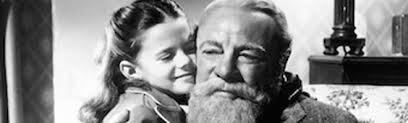
Today marks the start of the holiday season, but it doesn’t officially kick off for me until I’ve watched the Thanksgiving Day Parade and one of my favorite holiday films, Miracle on 34th Street (1947).


Until I see Santa arrive at the end of the parade there can be no Christmas Tree, tinsel, ornaments or stockings. This has been a tradition of mine since I was a kid. Without a doubt, Edmund Gwenn is Santa Claus. No matter what other films he’s made, each character turns into Kris Kringle. (he won the Academy Award for Best Supporting Actor) Gwenn played a cockney assassin in Hitchcock’s Foreign Correspondent in 1940, but all I could scream was “Santa, don’t throw that man off the ledge!”


Edmund Gwenn

Miracle Kris

(September 26, 1877 – September 6, 1959)

Natalie Wood was precious as Susan, the precocious daughter of Maureen O’Hara (Doris) who doesn’t believe in fairy tales and attends a “progressive” school. Natalie Wood had an illustrious career until her death in 1981. She was able to make the transition from child star to ingenue starring opposite James Dean in Rebel Without a Cause (1955) and Warren Beatty in Splendor in the Grass (1961). Known as a loving, giving person, as well as a star, she’s always had a special place in my heart.

Natalie Wood

Miracle on i believe

(July 20, 1938 – November 29, 1981)

miracle DorisDoris is cynical as a result of a bitter divorce so she’s raising her daughter to be practical and sensible. None of this believing in fairy tales and Santa crap. All was going well until Doris – the parade coordinator asks Kris to replace the drunken Santa originally set for the Macy’s Thanksgiving Parade. Kris is a big hit and becomes Macy’s official Santa resulting in a personal relationship with Doris and Susan.

Maureen O’Hara (born August 17, 1920)


Kris is an immediate influence teaching Susan it’s okay to pretend after she tells him the other kids don’t play with her because she won’t join in their game and act like a zoo animal.

The production took flack from the Catholic League of Decency because how dare you depict a divorced woman with a successful career and a young child as a “normal family.” Yep, 1940’s mentality and morality were hard at work.

miracle susan at play

Susan learning to act like a monkey!

Just as Doris is learning to have more faith in life and Susan is embracing imagination, Kris’s sanity is questioned and a legal battle ensues to prove that not only is he sane but the one and only Santa Claus. Fred (John Payne) who is Kris’s lawyer and Doris’s boyfriend, understands the importance of the spirit of Santa especially in the lives of Susan and Doris.

John Payne (on left)

(May 23, 1912 – December 6, 1989)

miracle john

Kris is exonerated and Christmas day has arrived. Susan has asked for a very special present and is disappointed at the Christmas party to see it isn’t under the tree. Doris, in a refreshing change of heart, tells Susan she must have faith.

miracle on faith

But, Santa Claus moves in mysterious ways and in the end teaches them both the true value of faith and miracles.


http://dai.ly/xg9vqw

 miracle end

Here’s to Faith and Miracles!

Legendary Director of “The Birdcage” Dies

  Mike Nichols, Acclaimed Director of ‘The Graduate,’ Dies at 83

mike nichols-master675

(November 6, 1931 – November 19, 2014)

New York (AP) Mike Nichols, one of America’s most celebrated directors, died on Wednesday from cardiac arrest. He was married to ABC’s news anchor Diane Sawyer. The family will hold a private service this week; a memorial will be held at a later date.

Dryly urbane, Mr. Nichols had a gift for communicating with actors and a keen comic timing, which he honed early in his career as half of the popular sketch comedy team Nichols and May. In films like “The Graduate,” “Who’s Afraid of Virginia Woolf?” and “Carnal Knowledge” and in comedies and dramas on stage, he accomplished what Orson Welles and Elia Kazan but few if any other directors have: achieving popular and artistic success in both film and theater. He was among the most decorated people in the history of show business, one of only a dozen or so to have won an Oscar, a Tony, an Emmy and a Grammy.

For more of his legacy click here:

READ MORE »

http://www.nytimes.com/2014/11/21/obituaries/mike-nichols-celebrated-director-dies-at-83.html?emc=edit_na_20141120


R.I.P.


My absolute favorite of his films!


The Birdcage (1996)


What’s not to love about this film? Starring Robin Williams and Nathan Lane the pairing is perfect and the performances are brilliant!

Here’s the plot:

Meet Armand, Albert and their son Val who’s engaged to Barbara Keeley and the rip-roaring evening when their families meet.

Val’s father, Armand, owns The Birdcage, a drag club in South Beach. His domestic partner is Albert, who appears regularly as “Starina”, the show’s star drag queen. Barbara’s father is ultraconservative Republican Senator Kevin Keeley of Stow, Ohio. He is up for reelection and is also co-founder of the “Coalition for Moral Order”.

Fearing the Keeleys reaction if they learn the truth about Val’s parents, Barbara tells her parents that Armand is a cultural attaché to Greece, that Albert is a housewife, and that they divide their time between Greece and Florida; she also changes the family’s last name from Goldman to Coleman to hide their Jewish background.

What could go wrong?

Based on the 1973 stage play by Jean Poiret and the 1978 French-Italian film la Cage aux Folles co-written and directed by Édouard Molinaro; it starred Ugo Tognazzi and Michel Serrault. In Italian, it is known as Il vizietto. An excellent flick definitely worth checking out.


Love the scene with Renaldo teaching Albin to act “straight.”  La Cage vs. Birdcage. What do you think?

(Sorry, no subtitles for the trailer but they are available on the DVD)


The Birdcage pays homage but definitely brings its own attitude and flair.


the Birdcage_imp


And Hank Azaria as Agador Spartacus is too hilarious!!!!


Directed by

Mike Nichols

Produced by

Mike Nichols

Neil A. Machlis

Screenplay by

Elaine May

Based on

La Cage aux Folles

by Jean Poiret

Francis Veber

Starring

Robin Williams

Gene Hackman

Nathan Lane

Dianne Wiest

Music by

Stephen Sondheim

Cinematography

Emmanuel Lubezki

Edited by

Arthur Schmidt

Production

company

Nichols Film Company

Distributed by

United Artists

Release dates

  • March 8, 1996


Boo! Don’t Turn Off the Lights

halloween boo 1

Happy Halloween!


In anticipation of the big day, I thought I’d share some of my Halloween Day viewing quirks. “Boo, Don’t Turn off the Lights” reveals what films I can watch only while it’s still light outside.

My top 2 are Psycho (1960) and Halloween (1978). If you haven’t experienced them you should and here’s why:


Psycho (1960)

Psycho_(1960)

Directed by the “Master of Suspense”, Sir Alfred Hitchcock, it turned the audience perception of a movie plot on its head. There were lines wrapped around the block and absolutely NO ADMISSION after the movie began. Sir Alfred, such a tease. For more on Al, please click here. A previous post tribute.


Starring Anthony Perkins and Janet Leigh, the screenplay is by Joseph Stefano and based on the 1959 novel of the same name by Robert Bloch. To fully appreciate the creepy effect of the film understand that the character of Norman Bates is loosely inspired by the crimes of Wisconsin murderer and grave robber Ed Gein.

Norman Bates

Norman Bates (Anthony Perkins)

I can’t give anything away, but the shower scene is legendary and a reason to watch with the lights on!

Janet Leigh Marion

Marion Crane (Janet Leigh)


Halloween (1978)

Halloween_1978

Directed by John Carpenter and the debut of Jamie Lee Curtis (Janet Leigh’s daughter), this film is inspired by and born from the masterwork Psycho (1960) bringing a fresh, 1978 twist on the horror genre. Void of a lot of blood and gore the focus becomes a child’s question: “What’s the “boogeyman?” and the response, “I believe that was.”

OMG, I add extra lighting when watching this definitive Halloween classic!


The unrelenting Michael Myers character is the scariest psycho of all time! 

Michael myers2007

This quote sums up Michael:

Dr. Sam Loomis: (Donald PleasenceI met him, fifteen years ago; I was told there was nothing left; no reason, no conscience, no understanding; and even the most rudimentary sense of life or death, of good or evil, right or wrong. I met this six-year-old child, with this blank, pale, emotionless face, and the blackest eyes… the devil’s eyes. I spent eight years trying to reach him, and then another seven trying to keep him locked up because I realized that what was living behind that boy’s eyes was purely and simply… evil.

Michael Myers young

6-year-old Michael Myers

The cinematic significance of this film is unlike other slasher movies of the day, the heroine is intelligent and continually devising ways to get away from the killer. Jamie Lee as Laurie is sweet, compassionate and determined to save the kids she’s babysitting and herself from death and live through Halloween night.


Shout out to the first horror “Scream Queen! (for you trivia buffs check-out Wes Craven’s Scream (1996) for a movie reference). Halloween (1978) was the film’s inspiration.

Laurie strong

Laurie Strode (Jamie Lee Curtis)


Halloween’s opening sequence is disturbing and reason for exclaiming:


Boo! Don’t Turn Off the Lights!


If it’s Sunday, breakout the hankies!

Cinema sign

Melodrama Sunday Movie Classics

In my last post I talked about maybe being a little anal about the rules for Saturday and Sunday afternoon movie watching. I shared my rules for Saturday afternoon movie viewing which is B-horror and science fiction. I also shared 3 of my favorite flicks. The Blob (1958), The Incredible Shrinking Man (1957) and The Tingler (1959). (hope you check ’em out)

So, for Part 2 I’m showcasing Sunday and my criteria for some great classic melodrama.

I love melodramas because they can be so over the top and cathartic (think movie therapy) and there’s no better day to indulge than on a lazy Sunday, vegging on the couch, better yet if it’s a rainy day.

According to dictionary.com:

Melodrama – Exaggerated and emotional or sentimental, sensational or sensationalized: over dramatic.

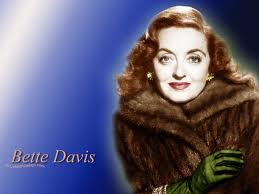
Bette Davis is my favorite Melodrama Diva! Talk about emotional and dramatic, she had those attitudes down pat. With her I find myself either talking back to my TV screen or weeping. (this is why rain helps) So, let’s find out about “The First Lady of the American Screen:

Bette Davis

Bette Davis color

 Ruth Elizabeth Davis (April 5, 1908 – October 6, 1989) known as Bette Davis

Born in Lowell, Massachusetts, Ms. Davis is regarded as one of the greatest actors in cinema history. Bette Davis was the first female president of the Academy of Motion Picture Arts and Sciences and won the Academy Award for Best Actress twice. She was also the first person to receive 10 Academy Award nominations for acting, and was the first woman to receive a Lifetime Achievement Award from the American Film Institute. With more than 100 films, television and theater roles to her credit, in 1999, Davis placed second on the American Film Institute’s list of the greatest female stars of all time.

Bette was known for her no-nonsense, no-holds barred personality and wasn’t afraid to take on unsympathetic character roles. In the RKO film Of Human Bondage (1934), she played such a character as Mildred, the cruel and vicious waitress.  A film adaptation of the 1915 novel of the same name by W. Somerset Maugham. This melodramatic adaptation about a crippled doctor’s destructive and compulsive passion for this coarse waitress was advertised with the tagline on one of its posters: “The Love That Lifted a Man to Paradise…and Hurled Him Back to Earth Again.”

In her 1st major, critically acclaimed part she insisted on looking hideous to depict the ravages of the disease tuberculosis on the human body. She wasn’t nominated for an Oscar but so impressed fellow artists that they insisted she be a write-in on the ballot.

Bette_davis_of_human_bondage

Bette as “Mildred” in Of Human Bondage 1934

A little bit of Mildred’s charm:

 Let’s take a look at her 10 Oscar nominations and 2 wins:

  • 1935: Won for Dangerous, as a self-destructive, alcoholic actress (really a make-up for not winning Of Human Bondage)


  • 1938: Won for Jezebel, as a self absorbed 1850’s southern belle whose insistence on wearing a red-dress to a formal affair (white = chaste) brings scandal and disapproval. Her man “Pres” Henry Fonda was too through with her.


  • 1939: Nominated for Dark Victory, as Judith Traherne, an impetuous, terminally ill Long Island socialite. (yes that’s Bette with a drunken Ronald Reagan) Big time tear-jerker! – Bette’s favorite!  


  • 1940: Nominated for The Letter, as a low-down, adulterous murderer who has absolutely no remorse for blowing her lover away. However, karma is a bitch.


  • 1941: Nominated for The Little Foxes, as Southern aristocrat Regina Giddens – that girl put the cold in cold-blooded.  


  •  1942: Nominated for Now, Voyager, as Charlotte Vale – a dowdy, overweight, spinster, abused by her mother but fights back and achieves a starling transformation in body and spirit. An incredible performance! My absolute favorite Bette Davis role! 

Charlotte on the edge of a well deserved nervous breakdown:


Charlotte’s journey:


  • 1944: Nominated for Mr. Skeffington, as Fanny Skeffington, a woman so conceited that she tries to steal her daughter’s boyfriend, loses her looks after an illness but still has the nerve to treat her husband like dirt and still believe she can have any man – no way. In the end she learns the hard way that “a woman is beautiful when she’s loved and only then.” (too bad it’s after her husband goes blind in a concentration camp)


  • 1950: Nominated for All About Eve, as Margo Channing  an insecure Broadway star challenged by the younger, conniving Eve – “Fasten your seat-belts, it’s going to be a bumpy night.”  It was selected in 1990 for preservation in the United States National Film Registry and was among the first 50 films to be registered.


  • 1952: Nominated for The Star, as Maggie, a washed up actress trying to revive her career. Notably, at this time in Bette Davis’ career, she was struggling for roles despite her body of work. Bette’s ego was blamed.


  • 1962: Nominated for What Ever Happened to Baby Jane?, as the demented Baby Jane Hudson who tortures and terrorizes her sister Blanche (Joan Crawford)  Much like their real life rivalry. This role renewed her success and paved the way for other deranged characters in such films as: Hush, Hush Sweet Charlotte (1964) and The Nanny (1965)

 ♦♦♦♦

Bette continued to perform in film and on television in the 70’s and 80’s. In 1983 at the age of 75 she had a mastectomy as a result of breast cancer. Nine days later she suffered a stroke. Despite her failing health she continued to work until her death in 1989.

This is an in-depth retrospect of “The First Lady of the American Screen”

Enjoy! Don’t forget to bring your hankie.


To Remake or Not To Remake. That is the Question.

I’m on the record saying I hate remakes. If it was genius in the first place, why mess with it? If it stunk, why bring it back? Are you so ego driven Mr. Director that you feel your “version” outshines, oh say, Alfred Hitchcock‘s Psycho? Or Mr. Director, do you so lack creatively that you cop-out and warm over some – why was it made in the first place (Teenage Mutant Ninja Turtles) flick?

That being said, there are those exceptions. Websters’ definition of a remake is: to make again or anew as in a new form or manner. If a film can pay homage and capture the essence of the original but also bring freshness, I consider that film to be a great remake!


This classic has a great remake:


Invasion of the Body Snatchers (1956)


Directed by Don Siegel and Produced by Walter Wanger, the film starred Kevin McCarthy and Dana Wynter. This 1956 sci-fi thriller taps into a hideous nightmare, what if we went to sleep and awoke as a “pod person?” (Our physical self but void of emotion.) This movie in and of itself is an update of the 1950’s fear of space, atomic energy, and aliens. However, instead of giant mutated spiders, this tale is of an invasion from within.


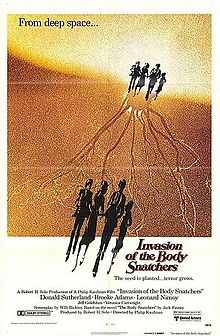
Invasion of the Body Snatchers (1978)

Invasion_of_the_body_snatchers_movie_poster_1978

“From deep space the seed is planted.”

Directed by Philip Kaufman and starring Donald Sutherland and Brooke Adams, this remake ups the ante. It honors the original sense of foreboding but the degree of terror is raised to a pandemic level.

There’s a scene in the original involving a dog that alerts the “pod people” that “Becky” (Dana Wynter) isn’t one of them. In this version they remake the dog scene but takes it to a much freakier place.   Outstanding!

I won’t give away the ending but, holy crap, that was frigging frightening!  Totally fresh update!


A box office success, Invasion of the Body Snatchers was well received by critics and is considered by some (myself included) to be among the greatest film remakes.

To Remake or not to Remake. That is the Question.

In this instance – YES!

It was the Jazz age. It was an age of Elegance and Violence.

  “The Cotton Club” (1984)

Cotton Club poster

Directed by Francis Ford Coppola
Produced by Robert Evans
Screenplay by William Kennedy
Francis Ford Coppola

I remember looking forward to screening this film.  I understood the significance of The Cotton Club during the Harlem Renaissance of the 20’s and 30’s and wanted the 1980’s audience to be curious about the history of the real club and incredible level of talent that appeared there between 1923 – 1940.

Some of the original performers at The Cotton Club included:

Among many others.

The movie is intense. Producer Robert Evans originally wanted to direct the project but later asked Coppola.  There are definite similarities to “The Godfather” in the film due to it’s violent nature and also the fact that Mario Puzo (author of The Godfather) wrote the original story and screenplay.

Gangsters, racism and love, this film exposes them all.  I do, however, wish more of the movie focus was on The Cotton Club itself and the lives of those characters.

The story centers around the dangerous love affair of Dixie Dwyer (Richard Gere) and Vera Cicero (Diane Lane).  She “belongs” to mobster Dutch Schultz (James Remar).  Dutch is a straight up psychopath   We also follow the budding romance between Sandman Williams (Gregory Hines) and Lila Rose Oliver (Lonette McKee).  He wants to get married.  She wants to be a “Star.”  (She’s also hiding a secret about her other life.)

Watch and listen as Lonette McKee, also from the movie (“Sparkle”), delivers a taste of the film’s 1930’s Harlem.

The song: “Ill Wind (You’re Blowing Me No Good)”  Composed by Harold Arlen, lyrics by Ted Koehler.  It was written for their last show at The Cotton Club in 1934.


One of the most memorable scenes is between the real life and onscreen brothers – Maurice and Gregory Hines.  Clay (Maurice Hines) and Sandman (Gregory Hines) have had a major falling out and at this moment we get to share their reunion.  Growing up, this old school tap dancing duo was compared to The Nicholas Brothers.  Gregory Hines remarked in an interview that after seeing The Nicholas Brothers perform that “nobody was going to be the next Nicholas Brothers, least of all my brother and I.”


Starring Richard Gere
Gregory Hines
Diane Lane
Lonette McKee
Music by John Barry


Explore the 1984 film but more importantly explore the controversial history of The Cotton Club and the entertainers and music that fueled the Jazz generation.