For a comprehensive and what I consider a definitive history of one of the original Hollywood Studios – Universal, check out the Documentary – “Universal Horror.” Universal was founded in 1912 by Carl Laemmle and is the world’s fourth oldest major film studio.
Originally airing on Turner Classic Movies in 1998, “Universal Horror” showcases the golden age of 1930’s movie monsters. The film also highlights Carl Laemmle’s family and Carl Laemmle, Jr’s game-changing vision of producing films based on classic horror tales.
Casting for the film became problematic initially since Laemmle was not at all interested in Lugosi, in spite of good reviews for his stage portrayal. Laemmle instead considered other popular actors of the day, including Paul Muni and Chester Morris.
In 1991, the Library of Congress selected Frankenstein for preservation in the United States National Film Registry as being “culturally, historically, or aesthetically significant.
Also affectionately called “Forry,” Ackerman was central to the formation, and spread of science fiction fandom, and a key figure in the wider awareness of science fiction as a literary, art and film genre. Famous for his wordplay he coined the genre nickname “sci-fi”.
Universal Monsters Tribute
The end of Universal’s first run of horror films came in 1936 as the Laemmles were forced out of the studio after financial difficulties and a series of box office flops due partly to censorship and a temporary ban on American horror films in Britain. The release of MGM’s Mad Love and The Raven (both 1935) were the final nail in the coffin for monster movies, being too strong for 1935 tastes, with its themes of torture, disfigurement, and grisly revenge.
The monster movies were dropped from the production schedule altogether and would not re-emerge for another three years. In the meantime, a theater owner revived Dracula and Frankenstein as a double feature, resulting in an immediate smash hit and leading to the original movies being re-released by the studio to surprising success.
Be sure to checkout these films and experience the original horror classics from the original horror classics studio – Universal!
“Listen to them, children of the night; what music they make.” Count Dracula
Dracula is the immortal 1897 Gothic horror novel by Irish author Bram Stoker. It introduced the famous character Count Dracula and established many conventions of subsequent vampire fantasy.
The first edition cover of Dracula
Of all the film adaptations of the classic novel, the 1931 Dracula directed by Tod Browning and starring Bela Lugosi is most synonymous with Stoker’s legendary character, Count Dracula of Transylvania.
The film was produced by Universal and is based on the 1924 stage play Dracula by Hamilton Deane and John L. Balderston, which in turn is loosely based on the novel Dracula by Bram Stoker. The 1924 stage play was substantially revised in 1927 and was the first authorized adaptation of Bram Stoker‘s novel Dracula, and has influenced many subsequent adaptations.
The 1927 Broadway production starred Bela Lugosi in his first major English-speaking role, which he reprised in the 1931 film adaptation of the play. A 1977 Broadway revival designed by Edward Gorey, starring Frank Langella, won the Tony Award for Best Revival.
Bram Stoker’s novel had already been filmed without permission as Nosferatu in 1922 by German expressionist filmmaker F. W. Murnau. Bram Stoker’s widow sued for plagiarism and copyright infringement, and the courts decided in her favor, essentially ordering that all prints of Nosferatu be destroyed.
Nosferatu
Enthusiastic young Hollywood producer Carl Laemmle, Jr. also saw the box office potential in Stoker’s gothic chiller, and he legally acquired the novel’s film rights. Initially, he wanted Dracula to be a spectacle on a scale with the lavish silent films The Hunchback of Notre Dame (1923) and The Phantom of the Opera (1925). (Wikipedia)
The decision on casting the title role proved problematic. Initially, Laemmle was not at all interested in Lugosi, in spite of good reviews for his stage portrayal. Laemmle instead considered other actors, including Paul Muni, Chester Morris, and Ian Keith.
Today, Dracula is widely regarded as a classic of the era and of its genre. In 2000, it was selected for preservation in the United States National Film Registry by the Library of Congress as being “culturally, historically, or aesthetically significant”.
To many film lovers and critics alike, Lugosi’s portrayal is widely regarded as the definitive Dracula. Lugosi had a powerful presence and authority on-screen. The slow, deliberate pacing of his performance (“I bid you… welcome!” and “I never drink… wine!”) gave his Dracula the air of a walking, talking corpse, which terrified 1931 movie audiences.
He was just as compelling with no dialogue, and the many close-ups of Lugosi’s face in icy silence jumped off the screen. With this mesmerizing performance, Dracula became Bela Lugosi’s signature role, his Dracula a cultural icon, and he himself a legend in the classic Universal Horror film series.
Stoker’s visit to the English coastal town of Whitby in 1890 is said to be part of the inspiration for Dracula. He began writing novels while a manager for Henry Irving, as well as, director of London’s Lyceum Theatre, beginning with The Snake’s Pass in 1890 and Dracula in 1897.
During this period, Stoker was part of the literary staff of the The Daily Telegraph in London, and he wrote other fiction, including the horror novels The Lady of the Shroud (1909) and The Lair of the White Worm (1911). (Wikipedia)
Stoker was bedridden with an unknown illness until he started school at the age of seven when he made a complete recovery. Of this time, Stoker wrote, “I was naturally thoughtful, and the leisure of long illness gave the opportunity for many thoughts which were fruitful according to their kind in later years.”
Before writing Dracula, Stoker met Ármin Vámbéry, a Hungarian writer, and traveler. Dracula likely emerged from Vámbéry’s dark stories of the Carpathian mountains. Stoker then spent several years researching European folklore and mythological stories of vampires.
Dracula is an epistolary novel, written as a collection of realistic but completely fictional diary entries, telegrams, letters, ship’s logs, and newspaper clippings, all of which added a level of detailed realism to the story, a skill which Stoker had developed as a newspaper writer.
At the time of its publication, Dracula was considered a “straightforward horror novel” based on imaginary creations of supernatural life.”It gave form to a universal fantasy . . and became a part of popular culture.” (Wikipedia)
After suffering a number of strokes, Stoker died at No. 26 St George’s Square, London on 20 April 1912. He was cremated, and his ashes were placed in a display urn at Golders Green Crematorium in north London.
Bette Davis is at the top of my list of incredible actresses of classic film and her infamous relationship with Joan Crawford is legendary. So, when I heard Ryan Murphy’s 2017 series “Feud” was recreating their tumultuous battles in the film “Whatever Happened to Baby Jane?” I had to check it out. Susan Sarandon (Davis) and Jessica Lange (Crawford) bring back old Hollywood and pull back the layers of the complexity between Bette Davis and Joan Crawford.
Director Robert Aldrich’s cult classic “Whatever Happened to Baby Jane” (1962) is brilliant! It’s not fair, but to the powers that be, women in Hollywood age but men are considered “salt n pepper” hot. Aldrich’s production capitalized on the star power of the “past their prime” celebrated divas and the result is a glimpse into the real-life feud between the stars.
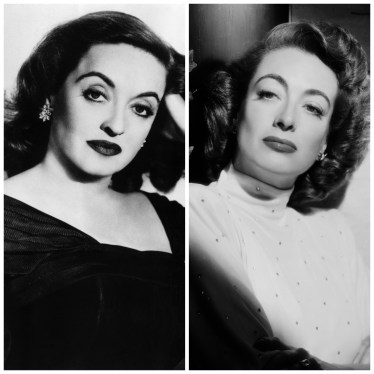
Bette Davis (L) Joan Crawford (R)
Not to be too biased😄 but, Ms. Davis literally kicked Joan’s behind! Crawford was way over her head onscreen and off as Bette outperformed and out strategized her nemesis. Bette is my hero because she took on roles other actresses wouldn’t touch because of their image.
Bette Davis in “Of Human Bondage”
She wasn’t afraid to go there and if the role required her to look unattractive she was game. An original in a class by herself, in “Of Human Bondage” (1934) her appearance was shocking to audiences of the time as she portrayed a callous woman dying of tuberculosis; not a pretty sight.
“What Ever Happened to Baby Jane?” is a 1962 American psychological thriller-horror film produced and directed by Robert Aldrich, starring Bette Davis and Joan Crawford, about an aging actress who holds her paraplegic sister captive in an old Hollywood mansion.
Alfred Molina as Aldrich (L) Robert Aldrich (R)
The screenplay by Lukas Heller is based on the 1960 novel of the same name by Henry Farrell. Upon the film’s release, it was met with widespread critical and box office acclaim and was later nominated for five Academy Awards, winning one for Best Costume Design, Black and White. (Wikipedia)
Bette Davis (L) Joan Crawford (R)
Susan Sarandon (L) Jessica Lange (R)
In true Bette Davis fashion, she came up with her own makeup for the role. She said that Jane was someone who never washed her face but just added more makeup.
In “Whatever Happened…” The young neighbor was played by Davis’ daughter B. D. Merrill who, followed in the footsteps of Joan Crawford’s daughter Christina, and wrote a scathing memoir, “My Mother’s Keeper”, that depicted her mother in a harsh light. However, unlike Christina who waited until after Crawford’s death to publish “Mommie Dearest”, B.D. published hers in 1985 while Davis was still alive but in poor health.
B.D (Davis’ daughter-L) Kiernan Shipka portrays B.D in “Feud”
It was an open secret that Davis and Crawford loathed each other, and filming was contentious as their real-life hatred for one another spilled over into the production, and even after filming had wrapped.
The film’s success spawned a succession of horror/thriller films featuring psychotic older women, later dubbed the psycho-biddy subgenre, among them Aldrich’s Hush… Hush, Sweet Charlotte, What Ever Happened to Aunt Alice? and What’s the Matter with Helen?. It was parodied by the Italian comedy film What Ever Happened to Baby Toto? (Wikipedia)
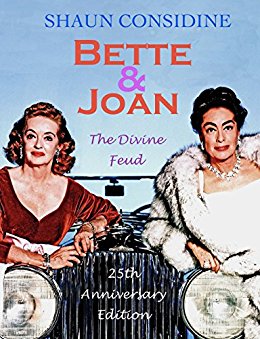
Shaun Considine’s 1989 book Bette and Joan: The Divine Feud chronicles the actresses’ rivalry, including their experience shooting this film.
Both Bette Davis and Joan Crawford had incredible and challenging careers and personal lives. If I’ve peaked your interest and you’d like to learn more, check out this eye-opening documentary.
My question is, would you? If you could? Drop out of this life and assume another; start a new journey as a “Second”. Arthur makes the decision to do just that and enters a psychedelic world of appropriating another’s reality, someone else’s truth so, be careful what you wish for, some dreams can become your nightmare.
“Seconds” is a 1966 American science fiction drama film directed by John Frankenheimer and starring Rock Hudson. The screenplay by Lewis John Carlino was based on Seconds, a novel by David Ely. The film was entered into the 1966 Cannes Film Festival and released by Paramount Pictures. The cinematography by James Wong Howe was nominated for an Academy Award. (Wikipedia)
“Seconds” is a mystery dealing with the obsession with eternal youth and a mysterious organization which gives people a second chance in life.
Arthur Hamilton (John Randolph) is a middle-aged man whose life has lost purpose. He’s achieved success but finds it unfulfilling. His love for his wife has dwindled and he seldom sees his only child. Through a friend, a man he thought was dead, Hamilton is approached by a secret organization, known simply as the “Company” which offers him a new life. (Wikipedia)
Arthur (John Randolph)
Arthur (Rock Hudson)
When much of American pop culture was infatuated with the swinging, psychedelic 1960s, Director John Frankenheimer was focused on the decade’s darker side—the sour aftertaste of McCarthyism, the expanding military-industrial complex, the growing sense that technology might be controlling us instead of the other way around.
John Frankenheimer
Of his eleven theatrical films made during this period, none is more chilling or prescient than 1966’s “Seconds”, the third and crowning chapter of what’s now known as Frankenheimer’s paranoia trilogy.
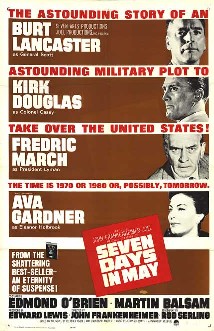
Frankenheimer had a gift for capturing the zeitgeist, and in the first two installments of his paranoia trilogy, he had already taken on some of postwar America’s most emotionally charged topics: brainwashing, commie-bashing, and political assassination in The Manchurian Candidate (1962), about a man hypnotically programmed to kill, and then nuclear dread, Cold War anxiety, and neofascist skullduggery in Seven Days in May (1964), about a military plot to seize the American government. (David Sterritt)
From the surreal opening titles designed by Saul Bass, atmospheric soundtrack by Jerry Goldsmith to the terrifying horror ending, “Seconds” feels queasy with a very real sense of paranoia evoked by James Wong Howe’s vision of a fantasy turned on its end.
Audiences weren’t ready for it in 1966 but the film has since become a cult classic. I highly recommend checking it out; a whole lotta food for thought.
In 2015, the United States Library of Congress selected the film for preservation in the National Film Registry, finding it “culturally, historically, or aesthetically significant.”
Ladies and gentlemen, just a word of warning. If any of you are not convinced that you have a tingler of your own, the next time you’re frightened in the dark… don’t scream. Dr. Warren Chapin “The Tingler”
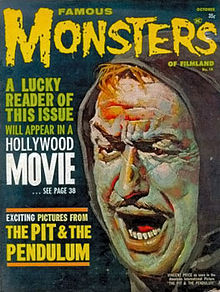
Vincent Price (Dr. Warren Chapin)
I maybe just a wee bit set in my ways, but the day of the week dictates my movie viewing genre. Monday thru Friday are pretty wide open, however, Saturday and Sunday must stick to my particular criteria. Saturday afternoon is definitely B-horror/Sci-fi flicks and Sunday is reserved for Melodrama film classics.
If you’ve read my About Page you know that as a kid the Saturday Matinee had a big influence on my love of B-horror/Sci-fi movies and William Castle.
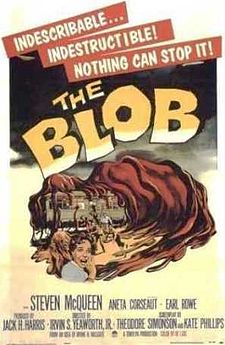
The Blob, The Incredible Shrinking Man and The Tingler. Now that’s good stuff!
The Blob, directed by Irvin Yeaworth, was Steve McQueen’s first leading role before he got his own TV series – Wanted: Dead or Alive (1959). McQueen was called “The King of Cool” and starred in such popular films as The Magnificent Seven and The Thomas Crown Affair. He received an Academy Award nomination for his role as Jake Holman in The Sand Pebbles.
Steve McQueen “King of Cool”
The Blob plot revolves around what happens when an old man pokes a stick at a piece of meteor and it cracks open releasing an oozy substance that starts to crawl up the stick. He tries to shake it off but ends up with “the blob” all over his hand. (This is why you don’t poke at things that drop from the sky. Yeesh!)
Steve (also his character name) and his girl Jane, after almost hitting the old man who has run onto the road, take him to the local doctor. Cutting to the chase: while Steve and Jane ( Aneta Corsaut, who eventually plays Andy Griffith’s TV girlfriend Helen) leave the doc’s office to look for clues to what’s on the old man’s hand, The Blob absorbs the old man, the doc and his nurse. Next thing you know it’s at the midnight horror movie. Cue the fleeing and screaming and holy crap how do we stop it. Phew, that was exhausting.
The theme song, written by Burt Bacharach and Mack David (who wrote some of the top hits of the sixties) is a catchy little gem. “It creeps and leaps and glides and slides across the floor…beware of the blob.” Here it is:
I’ve watched this movie a hundred times and the ending always makes me cry. This thought provoking Science Fiction classic taps into an anxiety of meaning in life and what exactly is the meaning of life. Scott Carey (Grant Williams) is dusted by a radioactive mist while on a boating vacation with his wife Louise (Randy Stuart). A few weeks later he starts to notice his clothes are fitting looser and he also appears to be losing height. After visiting a specialist, it is confirmed that he is indeed shrinking.
Grant Williams
Reduced to living in a dollhouse and eventually fighting for his life against the cat and then a tarantula living in the basement of the family home, Scott finally shrinks to an infinitesimal size, entering the realm of the unknown.
For me, this movie is so much more than just another Saturday afternoon B-Movie flick. The closing monolog makes the point by concluding that no matter how small, we still matter in the universe because, to God, “there is no zero.”
Producer/Director William Castle delivers his finest in The Tingler (1959), his third collaboration with writer Robb White. The film stars the incomparable Vincent Price as Pathologist, Dr. Warren Chapin who researches and discovers the existence of The Tingler.
“Percepto” is my favorite William Castle gimmick. There comes a time in the movie when the Tingler (a parasite that feeds on fear) is loose in the theater and to save your life you need to scream! For grins, in select seats in the theaters, Castle placed the “Percepto” system which made the seat vibrate to simulate the feeling of fear you feel in your body when The Tingler strikes.
Man do I wish I could have been there in 1959 when The Tingler attacks the projectionist, the film strip breaks and The Tingler appear on the screen. If that’s not enough, the lights go out and you hear the voice of Vincent Price declaring that The Tingler is loose in the theater so scream, scream for your life! Awesome!!
Just think of it, being in the movie theater watching The Tingler scene and ending up participating in the experience in your “Percepto”seat, with lights out and the sound of Price’s voice. I love it!!!
Break out the popcorn and let me know your faves in the comments.
I was working on a post the other day and the TV show Nothing but Trailers was on in the background. It got me thinking about some of my all-time favorites and what constitutes a great trailer.
First of all, it can’t just be a series of scenes from the movie. That really irks me! What’s the point of me going if you’ve already given me your best shots? Just lazy.
An excellent trailer peaks your curiosity gets your heart stirring and demands that you’re first in line to see it. An incredible trailer gives you minimal information but builds the anticipation with atmospheric music, punctuation shots, and an ending that elicits the core emotion of the film.
This is the criteria I applied to the following trailers and is the basis for them being some of the most memorable.
◊◊◊◊◊◊
Number One has got to be the 1979 sci-fi classic – Alien. “In space, no one can hear you scream.”
Starring Sigourney Weaver, director Ridley Scott scared the crap out of me and the little boy sitting in front of me at the theater. Oh, and to make matters worse, I was pregnant at the time. Yikes! (if you’ve seen it you understand, if you haven’t, what?? You must!) And my girl Sigourney Weaver showed the world what a badass woman in space looks like.
Sigourney Weaver
This is the epitome of an incredible trailer. Little bits and moments and truly haunting music. My heart was racing and I had no idea of what I’d just seen.
The visuals were outstanding! There was absolutely nothing familiar in the images coming off the screen. The Alien and its accompanying elements were designed by Swiss surrealist artist H. R. Giger. (I don’t know how he slept with those images in his head) The film received both critical acclaim and box office success, receiving an Academy Award for Best Visual Effects.
◊◊◊◊◊◊
Number Two is the sci-fi thriller –The Dark Knight (2008) – “Why So Serious?”
First of all, Heath Ledger. Second of all, Heath Ledger!! Even in the trailer, his intensity shines thru. He draws you in and you’re compelled to see more. His Oscar-winning performance was incredible and the most talked about that year.
Ledger almost made a complete sweep of over twenty awards for acting, including the Academy Award for Best Supporting Actor, Screen Actors Guild Award for Best Supporting Actor, the Golden Globe Award for Best Supporting Actor – Motion Picture, and the BAFTA Award for Best Actor in a Supporting Role.
Heath Ledger
Unfortunately, we lost him, but his genius as The Joker lives on. Starring Christian Bale as the caped crusader and directed by Christopher Nolan, when I saw this trailer I knew where I was going to be on opening night. Totally lived up to the hype.
◊◊◊◊◊◊
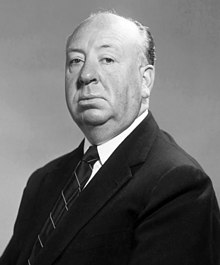
Last, but certainly not least of this compilation is the original master of suspense, Alfred Hitchcock’s – Psycho (1960) “…she just goes a little mad sometimes.”
This trailer shows Alfred Hitchcock taught the world just how horror is done. Fits every criterion for an incredible movie trailer and then some. Starring Janet Leigh and Anthony Perkins, my heart is racing right now re-visiting this magnificent piece of cinema.
Sir Alfred Hitchcock – (13 August 1899 – 29 April 1980)
Hitch’s stylistic trademarks include the use of camera movement that mimics a person’s gaze, forcing viewers to engage in a form of voyeurism. In addition, he framed shots to maximize anxiety, fear, or empathy and used innovative forms of film editing. (Wikipedia)
To quote me, “An incredible trailer gives you minimal information but builds the anticipation with atmospheric music, punctuation shots, and an ending that elicits the core emotion of the film.”
An unquestionable classic!
◊◊◊◊◊◊◊◊◊
Now that I’ve shared some of my faves, I’d love to hear some of yours! 😎
I’m a lifelong fan of Halloween and Universal Horror films. From “The Phantom of the Opera”(1925) to “The Wolfman”(1941), I own the entire catalog.
And, when you take those classic monster movies and add in the hilarity of the top comedy duo of the day, you end up with the hit comedy-horror flick “Abbott and Costello Meet Frankenstein” (1948).
Starring the legendary comedy team of Bud Abbott and Lou Costello the production has the reputation of being the final nail in the coffin of taking seriously Universal Horror monsters. The film is also considered the swan song for the “Big Three” Universal horror monsters – Count Dracula (Bela Lugosi), Frankenstein’s monster played by (Glenn Strange), and the Wolf Man (Lon Chaney, Jr.), none of whom had appeared in a Universal film since 1945’s House of Dracula.
left to right – Bud Abbott, Lou Costello, Frankenstein (Glenn Strange), Dracula (Bela Lugosi), and The Wolfman (Lon Chaney, Jr.)
The movie makes glorious fun of the classic monsters, Dracula, Frankenstein, and The Wolfman and is one of my all-time favorites!
Bud Abbott and Lou Costello Meet Frankenstein (the film’s poster title), or Bud Abbott Lou Costello Meet Frankenstein (the onscreen title)—although the film is usually referred to as simply Abbott and Costello Meet Frankenstein—is a 1948 American horror comedy film directed by Charles Barton and starring the comedy team of Abbott and Costello. The picture is the first of several films where the comedy duo meets classic characters from Universal’s horror film stable. (Wikipedia)
The plot revolves around Lawrence Talbot-The Wolfman (Lon Chaney, Jr.) making an urgent call from London to a Florida railway station where Chick Young (Bud Abbott) and Wilbur Grey (Lou Costello) work as baggage clerks. Wilbur answers the phone, and Talbot tries to impart to him the danger of a shipment due to arrive for the “McDougal House Of Horrors”, a local wax museum, which purportedly contains the actual bodies of Count Dracula (Béla Lugosi) and the Frankenstein Monster (Glenn Strange).
Bud and Lou at work
However, before he is able to warn Wilbur, a full moon rises, and Talbot transforms into The Werewolf. Wilbur, thinking the call is a prank, hangs up and continues on with his work day. Later that night, Chick and Wilbur arrive at McDougal’s “House Of Horrors”, open the first crate and find a coffin with “Dracula” inscribed on the front.
When Chick leaves to retrieve the second crate, Wilbur witnesses Dracula awaken and he tries to get Chick’s attention. However, when Chick returns with the second crate, Dracula hides just in time to go unnoticed. Dracula hypnotizes Wilbur and re-animates Frankenstein’s Monster. The plot thickens as Dracula intends to transplant Wilbur’s brain into the Frankenstein Monster. What could possibly go wrong?
The film is peppered with classic Abbott and Costello humor. In a discussion whether Costello would share an extra female admirer of his:
Chick Young: You know the old saying? Everything comes in threes.Now suppose a third girl should fall in love with you?
Wilbur Grey: What’s her name?
Chick Young: We’ll say her name is Mary.
Wilbur Grey: Is she pretty?
Chick Young: Beautiful!
Wilbur Grey: Naturally, she’d have to be.
Chick Young: Now you have Mary, you have Joan, and you have Sandra. So, to prove to you that I’m your pal, your bosom friend, I’ll take one of the girls off your hands.
Wilbur Grey: Chick, you’re what I call a real pal… you take Mary.
Trivia:
The film was originally intended to be titled The Brain of Frankenstein, but its name was changed prior to the filming schedule, which ran from February 5 through March 20, 1948.
During filming, Glenn Strange found Costello so funny he would often break up laughing, requiring many retakes (this is readily apparent in the scene where Costello sits on the Monster’s lap).
Boris Karloff refused to actually see this film, although he did help promote the film and can be seen in several publicity photos, including one where he is buying a ticket. Karloff appeared with the duo the next year in Abbott and Costello Meet the Killer, Boris Karloff, and in 1953 in Abbott and Costello Meet Dr. Jekyll and Mr. Hyde.
During the scene in the laboratory where the Monster comes after Chick and Wilbur after throwing Sandra through the window, Glenn Strange stepped on a camera cable, causing the camera to fall and break some bones in his foot. Lon Chaney, Jr., who was not working that day and who had previously played the Monster in The Ghost of Frankenstein, took over the role of the Monster for that scene as well as the scene where the monster is throwing barrels and crates at Wilbur and Chick while they are trying to escape in a rowboat at the pier.
This was the only time Béla Lugosi reprised the role he had created in Dracula (1931). He had previously portrayed vampires in Mark of the Vampire (1935), The Return of the Vampire (1943) and would do so again in Mother Riley Meets the Vampire (1952) (and made a gag cameo as Dracula in a 1933 Hollywood on Parade short), but this was the only other time he played Dracula as a sustained role on film.
Abbott and Costello were a comedy double act during the early Classical Hollywood era of American cinema. The team was composed of William “Bud” Abbott and Lou Costello whose work in vaudeville and on stage, radio, film and television made them the most popular comedy team during the 1940s and early 1950s. Their patter routine “Who’s on First?” is one of the best-known comedy routines of all time and set the framework for many of their best-known comedy bits. (Wikipedia)
Bud Abbott and Lou Costello
In 2001, the United States Library of Congress deemed “Abbott and Costello Meet Frankenstein”culturally, historically, or aesthetically significant” and selected it for preservation in the National Film Registry, and in September 2007, Readers Digest selected the movie as one of the top 100 funniest films of all time. The film is number 56th on the list of the “American Film Institute’s 100 Funniest American Movies”. (Wikipedia)
“Abbott and Costello Meet Frankenstein” is a playful romp through the Universal Horror franchise and a great family movie to add to your Halloween viewing list.
A funny thing happened at my 6-month dental check-up. Sitting in the dentist’s chair a lightbulb came on and the idea for this post hit me square in the mouth, “The Little Shop of Horrors”(1960)!
The 1986 film is a remake of the hit Broadway stage production which was a remake of the 1960 movie. (Phew, that took the long way around)
I had the fantastic experience of performing in a stage production as one of the street urchins. Chiffon, Crystal, and Ronette are fashioned after girl groups from the 1960’s. It was one of my favorite shows and roles in my community theater career.
The original 1960 film was a black comedy horror film directed by Detroit-born (my hometown) and celebrated B-movie legend, Roger Corman and written by Charles B. Griffith. The film is a farce about an inadequate florist’s assistant (Jonathan Haze) who cultivates a plant that feeds on human flesh and blood.
The film stars Jonathan Haze (Seymour), Jackie Joseph (Audrey), Mel Welles (Mr. Mushnick), and Dick Miller, all of whom had worked for Corman on previous films. Produced under the title “The Passionate People Eater”. It was a lot creepier and darker than either the 1986 film or Broadway production.
The film’s concept is thought to be based on a 1932 story called “Green Thoughts”, by John Collier, about a man-eating plant. However, author Dennis McDougal in Jack Nicholson‘s biography suggests that Griffith may have been influenced by Arthur C. Clarke’s sci-fi short story ‘The Reluctant Orchid’. (Wikipedia)
The film also garnered attention as a movie that was made into a Broadway production; it’s usually the other way around.
Writer, Charles B. Griffith, was the voice of Audrey 2 in 1960 film.
Levi Stubbs (lead singer of The Four Tops-Motown group) was the voice of Audrey II in 1986 movie.
Ellen Greene played Audrey in the Off-Broadway Production.
The gleefully masochistic dental patient, originally played by Jack Nicholson, is not in the musical but is in the 1986 film, played by Bill Murray.
Off-Broadway Production of “Little Shop of Horrors” 1982 with Ellen Greene immediately right of Audrey 2
A young Jack Nicholson‘s small role as the masochistic dental patient in the 1960 film was a hysterical standout. At the time of filming, Jack Nicholson had appeared in two films and had worked with Roger Corman as the lead in “The Cry Baby Killer”.
Roger Corman
According to Nicholson, “I went into the shoot knowing I had to be very quirky because Roger originally hadn’t wanted me. In other words, I couldn’t play it straight. So I just did a lot of weird shit that I thought would make it funny.”
Even though this was only his third film you could see that his talent was something quite special.
Because I’m a big-time musical theater lover, my affinity is for the 1986 film. The musical numbers were fabulous, the performances outstanding, and the memories lasting.
I loved performing the opening “Urchin” musical number “Little Shop of Horrors” which was also from the Off-Broadway stage production:
The film, directed by Frank Oz (Muppets), differs only slightly from the stage play. The title song is expanded to include an additional verse to allow for more opening credits. The song “Ya Never Know” was re-written into a calypso-style song called “Some Fun Now”, although some of the lyrics were retained.
Four other songs (“Closed for Renovation”, “Mushnik and Son”, “Now (It’s Just the Gas)”, as well as “Call Back in the Morning”) were cut from the original production score. An original song was written by Ashman and Menken, “Mean Green Mother from Outer Space”, was created for the film.
For a fun and dark Halloween double feature, I highly recommend checking out “The Little Shop of Horrors” (1960) and the remake, “Little Shop of Horrors” (1986). A little something for everyone.
Way to turn the classic “Dracula” on its’ head! I think the idea to present Blacula as an 18th Century African prince during the slave trade was historical and topical. Although considered a Blaxploitation horror film, it was taken with a serious approach and hits the mark on the classic Universal horror flick.
This trailer is so typical of an American International Picture, high on exploitation and drama. Formed on April 2, 1954, from American Releasing Corporation (ARC) by James H. Nicholson, former Sales Manager of Realart Pictures, and Samuel Z. Arkoff, an entertainment lawyer. It was dedicated to releasing independently produced, low-budget films.
Samuel Zachary Arkoff (12 June 1918 – 16 September 2001)
The ARKOFF formula:
Action (exciting, entertaining drama)
Revolution (novel or controversial themes and ideas)
Killing (a modicum of violence)
Oratory (notable dialogue and speeches)
Fantasy (acted-out fantasies common to the audience)
Fornication (sex appeal, for young adults)
The plot of Blacula is the story of Manuwalde (William Marshall), an African Prince. It’s a modern twist on the classic Dracula legend and is told in a very compelling and chilling way.
William Marshall “Blacula”
In the year 1780, while on a goodwill visit to ask Count Dracula (Charles Macaulay) to help him suppress the slave trade, (which existed in parts of Africa, like the rest of the world, and was a part of the economic structure of some societies for many centuries), he is refused by the Count. Instead, Manuwalde is turned into a vampire by Count Dracula and wife, Luva (Vonetta McGee) is killed.
Quote – Dracula: You shall pay, black prince. I shall place a curse of suffering on you that will doom you to a living hell. I curse you with my name. You shall be… Blacula!
The scene then shifts to the year 1972 with two interior decorators from modern-day Los Angeles California traveling to Castle Dracula in Transylvania and unknowingly purchasing the now-undead Mamuwalde’s coffin, which they ship to Los Angeles.
One of the interior decorators – Could he be Richard Simmons’ twin or what?😄
Later unlocking the coffin, the decorators release Mamuwalde, becoming his first two victims as a vampire, turning them and others he encounters in his bloodthirsty reign of terror into vampires like himself. (Wikipedia)
Blacula was released on August 25, 1972, to mixed reviews. American International Pictures’ marketing department in an effort to ensure that black audiences would be interested in Blacula; created posters for the film including references to slavery.
Noted for creating the Blaxploitation horror genre, Blacula debuted at #24 on Variety’s list of top films. It eventually grossed over a million dollars, making it one of the highest-grossing films of 1972. A sequel to the film titled Scream Blacula Scream was released in 1973 by American International. The film also stars William Marshall in the title role along with actress and star of (“Foxy Brown” 1974) Pam Grier.
Classic Draculas
Charles Macaulay – Count Dracula
William Marshall
Sequel Poster
Prince Mamuwalde / Blacula
Scream Blacula Scream was released in 1973
Trivia:
Blacula was in production between late January and late March 1972. While Blacula was in its production stages, William Marshall worked with the film producers to make sure his character had some dignity.
His character name was changed from Andrew Brown to Mamuwalde and his character received a background story about being an African prince who had succumbed to vampirism.
Blacula was shot on location in Los Angeles, with some scenes shot in the Watts neighborhood and the final scenes taken at the Hyperion Outfall Treatment Plant in the beachside, west Los Angeles Playa del Rey.
The Hues Corporation 1972
The music for Blacula is unlike that of most horror films as it uses rhythm and blues as opposed to haunting classical music. The film’s soundtrack features a score by Gene Page, who was one of the most prolific arrangers/conductors of popular music during his time and worked on more than 200 gold and platinum records.
Music on the soundtrack also included contributions by The Hues Corporation. They are best known for their 1974 single “Rock the Boat”, which sold over 2 million copies. (Wikipedia)
Seeing this black-and-white masterpiece on the big screen with an audience is a rarity in itself, but to make this screening a truly one-of-a-kind experience, writer, and director Mel Brooks will introduce the film live from the 20th Century Fox Lot in Hollywood, CA.
Mel Brooks “Young Frankenstein”
As I’ve written about before, “Young Frankenstein” is one of my all-time favorite films! Mel Brooks’ genius is on full display as he accurately fuses every Frankenstein film into one of the most hilarious ever produced.
In 2003, it was deemed “culturally, historically or aesthetically significant” by the United States National Film Preservation Board, and selected for preservation in the Library of Congress National Film Registry. On its 40th anniversary, Brooks considered it by far his finest (though not his funniest) film as a writer-director. (Wikipedia)
“Frankenstein” 1931
Dr. Frankenstein & Monster
Dr. Frankenstein & Igor
Dr. Frankenstein
The original “Frankenstein” is no longer a horror film to me since watching Mel’s take on this Universal Classic. There are so many scenes and moments from Brook’s movie that I couldn’t possibly pinpoint one. This is a reel of some of the best moments.
Young Frankenstein brings together Brooks’s inimitable style with a cast of comedy legends, including Gene Wilder as Federick Fronkensteen, Marty Feldman as shifty humpback Igor, Teri Garr as the hay-rolling lab assistant Inga, the brilliant Madeleine Kahn as Dr. Frankenstein’s high-strung fiancée Elizabeth, Peter Boyle as the kind-hearted monster, an uncredited Gene Hackman as the blind man who befriends him, and Cloris Leachman as Frau Blücher!
Check out the doctor and Frankie, Jr. “Puttin’ on the Ritz!”
Join in the fun as the young neurosurgeon (Wilder), inherits the castle of his grandfather, the famous Dr. Victor von Frankenstein. Young Frankenstein believes that the work of his grandfather is to put it in his words, “do do”, but when he discovers the book where the mad doctor describes his reanimation experiment, the light bulb comes on as he exclaims – “It could work!”.
“Dr. Frederick Frankenstein”
The film is an affectionate parody of the classic horror film genre, in particular, the various film adaptations of Mary Shelley‘s novel Frankenstein produced by Universal in the 1930s.
Most of the lab equipment used as props was created by Kenneth Strickfaden for the 1931 film Frankenstein. To help evoke the atmosphere of the earlier films, Brooks shot the picture entirely in black-and-white, a rarity in the 1970s, and employed 1930s’ style opening credits and scene transitions such as iris outs, wipes, and fades to black. The film also features a period score by Brooks’ longtime composer John Morris. (Wikipedia)
If you’ve never experienced this Mel Brooks’ gem, make sure to check out this one-night special event! And, if you’re a fan like I am, this is a great opportunity to quote your favorite lines and re-enjoy this classic on the big screen!
Extras: Behind the scenes of the Making of “Young Frankenstein”.
Tickets available online here. You can also, check with your local theater for showtimes and tickets.
Don’t miss this incredible opportunity to see the classic film on the big screen!
This site is about how to live our life in a meaningful way by accepting complete surrender to the Almighty with purity of mind and character. It is about the eternal religion of the world i.e. Hinduism which is very liberal to anyone because there are many branches or methods to get the divinity to turn our life into an ever blissful one.
Free listening and free download (mp3) chill and down tempo music (album compilation ep single) for free (usually name your price). Full merged styles: trip-hop electro chill-hop instrumental hip-hop ambient lo-fi boombap beatmaking turntablism indie psy dub step d'n'b reggae wave sainte-pop rock alternative cinematic organic classical world jazz soul groove funk balkan .... Discover lots of underground and emerging artists from around the world.















 iheartfilm