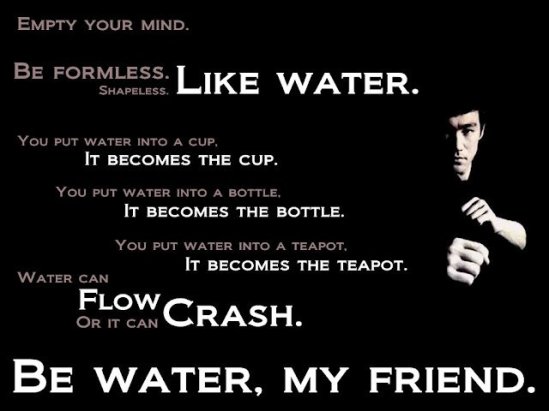
“Be Water, My Friend” – Bruce Lee

As many of us have experienced, writer’s block can be the ultimate frustration. Have I really run out of ideas to express? Excitement to share? What the heck am I actually trying to write about?

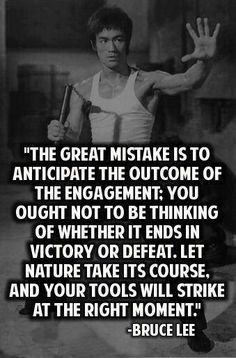
The more I focused on my block, the more aimlessly my mind wandered attempting to find some spark of inspiration. Until, hallelujah Bruce Lee! Still wandering but this time on YouTube, I came across this video of the incomparable martial arts genius sharing his philosophical thoughts on life, love and growth.


I fell in love with Bruce Lee in 1974 after experiencing his unfathomable skill in the classic Enter the Dragon (1973) starring Bruce Lee, John Saxon and Jim Kelly. Lee was also one of the film’s writers. This was Bruce Lee’s final film appearance before his death from cerebral edema (swelling of the brain) at the age of 32 on July 20, 1973. The movie was released six days later. Although he had passed before I’d discovered him, and there’d be no future projects to come, I could still immerse myself in his work and cherish his memory.

He epitomized badass with his fine, muscle ripped bod and his “put my foot in your behind” attitude. Considered one of the greatest martial arts films of all-time, in 2004 Enter the Dragon was deemed “culturally significant” in the United States and selected for preservation in the National Film Registry of the Library of Congress.
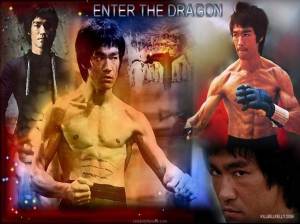
 

ENTER-THE-DRAGON-bruce-lee-

Enter the Dragon – July 26, 1973


Born Lee Jun-fan (November 27, 1940 – July 20, 1973) Bruce Lee was a Hong Kong American martial artist, actor, teacher, philosopher, and filmmaker who is widely regarded as the most influential martial artist of all-time; founder of Jeet Kune Do (The Way of the Intercepting Fist). A cultural icon of the 20th century, he’s credited with changing the way Asians are perceived in American films.

In March 1961 Lee enrolled at the University of Washington where he studied drama, philosophy, and psychology. There he met his future wife Linda Emery. They had two children,  Brandon Lee (1965–93) and Shannon Lee (born 1969). Brandon followed in his father’s footsteps as a martial arts actor. It was crushing to learn that he was accidentally killed in a firearms accident on the set of his fifth film, The Crow (1993). The movie was completed and released in 1994 using a stunt double and effects.
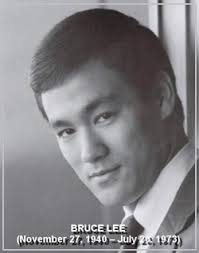
Bruce  Lee


Enter the Dragon made Bruce Lee an international star and cemented his legacy as an innovator in both martial arts and the martial arts film genre. This scene showcases his agility, strength and quiet contemplation.


He didn’t subscribe to the dogma of fighting styles but instead believed the moves should be fluid, not set positions. Those ideas were met with resistance from the sport but soon became respected after Lee proved his approach, not with words but with his emphasis on “practicality, flexibility, speed, and efficiency”; resulting in moves which had never been seen at that time.

Watch him here in all his glory, from his feature films – The Big Boss (1971), Fist of Fury (1972), Way of the Dragon (1972), directed and written by Lee, Warner Brothers’ Enter the Dragon (1973) and his last – Game of Death (1973).


Bruce Lee was truly ahead of his time and a soul taken from us too soon.

Thanks, Bruce for making myself and the world marvel and smile. Next time I’m faced with writer’s block I’ll think back on your philosophy and remember your words.


R.I.P “Live Long and Prosper”

Leonard nimoy

Leonard Nimoy (March 26, 1931 – February 27, 2015)


Leonard Nimoy, best known for playing the character Spock in the Star Trek television shows and films, died at 83.

Feeling the loss from today’s news of the passing of Leonard Nimoy – forever Mr. Spock.

I am from that generation, the Baby Boomers and yes, James T. Kirk (William Shatner) is my Captain, Uhura (Nichelle Nichols), Bones (DeForest Kelley), Scotty (James Doohan), Chekov (Walter Koenig ) and Sulu (George Takei ) the crew on the Starship Enterprise.

Gene Roddenberry had a vision of a time and space where all races, nationalities and creeds would work together with a common purpose. “…to explore strange new worlds, to seek out new life and new civilizations, to boldly go where no man has gone before.” He set precedence with an African-American woman, and Asian not only a part of the crew, but officers on a Starship.  Roddenberry also tackled issues of class warfare, economics, racism, religion, human rights, sexism, feminism, and the role of technology.

Gene Roddenberry also imagined Spock. Half human, half Vulcan. Although Spock embraces his Vulcan, void of emotion logical side, he at times also has to deal with his less logical, emotional, human side. These are some of his best episodes. My favorite is “Amok Time.” Spock goes straight up “anger man” slamming dishes, changing ship’s course and going into blind “kill mode” against Kirk in the “koon-ut-kal-if-fee” fight. Awesome!

I saw an interview with Leonard Nimoy talking about his stint as The Great Paris on “Mission Impossible” and how that experience made him appreciate the complexity of Mr. Spock. As Paris, his character didn’t have those layers. As Spock, he had to balance keeping that stoic face and rational demeanor with storylines that required his ability to convey love, compassion and occasionally frustration in what I like to call his “Menage a trois” relationship with Kirk and Bones. A much more complicated approach to storytelling than the usual TV fare of 1966.

Thankfully we have the Star Trek series, the movies and his body of work to continue to revisit and enjoy. But the fact still remains, we’ll miss you Spock.

R.I.P –  You’ll forever “Live Long and Prosper” in our hearts.


Happy Anniversary Thank You!

It’s officially the 1 Year Anniversary of iheartfilm and my first post!


My intent is to share my love of film with fellow aficionados and showcase movies that impressed and made me laugh, made me cry and contributed to my love of cinema.


Over the course of the year, I’ve had tremendous support and encouragement from fellow bloggers, friends and visitors from around the world.


thank you languages 2


Thanks so much for all the love and I hope you continue to come back and share a like or comment. If this is your first visit, hopefully, you’ll decide to follow. This is just the beginning as I continue to grow as a blogger.


iheartfilm is a personal passion I enjoy and have enjoyed sharing with you!

From myself and the spirit of Agnes

Agnes thank you

Thank You!


African-American Oscar History Pt. 2

Last year’s 86th Academy Awards marked a historic night for black filmmakers at the Oscars. It’s the first time a black film – 12 Years a Slave — won best picture; the Academy’s most prestigious award. John Ridley won for Best Adapted Screenplay and Steve McQueen won as Producer.

But, as the 1959 Grammy Award winning vocalist Dinah Washington sang: “What a Difference a Day Makes.”

I’m recognizing and celebrating the accomplishments of Black Artists in Hollywood; especially considering the lack of African-American nominations for this year’s 87th Academy Awards.


 Oscars 2015: No black actors or female screenwriters, directors or cinematographers were nominated.


History

The 12th Academy Awards is historic for being the 1st Oscar nomination for an African-American and 1st Oscar win. Hattie McDaniel accepted her award in 1940 as Best Actress in a Supporting Role for “Gone With the Wind” as the character – Mammy.

hattie

Hattie McDaniel


However, if David O. Selznick (Producer, film studio executive) hadn’t pulled a favor, she might not have been able to deliver her acceptance speech at all. At the time, the Cocoanut Grove nightclub (located in the Ambassador Hotel) was segregated so Ms. McDaniel wasn’t even allowed entrance. Selznick pulled another favor so she could be seated at a table at the very back of the room with her agent. To add insult to injury, Hattie McDaniel wasn’t allowed to speak her own words, the acceptance speech was written by the studio.

Despite all the prejudice, Hattie McDaniel – who at the time was one of the biggest African-American actors in the world -promoted herself for the nomination. After the release of the movie, she placed a stack of outstanding film reviews on O. Selznick’s desk and the rest is history.


First Best Actress Oscar 

In 2002, Halle Berry became the 1st (and to date) only African-American to win the Academy Award for Best Actress. The Oscar was for the film “Monsters Ball”.


Halle Berry 2002 Best Actress

Halle Berry 2002 Best Actress

Dorothy Dandridge – (November 9, 1922 – September 8, 1965) is the 1st African-American actress to be nominated for a Best Actress Oscar in 1954 for her performance in “Carmen Jones.” She has been recognized with a star on the Hollywood Walk of Fame and was married to dancer Harold Nicholas. Check out my previous post on the Nicholas Brothers here.

Dorothy_Dandridge

Dorothy Dandridge

Halle Berry portrayed her life in the HBO biographical film “Introducing Dorothy Dandridge” in 1999.

Halle_Berry Introducing Dorothy Dandridge


Watching Halle’s acceptance speech again while researching this post, I burst into tears reliving her emotion as she tries to process the win and the historical significance of this moment. Looking forward to the acceptance speech of our second Best Actress Oscar Winner.


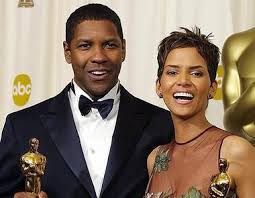
Halle and Denzel Oscars

Halle and Denzel Oscars

This win also marked the 1st time two African-American performers won in leading role Oscars in the same year (Denzel Washington, Training Day).


oscars 3

Best Supporting Actress

1st to Win: Hattie McDaniel “Gone With the Wind” 1940

Hattie McDaniel 1940 Oscars

Although known as an actress she was a professional singer-songwriter, comedian, stage actress, radio performer, and television star; she was the first black woman to sing on the radio in the U.S. and has two stars on the Hollywood Walk of Fame. In 1975, she was inducted into the Black Filmmakers Hall of Fame and in 2006 became the first black Oscar winner honored with a US postage stamp.

  • Hattie McDaniel was also the oldest African-American actress to win an Academy Award (age 44).

  Finally – 50 Years later the 2nd Winner!

Winner: Supporting Actress – Whoopi Goldberg “Ghost” 1990

  • First African-American actress to receive two acting nominations overall.

  • Second African-American actress to win Best Supporting Actress.

Whoopi oscar

Whoopi Goldberg 1990 Best Supporting Actress

 Winner: Supporting Actress – Jennifer Hudson “Dreamgirls” 2006

jennifer hudson

Jennifer Hudson 2006 Oscar

  •  First African-American actor (male or female) to win an Academy Award for a debut film performance.

  • Youngest African-American actress to win or be nominated for Best Supporting Actress.

  • Youngest African-American actor (male or female) to win an Academy Award (age 25).

  • First African-American actress to win an Academy Award for a musical film.

Oscar

Oldest African-American actress to be nominated for an Academy Award (age 83) – Ruby Dee “American Gangster” 2007.

Ruby Dee

Ruby Dee

For her life and career see my previous post here: Ruby Dee


oscar red

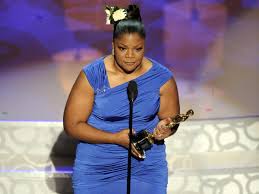
Winner: Supporting Actress – Mo’Nique “Precious” 2009

Mo'Nique

Mo’Nique

  • Second film to feature African-American nominees for both Best Actress and Best Supporting Actress.

Octavia Spencer

Octavia Spencer

Winner: Supporting Actress – Octavia Spencer  “The Help” 2011

  • Third film to feature African-American nominees for both Best Actress and Supporting Actress.

Lupita oscar 1

Winner: Supporting Actress – Lupita Nyong’o  “12 Years a Slave” 2013

  • First black African (Kenyan) actress to be nominated.

  • First black African to win in any category.

  • Second black actor to win for a debut performance.


  Congratulations and Cheers to these exceptional artists!


champagne cheers


We’ve come a long way, but we’ve still got a long way to go.


African-American Oscar History Pt. 1

In honor of Black History Month

Celebrating the accomplishments of Black Artists in Hollywood; especially in light of the lack of African-American nominations for this year’s 87th Academy Awards.


oscars logo


Oscars 2015: No black actors or female screenwriters, directors or cinematographers were nominated.

oscar stats

Our First Best Actor

In 1958, Sidney Poiter became the first black actor to be nominated for an Academy Award in the Best Actor category for “The Defiant Ones.” In 1963, he went on to make history and become the first to win the Oscar for Best Actor in “Lillies of the Field.” I saw the film as a kid and although it was quite popular never expected him to take home the statue.

However, Hollywood did love him. I believe they saw him as non-threatening due to his mild-mannered characterizations. He was quoted as saying he had concerns that he would be seen as a token and never given any substantial roles. Well, his Detective Virgil Tibbs in the film “In the Heat of the Night” sure put that fear to bed. Slapping a white man in racist Mississippi in 1967 was a bold and hand clapping moment in the theater. Poitier was nominated for a Golden Globe for Best Actor and the film won five Academy Awards, including the 1967 award for Best Picture.


Sidney Poiter

Sidney Poiter 1963 Oscar for Best Actor


Oscar Accomplishments:

  • First African-American nominated for Best Actor award

  • First black male to win an Oscar

  • First black actor to win Best Actor

  • First to receive two acting nominations (Best Actor)

  • Youngest black actor to win Best Actor (37)


It took 36 years for another win in the Best Actor category, but finally Denzel Washington was recognized by the Academy for his portrayal of Alonso Harris in “Training Day” making him the second black actor to win the Oscar.

1999 also marked the first time two African-American performers won leading role Oscars in the same year. (Halle Berry, “Monster’s Ball“)


Denzel and Halle

Denzel Washington and Halle Berry “Best Actors.”

Denzel Washington has the most nominations for an African-American Actor: Best Actor (4 nominations) and Best Supporting Actor (2 nominations).


Jamie Foxx 2004 Oscar Best Actor

Jamie Foxx 2004 Oscar Best Actor

Jamie Foxx was awarded the 2004 Oscar for Best Actor as Ray Charles in the biopic “Ray”.  That same year, he was nominated for the Academy Award for Best Supporting Actor for his role in the action film Collateral making him the first African-American actor to receive two acting nominations in the same year.


forest whitaker oscar

Forest Whitaker Best Actor 2006

Forest Whitaker is the fourth and most recent African-American male to win the Academy Award for Best Actor for his performance as the Ugandan dictator Idi Amin in the 2006 film “The Last King of Scotland.”


oscars 3

Best Supporting Actor

First Nominated:  Rupert Crosse“The Reivers” 1969

First to Win: Louis Gossett, Jr – “An Officer and a Gentleman” 1982

Winner: Supporting Actor – Denzel Washington “Glory” 1989

Youngest African-American male actor to win an Academy Award (age 29) – Cuba Gooding, Jr. “Jerry Maguire” 1996

Oldest African-American actor to win an Academy Award (age 67) – Morgan Freeman “Million Dollar Baby” 2004


 Congratulations and Cheers to these exceptional artists!

Part two in this series will focus on the achievements of African-American Women in film.


Macabre the 13th

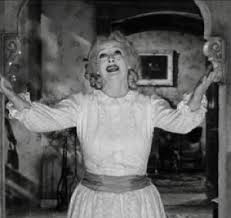
I really don’t need an excuse to watch the creepy, macabre “What Ever Happened to Baby Jane?” (1962) but on Friday the 13th it just seems apropos.

WHAT-EVER-HAPPENED-TO-BABY-JANE


This film showcases not only the destructive rival between two sisters Baby Jane Hudson (Bette Davis) and Blanche Hudson (Joan Crawford) but also the real life, career-long rival between the actresses. That’s at the center of what makes this such a fabulous movie. I can just see Bette’s wheels turning as she relishes her slow, ongoing torture of Joan, her on-screen nemesis.


What ever jane and blanche


Directed by Robert Aldrich from the novel by Henry Farrell, the story revolves around former child star – Baby Jane Hudson who can’t make the successful transition to film unlike her sister Blanche who spent her childhood in Baby Jane’s shadow. But, because of a car accident, Blanche is left crippled and Jane is begrudgingly forced to take care of her. Emphasis on the begrudging! – The result? – 133 minutes of pure on the edge of your seat, I can’t believe she just did that, sadomasochist Baby Jane Hudson.

What ever i've written a letter

Baby Jane – “I’ve Written a Letter to Daddy”


What ever blanche bird

Blanche Hudson


For full disclosure, I’ve always loved Bette Davis! Check out my previous post, If it’s Sunday, break out the hankies! Bette always sought out challenging roles and wasn’t afraid to “go there.” As a matter of fact, in her first acclaimed film, “Of Human Bondage” she both emotionally and physically portrayed the grotesque nature of her character. She made her appearance “haggish” wanting to express the true physical appearance of someone with tuberculosis.

The success of “What Ever Happened to Baby Jane” re-energized both actresses careers in the 60’s as the “psycho-biddy” subgenre of horror/thriller films featuring psychotic older women came into vogue. Two other movies that followed the trend were Aldrich’s Hush… Hush, Sweet Charlotte and What Ever Happened to Aunt Alice?.

“What Ever Happened to Baby Jane?” was nominated for 5 Academy Awards, winning one for Best Costume Design.

So, on this Friday the 13th if you’re looking for a treat – I recommended spending a little time with the Hudson sisters and find out – “What Ever Happened to Baby Jane?”


What’s Love Got to Do with It?

Angela Bassett’s performance of Tina Turner’s iconic “Proud Mary” in the biopic, “What’s Love Got to Do With It?”(1993) is a tour de force tribute to my favorite “girls rock” musical numbers from films with dynamic female leads.

James Brown may have been the hardest working man in show business, but he wasn’t being physically abused every day by his spouse. Unlike Tina Turner, the hardest working woman in show business who simultaneously raised a family while delivering show stopping, gut wrenching vocals that, at that time, girls weren’t suppose to be able to deliver.


What's Love Got to Do with it poster


Quoting my favorite critic – the late Roger Ebert’s review from 1993 – “…ranks as one of the most harrowing, uncompromising showbiz biographies I’ve ever seen.”

Bassett kills it with her living, breathing and – Whoa, check out those guns – transformation paying homage to the Queen of Rock – Tina Turner!

This is Angela Bassett’s hard work paying off; seamlessly blending Tina’s vocals with a powerful performance of her hard rockin’ hit – “Proud Mary”.

Tina Turner’s (Anna Mae Bullocklife is a testament to her resilience. I’ve been fortunate enough to see her live and believe me she is truly a force of energy “leaving it all on the stage” with every performance.  “Proud Mary” (written in 1969 by singer/songwriter John Fogerty and recorded by his band Credence Clearwater Revival) is one of her most recognizable signature songs.

Tina’s interpretation is worlds away from the original southern rock version. With a completely different arrangement, it opens with Tina teasing that sometimes the audience might like to hear them do a song “nice and easy” but “we never, ever do nothing nice and easy” we always do it “nice and rough”. She further sets up the number by enticing the crowd with they’re going to do the first part “nice” but they’re going to do the finish “rough”.

The song reached #4 on the pop charts on March 27, 1971 and won the Grammy Award for Best R&B Vocal Performance by a Group in 1972.


Tina

Tina lived a life of poverty growing up in Nutbush, TN in the 1940’s, but found solace in the spirit and freeing experience of music and singing in the choir of her Southern Baptist church. She began her musical career in St. Louis in the 1950’s singing in Ike Turner’s Kings of Rhythm band.

Ike Turner (her husband) ended up trying to destroy not only her passion but her life. With hate in his heart and jealousy of her talent, he systematically physically and mentally abused her for years. However, through her strength of will and perseverance, she fought back, sued for divorce, and walked out the courtroom in 1978 (in spite of what Ike tried to prevent) with her dignity and above all – Her Name!

I love Tina Turner and smile because this routine has been performed more than once in the living rooms, basements, wherever by a generation of “rock girls” (myself included). Tearing it up, whipping our hair back and forth and just knowing we are too doggone hot!

This performance of “Proud Mary”(1971) showcases the dynamic energy and incredible legs of the one, the only, the incomparable – Miss Tina Turner!


Spark the Fire – What it Means to be Young!

fireglass newyears eve

This new year I’m starting out with a series of tributes to my favorite “girls rock” musical numbers from films with dynamic female leads.

This post is my salute to Diane Lane (Ellen Aim) and to one of the great bass thumping, energy boosting, heart-stirring numbers I love from the 80’s. (Giving credit where credit is due, those incredible vocals were performed by Holly Sherwood; another unsung, backup hero.)


 Streets of Fire 1984


My emotional connection to this song has not diminished. It’s still as powerful and meaningful to me as when I first embraced it over 20 years ago. Penning this post was difficult but also cathartic. To write this piece from truth, I had to acknowledge my own struggle to reconcile the ideal with the real. My vision of myself as the rebel, the dreamer and the one determined to not look back with regret.

“Tonight is What it Means to be Young” amplifies those feelings of that perfect love, staying true to one’s self, and the reality of having to let go.

This driving beat is palpable. It’s a CPR pumping of blood sent to both quicken and relieve the relentless pain Ellen Aim is feeling after losing the love of her life; the embodiment of her dream of an “angel.”

Rockin’ that hot red dress, she channels acceptance and remembrance of another time and another place of youth and the promise of love.


Streets of Fire Diane


I’ve got a dream when the darkness is over
We’ll be lyin’ in the rays of the sun
But it’s only a dream and tonight is for real
You’ll never know what it means
But you’ll know how it feels

It’s gonna be over
Before you know it’s begun
It’s all we really got tonight
Tonight is what it means to be young


Souls of 2014

white roses

It’s hard for me to believe we’re at the end of another year. Looking back at 2014 and the artistic souls we’ve lost, I re-live joy, sorrow, wonderment, and childhood. Lost a little of my soul in 2014 but gained a new appreciation for what those souls gave to my life and the lives of others.

This retrospect is a beautiful reminder of the dedication, love and craftsmanship that goes into the creation of a film and the experiences we share sitting in a darkened theater. I love the movies (even built a website to celebrate) and the honesty of great actors.

Thank you so much for sharing your gift.


Souls of 2014 shared here at iheartfilmblog.com

Robin Williams

Ruby Dee

Maya Angelou

Lauren Bacall

white roses star yes

Don’t Be So Mean Grinch!

“Every Who down in Whoville liked Christmas a lot,
But the Grinch, who lived just north of Whoville, did not.
The Grinch hated Christmas — the whole Christmas season.
Oh, please don’t ask why, no one quite knows the reason.
It could be, perhaps, that his shoes were too tight.
It could be his head wasn’t screwed on just right.
But I think that the most likely reason of all
May have been that his heart was two sizes too small.”


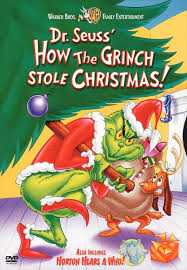
How the Grinch Stole Christmas


Theodor Seuss Geisel aka Dr. Seuss is one of the most significant authors in American literature. His classic book, “How the Grinch Stole Christmas” has been a lifelong favorite. Known as a children’s author, Dr. Seuss’ cadence and rhyming style (anapestic tetrameter) is both renown and his signature. I believe his gift lies in his ability to convey his philosophy of life in a playful, endearing way. Most of us grew up reading Dr. Seuss and escaping into the wonderful worlds he shared. His other bestselling books bring back precious memories: Green Eggs and Ham, The Cat in the Hat, The Lorax, One Fish Two Fish Red Fish Blue Fish, and Horton Hears a Who!


How the Grinch Dr. Seuss


On December 18, 1966 “How the Grinch Stole Christmas” premiered as a television special and has continued to entertain and touch my life and the lives of countless children both young and old. It relates the tale of the Christmas plot of the mean ole Mr. Grinch to steal the joy of celebration from the residents of Whoville; it’s Seuss’ spiritual lesson for the true meaning of Christmas.


How_the_grinch_stole_christmas_1966_print_ad_premiere

Print ad of Dr. Seuss’ How the Grinch Stole Christmas! 1966

Narrated by the legendary Boris Karloff – also the voice of The Grinch – we are introduced to the world of Whoville and that nasty wasty Grinch.


How the Grinch Boris

Boris Karloff and The Grinch

You’re a foul one, Mr. Grinch.
You’re a nasty, wasty skunk.
Your heart is full of unwashed socks, your soul is full of gunk.
Mr. Grinch!
[spoken] The three words that best describe you are as follows and I quote:
[sung] “Stink! Stank! Stunk!”


In this version of the story, we don’t really know why The Grinch hates Christmas and the residents of Whoville. Just that his heart is 2 sizes too small. However in the Jim Carrey movie version of Dr. Seuss “How the Grinch Stole Christmas,”we see the flashback of The Grinch as a child and how because he looks different: green and hairy as an eight-year-old he is taunted and teased by his classmates.

For his crush, he makes a Christmas present and tries to shave his face but ends up with toilet paper stuck all over. Everyone laughs at him – including his crush – so he storms out the room climbing up to his mountain exile. Not seen for years, he becomes an urban legend. Flashing forward to The Grinch and his now adult classmates it isn’t hard to understand why Whoville isn’t his favorite town and therefore the Whos love of Christmas has become a thorn in his side.


How_the_Grinch_Stole_Christmas_film_poster

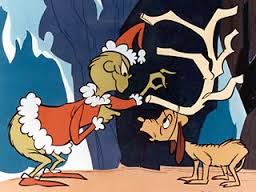
So, The Grinch gets this inspired idea after seeing his dog Max get snow on his face that sort of looks like a beard. The plan becomes to dress up as Santa, sneak into Whoville and rip off all the houses of presents, toys and even a piece of cheese from a mouse. So low down. Hence “stink, stank, stunk!”


How the Grinch Santa outfit

Poor Max wasn’t really down with the plan but was forced to play his part as a reindeer.


Enter my favorite resident of Whoville, Cindy Lou Who. I’ve loved her all my life. Her innocence and open heart is a testament to – as John Lennon once wrote: “All you need is love.”


Ah, but not even the innocence of Cindy Lou could discourage The Grinch from following thru with his wicked plan.


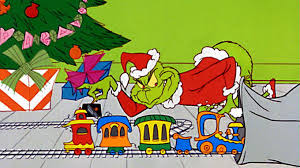
How the Grinch stealing presents

However, The Grinch would come to realize that Whoville is no ordinary town. Even without presents, toys or roast beast, Christmas would still come.


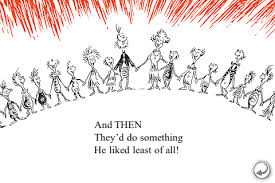
How the Grinch Who singing


This timeless message of appreciating what you have in friends and family is a gift often lost in this world of envy and greed. Matthew 16:26 “For what will it profit a man if he gains the whole world and forfeits his soul?” Let’s remember the true meaning of Christmas not only during the holidays but every day of the year.


Merry Christmas!