Dr. Strangelove or Lovin’ da Bomb! – Ugh😈

TCM Big Screen Classics Presents

Fathom Events, Turner Classic Movies, and Sony Pictures Entertainment present on the big screen the Stanley Kubrick classic:

Dr. Strangelove or: How I Learned to Stop Worrying and Love the Bomb (1964)

Bursting into cinemas nationwide for a special two-day event Sunday, September 18 and Wednesday, September 21.

With exclusive commentary from Turner Classic Movies host Ben Mankiewicz that helps decipher the many layers of satire in Stanley Kubrick’s masterpiece.


Peter Sellers is at his over the top best with his performance as nutcase Dr. Strangelove.(and a few other characters) A wheelchair-bound nuclear scientist with bizarre ideas about man’s future. The entire war room scene totally represents the lunacy of nuclear war.

Image result for dr strangelove cast

Columbia Pictures agreed to finance the film if Peter Sellers played at least four major roles. The condition stemmed from the studio’s opinion that much of the success of Kubrick’s previous film Lolita (1962) was based on Sellers’s performance in which his single character assumes a number of identities.
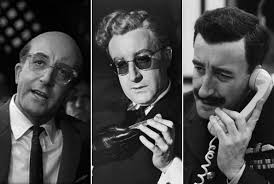
Peter Sellers as – President Merkin Muffley, Dr. Strangelove, and Captain Lionel Mandrake

Sellers is said to have improvised much of his dialogue, with Kubrick incorporating the ad-libs into the written screenplay so the improvised lines became part of the official screenplay.

Dr. Strangelove is a 1964 political satire black comedy film that satirizes the Cold War fears of a nuclear conflict between the USSR and the USA. The film was directed, produced, and co-written by Stanley Kubrick, stars Peter Sellers and George C. Scott, and features Sterling Hayden, Keenan Wynn, and Slim Pickens. The film is loosely based on Peter George‘s thriller novel Red Alert. (Wikipedia)


Awards and honors

The film was nominated for four Academy Awards and also seven BAFTA Awards, of which it won four.

Kubrick won two awards for best director, from the New York Film Critics Circle and the Italian National Syndicate of Film Journalists, and was nominated for one by the Directors Guild of America.

In 1989 the United States Library of Congress included it in the first group of films selected for preservation in the National Film Registry. It was listed as number three on AFI’s 100 Years…100 Laughs list.

Slim Pickens

Ye Ha! Slim Pickens as Aircraft commander Major T. J. “King” Kong riding the bomb down.

Check with your local theater for showtimes or click here to buy tickets online.


Favorite Actors Favorite Roles

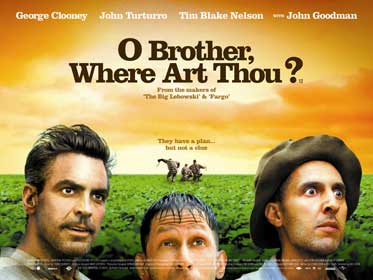
ohbrotherwhereartthoposter

I was thinking about actors who so embodied the role that you forgot the actual actor. The first that immediately came to mind was George Clooney in the Coen Brother’s Academy Award Nominated film –“Oh Brother, Where Art Thou?”

George Clooney

George Clooney

Normally my reaction to Clooney is, “wow, he’s so fine!” But, as Ulysses Everett McGill I didn’t ever think about the “fine” George Clooney but instead was mesmerized and cracking up with laughter at lines like “my hair”. Ulysses is a Dapper Dan hair pomade man. (totally obsessed with his hair)

I had no idea he was so freakin’ funny! Who knew? He usually plays fine, hot, strong characters but this time, he went all the way out the box with this incredible performance.

One of my favorite scenes is when he’s at a political benefit concert with his “band” the Soggy Bottom Boys and becomes engrossed in conversation trying to convince his ex-wife (Holly Hunter) to give him a second chance. Just when he is just about to reel her in, he hears the opening line to his (unbeknownst to him) hit song “Constant Sorrow”and without hesitation is back at the mike and crushing it. A man after my own heart. (I’m a community theater veteran:)

Produced, edited, and directed by Joel and Ethan Coen, and starring George Clooney, John Turturro, and Tim Blake Nelson, with John Goodman, Holly Hunter, and Charles Durning in supporting roles. Set in 1937 rural Mississippi during the Great Depression, the film’s story is a modern satire loosely based on Homer’s epic poem, Odyssey. The title of the film is a reference to the 1941 film Sullivan’s Travels, in which the protagonist (a director) wants to film a fictional book about the Great Depression called O Brother, Where Art Thou? (Wikipedia)

The film is brilliant and all the actor’s performances are remarkable! “Oh, Brother Where Art Thou” is a dark comedy whose themes touch on poverty, politics and racism. I give it – both thumbs way up.

OBrother


Corporate Media in America-Good Night, and Good Luck 📺

Goodnightgoodluck_poster

Media Responsibility

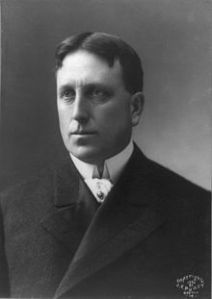
As a journalism student in college, I learned the role/responsibility of the press. I also studied the newspaper mogul, William Randolph Hurst, and yellow journalism (sensationalized stories of dubious veracity).

William Randolph Hearst

William Randolph Hearst

Civics class in high school informed me about the function of the press in the accountability of politicians and government. Well, today it seems all I’ve ever learned and understood about the role of journalists has been abdicated for full on “entertainment”.

Set in 1953, during the early days of television, “Good Night, and Good Luck” focuses on the potential of television to inform and educate the public, so that it doesn’t become, as Murrow put it, only “wires and lights in a box”.

“Good Night, and Good Luck” also portrays how CBS news broadcast journalist Edward R. Murrow (David Strathairn) and his dedicated staff — headed by his co-producer Fred Friendly (George Clooney) and reporter Joseph Wershba (Robert Downey, Jr.) defy corporate and sponsorship pressures, and discredit the tactics used by Joseph McCarthy during his crusade to root out Communist elements within the government.

Joseph McCarthy

Joseph McCarthy

This morality tale is as relevant today as it was in 2005 (if not more so). It seems that broadcast news has turned into entertainment television and lost it’s way as the checks and balances of politics and the government. The news media is supposed to be the Fourth Estate – the fourth estate is a term that positions the press (newspapers, news media) as the fourth branch of government and one that is important to a functioning democracy. In my high school Civics class, I learned that the First Amendment to the Constitution “frees” the press but also carries with it the responsibility to be the people’s watchdog.

fourth estate

In his fight against McCarthy, Murrow first defends Milo Radulovich, an American citizen (born in Detroit) of Serbian ethnicity and former reserve Air Force lieutenant who was accused of being a security risk for maintaining a “close and continuing relationship” with his father and sister, in violation of Air Force regulation 35-62 (a regulation which states that ‘A man may be regarded as a security risk if he has close and continuing associations with communists or people believed to have communist sympathies.’)

Radulovich’s case was publicized nationally by Edward Murrow on October 20, 1953, on Murrow’s program, See It Now: Murrow makes a show on McCarthy attacking him. A very public feud develops when McCarthy responds by accusing Murrow of being a communist. Murrow is accused of having been a member of the leftist union Industrial Workers of the World, which Murrow claimed was false. (Wikipedia)

George Clooney (Director), a journalism student in college, held this project close to his heart. In September 2005, Clooney explained his interest in the story to an audience at the New York Film Festival: “I thought it was a good time to raise the idea of using fear to stifle political debate.”

Clooney and producer Grant Heslov decided to use only archival footage of Joseph McCarthy in his depiction, demonstrating the furor with which McCarthy pressed his communist accusations.

The film was critically acclaimed upon release. It was named “Best Reviewed Film of 2005 in Limited Release” by Rotten Tomatoes, where it achieved a 93% positive review rating. The movie received six Academy Award nominations, including Best Picture, Director (Clooney), and Actor (Strathairn).

goodnightreviews

The late Roger Ebert, in his Chicago Sun-Times review, contends that “the movie is not really about the abuses of McCarthy, but about the process by which Murrow and his team eventually brought about his downfall (some would say his self-destruction). It is like a morality play, from which we learn how journalists should behave. It shows Murrow as fearless, but not flawless.”

So, the next time you’re watching the news on tv or reading your favorite print medium, ask yourself, is corporate media looking out for the people or profits for themselves.


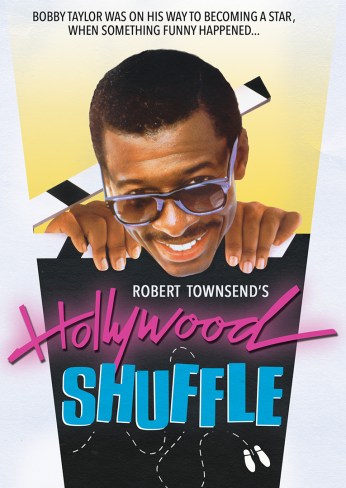
Hollywood Shuffle

Hollywood Shuffle

(1987)

In honor of Black History Month, I’ll be featuring films either starring or representing African American themes.

My first film for the month is “Hollywood Shuffle” (1987) directed by and starring Robert Townsend. More than 25 years ago, this small, low-budget movie caught the fascination of movie viewers across the country. And it just happens to be one of my favorite films.

The story revolves around aspiring actor Bobby Taylor (Robert Townsend) trying to break into Hollywood. His troubles lie not with his talent, but the stereotypical roles that he’s asked to play. “Hollywood Shuffle” takes a satiric look at African American actors in Hollywood.

Accepting the lead role in a typical blaxploitation movie, Bobby dreams about what it would be like if African Americans were respected as legitimate actors in roles from Sam Spade to Shakespeare to superheroes. He just has to convince Hollywood that gangstas, slaves and “Eddie Murphy-types” aren’t the sum of his talents.

With his little brother looking up to him and his grandmother proclaiming “there’s work at the post office”, Bobby faces the dilemma of, art or dignity.

For me, I have to go along with grandma, “there’s work at the post office”.

We’ve come a long way in 29 years but as I always say: “We’ve come a long way but we’ve still got a long way to go”!

In Robert Townsend’s own words:

https://soundcloud.com/taketwoshow/robert-townsend-on-paying-for-hollywood-shuffle-with-a-credit-card

https://soundcloud.com/taketwoshow/robert-townsend-on-auditioning-for-terrible-roles


Pioneering Women Filmmakers – Lois Weber

The Early Visionaries of American Film: A Series – Part 2

star wars galaxy

A long time ago in a galaxy far, far away…Women were the driving force behind Hollywood and the movies. This is the second part of a series paying homage to the women who broke the glass ceiling and wrote and directed the films that gave birth to the “Golden Age” of cinema and the motion picture industry.  Unfortunately, when the men realized the gold mine films were becoming, the women faded away thanks to the Hollywood studio system. Well, as the saying goes, “that’s the way they do you.”

Lois Weber (June 13, 1879 – November 13, 1939)

Florence Lois Weber was an American silent film actress, screenwriter, producer, and director, who is considered the most important female director the American film industry has known and is one of the most important and prolific film directors in the era of silent films. Along with D.W. Griffith, Lois Weber was the American cinema’s first genuine auteur, “a filmmaker whose personal influence and artistic control over a movie are so great that the filmmaker is regarded as the author of the movie”. In that spirit, Lois Weber utilized the motion picture to put across her own ideas and philosophies.

Weber brought to the screen her concerns for humanity and social justice in an estimated 200 to 400 films, of which as few as twenty have been preserved, and she has been credited by IMDb with directing 135 films, writing 114, and acting in 100. Weber was also one of the first directors to come to the attention of the censors in Hollywood’s early years.

During the war years, Weber achieved tremendous success by combining commercially successful scripts with a rare vision of cinema as a moral tool. At her zenith, few men, before or since, have retained such absolute control over the films they have directed – and certainly no women directors have achieved the powerful status once held by Lois Weber. By 1920, Weber was considered the premier woman director of the screen and author and producer of the biggest money-making features in the history of the film business.

Among Weber’s notable films are the controversial “Hypocrites”, which featured the first full-frontal female nude scene in 1915; the 1916 film “Where Are My Children?”, which discussed abortion and birth control, and was added to the National Film Registry in 1993; and what is often considered her masterpiece, “The Blot” in 1921.

In 1913, Weber and husband Smalley collaborated in directing a ten-minute thriller, “Suspense”, based on the play Au Telephone by André de Lorde, which had been filmed in 1908 as “Heard over the ‘Phone” by Edwin S. Porter. Adapted by Weber, it used multiple images and mirror shots to tell the story of a woman (Weber) threatened by a burglar (Douglas Gerrard). Weber has been credited with pioneering the use of the split-screen technique to show simultaneous action in this film, According to film historian Tom Gunning, “No film made before WWI shows a stronger command of film style than “Suspense” which outdoes even Griffith for emotionally involved filmmaking”. “Suspense” was released on July 6, 1913.

loisweberSuspense_(1913_film)

Suspense” – Split Screen

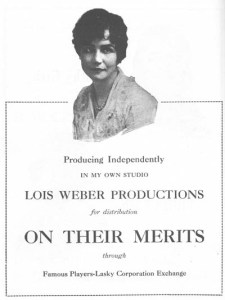
In 1913 Weber was one of the first directors to experiment with sound, making the first sound films in the United States, and was also the first American woman to direct a full-length feature film when she and husband Phillips Smalley directed “The Merchant of Venice” in 1914, and in 1917 the first woman director to own her own film studio.

Lois_Weber_Productions

In Part 1 of this series we talked about the accomplishments of director Frances Marion. Lois Weber discovered and inspired director and screenwriter Frances Marion.

For her contribution to the motion picture industry, on February 8, 1960, Lois Weber was awarded a star on the Hollywood Walk of Fame.

In Part 3 of this series, we’ll discuss contemporary female filmmakers and their viewpoint on Hollywood and the world in which we live.

Oscar Michaeaux – The Czar of Black Hollywood 🎥

oscarmicheaux oscarmicheauxdirector

Oscar Devereaux Micheaux

January 2, 1884 – March 25, 1951

https://youtu.be/ao5V-XhXS-c

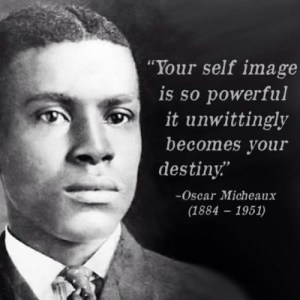
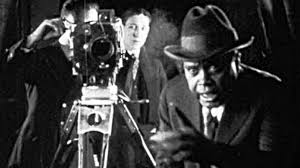
Probably not well known but a very important artist and groundbreaker in the early days of cinema, Oscar Micheaux was definitely a man ahead of his time. He was the most successful African-American filmmaker of the first half of the twentieth century and the most prominent producer of race films. He produced both silent films and “talkies” as a film director and independent producer of more than 44 films.

Micheaux’s movies were a challenge to racial segregation and an alternative outlet for black moviegoers. He is thought to have written, produced and directed more than 40 films from 1919 to 1948.

In response to D.W. Griffith’s outrageous and racist depiction of African-Americans in his landmark film“The Birth of a Nation” (1915) Micheaux produced “Within Our Gates” (1920). It is considered an important expression of African-American life in the years immediately following World War I when violent racist incidents occurred throughout the United States, but most frequently in the South. Produced, written and directed by Micheaux, it is his second and the oldest known surviving film made by an African-American director.

Lost for decades, a single print of the film, entitled La Negra (The Black Woman), was discovered in Spain in the 1970s. In 1992, “Within Our Gates” was selected by the Library of Congress for preservation in the United States National Film Registry as being “culturally, historically, and aesthetically significant”.

On his style:

Micheaux said,

“My results…might have been narrow at times, due perhaps to certain limited situations, which I endeavored to portray, but in those limited situations, the truth was the predominate characteristic. It is only by presenting those portions of the race portrayed in my pictures, in the light and background of their true state, that we can raise our people to greater heights. I am too imbued with the spirit of Booker T. Washington to engraft false virtues upon ourselves, to make ourselves that which we are not.”

◊◊◊◊◊◊

Micheaux died on March 25, 1951, in Charlotte, North Carolina, of heart failure. He is buried in Great Bend Cemetery in Great Bend, Kansas, the home of his youth. His gravestone reads: “A Man Ahead of His Time”.

Selma


Perserverance

January 15, 1929 – April 4, 1968

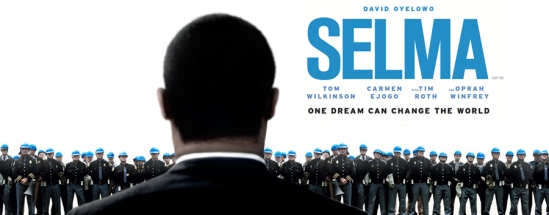
Selma is a 2014 American historical drama film directed by Ava DuVernay and written by Paul Webb. It is based on the 1965 Selma to Montgomery voting rights marches led by James BevelHosea Williams, Martin Luther King, Jr., and John Lewis. The film stars actors David Oyelowo as King, Tom Wilkinson as President Lyndon B. Johnson, Tim Roth as George Wallace, Carmen Ejogoas Coretta Scott King, and rapper and actor Common as Bevel.

Selma

At first, I was skeptical on how this history would be portrayed. I didn’t want a melodrama about Bloody Sunday and those on the front lines of the Civil Rights Movement. But, Director, Ava DuVernay did an incredible job and for me, the film should be included as part of the historical record.

Selma was a turning point in the Civil Rights Movement. In your living room. In your face. The first march took place on March 7, 1965, organized locally by SCLC Director of Direct Action James Bevel, who was directing SCLC’s Selma Voting Rights Movement. State troopers and county posse men attacked the unarmed marchers with billy clubs and tear gas after they passed over the county line, and the event became known as Bloody Sunday. Law enforcement beat activist Amelia Boynton unconscious, and the media publicized worldwide a picture of her lying wounded on the bridge.

Selma had four Golden Globe Award nominations, including Best Motion Picture – Drama, Best Director, and Best Actor, and won for Best Original Song. It was also nominated for Best Picture and won Best Original Song at the 87th Academy Awards.

Whether you know the history or just learning, I consider the film Selma essential viewing for a pivotal moment in the Civil Rights Movement.  A Movement which we must always remember and never forget as …

The Struggle Continues.

This slideshow requires JavaScript.


Forrest Gump Gratitude 🏃

Forrest_Gump_poster

“Forrest Gump” (1994)


iheartfilm is dedicating the month of November to the lesson of Gratitude in films; the quality of being thankful.

“Run Forrest, Run!”

forrestgumprunning

Every time I think of the movie “Forrest Gump”, that’s the first quote I hear. Then, “Life’s like a box of chocolates, you never know what you’re gonna get.”


forrestgumpchocolate


Quotes galore plus Lieutenant Dan (Gary Sinise) and Bubba (Mykelti Williamson). Love this movie!

Forrest Gump’s (Tom Hanks) life is a testimony to gratitude. He understands his challenges but is not hesitant to live his life to the fullest, including telling his childhood love, Jenny (Robin Wright) how he feels about her.

He gets it. Life gives you what you get, so don’t whine, go for it and make the most of your journey. Thank God for his mother, (Sally Field), she didn’t listen to what the”experts” had to say. She did whatever she had to do to provide Forrest with the foundation that he could do anything. With his braces, he had “magic” legs. Turn every so-called obstacle into an advantage. Once again, attitude is everything!


Forrest is a true inspiration and proof that with support and love we can overcome adversity. Love and compassion make the difference.

Mama, Jenny, Bubba, and Lieutenant Dan. Forrest loved and was deeply loved by those whose lives he touched.

forrestgumpallihavetosay

What the F**k People?

I’ve been so angry since Tuesday’s midterm results it’s been hard to articulate all my feelings. Therefore, I’m using this video as my mode of expression. An oldie but definitely a goodie is this Youtube video from the 2012 election featuring Samuel L. Jackson’s “in your face” take on a bedtime story. It highlights the stark realities facing our country and the decisions we need to make about what kind of policies and society we want to advance progress.

But I’ll let Samuel L. do the talking.


We’ve reached a turning point in this country and the midterms were the 2014 version of “Wake the Fuck Up.” All of the issues that were at stake in 2012 haven’t gone away. As a matter of fact, we’ve lost ground on some basic principals we thought were resolved: voter rights, women’s reproductive rights, the safety net (our social contract that no child should go hungry and every citizen should be afforded the opportunity to achieve a better life.)

I’m a baby boomer so I grew up back in the day before the internet, cell phones, personal computers and social media like Facebook and Twitter. I remember reading newspapers, going to the library to research school work and watching in horror Alabama’s reigning racist Bull Connor ordering police squads to turn fire hoses and attack dogs on innocent children in Birmingham who were expressing their right to march and protest. But, because of their dedication to take on the fight, Connor’s hate filled rage backfired when his actions were broadcast into the living rooms of millions of Americans helping to facilitate the passage of the Civil Rights Act of 1964 and the Voting Rights Act of 1965.

Bloody_Sunday-Alabama_police_attack

Alabama police attack voting rights marchers participating in the first of the Selma to Montgomery marches in 1965

I also remember the 1967 Detroit Riots and riots across the country in protest of police brutality, unfair housing practices, unemployment and underfunded education. I also remember watching body bags arrive home from Vietnam on the six-o-clock news and the country being outraged and questioning the war and the world around us.

These memories drive my anger and make me want to scream – We just blew it people!! We didn’t wake up and we still refuse to deal with the ramifications of a political party that doesn’t care about the poor and struggling in this country. Women, if you aren’t already, you should be very, very afraid for not only yourself but your daughters and their reproductive health.

The facts are clear. The Teabag/Republican Party has already dismantled voter rights, will repeal the 1973 landmark decision Rove vs Wade which guarantees a woman’s right to privacy and choice. And, if the Republicans win the White House in 2016, have no doubt they will repeal and thereby deprive millions of Americans the right to affordable healthcare.

Bill of rights torn

In the light of this history, it’s outrageous how we’ve turned our backs on our ancestors who believed in and died for our freedoms. It’s just sad to know we don’t take their sacrifices seriously or honor their commitment. My question is:

What’s it going to take people to finally “Wake the Fuck Up?”