“Ferris Bueller’s Day Off” 30th Anniversary Event

fathomevents

turnerclassicmovieslogo

TCM Big Screen Classics
In Select Cinemas Nationwide

Take a day off with Ferris Bueller because you know “life can move pretty fast”. Celebrate the 30th Anniversary of the John Hughes cult hit with a special screening by Fathom Events in partnership with Turner Classic Movies as part of their TCM Big Screen Classics series.

“Ferris Bueller’s Day Off” (1986) will be accompanied by special commentary from TCM host Ben Mankiewicz, who will provide insight, background and more. The event also includes special interviews with the cast and director John Hughes about casting Matthew Broderick in the iconic role of Ferris Bueller.

“Ferris Bueller’s Day Off” 30th Anniversary

Sunday, May 15th & Wednesday, May 18th

Ferris

“Ferris Bueller’s Day Off” (1986)

Ferris is truly a “righteous dude”. I love his philosophy on life. It’s very simple – Live It! Treasure every moment and run like someone left the gate open.

I featured “Ferris Bueller’s Day Off” in a previous post about gratitude. I took the position that it was actually Ferris Bueller’s Day On!

Ferris is the type of person who lives in the moment and shows gratitude every day for his life and the endless adventures that it holds. He squeezes every last drop out of living, is grateful for it and is always thirsty for more!

As part of the TCM Big Screen Classics series, the film will be presented on Sunday, May 15th and Wednesday, May 18th at 2:00 p.m. and 7:00 p.m. (local time) each day. Tickets are available by clicking on the orange “Buy Tickets” button on the website.

I’ll give you a heads up about the other upcoming movies in the series so you don’t miss your chance to catch a classic film on the big screen every month in 2016!

As Ferris always says –

 Ferris-Bueller-Quotes-3

“The Addams Family” 🎬 Small Screen to Big Screen

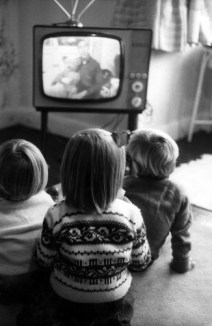
tvsetkids

When I was a kid I was a tv junkie and a walking tv guide. Granted there were only 3 channels at the time and television actually went off the air at midnight, give me a time and a day and I could not only tell you what was airing but a synopsis of the program.

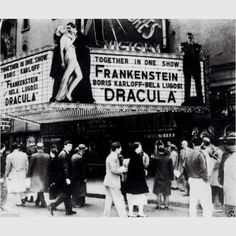
I also grew up loving movies of all types and even at a young age understood more about film than the average 7-year-old. My faves have always been Universal monster movies, black and white melodramas and musicals.

The intersection of movies and television got me thinking about what tv shows successfully made the leap to the big screen. The first two that came to mind are “The Addams Family” and the more famous and successful of the two – “Batman”.

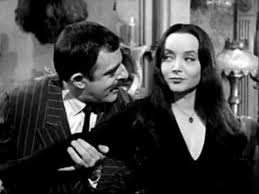
“The Addams Family” was one of my favorites from childhood. Morticia’s and Gomez’s marriage served as a blueprint for what I imaged mine would be. A husband with drawers full of money who’s totally head over heels about his wife. 😄🤑

Gomez and Morticia

Gomez and Morticia

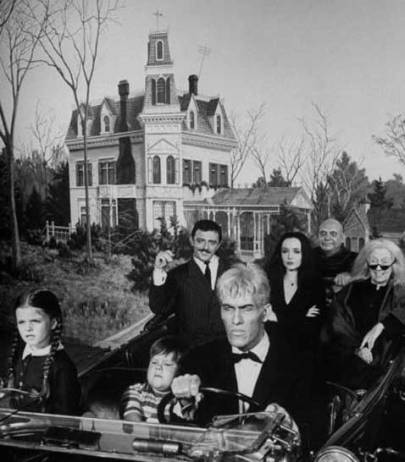
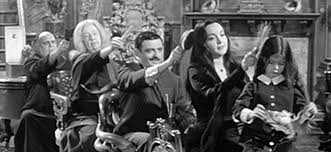
The wacky and macabre Addams family, created by American cartoonist Charles Addams, consisted of caring parents Morticia and Gomez. Children – melancholic Wednesday and not quite right Pugsley. Uncle Fester, Grandmama, a disembodied hand named Thing, Cousin It and their deadpan-faced butler, Lurch round out the bunch.

This delightfully ghoulish family takes pleasure in most of the things of which the average person would find weird. Gomez clears his throat with a sword, Uncle Fester sleeps on a bed of nails and Morticia lovingly cares for her carnivorous plants including the cooing venus flytrap, Cleopatra. Conversely, they’re a tight-knit, multi-generational family sending their children to public school, sharing candlelit picnics in the graveyard (okay that’s a little bizarre) and enjoying outings and family time together.

theaddamsfamilytogether

Uncle Fester, Grandmama, Gomez, Morticia and Wednesday

One of the reasons I was a big fan is because the show represented a break from the “ideal American family” mold that had previously dominated TV, especially since Gomez and Morticia often got very affectionate with each other whenever Morticia spoke French. (drove Gomez wild:)

The series ran from 1964-1966.

The Cast

Carolyn Jones Carolyn Jones
 Morticia Frump Addams / … (64 episodes, 1964-1966)
John Astin John Astin
 Gomez Addams (64 episodes, 1964-1966)
Ted Cassidy Ted Cassidy
 Lurch / … (64 episodes, 1964-1966)
Jackie Coogan Jackie Coogan
 Uncle Fester Frump (61 episodes, 1964-1966)
Ken Weatherwax Ken Weatherwax
 Pugsley Addams (39 episodes, 1964-1966)
Lisa Loring Lisa Loring
 Wednesday Addams (36 episodes, 1964-1966)
Marie Blake Marie Blake
 Grandmama Addams (35 episodes, 1964-1966)

The Addams Family was unique for the time and the episodes were hilarious!


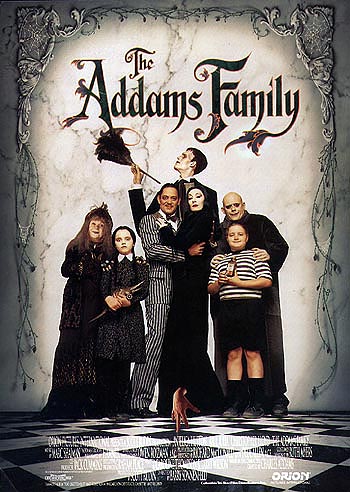
“The Addams Family” Movie (1991)

Addams_Familyfilm

“The Addams Family”movie, directed by Barry Sonnenfeld, was a fabulous takeoff and homage to the original tv series. Anjelica Houston and Raul Julia were outstanding and completely embodied the affectionate couple to a tee. Anjelica Houston won a Golden Globe award for her performance. It made me smile and didn’t disappoint in content and feeling.

The entire family characterization was perfect. The cast really did their homework because not only did they represent the essence of the original tv characters but actually embellished them even more. Outstanding tv to film leap.

Gomez loves Morticia ♥

Family Dinner

Cast

Anjelica Huston Anjelica Huston
Raul Julia Raul Julia
Christopher Lloyd Christopher Lloyd
Uncle Fester Addams / Gordon Craven
Carel Struycken Carel Struycken
Christina Ricci Christina Ricci
Jimmy Workman Jimmy Workman
Christopher Hart Christopher Hart
John Franklin John Franklin

“The Addams Family” film from 1991 was so successful it resulted 2 years later in the sequel “Addams Family Values”. Once again we were treated to the escapes of this quirky family with the challenges of a new baby, Pubert, and Debbie, the nanny hired to care for Pubert but whose true intentions include landing Uncle Fester so she can partake of the Addams family riches. After all, “What about Debbie?”

To add to the family chaos, Wednesday and Pugsley are sent to summer camp (Camp Chippewa) at the urging of Debbie. (so her motives won’t be discovered) Morticia and Gomez are horrified but comply because Debbie assures them the kids want to go. (big lie!) With the addition of the Addams kids, this summer camp will never be the same.

Wednesday as Pocahontas and Pugsley as the turkey burning down the house!

It’s so satisfying to see the brilliant big screen version of a childhood favorite tv show. If you haven’t seen either the tv series or the movies, they’re definitely worth checking out for some hilarious and macabre fun!

Next post I’ll review “Batman” to see how the big screen version holds up against the original tv series.

batmanlogo


The Incredibles

The_Incredibles

“The Incredibles” is a 2004 American computer-animated superhero comedy film written and directed by Brad Bird, produced by Pixar Animation Studios, and released by Walt Disney Pictures.

theIncredibles_Bird

Brad Bird and Edna Mode

In this lauded Pixar production, married superheroes Mr. Incredible (Craig T. Nelson) and Elastigirl (Holly Hunter) are forced to assume mundane lives as Bob and Helen Parr after all super-powered activities have been banned by the government. While Mr. Incredible loves his wife and kids, he longs to return to a life of adventure and his desire to help people draws the entire family into a battle with superhero obsessed villain –

Syndrome (Jason Lee)

theincrediblesnemisis

and his killer robot. Omnidroid

theincrediblesomnibot

I must say that baby Jack-Jack is my favorite “Super”/Parr family member.

theincrediblesjackjack

Everyone thinks he has no powers and is “normal”. (which is so not true) When I saw this scene with Jack-Jack and his babysitter Kari, I would have spit milk out of my nose (if I was drinking milk😂) Too funny!!

When “The Incredibles” was released I felt it was the best-animated film I’d seen to date. It combined humor with drama and kept the audience engaged from start to finish. There was an audible gasp in the theater during the airplane sequence with Elastigirl and the kids (Dash and Violet).

The Incredibles was written and directed solely by Brad Bird, a departure from previous Pixar productions which typically had two or three directors and as many screenwriters. In addition, it would be the company’s first film in which all characters are human.

theincrediblesplain

Brad Bird came to Pixar with the lineup of the story’s family members worked out: a mom and dad, both suffering through the dad’s midlife crisis; a shy teenage girl; a cocky ten-year-old boy; and a baby. Bird had based their powers on family archetypes.

theincrediblesEdna_mode2

After several failed attempts to cast Edna Mode, Bird took on her voice role himself. It was an extension of the Pixar custom of tapping in-house staff whose voices came across particularly well on scratch dialogue tracks.

There were 781 visual effects shots in the film and the skin of the characters gained a new level of realism from a technology to produce what is known as “subsurface scattering.”

Critic Roger Ebert of the Chicago Sun-Times awarded the film 3½ stars out of 4, writing that the film “alternates breakneck action with satire of suburban sitcom life” and is “another example of Pixar’s mastery of popular animation.”

The film won the Academy Award for Best Animated Feature, beating two DreamWorks films, Shrek 2 and Shark Tale, as well as Best Sound Editing at the 77th Academy Awards. It also received nominations for Best Original Screenplay (for writer/director Brad Bird) and Best Sound Mixing (Randy Thom, Gary Rizzo, and Doc Kane). It was Pixar’s first feature film to win multiple Oscars, followed in 2010 by Up. (Wikipedia)

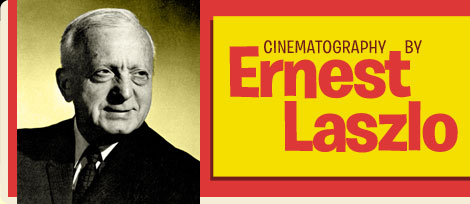
Academy Award Cinematographer – Ernest Laszlo 🎥

Ernest Laszlo

(April 23, 1898 – January 6, 1984)

Ernest Laszlo is our next artist for “The Faces Behind the Camera” theme. Best-known for his striking black-and-white cinematography, Laszlo was a painstaking technician and a true artist who rejected Hollywood glamour to bring a refreshing naturalism to his films.
Description: A cinematographer or director of photography (sometimes shortened to DP or DOP) is the chief over the camera crews working on a film, television production or other live action pieces and is responsible for achieving artistic and technical decisions related to the image. (Wikipedia)

Ernest Laszlo, A.S.C. was a Hungarian-American cinematographer for over 60 films and was known for his frequent collaborations with directors Robert Aldrich and Stanley Kramer. He was a member of the American Society of Cinematographers, and was its president from 1972 to 1974.

Laszlo emigrated to the United States and began working as a camera operator on such silent films as Wings (1927). Between 1927 and 1977, he served as cinematographer on sixty-nine films. Between 1961 and 1976 Laszlo was nominated for eight Academy Awards for Best Cinematography, and won the award in 1966 for Ship of Fools. He died in Los Angeles, California in 1984.

Some of my favorite films he shot are:

Directed by Stanley Kramer, “It’s a Mad, Mad, Mad, Mad World” (1963) was a scream! Every comic in the business appeared in this film. I’ve always said if you were a comedian during the filming and weren’t asked to participate, you just didn’t rate. 😟

There’s nothing more intriguing and hilarious than a bunch of strangers going on a treasure hunt and the lengths they will go through to retrieve the big prize. Dick Shawn stole the show with his portrayal of “Sylvester”, the not so bright hunk that’s determined to “save his mama”.

Filmed in Ultra Panavision 70 and presented in Cinerama (becoming one of the first single-camera Cinerama features produced), Mad World also had an all-star cast, with dozens of major comedy stars from all eras of cinema appearing in the film. It’s a Mad, Mad, Mad, Mad World rated #40 in the American Film Institute’s list – 100 Years…100 Laughs.

Spencer TracyEdie Adams, Milton Berle, Dick ShawnSid Caesar, Buddy Hackett, Ethel Merman, Mickey Rooney, Phil Silvers, Terry-Thomas, and Jonathan Winters.

A Little Cinematographer History

In the infancy of motion pictures, the cinematographer was usually also the director and the person physically handling the camera. Cinematography was key during the silent movie era; with no sound apart from background music and no dialogue, the films depended on lighting, acting, and set.

In 1919 Hollywood, the then-new motion picture capital of the world, one of the first (and still existing) trade societies was formed: the American Society of Cinematographers (ASC), which stood to recognize the cinematographer’s contribution to the art and science of motion picture making. (Wikipedia)

Some of Ernest Lazlo’s celebrated films

Ernest Laszlo, the trailblazing cinematographer whose body of work spans over 5 decades starting in the silent era with the first Academy Award winning film, Wings (1927) to his last film, The Domino Principle (1977). His visual style crossed all genres and he earned the accolade of being one of the best cinematographers in Hollywood.


Nora Ephron – “I’ll Have What She’s Having”

Nora Ephron

May 19, 1941 – June 26, 2012

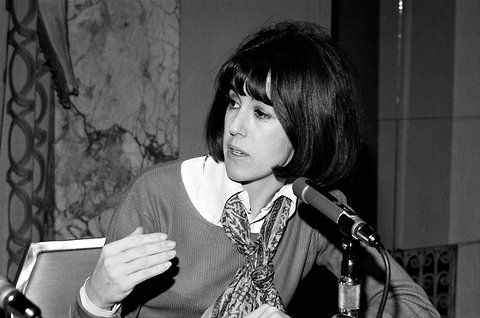
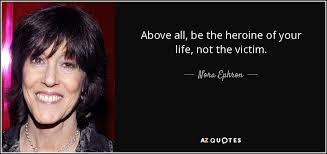
Our next artist for “The Faces Behind the Camera” theme is Nora Ephron – writer,  journalist, essayist, playwright, screenwriter, novelist, producer, and director. Probably best known for her romantic comedies – “When Harry Met Sally”, “Sleepless in Seattle” and drama “Silkwood”. She was nominated three times for the Academy Award for Best Writing: for Silkwood, When Harry Met Sally, and Sleepless in Seattle. She won a BAFTA Award for Best Original Screenplay for “When Harry Met Sally”. Ephron received a posthumous Tony Award nomination for Best Play for her play “Lucky Guy” which starred Tom Hanks.


I love “Sleepless in Seattle” because of Nora Ephron’s smart writing, directing and the entire ensemble cast. This is one of the best scenes, comparing the tear-jerker “An Affair to Remember” versus “The Dirty Dozen” – Hilarious! Don’t get me wrong, both “You’ve Got Mail” and “Silkwood” are brilliant films. Right now “Sleepless” just resonates with me.

Ephron hails from a writing family starting with her stage and screenwriter parents – Henry and Phoebe Ephron. Her parents used her infancy as the subject of their play “Three’s a Family” and based their comedy Take Her, She’s Mine (1963) starring Jimmy Stewart and Sandra Dee on letters their 22-year-old daughter wrote them from college. Their screenplays include There’s No Business Like Show Business (1954), Carousel (1956) and Desk Set (1957). Nora is also eldest of four daughters – all writers.

Miss Ephron had a distinctive voice and didn’t shy away from controversy. She took on a satire lampooning the New York Post which actually resulted in a job offer as Reporter from The Post, a gig which lasted 5 years.


Nora Ephron 1972

Nora Ephron 1972


As a writer for Esquire magazine she took on her former boss – Dorothy Schiff, owner of the Post and also Betty Friedan for starting a feud with Gloria Steinem and her alma mater Wellesley, which Friedan said had turned out “a generation of docile and unadventurous women”.

Fun Fact: Nora Ephron was married to journalist Carl Bernstein (1976-1980) of Watergate fame and she correctly guessed the identity of “Deep Throat” (the source for news articles written by her ex-husband Carl Bernstein and Bob Woodward during the Watergate scandal) before his name was revealed in 2005.

On June 26, 2012, Ephron died from pneumonia, a complication resulting from acute myeloid leukemia, a condition with which she was diagnosed in 2006. In her final book, I Remember Nothing (2010), Ephron left clues that something was wrong with her or that she was ill, particularly in a list at the end of the book citing “things I won’t miss/things I’ll miss.”


nora ephron quote


The Tribeca film festival established The Nora Ephron Prize which is a $25,000 award for a female writer or filmmaker “with a distinctive voice”. The first Nora Ephron Prize was awarded in 2013 to Meera Menon for her film Farah Goes Bang.

Her death was a shock to many as she didn’t reveal her illness. Her brilliant writing and filmmaking talents are a definite loss to the industry.


Filmography

Feature films

Year Title Credited as
Director Screenwriter Producer
1983 Silkwood Yes
1986 Heartburn Yes
1989 When Harry Met Sally… Yes Yes
Cookie Yes Yes
1990 My Blue Heaven Yes Yes
1991 The Super (uncredited)[20] Yes
1992 This Is My Life Yes Yes
1993 Sleepless in Seattle Yes Yes
1994 Mixed Nuts Yes Yes
1996 Michael Yes Yes Yes
1998 All I Wanna Do Yes
You’ve Got Mail Yes Yes Yes
2000 Hanging Up Yes Yes
Lucky Numbers Yes Yes
2005 Bewitched Yes Yes Yes
2009 Julie & Julia Yes Yes Yes


The Man with the “Touch” – Ernst Lubitsch 🎬🙌🎥

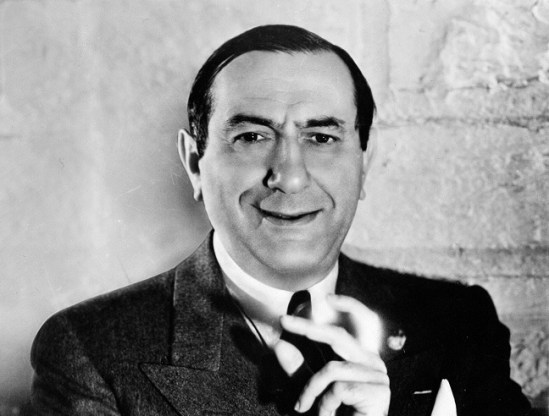
Ernst Lubitsch

Ernst Lubitsch (January 29, 1892 – November 30, 1947)

Keeping with the “Faces Behind the Camera” theme I’m spotlighting the saucy, bedroom comedies director Ernst Lubitsch and his famous “Lubitsch Touch”. This moniker was bestowed on him by other legendary filmmakers including Billy Wilder who was featured in the previous “Faces Behind the Camera” post. The phrase is used to describe the unique style and cinematic trademarks of director Ernst Lubitsch.

Hailed by the likes of Alfred Hitchcock (my other favorite director), Francois Truffaut and Orson Welles as a giant among filmmakers, Ernst Lubitsch was a preeminent figure in the history of cinema who directed some of Hollywood’s most sophisticated and enduring comedies.

Hollywood Sign

More than a great director of actors and action, he added his own personal signature – the “Lubitsch touch” – to all his work creating a sense of style and grace that was rarely duplicated on the screen.

After making a name as a director in his native Germany, Lubitsch was brought over at the behest of silent film star Mary Pickford to direct her in “Rosita” (1923). From there, he made comedies like “The Marriage Circle” (1924) and “Kiss Me Again” (1925), as well as dramas like “The Patriot” (1925). But with the advent of sound, the cigar-chomping director’s career took off with his fascination with a new genre, the musical comedy, and he began displaying his famed Lubitsch touch with classics like “Monte Carlo” (1930) and “One Hour with You” (1932).

He directed his first bona fide masterpiece, “Trouble in Paradise” (1932) later described as “truly amoral” by critic David Thomson (a British film critic and historian). The cynical comedy was popular both with critics and with audiences. But it was a project that could only have been made before the enforcement of the Production Code. After 1935, “Trouble in Paradise” was withdrawn from circulation. It was not seen again until 1968. The film was never available on videocassette and only became available on DVD in 2003.

Lubitsch later hit his stride full force with “Bluebeard’s Eighth Wife” (1938), “Ninotchka” (1939) co-written by Billy Wilder and “The Shop Around the Corner” (1940). Lubitsch reached great artistic heights with “To Be or Not to Be” (1942) and “Heaven Can Wait” (1943) before dying mid-career in 1947, leaving behind a legacy virtually unmatched by a filmmaker before or since.

In 1946, he received an Honorary Academy Award for his distinguished contributions to the art of the motion picture. He was also nominated three times for Best Director.

Lubitsch died of a heart attack on November 30, 1947, in Hollywood, and was buried at Glendale Forest Lawn in Glendale, CA. Leaving Lubitsch’s funeral, Billy Wilder ruefully said, “No more Lubitsch.” Lubitsch has a Star on the Hollywood Walk of Fame at 7040 Hollywood Blvd.


The Faces Behind the Camera 📽


TCM movie lovers

If you’re a movie junkie like me you probably not only know the stars of the film but the Director, The Cinematographer, the Editor, Writers and possibly the Key Grip. The faces behind the camera.

If you attend a movie with me, be prepared to stay through the end credits. I feel it’s imperative to acknowledge those artists who are responsible for the project. Staying for the credits also gives you a foundation to critique a film based on the direction, writing, and editing. Whether or not to see a movie based on a Director’s previous track record or the Cinematographer’s eye for the visuals.

image

This month is dedicated to educating and paying homage to the artists who help put it all together. Let’s begin with one of the top 2 of my favorite Directors, Billy Wilder.

Billy Wilder

Billy Wilder

Billy Wilder (June 22, 1906 – March 27, 2002) was an Austrian-born American filmmaker, screenwriter, producer, artist and journalist, whose career spanned more than fifty years and sixty films. He is regarded as one of the most brilliant and versatile filmmakers of Hollywood’s golden age.

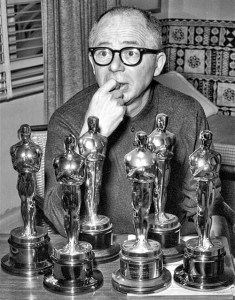
Billy Wilder with Oscars

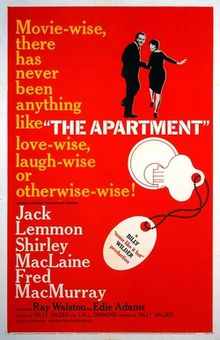
With The Apartment, (starring Jack Lemmon, Shirley MacLaine, and Fred MacMurray) Wilder became the first person to win Academy Awards as the producer, director, and screenwriter for the same film. “The Apartment” was nominated for ten Academy Awards and won five, including Best Picture.

The Apartment (1960)

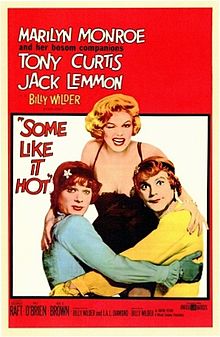
I love Billy Wilder because of his versatility in films and his testing the boundaries of societal norms. The first movie that comes to mind with his pushing the boundaries is “Some Like it Hot” 1959 starring Marilyn Monroe, Jack Lemmon, and Tony Curtis.

The plot revolves around two musicians who dress in drag in order to escape from mafia gangsters whom they witnessed commit the Saint Valentine’s Day Massacre. These are the final lines of the film delivered by (Daphne/Jerry) Lemmon and Joe E. Brown (Osgood) in regards to their pending marriage: Daphne/Jerry: But you don’t understand, Osgood! [Whips off his wig, exasperated, and changes to a manly voice] Uh, I’m a man! Osgood: [Looks at him then turns back, unperturbed] Well, nobody’s perfect!Wow! for 1959 that was pretty radical.

Some_Like_It_Hot_poster

“Some Like It Hot” is considered to be one of the greatest film comedies of all time. It was voted as the top comedy film by the American Film Institute on their list on AFI’s 100 Years… 100 Laughs poll in 2000. The film is also notable for featuring cross-dressing and homosexuality, which led to it being produced without approval from the Motion Picture Production Code. The Code was the set of industry moral guidelines that was applied to most American motion pictures released by major studios from 1930 to 1968. The Production Code had been gradually weakening in its scope during the early 1950s due to increasing societal tolerance for previously taboo topics in film, but it was still officially enforced. The overwhelming success of “Some Like It Hot” was a final nail in the coffin for the Hays Code.

Wilder became a screenwriter in the late 1920s while living in Berlin. After the rise of the Nazi Party, Wilder, who was Jewish, left for Paris, where he made his directorial debut. He moved to Hollywood in 1933, and in 1939, he had a hit when he co-wrote the screenplay for the screwball comedy Ninotchka. Wilder established his directorial reputation with Double Indemnity (1944), a film noir he co-wrote with crime novelist Raymond Chandler. Wilder earned the Best Director and Best Screenplay Academy Awards for the adaptation of a Charles R. Jackson story The Lost Weekend (1945), about alcoholism. In 1950, Wilder co-wrote and directed the critically acclaimed Sunset Boulevard.

Wilder was recognized with the American Film Institute (AFI) Life Achievement Award in 1986. In 1988, Wilder was awarded the Irving G. Thalberg Memorial Award. In 1993, he was awarded the National Medal of Arts.

Billy Wilder’s films:

Year Film Involvement
1934 Mauvaise Graine (also known as Bad Seed) Director/Writer
1942 The Major and the Minor Director/Writer
1943 Five Graves to Cairo Director/Writer
1944 Double Indemnity Director/Writer
1945 The Lost Weekend Director/Writer
1945 Death Mills Director
1948 The Emperor Waltz Director/Writer
1948 A Foreign Affair Director/Writer
1950 Sunset Boulevard Director/Writer
1951 Ace in the Hole Director/Writer/Producer
1953 Stalag 17 Director/Writer/Producer
1954 Sabrina Director/Writer/Producer
1955 The Seven Year Itch Director/Writer/Producer
1957 The Spirit of St. Louis Director/Writer
1957 Love in the Afternoon Director/Writer/Producer
1957 Witness for the Prosecution Director/Writer
1959 Some Like It Hot Director/Writer/Producer
1960 The Apartment Director/Writer/Producer
1961 One, Two, Three Director/Writer/Producer
1963 Irma la Douce Director/Writer/Producer
1964 Kiss Me, Stupid Director/Writer/Producer
1966 The Fortune Cookie Director/Writer/Producer
1970 The Private Life of Sherlock Holmes Director/Writer/Producer
1972 Avanti! Director/Writer/Producer
1974 The Front Page Director/Writer
1978 Fedora Director/Writer/Producer
1981 Buddy Buddy Director/Writer

Wilder received a total of twenty-one Academy Award nominations; eight for Best Director, twelve for writing, and one as the producer of Best Picture. With eight nominations for Academy Award for Best Director, Wilder is, together with Martin Scorsese, the second most nominated director in the history of the Academy Awards, behind William Wyler, and the second most nominated screenwriter behind Woody Allen.

Wilder won a total of six Oscars: Best Director for The Lost Weekend and The Apartment, Best Screenplay for The Lost Weekend, Sunset Blvd, The Apartment, and Best Picture for The Apartment. In addition, he received the Irving G. Thalberg Memorial Award in 1988.

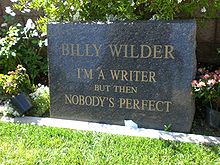
Billy Wilder"s grave

Wilder died in 2002 of pneumonia at the age of 95 after battling health problems, including cancer, in Los Angeles and was interred in the Westwood Village Memorial Park Cemetery in Westwood, Los Angeles near Jack Lemmon and Walter Matthau. Marilyn Monroe’s crypt is located in the same cemetery. Wilder died the same day as two other comedy legends: Milton Berle and Dudley Moore. The next day, French newspaper Le Monde titled its first-page obituary, “Billy Wilder dies. Nobody’s perfect”, quoting the final gag line in “Some Like It Hot”.


Hollywood Shuffle

Hollywood Shuffle

(1987)

In honor of Black History Month, I’ll be featuring films either starring or representing African American themes.

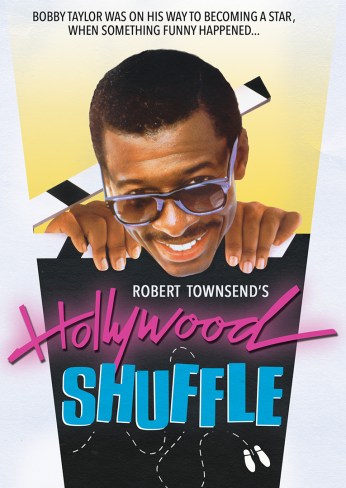
My first film for the month is “Hollywood Shuffle” (1987) directed by and starring Robert Townsend. More than 25 years ago, this small, low-budget movie caught the fascination of movie viewers across the country. And it just happens to be one of my favorite films.

The story revolves around aspiring actor Bobby Taylor (Robert Townsend) trying to break into Hollywood. His troubles lie not with his talent, but the stereotypical roles that he’s asked to play. “Hollywood Shuffle” takes a satiric look at African American actors in Hollywood.

Accepting the lead role in a typical blaxploitation movie, Bobby dreams about what it would be like if African Americans were respected as legitimate actors in roles from Sam Spade to Shakespeare to superheroes. He just has to convince Hollywood that gangstas, slaves and “Eddie Murphy-types” aren’t the sum of his talents.

With his little brother looking up to him and his grandmother proclaiming “there’s work at the post office”, Bobby faces the dilemma of, art or dignity.

For me, I have to go along with grandma, “there’s work at the post office”.

We’ve come a long way in 29 years but as I always say: “We’ve come a long way but we’ve still got a long way to go”!

In Robert Townsend’s own words:

https://soundcloud.com/taketwoshow/robert-townsend-on-paying-for-hollywood-shuffle-with-a-credit-card

https://soundcloud.com/taketwoshow/robert-townsend-on-auditioning-for-terrible-roles


Happy New Year! 🎊

Thinking about what film to feature for this post I posed the question, what movie could entertain and at the same time set a positive attitude for the new year?

positivestronger2

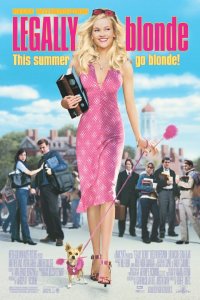
Looking through my film collection, I came across “Legally Blonde” (2001) and thought, yeah, this totally fits the bill. A fabulously positive tale about sorority queen Elle Woods (Reese Witherspoon) and her awesome dog “Bruiser”, who discovers her inner feminist and realizes she’s smarter, has her own power and possesses more heart than her stupid ex-boyfriend – Warner Huntington III (Matthew Davis).

Legally Blonde

I admit when I first heard of the film I figured it was light weight and would be so-so, but boy was I wrong. The message of “Legally Blonde” (Be True to Yourself) will always be relevant and the film can be an excellent opportunity to demonstrate to young girls and women the strength and determination of a focused woman!

Graduated Harvard Law with Honors

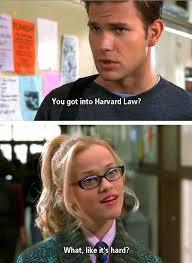
When Elle is dumped by Warner, (her stupid ex-boyfriend) she decides to apply to Harvard Law (where he’s attending) and win him back. This isn’t just some pipe dream. Although she graduated with a Fashion Merchandising degree from UCLA, she studies around the clock for her new goal, taking the Law School Admission Test which she scores 179 on, one point below the highest possible score.

legallyblondeharvard2

A perfect example of what I love about Elle’s style is that her law school application is chock full of personality. She creates a video essay demonstrating her unique qualifications (including, she was in a Ricky Martin video) and her resume is pink and sweetly scented. Proving you don’t have to change the essence of who you are to accomplish your goals.

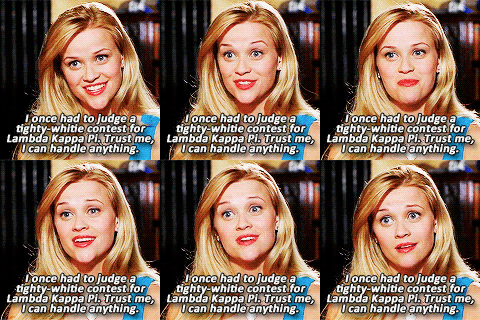
Even though her initial motivation to attend Harward was wack, that path eventually led her to chart a new destiny for herself. Affecting how people perceived her (dumb blonde) into smart, original, diehard friend who doesn’t give up and encourages others to do the same. Like with her manicurist friend Paulette. Elle helps Paulette gain custody of her dog back from her ex-husband, and she also helps her seduce the delivery man on whom she has a crush.

Hadn’t watched “Legally Blonde” in quite some time so I’m so glad I posed the question to myself – what’s a good positive new year movie? This film definitely qualifies and I love Elle, Bruiser and the enduring message of empowerment and friendship!


Gotta Love Her!


The Coolest Guys to Ever Hit the Vegas Strip! 😎

Frank Sinatra, Dean Martin and Sammy Davis, Jr.

The Rat Pack

This New Year’s Eve some of us movie junkies are staying in for the festivities. If you’re doing the same, I recommend adding to your viewing list, “Ocean’s 11.” It’s a great New Year’s Eve, buddy movie and heist caper all in one. What better way to ring in the new year than with the coolest guys to ever hit the strip. 

Ocean’s 11 (1960)

Ocean'sEleven(1960)Poster

I can just hear Sinatra’s proposal.  How about this, we’ll shoot a film during the day in Las Vegas then party and work the Sands Hotel at night.  Unanimous vote.  (EE-O-Eleven.)

 Look out Vegas, here we come!

The Rat Pack: Frank Sinatra, Dean Martin and Sammy Davis, Jr.

Humphrey Bogart (regarded as the greatest male star by the American Film Institute in 1999) originated the concept of the “Rat Pack” with his “Clan.”  He was “the man”, holding court nightly in the 50’s at Holmby Hills. (home of Bogey and his wife Lauren Bacall)  He passed the torch to Frank Sinatra, (an original member of Bogart’s “Pack” who served as “pack master.”)  After Bogey’s death in 1957,   Frank’s boys became his “Rat Pack.”

Humphrey Bogart

Bogart

Performers commonly associated with The Rat Pack:  Joey Bishop and Peter Lawford.

Angie Dickinson and Shirley MacLaine were often referred to as the “Rat Pack Mascots.”

Rat Pack all

(Peter Lawford, Sammy Davis, Jr, Frank Sinatra, Joey Bishop, Dean Martin)

Danny Ocean isn’t really a fictional character, he is Frank Sinatra.  You better believe his boys would do anything for him. Except Dean, he was the only one who ever said no to old blue eyes.  Frank really dug Dean’s truthfulness.

The plot revolves around a group of former World War II army buddies (under the command of Danny Ocean) conspiring to rob, on New Year’s Eve, five casinos on the Vegas strip.  When Peter Lawford presented the story idea Frank Sinatra joked: “Forget the movie, let’s pull the job!”


Whenever one of the “Pack” was performing at a club in Vegas, the others would show up to support and usually put on an impromptu performance.  While they were in town, Las Vegas was jam packed with admirers hoping to catch a show.

ratpack

 And, over 50 years later, Frank Sinatra, Dean Martin, and Sammy Davis, Jr. are still the coolest guys to ever hit the Vegas Strip!