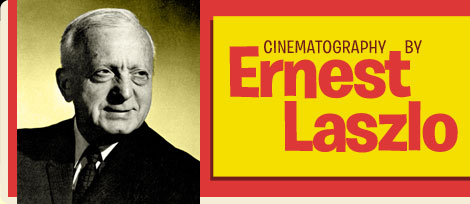
Academy Award Cinematographer – Ernest Laszlo ðŸŽ¥

Ernest Laszlo

(April 23, 1898 – January 6, 1984)

Ernest Laszlo is our next artist for “The Faces Behind the Camera” theme. Best-known for his striking black-and-white cinematography, Laszlo was a painstaking technician and a true artist who rejected Hollywood glamour to bring a refreshing naturalism to his films.

Description: A cinematographer or director of photography (sometimes shortened to DP or DOP) is the chief over the camera crews working on a film, television production or other live action pieces and is responsible for achieving artistic and technical decisions related to the image. (Wikipedia)

Ernest Laszlo, A.S.C. was a Hungarian-American cinematographer for over 60 films and was known for his frequent collaborations with directors Robert Aldrich and Stanley Kramer. He was a member of the American Society of Cinematographers, and was its president from 1972 to 1974.

Laszlo emigrated to the United States and began working as a camera operator on such silent films as Wings (1927). Between 1927 and 1977, he served as cinematographer on sixty-nine films. Between 1961 and 1976 Laszlo was nominated for eight Academy Awards for Best Cinematography, and won the award in 1966 for Ship of Fools. He died in Los Angeles, California in 1984.

Some of my favorite films he shot are:

Directed by Stanley Kramer, “It’s a Mad, Mad, Mad, Mad World” (1963) was a scream! Every comic in the business appeared in this film. I’ve always said if you were a comedian during the filming and weren’t asked to participate, you just didn’t rate. 😟

There’s nothing more intriguing and hilarious than a bunch of strangers going on a treasure hunt and the lengths they will go through to retrieve the big prize. Dick Shawn stole the show with his portrayal of “Sylvester”, the not so bright hunk that’s determined to “save his mama”.

Filmed in Ultra Panavision 70 and presented in Cinerama (becoming one of the first single-camera Cinerama features produced), Mad World also had an all-star cast, with dozens of major comedy stars from all eras of cinema appearing in the film. It’s a Mad, Mad, Mad, Mad World rated #40 in the American Film Institute’s list – 100 Years…100 Laughs.

Spencer Tracy,  Edie Adams, Milton Berle, Dick Shawn, Sid Caesar, Buddy Hackett, Ethel Merman, Mickey Rooney, Phil Silvers, Terry-Thomas, and Jonathan Winters.

A Little Cinematographer History

In the infancy of motion pictures, the cinematographer was usually also the director and the person physically handling the camera. Cinematography was key during the silent movie era; with no sound apart from background music and no dialogue, the films depended on lighting, acting, and set.

In 1919 Hollywood, the then-new motion picture capital of the world, one of the first (and still existing) trade societies was formed: the American Society of Cinematographers (ASC), which stood to recognize the cinematographer’s contribution to the art and science of motion picture making. (Wikipedia)

Some of Ernest Lazlo’s celebrated films

Ernest Laszlo, the trailblazing cinematographer whose body of work spans over 5 decades starting in the silent era with the first Academy Award winning film, Wings (1927) to his last film, The Domino Principle (1977). His visual style crossed all genres and he earned the accolade of being one of the best cinematographers in Hollywood.


Nora Ephron – “I’ll Have What She’s Having”

Nora Ephron

May 19, 1941 – June 26, 2012

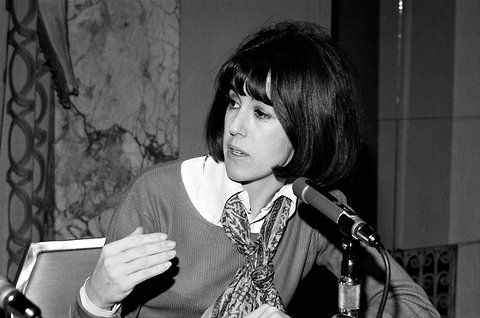
Our next artist for “The Faces Behind the Camera” theme is Nora Ephron – writer,  journalist, essayist, playwright, screenwriter, novelist, producer, and director. Probably best known for her romantic comedies – “When Harry Met Sally”, “Sleepless in Seattle” and drama “Silkwood”. She was nominated three times for the Academy Award for Best Writing: for Silkwood, When Harry Met Sally, and Sleepless in Seattle. She won a BAFTA Award for Best Original Screenplay for “When Harry Met Sally”. Ephron received a posthumous Tony Award nomination for Best Play for her play “Lucky Guy” which starred Tom Hanks.


I love “Sleepless in Seattle” because of Nora Ephron’s smart writing, directing and the entire ensemble cast. This is one of the best scenes, comparing the tear-jerker “An Affair to Remember” versus “The Dirty Dozen” – Hilarious! Don’t get me wrong, both “You’ve Got Mail” and “Silkwood” are brilliant films. Right now “Sleepless” just resonates with me.

Ephron hails from a writing family starting with her stage and screenwriter parents – Henry and Phoebe Ephron. Her parents used her infancy as the subject of their play “Three’s a Family” and based their comedy Take Her, She’s Mine (1963) starring Jimmy Stewart and Sandra Dee on letters their 22-year-old daughter wrote them from college. Their screenplays include There’s No Business Like Show Business (1954), Carousel (1956) and Desk Set (1957). Nora is also eldest of four daughters – all writers.

Miss Ephron had a distinctive voice and didn’t shy away from controversy. She took on a satire lampooning the New York Post which actually resulted in a job offer as Reporter from The Post, a gig which lasted 5 years.


Nora Ephron 1972

Nora Ephron 1972


As a writer for Esquire magazine she took on her former boss – Dorothy Schiff, owner of the Post and also Betty Friedan for starting a feud with Gloria Steinem and her alma mater Wellesley, which Friedan said had turned out “a generation of docile and unadventurous women”.

Fun Fact: Nora Ephron was married to journalist Carl Bernstein (1976-1980) of Watergate fame and she correctly guessed the identity of “Deep Throat” (the source for news articles written by her ex-husband Carl Bernstein and Bob Woodward during the Watergate scandal) before his name was revealed in 2005.

On June 26, 2012, Ephron died from pneumonia, a complication resulting from acute myeloid leukemia, a condition with which she was diagnosed in 2006. In her final book, I Remember Nothing (2010), Ephron left clues that something was wrong with her or that she was ill, particularly in a list at the end of the book citing “things I won’t miss/things I’ll miss.”


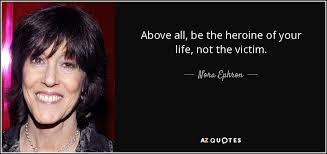
nora ephron quote


The Tribeca film festival established The Nora Ephron Prize which is a $25,000 award for a female writer or filmmaker “with a distinctive voice”. The first Nora Ephron Prize was awarded in 2013 to Meera Menon for her film Farah Goes Bang.

Her death was a shock to many as she didn’t reveal her illness. Her brilliant writing and filmmaking talents are a definite loss to the industry.


Filmography

Feature films

Year Title Credited as
Director Screenwriter Producer
1983 Silkwood Yes
1986 Heartburn Yes
1989 When Harry Met Sally… Yes Yes
Cookie Yes Yes
1990 My Blue Heaven Yes Yes
1991 The Super (uncredited)[20] Yes
1992 This Is My Life Yes Yes
1993 Sleepless in Seattle Yes Yes
1994 Mixed Nuts Yes Yes
1996 Michael Yes Yes Yes
1998 All I Wanna Do Yes
You’ve Got Mail Yes Yes Yes
2000 Hanging Up Yes Yes
Lucky Numbers Yes Yes
2005 Bewitched Yes Yes Yes
2009 Julie & Julia Yes Yes Yes


The Man with the “Touch” – Ernst Lubitsch ðŸŽ¬ðŸ™ŒðŸŽ¥

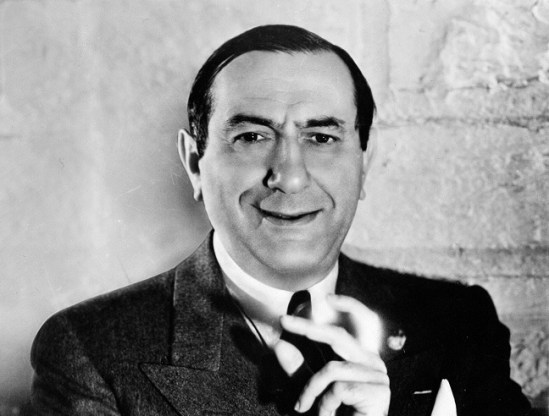
Ernst Lubitsch

Ernst Lubitsch (January 29, 1892 – November 30, 1947)

Keeping with the “Faces Behind the Camera” theme I’m spotlighting the saucy, bedroom comedies director Ernst Lubitsch and his famous “Lubitsch Touch”. This moniker was bestowed on him by other legendary filmmakers including Billy Wilder who was featured in the previous “Faces Behind the Camera” post. The phrase is used to describe the unique style and cinematic trademarks of director Ernst Lubitsch.

Hailed by the likes of Alfred Hitchcock (my other favorite director), Francois Truffaut and Orson Welles as a giant among filmmakers, Ernst Lubitsch was a preeminent figure in the history of cinema who directed some of Hollywood’s most sophisticated and enduring comedies.

Hollywood Sign

More than a great director of actors and action, he added his own personal signature – the “Lubitsch touch” – to all his work creating a sense of style and grace that was rarely duplicated on the screen.

After making a name as a director in his native Germany, Lubitsch was brought over at the behest of silent film star Mary Pickford to direct her in “Rosita” (1923). From there, he made comedies like “The Marriage Circle” (1924) and “Kiss Me Again” (1925), as well as dramas like “The Patriot” (1925). But with the advent of sound, the cigar-chomping director’s career took off with his fascination with a new genre, the musical comedy, and he began displaying his famed Lubitsch touch with classics like “Monte Carlo” (1930) and “One Hour with You” (1932).

He directed his first bona fide masterpiece, “Trouble in Paradise” (1932) later described as “truly amoral” by critic David Thomson (a British film critic and historian). The cynical comedy was popular both with critics and with audiences. But it was a project that could only have been made before the enforcement of the Production Code. After 1935, “Trouble in Paradise” was withdrawn from circulation. It was not seen again until 1968. The film was never available on videocassette and only became available on DVD in 2003.

Lubitsch later hit his stride full force with “Bluebeard’s Eighth Wife” (1938), “Ninotchka” (1939) co-written by Billy Wilder and “The Shop Around the Corner” (1940). Lubitsch reached great artistic heights with “To Be or Not to Be” (1942) and “Heaven Can Wait” (1943) before dying mid-career in 1947, leaving behind a legacy virtually unmatched by a filmmaker before or since.

In 1946, he received an Honorary Academy Award for his distinguished contributions to the art of the motion picture. He was also nominated three times for Best Director.

Lubitsch died of a heart attack on November 30, 1947, in Hollywood, and was buried at Glendale Forest Lawn in Glendale, CA. Leaving Lubitsch’s funeral, Billy Wilder ruefully said, “No more Lubitsch.” Lubitsch has a Star on the Hollywood Walk of Fame at 7040 Hollywood Blvd.


What’s Love Got to Do with It?

This film “What’s Love Got to Do With It?” is from a previous post but I think it exemplifies the strength and determination that is the perfect subject matter for Black History Month. Tina Turner’s tumultuous life is explored and documented with the impeccable interpretation by the dynamic Angela Bassett.

Angela Bassett’s performance of Tina Turner’s iconic “Proud Mary” in the biopic, “What’s Love Got to Do With It?”(1993) is a tour de force tribute to Tina Turner and musical numbers from films with dynamic female leads.

James Brown may have been the hardest working man in show business, but he wasn’t being physically abused every day by his spouse. Unlike Tina Turner, the hardest working woman in show business who simultaneously raised a family while delivering show stopping, gut wrenching vocals that, at that time, girls weren’t supposed to be able to deliver.


What's Love Got to Do with it poster


Quoting my favorite critic – the late Roger Ebert’s review from 1993 – “…ranks as one of the most harrowing, uncompromising showbiz biographies I’ve ever seen.”

Bassett kills it with her living, breathing and – Whoa, check out those guns – transformation paying homage to the Queen of Rock – Tina Turner!

This is Angela Bassett’s hard work paying off; seamlessly blending Tina’s vocals with a powerful performance of her hard rockin’ hit – “Proud Mary”.

Tina Turner’s (Anna Mae Bullock) life is a testament to her resilience. I’ve been fortunate enough to see her live and believe me she is truly a force of energy “leaving it all on the stage” with every performance.  “Proud Mary” (written in 1969 by singer/songwriter John Fogerty and recorded by his band Credence Clearwater Revival) is one of her most recognizable signature songs.

Tina’s interpretation is worlds away from the original southern rock version. With a completely different arrangement, it opens with Tina teasing that sometimes the audience might like to hear them do a song “nice and easy” but “we never, ever do nothing nice and easy” we always do it “nice and rough”. She further sets up the number by enticing the crowd with they’re going to do the first part “nice” but they’re going to do the finish “rough”.

The song reached #4 on the pop charts on March 27, 1971 and won the Grammy Award for Best R&B Vocal Performance by a Group in 1972.


Tina

Tina lived a life of poverty growing up in Nutbush, TN in the 1940’s, but found solace in the spirit and freeing experience of music and singing in the choir of her Southern Baptist church. She began her musical career in St. Louis in the 1950’s singing in Ike Turner’s Kings of Rhythm band.

Ike Turner (her husband) ended up trying to destroy not only her passion but her life. With hate in his heart and jealousy of her talent, he systematically physically and mentally abused her for years. However, through her strength of will and perseverance, she fought back, sued for divorce, and walked out the courtroom in 1978 (in spite of what Ike tried to prevent) with her dignity and above all – Her Name!

I love Tina Turner and smile because this routine has been performed more than once in the living rooms, basements, wherever by a generation of “rock girls” (myself included). Tearing it up, whipping our hair back and forth and just knowing we are too doggone hot!

This Grammy-winning performance of “Proud Mary”(1971) showcases the dynamic energy and incredible legs of the one, the only, the incomparable – Miss Tina Turner!


“Lady Sings the Blues” ðŸŽ¤ðŸŽ¬

lady-sings-the-blues-(1972)

“Lady Sings the Blues” (1972) is the biopic of the troubled life and career of the legendary Jazz singer, Billie Holiday. Loosely based on her 1956 autobiography which, in turn, took its title from one of Holiday’s most popular songs. It was produced by Motown Productions for Paramount Pictures and directed by Sidney J. Furie.

When I first heard Diana Ross had been cast as Billie Holiday I thought, she can’t act and will never pull it off. I wasn’t a big Diana Ross fan but when I saw the movie I had to give her credit for her phenomenal, Oscar-nominated performance. She lost to Liza Minnelli in “Cabaret”, but I thought Ross deserved the award.

The opening sequence (which was shot in black and white in still pictures) made me sit up and go, whoa, she’s serious. Diana Ross, the glamorous diva wore no makeup and looked the part of a heroin addict. The movie overall was a triumph not only for Ross but the incredible cast including – Billy Dee Williams as Holiday’s boyfriend Louis McKay, and Richard Pryor as Piano Man.

ladysingsthebluesopeningscene

(In 1936, New York City, Billie Holiday (Diana Ross) is arrested on a drugs charge.)

The story takes us from Billie’s tumultuous youth when in 1928 she is raped in the Baltimore brothel where she works as a housekeeper. She runs away to her mother who proceeds to get her a job in another brothel in the Harlem section of New York where she becomes a prostitute. Seeing that her life is going nowhere, she quits and heads to a local nightclub to become a showgirl. Billie has always had a love of music and has a remarkable voice. After “Piano Man” (Richard Pryor) accompanies Billie on the song”All of Me“, Jerry, the club owner, books her as a singer in the show.

Billie Holiday

billie-holiday

Eleanora Fagan (April 7, 1915 – July 17, 1959), professionally known as Billie Holiday lived a life that was an American tragedy full of turmoil, racism, and drug abuse. Despite all this we are left with her incredible song catalog and heartfelt performances.

Holiday had a tremendous influence on jazz music and pop singing. Her vocal style, strongly inspired by jazz instrumentalists, pioneered a new way of manipulating phrasing and tempo. “God Bless the Child” became Holiday’s most popular and covered record. It reached number 25 on the charts in 1941 and was third in Billboard’s songs of the year, selling over a million records. In 1976, the song was added to the Grammy Hall of Fame.

Billie Holiday died of cirrhosis of the liver in 1959 when she was 44. The biggest triumph of her career was her sold-out, standing ovation performance at Carnegie Hall.

Awards and Honors

“Lady Sings the Blues” was nominated for five Academy Awards. The nominations were for Best Actress in a Leading Role (Diana Ross), Best Art Direction-Set Decoration (Carl Anderson and Reg Allen), Best Costume Design (Norma Koch), Best Music, Original Song Score and Adaptation (Gil Askey & Michel Legrand) and Best Writing, Story and Screenplay Based on Factual Material or Material Not Previously Published or Produced.The film was also screened at the 1973 Cannes Film Festival but was not entered into the main competition.

Soundtrack

Motown released a hugely successful soundtrack double-album of Ross’ recordings of Billie Holiday songs from the film, also titled Lady Sings the Blues. The album went to number one on the Billboard Hot 200 Album Charts, for the week-ending dates of April 7 and 14, 1973.


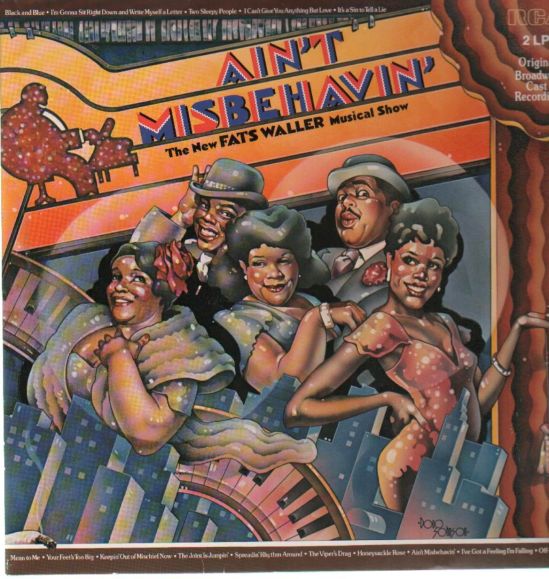
“Ain’t Misbehavin” – Fats Waller ðŸŽ¹ðŸŽ¼

aintmisbehavinposter

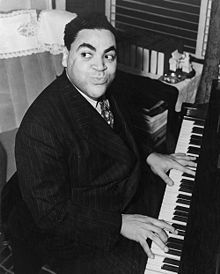
Thomas WrightFatsWaller (May 21, 1904 – December 15, 1943)

“Ain’t Misbehavin” is a musical tribute to the incomparable, Fats Waller. It originated at Broadway’s Longacre Theatre on May 9, 1978. The original cast included: Nell Carter, André DeShields, Armelia McQueen, Ken Page, and Charlayne Woodard. It ran for 1604 performances and closed on February 21, 1982. The book was by –  Murray Horwitz and Richard Maltby, Jr., and music by various composers and lyricists as arranged and orchestrated by Luther Henderson. It won the Tony Award for Best Musical.

On June 12, 1982, NBC broadcast the revue with the original Broadway cast and that’s what this post is about and how I experienced the production, which blew me away! Fats Waller songs are classic and give a jumpin’ snapshot of the 1920’s and 1930’s with the cast so brilliantly bringing his songs to life. His signature song was “Ain’t Misbehavin” which is the opening number for the 1982 production.

Waller was an American jazz pianist, organist, composer, singer, and comedic entertainer, whose innovations to the Harlem stride style laid the groundwork for modern jazz piano, and whose best-known compositions, “Ain’t Misbehavin” and “Honeysuckle Rose”, were inducted into the Grammy Hall of Fame in 1984 and 1999.

aintmisbehavinFats_Waller_edit

“Ain’t Misbehavin” was a feature number in the acclaimed 1943 film “Stormy Weather”.

Some of my favorite songs from the NBC production are: “Ain’t Misbehavin”, “The Joint is Jumpin”, and the hilarious”Your Feet’s too Big”.

There were plenty of awards for the 1978 production of “Ain’t Misbehavin” including:

Drama Desk Award

Award – Outstanding Musical

Won – Outstanding Actor in a MusicalKen Page. Won –André DeShields

Won –Outstanding Actress in a Musical –Nell Carter.

Theatre World Award

Won – Nell Carter. Won –Armelia McQueen

Tony Award

Won-Best Musical

Won-Best Performance by a Featured Actress in a Musical –Nell Carter.

Won –Best Direction of a Musical –Richard Maltby, Jr.

aintmisbehavinfats_waller-aint_misbehavin_-_the_new_f.w._musical_show


“Stormy Weather” – An African American Showcase 🎥 ðŸŽ

 In honor of Black History Month, I’ll be featuring films either starring or representing African American themes.

My next film for the month is “Stormy Weather (1943). An American musical film produced and released by 20th Century Fox. Considered one of the best Hollywood musicals with an all African-American cast, the other being MGM’s Cabin in the Sky. “Stormy Weather” is considered a brilliant showcase of some of the top African-American performers of the time, during an era when African-American actors and singers rarely appeared in lead roles in mainstream Hollywood productions, especially those of the musical genre.

Stormy Weather cast

This movie blew my mind!  I saw it as a kid in the early sixties having no idea that there had ever been an all Black cast in a Hollywood production. Most of the premier entertainers of the 1940’s appeared in this tour de force that still stands as one of the best musicals of all time!

Classic Cab Calloway – “Zoot Suiting” it!


Directed by Andrew L. Stone
Produced by William LeBaron
Written by Jerry Horwin, Seymour B. Robinson (story)
H.S. Kraft (adaptation)
Starring Lena Horne
Bill Robinson
Cab Calloway
Katherine Dunham
Fats Waller
Fayard Nicholas
Harold Nicholas
Ada Brown
Dooley Wilson
Music by Harold Arlen
Cinematography Leon Shamroy
Editing by James B. Clark
Distributed by 20th Century Fox
Release dates
  • July 21, 1943
Running time 78 minutes
Country United States
Language English

Lena’s rendition of “Stormy Weather”, featuring  African-American modern dance innovator Katherine Dunham and dancers.

Katherine Dunham and troupe’s “Stormy Weather” full dance sequence.

“Stormy Weather” was the 2nd all Black cast film made by a major studio in the 1940’s. “Cabin in the Sky” (1943) was the 1st, produced by MGM. Lena Horne starred in both and became famous for her rendition of “Stormy Weather” although Ethel Waters first performed the classic at The Cotton Club Nightclub in Harlem in 1933.

Ethel Waters was a famous blues, jazz, gospel vocalist and actress.  Her best-known recordings include “Dinah”, “Stormy Weather”, “Taking a Chance on Love” and “Cabin in the Sky” (She also starred in the film) Let’s enjoy her interpretation of the classic tune by Arlen and Koehler:

The song was written by Harold Arlen and Ted Koehler who worked as music composers at the renowned Cotton Club from 1930-1934. They wrote many of the jazz revue songs that were performed at the club and are still classics today. Harold Arlen wrote the music and Ted Koehler the lyrics.

Awards

“Stormy Weather” was selected in 2001 to The Library of Congress National Film Registry.


Stormy Weather 1

Get ready to have your “mind blown”!  This dance sequence by the Nicholas Brothers is unreal.  Check it out.  Holy crap!!


The Five Heartbeats ðŸŽ


In honor of Black History Month, I’ll be featuring films either starring or representing African American themes.

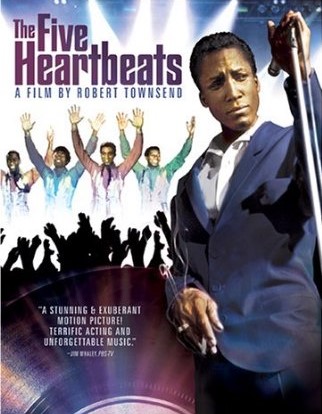
My second film, “The Five Heartbeats” (1991) is a rousing, slice of 60’s R&B music and reminiscent of groups like The Temptations and the Four Tops. Growing up in the 60’s in Motown, this film speaks to me and brings back wonderful memories of the times and the music. Another Robert Townsend production which he wrote directed and starred, it does not disappoint in energy or the drama of the music industry.


Inspired by the R&B group The Dells, it is co-written by Keenan Ivory Wayans and Robert Townsend. The movie also features 40’s tap dance icon Harold Nicholas (Nicholas Brothers) as Ernest “Sarge” Johnson in his final film as the group’s spunky choreographer.

After extensive research with R&B singing group The Dells, who were renowned for their four-decade career, Townsend used his film to depict a similar story, following the lives of five friends who aspire to musical stardom. Given the setting of the film, he was able to tie in other elements, such as race relations, as well.

The Five Heartbeats

The music (by Stanley Clarke) is phenomenal and a soundtrack for the film was released by Virgin Records, featuring original music by various artists. Both “Nights like This” and “A Heart Is a House for Love” became top 20 hits on the U.S. Billboard Hot R&B Singles chart. The film received an ASCAP award for Most Performed Songs in a Motion Picture for the song “Nights Like This.”

The Five Heartbeats:

For an evening of great R&B music and entertainment, grab some snacks and fire up “The Five Heartbeats”.


Pioneering Women Filmmakers – Lois Weber

The Early Visionaries of American Film: A Series – Part 2

star wars galaxy

A long time ago in a galaxy far, far away…Women were the driving force behind Hollywood and the movies. This is the second part of a series paying homage to the women who broke the glass ceiling and wrote and directed the films that gave birth to the “Golden Age” of cinema and the motion picture industry.  Unfortunately, when the men realized the gold mine films were becoming, the women faded away thanks to the Hollywood studio system. Well, as the saying goes, “that’s the way they do you.”

Lois Weber (June 13, 1879 – November 13, 1939)

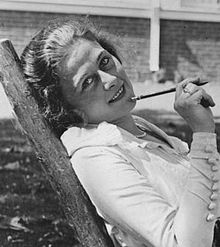
Florence Lois Weber was an American silent film actress, screenwriter, producer, and director, who is considered the most important female director the American film industry has known and is one of the most important and prolific film directors in the era of silent films. Along with D.W. Griffith, Lois Weber was the American cinema’s first genuine auteur, “a filmmaker whose personal influence and artistic control over a movie are so great that the filmmaker is regarded as the author of the movie”. In that spirit, Lois Weber utilized the motion picture to put across her own ideas and philosophies.

Weber brought to the screen her concerns for humanity and social justice in an estimated 200 to 400 films, of which as few as twenty have been preserved, and she has been credited by IMDb with directing 135 films, writing 114, and acting in 100. Weber was also one of the first directors to come to the attention of the censors in Hollywood’s early years.

During the war years, Weber achieved tremendous success by combining commercially successful scripts with a rare vision of cinema as a moral tool. At her zenith, few men, before or since, have retained such absolute control over the films they have directed – and certainly no women directors have achieved the powerful status once held by Lois Weber. By 1920, Weber was considered the premier woman director of the screen and author and producer of the biggest money-making features in the history of the film business.

Among Weber’s notable films are the controversial “Hypocrites”, which featured the first full-frontal female nude scene in 1915; the 1916 film “Where Are My Children?”, which discussed abortion and birth control, and was added to the National Film Registry in 1993; and what is often considered her masterpiece, “The Blot” in 1921.

In 1913, Weber and husband Smalley collaborated in directing a ten-minute thriller, “Suspense”, based on the play Au Telephone by André de Lorde, which had been filmed in 1908 as “Heard over the ‘Phone” by Edwin S. Porter. Adapted by Weber, it used multiple images and mirror shots to tell the story of a woman (Weber) threatened by a burglar (Douglas Gerrard). Weber has been credited with pioneering the use of the split-screen technique to show simultaneous action in this film, According to film historian Tom Gunning, “No film made before WWI shows a stronger command of film style than “Suspense” which outdoes even Griffith for emotionally involved filmmaking”. “Suspense” was released on July 6, 1913.

loisweberSuspense_(1913_film)

Suspense” – Split Screen

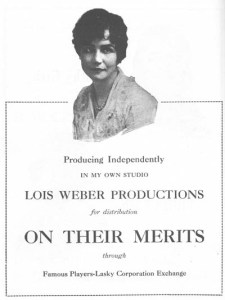
In 1913 Weber was one of the first directors to experiment with sound, making the first sound films in the United States, and was also the first American woman to direct a full-length feature film when she and husband Phillips Smalley directed “The Merchant of Venice” in 1914, and in 1917 the first woman director to own her own film studio.

Lois_Weber_Productions

In Part 1 of this series we talked about the accomplishments of director Frances Marion. Lois Weber discovered and inspired director and screenwriter Frances Marion.

For her contribution to the motion picture industry, on February 8, 1960, Lois Weber was awarded a star on the Hollywood Walk of Fame.

In Part 3 of this series, we’ll discuss contemporary female filmmakers and their viewpoint on Hollywood and the world in which we live.

Pioneering Women Filmmakers

The Early Visionaries of American Film: A Series – Part 1

star wars galaxy

A long time ago in a galaxy far, far away…Women were the driving force behind Hollywood and the movies. This is the first part in a series paying homage to the women who broke the glass ceiling and wrote and directed the films that gave birth to the “Golden Age” of cinema and the motion picture industry.  Unfortunately, when the men realized the gold mine films were becoming, the women faded away thanks to the Hollywood studio system. Well, as the saying goes, “that’s the way they do you.”


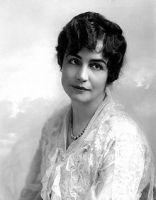
Frances Marion 1918

Frances Marion 1918


Frances Marion was a trailblazer. becoming one of the most powerful screenwriters of the 20th century. With a career that spanned decades, she became the first female to win an Academy Award for Best Adapted Screenplay in 1930 for the prison life film The Big House, starring Robert Montgomery, Wallace Beery, and Chester Morris. Her research included visiting San Quentin for the atmosphere and lingo of the inmates. The movie gave audiences their first experience of hearing prison doors slam shut, tin cups clanking on mess-hall tables and prisoners’ feet shuffling down corridors.


Frances also received the Academy Award for Best Story for The Champ in 1932. The tearjerker chronicled the relationship between a washed out boxer (Wallace Beery) and his young son (Jackie Cooper). Marion was credited with writing 300 scripts and producing over 130 films.


Born Marion Benson Owens (November 18, 1888) in San Francisco, California, she worked as a journalist and served overseas as a combat correspondent during World War I. On her return home in 1910, she moved to Los Angeles and was hired as a writing assistant, and actress by “Lois Weber Productions”, a film company owned and operated by pioneer female film director Lois Weber. (more on Lois Weber in Part 2 of the series)


Lois Weber

Lois Weber – Film Director

Frances was quite beautiful and could have been an actress but preferred to work behind the camera. She learned screenwriting from Lois Weber and went on to become the highest paid screenwriter, woman or man. Hollywood moguls competed for her stories and stars of the day Mary Pickford, Lilian Gish, Greta Garbo and Rudolph Valentino brought her characters to life on the screen. From 1919 – 1939 her star was ascendant, born at the right place and the right time, honing her craft during one of the most liberating eras for women in film.


When Marion met Mary Pickford (actress, producer, screenwriter) they became best friends with Marion writing screen adaptations of Rebecca of Sunnybrook Farm and The Poor Little Rich Girl for Pickford. As a result of the commercial success of “The Poor Little Rich Girl” in 1917 Marion was signed as Pickford’s “exclusive writer” at the salary of $50,000 a year, an unprecedented arrangement for that time.

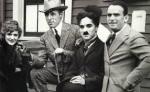
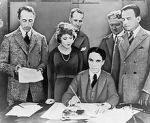
Pickford was the celebrated “America’s Sweetheart” and in 1919 together with her swashbuckler actor husband Douglas Fairbanks, Sr., director D.W. Griffith (Birth of a Nation) and “The Tramp” Charlie Chaplin established “United Artists” pictures. These four were the leading figures in early Hollywood and this was their stand for independence against the powerful studio system. Mary was also  one of the original 36 founders of the Academy of Motion Picture Arts and Sciences.


In 1921, Frances Marion directed a film for the first time with Just Around the Corner. That same year, she directed her friend Mary Pickford in one of her own scripts entitled The Love Light. Their relationship was more than just writer and star, they were collaborators and the friendship between Pickford and Marion lasted more than 50 years.

Married four times, Frances Marion had two children with third husband, actor Fred Thomson. This was her longest marriage, lasting from 1919 until Thomson’s sudden and tragic death from a Tetanus infection in 1928. Frances’ great friend Mary Pickford had introduced them. Frances said it was love at first sight.


Fred Thomson and Frances Marion

Fred Thomson and Frances Marion

For many years she was under contract to MGM Studios, but, independently wealthy, she left Hollywood in 1946 to devote more time to writing stage plays and novels. Frances Marion published a memoir Off With Their Heads: A Serio-Comic Tale of Hollywood in 1972.

Frances died on May 12, 1973 leaving a legacy of innovation, independence and inspiration for future aspiring female writers. The documentary, Frances Marion: Without Lying Down,” is an insightful profile of her life and achievements in Hollywood.


Without Lying Down

Mary Pickford and Frances Marion


Narrated by “Pulp Fiction” actress Uma Thurman and Oscar-winner Kathy Bates, who gives voice to the screenwriter’s own words taken from her letters, diaries. and memoirs. The documentary also features footage from more than twenty of Marion’s movies, with commentary by silent film historian Kevin Brownlow, and film critic Leonard Maltin.

I was fortunate enough to catch it on Turner Classic Movies and it was very enlightening on women’s roles in Hollywood. It’s also available for purchase at Amazon.com. I highly recommend checking it out!

  frances marion lying

“I’ve spent my life searching for a man to look up to without lying down.” Frances Marion


It took more than 60 years before women were once again present in meaningful numbers at every level of film production.