iheart Halloween!

Halloween is my favorite holiday! It’s a day for self-expression. A day for fun and fantasy. A day for taking control of phobias and fears and turning your back on Freddy Krueger from A Nightmare on Elm Street (1984). Where’s your power now Fred? Way to shut that mess down.

It’s also a day to indulge in all your favorite classic, creepy, monster, sci-fi horror films.

Therefore, in the spirit of Halloween, let’s pay homage to the original man of horror. The “Man of a Thousand Faces”- Lon Chaney.

 Man of a Thousand Faces – Lon Chaney

lon chaney man of a

Lon Chaney (April 1, 1883 – August 26, 1930), born Leonidas Frank Chaney

Born to deaf parents, Lon learned to express himself and communicate visually. He took his desire to become an actor and created an art form and space for himself that was revolutionary to the motion picture industry. His makeup artistry allowed him to transform and become grotesque characters in films like The Hunchback of Notre Dame (1923) and The Phantom of the Opera (1925). He’s regarded as one of the most important character actors of the silent film era.

lon chaney headshot

The original “monster maker”, he would scout out the daily call sheets for a studio finding out what types of extras were needed for that day’s shoot. He created a make-up toolbox of possibilities for him to achieve the look and characterizations needed to be chosen for a role. This talent was the impetus for his unparalleled reputation in the burgeoning film industry.
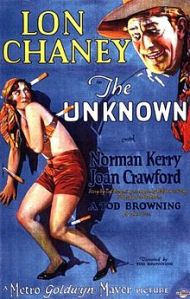
 lon unknown poster

This flick is by far my favorite Lon Chaney! 

Chaney’s alliance with Director Tod Browning was inspired! Browning was into the macabre and best known for his films Dracula (1931) and the cult classic Freaks (1932) and Lon Chaney had the acting and makeup skills to realize any twisted character the director could come up with.

My favorite movie line is from their 1927 silent film The Unknown – “crack of your ass”. (okay, I can’t swear that’s what he said) But, seriously, as Alonzo the Armless, he threatened his co-star Joan Crawford with bodily harm if she did not bend to his will. Remember Grandma Klump from Eddie Murphy’s The Nutty Professor(1996)? “You might walk over, but you limpin’ back! “Chaney totally went there. Check it out:

Let’s talk about the level of twisted in this movie:

A word of advice, if you’ve got a thing about someone that’s all consuming and you’d do anything to get with that person, forget about it!

Plot: This crazy man, Alonzo the Armless (Lon Chaney) has a knife throwing act using only his feet and is in love with Nanon (Joan Crawford) who”can’t bear to be touched.” He has arms but pretends not to for his act and so Nanon will talk to him. When it’s discovered that he indeed has arms, he blackmails a low-rent surgeon to amputate them. Sick!

Nanon and Alonzo

lon and nanon

After his surgery, Alonzo returns to the circus and his knife throwing act. Hoping to rekindle his relationship, he strolls over to Nanon’s circus wagon to see his rival Malabar, the circus strongman, (Norman Kerry) with his hands all over his love. Holy crap, it’s on! Alonzo schemes to get his girl back by rigging the speed of Malabar’s horses in his act which will dislocate and sever his arms during the live circus performance.

Alonzo
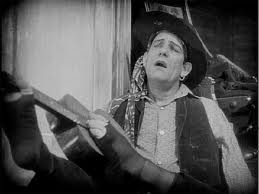
lon feet

Alonzo’s sick plan is working until Nanon realizes what is happening and tries to stop the performance. And then boom! The”crack of your ass” line. As you saw in the clip, things didn’t really work out the way he saw it play out in his mind.

Malabar

lon malabar stretch

This documentary, Lon Chaney: A Thousand Faces is a great biography for more in-depth background information and presents a great opportunity to discover your own Lon Chaney gem.

Here it is, Lon Chaney: A Thousand Faces


Lon Chaney is also the father of Lon Chaney, Jr best known for his role in Universal’s The Wolfman (1941).

If it’s Sunday, breakout the hankies!

Cinema sign

Melodrama Sunday Movie Classics

In my last post I talked about maybe being a little anal about the rules for Saturday and Sunday afternoon movie watching. I shared my rules for Saturday afternoon movie viewing which is B-horror and science fiction. I also shared 3 of my favorite flicks. The Blob (1958), The Incredible Shrinking Man (1957) and The Tingler (1959). (hope you check ’em out)

So, for Part 2 I’m showcasing Sunday and my criteria for some great classic melodrama.

I love melodramas because they can be so over the top and cathartic (think movie therapy) and there’s no better day to indulge than on a lazy Sunday, vegging on the couch, better yet if it’s a rainy day.

According to dictionary.com:

Melodrama – Exaggerated and emotional or sentimental, sensational or sensationalized: over dramatic.

Bette Davis is my favorite Melodrama Diva! Talk about emotional and dramatic, she had those attitudes down pat. With her I find myself either talking back to my TV screen or weeping. (this is why rain helps) So, let’s find out about “The First Lady of the American Screen:

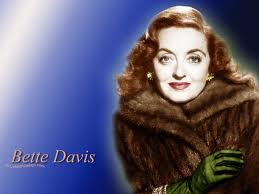
Bette Davis

Bette Davis color

 Ruth Elizabeth Davis (April 5, 1908 – October 6, 1989) known as Bette Davis

Born in Lowell, Massachusetts, Ms. Davis is regarded as one of the greatest actors in cinema history. Bette Davis was the first female president of the Academy of Motion Picture Arts and Sciences and won the Academy Award for Best Actress twice. She was also the first person to receive 10 Academy Award nominations for acting, and was the first woman to receive a Lifetime Achievement Award from the American Film Institute. With more than 100 films, television and theater roles to her credit, in 1999, Davis placed second on the American Film Institute’s list of the greatest female stars of all time.

Bette was known for her no-nonsense, no-holds barred personality and wasn’t afraid to take on unsympathetic character roles. In the RKO film Of Human Bondage (1934), she played such a character as Mildred, the cruel and vicious waitress.  A film adaptation of the 1915 novel of the same name by W. Somerset Maugham. This melodramatic adaptation about a crippled doctor’s destructive and compulsive passion for this coarse waitress was advertised with the tagline on one of its posters: “The Love That Lifted a Man to Paradise…and Hurled Him Back to Earth Again.”

In her 1st major, critically acclaimed part she insisted on looking hideous to depict the ravages of the disease tuberculosis on the human body. She wasn’t nominated for an Oscar but so impressed fellow artists that they insisted she be a write-in on the ballot.

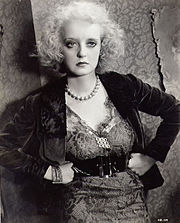
Bette_davis_of_human_bondage

Bette as “Mildred” in Of Human Bondage 1934

A little bit of Mildred’s charm:

 Let’s take a look at her 10 Oscar nominations and 2 wins:

  • 1935: Won for Dangerous, as a self-destructive, alcoholic actress (really a make-up for not winning Of Human Bondage)


  • 1938: Won for Jezebel, as a self absorbed 1850’s southern belle whose insistence on wearing a red-dress to a formal affair (white = chaste) brings scandal and disapproval. Her man “Pres” Henry Fonda was too through with her.


  • 1939: Nominated for Dark Victory, as Judith Traherne, an impetuous, terminally ill Long Island socialite. (yes that’s Bette with a drunken Ronald Reagan) Big time tear-jerker! – Bette’s favorite!  


  • 1940: Nominated for The Letter, as a low-down, adulterous murderer who has absolutely no remorse for blowing her lover away. However, karma is a bitch.


  • 1941: Nominated for The Little Foxes, as Southern aristocrat Regina Giddens – that girl put the cold in cold-blooded.  


  •  1942: Nominated for Now, Voyager, as Charlotte Vale – a dowdy, overweight, spinster, abused by her mother but fights back and achieves a starling transformation in body and spirit. An incredible performance! My absolute favorite Bette Davis role! 

Charlotte on the edge of a well deserved nervous breakdown:


Charlotte’s journey:


  • 1944: Nominated for Mr. Skeffington, as Fanny Skeffington, a woman so conceited that she tries to steal her daughter’s boyfriend, loses her looks after an illness but still has the nerve to treat her husband like dirt and still believe she can have any man – no way. In the end she learns the hard way that “a woman is beautiful when she’s loved and only then.” (too bad it’s after her husband goes blind in a concentration camp)


  • 1950: Nominated for All About Eve, as Margo Channing  an insecure Broadway star challenged by the younger, conniving Eve – “Fasten your seat-belts, it’s going to be a bumpy night.”  It was selected in 1990 for preservation in the United States National Film Registry and was among the first 50 films to be registered.


  • 1952: Nominated for The Star, as Maggie, a washed up actress trying to revive her career. Notably, at this time in Bette Davis’ career, she was struggling for roles despite her body of work. Bette’s ego was blamed.


  • 1962: Nominated for What Ever Happened to Baby Jane?, as the demented Baby Jane Hudson who tortures and terrorizes her sister Blanche (Joan Crawford)  Much like their real life rivalry. This role renewed her success and paved the way for other deranged characters in such films as: Hush, Hush Sweet Charlotte (1964) and The Nanny (1965)

 ♦♦♦♦

Bette continued to perform in film and on television in the 70’s and 80’s. In 1983 at the age of 75 she had a mastectomy as a result of breast cancer. Nine days later she suffered a stroke. Despite her failing health she continued to work until her death in 1989.

This is an in-depth retrospect of “The First Lady of the American Screen”

Enjoy! Don’t forget to bring your hankie.


If it’s Saturday it must be The Blob!

Maybe I’m just a wee bit anal but the day of the week dictates the genre that I watch. Monday thru Friday are pretty wide open, however, Saturday and Sunday must stick to my criteria. Saturday afternoon is definitely B-horror/Sci-fi flicks and Sunday is reserved for Melodrama film classics.

If you’ve read my About Page you know that as a kid the Saturday Matinee had a big influence on my love of B-horror/Sci-fi movies and William Castle.

The Blob, The Incredible Shrinking Man and The Tingler. Now that’s good stuff!


The_Blob_poster

 The Blob (1958)

The Blob, directed by Irvin Yeaworth, was Steve McQueen’s first leading role before he got his own TV series – Wanted: Dead or Alive (1959). McQueen was called “The King of Cool” and starred in such popular films as The Magnificent Seven and The Thomas Crown Affair. He received an Academy Award nomination for his role as Jake Holman in The Sand Pebbles.

The Blob plot revolves around what happens when an old man pokes a stick at a piece of meteor and it cracks open releasing an oozy substance that starts to crawl up the stick. He tries to shake it off but ends up with “the blob” all over his hand. (This is why you don’t poke at things that drop from the sky. Yeesh!)

Steve (also his character name) and his girl Jane, after almost hitting the old man who has run onto the road, take him to the local doctor. Cutting to the chase: while Steve and Jane ( Aneta Corsaut, who eventually plays Andy Griffith’s TV girlfriend Helen) leave the doc’s office to look for clues to what’s on the old man’s hand, The Blob absorbs the old man, the doc and his nurse. Next thing you know it’s at the midnight horror movie. Cue the fleeing and screaming and holy crap how do we stop it. Phew, that was exhausting.

The theme song, written by Burt Bacharach and Mack David (who wrote some of the top hits of the sixties) is a catchy little gem. “It creeps and leaps and glides and slides across the floor…beware of the blob.” Here it is:


The Incredible Shrinking Man (1957) 

The Incredible Shrinking Man

Directed by Jack Arnold

I’ve watched this movie a hundred times and the ending always makes me cry. This thought provoking Science Fiction classic taps into an anxiety of meaning in life and what exactly is the meaning of life. Scott Carey (Grant Williams) is dusted by a radioactive mist while on a boating vacation with his wife Louise (Randy Stuart). A few weeks later he starts to notice his clothes are fitting more loose and he also appears to be losing height. After visiting a specialist, it is confirmed that he is indeed shrinking.

Reduced to living in a dollhouse and eventually fighting for his life against the cat and then a tarantula living in the basement of the family home, Scott finally shrinks to an infinitesimal size, entering the realm of the unknown.

For me this movie is so much more than just another Saturday afternoon B-Movie flick. The closing monologue makes the point by concluding that no matter how small, we still matter in the universe because, to God, “there is no zero.”

The film won the first Hugo Award for Best Dramatic Presentation in 1958 by the World Science Fiction Convention. In 2009 it was named to the National Film Registry by the Library of Congress for being “culturally, historically or aesthetically” significant and will be preserved for all time.


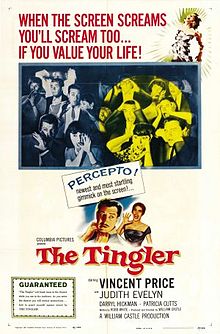
The Tingler

Producer/Director William Castle delivers his finest in The Tingler (1959), his third collaboration with writer Robb White. The film stars the incomparable Vincent Price as Pathologist, Dr. Warren Chapin who researches and discovers the existence of The Tingler.

Percepto is my favorite William Castle gimmick. There comes a time in the movie when the Tingler (a parasite that feeds on fear) is loose in the theater and to save your life you need to scream! For grins, in select seats in the theaters, Castle placed the Percepto system which made the seat vibrate to simulate the feeling of fear you feel in your body when The Tingler strikes.

Man do I wish I could have been there in 1959 when The Tingler attacks the projectionist, the film strip breaks and The Tingler appears on the screen. If that’s not enough, the lights go out and you hear the voice of Vincent Price declaring that The Tingler is loose in the theater so scream, scream for your life! Awesome!!

Just think of it, being in the movie theater watching The Tingler scene and ending up participating in the experience in your Percepto seat, with lights out and the sound of Price’s voice. I love it!!!


Break out the popcorn and let me know your faves in the comments.

And be sure to stay tuned for my next post:

Melodrama Sunday Movie Classics

“Here ’tis, little Fats Waller. Mama’s favorite 285 lbs of jam, jive and everything!”

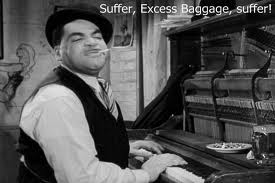
Fats suffer

  May 21, 1904 – December 15, 1943

Title sums it up. “Jam, Jive and Everything!.”  Thomas Wright “Fats” Waller is one of the most charming, talented and prolific artists to ever tickle the ivories of a stride piano.

We share a birthday – May 21st.  His last recording session was in Detroit, Michigan – home of my birth. I guess it was destiny that his music and spirit would come to bring me such joy!

What excites me about Fats?

When I was a kid and first saw the ground breaking musical Stormy Weather (1943) I was familiar with its star Lena Horne because my father loved him some Miss Lena.  But for me, the wonderful surprise of the film was Fats Waller.

Fats Waller and Lena Horne

When you see him you’re totally invested.  His personality jumps off the screen.  People talk about presence.  Fats created “presence!”

Fats is credited with advancing the musical style – stride piano.  Although known for his two most famous compositions:  “Ain’t Misbehavin'” and “Honeysuckle Rose”, he penned many more uncredited hits such as “I Can’t Give you Anything but love, Baby” and “On the Sunny Side of the Street”.

Waller copyrighted over 400 songs and began his professional career as a pianist at the age of 15, working in cabarets and theaters.

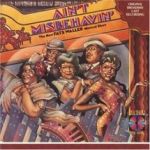
His life and artistry became the Broadway musical revue “Ain’t Misbehavin‘ produced in 1978.  (The show and star Nell Carter won Tony Awards.)

Aintmisbehavin

Recordings of Fats Waller were inducted into the Grammy Hall of Fame which is a special Grammy Award established in 1973 to honour recordings that are at least 25 years old and that have “qualitative or historical significance”.


Here ’tis, a tribute to Fats’ brilliance and charm:


Fats Waller – Ain’t Misbehavin’ – Stormy Weather (1943)


This song cracks me up!

Fats Waller – Your Feet’s Too Big! (1936)


Fats Waller – Honeysuckle Rose (1929)


Thanks Fats for the jam, jive and everything!

To Remake or Not To Remake. That is the Question.

I’m on the record saying I hate remakes. If it was genius in the first place, why mess with it? If it stunk, why bring it back? Are you so ego driven Mr. Director that you feel your “version” outshines, oh say, Alfred Hitchcock‘s Psycho? Or Mr. Director, do you so lack creatively that you cop-out and warm over some – why was it made in the first place (Teenage Mutant Ninja Turtles) flick?

That being said, there are those exceptions. Websters’ definition of a remake is: to make again or anew as in a new form or manner. If a film can pay homage and capture the essence of the original but also bring freshness, I consider that film to be a great remake!


This classic has a great remake:


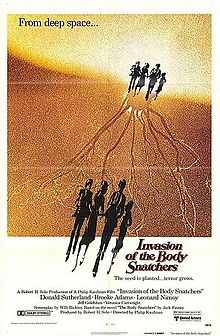
Invasion of the Body Snatchers (1956)


Directed by Don Siegel and Produced by Walter Wanger, the film starred Kevin McCarthy and Dana Wynter. This 1956 sci-fi thriller taps into a hideous nightmare, what if we went to sleep and awoke as a “pod person?” (Our physical self but void of emotion.) This movie in and of itself is an update of the 1950’s fear of space, atomic energy, and aliens. However, instead of giant mutated spiders, this tale is of an invasion from within.


Invasion of the Body Snatchers (1978)

Invasion_of_the_body_snatchers_movie_poster_1978

“From deep space the seed is planted.”

Directed by Philip Kaufman and starring Donald Sutherland and Brooke Adams, this remake ups the ante. It honors the original sense of foreboding but the degree of terror is raised to a pandemic level.

There’s a scene in the original involving a dog that alerts the “pod people” that “Becky” (Dana Wynter) isn’t one of them. In this version they remake the dog scene but takes it to a much freakier place.   Outstanding!

I won’t give away the ending but, holy crap, that was frigging frightening!  Totally fresh update!


A box office success, Invasion of the Body Snatchers was well received by critics and is considered by some (myself included) to be among the greatest film remakes.

To Remake or not to Remake. That is the Question.

In this instance – YES!

Master of Suspense?

Master of Suspense

Sir Alfred Joseph Hitchcock  (August 13, 1899 – April 29,  1980)

Sir Alfred Joseph Hitchcock aka “Master of Suspense” was a British born director known for his mastery of the suspense and psychological thriller.  He was an innovator using film editing (cuts) as the basis to construct a film. He poked, stabbed and forced us to face our fears, obsessions and compulsions.

Hitch is one of my favorite directors because of his fearlessness. He used a voyeuristic style and cuts to let you see inside the head of his leading characters. Rear Window (1954) is a classic example of his style as the audience becomes the voyeur along with James Stewart’s character. We go along with Hitch and peer through the windows of Stewart’s neighbors and cross a line we otherwise wouldn’t.

In Psycho (1960) we peer through the peephole with “Norman Bates” (Anthony Perkins) and end up rooting for this very troubled individual. Not allowing patrons to enter the theater after Psycho started was a great gimmick. His most fearless move was what occurred in the first 45 minutes of the film. Now that’s risk and genius!

In 1992, the US Library of Congress deemed the film “culturally, historically, or aesthetically significant” and selected it for preservation in the National Film Registry.

Now, meet Hitchcock as he takes us through the Bates Motel and the events that occurred. This is Sir Alfred in all his shocking glory.

Although Hitchcock is legendary for his film editing genius, Rope (1948 ) proved to be his ultimate experiment. Instead of using film editing, he would shoot the movie in one long sequence. Stopping only to change the camera role. Like filming a play. Each role of camera film holds about 10-12 minutes of film.

The set was insane with flying walls and furniture. Jimmy Stewart once remarked about placing his drink on a table, turning back around and not only was the drink gone but the table it was sitting on. Everyone had to be on their mark and not drop a line because if anything went wrong they had to do everything  all over again. Hitchcock said the film just about killed him!

A Little Hitchcock History:

His first directing assignment, Number 13, began in 1922 but unfortunately wasn’t finished due to financial issues. His big break came in 1927 with the completion of his thriller The Lodger: A Story of the London Fog.  The plot revolved around a search for a Jack the Ripper type of serial killer and mistaken identity. Hitchcock’s first thriller is ripe with mood and the German Expressionist influence. A taste of things to come in Hitch’s repertoire, it was a commercial and critical success.

Hitchcock-The_Lodger_1927_Poster

Hitchcock’s tenth film, Blackmail was released in 1929 and considered Britain’s first talkie. It also starts his usage of landmarks as a tradition and appears in the longest cameo of all his films.

Hitchcock-Blackmail_1929_Poster

The 39 Steps (1935) is widely considered the best of Hitchcock’s early films and made him a star in the U.S.  It also branded Hitch’s obsession with the cold blonde, sophisticated leading lady which Grace Kelly would come to epitomize. Then there’s the infamous “MacGuffin.”  A reoccurring plot device that actually had no real significance to the story-line. A decoy. Just another Hitch thing.

The 39 Steps

Alfred Hitchcock’s films were produced in Britain until in 1939. When David O. Selznick signed him to a seven year contract, Hitch relocated to the United States with his wife Alma Reville (his closest collaborator) and his daughter Patricia Hitchcock.

Alma Reville was an accomplished director, writer, editor and producer in Britain before she met Hitch while working  at Paramount‘sFamous Players-Lasky studio in London, during the early 1920s. Patricia Hitchcock appeared in several of her dad’s films including: Psycho, Strangers on a Train and Stage Fright.

Rebecca (1940) was Hitchcock’s first American film. It won the Academy Award for Best Picture and Hitchcock was nominated for Best Director but did not win. In fact, although nominated five times, he would never be afforded that honor.

Alfred Hitchcock  became an American citizen in 1956 and was a multiple nominee and winner of a number of prestigious awards. Hithcock was the recipient of  two Golden Globes, eight Laurel Awards, and five lifetime achievement awards including the first BAFTA Academy Fellowship Award.

Hitchcock received a knighthood in 1980 when he was appointed a Knight Commander of the Most Excellent Order of the British Empire (KBE) by Queen Elizabeth II.

What’s your quintessential Hitchcock film?

  • Stage Fright (1950)
  • Saboteur (1942)
  • Strangers on a Train (1951)
  • The Birds (1963)
  • Spellbound (1945)
  • Shadow of a Doubt (1943)
  • Rebecca (1940)
  • Foreign Correspondent (1940)
  • The 39 Steps (1935)
  • Rope (1948)
  • Vertigo (1958)

Not here? Voice Your choice in the comments.

Check out Alfred Hitchcock’s substantial catalog.

The quintessential “Master of Suspense.”

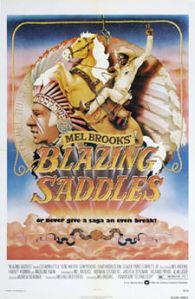
Too”Blazing”Hot?

Blazing Saddles_movie_poster

I’ll never forget the day my boyfriend (now husband) came to me super excited about, in his words, “the funniest movie he’s seen” and there’s another showing in half an hour!.  Okay I say, skeptical, but I’m game.  He couldn’t stop talking about his favorite “moment” – the “campfire and beans scene.”  As the end credits rolled I agreed, this was the funniest movie I’d ever seen and my favorite “moment” was — holy crap — I can’t name just one.  Lili von Shtupp “I’m Tired”, “The sheriff is near” or “Mongo only pawn in game of life.”   Awwh, it’s too hard to pick just one!  Blazing Saddles is probably one of the most quotable movies of all time.

The movie was nominated for three Academy Awards, and is ranked No. 6 on the American Film Institute‘s 100 Years…100 Laughs list.

“Mongo only pawn in game of life”

Mongo


But, I wonder, how would Blazing Saddles be received by audiences today?

This film was released in 1974 but reflecting today on the welcoming scene for Sheriff Bart, it could just as well have been President Obama’s Inaugural Reception.  In the western town of Rockridge the women clutched their purses and the men drew their guns.  A Black Sheriff, no way!  For some, The President’s election and re-election evoked some of those same feelings.  A Black man in the White House, no way!   Yes, it’s 2014 but yes for some, the stereotypes still exist.  There are those who wish the country could go back to the “good ole days” when if you were white it’s alright, but, if you’re black get back.  It’s irrational and built on fear, but racism has always been apart of the fabric of this country.

Mel nig


Directed by: Mel Brooks

Written by: Mel Brooks, Richard Pryor, Andrew Bergman, Norman Steinberg and Al Unger

Songs: Mel Brooks

Starring Cleavon Little
Gene Wilder
Harvey Korman
Slim Pickens
Madeline Kahn
Mel Brooks

It’s a brilliant film!  The writing, the acting, the concept.  And what a concept.  A Black sheriff in an all white 1874 small western town.  What could possibly go wrong?

The film is an in your face satire about racism in the old west as opposed to the Hollywood cowboy myth.  Liberal uses of the N word and plenty of references to black men being sexually”gifted.”  Lili: “Is it true what they say about you people?”  Also, you know black men all want white women.

Lili von Shtupp goes there:


“Where the white women at?”


I’m not really sure how Blazing Saddles would touch people today, but in 1974 I got the feeling that black and white laughed at the jokes and understood their own truth within the satire.   Have the voices of hate overshadowed our ability to laugh and rebuke racism or are the hate filled voices of today outliers?  Is the majority of the country trying to go backwards or are we embracing progress and the commitment it takes?

Harvey Mel

 Blazing Saddle Quotes:

  • Jim: [consoling Bart] What did you expect? “Welcome, sonny”? “Make yourself at home”? “Marry my daughter”? You’ve got to remember that these are just simple farmers. These are people of the land. The common clay of the new West. You know… morons.
  •  Bart: I better go check out this Mongo character.

[Bart reaches for his gun]

Jim: Oh no, don’t do that, don’t do that. If you shoot him, you’ll just make him mad.

  • Mexican Bandit: Badges? We don’t need no stinking badges.
  •  Lili Von Shtupp: Hello, handsome, is that a ten-gallon hat or are you just enjoying the show?

If you have seen the movie give it a revisit and let me know what you think.  Or if you haven’t, check it out and let me know your thoughts in the comments.

The coolest guys to ever hit the Vegas strip

Frank Sinatra, Dean Martin and Sammy Davis, Jr.

The Rat Pack


Ocean’s 11 (1960)

Ocean'sEleven(1960)Poster

I can just hear Sinatra’s proposal.  How about this, we’ll shoot a film during the day in Las Vegas then party and work the Sands Hotel at night.  Unanimous vote.  (EE-O-Eleven.)

 Look out Vegas, here we come!

The Rat Pack: Frank Sinatra, Dean Martin and Sammy Davis, Jr.

Humphrey Bogart (regarded as the greatest male star by the American Film Institute in 1999) originated the concept of the “Rat Pack” with his “Clan.”  He was “the man”, holding court nightly in the 50’s at Holmby Hills. (home of Bogey and his wife Lauren Bacall)  He passed the torch to Frank Sinatra, (an original member of Bogart’s “Pack” who served as “pack master.”)  After Bogey’s death in 1957,   Frank’s boys became his “Rat Pack.”

Humphrey Bogart

Bogart

Performers commonly associated with The Rat Pack:  Joey Bishop and Peter Lawford.

Angie Dickinson, and Shirley MacLaine were often referred to as the “Rat Pack Mascots.”

Rat Pack all

Peter Lawford, Sammy Davis, Jr, Frank Sinatra, Joey Bishop, Dean Martin

Danny Ocean isn’t really a fictional character, he is Frank Sinatra.  Believe it, his boys would do anything for him. Except Dean, he was the only one who ever said no to old blue eyes.  Frank really dug Dean’s truthfulness.

The plot revolves around a group of former World War II army buddies (under the command of Danny Ocean) conspiring to rob, on New Year’s Eve, five casinos on the Vegas strip.  When Peter Lawford presented the story idea Frank Sinatra joked: “Forget the movie, let’s pull the job!”


Whenever one of the “Pack” was performing at a club in Vegas, the others would show up to support and usually put on an impromptu performance.  While they were in town, Las Vegas was jam packed with admirers hoping to catch a show.

This performance was on June 20, 1965 featuring, Frank Sinatra, Dean Martin and Sammy Davis, Jr.   Johnny Carson (known for The Tonight Show) served as the emcee, filling in for Joey Bishop who had hurt his back.

It would be their only televised concert together.


Robin and the 7 Hoods 1964

Robin_and_the_7_Hoods_Poster

  Set in Prohibition-era Chicago, the film is a take on the classic Robin Hood tale.  This engaging musical features the Academy Award nominated song “My Kind of Town” sung by Frank Sinatra.

 My favorite number is “Mr. Booze” sung by Bing Crosby.  I love this scene because Robbo’s (Sinatra) club miraculously converts into a mission (due to some clever architectural tricks) to fool the police during a raid.  Robbo’s gang breaks into the gospel version of “Mr. Booze” with Alan A Dale (Crosby) preaching and Little John (Dean) testifying on the lessons of temperance.

Peter Lawford was originally cast as Alan A. Dale, but due to a falling out with Frank Sinatra, Bing Crosby took over the role.  At the time, Lawford’s brother-in-law was President John F. Kennedy and Lawford had arranged for The President to stay at Sinatra’s home.  However, because of concerns over Frank’s ties to the “Mob”, the plans were scraped.

“Mr. Booze, Mr. Booze, Mr. B double O, Z, E, don’t ever choose.”

Other numbers include:

“Don’t be a Do-Badder” sung by Bing Crosby

“Bang, Bang!” sung by Sammy Davis, Jr.

“Style” sung by Frank Sinatra, Dean Martin, Bing Crosby

My favorite Rat Pack movie reference line is from Clueless (1995).

Cher’s dad talking to her date who is dressed circa 60’s “Pack” style:

“What’s with you kid? You think the death of Sammy Davis, Jr. left an opening in The Rat Pack?”   Too hilarious!!


Over 50 years later, Frank Sinatra, Dean Martin and Sammy Davis, Jr. are still the coolest guys to ever hit the Vegas Strip!