The opening title sequence of a movie should invoke the tone of the film, grab your attention and create the anticipation of what’s to come. I recently did a post on most memorable film trailers and now I’m offering up some of the most memorable opening titles.
Vertigo (1958)
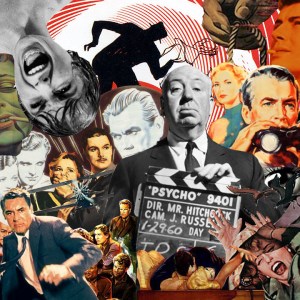
Alfred Hitchcock is the “master of suspense” for a myriad of reasons and this opening sequence created by Saul Bass, graphic designer, and Academy Award-winning filmmaker is an epic example of setting the tone and anticipation of what’s to come.
Hitchcock hints at the relationship between James Stewart and Kim Novak by opening on James Stewart’s name above Kim Novak’s lips transitioning into her eyes and the swirling sensation of vertigo. In addition, the beautifully haunting theme music of Bernard Herrmann perfectly sets the suspenseful mood of the film.
Casino Royale (2006)
It’s always dicey when you try to recast an iconic treasure like James Bond. Sean Connery was the only Bond I recognized (although Pierce Brosnan definitely held his own) so, when Daniel Craig was announced to fill Connery’s spot, I was definitely skeptical but quickly became a huge Daniel Craig fan. I think he did a great job of bringing just the right amount of attitude, style, and hotness necessary to carry on the franchise.
Casino Royale introduces James Bond before he holds his license to kill through his transition into his 007 status. The opening theme song by Chris Cornell (then-former lead singer of Soundgarden and former lead singer of Audioslave), adds the perfect punctuation with his title song – “You Know My Name!”
⇔⇔⇔⇔⇔⇔
One of the coolest, funniest, most irreverent sequences I think I’ve ever seen are the opening titles for one of my new favorite movies, “Deadpool” (2016).
I call Deadpool the anti-Marvel film because its tone goes against the grain of a typical Marvel movie. Ryan Reynolds was hil-a-ri-ous! Although there was plenty of action, Reynold’s deadpan comedy changed the attitude of the film and was priceless. Talked friends into watching who aren’t Marvel fans and after it was over, loved it and said it was totally not what they expected. If you haven’t, give it a chance. I think you’ll enjoy it.
These are just of few of my favorites. Let me know in the comments those that make your list.
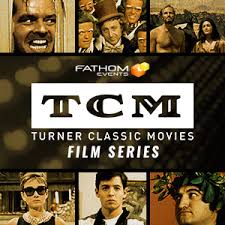
This joint venture with Fathom Events is an outstanding movie series and a great opportunity to check out some tried and true gems on the big screen! Even though we have the convenience of DVDs and streaming, nothing beats the experience of sitting in the dark and enjoying a great film with fellow movie lovers.
And an excellent film that fits the bill is the 1978 comedy “Animal House”.
Let’s head back to college with John Belushi and the gang in this raucous, and hilarious film packed with completely uncivilized frat parties, food fights, togas, and lots of fun!
School’s out for the summer, so why not break all the rules? The Deltas did and now they’re battling Dean Wormer. Whose side are you on? The uncivilized frat boys or the administration of Faber College?
The screenplay was adapted by Douglas Kenney, Chris Miller, and Harold Ramis from stories written by Miller and published in National Lampoon magazine, the stories were based on the writers’ college experience in fraternities.
Chris Miller
Doug Kenney/”Stork”
Harold Ramis
“Animal House” was the first film produced by National Lampoon, the most popular humor magazine on college campuses in the mid-1970s. The periodical specialized in humor and satirized politics and popular culture. Many of the magazine’s writers were recent college graduates, hence their appeal to students all over the country. (Wikipedia)
Being a college student in the mid-1970’s, I loved reading National Lampoon. The humor was totally off the wall. An all time favorite magazine cover was entitled: “If You Don’t Buy This Magazine, We’ll Kill This Dog” including a gun to the dog’s head. (told you it was off the wall and sometimes totally inappropriate😳 )
Cover of the infamous “Death” issue in January 1973.
Thanks to “Animal House”, toga parties became one of the favorite college campus happenings during 1978 and 1979. In 2001 the United States Library of Congress deemed Animal House “culturally, historically, or aesthetically significant” and selected it for preservation in theNational Film Registry.
Coming Soon To a Theater Near You!
60th Anniversary
Whether you’re a Yul Brener fan or just a push over for a love story, the Rodgers and Hammerstein musical classic,”The King and I” celebrates its 60th anniversary and is the next film in the series.
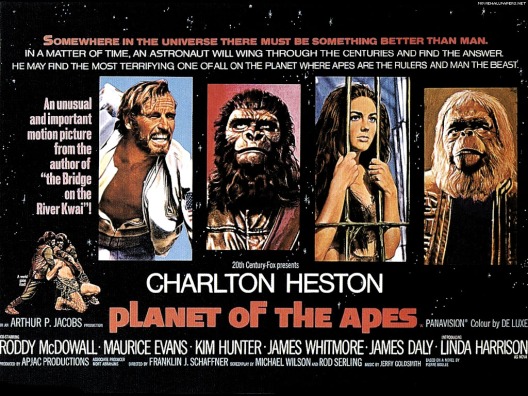
TCM’s Classic Movies Seriesis the perfect opportunity to re-visit or perhaps attend for the first time the theatrical screenings of – “Planet of the Apes”, “Animal House” and “The King and I”.
Each film will include a special TCM-produced commentary by host Ben Mankiewicz who will provide exclusive insights, behind-the-scenes looks and more.
I’m a big proponent of heading to the theater to watch an anticipated movie on the big screen. Even though we have the convenience of DVDs and streaming, nothing beats the experience of sitting in the dark and enjoying a great film with fellow movie lovers.
Planet of the Apes may make you question just how civilized and superior humans really are to our primate relatives. It serves as a metaphor for man’s frailties and social prejudices. It holds up a mirror for people to challenge the idea of humanity.
A science fiction film directed by Franklin J. Schaffner, it stars Charlton Heston, Roddy McDowall, Kim Hunter, Maurice Evans, James Whitmore, James Daly and Linda Harrison. The screenplay by Michael Wilson and Rod Serling was based on the 1963 French novel La Planète des Singes by Pierre Boulle.
The film tells the story of an astronaut crew who crash-land on a strange planet in the distant future. Although the planet appears desolate at first, the surviving crew members stumble upon a society in which apes have evolved into creatures with human-like intelligence and speech. The apes have assumed the role of the dominant species and humans are mute creatures wearing animal skins.(Wikipedia)
Join Astronaut George Taylor (Charleton Heston) as he attempts to uncover the truth after waking up on a desolate planet and discovering that apes are in control! See the classic that bravely challenged social issues and made people ask the question, “how civilized are we, really?”
As I write on my About page, I’ve loved movies ever since I was a kid at the Saturday matinees. When the VCR was developed, I was in heaven. The ability to view my favorite films whenever I wanted was a day I had envisioned since childhood.
I have two children and raised them to be movie junkies, as well. We frequently have conversations laced with film quotes like – “It doesn’t have to be gold” from the Billy Wilder classic, “Some Like it Hot!” or “Do or do not. There is no try.” from the wise Yoda in “Empire Strikes Back”.
This post features some of my favorite, most notable quotes from my best-loved movies. There are way too many to name, but here goes:
Trivia: Marlon Brando boycotted the Academy Awards and turned down his Oscar for Best Actor in protest of the treatment of Native Americans in film and on television. Al Pacino also was a no-show for being nominated as Best Supporting Actor and not Best Actor. He had more screen time so didn’t appreciate the slight.
This Jack Lemmon, Tony Curtis, Marilyn Monroe comedy vehicle has always been close to my heart because, for its time, was the most subversive film I’d ever seen. And I mean that in a good way! Cross-dressing, gay marriage, it’s brilliant! In my top 5.
Tom Hanks “made his bones” to quote The Godfather in this remarkable cinematic triumph. Forrest Gump will probably go down as one of the most quotable films of all time! “Mama always said life was like a box of chocolates, you never know what you’re gonna get”.
1939 is considered to be the most amazing year in the motion picture industry for the quality of films and audience attendance. “Gone With the Wind”, “Mr. Smith Goes to Washington” and “The Wizard of Oz”, which is one of the most beloved works of our time. It continues to tug at our heart strings with every generation.
“Some people without brains do an awful lot of talking.” Scarecrow
This group is just a sampling of some of the best. Stay tuned for Part Two of the Most Quotable Films. In the meantime:
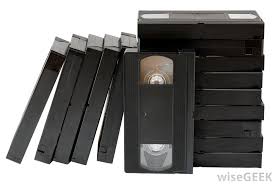
My ideas for posts come to me in a very organic way. Doesn’t matter where I am or what I’m doing, if a thought comes to mind I immediately write it down. (if I don’t, it can be lost in the ether forever:) This time, sitting under the dryer at the salon, I came up with the idea for a flashback look at the revolutionary video format from “back in the day”and some of my favorite titles from the hundreds of tapes in my VCR library.
The Video Home System (VHS) is a standard for consumer-level use of analog recording on videotape cassettes. It was developed by Victor Company of Japan (JVC) in the 1970s. (Wikipedia)
Over the years, I’ve been upgrading my VHS tapes to DVDs because of the quality. But, I’d also kept my VCR because of my extensive VHS collection and besides, it was in perfectly good condition. That is until about a year ago. The rewind ceased to function and upon ejecting the tape it became a projectile, hurling itself across the room.
I recently celebrated my birthday and received an Amazon gift card which I was very excited to use in purchasing a new, used VCR. As I started taking inventory of tapes I hadn’t been able to or just forgot about watching over the years, I was like a kid in a candy store, discovering these titles all over again.
Anyone who knows me understands I’m a movie junkie. As a kid, my mom and I went to the “show” (as we called it) on a weekly basis. And on Saturdays, I’d tag along with my sister to the monster matinees.
Growing up in the sixties, I only had access to my favorite films at the movie theater. However, I always believed the day would come when I’d assemble a film library and be able to watch my faves as often as I’d like. It would take another decade, but I got my wish when in 1977 the VCR player became available to the general public.
From the 1950s, magnetic tape video recording became a major contributor to the television industry, via the first commercialized video tape recorders (VTRs). At that time, the devices were used only in expensive professional environments such as television studios and medical imaging (fluoroscopy).
In the 1970s videotape entered home use, creating the home video industry and changing the economics of the television and movie businesses. The television industry viewed VCRs as having the power to disrupt their business, while television users viewed the VCR as the means to take control of their hobby. (Wikipedia)
First VHS Logo
In the beginning, there were few titles available and the tapes were expensive. ($60-$80) It would take until the early eighties before the format was feasible as prices came down.
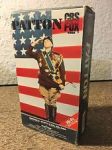
The first theatrical film ever released to the public on VHS was the South Korean drama, The Young Teacher, in 1976. The first three titles to become available in the U.S were – The Sound of Music, Patton, and M*A*S*H (at an average retail cost of $50-$70, each).
I have such happy memories of watching The Sound of Music (1965) for the first time and being swept up in the majestic opening number and loving every song. At that moment, Julie Andrews became my favorite songstress and I would forever perform as a soprano!
West Side Story (1961) also made an impression and was one of the coolest musicals of the 1960’s. Winner of ten Academy Awards including Best Picture, this electrifying musical sets the ageless tragedy of Romeo and Juliet in the slums of 1950s New York.
My personality is the type that will watch a movie over and over again and I’m so thankful for the advent of the VCR which has allowed me to collect and enjoy my film library anytime I desire. These films have also impacted and inspired me to take my love of musicals and eventually perform in community theater productions.
It’s so wonderful to be able to relive fond big screen memories, and relish home movies of when my kids were young. Starting my video collection was a wish come true and I often enjoy revisiting these special films and moments of days and times gone by.
VHS Legacy
Often considered an important medium of film history, the influence of VHS on art and cinema was highlighted in a retrospective staged at the Museum of Arts and Design in 2013. In 2015 the Yale University Library collected nearly 3,000 horror and exploitation movies on VHS tapes, distributed from 1978 to 1985, calling them “the cultural id of an era.” (Wikipedia)
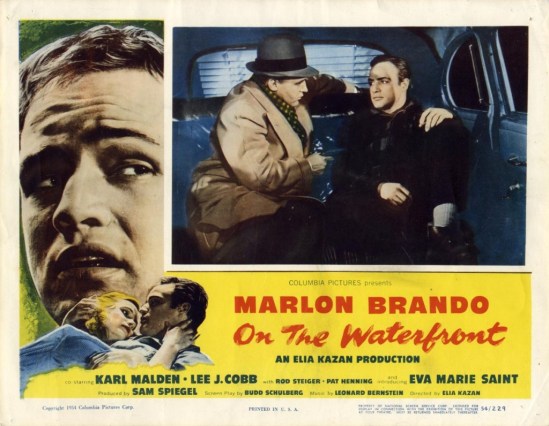
“On the Waterfront” with exclusive commentary and a special glimpse behind the scenes from Turner Classic Movies host Ben Mankiewicz that will illustrate how this movie, which was filmed in only 36 days, made such a long-lasting cultural impact.
As a classic movie fan, seeing this Marlon Brando Academy Award winning film on the big screen is an opportunity not to be missed!
“You don’t understand! I coulda had class. I coulda been a contender. I could’ve been somebody, instead of a bum, which is what I am.” Watch Marlon Brando deliver those famous lines on the big screen when Fathom Events, Turner Classic Movies, and Sony Pictures Entertainment bring On the Waterfront (1954) back to selectcinemas nationwide for a special two-day event on Sunday, April 24 and Wednesday, April 27.
Marlon Brando
Marlon Brando stars as Terry Malloy, a washed-up prizefighter who, through the influence of his brother, Charley (Rod Steiger), a lawyer for a corrupt waterfront union, is employed as an errand boy for the mob. After luring a fellow dockworker and friend to his death to keep him from testifying against labor boss Johnny Friendly (Lee J. Cobb), the appeals of the dead man’s sister (Eva Marie Saint) and a crusading priest (Karl Malden) awaken Terry’s guilty conscience and love prompts Terry to seek redemption. (Fathom Events)
Eva Marie Saint, Brando
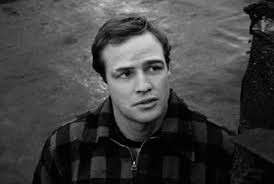
Brando – Terry Malloy
Karl Malden, Brando, Eva Marie Saint
Brando Academy Award
Do not miss the opportunity to see this classic, winner of eight Academy Awards including Best Picture in 1954, as it was meant to be seen – on the big screen!
Today we’re celebrating Brando’s 92th birthday. His style, his “method”, his talent. Truly an original. One of the greatest actors of all time!
“Listen to Me Marlon” is the outstanding, award-winning documentary airing on cable’s Showtime about Brando in his own words:
April 3, 1924 – July 1, 2004
Marlon Brando, Jr. was an American actor, film director, and activist. He is hailed for bringing a gripping realism to film acting and is often cited as one of the greatest and most influential actors of all time.
“The Wild One”
Biography’s Documentary on Brando:
Brando is also credited with helping to popularize the Stanislavski system of acting, today more commonly referred to as method acting. A cultural icon, Brando is most famous for his Academy Award-winning performances as Terry Malloy in On the Waterfront (1954) and Vito Corleone in The Godfather (1972), as well as influential performances in A Streetcar Named Desire (1951), The Wild One (1953), Last Tango in Paris (1972), and Apocalypse Now (1979).
Marlon Brando initially gained acclaim and an Academy Award nomination for reprising the role of Stanley Kowalski in the 1951 film adaptation of Tennessee Williams’ play A Streetcar Named Desire, a role that he had originated successfully on Broadway.
“On the Waterfront”
“The Godfather”
The sixties were an artistic bust for Brando but ten years later he made his successful and award-winning comeback with his portrayal of Vito Corleone in Francis Ford Coppola’s “The Godfather”. The studio was opposed to his casting so he had to audition for the role. He improvised with cotton in his mouth to come up with the mumbling sound of The Don. The studio relinquished and the rest is cinema history.
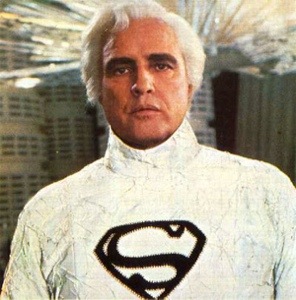
“Superman”
As a result of regaining his box office gravitas with “The Godfather” and “Last Tango in Paris”, Brando became a highly paid character actor with roles in films like “Superman” which according to the Guinness Book of World Records, Brando was paid a record $3.7 million ($14 million in inflation-adjusted dollars) and 11.75% of the gross profits for 13 days’ work.
Brando was ranked by the American Film Institute as the fourth greatest movie star among male movie stars whose screen debuts occurred in or before 1950. He was one of only three professional actors, along with Charlie Chaplin and Marilyn Monroe, named in 1999 by Time magazine as one of its 100 Most Important People of the Century. He died of respiratory failure on July 1, 2004, at age 80. (Wikipedia)
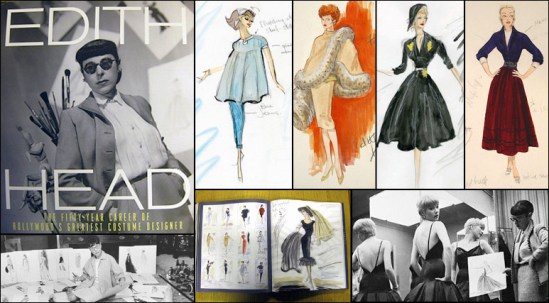
As a classic movie lover, it seems every important film from the 1940’s until the 1970’s was dressed by Academy Award Winning Costume Designer Edith Head. The look of a film sets the tone which Ms. Head artfully conveyed with her iconic fashions, making her our next accomplished artist in “The Faces Behind the Camera” theme.
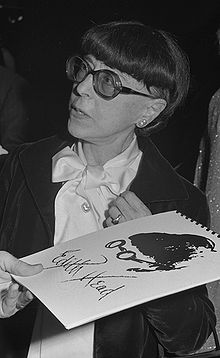
Edith Head in 1976
Born Edith Claire Posener in San Bernardino, California, Edith Head (October 28, 1897 – October 24, 1981) was an American costume designer who won a record eight Academy Awards for Best Costume Design, starting with The Heiress (1949) and ending with The Sting (1973).
Head’s designs were integral to the look and feel of a picture and she was considered exceptional for her close working relationships with her subjects, with whom she consulted extensively, and these included virtually every top female star in Hollywood.
Dorothy Lamour, Veronica Lake, Barbara Stanwyck, Ingrid Bergman, Bette Davis, Elizabeth Taylor, Grace Kelly, Kim Novack and Tippi Hendren to name a few.
Head received eight Academy Awards for Best Costume Design, more than any other person, from a total of 35 nominations. (Wikipedia)
Born and raised in California, Head managed to get a job as a costume sketch artist at Paramount Pictures, without any relevant training. She first acquired notability for Dorothy Lamour’s trademark sarong dress in Paramount’s, The Jungle Princess (1936) and then became a household name after the Academy Awards created a new category of Costume Designer in 1948.
In 1967, at the age of 70, she left Paramount Pictures and joined Universal Pictures to work with Alfred Hitchcock on such films as –Rear Window, 1954, To Catch a Thief, 1955, The Man Who Knew Too Much, 1956, Vertigo, 1958, The Birds, 1963, and Marnie, 1964, where she remained until her death in 1981.
An Edith Head costume collection from the Paramount Pictures Archive left Hollywood—for just the second time—to be shown exclusively at the Decorative Arts Center of Ohio in Lancaster in “Designing Woman: Edith Head at Paramount 1924-1967” as presented by the Fox Foundation from June 7 through August 17, 2014. (Wikipedia)
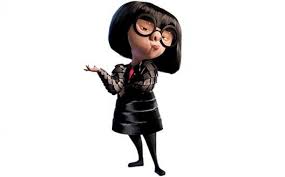
Trivia: The costume designer Edna Mode in the 2004 Pixar movie The Incredibles was largely based on Edith Head, according to director Brad Bird, who voiced the character.
Edna Mode – “The Incredibles”
Head died on October 24, 1981, four days before her 84th birthday, from myelofibrosis, an incurable bone marrow disease. She is interred at Forest Lawn Memorial Park in Glendale, California.
Edith Head’s star on the Hollywood Walk of Fame is located at 6504 Hollywood Boulevard.
If you’re a movie junkie like me you probably not only know the stars of the film but the Director, The Cinematographer, the Editor, Writers and possibly the Key Grip. The faces behind the camera.
If you attend a movie with me, be prepared to stay through the end credits. I feel it’s imperative to acknowledge those artists who are responsible for the project. Staying for the credits also gives you a foundation to critique a film based on the direction, writing, and editing. Whether or not to see a movie based on a Director’s previous track record or the Cinematographer’s eye for the visuals.
This month is dedicated to educating and paying homage to the artists who help put it all together. Let’s begin with one of the top 2 of my favorite Directors, Billy Wilder.
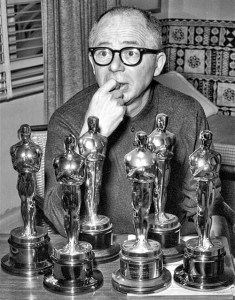
Billy Wilder
Billy Wilder (June 22, 1906 – March 27, 2002) was an Austrian-born American filmmaker, screenwriter, producer, artist and journalist, whose career spanned more than fifty years and sixty films. He is regarded as one of the most brilliant and versatile filmmakers of Hollywood’s golden age.
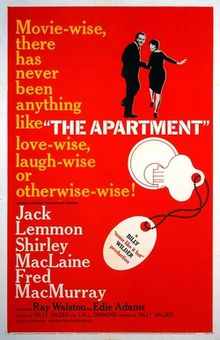
With The Apartment, (starring Jack Lemmon, Shirley MacLaine, and Fred MacMurray) Wilder became the first person to win Academy Awards as the producer, director, and screenwriter for the same film. “The Apartment” was nominated for ten Academy Awards and won five, including Best Picture.
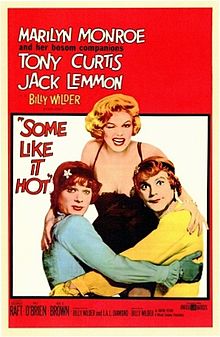
I love Billy Wilder because of his versatility in films and his testing the boundaries of societal norms. The first movie that comes to mind with his pushing the boundaries is “Some Like it Hot” 1959 starring Marilyn Monroe, Jack Lemmon, and Tony Curtis.
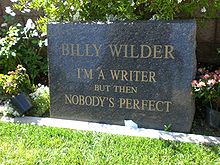
The plot revolves around two musicians who dress in drag in order to escape from mafia gangsters whom they witnessed commit the Saint Valentine’s Day Massacre. These are the final lines of the film delivered by (Daphne/Jerry) Lemmon and Joe E. Brown (Osgood) in regards to their pending marriage: Daphne/Jerry: But you don’t understand, Osgood![Whips off his wig, exasperated, and changes to a manly voice]Uh, I’m a man! Osgood: [Looks at him then turns back, unperturbed]Well, nobody’s perfect!” Wow! for 1959 that was pretty radical.
“Some Like It Hot” is considered to be one of the greatest film comedies of all time. It was voted as the top comedy film by the American Film Institute on their list on AFI’s 100 Years… 100 Laughs poll in 2000. The film is also notable for featuring cross-dressing and homosexuality, which led to it being produced without approval from the Motion Picture Production Code. The Code was the set of industry moral guidelines that was applied to most American motion pictures released by major studios from 1930 to 1968. The Production Code had been gradually weakening in its scope during the early 1950s due to increasing societal tolerance for previously taboo topics in film, but it was still officially enforced. The overwhelming success of “Some Like It Hot” was a final nail in the coffin for the Hays Code.
Wilder became a screenwriter in the late 1920s while living in Berlin. After the rise of the Nazi Party, Wilder, who was Jewish, left for Paris, where he made his directorial debut. He moved to Hollywood in 1933, and in 1939, he had a hit when he co-wrote the screenplay for the screwball comedy Ninotchka. Wilder established his directorial reputation with Double Indemnity (1944), a film noir he co-wrote with crime novelist Raymond Chandler. Wilder earned the Best Director and Best Screenplay Academy Awards for the adaptation of a Charles R. Jackson story The Lost Weekend (1945), about alcoholism. In 1950, Wilder co-wrote and directed the critically acclaimed Sunset Boulevard.
Wilder was recognized with the American Film Institute (AFI) Life Achievement Award in 1986. In 1988, Wilder was awarded the Irving G. Thalberg Memorial Award. In 1993, he was awarded the National Medal of Arts.
Wilder received a total of twenty-one Academy Award nominations; eight for Best Director, twelve for writing, and one as the producer of Best Picture. With eight nominations for Academy Award for Best Director, Wilder is, together with Martin Scorsese, the second most nominated director in the history of the Academy Awards, behind William Wyler, and the second most nominated screenwriter behind Woody Allen.
Wilder won a total of six Oscars: Best Director for The Lost Weekend and The Apartment, Best Screenplay for The Lost Weekend, Sunset Blvd, The Apartment, and Best Picture for The Apartment. In addition, he received the Irving G. Thalberg Memorial Award in 1988.
Wilder died in 2002 of pneumonia at the age of 95 after battling health problems, including cancer, in Los Angeles and was interred in the Westwood Village Memorial Park Cemetery in Westwood, Los Angeles near Jack Lemmon and Walter Matthau. Marilyn Monroe’s crypt is located in the same cemetery. Wilder died the same day as two other comedy legends: Milton Berle and Dudley Moore. The next day, French newspaper Le Monde titled its first-page obituary, “Billy Wilder dies. Nobody’s perfect”, quoting the final gag line in “Some Like It Hot”.
In honor of Black History Month, I’ll be featuring films either starring or representing African American themes.
This repost and film duo for the month is the incomparable Nicholas Brothers. Their energy and dynamic dance routines are legendary and unmatched by any other artist then or now. Born during an era when African American entertainers were restricted in film appearances and even cut out for southern audiences, the Nicholas Brothers rose above and beyond the sensibilities of the times.
The Nicholas Brothers were a famous African American team of dancing brothers, Fayard (1914–2006) and Harold (1921–2000). Their highly acrobatic technique (“flash dancing“), demonstrated such a high level of artistry and daring innovations that they were considered by many to be the greatest tap dancers of their day.
Growing up with musician parents (mother played piano and father drums) who had their own band, the brothers were surrounded by some of the best Vaudeville acts of the time and became stars of the jazz circuit during the heyday of the Harlem Renaissance . Fayard and Harold went on to have successful careers performing on stage, film, and television well into the 1990s.
Their signature move was to leapfrog down a long, broad flight of stairs, while completing each step with a split. This move was performed to perfection in the finale of the movie, Stormy Weather . In my humble opinion, the “Jumpin’ Jive” dance number in Stormy Weather was the greatest movie musical sequence of all time!
Nicholas Brothers – Jump!
Another signature move was to arise from a split without using their hands.Gregory Hines (with brother Maurice – tap dancing brother and father team Hines, Hines and Dad) declared that if the Nicholas Brothers biography were ever filmed, their dance numbers would have to be computer generated because no one now could emulate them. Ballet legend Mikhail Baryshnikov once called them the most amazing dancers he had ever seen in his life.
The Nicholas Brothers influenced every dancer that came after. Including Michael Jackson. Here they are together on the Jackson’s TV Show.
Legends of dance that should always be remembered!
Nicholas Brothers and Gene Kelley
Fayard and Harold
Harold Nicholas, Dorothy Dandridge and Fayard Nicholas
This site is about how to live our life in a meaningful way by accepting complete surrender to the Almighty with purity of mind and character. It is about the eternal religion of the world i.e. Hinduism which is very liberal to anyone because there are many branches or methods to get the divinity to turn our life into an ever blissful one.
Free listening and free download (mp3) chill and down tempo music (album compilation ep single) for free (usually name your price). Full merged styles: trip-hop electro chill-hop instrumental hip-hop ambient lo-fi boombap beatmaking turntablism indie psy dub step d'n'b reggae wave sainte-pop rock alternative cinematic organic classical world jazz soul groove funk balkan .... Discover lots of underground and emerging artists from around the world.




















 iheartfilm