13 Ghosts❗️ 👻👻👻👻👻👻👻👻👻👻👻👻👻

williamcastle


Let me start by saying, I absolutely love William Castle! His “effects”, and his campy, “spooky” movies made him the “Master of the Movie Gimmick”! He financed his first movie, Macabre (1958), by mortgaging his house and came up with the brilliant idea to give every movie-goer a certificate for a $1,000 life insurance policy from Lloyd’s of London in case they should die of fright during the film. He also stationed nurses in the lobbies with parked hearses outside the theaters. Macabre was a hit!


Each of his films featured an “effect” or gimmick. With “House on Haunted Hill,” it was “Emergo”, the “flying skeleton.” It didn’t always work, but the kids in the audience had a good time anyway trying to knock it down. (kids will be kids:) Trivia Fact: William Castle produced the Roman Polanski horror hit “Rosemary’s Baby.”

houseskeleton

“House on Haunted Hill” Skelton


  “13 Ghosts” is jammed packed with “effects” and filmed in “Illusion-O”. Knife-wielding ghosts, headless ghosts, and murderous ghost Emilio, who has a thing for totally destroying the kitchen. As Buck Zorba (Charles Herbert) tells the story, seems Emilio killed not only his wife but his mother-in-law as well. Whack, whack! (nice sound effect Buck)

The “13 Ghosts'” storyline begins with Dr. Plato Zorba dying and leaving his broke nephew, Professor Cyrus Zorba (Donald Woods), an old, rundown LA mansion. The catch is Cyrus, his wife Hilda,(Rosemary DeCamp), daughter Madea (Jo Morrow) and son Buck can’t sell the house so are forced to share the joint with the 13 ghosts. “They come with the house.”

Ghosts or not the family is so broke that it’s common place for their furniture to be repossessed on a regular basis. In fact, the night they receive a telegram (from a little person in the dark) to meet with Uncle Zorba’s attorney Benjamin Rush (Martin Milner), they’re sitting on the floor exchanging gifts and slicing birthday cake for their youngest son, Buck – Once again, the furniture’s been repossessed.

Move-in day at their new digs includes meeting their Uncle’s housekeeper who turns out to be the green one herself, the Wicked Witch of the West! (Margaret Hamilton)

ghostshamilton

Margaret Hamilton (Elaine the housekeeper)

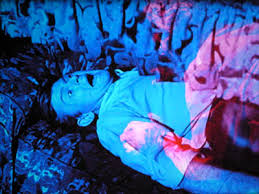
The best is yet to come as attorney Benjamin Rush goes to extremes trying to find the supposed fortune in cash Uncle Zorba stashed somewhere in the house. Ghosts run wild and the ghost viewer lets you catch all the action. Here’s where Illusion-O comes in:
"Aahhhhh!"

“Aahhhhh!”

Audiences received viewers with red and blue cellophane filters. Choosing to look through the red filter intensified the images of the ghosts while the blue filter “removed” them. Being brave or coward, the choice was up to you.

ghostviewer2

“13 Ghosts” is the fourth collaboration from director William Castle and writer Robb White and lives up to the Castle touch. Two of his films were remade by his daughter Terry Ann Castle, who co-produced House on Haunted Hill in 1999, and Thirteen Ghosts in 2001 (the latter retitled Thir13en Ghosts).

A documentary focusing on Castle’s life, Spine Tingler! The William Castle Story, directed by Jeffrey Schwarz, had its premiere at AFI FEST 2007 in Los Angeles on November 8, 2007. It won the Audience Award for Best Documentary.

William Castle Spine Tingler

The Trick Is To Stay Alive!

SpectiCast Presents

Halloween_cover

John Carpenter’s HALLOWEEN

THE 1978 CLASSIC RETURNS TO THE BIG SCREEN

October 29th at 7:30 pm

A special event in cinemas nationwide


In my opinion, John Carpenter’s “Halloween” is the quintessential All Hallows Eve movie. It still freaks me out to the point where I can only watch it during the daytime. So sad:(

Fathom Events and SpectiCast is presenting this special screening of “Halloween” on October 29th at 7:30 pm. Go, Go, Go, see it on the big screen! It’s frightening enough on the small screen and in the theater, I bet it’ll have you curled up in a ball! My favorite lines from the film are – Tommy: “What’s the Boogey Man?” Dr. Loomis: “As a matter of fact… it was.”

This movie is credited with the first strong female in a slasher film and redefines the genre. Jamie Lee Curtis, in her film debut, plays the title role of Laurie Strode. Laurie is not only book smart but has a strong sense of survival. She’s the ‘I’m gonna fight you tooth and nail’ type babysitter who doesn’t just scream and lay there making easy pickings for the killer. Watch out Michael Meyers, she’s no easy win.

A classic film all the way! A must see for every true horror fan.

halloween1978

 ticketsonsalehalloween

John Carpenter’s HALLOWEEN
In Select Cinemas Nationwide

Thursday, October 29
7:30 p.m. (local time)

Buy Tickets

 “It’s Halloween, everyone’s entitled to one good scare.”

Michael Meyers returns to Haddonfield, and the big screen, for one terrifying night on Thursday, October 29th with John Carpenter’s HALLOWEEN. One of the most successful independent movies of all time, the original HALLOWEEN redefined the horror genre as we know it and has spawned a horror franchise of seven sequels.

In 1963, six-year-old Michael stabbed his 15-year-old sister to death. Institutionalized for the next 15 years, Michael manages to escape and heads for his hometown of Haddonfield the day before Halloween. Meanwhile Laurie Strode, a serious student, is spending Halloween night babysitting for the neighbors. Little does she know the danger she and her friends are in with Michael on the prowl.

This special one-night event will also feature an introduction with director John Carpenter, providing exclusive insights into his iconic horror indie.


halloweenjohncarpenter

R.I.P Maureen O’Hara – “Queen of Technicolor”

image

Maureen O’Hara, ‘The Queen of Technicolor,’ Dies at 95

(August 17, 1920 – October  24, 2015)

I loved the feisty Irish attitude she embodied in the characters created starring opposite John Wayne, but my sentiments will always go to her role as 8-year old Natalie Wood’s mother in the Christmas Classic, “Miracle on 34th Street.” R.I.P. Maureen O’Hara

Maureen O’Hara, the Irish beauty whose striking red hair, crystal green eyes, and porcelain skin was so dazzling on the silver screen that she was dubbed “The Queen of Technicolor,” has died. She was 95.

O’Hara, who played the feisty wife to onscreen husband John Wayne in five films — three of them directed by John Ford — died Saturday at her home in Boise, Idaho, Johnny Nicoletti, her longtime manager, told the Associated Press.

“She passed peacefully surrounded by her loving family as they celebrated her life listening to music from her favorite movie, The Quiet Man,” said a statement from her family.

She moved to Idaho in 2013 to be closer to her relatives after spending four decades in Glengarriff, Ireland.

Although she was memorable in so many great Hollywood films — including The Hunchback of Notre Dame (1939), How Green Was My Valley (1941), Miracle on 34th Street (1947), Rio Grande (1950), The Quiet Man (1952), Our Man in Havana (1959) and The Parent Trap (1961) — the Dublin native never won an Academy Award, much less received an Oscar nomination.

That oversight was rectified when the Academy presented her with an honorary Oscar at the Governors Awards in November 2014.


Musing about what made her a star, O’Hara wrote: “I have always believed my most compelling quality to be my inner strength, something I am easily able to share with an audience. I’m very comfortable in my own skin. I never thought my looks would have anything to do with becoming a star. Yet it seems that in some ways they did.”

(Reposted from the Hollywood Reporter)

Dark Comedy Halloween Laughs:)

Arsenic and Old Lace_01

Most people think of Cary Grant as a suave leading man, but he is also an incredible physical comic. The dark comedy “Arsenic and Old Lace”(1944) directed by Frank Capra is the perfect vehicle for his slapstick comedic style. Grant plays Mortimer Brewster who, to his horror, discovers that his two darling elderly aunts (Abby (Josephine Hull) and Martha (Jean Adair) are in fact serial killers, bumping off those who they perceive as “lonely bachelor” men.

arsenicauntsvictim

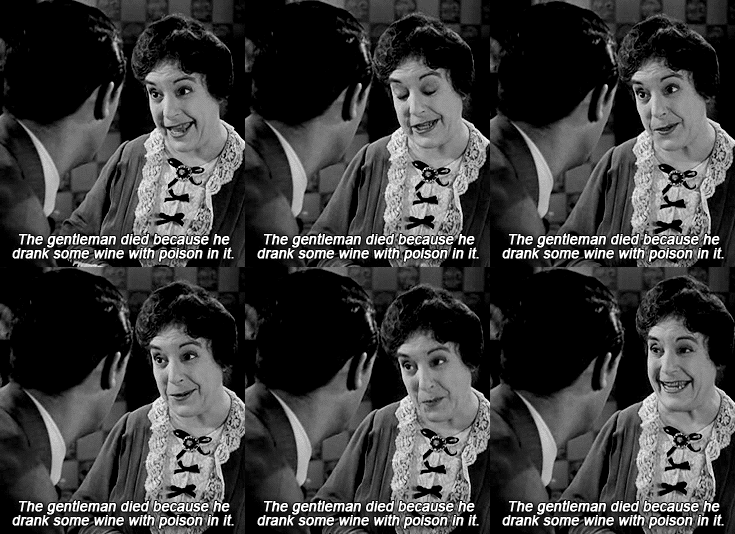
Mortimer’s aunts epitomize the idea of sweet little old ladies. They can preserves, donate toys to the policeman’s children’s fund, make Elderberry wine. The problem is that their tasty Elderberry wine is spiked with arsenic, strychnine and “just a pinch of cyanide”.

After Mortimer discovers a dead body hidden in the window seat he assumes that Teddy (John Alexander) – Abby and Martha’s brother – has committed murder under some delusion, (he believes he’s Theodore Roosevelt).

But the aunts are quite sincere when they explain to Mortimer that they are responsible (“It’s one of our charities”).

arsenicinsanity


The look on Cary’s face when he discovers one of the bodies in the window seat is priceless. The classic double take.


Abby and Martha have the perfect set-up. The cellar of the family home becomes the burial ground for their victims with their brother Teddy aka Theodore Roosevelt digging the graves convinced he’s digging locks for the Panama Canal and burying yellow fever victims.

And, as if his murderous aunts weren’t enough on Mortimer’s plate, enter long, lost brother Jonathan (Raymond Massey). Jonathon is a psychotic killer looking to stash a body of his own (Mr. Spenalzo). Also, to his annoyance, Jonathan is in need of another plastic surgery because his face bears a striking resemblance to Frankenstein thanks to his alcoholic plastic surgeon and accomplice Dr. Herman Einstein (Peter Lorre).

Oh, did I mention the reason why Mortimer was actually visiting his aunts? Well, despite having written several books ridiculing marriage as an “old-fashioned superstition”, Mortimer has fallen in love and has just married the irresistible next door neighbor, Elaine Harper (Priscilla Lane). The wedding took place that morning which is (and this is too perfect) Halloween day.


When Jonathan discovers his aunts’ secret, he threatens to expose them if they try to turn him into the police. When the police come to the house to pick up Abby and Martha’s donation to the policeman’s children’s fund, Mortimer tries to hip them to Jonathan’s identify but it doesn’t go as smoothly as he’d planned. Chaos and hilarity ensue and this is where the monster mash fun begins.


And with that, I’ll let the opening credits speak for itself…

Happy Viewing!

Halloween – Friday Night Frights!

tcmhorror

TCM Horror Fridays in October

In my countdown to Halloween, I’ve already started watching my Friday night fright movies with help from my favorite classic film channel Turner Classic Movies. Fridays in October at 8:00 pm, they’re featuring theme-based horror flicks. The theme for Friday, October 9th is ‘Rogue Body Parts’. (sounds like fun!) To help other fans with fright flick selections, I’ll be recommending my DVR worthy choices for the TCM Horror Fest. So fire up the DVR, grab your favorite go-to snack and settle into the Halloween spirit!


Mad love

Mad Love (1935) – Peter Lorre, Frances Drake


My DVR choice of movies featured in the ‘Rogue Body Parts’ theme, is “Mad Love” (1935) directed by German filmmaker Karl Freund and starring Peter Lorre, Frances Drake and ‘Dr. Frankenstein’ himself, Colin Clive. An adaptation of Maurice Renard’s story The Hands of Orlac, it’s probably one of the most bizarre movies you’ll ever see.

madlovegogol

Peter Lorre as Dr. Gogol

“Mad Love” was so disturbing for the time that the studio released the film with an opening disclaimer that began, “Ladies and Gentlemen, Metro-Goldwyn-Mayer feels that it would be a little unkind to present this picture without just a word of friendly warning….” The Hays censorship office had objections to the showing of the train wreck or any “gruesome” images. It also had issues with the torture scenes and a shot of Dr. Gogol fondling the wax replica of Yvonne. Oops!

madlove5

This movie is Lorre’s American film debut and he portrays the strange Dr. Gogol – his name alone evokes an unsettling mood. Well, Gogol seems to have a thing for sadomasochism which he enjoys at the ‘Théâtre des Horreurs’. Actress Yvonne Orlac (Frances Drake) is the object of Dr. Gogol’s obsession as she embodies his fantasy on stage in the theater company’s latest torture production.

So sorry Dr. Gogol but Yvonne is married to Stephen Orlac (Colin Clive) – accomplished concert pianist – but anyway, she is so NOT into this creepy little man who has a standing box seat and has attended every performance. Gogol is so obsessed with Yvonne that he buys the wax figure of her after the show’s final performance. Mind you this is a life-size replica that he enshrines in his home so he can “always possess her.” Told you he was creepy.

Yvonne Orlac in wax – Dr. Gogol

The brilliant Dr. Gogol is a renowned surgeon with whom Yvonne, in desperation, must plead with to save her successful pianist husband’s hands and career after a gruesome train wreck. Well, of course, he’ll help his love but during emergency surgery on Stephen he comes up with the twisted idea to graft the hands of a knife-wielding killer who has just been put to death on the guillotine. (And of course, Gogol attended the decapitation.) However, soon afterward Stephen begins to suspect that something is seriously wrong with his new found extremities.

This is where we add another level of freaky to the plot. I’m not going to give anything away – that goes against every film fan rule. So, check it out and let me know on a scale of 1 – 10 the creep/freak factor in the comments. Also, be sure to stay tuned for next week’s DVR worthy fright flick. Theme – ‘Scary Kids’.


Happy Viewing!


Turner Classic Movies – Host Robert Osbourne’s 20th Anniversary

image

Those of you who read my posts on a regular basis know I’m a big time fan of classic movies. My interests include all genres and typically those from legendary directors like Alfred Hitchcock and Billy Wilder. Melodrama and classic Sci-Fi rate high on my favorite movie lists and the best television source I’ve discovered and my go to for “all things film” is the Turner Classic Movies channel.


As program host, Robert Osbourne brings a style and wealth of cinema knowledge respected by both enthusiasts and Hollywood legends alike. Osbourne is a graduate of the University of Washington’s School of Journalism and has over 30 years experience writing about film and Hollywood. In 1977, he started his career as a columnist for The Hollywood Reporter and the following year published 50 Years of Oscar which won him the 1979 National Film Book award. He served as President of the Los Angeles Film Critics Association in 1981, a position he would be re-elected to for the next two years. In 1994, Ted Turner created Turner Classic Movies as a competitor to American Movie Classics (now known as AMC). Osborne was selected as the host of their nightly broadcasts as well as special one-on-one “Private Screening” interviews and the weekly feature “The Essentials.”

  • image

This month we celebrate Mr. Osbourne’s 20th Anniversary with a tribute to his memories and moments of sharing rare, golden Hollywood era and restored film classics from the TCM vault. For a retrospective of Mr. Osbourne’s beginnings as host, films and Hollywood legends that have visited and shared their stories, tune in on September 15th at 5:30am (I know, way too early – I’m going to DVR the special:) on your local cable channel or visit online at: http://www.tcm.com for complete details and the upcoming TCM schedule.


TCM 20 years of classic movies

TCM’s library of films spans several decades of cinema and includes thousands of film titles. The channel has licensing agreements with such studios as Metro-Goldwyn-Mayer and Warner Bros, Entertainment. They also have movie licensing rights with Universal Studios, Paramount, 20th Century Fox, Walt Disney Studios, Selznick International Pictures, Sony Pictures Entertainment, Studio Canal and Janus Films. With such an extensive collection, we are treated to program features such as “31 Days of Oscar”, “Star of the Month”, “Silent Sunday Night”, “TCM Remembers”and numerous original programming broadcast specials.


Twenty-Four Seven there’s always new movies to discover, old titles to revisit and an extensive background of cinema and film history. You can’t go wrong. Turner Classic Movies – For Movie Lovers Everywhere!


TCM logo


Master of Suspense?

Master of Suspense

Sir Alfred Joseph Hitchcock  (August 13, 1899 – April 29,  1980)

Sir Alfred Joseph Hitchcock aka “Master of Suspense” was a British born director known for his mastery of the suspense and psychological thriller.  He was an innovator using film editing (cuts) as the basis to construct a film. He poked, stabbed and forced us to face our fears, obsessions and compulsions.

Hitch is one of my favorite directors because of his fearlessness. He used a voyeuristic style and cuts to let you see inside the heads of his leading characters. Rear Window (1954) is a classic example of his style as the audience becomes the voyeur along with James Stewart’s character. We go along with Hitch and peer through the windows of Stewart’s neighbors and cross a line we otherwise wouldn’t.

In Psycho (1960) we peer through the peephole with “Norman Bates” (Anthony Perkins) and end up rooting for this very troubled individual. Not allowing patrons to enter the theater after Psycho started was a great gimmick. His most fearless move was what occurred in the first 45 minutes of the film. Now that’s risk and genius!

In 1992, the US Library of Congress deemed the film “culturally, historically, or aesthetically significant” and selected it for preservation in the National Film Registry.

Now, meet Hitchcock as he takes us through the Bates Motel and the events that occurred. This is Sir Alfred in all his shocking glory.

Although Hitchcock is legendary for his film editing genius, Rope (1948 ) proved to be his ultimate experiment. Instead of using film editing, he would shoot the movie in one long sequence. Stopping only to change the camera role. Like filming a play. Each role of camera film holds about 10-12 minutes of film.
The set was insane with flying walls and furniture. Jimmy Stewart once remarked about placing his drink on a table, turning back around and not only was the drink gone but the table it was sitting on. Everyone had to be on their mark and not drop a line because if anything went wrong they had to do everything  all over again. Hitchcock said the film just about killed him!

A Little Hitchcock History:

His first directing assignment, Number 13, began in 1922 but unfortunately wasn’t finished due to financial issues. His big break came in 1927 with the completion of his thriller The Lodger: A Story of the London Fog.  The plot revolved around a search for a Jack the Ripper type of serial killer and mistaken identity. Hitchcock’s first thriller is ripe with mood and the German Expressionist influence. A taste of things to come in Hitch’s repertoire, it was a commercial and critical success.

Hitchcock-The_Lodger_1927_Poster

Hitchcock’s tenth film, Blackmail was released in 1929 and considered Britain’s first talkie. It also starts his usage of landmarks as a tradition and appears in the longest cameo of all his films.

Hitchcock-Blackmail_1929_Poster

The 39 Steps (1935) is widely considered the best of Hitchcock’s early films and made him a star in the U.S.  It also branded Hitch’s obsession with the cold blonde, sophisticated leading lady which Grace Kelly would come to epitomize. Then there’s the infamous “MacGuffin.”  A reoccurring plot device that actually had no real significance to the story-line. A decoy. Just another Hitch thing.

The 39 Steps

Alfred Hitchcock’s films were produced in Britain until in 1939. When David O. Selznick signed him to a seven year contract, Hitch relocated to the United States with his wife Alma Reville (his closest collaborator) and his daughter Patricia Hitchcock.

Alma Reville was an accomplished director, writer, editor and producer in Britain before she met Hitch while working  at Paramount‘sFamous Players-Lasky studio in London, during the early 1920s. Patricia Hitchcock appeared in several of her dad’s films including: Psycho, Strangers on a Train and Stage Fright.

Rebecca (1940) was Hitchcock’s first American film. It won the Academy Award for Best Picture and Hitchcock was nominated for Best Director but did not win. In fact, although nominated five times, he would never be afforded that honor.

Alfred Hitchcock  became an American citizen in 1956 and was a multiple nominee and winner of a number of prestigious awards. Hithcock was the recipient of  two Golden Globes, eight Laurel Awards, and five lifetime achievement awards including the first BAFTA Academy Fellowship Award.

Hitchcock received a knighthood in 1980 when he was appointed a Knight Commander of the Most Excellent Order of the British Empire (KBE) by Queen Elizabeth II.

What’s your quintessential Hitchcock film?

  • Stage Fright (1950)
  • Saboteur (1942)
  • Strangers on a Train (1951)
  • The Birds (1963)
  • Spellbound (1945)
  • Shadow of a Doubt (1943)
  • Rebecca (1940)
  • Foreign Correspondent (1940)
  • The 39 Steps (1935)
  • Rope (1948)
  • Vertigo (1958)

Not here? Voice Your choice in the comments.

Check out Alfred Hitchcock’s substantial catalog.

The quintessential “Master of Suspense.”

80’s Classics Turn 30!

Goonies poster

Released June 7, 1985

Directed by Richard Donner. The screenplay was written by Chris Columbus from a story by executive producer Steven Spielberg.

Hard to believe but this year marks the 30th Anniversary of The Goonies and the “Truffle Shuffle”. I love this film! Buddies on a treasure hunt adventure to help their parents and save their neighborhood while along the way encountering pirates (one-eyed Willie), escaping from gangster family – the Fratelli’s and by the end forging a special friendship with the one-eyed, Baby Ruth eating, and ever lovable – Sloth. Sounds good to me! The Goonies got their nickname from the “Goon Docks” which is the neighborhood in which they live.

The movie was filmed in Astoria, Oregon which held a big four-day event that kicked off on Thursday, June 4th, running until Sunday, June 7th. Goonies fans were able to tour film locations, go to film screenings and even go on a treasure hunt. The actor who plays Chunk, Jeff Cohen, took part in the celebration signing autographs for fans on Friday at the Liberty Theater.


My favorite character is the klutzy Chunk. He has the best scenes and is absolutely hilarious. Getting into a little bit of everything he has lots of stories and confessions to share.


And what would the movie be without the theme song from Cyndi Lauper – The Goonies ‘R’ Good Enough:

The Goonies

Sean Astin as Michael “Mikey” Walsh

Corey Feldman as Clark “Mouth” Devereaux

Ke Huy Quan as Richard “Data” Wang

Josh Brolin as Brandon “Brand” Walsh

Jeff Cohen as Lawrence “Chunk” Cohen

Kerri Green as Andrea “Andy” Carmichael

Martha Plimpton as Stephanie “Stef” Steinbrenner


happy anniversary 30


The Breakfast Club

John Hughes films really have a knack for capturing the teenage angst and The Breakfast Club stands out as one of the best. The movie is engaging, funny and poignant and by the end you understand and care about each one of the characters. It may have been 30 years ago. but the themes still stand the test of time. We can all relate to the jungle called high school. For many it was the best of times and for others the worst of times.


breakfast-30th-banner

Anthony Michael Hall, Molly Ringwald, Ally Sheedy and Judd Nelson then and now.

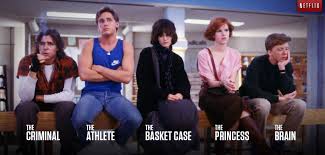
Directed, written and produced by John Hughes, the coming of age storyline follows five teenagers, each a member of a different high school clique, who spend a Saturday in detention together and come to realize that they’ve bought into their respective stereotypes from peer pressure but are more complex than the labels they wear. They also deal with the pressures and expectations of their parents, teachers, and other authority figures. Critics consider it to be one of the great high school films as well as one of Hughes’ most memorable and recognizable works.

John Hughes

John Hughes

Starring Emilio Estevez, Paul Gleason, Anthony Michael Hall, Judd Nelson, Molly Ringwald and Ally Sheedy, it’s a bonafide classic and made 80’s icons of Anthony Michael Hall, Judd Nelson, Molly Ringwald and Ally Sheedy. The “Brat Pack.”


The Breakfast Club quote

Breakfast Club Bowie quote

“Changes” – Opening verse of the 1985 film The Breakfast Club

Happy 30th Anniversary!

happy anniversary gold

Be sure to click this link to check out my post on The Breakfast Club Brat Pack.


Pioneering Women Filmmakers

The Early Visionaries of American Film: A Series – Part 1

star wars galaxy

A long time ago in a galaxy far, far away…Women were the driving force behind Hollywood and the movies. This is the first part in a series paying homage to the women who broke the glass ceiling and wrote and directed the films that gave birth to the “Golden Age” of cinema and the motion picture industry.  Unfortunately, when the men realized the gold mine films were becoming, the women faded away thanks to the Hollywood studio system. Well, as the saying goes, “that’s the way they do you.”


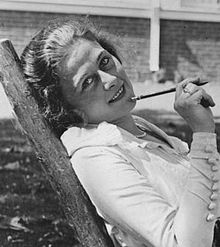
Frances Marion 1918

Frances Marion 1918


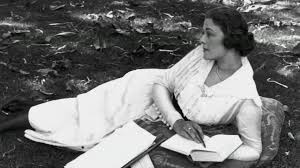
Frances Marion was a trailblazer. becoming one of the most powerful screenwriters of the 20th century. With a career that spanned decades, she became the first female to win an Academy Award for Best Adapted Screenplay in 1930 for the prison life film The Big House, starring Robert Montgomery, Wallace Beery and Chester Morris. Her research included visiting San Quentin for the atmosphere and lingo of the inmates. The movie gave audiences their first experience of hearing prison doors slam shut, tin cups clanking on mess-hall tables and prisoners’ feet shuffling down corridors.


Frances also received the Academy Award for Best Story for The Champ in 1932. The tearjerker chronicled the relationship between a washed out boxer (Wallace Beery) and his young son (Jackie Cooper). Marion was credited with writing 300 scripts and producing over 130 films.


Born Marion Benson Owens (November 18, 1888) in San Francisco, California, she worked as a journalist and served overseas as a combat correspondent during World War I. On her return home in 1910, she moved to Los Angeles and was hired as a writing assistant, an actress by “Lois Weber Productions”, a film company owned and operated by pioneer female film director Lois Weber. (more on Lois Weber in Part 2 of the series)


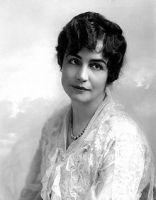
Lois Weber

Lois Weber – Film Director

Frances was quite beautiful and could have been an actress but preferred to work behind the camera. She learned screenwriting from Lois Weber and went on to become the highest paid screenwriter, woman or man. Hollywood moguls competed for her stories and stars of the day Mary Pickford, Lilian Gish, Greta Garbo and Rudolph Valentino brought her characters to life on the screen. From 1919 – 1939 her star was ascendant, born at the right place and the right time, honing her craft during one of the most liberating eras for women in film.


When Marion met Mary Pickford (actress, producer, screenwriter) they became best friends with Marion writing screen adaptations of Rebecca of Sunnybrook Farm and The Poor Little Rich Girl for Pickford. As a result of the commercial success of “The Poor Little Rich Girl” in 1917 Marion was signed as Pickford’s “exclusive writer” at the salary of $50,000 a year, an unprecedented arrangement for that time.

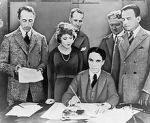
Pickford was the celebrated “America’s Sweetheart” and in 1919 together with her swashbuckler actor husband Douglas Fairbanks, Sr., director D.W. Griffith (Birth of a Nation) and “The Tramp” Charlie Chaplin established “United Artists” pictures. These four were the leading figures in early Hollywood and this was their stand for independence against the powerful studio system. Mary was also  one of the original 36 founders of the Academy of Motion Picture Arts and Sciences.


In 1921, Frances Marion directed a film for the first time with Just Around the Corner. That same year, she directed her friend Mary Pickford in one of her own scripts entitled The Love Light. Their relationship was more than just writer and star, they were collaborators and the friendship between Pickford and Marion lasted more than 50 years.

Married four times, Frances Marion had two children with third husband, actor Fred Thomson. This was her longest marriage, lasting from 1919 until Thomson’s sudden and tragic death from a Tetanus infection in 1928. Frances’ great friend Mary Pickford had introduced them. Frances said it was love at first sight.


Fred Thomson and Frances Marion

Fred Thomson and Frances Marion

For many years she was under contract to MGM Studios, but, independently wealthy, she left Hollywood in 1946 to devote more time to writing stage plays and novels. Frances Marion published a memoir Off With Their Heads: A Serio-Comic Tale of Hollywood in 1972.

Frances died on May 12, 1973 leaving a legacy of innovation, independence and inspiration for future aspiring female writers. The documentary, Frances Marion: Without Lying Down,” is an insightful profile of her life and achievements in Hollywood.


Without Lying Down

Mary Pickford and Frances Marion


Narrated by “Pulp Fiction” actress Uma Thurman and Oscar-winner Kathy Bates, who gives voice to the screenwriter’s own words taken from her letters, diaries. and memoirs. The documentary also features footage from more than twenty of Marion’s movies, with commentary by silent film historian Kevin Brownlow, and film critic Leonard Maltin.

I was fortunate enough to catch it on Turner Classic Movies recently and great news, it will be replayed on June 10th at 6:00 am (est). It’s also available for purchase at Amazon.com. I highly recommend checking it out!

  frances marion lying

“I’ve spent my life searching for a man to look up to without lying down.” Frances Marion


It’ll take more than 60 years before women are once again present in meaningful numbers at every level of film production.


The “Brat Pack”

“Don’t You Forget About Me Breakfast Club”

The 2015 Billboard Music Awards reminded me it’s been 30 years since the premiere of Director John Hughes‘ “The Breakfast Club”. Molly Ringwald was on hand (she looked good) to reminisce and introduce the band Simple Minds (except not really – it was just the lead singer who wasn’t looking or singing so hot) performing “Don’t You Forget About Me” which coincidentally hit on the Billboard Top 100 – 30 years ago this week.

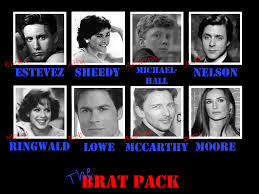
I did a post a few months back on the original “Rat Pack” –  Frank Sinatra, Dean Martin, and Sammy Davis, Jr. Not the same as the ultra cool “Pack” from the 60’s, this new generation was crowned by the media in the 80’s as the new “Pack” – The “Brat Pack.”


Brat Pack


 “The Brat” Members were:

Emilio Estevez, Ally Sheedy, Molly Ringwald, Judd Nelson, Anthony Michael Hall,

Rob Lowe, Demi Moore, and Andrew McCarthy

St. Elmo's Fire

St. Elmo’s Fire

Prerequisite to becoming a member of the “Pack” was being cast in either St. Elmo’s Fire or The Breakfast Club.

Breakfast

The Breakfast Club 1985

Directed and written by John Hughes, the coming of age storyline follows five teenagers, each a member of a different high school clique, who spend a Saturday in detention together and come to realize that they’ve bought into their respective stereotypes from peer pressure but are more complex than the labels they wear. They also deal with the pressures and expectations of their parents, teachers, and other authority figures. Critics consider it to be one of the great high school films as well as one of Hughes’ most memorable and recognizable works. Although I love The Breakfast Club, my heart will always belong to Hughes’ other classic – Sixteen Candles (1984). (but that’s another story)


Theatrical release poster

Theatrical release poster

The Breakfast Club made the “Brat Pack” icons of their generation and forever associated with the films that we still celebrate and reminisce with each viewing. Although it’s been 30 years the themes still hold true. I don’t think we’ll be forgetting anytime soon the connection and memories of those characters.

Director John Hughes had a knack for tapping into teen angst and connecting with his audience. Some of his other memorable classics include – Sixteen Candles (1984), Pretty in Pink (1986), Ferris Bueller’s Day Off (1986), and Home Alone (1990).


John Hughes

John Hughes

John Wilden Hughes, Jr. (February 18, 1950 – August 6, 2009) was honored at the 82nd Academy Awards (March 7, 2010), by Sheedy, Hall, Ringwald, and Nelson who all appeared in a tribute along with other actors who had worked with him including Jon Cryer (Pretty in Pink), Matthew Broderick (Ferris Bueller’s Day Off), and Macaulay Culkin (Home Alone).


A little Breakfast Club trivia:

So, tomorrow in honor of John Hughes and the anniversary of the film, I’m going to break out my Breakfast Club DVD and celebrate 30 years of loving this film and bonding forever with “The Pack”.