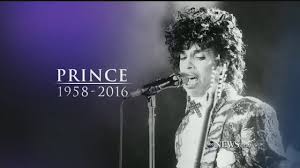
Ever since Prince came on the scene his music has been such a vital part of my life. His passing is a tremendous loss personally and his enormous talent leaves a hole in our collective souls.
As the memories flood my mind I flashback to Prince and Morris Day with The Time performing at Hill Auditorium on the campus of my alma mater – The University of Michigan. This was 1978 before Prince was PRINCE. I can still see the audience swaying, fully in tune with Prince’s dynamic energy and saw a sea change, realizing this was the last time I would intimately see this badass, revolutionary genius. Now, PRINCE would belong to the world.
Prince Rogers Nelson (June 7, 1958 – April 21, 2016)
“On the Waterfront” with exclusive commentary and a special glimpse behind the scenes from Turner Classic Movies host Ben Mankiewicz that will illustrate how this movie, which was filmed in only 36 days, made such a long-lasting cultural impact.
As a classic movie fan, seeing this Marlon Brando Academy Award winning film on the big screen is an opportunity not to be missed!
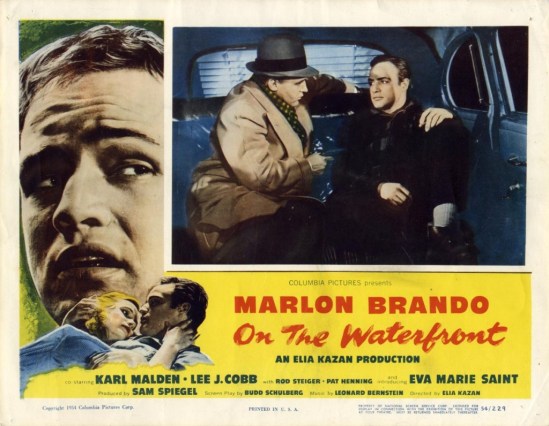
“You don’t understand! I coulda had class. I coulda been a contender. I could’ve been somebody, instead of a bum, which is what I am.” Watch Marlon Brando deliver those famous lines on the big screen when Fathom Events, Turner Classic Movies, and Sony Pictures Entertainment bring On the Waterfront (1954) back to selectcinemas nationwide for a special two-day event on Sunday, April 24 and Wednesday, April 27.
Marlon Brando
Marlon Brando stars as Terry Malloy, a washed-up prizefighter who, through the influence of his brother, Charley (Rod Steiger), a lawyer for a corrupt waterfront union, is employed as an errand boy for the mob. After luring a fellow dockworker and friend to his death to keep him from testifying against labor boss Johnny Friendly (Lee J. Cobb), the appeals of the dead man’s sister (Eva Marie Saint) and a crusading priest (Karl Malden) awaken Terry’s guilty conscience and love prompts Terry to seek redemption. (Fathom Events)
Eva Marie Saint, Brando
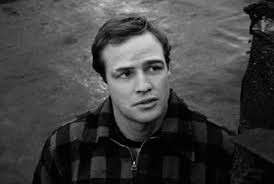
Brando – Terry Malloy
Karl Malden, Brando, Eva Marie Saint
Brando Academy Award
Do not miss the opportunity to see this classic, winner of eight Academy Awards including Best Picture in 1954, as it was meant to be seen – on the big screen!
Let’s start with our substitute teacher, Mr. Schneebly – what kid hasn’t wished for a sub like him? No grades, being part of a kick butt rock band, defying parents, breaking the rules. Good, right?
Jack Black’s character Dewey Finn is the forever loser and quintessential wanna be rock star, but when he steals his roommate’s identity as a substitute teacher, (Mr, Schneebly) he discovers he has a class of very musically talented 5th-grade students. So, Dewey decides to turn his class into a rock band to potentially win the Battle of the Bands and $20,000. I won’t spoil whether the kids win or don’t win the battle but as a result of the contest they gain self-confidence and continue to play rock in an after school program coached by Dewey. Long live Rock!
This film totally tapped into my inner rocker!
“The Commitments” (1991)
What happens when a group of white working class Dubliners forms a soul band? A rousing film with some great music inspired by legendary artists, Otis Redding, Aretha Franklin and Wilson Pickett.
The band nails the soul of the greats by immersing themselves 24/7 in classic soul standards:
“In the Midnight Hour” – Wilson Pickett
“Try a Little Tenderness” – Otis Redding
“I Never Loved a Man” – Aretha Franklin
Whether on buses, hanging up laundry or in music store windows, they were feeling the soul. In the words of Félim Gormley (Dean Fay- Saxophone), “I’m black and I’m proud!”
I’m so glad the movie was authentic with the cast singing on the soundtrack. (The actors were cast for their musical abilities.) Lead singer (Andrew Strong “Deco”) was nuts but the standout talent of the band.
The Commitments was voted best Irish film of all time in a 2005 poll sponsored by Jameson Irish Whiskey and launched a generation of Irish musicians and actors.
“This is Spinal Tap” (1984)
OMG, the funniest, dead on satire of a rock metal band ever!
Classic in every sense of the word, Director/Writer Rob Reiner’s masterpiece was also written and scored by the stars:
Rob Reiner – (Marty D. Bergi) – Mokumentarian
Spinal Tap
Christopher Guest – (Nigel Tufnel)
Michael McKean- (David St. Hubbins)
Harry Shearer – (Derek Smalls)
This mockumentary feels so real that some moviegoers thought they were an actual group!
The “Stonehenge” number during the Smell the Glove tour is priceless. Due to a mix up with size dimensions, the Stonehenge replica for their epic song is 18 inches instead of 18 feet tall. The little people performers in the number were taller. And Derek Smalls getting stuck in the stage prop egg is hilarious!
In 2002, This Is Spinal Tap was deemed “culturally, historically, or aesthetically significant” by the Library of Congress and was selected for preservation by the United States National Film Registry.
These are 3 of my favorite Rock Movies – Let me know yours in the comments!
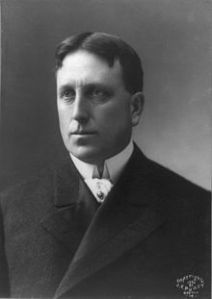
As a journalism student in college, I learned the role/responsibility of the press. I also studied the newspaper mogul, William Randolph Hurst, and yellow journalism (sensationalized stories of dubious veracity).
William Randolph Hearst
Civics class in high school informed me about the function of the press in the accountability of politicians and government. Well, today it seems all I’ve ever learned and understood about the role of journalists has been abdicated for full on “entertainment”.
Set in 1953, during the early days of television, “Good Night, and Good Luck” focuses on the potential of television to inform and educate the public, so that it doesn’t become, as Murrow put it, only “wires and lights in a box”.
“Good Night, and Good Luck” also portrays how CBS news broadcast journalist Edward R. Murrow (David Strathairn) and his dedicated staff — headed by his co-producer Fred Friendly (George Clooney) and reporter Joseph Wershba (Robert Downey, Jr.) defy corporate and sponsorship pressures, and discredit the tactics used by Joseph McCarthy during his crusade to root out Communist elements within the government.
Joseph McCarthy
This morality tale is as relevant today as it was in 2005 (if not more so). It seems that broadcast news has turned into entertainment television and lost it’s way as the checks and balances of politics and the government. The news media is supposed to be the Fourth Estate – the fourth estate is a term that positions the press (newspapers, news media) as the fourth branch of government and one that is important to a functioning democracy. In my high school Civics class, I learned that the First Amendment to the Constitution “frees” the press but also carries with it the responsibility to be the people’s watchdog.
In his fight against McCarthy, Murrow first defends Milo Radulovich, an American citizen (born in Detroit) of Serbian ethnicity and former reserve Air Force lieutenant who was accused of being a security risk for maintaining a “close and continuing relationship” with his father and sister, in violation of Air Force regulation 35-62 (a regulation which states that ‘A man may be regarded as a security risk if he has close and continuing associations with communists or people believed to have communist sympathies.’)
Radulovich’s case was publicized nationally by Edward Murrow on October 20, 1953, on Murrow’s program, See It Now: Murrow makes a show on McCarthy attacking him. A very public feud develops when McCarthy responds by accusing Murrow of being a communist. Murrow is accused of having been a member of the leftist union Industrial Workers of the World, which Murrow claimed was false. (Wikipedia)
George Clooney (Director), a journalism student in college, held this project close to his heart. In September 2005, Clooney explained his interest in the story to an audience at the New York Film Festival: “I thought it was a good time to raise the idea of using fear to stifle political debate.”
Clooney and producer Grant Heslov decided to use only archival footage of Joseph McCarthy in his depiction, demonstrating the furor with which McCarthy pressed his communist accusations.
The film was critically acclaimed upon release. It was named “Best Reviewed Film of 2005 in Limited Release” by Rotten Tomatoes, where it achieved a 93% positive review rating. The movie received six Academy Award nominations, including Best Picture, Director (Clooney), and Actor (Strathairn).
The late Roger Ebert, in his Chicago Sun-Times review, contends that “the movie is not really about the abuses of McCarthy, but about the process by which Murrow and his team eventually brought about his downfall (some would say his self-destruction). It is like a morality play, from which we learn how journalists should behave. It shows Murrow as fearless, but not flawless.”
So, the next time you’re watching the news on tv or reading your favorite print medium, ask yourself, is corporate media looking out for the people or profits for themselves.
Today we’re celebrating Brando’s 92th birthday. His style, his “method”, his talent. Truly an original. One of the greatest actors of all time!
“Listen to Me Marlon” is the outstanding, award-winning documentary airing on cable’s Showtime about Brando in his own words:
April 3, 1924 – July 1, 2004
Marlon Brando, Jr. was an American actor, film director, and activist. He is hailed for bringing a gripping realism to film acting and is often cited as one of the greatest and most influential actors of all time.
“The Wild One”
Biography’s Documentary on Brando:
Brando is also credited with helping to popularize the Stanislavski system of acting, today more commonly referred to as method acting. A cultural icon, Brando is most famous for his Academy Award-winning performances as Terry Malloy in On the Waterfront (1954) and Vito Corleone in The Godfather (1972), as well as influential performances in A Streetcar Named Desire (1951), The Wild One (1953), Last Tango in Paris (1972), and Apocalypse Now (1979).
Marlon Brando initially gained acclaim and an Academy Award nomination for reprising the role of Stanley Kowalski in the 1951 film adaptation of Tennessee Williams’ play A Streetcar Named Desire, a role that he had originated successfully on Broadway.
“On the Waterfront”
“The Godfather”
The sixties were an artistic bust for Brando but ten years later he made his successful and award-winning comeback with his portrayal of Vito Corleone in Francis Ford Coppola’s “The Godfather”. The studio was opposed to his casting so he had to audition for the role. He improvised with cotton in his mouth to come up with the mumbling sound of The Don. The studio relinquished and the rest is cinema history.
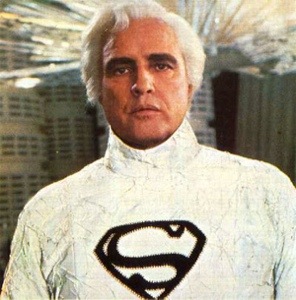
“Superman”
As a result of regaining his box office gravitas with “The Godfather” and “Last Tango in Paris”, Brando became a highly paid character actor with roles in films like “Superman” which according to the Guinness Book of World Records, Brando was paid a record $3.7 million ($14 million in inflation-adjusted dollars) and 11.75% of the gross profits for 13 days’ work.
Brando was ranked by the American Film Institute as the fourth greatest movie star among male movie stars whose screen debuts occurred in or before 1950. He was one of only three professional actors, along with Charlie Chaplin and Marilyn Monroe, named in 1999 by Time magazine as one of its 100 Most Important People of the Century. He died of respiratory failure on July 1, 2004, at age 80. (Wikipedia)
“The Incredibles” is a 2004 American computer-animated superhero comedy film written and directed by Brad Bird, produced by Pixar Animation Studios, and released by Walt Disney Pictures.
Brad Bird and Edna Mode
In this lauded Pixar production, married superheroes Mr. Incredible (Craig T. Nelson) and Elastigirl (Holly Hunter) are forced to assume mundane lives as Bob and Helen Parr after all super-powered activities have been banned by the government. While Mr. Incredible loves his wife and kids, he longs to return to a life of adventure and his desire to help people draws the entire family into a battle with superhero obsessed villain –
I must say that baby Jack-Jack is my favorite “Super”/Parr family member.
Everyone thinks he has no powers and is “normal”. (which is so not true) When I saw this scene with Jack-Jack and his babysitter Kari, I would have spit milk out of my nose (if I was drinking milk😂) Too funny!!
When “The Incredibles” was released I felt it was the best-animated film I’d seen to date. It combined humor with drama and kept the audience engaged from start to finish. There was an audible gasp in the theater during the airplane sequence with Elastigirl and the kids (Dash and Violet).
The Incredibles was written and directed solely by Brad Bird, a departure from previous Pixar productions which typically had two or three directors and as many screenwriters. In addition, it would be the company’s first film in which all characters are human.
Brad Bird came to Pixar with the lineup of the story’s family members worked out: a mom and dad, both suffering through the dad’s midlife crisis; a shy teenage girl; a cocky ten-year-old boy; and a baby. Bird had based their powers on family archetypes.
After several failed attempts to cast Edna Mode, Bird took on her voice role himself. It was an extension of the Pixar custom of tapping in-house staff whose voices came across particularly well on scratch dialogue tracks.
There were 781 visual effects shots in the film and the skin of the characters gained a new level of realism from a technology to produce what is known as “subsurface scattering.”
Critic Roger Ebert of the Chicago Sun-Times awarded the film 3½ stars out of 4, writing that the film “alternates breakneck action with satire of suburban sitcom life” and is “another example of Pixar’s mastery of popular animation.”
The film won the Academy Award for Best Animated Feature, beating two DreamWorks films, Shrek 2 and Shark Tale, as well as Best Sound Editing at the 77th Academy Awards. It also received nominations for Best Original Screenplay (for writer/director Brad Bird) and Best Sound Mixing (Randy Thom, Gary Rizzo, and Doc Kane). It was Pixar’s first feature film to win multiple Oscars, followed in 2010 by Up. (Wikipedia)
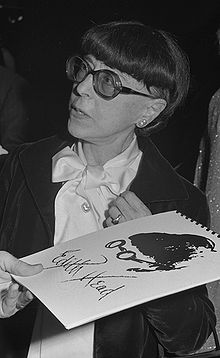
As a classic movie lover, it seems every important film from the 1940’s until the 1970’s was dressed by Academy Award Winning Costume Designer Edith Head. The look of a film sets the tone which Ms. Head artfully conveyed with her iconic fashions, making her our next accomplished artist in “The Faces Behind the Camera” theme.
Edith Head in 1976
Born Edith Claire Posener in San Bernardino, California, Edith Head (October 28, 1897 – October 24, 1981) was an American costume designer who won a record eight Academy Awards for Best Costume Design, starting with The Heiress (1949) and ending with The Sting (1973).
Head’s designs were integral to the look and feel of a picture and she was considered exceptional for her close working relationships with her subjects, with whom she consulted extensively, and these included virtually every top female star in Hollywood.
Dorothy Lamour, Veronica Lake, Barbara Stanwyck, Ingrid Bergman, Bette Davis, Elizabeth Taylor, Grace Kelly, Kim Novack and Tippi Hendren to name a few.
Head received eight Academy Awards for Best Costume Design, more than any other person, from a total of 35 nominations. (Wikipedia)
Born and raised in California, Head managed to get a job as a costume sketch artist at Paramount Pictures, without any relevant training. She first acquired notability for Dorothy Lamour’s trademark sarong dress in Paramount’s, The Jungle Princess (1936) and then became a household name after the Academy Awards created a new category of Costume Designer in 1948.
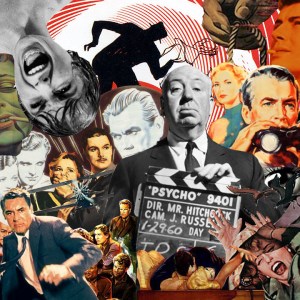
In 1967, at the age of 70, she left Paramount Pictures and joined Universal Pictures to work with Alfred Hitchcock on such films as –Rear Window, 1954, To Catch a Thief, 1955, The Man Who Knew Too Much, 1956, Vertigo, 1958, The Birds, 1963, and Marnie, 1964, where she remained until her death in 1981.
An Edith Head costume collection from the Paramount Pictures Archive left Hollywood—for just the second time—to be shown exclusively at the Decorative Arts Center of Ohio in Lancaster in “Designing Woman: Edith Head at Paramount 1924-1967” as presented by the Fox Foundation from June 7 through August 17, 2014. (Wikipedia)
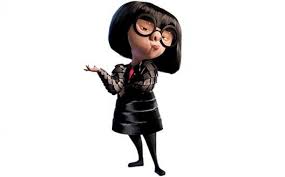
Trivia: The costume designer Edna Mode in the 2004 Pixar movie The Incredibles was largely based on Edith Head, according to director Brad Bird, who voiced the character.
Edna Mode – “The Incredibles”
Head died on October 24, 1981, four days before her 84th birthday, from myelofibrosis, an incurable bone marrow disease. She is interred at Forest Lawn Memorial Park in Glendale, California.
Edith Head’s star on the Hollywood Walk of Fame is located at 6504 Hollywood Boulevard.
Music is essential to a film production. It sets the tone and mood and helps tell the movie’s story. A great musician “behind the camera” is Danny Elfman, who’s scored such film’s as “Pee-Wee’s Big Adventure”, “Batman” and “The Nightmare Before Christmas”.
Daniel Robert Elfman(born May 29, 1953) is an American composer, singer, songwriter, and record producer. From 1976 to 1995 he was the lead singer and songwriter for the rock band Oingo Boingo.
In 1976, Elfman entered the film industry as an actor. In 1982, he scored his first film, Forbidden Zone, directed by his older brother Richard Elfman. Among his honors are four Academy Award nominations, a Grammy for Batman, an Emmy for Desperate Housewives, the 2002 Richard Kirk Award, and the Disney Legend Award.
I first became aware of Danny Elfman from his band, Oingo Boingo. Their ska driven music was freeing and fun. Ska-influenced the new wave band in 1979, and then changed again towards a more guitar-oriented rock sound, in the late 1980s. The band’s appearance in Back to School energized the soundtrack with “Dead Man’s Party”.
“Back to School” (1986)
Some of Elfman’s music influences were Bernard Hermann, Franz Waxman, and Philip Glass. In 1985, Tim Burton and Paul Reubens invited Elfman to write the score for their first feature film, “Pee-wee’s Big Adventure”. Elfman was apprehensive at first, because of his lack of formal training, but with orchestration assistance from Oingo Boingo guitarist and arranger Steve Bartek, he achieved his goal of emulating the mood of such composers as Nino Rota and Bernard Herrmann.
Elfman immediately developed a rapport with Burton and has gone on to score all but three of Burton’s major studio releases. Elfman also provided the singing voice for Jack Skellington in Tim Burton’s The Nightmare Before Christmas and the voices of both Barrel and the “Clown with the Tear-Away Face”. Years later he provided the voice for Bonejangles the skeleton in Corpse Bride.
Trivia: Elfman also composed the theme to “The Simpsons”.
Burton has said of his relationship with Elfman: “We don’t even have to talk about the music. We don’t even have to intellectualize – which is good for both of us, we’re both similar that way. We’re very lucky to connect”. (Wikipedia)
Danny Elfman’s score of “Batman” (directed by Tim Burton) won him a Grammy Award.
Elfman admits his favorite movie to score was “Edward Scissorhands” (Tim Burton director).
Tim Burton, Winona Ryder, Johnny Depp and Danny Elfman in 1990.
Danny Elfman has three children: Lola (born 1979), Mali (born 1984), and Oliver (born 2005). On November 29, 2003, he married actress Bridget Fonda.
In October 2013, Elfman returned to the stage to sing his vocal parts to a handful of Nightmare Before Christmas songs as part of a concert titled Danny Elfman’s Music from the Films of Tim Burton. He composed the film score for Oz the Great and Powerful (2013), and composed additional music for Avengers: Age of Ultron (2015) together with Brian Tyler.
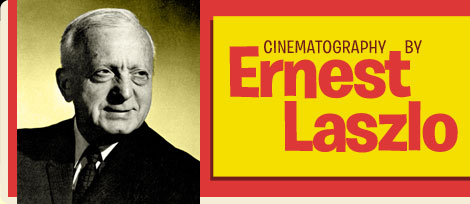
Ernest Laszlo is our next artist for “The Faces Behind the Camera” theme. Best-known for his striking black-and-white cinematography, Laszlo was a painstaking technician and a true artist who rejected Hollywood glamour to bring a refreshing naturalism to his films.
Description: A cinematographer or director of photography (sometimes shortened to DP or DOP) is the chief over the camera crews working on a film, television production or other live action pieces and is responsible for achieving artistic and technical decisions related to the image. (Wikipedia)
Ernest Laszlo, A.S.C. was a Hungarian-American cinematographer for over 60 films and was known for his frequent collaborations with directors Robert Aldrich and Stanley Kramer. He was a member of the American Society of Cinematographers, and was its president from 1972 to 1974.
Laszlo emigrated to the United States and began working as a camera operator on such silent films as Wings(1927). Between 1927 and 1977, he served as cinematographer on sixty-nine films. Between 1961 and 1976 Laszlo was nominated for eight Academy Awards for Best Cinematography, and won the award in 1966 for Ship of Fools. He died in Los Angeles, California in 1984.
Directed by Stanley Kramer, “It’s a Mad, Mad, Mad, Mad World” (1963) was a scream! Every comic in the business appeared in this film. I’ve always said if you were a comedian during the filming and weren’t asked to participate, you just didn’t rate. 😟
There’s nothing more intriguing and hilarious than a bunch of strangers going on a treasure hunt and the lengths they will go through to retrieve the big prize. Dick Shawn stole the show with his portrayal of “Sylvester”, the not so bright hunk that’s determined to “save his mama”.
Filmed in Ultra Panavision 70 and presented in Cinerama (becoming one of the first single-camera Cinerama features produced), Mad World also had an all-star cast, with dozens of major comedy stars from all eras of cinema appearing in the film. It’s a Mad, Mad, Mad, Mad World rated #40 in the American Film Institute’s list – 100 Years…100 Laughs.
In the infancy of motion pictures, the cinematographer was usually also the director and the person physically handling the camera. Cinematography was key during the silent movie era; with no sound apart from background music and no dialogue, the films depended on lighting, acting, and set.
In 1919 Hollywood, the then-new motion picture capital of the world, one of the first (and still existing) trade societies was formed: the American Society of Cinematographers (ASC), which stood to recognize the cinematographer’s contribution to the art and science of motion picture making. (Wikipedia)
Some of Ernest Lazlo’s celebrated films
Houdini-Tony Curtis, Janet Leigh
Ernest Laszlo, the trailblazing cinematographer whose body of work spans over 5 decades starting in the silent era with the first Academy Award winning film, Wings (1927) to his last film, The Domino Principle (1977). His visual style crossed all genres and he earned the accolade of being one of the best cinematographers in Hollywood.
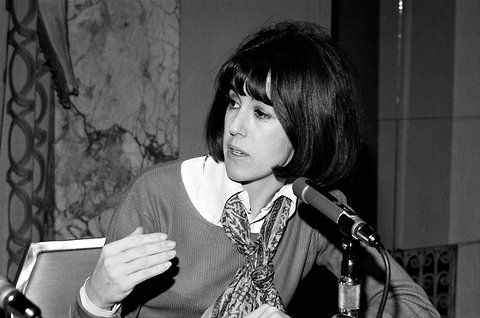
Our next artist for “The Faces Behind the Camera” theme is Nora Ephron – writer, journalist, essayist, playwright, screenwriter, novelist, producer, and director. Probably best known for her romantic comedies – “When Harry Met Sally”, “Sleepless in Seattle” and drama “Silkwood”. She was nominated three times for the Academy Award for Best Writing: for Silkwood, When Harry Met Sally, and Sleepless in Seattle. She won a BAFTA Award for Best Original Screenplay for “When Harry Met Sally”. Ephron received a posthumous Tony Award nomination for Best Play for her play “Lucky Guy” which starred Tom Hanks.
I love “Sleepless in Seattle” because of Nora Ephron’s smart writing, directing and the entire ensemble cast. This is one of the best scenes, comparing the tear-jerker “An Affair to Remember” versus “The Dirty Dozen” – Hilarious! Don’t get me wrong, both “You’ve Got Mail” and “Silkwood” are brilliant films. Right now “Sleepless” just resonates with me.
Ephron hails from a writing family starting with her stage and screenwriter parents – Henry and Phoebe Ephron. Her parents used her infancy as the subject of their play “Three’s a Family” and based their comedy Take Her, She’s Mine (1963) starring Jimmy Stewart and Sandra Dee on letters their 22-year-old daughter wrote them from college. Their screenplays include There’s No Business Like Show Business (1954), Carousel (1956) and Desk Set (1957). Nora is also eldest of four daughters – all writers.
Miss Ephron had a distinctive voice and didn’t shy away from controversy. She took on a satire lampooning the New York Post which actually resulted in a job offer as Reporter from The Post, a gig which lasted 5 years.
Nora Ephron 1972
As a writer for Esquire magazine she took on her former boss – Dorothy Schiff, owner of the Post and also Betty Friedan for starting a feud with Gloria Steinem and her alma mater Wellesley, which Friedan said had turned out “a generation of docile and unadventurous women”.
Fun Fact: Nora Ephron was married to journalist Carl Bernstein (1976-1980) of Watergate fame and she correctly guessed the identity of “Deep Throat” (the source for news articles written by her ex-husband Carl Bernstein and Bob Woodward during the Watergate scandal) before his name was revealed in 2005.
On June 26, 2012, Ephron died from pneumonia, a complication resulting from acute myeloid leukemia, a condition with which she was diagnosed in 2006. In her final book, I Remember Nothing (2010), Ephron left clues that something was wrong with her or that she was ill, particularly in a list at the end of the book citing “things I won’t miss/things I’ll miss.”
The Tribeca film festival established The Nora Ephron Prize which is a $25,000 award for a female writer or filmmaker “with a distinctive voice”. The first Nora Ephron Prize was awarded in 2013 to Meera Menon for her film Farah Goes Bang.
Her death was a shock to many as she didn’t reveal her illness. Her brilliant writing and filmmaking talents are a definite loss to the industry.
This site is about how to live our life in a meaningful way by accepting complete surrender to the Almighty with purity of mind and character. It is about the eternal religion of the world i.e. Hinduism which is very liberal to anyone because there are many branches or methods to get the divinity to turn our life into an ever blissful one.
Free listening and free download (mp3) chill and down tempo music (album compilation ep single) for free (usually name your price). Full merged styles: trip-hop electro chill-hop instrumental hip-hop ambient lo-fi boombap beatmaking turntablism indie psy dub step d'n'b reggae wave sainte-pop rock alternative cinematic organic classical world jazz soul groove funk balkan .... Discover lots of underground and emerging artists from around the world.














 iheartfilm