Better known for her work as a novelist, Zora Neale Hurston could be, according to an essay by academic Gloria Gibson, the first African-American woman filmmaker. The film footage, which includes Children’s Games (1928), Logging (1928), and Baptism (1929), appears to be from her work as a student of anthropology under the guidance of famed anthropologist, professor, and mentor, Dr. Franz Boas of Columbia University. (Wikipedia)
A graduate of Barnard College (B.A. in anthropology in 1928) and a Guggenheim fellow, Hurston traveled back to a South similar to her hometown of Eatonville, Florida (one of the first all-black towns to be incorporated in the United States) to capture a variety of short takes of African-American life. Ethnographic in nature, the films reflect a focus of folklorists of that time period who believed that “…cultural performance and beliefs must be expeditiously collected and documented because they would soon be gone forever” (Gloria Gibson).
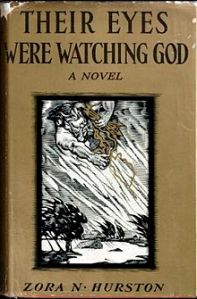
Hurston authored four novels and more than 50 published short stories, plays, and essays, she is best known for her 1937 novel Their Eyes Were Watching God.
In addition to new editions of her work being published after a revival of interest in her in 1975, her manuscript Every Tongue Got to Confess (2001), a collection of folktales gathered in the 1920s, was published posthumously after being discovered in the Smithsonian archives.
During a period of financial and medical difficulties, Hurston was forced to enter St. Lucie County Welfare Home, where she suffered a stroke. She died of hypertensive heart disease on January 28, 1960, and was buried at the Garden of Heavenly Rest in Fort Pierce, Florida. Sadly, her remains were in an unmarked grave until 1973 when novelist Alice Walker and literary scholar Charlotte Hunt found an unmarked grave in the general area where Hurston had been buried and decided to mark it as hers. (Wikipedia)
Ethel Waters was American blues, jazz and gospel singer, and actress. Her best-known recordings include “Dinah,” “Stormy Weather,” “Taking a Chance on Love,” “Heat Wave,” “Supper Time,” “Am I Blue?” and “Cabin in the Sky,” as well as her version of the spiritual “His Eye Is on the Sparrow.”
Waters was the second African American, after Hattie McDaniel, to be nominated for an Academy Award. She was also the first African-American woman to be nominated for an Emmy Award, in 1962. (Wikipedia)
Waters was born in Chester, Pennsylvania, on October 31, 1896, and by the age of 17 was singing professionally in Baltimore. It was there that she became the first woman to sing “St. Louis Blues” on the stage. In 1925 she appeared at the Plantation Club in Harlem, and her performance there led to Broadway. In 1927 she appeared in an all-black revue Africana. Thereafter she divided her time between the stage, nightclubs, and eventually movies. (Wikipedia)
Ms. Waters had a troubled childhood. Born as the result of rape, she was raised in poverty and never lived in the same place for more than 15 months. Waters said of her difficult upbringing, “I never was a child. I never was cuddled, or liked, or understood by my family.”
After her start in Baltimore, Waters toured on the black vaudeville circuit. As she described it later, “I used to work from nine until unconscious.” Despite her early success, she fell on hard times and joined a carnival, traveling in freight cars along the carnival circuit and eventually reaching Chicago.
Around 1919, Waters moved to Harlem and there became a celebrity performer in the Harlem Renaissance of the 1920s. In 1921, women blues singers were among the most powerful entertainers in the country and Waters became the fifth black woman to make a record, on the tiny Cardinal Records label.
As her career continued, she evolved into a blues and Broadway singer, performing with artists such as Duke Ellington and starring at the Cotton Club.
She had a featured role in the wildly successful Irving Berlin Broadway musical revue As Thousands Cheer in 1933, in which she was the first black woman in an otherwise white show. She had three gigs at this point; in addition to the show, she starred in a national radio program and continued to work in nightclubs. (Wikipedia)
Ms. Waters was the highest-paid performer on Broadway starring as Petunia in the all-black musical Cabin in the Sky. In 1942 Ms. Waters reprised her stage role of 1940 in the film, directed by Vincente Minnelli; it was a huge success.
Adding to her list of accomplishments, Ms. Waters was nominated for an Academy Award for Best Supporting Actress for the controversial film “Pinky“ (1949) about a light-skinned black woman passing for white; directed by Elia Kazan.
In 1950, she won the New York Drama Critics Circle Award for her performance opposite Julie Harris in the play The Member of the Wedding. Waters and Harris reprised their roles in the 1952 film version, Member of the Wedding.
Ethel Waters, Julie Harris
In 1950, Waters starred in the television series Beulah, becoming the first African-American actress to have a lead role in a television series. However, she quit after complaining that the portrayal of blacks was “degrading.” She later guest-starred in 1957 and 1959 on NBC’s The Ford Show, Starring Tennessee Ernie Ford. In the 1957 episode, she sang “Cabin in the Sky”. (Wikipedia)
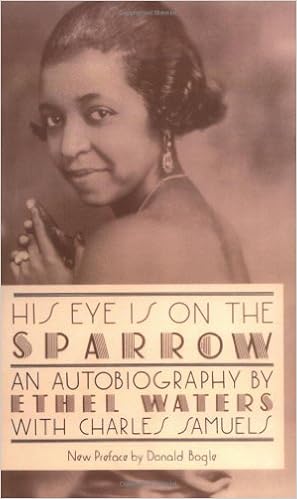
Despite her earlier successes, by the 1950’s Ms. Waters remarkable career was fading. As her health suffered, she worked only sporadically. In 1950–51 she wrote her autobiography His Eye Is on the Sparrow with Charles Samuels, in which she wrote candidly about her life.
His Eye Is on the Sparrow was adapted for a stage production in which she was portrayed by Ernestine Jackson. Her second autobiography was titled – To Me, It’s Wonderful.
American feminist and jazz historian Rosetta Reitz called Waters “a natural … [Her] songs are enriching, nourishing. You will want to play them over and over again, idling in their warmth and swing. Though many of them are more than 50 years old, the music and the feeling are still there.”
Both the Oscars and Black History Month are recognized in February which gives me the perfect opportunity to celebrate the accomplishments of Black Artists in Hollywood.
2015 and 2016 were standout years for the lack of Black filmmakers nominated for Oscars. However, 2017 breaks that record and will make African-American Oscar nominee history.
Janelle Monae, Taraji P. Henson, Octavia Spencer “Hidden Figures” (2016)
1. “Moonlight” director Barry Jenkins, 37, is the first African-American filmmaker to be nominated for Best Picture, Best Director, and Best Adapted Screenplay.
2. “Fences” star Viola Davis, 51, is the first Black actress to be nominated for an Oscar three times (Doubt in 2009, The Help in 2012) with her Best Supporting Actress nod.
3. “Arrival” cinematographer Bradford Young, 39, is the first African-American to be nominated for the Best Cinematography award. (Young is the second Black man; British cinematographer Remi Adefarasin was nominated for Elizabeth in 1998.)
Moonlight
4. A Black actor is nominated in all four acting categories for the first time in history:
✨Naomie Harris, Best Supporting Actress, “Moonlight”
5. This is the first time that six African-American actors and actresses have been nominated in total. (The previous record was five in 2005 and 2007.)
6. “Moonlight” editor Joi McMillon is the first Black woman to be nominated for film editing.
7. This is the first time that three Black people have been nominated within a single category (Best Supporting Actress, in this case):
Viola Davis in Fences, Naomie Harris in Moonlight, and Octavia Spencer in Hidden Figures. (Carolyn L. Todd)
Let’s keep up the good work Oscars!
History
✨
The 12th Academy Awards is historic for being the 1st Oscar nomination for an African-American and 1st Oscar win. In 1940, Hattie McDaniel accepted the Oscar for Best Actress in a Supporting Role in “Gone With the Wind” for the character – Mammy.
Hattie McDaniel
However, if David O. Selznick (Producer, film studio executive) hadn’t pulled a favor, she might not have been able to deliver her acceptance speech at all. At the time, the Cocoanut Grove nightclub (located in the Ambassador Hotel) was segregated so Ms. McDaniel wasn’t even allowed entrance. Selznick pulled another favor so she could be seated at a table at the very back of the room with her agent. To add insult to injury, Hattie McDaniel wasn’t allowed to speak her own words, the acceptance speech was written by the studio.
Despite all the prejudice, Hattie McDaniel – who at the time was one of the biggest African-American actors in the world -promoted herself for the nomination. After the release of the movie, she placed a stack of outstanding film reviews on O. Selznick’s desk and the rest is history. (Wikipedia)
First Best Actress Oscar
In 2002, Halle Berry became the 1st (and to date) only African-American to win the Academy Award for Best Actress. The Oscar was for the film “Monsters Ball”.
Halle Berry 2002 Best Actress
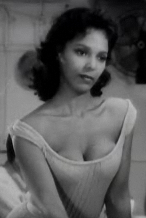
Dorothy Dandridge – (November 9, 1922 – September 8, 1965) is the 1st African-American actress to be nominated for a Best Actress Oscar in 1954 for her performance in “Carmen Jones.” She has been recognized with a star on the Hollywood Walk of Fame and was married to dancer Harold Nicholas. Check out my previous post on the Nicholas Brothers here.
Watching Halle’s acceptance speech again while researching this post, I burst into tears reliving her emotion as she tries to process the win and the historical significance of this moment. Looking forward to the acceptance speech of our second Best Actress Oscar Winner.
Halle and Denzel Oscars
This win also marked the 1st time two African-American performers won in leading role Oscars in the same year (Denzel Washington, Training Day).
Best Supporting Actress
First to Win: Hattie McDaniel “Gone With the Wind” 1940
Hattie McDaniel 1940 Oscars
Although known as an actress she was a professional singer-songwriter, comedian, stage actress, radio performer, and television star; she was the first black woman to sing on the radio in the U.S. and has two stars on the Hollywood Walk of Fame. In 1975, she was inducted into the Black Filmmakers Hall of Fame and in 2006 became the first black Oscar winner honored with a US postage stamp.
Hattie McDaniel was also the oldest African-American actress to win an Academy Award (age 44).
John Hurt passed on January 25th and with him a tremendous body of work worth celebrating. “The Elephant Man” (John Merrick), (Kane) “Alien”, “Harry Potter” (Garrick Ollivander), (Max) “Midnight Express” and two of his most prophetic roles – (Chancelor Sutler) “V for Vendetta” and as (Winston Smith) – in director Michael Radford‘s remarkable film, “1984”.
Winston endures a squalid existence under the constant surveillance of the Thought Police. Winston works in a small office cubicle at the Ministry of Truth, rewriting history (aka Alternate Facts) in accordance with the dictates of the Party and its supreme figurehead, Big Brother. A man haunted by painful memories and restless desires, Winston is an everyman who keeps a secret diary of his private thoughts, thus creating evidence of his thoughtcrime. (Wikipedia)
As a result of his resistance, Winston is tortured and learns about the state’s true purpose, the principles of doublethink — the practice of holding two contradictory thoughts in the mind simultaneously.
Right now our country is rapidly becoming Orwell’s vision of a country co-opted by tyranny. From Alternative Facts to out and out lies about events we witness with our own eyes; the parallels are stunning.
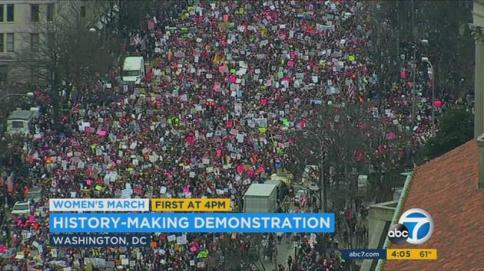
Watching and participating in the Women’s March and rallies, I’m heartened with the energy of this movement of 21-century change.
If the past is prolog, we already know what lies ahead if we aren’t resilient. But, our fate rests in our own hands and we can alter the ending of our “1984″ by fighting back against those who would be Kings and Dictators.
Another brilliant John Hurt performance and cautionary tale “V for Vendetta” stares back at me as truth. Just turn on your television.
Thank you, Sir John for sharing your gifts and revealing truths of the human condition.
I still remember sitting in the theater with my heart beating with anticipation as I reminisced about a time and music that is a flashback to my childhood memories. From the first beat, I knew I was in for a rockin’ good time.
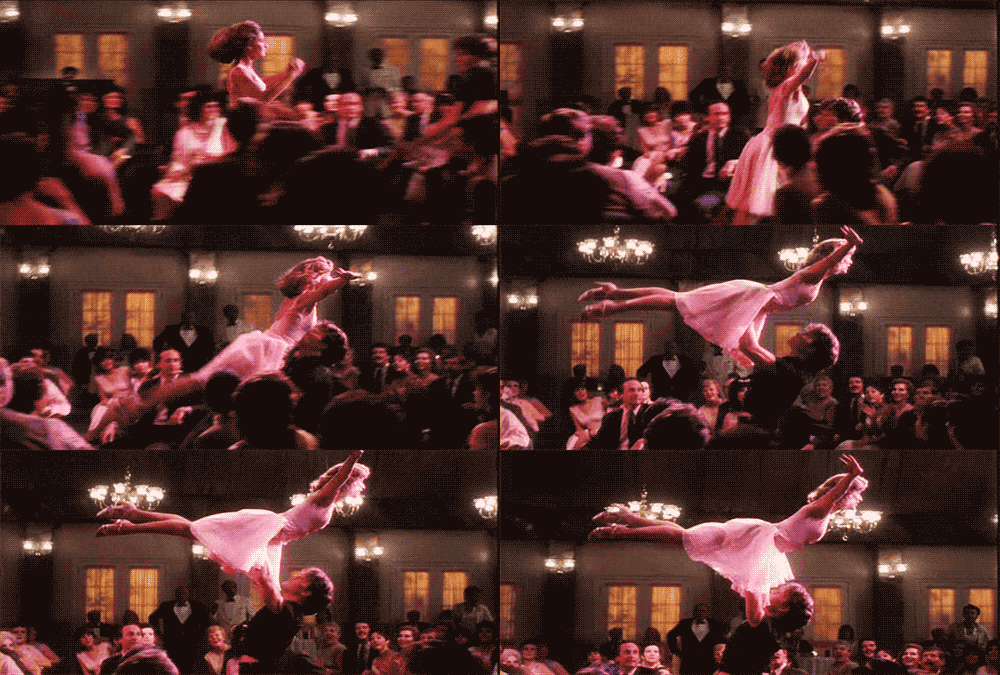
Choreographed by Kenny Ortega, “Dirty Dancing”(1987) is a soulful coming of age tale of star-crossed lovers Baby (Jennifer Grey) and Johnny (Patrick Swayze). The film showcases an award-winning dance soundtrack that genuinely represents the spirit of the early 1960’s.
Jennifer Grey and Patrick Swayze
Written by Eleanor Bergstein, and directed by Emile Ardolino, “Dirty Dancing” was originally a low-budget film by a new studio, Great American Films Limited Partnership, and with no major stars (except Broadway legend Jerry Orbach in a supporting role), “Dirty Dancing” became a massive box office hit. As of 2009, it has earned over $214 million worldwide. (Wikipedia)
Dirty Dancing is based in large part on screenwriter Eleanor Bergstein’s own childhood: she is the younger daughter of a Jewish doctor from New York, spent summers with her family in the Catskills, participated in “Dirty Dancing” competitions, and was herself nicknamed “Baby” as a girl. (Wikipedia)
Bergstein constructed the character of Johnny based on the stories of Michael Terrace, a dance instructor whom Bergstein met in the Catskills in 1985 while she was researching the story.
Jack Weston (L) Patrick Swayze (R)
“Dirty Dancing” was the first film to sell more than a million copies on home video, and the Dirty Dancing soundtrack created by Jimmy Ienner generated two multi-platinum albums and multiple singles, including (I’ve Had) The Time of My Life”, which won both the Golden Globe and Academy Award for Best Original Song, and a Grammy Award for best duet (Bill Medley and Jennifer Warnes) . (Wikipedia)
Kelly Bishop, Jerry Orbach
Patrick Swayze
Grey and Swayze
Patrick Swayze
Jennifer Grey
So, whether it’s your first time or you’re enjoying it all over again, make sure to make plans to see “Dirty Dancing” on the big screen and, have the time of your life!
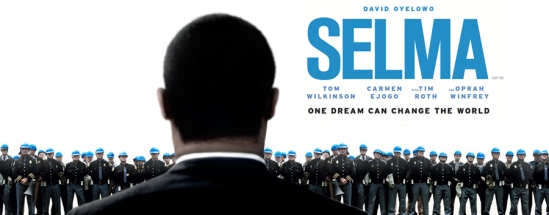
At first, I was skeptical on how this history would be portrayed. I didn’t want a melodrama about Bloody Sunday and those on the front lines of the Civil Rights Movement. But, Director, Ava DuVernay did an incredible job and for me, the film should be included as part of the historical record.
Selma was a turning point in the Civil Rights Movement. In your living room. In your face. The first march took place on March 7, 1965, organized locally by SCLC Director of Direct Action James Bevel, who was directing SCLC’s Selma Voting Rights Movement. State troopers and county posse men attacked the unarmed marchers with billy clubs and tear gas after they passed over the county line, and the event became known as Bloody Sunday. Law enforcement beat activist Amelia Boynton unconscious, and the media publicized worldwide a picture of her lying wounded on the bridge.
Selmahad four Golden Globe Award nominations, including Best Motion Picture – Drama, Best Director, and Best Actor, and won for Best Original Song. It was also nominated for Best Picture and won Best Original Song at the 87th Academy Awards.
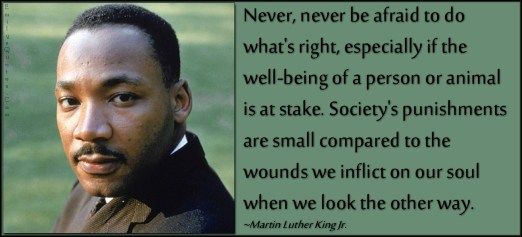
Whether you know the history or just learning, I consider the film Selma essential viewing for a pivotal moment in the Civil Rights Movement. A Movement which we must always remember and never forget as …
A long time ago in a galaxy far, far away…Women were the driving force behind Hollywood and the movies. Today we pay homage to the women who broke the glass ceiling and wrote and directed the films that gave birth to the “Golden Age” of cinema and the motion picture industry. Unfortunately, when the men realized the gold mine films were becoming, the women faded away thanks to the Hollywood studio system. Well, as the saying goes, “that’s the way they do you.”
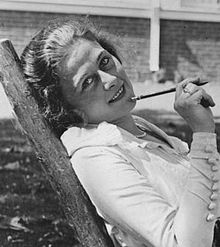
Frances Marion 1918
Frances Marion was a trailblazer. becoming one of the most powerful screenwriters of the 20th century. With a career that spanned decades, she became the first female to win an Academy Award for Best Adapted Screenplay in 1930 for the prison life film The Big House, starring Robert Montgomery, Wallace Beery and Chester Morris.
Marion’s research included visiting San Quentin to experience the atmosphere and lingo of the inmates. The movie gave audiences their first taste of hearing prison doors slam shut, tin cups clanking on mess-hall tables and prisoners’ feet shuffling down corridors.
Adding to her accolades, Frances received the Academy Award for Best Story for The Champ in 1932. The tearjerker chronicled the relationship between a washed out boxer (Wallace Beery) and his young son (Jackie Cooper). Marion was credited with writing 300 scripts and producing over 130 films.
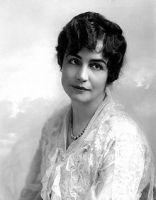
Born Marion Benson Owens (November 18, 1888) in San Francisco, California, she worked as a journalist and served overseas as a combat correspondent during World War I. On her return home in 1910, she moved to Los Angeles and was hired as a writing assistant and actress by “Lois Weber Productions”, a film company owned and operated by another pioneer female film director Lois Weber.
Lois Weber – Film Director
Frances was quite beautiful and could have continued as an actress but preferred to work behind the camera. She learned screenwriting from Lois Weber and went on to become the highest paid screenwriter, woman or man. Hollywood moguls competed for her stories and stars of the day Mary Pickford, Lillian Gish, Greta Garbo and Rudolph Valentino brought her characters to life on the screen.
From 1919 – 1939 her star was ascendant, born at the right place and the right time, honing her craft during one of the most liberating eras for women in film.
Mary Pickford
Lillian Gish
Greta Garbo
Rudolph Valentino
When Marion met Mary Pickford (actress, producer, screenwriter) they became best friends with Marion writing screen adaptations of Rebecca of Sunnybrook Farm and The Poor Little Rich Girl for Pickford. As a result of the commercial success of “The Poor Little Rich Girl” in 1917 Marion was signed as Pickford’s “exclusive writer” at the salary of $50,000 a year, an unprecedented arrangement for that time.
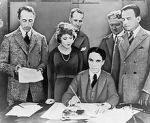
Pickford was the celebrated “America’s Sweetheart” and in 1919 together with her swashbuckler actor husband Douglas Fairbanks, Sr., director D.W. Griffith (Birth of a Nation) and “The Tramp” Charlie Chaplin established “United Artists” pictures.
These four were the leading figures in early Hollywood and this was their stand for independence against the powerful studio system. Mary Pickford was also one of the original 36 founders of the Academy of Motion Picture Arts and Sciences.
Mary Pickford, D.W. Griffith, Charlie Chaplin, Douglas Fairbanks
United Artists Logo 1919
Contract Signing 1919
In 1921, Frances Marion directed a film for the first time with Just Around the Corner. That same year, she directed her friend Mary Pickford in one of her own scripts entitled The Love Light. Their relationship was more than just writer and star, they were collaborators and the friendship between Pickford and Marion lasted more than 50 years.
Married four times, Frances Marion had two children with third husband, actor Fred Thomson. This was her longest marriage, lasting from 1919 until Thomson’s sudden and tragic death from a Tetanus infection in 1928. Frances’ great friend Mary Pickford had introduced them. Frances said it was love at first sight.
Fred Thomson and Frances Marion
For many years she was under contract to MGM Studios, but, independently wealthy, left Hollywood in 1946 to devote more time to writing stage plays and novels. Frances Marion published a memoir Off With Their Heads: A Serio-Comic Tale of Hollywood in 1972.
Frances died on May 12, 1973 leaving a legacy of innovation, independence and inspiration for future aspiring female writers. The documentary, Frances Marion: Without Lying Down,” is an insightful profile of her life and achievements in Hollywood.
Mary Pickford and Frances Marion
Narrated by “Pulp Fiction” actress Uma Thurman and Oscar-winner Kathy Bates, who gives voice to the screenwriter’s own words taken from her letters, diaries. and memoirs. The documentary also features footage from more than twenty of Marion’s movies, with commentary by silent film historian Kevin Brownlow, and film critic Leonard Maltin.
Available for purchase at Amazon.com, I highly recommend checking it out!
“I’ve spent my life searching for a man to look up to without lying down.” Frances Marion
It would take more than 60 years before women were once again present in meaningful numbers at every level of film production.
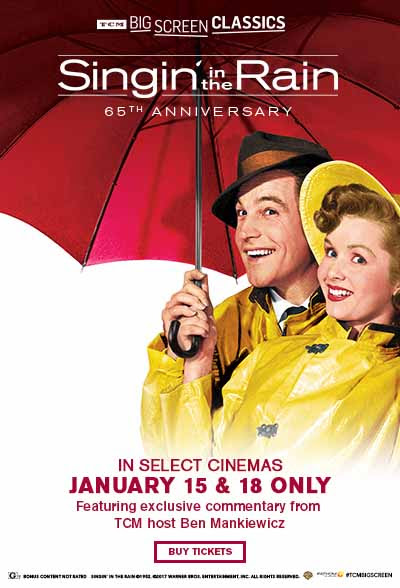
Fathom Events, Turner Classic Movies, and Warner Bros. Entertainment presents a special two-day event, Singin’ in the Rain 65th Anniversary, in select cinemas nationwide on Sunday, January 15 and Wednesday, January 18.
This special event also includes exclusive commentary fromTurner Classic Movies host Ben Mankiewicz,who will give insight into this classic film.
“Singin’ in the Rain” is on my list as one of the greatest musicals of all time! Funny with incredible dance numbers and a memorable score that will stand for generations.
A previous post on some of my favorite musical moments includes “nails on a chalkboard voice” Lina Lamont (Jean Hagen), who made Number One.
Gene Kelly, Debbie Reynolds and Donald O’Connor star in one of the greatest musicals ever filmed. Musician Don Lockwood (Kelly) rises to stardom during Hollywood’s silent-movie era–paired with the beautiful, jealous and dumb Lina Lamont (Jean Hagen).
Donald O’Connor, Debbie Reynolds, Gene Kelly
When Lockwood becomes attracted to young studio singer Kathy Selden (Reynolds), Lamont has her fired. But with the introduction of talking pictures, audiences laugh when they hear Lockwood speak for the first time–and the studio uses Selden to dub her voice.
Gene Kelly and Debbie Reynolds
This special 65th Anniversary Screening is a heartfelt dedication to Debbie Reynolds and in sympathy to the tragic loss of her daughter, actress, and writer Carrie Fisher.
Debbie was only 19 when she was cast in this classic but deftly held her own with the likes of legendary hoofers, Gene Kelly and Donald O’Connor!
Mary Frances “Debbie” Reynolds (April 1, 1932 – December 28, 2016)
In 2002, on the film’s 50th Anniversary, Debbie Reynolds shares her memories on the history and movie magic of “Singin’ in the Rain”.
Don’t miss this incredible opportunity to see “Singin’ in the Rain” on the big screen as it was originally shown.
“I’ll walk down the lane with a happy refrain…and singin’ just singin’ in the rain.” Gene Kelly
As a film student at The University of Michigan, I was exposed to the masters of cinema – Chaplin, Murnau, Kubrick, Lang, etc. There, we were challenged to critique and look beyond the surface to the underlying themes. “Metropolis” is supreme in incorporating intriguing layers of sub-texture and sub-plots.
Moloch Machine – (Power for the City)
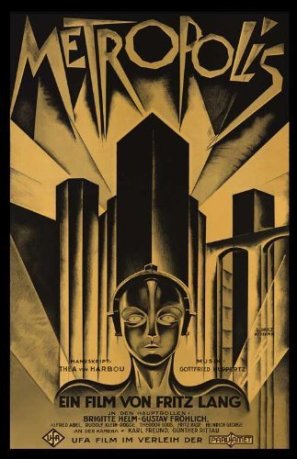
Austrian director Fritz Lang’s German Expressionistic masterpiece helped to develop the science-fiction genre, with innovative imagery from cinematographer Karl Freund, art design by Otto Hunte, Erich Kettelhut, and Karl Vollbrecht and set design by Edgar Ulmer.(set designer for The Phantom of the Opera) It was the last of Lang’s silent films. (Filmsite Movie Review)
Friedrich Christian Anton “Fritz” Lang (December 5, 1890 – August 2, 1976)
“Metropolis” was not just some sci-fi flick from the silent era, it’s a visually-compelling, allegory set in the dystopic, 21st-century city of Metropolis and represents a brilliant critique of the repercussions of man vs. machine and the brutality of the never-ending class struggle.
Establishing the tone of the film, this statement is presented following the opening credits.
THE MEDIATOR BETWEEN HEAD AND HANDS MUST BE THE HEART!
“Metropolis” took over 2 years to complete at ten times the budget for the usual Hollywood production of the time and influenced visuals associated with classic films such as; Chaplin’s war against the machines in Modern Times (1936), the mechanical hand of Dr. Strangelove in Stanley Kubrick’s Dr. Strangelove, Or: (1964), the resemblance between the Maria robot and the droid C-3PO in George Lucas’ Star Wars (1977) trilogy of films, and scenes of Los Angeles in Ridley Scott’s Blade Runner (1982) to name just a few.
Blade Runner
Modern Times
Dr. Strangelove
C 3-PO Star Wars
This symbolic tale was written by Lang’s wife Thea Von Harbou (from her own novel). Her vision detailed a self-indulgent, futuristic, industrial world built of skyscrapers and bridges incorporating the Art Deco style of the 20s for the 2026 city of Metropolis.
An ultra elite, 1% privileged class of powerful industrialists is juxtaposed with a subterranean environment of the nameless, oppressed and exploited drone-like slave labor class.
Made in Germany during the Weimar Period, Metropolis is set in a futuristic urban dystopia and follows the attempts of Freder (Gustav Fröhlich), the wealthy son of the city’s ruler, and Maria (Brigitte Helm), a poor worker, to overcome the vast gulf separating the classes of their city.
Brigitte Helm – Maria
Gustav Frohlich – Freder
Filming took place in 1925 at a cost of approximately five million Reichsmarks. The art direction draws influence from Bauhaus, Cubist, and Futurist design. (Wikipedia)
Fritz Lang directing the workers
As with all great films, “Metropolis” was influenced by the historical events occurring during its time. Centered around the developing Industrial Revolution and depressed economic times, the film also incorporates the rise of fascism in a pre-Hitler Weimar Republic Germany following World War I.
Another influence of the movie’s themes was the rise of the American labor movement and unions during the 1920s due to oppressive working conditions. “Metropolis”, like the Progressive, investigative journalists of the day, took on corrupt politicians and the establishment in an effort to make people aware of the contrast of poverty with the upper-crust classes of the opulent Roaring 20s.
I’m a steadfast believer that understanding history is empowering. “Metropolis” tackles the rise of immigration into the US and exploitation of workers at the beginning of the 20th century along with Capitalists exploiting labor. It deals with the conversation of doing what’s right versus greed and the power of modern science.
The creation of the evil android Maria (Bridgitte Helm) was an abuse of science but that same knowledge powered the city in the sky and could have been used to enrich the lives of the subterranean slaves.
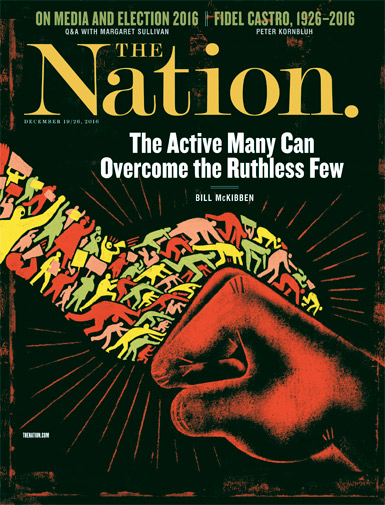
Describing these themes and comparisons in “Metropolis” is like writing a piece for The Nation magazine today. The similarities are frightening like George Orwell’s “1984” or H.G. Well’s “The Time Machine”. It’s incredible to think that a film I critiqued back in the 70’s which was made in the 20’s is actually unfolding in the year 2016; only 10 years away from the 2026 Art Deco Metropolis city in the sky.
Does art imitate life or life imitate art? I’m not sure, but in our “reality” tv driven news programming, a low information population and the “I don’t believe in science” faction, we might as well be living in the dystopian world of “Metropolis”.
Lest we forget.
THE MEDIATOR BETWEEN HEAD AND HANDS MUST BE THE HEART!
◊
This is a restored version of “Metropolis”
If you’ve never seen it, I highly recommend this viewing experience. But, lasting 2 1/2 hours, prepare to settle in with an extra large bag of popcorn.
This site is about how to live our life in a meaningful way by accepting complete surrender to the Almighty with purity of mind and character. It is about the eternal religion of the world i.e. Hinduism which is very liberal to anyone because there are many branches or methods to get the divinity to turn our life into an ever blissful one.
Free listening and free download (mp3) chill and down tempo music (album compilation ep single) for free (usually name your price). Full merged styles: trip-hop electro chill-hop instrumental hip-hop ambient lo-fi boombap beatmaking turntablism indie psy dub step d'n'b reggae wave sainte-pop rock alternative cinematic organic classical world jazz soul groove funk balkan .... Discover lots of underground and emerging artists from around the world.




























 iheartfilm