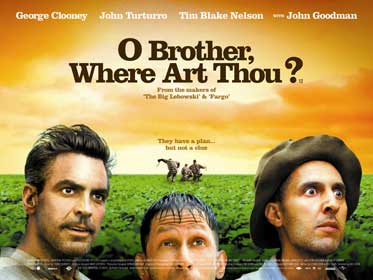
Favorite Actors Favorite Roles

ohbrotherwhereartthoposter

I was thinking about actors who so embodied the role that you forgot the actual actor. The first that immediately came to mind was George Clooney in the Coen Brother’s Academy Award Nominated film –“Oh Brother, Where Art Thou?”

George Clooney

George Clooney

Normally my reaction to Clooney is, “wow, he’s so fine!” But, as Ulysses Everett McGill I didn’t ever think about the “fine” George Clooney but instead was mesmerized and cracking up with laughter at lines like “my hair”. Ulysses is a Dapper Dan hair pomade man. (totally obsessed with his hair)

I had no idea he was so freakin’ funny! Who knew? He usually plays fine, hot, strong characters but this time, he went all the way out the box with this incredible performance.

One of my favorite scenes is when he’s at a political benefit concert with his “band” the Soggy Bottom Boys and becomes engrossed in conversation trying to convince his ex-wife (Holly Hunter) to give him a second chance. Just when he is just about to reel her in, he hears the opening line to his (unbeknownst to him) hit song “Constant Sorrow”and without hesitation is back at the mike and crushing it. A man after my own heart. (I’m a community theater veteran:)

Produced, edited, and directed by Joel and Ethan Coen, and starring George Clooney, John Turturro, and Tim Blake Nelson, with John Goodman, Holly Hunter, and Charles Durning in supporting roles. Set in 1937 rural Mississippi during the Great Depression, the film’s story is a modern satire loosely based on Homer’s epic poem, Odyssey. The title of the film is a reference to the 1941 film Sullivan’s Travels, in which the protagonist (a director) wants to film a fictional book about the Great Depression called O Brother, Where Art Thou? (Wikipedia)

The film is brilliant and all the actor’s performances are remarkable! “Oh, Brother Where Art Thou” is a dark comedy whose themes touch on poverty, politics and racism. I give it – both thumbs way up.

OBrother


Long Live Rock Movies! 😎🎸

“School of Rock” (2003)

school of rock

Let’s start with our substitute teacher, Mr. Schneebly – what kid hasn’t wished for a sub like him?  No grades, being part of a kick butt rock band, defying parents, breaking the rules.  Good, right?

Jack Black’s character Dewey Finn is the forever loser and quintessential wanna be rock star, but when he steals his roommate’s identity as a substitute teacher, (Mr, Schneebly) he discovers he has a  class of very musically talented 5th-grade students. So, Dewey decides to turn his class into a rock band to potentially win the Battle of the Bands and $20,000.  I won’t spoil whether the kids win or don’t win the battle but as a result of the contest they gain self-confidence and continue to play rock in an after school program coached by Dewey.  Long live Rock!

This film totally tapped into my inner rocker!


“The Commitments” (1991)

commitments

What happens when a group of white working class Dubliners forms a soul band?  A rousing film with some great music inspired by legendary artists, Otis Redding, Aretha Franklin and Wilson Pickett.

The band nails the soul of the greats by immersing themselves 24/7 in classic soul standards:

  •     “In the Midnight Hour” – Wilson Pickett
  • “Try a Little Tenderness” – Otis Redding
  • “I Never Loved a Man” – Aretha Franklin
  • Whether on buses, hanging up laundry or in music store windows, they were feeling the soul.  In the words of  Félim Gormley (Dean Fay- Saxophone), “I’m black and I’m proud!”

I’m so glad the movie was authentic with the cast singing on the soundtrack.  (The actors were cast  for their musical abilities.) Lead singer (Andrew Strong “Deco”) was nuts but the standout talent of the band.

The Commitments was voted best Irish film of all time in a 2005 poll sponsored by Jameson Irish Whiskey and launched a generation of Irish musicians and actors.


 “This is Spinal Tap” (1984)


This is spinal tap poster

 OMG, the funniest, dead on satire of a rock metal band ever!

Classic in every sense of the word, Director/Writer Rob Reiner’s masterpiece was also written and scored by the stars:

Rob Reiner – (Marty D. Bergi) – Mokumentarian

Spinal Tap

Christopher Guest – (Nigel Tufnel)

Michael McKean- (David St. Hubbins)

Harry Shearer – (Derek Smalls)

This mockumentary feels so real that some moviegoers thought they were an actual group!

The “Stonehenge” number during the Smell the Glove tour is priceless.  Due to a mix up with size dimensions, the Stonehenge replica for their epic song is 18 inches instead of 18 feet tall.  The little people performers in the number were taller. And Derek Smalls getting stuck in the stage prop egg is hilarious!

 In 2002, This Is Spinal Tap was deemed “culturally, historically, or aesthetically significant” by the Library of Congress and was selected for preservation by the United States National Film Registry.


These are 3 of my favorite Rock Movies – Let me know yours in the comments!


The Incredibles

The_Incredibles

“The Incredibles” is a 2004 American computer-animated superhero comedy film written and directed by Brad Bird, produced by Pixar Animation Studios, and released by Walt Disney Pictures.

theIncredibles_Bird

Brad Bird and Edna Mode

In this lauded Pixar production, married superheroes Mr. Incredible (Craig T. Nelson) and Elastigirl (Holly Hunter) are forced to assume mundane lives as Bob and Helen Parr after all super-powered activities have been banned by the government. While Mr. Incredible loves his wife and kids, he longs to return to a life of adventure and his desire to help people draws the entire family into a battle with superhero obsessed villain –

Syndrome (Jason Lee)

theincrediblesnemisis

and his killer robot. Omnidroid

theincrediblesomnibot

I must say that baby Jack-Jack is my favorite “Super”/Parr family member.

theincrediblesjackjack

Everyone thinks he has no powers and is “normal”. (which is so not true) When I saw this scene with Jack-Jack and his babysitter Kari, I would have spit milk out of my nose (if I was drinking milk😂) Too funny!!

When “The Incredibles” was released I felt it was the best-animated film I’d seen to date. It combined humor with drama and kept the audience engaged from start to finish. There was an audible gasp in the theater during the airplane sequence with Elastigirl and the kids (Dash and Violet).

The Incredibles was written and directed solely by Brad Bird, a departure from previous Pixar productions which typically had two or three directors and as many screenwriters. In addition, it would be the company’s first film in which all characters are human.

theincrediblesplain

Brad Bird came to Pixar with the lineup of the story’s family members worked out: a mom and dad, both suffering through the dad’s midlife crisis; a shy teenage girl; a cocky ten-year-old boy; and a baby. Bird had based their powers on family archetypes.

theincrediblesEdna_mode2

After several failed attempts to cast Edna Mode, Bird took on her voice role himself. It was an extension of the Pixar custom of tapping in-house staff whose voices came across particularly well on scratch dialogue tracks.

There were 781 visual effects shots in the film and the skin of the characters gained a new level of realism from a technology to produce what is known as “subsurface scattering.”

Critic Roger Ebert of the Chicago Sun-Times awarded the film 3½ stars out of 4, writing that the film “alternates breakneck action with satire of suburban sitcom life” and is “another example of Pixar’s mastery of popular animation.”

The film won the Academy Award for Best Animated Feature, beating two DreamWorks films, Shrek 2 and Shark Tale, as well as Best Sound Editing at the 77th Academy Awards. It also received nominations for Best Original Screenplay (for writer/director Brad Bird) and Best Sound Mixing (Randy Thom, Gary Rizzo, and Doc Kane). It was Pixar’s first feature film to win multiple Oscars, followed in 2010 by Up. (Wikipedia)

Nora Ephron – “I’ll Have What She’s Having”

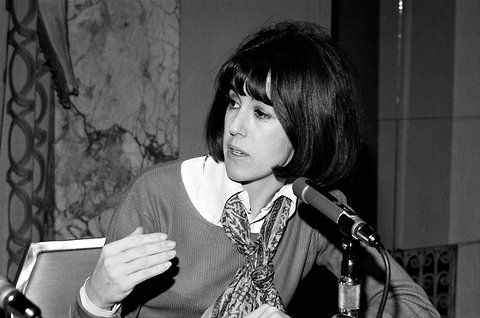
Nora Ephron

May 19, 1941 – June 26, 2012

Our next artist for “The Faces Behind the Camera” theme is Nora Ephron – writer,  journalist, essayist, playwright, screenwriter, novelist, producer, and director. Probably best known for her romantic comedies – “When Harry Met Sally”, “Sleepless in Seattle” and drama “Silkwood”. She was nominated three times for the Academy Award for Best Writing: for Silkwood, When Harry Met Sally, and Sleepless in Seattle. She won a BAFTA Award for Best Original Screenplay for “When Harry Met Sally”. Ephron received a posthumous Tony Award nomination for Best Play for her play “Lucky Guy” which starred Tom Hanks.


I love “Sleepless in Seattle” because of Nora Ephron’s smart writing, directing and the entire ensemble cast. This is one of the best scenes, comparing the tear-jerker “An Affair to Remember” versus “The Dirty Dozen” – Hilarious! Don’t get me wrong, both “You’ve Got Mail” and “Silkwood” are brilliant films. Right now “Sleepless” just resonates with me.

Ephron hails from a writing family starting with her stage and screenwriter parents – Henry and Phoebe Ephron. Her parents used her infancy as the subject of their play “Three’s a Family” and based their comedy Take Her, She’s Mine (1963) starring Jimmy Stewart and Sandra Dee on letters their 22-year-old daughter wrote them from college. Their screenplays include There’s No Business Like Show Business (1954), Carousel (1956) and Desk Set (1957). Nora is also eldest of four daughters – all writers.

Miss Ephron had a distinctive voice and didn’t shy away from controversy. She took on a satire lampooning the New York Post which actually resulted in a job offer as Reporter from The Post, a gig which lasted 5 years.


Nora Ephron 1972

Nora Ephron 1972


As a writer for Esquire magazine she took on her former boss – Dorothy Schiff, owner of the Post and also Betty Friedan for starting a feud with Gloria Steinem and her alma mater Wellesley, which Friedan said had turned out “a generation of docile and unadventurous women”.

Fun Fact: Nora Ephron was married to journalist Carl Bernstein (1976-1980) of Watergate fame and she correctly guessed the identity of “Deep Throat” (the source for news articles written by her ex-husband Carl Bernstein and Bob Woodward during the Watergate scandal) before his name was revealed in 2005.

On June 26, 2012, Ephron died from pneumonia, a complication resulting from acute myeloid leukemia, a condition with which she was diagnosed in 2006. In her final book, I Remember Nothing (2010), Ephron left clues that something was wrong with her or that she was ill, particularly in a list at the end of the book citing “things I won’t miss/things I’ll miss.”


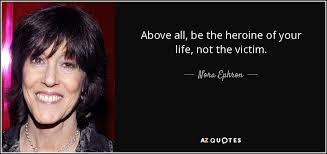
nora ephron quote


The Tribeca film festival established The Nora Ephron Prize which is a $25,000 award for a female writer or filmmaker “with a distinctive voice”. The first Nora Ephron Prize was awarded in 2013 to Meera Menon for her film Farah Goes Bang.

Her death was a shock to many as she didn’t reveal her illness. Her brilliant writing and filmmaking talents are a definite loss to the industry.


Filmography

Feature films

Year Title Credited as
Director Screenwriter Producer
1983 Silkwood Yes
1986 Heartburn Yes
1989 When Harry Met Sally… Yes Yes
Cookie Yes Yes
1990 My Blue Heaven Yes Yes
1991 The Super (uncredited)[20] Yes
1992 This Is My Life Yes Yes
1993 Sleepless in Seattle Yes Yes
1994 Mixed Nuts Yes Yes
1996 Michael Yes Yes Yes
1998 All I Wanna Do Yes
You’ve Got Mail Yes Yes Yes
2000 Hanging Up Yes Yes
Lucky Numbers Yes Yes
2005 Bewitched Yes Yes Yes
2009 Julie & Julia Yes Yes Yes


The Faces Behind the Camera 📽


TCM movie lovers

If you’re a movie junkie like me you probably not only know the stars of the film but the Director, The Cinematographer, the Editor, Writers and possibly the Key Grip. The faces behind the camera.

If you attend a movie with me, be prepared to stay through the end credits. I feel it’s imperative to acknowledge those artists who are responsible for the project. Staying for the credits also gives you a foundation to critique a film based on the direction, writing, and editing. Whether or not to see a movie based on a Director’s previous track record or the Cinematographer’s eye for the visuals.

image

This month is dedicated to educating and paying homage to the artists who help put it all together. Let’s begin with one of the top 2 of my favorite Directors, Billy Wilder.

Billy Wilder

Billy Wilder

Billy Wilder (June 22, 1906 – March 27, 2002) was an Austrian-born American filmmaker, screenwriter, producer, artist and journalist, whose career spanned more than fifty years and sixty films. He is regarded as one of the most brilliant and versatile filmmakers of Hollywood’s golden age.

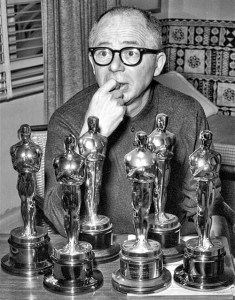
Billy Wilder with Oscars

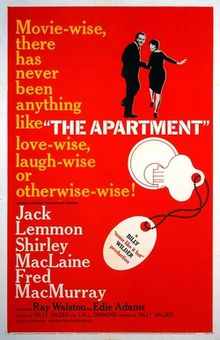
With The Apartment, (starring Jack Lemmon, Shirley MacLaine, and Fred MacMurray) Wilder became the first person to win Academy Awards as the producer, director, and screenwriter for the same film. “The Apartment” was nominated for ten Academy Awards and won five, including Best Picture.

The Apartment (1960)

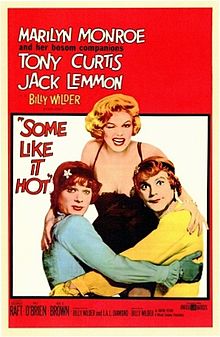
I love Billy Wilder because of his versatility in films and his testing the boundaries of societal norms. The first movie that comes to mind with his pushing the boundaries is “Some Like it Hot” 1959 starring Marilyn Monroe, Jack Lemmon, and Tony Curtis.

The plot revolves around two musicians who dress in drag in order to escape from mafia gangsters whom they witnessed commit the Saint Valentine’s Day Massacre. These are the final lines of the film delivered by (Daphne/Jerry) Lemmon and Joe E. Brown (Osgood) in regards to their pending marriage: Daphne/Jerry: But you don’t understand, Osgood! [Whips off his wig, exasperated, and changes to a manly voice] Uh, I’m a man! Osgood: [Looks at him then turns back, unperturbed] Well, nobody’s perfect!Wow! for 1959 that was pretty radical.

Some_Like_It_Hot_poster

“Some Like It Hot” is considered to be one of the greatest film comedies of all time. It was voted as the top comedy film by the American Film Institute on their list on AFI’s 100 Years… 100 Laughs poll in 2000. The film is also notable for featuring cross-dressing and homosexuality, which led to it being produced without approval from the Motion Picture Production Code. The Code was the set of industry moral guidelines that was applied to most American motion pictures released by major studios from 1930 to 1968. The Production Code had been gradually weakening in its scope during the early 1950s due to increasing societal tolerance for previously taboo topics in film, but it was still officially enforced. The overwhelming success of “Some Like It Hot” was a final nail in the coffin for the Hays Code.

Wilder became a screenwriter in the late 1920s while living in Berlin. After the rise of the Nazi Party, Wilder, who was Jewish, left for Paris, where he made his directorial debut. He moved to Hollywood in 1933, and in 1939, he had a hit when he co-wrote the screenplay for the screwball comedy Ninotchka. Wilder established his directorial reputation with Double Indemnity (1944), a film noir he co-wrote with crime novelist Raymond Chandler. Wilder earned the Best Director and Best Screenplay Academy Awards for the adaptation of a Charles R. Jackson story The Lost Weekend (1945), about alcoholism. In 1950, Wilder co-wrote and directed the critically acclaimed Sunset Boulevard.

Wilder was recognized with the American Film Institute (AFI) Life Achievement Award in 1986. In 1988, Wilder was awarded the Irving G. Thalberg Memorial Award. In 1993, he was awarded the National Medal of Arts.

Billy Wilder’s films:

Year Film Involvement
1934 Mauvaise Graine (also known as Bad Seed) Director/Writer
1942 The Major and the Minor Director/Writer
1943 Five Graves to Cairo Director/Writer
1944 Double Indemnity Director/Writer
1945 The Lost Weekend Director/Writer
1945 Death Mills Director
1948 The Emperor Waltz Director/Writer
1948 A Foreign Affair Director/Writer
1950 Sunset Boulevard Director/Writer
1951 Ace in the Hole Director/Writer/Producer
1953 Stalag 17 Director/Writer/Producer
1954 Sabrina Director/Writer/Producer
1955 The Seven Year Itch Director/Writer/Producer
1957 The Spirit of St. Louis Director/Writer
1957 Love in the Afternoon Director/Writer/Producer
1957 Witness for the Prosecution Director/Writer
1959 Some Like It Hot Director/Writer/Producer
1960 The Apartment Director/Writer/Producer
1961 One, Two, Three Director/Writer/Producer
1963 Irma la Douce Director/Writer/Producer
1964 Kiss Me, Stupid Director/Writer/Producer
1966 The Fortune Cookie Director/Writer/Producer
1970 The Private Life of Sherlock Holmes Director/Writer/Producer
1972 Avanti! Director/Writer/Producer
1974 The Front Page Director/Writer
1978 Fedora Director/Writer/Producer
1981 Buddy Buddy Director/Writer

Wilder received a total of twenty-one Academy Award nominations; eight for Best Director, twelve for writing, and one as the producer of Best Picture. With eight nominations for Academy Award for Best Director, Wilder is, together with Martin Scorsese, the second most nominated director in the history of the Academy Awards, behind William Wyler, and the second most nominated screenwriter behind Woody Allen.

Wilder won a total of six Oscars: Best Director for The Lost Weekend and The Apartment, Best Screenplay for The Lost Weekend, Sunset Blvd, The Apartment, and Best Picture for The Apartment. In addition, he received the Irving G. Thalberg Memorial Award in 1988.

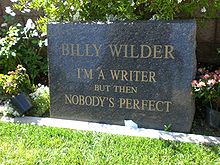
Billy Wilder"s grave

Wilder died in 2002 of pneumonia at the age of 95 after battling health problems, including cancer, in Los Angeles and was interred in the Westwood Village Memorial Park Cemetery in Westwood, Los Angeles near Jack Lemmon and Walter Matthau. Marilyn Monroe’s crypt is located in the same cemetery. Wilder died the same day as two other comedy legends: Milton Berle and Dudley Moore. The next day, French newspaper Le Monde titled its first-page obituary, “Billy Wilder dies. Nobody’s perfect”, quoting the final gag line in “Some Like It Hot”.


“Lady Sings the Blues” 🎤🎬

lady-sings-the-blues-(1972)

“Lady Sings the Blues” (1972) is the biopic of the troubled life and career of the legendary Jazz singer, Billie Holiday. Loosely based on her 1956 autobiography which, in turn, took its title from one of Holiday’s most popular songs. It was produced by Motown Productions for Paramount Pictures and directed by Sidney J. Furie.

When I first heard Diana Ross had been cast as Billie Holiday I thought, she can’t act and will never pull it off. I wasn’t a big Diana Ross fan but when I saw the movie I had to give her credit for her phenomenal, Oscar-nominated performance. She lost to Liza Minnelli in “Cabaret”, but I thought Ross deserved the award.

The opening sequence (which was shot in black and white in still pictures) made me sit up and go, whoa, she’s serious. Diana Ross, the glamorous diva wore no makeup and looked the part of a heroin addict. The movie overall was a triumph not only for Ross but the incredible cast including – Billy Dee Williams as Holiday’s boyfriend Louis McKay, and Richard Pryor as Piano Man.

ladysingsthebluesopeningscene

(In 1936, New York City, Billie Holiday (Diana Ross) is arrested on a drugs charge.)

The story takes us from Billie’s tumultuous youth when in 1928 she is raped in the Baltimore brothel where she works as a housekeeper. She runs away to her mother who proceeds to get her a job in another brothel in the Harlem section of New York where she becomes a prostitute. Seeing that her life is going nowhere, she quits and heads to a local nightclub to become a showgirl. Billie has always had a love of music and has a remarkable voice. After “Piano Man” (Richard Pryor) accompanies Billie on the song”All of Me“, Jerry, the club owner, books her as a singer in the show.

Billie Holiday

billie-holiday

Eleanora Fagan (April 7, 1915 – July 17, 1959), professionally known as Billie Holiday lived a life that was an American tragedy full of turmoil, racism, and drug abuse. Despite all this we are left with her incredible song catalog and heartfelt performances.

Holiday had a tremendous influence on jazz music and pop singing. Her vocal style, strongly inspired by jazz instrumentalists, pioneered a new way of manipulating phrasing and tempo. “God Bless the Child” became Holiday’s most popular and covered record. It reached number 25 on the charts in 1941 and was third in Billboard’s songs of the year, selling over a million records. In 1976, the song was added to the Grammy Hall of Fame.

Billie Holiday died of cirrhosis of the liver in 1959 when she was 44. The biggest triumph of her career was her sold-out, standing ovation performance at Carnegie Hall.

Awards and Honors

“Lady Sings the Blues” was nominated for five Academy Awards. The nominations were for Best Actress in a Leading Role (Diana Ross), Best Art Direction-Set Decoration (Carl Anderson and Reg Allen), Best Costume Design (Norma Koch), Best Music, Original Song Score and Adaptation (Gil Askey & Michel Legrand) and Best Writing, Story and Screenplay Based on Factual Material or Material Not Previously Published or Produced.The film was also screened at the 1973 Cannes Film Festival but was not entered into the main competition.

Soundtrack

Motown released a hugely successful soundtrack double-album of Ross’ recordings of Billie Holiday songs from the film, also titled Lady Sings the Blues. The album went to number one on the Billboard Hot 200 Album Charts, for the week-ending dates of April 7 and 14, 1973.


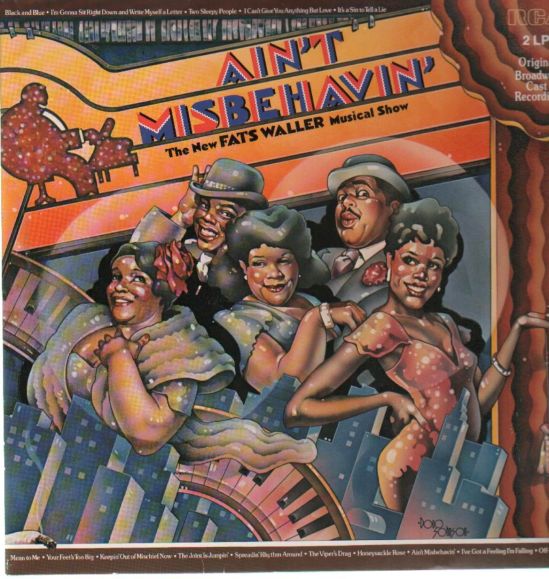
“Ain’t Misbehavin” – Fats Waller 🎹🎼

aintmisbehavinposter

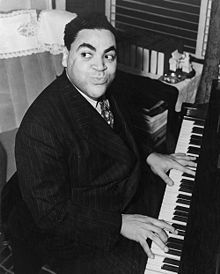
Thomas WrightFatsWaller (May 21, 1904 – December 15, 1943)

“Ain’t Misbehavin” is a musical tribute to the incomparable, Fats Waller. It originated at Broadway’s Longacre Theatre on May 9, 1978. The original cast included: Nell Carter, André DeShields, Armelia McQueen, Ken Page, and Charlayne Woodard. It ran for 1604 performances and closed on February 21, 1982. The book was by –  Murray Horwitz and Richard Maltby, Jr., and music by various composers and lyricists as arranged and orchestrated by Luther Henderson. It won the Tony Award for Best Musical.

On June 12, 1982, NBC broadcast the revue with the original Broadway cast and that’s what this post is about and how I experienced the production, which blew me away! Fats Waller songs are classic and give a jumpin’ snapshot of the 1920’s and 1930’s with the cast so brilliantly bringing his songs to life. His signature song was “Ain’t Misbehavin” which is the opening number for the 1982 production.

Waller was an American jazz pianist, organist, composer, singer, and comedic entertainer, whose innovations to the Harlem stride style laid the groundwork for modern jazz piano, and whose best-known compositions, “Ain’t Misbehavin” and “Honeysuckle Rose”, were inducted into the Grammy Hall of Fame in 1984 and 1999.

aintmisbehavinFats_Waller_edit

“Ain’t Misbehavin” was a feature number in the acclaimed 1943 film “Stormy Weather”.

Some of my favorite songs from the NBC production are: “Ain’t Misbehavin”, “The Joint is Jumpin”, and the hilarious”Your Feet’s too Big”.

There were plenty of awards for the 1978 production of “Ain’t Misbehavin” including:

Drama Desk Award

Award – Outstanding Musical

Won – Outstanding Actor in a MusicalKen Page. Won –André DeShields

Won –Outstanding Actress in a Musical –Nell Carter.

Theatre World Award

Won – Nell Carter. Won –Armelia McQueen

Tony Award

Won-Best Musical

Won-Best Performance by a Featured Actress in a Musical –Nell Carter.

Won –Best Direction of a Musical –Richard Maltby, Jr.

aintmisbehavinfats_waller-aint_misbehavin_-_the_new_f.w._musical_show


Pioneering Women Filmmakers – A Series – Part 3

The Contemporary Visionaries of American Film

stars

A long time ago in a galaxy far, far away…Women were the driving force behind Hollywood and the movies. This is the third part of a series paying homage to contemporary women filmmakers who broke the glass ceiling and wrote and directed the films that took 86 years from pioneer Lois Weber’s day to achieve. Hollywood is still run by men but these women prove that it may be a man’s world but it would be nothing without a woman or a girl. Thanks, James Brown for the lyric.

  • In 86 years, only four women have been nominated for the Best Director Oscar. Only one, Kathryn Bigelow, has won.

  • Women filmmakers nominated for the Best Director: Lina Wertmüller for Seven Beauties (1976), Jane Campion for The Piano (1993), Sofia Coppola for Lost in Translation (2003), and Kathryn Bigelow for The Hurt Locker (2009).

  • Sofia Coppola was the first American woman to ever be nominated for Best Director for the 2003 movie, “Lost in Translation.”

◊◊◊◊◊◊

Kathryn Ann Bigelow ( born November 27, 1951) is an American director, producer, and writer. Her films include the vampire Western horror film Near Dark (1987), the action crime film Point Break (1991), the controversial science fiction action thriller Strange Days (1995), the mystery thriller The Weight of Water (2000), the submarine thriller K-19: The Widowmaker (2002), the war film The Hurt Locker (2009), the action thriller war film Zero Dark Thirty (2012), and the short film Last Days of Ivory (2014). The Hurt Locker won the 2009 Academy Award for Best Picture, won the BAFTA Award for Best Film, and was nominated for the 2009 Golden Globe Award for Best Drama.

Kathryn Bigelow

Kathryn Ann Bigelow

Bigelow’s trilogy of action films — Blue Steel, Point Break, and Strange Days —  are looked at by critics as rethinking the conventions of action cinema while exploring gendered and racial politics. In her career, Bigelow has become recognizable as both a Hollywood brand and an auteur.

Married to director James Cameron from 1989-1991, she and Cameron were both nominated for Best Director at the 2010 82nd Academy Awards, which Bigelow won. Yay, Kathryn!

Sofia Coppola

Sofia Coppola

Sofia Carmina Coppola (born May 14, 1971) is an American screenwriter, director, producer, and actress. In 2003, she received the Academy Award for Best Original Screenplay for the comedy-drama Lost in Translation and became the third woman to be nominated for an Academy Award for Best Director. Her nomination for Best Director made her the first American woman in history to be nominated in that category, and the third woman overall, after Lina Wertmüller and Jane Campion. In 2010, with the drama Somewhere, she became the first American woman (and fourth American filmmaker) to win the Golden Lion, the top prize at the Venice Film Festival. Her father is the director, producer, and screenwriter Francis Ford Coppola.

She made her feature film directing debut with The Virgin Suicides (1999). It received critical acclaim upon its premiere in North America at the 2000 Sundance Film Festival and was released later that year. If you haven’t seen it, check it out. It’s brilliant and makes you think about parenting skills or the lack thereof.

◊◊◊◊◊◊

African American Women Filmmakers

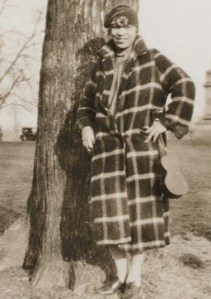
Zora Neale Hurston

Zora Neale Hurston

(January 7, 1891 – January 28, 1960)

Better known for her work as a novelist, Zora Neale Hurston could be, according to an essay by academic Gloria Gibson, the first African-American woman filmmaker. The film footage, which includes Children’s Games (1928), Logging (1928), and Baptism (1929), appears to be from her work as a student of anthropology under the guidance of famed anthropologist, professor, and mentor, Dr. Franz Boas of Columbia University.

A graduate of Barnard College (B.A. in anthropology in 1928) and a Guggenheim fellow, Hurston traveled back to a South similar to her hometown of Eatonville, Florida (one of the first all-black towns to be incorporated in the United States) to capture a variety of short takes of African-American life. Ethnographic in nature, the films reflect a focus of folklorists of that time period who believed that “…cultural performance and beliefs must be expeditiously collected and documented because they would soon be gone forever” (Gloria Gibson).

During a period of financial and medical difficulties, Hurston was forced to enter St. Lucie County Welfare Home, where she suffered a stroke. She died of hypertensive heart disease on January 28, 1960, and was buried at the Garden of Heavenly Rest in Fort Pierce, Florida. Sadly, her remains were in an unmarked grave until 1973 when novelist Alice Walker and literary scholar Charlotte Hunt found an unmarked grave in the general area where Hurston had been buried and decided to mark it as hers.

Our future:

Ava DuVernay – Current/future generation screenwriter/director – She would have been the first black woman nominated for best director in Oscar history, and just the fifth woman, following Lina Wertmüller for Seven Beauties, Jane Campion for The Piano, Sofia Coppola for Lost in Translation, and Kathryn Bigelow for The Hurt Locker. Instead, she’s been added to the list of female directors who have seen their films get nominated while they’ve been snubbed.

Ava DuVernay

Ava DuVernay

Ava Marie DuVernay (born August 24, 1972) is an American director, screenwriter, film marketer, and film distributor. At the 2012 Sundance Film Festival, DuVernay won the Best Director Prize for her second feature film Middle of Nowhere, becoming the first African-American woman to win the award. For her work in Selma, DuVernay is the first black woman director to be nominated for a Golden Globe Award. With Selma, she is also the first black woman director to have their film nominated for the Academy Award for Best Picture.

In 2015, it was announced that DuVernay would be writing, producing, and directing her next project, Queen Sugar which is an upcoming American drama television series, created, directed and executive produced by Ava DuVernay alongside Oprah Winfrey. The series is based on the novel of the same name by Natalie Baszile.The series is set to air on the Oprah Winfrey Network. 

Women filmmakers are essential to the stories and voices of Hollywood. We’ve made some progress but we still have a long way to go!

Pioneering Women Filmmakers – Lois Weber

The Early Visionaries of American Film: A Series – Part 2

star wars galaxy

A long time ago in a galaxy far, far away…Women were the driving force behind Hollywood and the movies. This is the second part of a series paying homage to the women who broke the glass ceiling and wrote and directed the films that gave birth to the “Golden Age” of cinema and the motion picture industry.  Unfortunately, when the men realized the gold mine films were becoming, the women faded away thanks to the Hollywood studio system. Well, as the saying goes, “that’s the way they do you.”

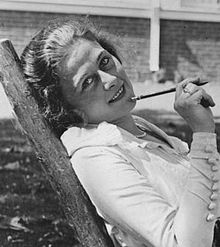
Lois Weber (June 13, 1879 – November 13, 1939)

Florence Lois Weber was an American silent film actress, screenwriter, producer, and director, who is considered the most important female director the American film industry has known and is one of the most important and prolific film directors in the era of silent films. Along with D.W. Griffith, Lois Weber was the American cinema’s first genuine auteur, “a filmmaker whose personal influence and artistic control over a movie are so great that the filmmaker is regarded as the author of the movie”. In that spirit, Lois Weber utilized the motion picture to put across her own ideas and philosophies.

Weber brought to the screen her concerns for humanity and social justice in an estimated 200 to 400 films, of which as few as twenty have been preserved, and she has been credited by IMDb with directing 135 films, writing 114, and acting in 100. Weber was also one of the first directors to come to the attention of the censors in Hollywood’s early years.

During the war years, Weber achieved tremendous success by combining commercially successful scripts with a rare vision of cinema as a moral tool. At her zenith, few men, before or since, have retained such absolute control over the films they have directed – and certainly no women directors have achieved the powerful status once held by Lois Weber. By 1920, Weber was considered the premier woman director of the screen and author and producer of the biggest money-making features in the history of the film business.

Among Weber’s notable films are the controversial “Hypocrites”, which featured the first full-frontal female nude scene in 1915; the 1916 film “Where Are My Children?”, which discussed abortion and birth control, and was added to the National Film Registry in 1993; and what is often considered her masterpiece, “The Blot” in 1921.

In 1913, Weber and husband Smalley collaborated in directing a ten-minute thriller, “Suspense”, based on the play Au Telephone by André de Lorde, which had been filmed in 1908 as “Heard over the ‘Phone” by Edwin S. Porter. Adapted by Weber, it used multiple images and mirror shots to tell the story of a woman (Weber) threatened by a burglar (Douglas Gerrard). Weber has been credited with pioneering the use of the split-screen technique to show simultaneous action in this film, According to film historian Tom Gunning, “No film made before WWI shows a stronger command of film style than “Suspense” which outdoes even Griffith for emotionally involved filmmaking”. “Suspense” was released on July 6, 1913.

loisweberSuspense_(1913_film)

Suspense” – Split Screen

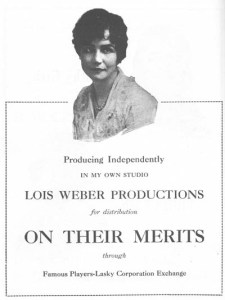
In 1913 Weber was one of the first directors to experiment with sound, making the first sound films in the United States, and was also the first American woman to direct a full-length feature film when she and husband Phillips Smalley directed “The Merchant of Venice” in 1914, and in 1917 the first woman director to own her own film studio.

Lois_Weber_Productions

In Part 1 of this series we talked about the accomplishments of director Frances Marion. Lois Weber discovered and inspired director and screenwriter Frances Marion.

For her contribution to the motion picture industry, on February 8, 1960, Lois Weber was awarded a star on the Hollywood Walk of Fame.

In Part 3 of this series, we’ll discuss contemporary female filmmakers and their viewpoint on Hollywood and the world in which we live.

Pioneering Women Filmmakers

The Early Visionaries of American Film: A Series – Part 1

star wars galaxy

A long time ago in a galaxy far, far away…Women were the driving force behind Hollywood and the movies. This is the first part in a series paying homage to the women who broke the glass ceiling and wrote and directed the films that gave birth to the “Golden Age” of cinema and the motion picture industry.  Unfortunately, when the men realized the gold mine films were becoming, the women faded away thanks to the Hollywood studio system. Well, as the saying goes, “that’s the way they do you.”


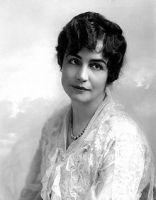
Frances Marion 1918

Frances Marion 1918


Frances Marion was a trailblazer. becoming one of the most powerful screenwriters of the 20th century. With a career that spanned decades, she became the first female to win an Academy Award for Best Adapted Screenplay in 1930 for the prison life film The Big House, starring Robert Montgomery, Wallace Beery, and Chester Morris. Her research included visiting San Quentin for the atmosphere and lingo of the inmates. The movie gave audiences their first experience of hearing prison doors slam shut, tin cups clanking on mess-hall tables and prisoners’ feet shuffling down corridors.


Frances also received the Academy Award for Best Story for The Champ in 1932. The tearjerker chronicled the relationship between a washed out boxer (Wallace Beery) and his young son (Jackie Cooper). Marion was credited with writing 300 scripts and producing over 130 films.


Born Marion Benson Owens (November 18, 1888) in San Francisco, California, she worked as a journalist and served overseas as a combat correspondent during World War I. On her return home in 1910, she moved to Los Angeles and was hired as a writing assistant, and actress by “Lois Weber Productions”, a film company owned and operated by pioneer female film director Lois Weber. (more on Lois Weber in Part 2 of the series)


Lois Weber

Lois Weber – Film Director

Frances was quite beautiful and could have been an actress but preferred to work behind the camera. She learned screenwriting from Lois Weber and went on to become the highest paid screenwriter, woman or man. Hollywood moguls competed for her stories and stars of the day Mary Pickford, Lilian Gish, Greta Garbo and Rudolph Valentino brought her characters to life on the screen. From 1919 – 1939 her star was ascendant, born at the right place and the right time, honing her craft during one of the most liberating eras for women in film.


When Marion met Mary Pickford (actress, producer, screenwriter) they became best friends with Marion writing screen adaptations of Rebecca of Sunnybrook Farm and The Poor Little Rich Girl for Pickford. As a result of the commercial success of “The Poor Little Rich Girl” in 1917 Marion was signed as Pickford’s “exclusive writer” at the salary of $50,000 a year, an unprecedented arrangement for that time.

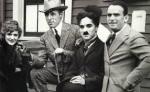
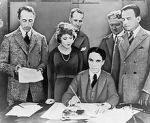
Pickford was the celebrated “America’s Sweetheart” and in 1919 together with her swashbuckler actor husband Douglas Fairbanks, Sr., director D.W. Griffith (Birth of a Nation) and “The Tramp” Charlie Chaplin established “United Artists” pictures. These four were the leading figures in early Hollywood and this was their stand for independence against the powerful studio system. Mary was also  one of the original 36 founders of the Academy of Motion Picture Arts and Sciences.


In 1921, Frances Marion directed a film for the first time with Just Around the Corner. That same year, she directed her friend Mary Pickford in one of her own scripts entitled The Love Light. Their relationship was more than just writer and star, they were collaborators and the friendship between Pickford and Marion lasted more than 50 years.

Married four times, Frances Marion had two children with third husband, actor Fred Thomson. This was her longest marriage, lasting from 1919 until Thomson’s sudden and tragic death from a Tetanus infection in 1928. Frances’ great friend Mary Pickford had introduced them. Frances said it was love at first sight.


Fred Thomson and Frances Marion

Fred Thomson and Frances Marion

For many years she was under contract to MGM Studios, but, independently wealthy, she left Hollywood in 1946 to devote more time to writing stage plays and novels. Frances Marion published a memoir Off With Their Heads: A Serio-Comic Tale of Hollywood in 1972.

Frances died on May 12, 1973 leaving a legacy of innovation, independence and inspiration for future aspiring female writers. The documentary, Frances Marion: Without Lying Down,” is an insightful profile of her life and achievements in Hollywood.


Without Lying Down

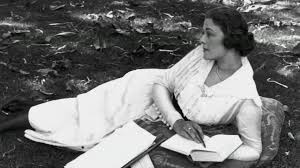
Mary Pickford and Frances Marion


Narrated by “Pulp Fiction” actress Uma Thurman and Oscar-winner Kathy Bates, who gives voice to the screenwriter’s own words taken from her letters, diaries. and memoirs. The documentary also features footage from more than twenty of Marion’s movies, with commentary by silent film historian Kevin Brownlow, and film critic Leonard Maltin.

I was fortunate enough to catch it on Turner Classic Movies and it was very enlightening on women’s roles in Hollywood. It’s also available for purchase at Amazon.com. I highly recommend checking it out!

  frances marion lying

“I’ve spent my life searching for a man to look up to without lying down.” Frances Marion


It took more than 60 years before women were once again present in meaningful numbers at every level of film production.