Academy Award Cinematographer – Ernest Laszlo 🎥

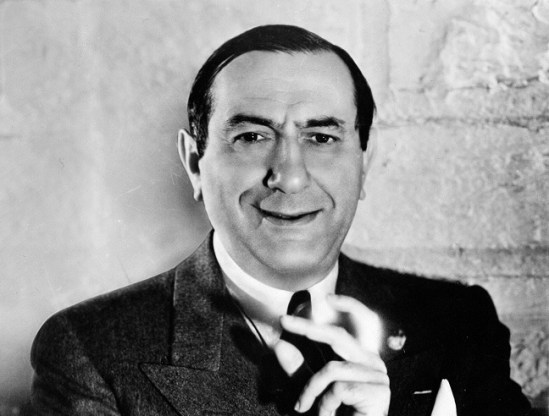
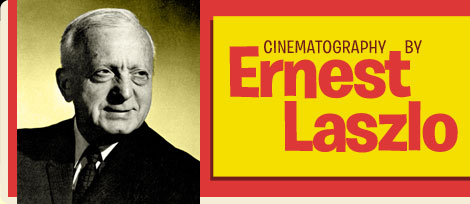
Ernest Laszlo

(April 23, 1898 – January 6, 1984)

Ernest Laszlo is our next artist for “The Faces Behind the Camera” theme. Best-known for his striking black-and-white cinematography, Laszlo was a painstaking technician and a true artist who rejected Hollywood glamour to bring a refreshing naturalism to his films.

Description: A cinematographer or director of photography (sometimes shortened to DP or DOP) is the chief over the camera crews working on a film, television production or other live action pieces and is responsible for achieving artistic and technical decisions related to the image. (Wikipedia)

Ernest Laszlo, A.S.C. was a Hungarian-American cinematographer for over 60 films and was known for his frequent collaborations with directors Robert Aldrich and Stanley Kramer. He was a member of the American Society of Cinematographers, and was its president from 1972 to 1974.

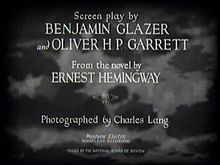
Laszlo emigrated to the United States and began working as a camera operator on such silent films as Wings (1927). Between 1927 and 1977, he served as cinematographer on sixty-nine films. Between 1961 and 1976 Laszlo was nominated for eight Academy Awards for Best Cinematography, and won the award in 1966 for Ship of Fools. He died in Los Angeles, California in 1984.

Some of my favorite films he shot are:

Directed by Stanley Kramer, “It’s a Mad, Mad, Mad, Mad World” (1963) was a scream! Every comic in the business appeared in this film. I’ve always said if you were a comedian during the filming and weren’t asked to participate, you just didn’t rate. 😟

There’s nothing more intriguing and hilarious than a bunch of strangers going on a treasure hunt and the lengths they will go through to retrieve the big prize. Dick Shawn stole the show with his portrayal of “Sylvester”, the not so bright hunk that’s determined to “save his mama”.

Filmed in Ultra Panavision 70 and presented in Cinerama (becoming one of the first single-camera Cinerama features produced), Mad World also had an all-star cast, with dozens of major comedy stars from all eras of cinema appearing in the film. It’s a Mad, Mad, Mad, Mad World rated #40 in the American Film Institute’s list – 100 Years…100 Laughs.

Spencer TracyEdie Adams, Milton Berle, Dick ShawnSid Caesar, Buddy Hackett, Ethel Merman, Mickey Rooney, Phil Silvers, Terry-Thomas, and Jonathan Winters.

A Little Cinematographer History

In the infancy of motion pictures, the cinematographer was usually also the director and the person physically handling the camera. Cinematography was key during the silent movie era; with no sound apart from background music and no dialogue, the films depended on lighting, acting, and set.

In 1919 Hollywood, the then-new motion picture capital of the world, one of the first (and still existing) trade societies was formed: the American Society of Cinematographers (ASC), which stood to recognize the cinematographer’s contribution to the art and science of motion picture making. (Wikipedia)

Some of Ernest Lazlo’s celebrated films

Ernest Laszlo, the trailblazing cinematographer whose body of work spans over 5 decades starting in the silent era with the first Academy Award winning film, Wings (1927) to his last film, The Domino Principle (1977). His visual style crossed all genres and he earned the accolade of being one of the best cinematographers in Hollywood.


Nora Ephron – “I’ll Have What She’s Having”

Nora Ephron

May 19, 1941 – June 26, 2012

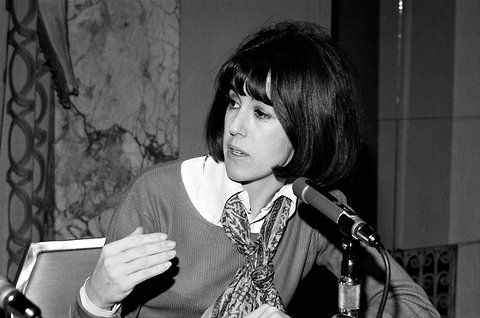
Our next artist for “The Faces Behind the Camera” theme is Nora Ephron – writer,  journalist, essayist, playwright, screenwriter, novelist, producer, and director. Probably best known for her romantic comedies – “When Harry Met Sally”, “Sleepless in Seattle” and drama “Silkwood”. She was nominated three times for the Academy Award for Best Writing: for Silkwood, When Harry Met Sally, and Sleepless in Seattle. She won a BAFTA Award for Best Original Screenplay for “When Harry Met Sally”. Ephron received a posthumous Tony Award nomination for Best Play for her play “Lucky Guy” which starred Tom Hanks.


I love “Sleepless in Seattle” because of Nora Ephron’s smart writing, directing and the entire ensemble cast. This is one of the best scenes, comparing the tear-jerker “An Affair to Remember” versus “The Dirty Dozen” – Hilarious! Don’t get me wrong, both “You’ve Got Mail” and “Silkwood” are brilliant films. Right now “Sleepless” just resonates with me.

Ephron hails from a writing family starting with her stage and screenwriter parents – Henry and Phoebe Ephron. Her parents used her infancy as the subject of their play “Three’s a Family” and based their comedy Take Her, She’s Mine (1963) starring Jimmy Stewart and Sandra Dee on letters their 22-year-old daughter wrote them from college. Their screenplays include There’s No Business Like Show Business (1954), Carousel (1956) and Desk Set (1957). Nora is also eldest of four daughters – all writers.

Miss Ephron had a distinctive voice and didn’t shy away from controversy. She took on a satire lampooning the New York Post which actually resulted in a job offer as Reporter from The Post, a gig which lasted 5 years.


Nora Ephron 1972

Nora Ephron 1972


As a writer for Esquire magazine she took on her former boss – Dorothy Schiff, owner of the Post and also Betty Friedan for starting a feud with Gloria Steinem and her alma mater Wellesley, which Friedan said had turned out “a generation of docile and unadventurous women”.

Fun Fact: Nora Ephron was married to journalist Carl Bernstein (1976-1980) of Watergate fame and she correctly guessed the identity of “Deep Throat” (the source for news articles written by her ex-husband Carl Bernstein and Bob Woodward during the Watergate scandal) before his name was revealed in 2005.

On June 26, 2012, Ephron died from pneumonia, a complication resulting from acute myeloid leukemia, a condition with which she was diagnosed in 2006. In her final book, I Remember Nothing (2010), Ephron left clues that something was wrong with her or that she was ill, particularly in a list at the end of the book citing “things I won’t miss/things I’ll miss.”


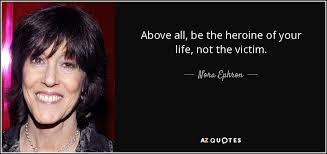
nora ephron quote


The Tribeca film festival established The Nora Ephron Prize which is a $25,000 award for a female writer or filmmaker “with a distinctive voice”. The first Nora Ephron Prize was awarded in 2013 to Meera Menon for her film Farah Goes Bang.

Her death was a shock to many as she didn’t reveal her illness. Her brilliant writing and filmmaking talents are a definite loss to the industry.


Filmography

Feature films

Year Title Credited as
Director Screenwriter Producer
1983 Silkwood Yes
1986 Heartburn Yes
1989 When Harry Met Sally… Yes Yes
Cookie Yes Yes
1990 My Blue Heaven Yes Yes
1991 The Super (uncredited)[20] Yes
1992 This Is My Life Yes Yes
1993 Sleepless in Seattle Yes Yes
1994 Mixed Nuts Yes Yes
1996 Michael Yes Yes Yes
1998 All I Wanna Do Yes
You’ve Got Mail Yes Yes Yes
2000 Hanging Up Yes Yes
Lucky Numbers Yes Yes
2005 Bewitched Yes Yes Yes
2009 Julie & Julia Yes Yes Yes


The Man with the “Touch” – Ernst Lubitsch 🎬🙌🎥

Ernst Lubitsch

Ernst Lubitsch (January 29, 1892 – November 30, 1947)

Keeping with the “Faces Behind the Camera” theme I’m spotlighting the saucy, bedroom comedies director Ernst Lubitsch and his famous “Lubitsch Touch”. This moniker was bestowed on him by other legendary filmmakers including Billy Wilder who was featured in the previous “Faces Behind the Camera” post. The phrase is used to describe the unique style and cinematic trademarks of director Ernst Lubitsch.

Hailed by the likes of Alfred Hitchcock (my other favorite director), Francois Truffaut and Orson Welles as a giant among filmmakers, Ernst Lubitsch was a preeminent figure in the history of cinema who directed some of Hollywood’s most sophisticated and enduring comedies.

Hollywood Sign

More than a great director of actors and action, he added his own personal signature – the “Lubitsch touch” – to all his work creating a sense of style and grace that was rarely duplicated on the screen.

After making a name as a director in his native Germany, Lubitsch was brought over at the behest of silent film star Mary Pickford to direct her in “Rosita” (1923). From there, he made comedies like “The Marriage Circle” (1924) and “Kiss Me Again” (1925), as well as dramas like “The Patriot” (1925). But with the advent of sound, the cigar-chomping director’s career took off with his fascination with a new genre, the musical comedy, and he began displaying his famed Lubitsch touch with classics like “Monte Carlo” (1930) and “One Hour with You” (1932).

He directed his first bona fide masterpiece, “Trouble in Paradise” (1932) later described as “truly amoral” by critic David Thomson (a British film critic and historian). The cynical comedy was popular both with critics and with audiences. But it was a project that could only have been made before the enforcement of the Production Code. After 1935, “Trouble in Paradise” was withdrawn from circulation. It was not seen again until 1968. The film was never available on videocassette and only became available on DVD in 2003.

Lubitsch later hit his stride full force with “Bluebeard’s Eighth Wife” (1938), “Ninotchka” (1939) co-written by Billy Wilder and “The Shop Around the Corner” (1940). Lubitsch reached great artistic heights with “To Be or Not to Be” (1942) and “Heaven Can Wait” (1943) before dying mid-career in 1947, leaving behind a legacy virtually unmatched by a filmmaker before or since.

In 1946, he received an Honorary Academy Award for his distinguished contributions to the art of the motion picture. He was also nominated three times for Best Director.

Lubitsch died of a heart attack on November 30, 1947, in Hollywood, and was buried at Glendale Forest Lawn in Glendale, CA. Leaving Lubitsch’s funeral, Billy Wilder ruefully said, “No more Lubitsch.” Lubitsch has a Star on the Hollywood Walk of Fame at 7040 Hollywood Blvd.


The Faces Behind the Camera 📽


TCM movie lovers

If you’re a movie junkie like me you probably not only know the stars of the film but the Director, The Cinematographer, the Editor, Writers and possibly the Key Grip. The faces behind the camera.

If you attend a movie with me, be prepared to stay through the end credits. I feel it’s imperative to acknowledge those artists who are responsible for the project. Staying for the credits also gives you a foundation to critique a film based on the direction, writing, and editing. Whether or not to see a movie based on a Director’s previous track record or the Cinematographer’s eye for the visuals.

image

This month is dedicated to educating and paying homage to the artists who help put it all together. Let’s begin with one of the top 2 of my favorite Directors, Billy Wilder.

Billy Wilder

Billy Wilder

Billy Wilder (June 22, 1906 – March 27, 2002) was an Austrian-born American filmmaker, screenwriter, producer, artist and journalist, whose career spanned more than fifty years and sixty films. He is regarded as one of the most brilliant and versatile filmmakers of Hollywood’s golden age.

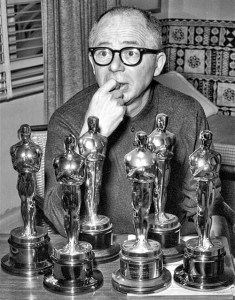
Billy Wilder with Oscars

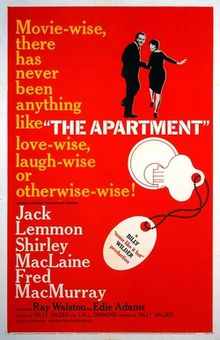
With The Apartment, (starring Jack Lemmon, Shirley MacLaine, and Fred MacMurray) Wilder became the first person to win Academy Awards as the producer, director, and screenwriter for the same film. “The Apartment” was nominated for ten Academy Awards and won five, including Best Picture.

The Apartment (1960)

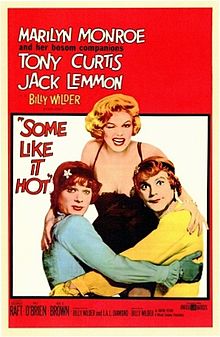
I love Billy Wilder because of his versatility in films and his testing the boundaries of societal norms. The first movie that comes to mind with his pushing the boundaries is “Some Like it Hot” 1959 starring Marilyn Monroe, Jack Lemmon, and Tony Curtis.

The plot revolves around two musicians who dress in drag in order to escape from mafia gangsters whom they witnessed commit the Saint Valentine’s Day Massacre. These are the final lines of the film delivered by (Daphne/Jerry) Lemmon and Joe E. Brown (Osgood) in regards to their pending marriage: Daphne/Jerry: But you don’t understand, Osgood! [Whips off his wig, exasperated, and changes to a manly voice] Uh, I’m a man! Osgood: [Looks at him then turns back, unperturbed] Well, nobody’s perfect!Wow! for 1959 that was pretty radical.

Some_Like_It_Hot_poster

“Some Like It Hot” is considered to be one of the greatest film comedies of all time. It was voted as the top comedy film by the American Film Institute on their list on AFI’s 100 Years… 100 Laughs poll in 2000. The film is also notable for featuring cross-dressing and homosexuality, which led to it being produced without approval from the Motion Picture Production Code. The Code was the set of industry moral guidelines that was applied to most American motion pictures released by major studios from 1930 to 1968. The Production Code had been gradually weakening in its scope during the early 1950s due to increasing societal tolerance for previously taboo topics in film, but it was still officially enforced. The overwhelming success of “Some Like It Hot” was a final nail in the coffin for the Hays Code.

Wilder became a screenwriter in the late 1920s while living in Berlin. After the rise of the Nazi Party, Wilder, who was Jewish, left for Paris, where he made his directorial debut. He moved to Hollywood in 1933, and in 1939, he had a hit when he co-wrote the screenplay for the screwball comedy Ninotchka. Wilder established his directorial reputation with Double Indemnity (1944), a film noir he co-wrote with crime novelist Raymond Chandler. Wilder earned the Best Director and Best Screenplay Academy Awards for the adaptation of a Charles R. Jackson story The Lost Weekend (1945), about alcoholism. In 1950, Wilder co-wrote and directed the critically acclaimed Sunset Boulevard.

Wilder was recognized with the American Film Institute (AFI) Life Achievement Award in 1986. In 1988, Wilder was awarded the Irving G. Thalberg Memorial Award. In 1993, he was awarded the National Medal of Arts.

Billy Wilder’s films:

Year Film Involvement
1934 Mauvaise Graine (also known as Bad Seed) Director/Writer
1942 The Major and the Minor Director/Writer
1943 Five Graves to Cairo Director/Writer
1944 Double Indemnity Director/Writer
1945 The Lost Weekend Director/Writer
1945 Death Mills Director
1948 The Emperor Waltz Director/Writer
1948 A Foreign Affair Director/Writer
1950 Sunset Boulevard Director/Writer
1951 Ace in the Hole Director/Writer/Producer
1953 Stalag 17 Director/Writer/Producer
1954 Sabrina Director/Writer/Producer
1955 The Seven Year Itch Director/Writer/Producer
1957 The Spirit of St. Louis Director/Writer
1957 Love in the Afternoon Director/Writer/Producer
1957 Witness for the Prosecution Director/Writer
1959 Some Like It Hot Director/Writer/Producer
1960 The Apartment Director/Writer/Producer
1961 One, Two, Three Director/Writer/Producer
1963 Irma la Douce Director/Writer/Producer
1964 Kiss Me, Stupid Director/Writer/Producer
1966 The Fortune Cookie Director/Writer/Producer
1970 The Private Life of Sherlock Holmes Director/Writer/Producer
1972 Avanti! Director/Writer/Producer
1974 The Front Page Director/Writer
1978 Fedora Director/Writer/Producer
1981 Buddy Buddy Director/Writer

Wilder received a total of twenty-one Academy Award nominations; eight for Best Director, twelve for writing, and one as the producer of Best Picture. With eight nominations for Academy Award for Best Director, Wilder is, together with Martin Scorsese, the second most nominated director in the history of the Academy Awards, behind William Wyler, and the second most nominated screenwriter behind Woody Allen.

Wilder won a total of six Oscars: Best Director for The Lost Weekend and The Apartment, Best Screenplay for The Lost Weekend, Sunset Blvd, The Apartment, and Best Picture for The Apartment. In addition, he received the Irving G. Thalberg Memorial Award in 1988.

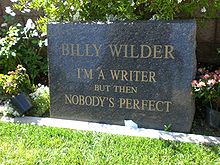
Billy Wilder"s grave

Wilder died in 2002 of pneumonia at the age of 95 after battling health problems, including cancer, in Los Angeles and was interred in the Westwood Village Memorial Park Cemetery in Westwood, Los Angeles near Jack Lemmon and Walter Matthau. Marilyn Monroe’s crypt is located in the same cemetery. Wilder died the same day as two other comedy legends: Milton Berle and Dudley Moore. The next day, French newspaper Le Monde titled its first-page obituary, “Billy Wilder dies. Nobody’s perfect”, quoting the final gag line in “Some Like It Hot”.


Nicholas Brothers – Flash! (So You Think You Can Dance?)

In honor of Black History Month, I’ll be featuring films either starring or representing African American themes.

Nicholas Brothers

This repost and film duo for the month is the incomparable Nicholas Brothers. Their energy and dynamic dance routines are legendary and unmatched by any other artist then or now. Born during an era when African American entertainers were restricted in film appearances and even cut out for southern audiences, the Nicholas Brothers rose above and beyond the sensibilities of the times.

Nicholas Brothers

The Nicholas Brothers were a famous African American team of dancing brothers, Fayard (1914–2006) and Harold (1921–2000). Their highly acrobatic technique (“flash dancing“), demonstrated such a high level of artistry and daring innovations that they were considered by many to be the greatest tap dancers of their day.

Growing up with musician parents (mother played piano and father drums) who had their own band, the brothers were surrounded by some of the best Vaudeville acts of the time and became stars of the jazz circuit during the heyday of the Harlem Renaissance . Fayard and Harold went on to have successful careers performing on stage, film, and television well into the 1990s.


Their signature move was to leapfrog down a long, broad flight of stairs, while completing each step with a split. This move was performed to perfection in the finale of the movie, Stormy Weather . In my humble opinion, the “Jumpin’ Jive” dance number in Stormy Weather was the greatest movie musical sequence of all time!

Nicholas Brothers - Jump!

Nicholas Brothers – Jump!

Another signature move was to arise from a split without using their hands. Gregory Hines (with brother Maurice – tap dancing brother and father team Hines, Hines and Dad) declared that if the Nicholas Brothers biography were ever filmed, their dance numbers would have to be computer generated because no one now could emulate them. Ballet legend Mikhail Baryshnikov once called them the most amazing dancers he had ever seen in his life.


The Nicholas Brothers influenced every dancer that came after. Including Michael Jackson. Here they are together on the Jackson’s TV Show.

Legends of dance that should always be remembered!

Liebster Award Number 3!!

Liebster-Award

I am so honored to be nominated again. I love the idea of this award because it welcomes new, awesome bloggers into the community. It feels good to be receiving but also giving back to the WordPress blogging community. I’d like to thank my wonderful nominator: Realwgeegiemidget for the opportunity to highlight other fellow bloggers! Make sure to check her out!

Now, some info on just what the Liebster Award is all about.

The Official Rules Of The Liebster Award 

If you have been nominated for The Liebster Award AND YOU CHOOSE TO ACCEPT IT, write a blog post about the Liebster award in which you:

1. thank the person who nominated you, and post a link to their blog on your blog.

2. display the award on your blog — by including it in your post and/or displaying it using a “widget” or a “gadget”. (Note that the best way to do this is to save the image to your own computer and then upload it to your blog post.)

3. answer 11 questions about yourself, which will be provided to you by the person who nominated you.

4. provide 11 random facts about yourself.

5. nominate 5 – 11 blogs that you feel deserve the award, who have a less than 1000 followers. (Note that you can always ask the blog owner this since not all blogs display a widget that lets the readers know this information!)

6. create a new list of questions for the blogger to answer.

7. list these rules in your post. Once you have written and published it, you then have to:

8. Inform the people/blogs that you nominated that they have been nominated for the Liebster award and provide a link for them to your post so that they can learn about it (they might not have ever heard of it!)

My nominees are:

Simpleheadgirl

Raulconde001

The Narrow Lens

My Food Mission

CURIO

Congratulations! Here is your award to cut and paste to your blog.

From – https://iheartfilmblog.com

Liebster-Award

Questions for me:

  1. How did you choose the name for your blog? The name is a result of my love of film.

  2. How did you decide on the subject of your blog? I’ve always loved film and studied in college. One day I thought I’d like to share my love with others. Hence my blog.

  3. If you could choose a film to be reviewed in this blog which one would you choose? The Princess Bride.

  4. Why? It’s a classic and I’d love to read your take on it.

  5.  Which of my film reviews would you pass onto a friend if you wanted them to see the film with you? Galaxy Quest.

  6. Why? Loved your review focusing on Alan Rickman. (He’s so great) Also, your review provides a great synopsis of the film and makes the case for watching.

  7. Which of my TV  reviews would you pass onto a friend if you wanted them to watch the programme with you? Dallas.

  8.  Why? I love your enthusiasm and insider facts. I too was a fan and never missed an episode. I feel the same way about the Dallas sequel and love your reference to George Lucas and the Star Wars pre-sequels which I detested.

  9. If you could move anywhere as an expat where would you move? Italy.

  10. Why? Just saw the new Michael Moore film “Where to Invade Next” and Italy looked mighty good to me. Plus I’ve always wanted to travel there and I’m currently making plans to visit in 2017.

  11. Final question… What 3 tips would you give for a first time blogger?  1. Write what you’re passionate about. 2.Think, what would I like to read in a blog post. What draws me in? 3. Read other blogs and comment. You might get ideas for your own but mostly it’s great to be part of the community and get feedback from fellow bloggers.

Random facts about me:

  1. I’ve performed in Community Theatre as Actress and Singer. “Little shop of Horrors” was my favorite.

  2. Political junkie.

  3. Love Minions.

  4. Would rather be hot than cold.

  5. Love watching HGTV.

  6. Love classic films from the 30’s and 40’s.

  7. Beach vacations are my absolute favorites.

  8. My other WordPress blog – Livinginthemoment2015 is about finding inspiration in my fight against both Colon and Breast cancer.

  9. I enjoy a good peanut and jelly sandwich.

  10. Bette Davis is my favorite classic actress.

  11. I am a wife and mother of two beautiful children.

Questions for my nominees:

  1. What’s been your favorite vacation?

  2. Coffee or Tea?

  3. What’s your favorite film from the 1980’s?

  4. What inspired your blog name?

  5. Favorite post from your blog?

  6. What prompted you to follow my blog?

  7. Favorite time of year?

  8. What inspires you to write?

  9. Where would be your dream vacation?

  10. What TV show would you prefer to promote your blog?

  11. What’s your favorite cartoon from childhood?

So now’s your turn nominees. Please comment on this post so I know you’ve accepted and I can keep a look out for your post.

Congratulations!

congratulations


What’s Love Got to Do with It?

This film “What’s Love Got to Do With It?” is from a previous post but I think it exemplifies the strength and determination that is the perfect subject matter for Black History Month. Tina Turner’s tumultuous life is explored and documented with the impeccable interpretation by the dynamic Angela Bassett.

Angela Bassett’s performance of Tina Turner’s iconic “Proud Mary” in the biopic, “What’s Love Got to Do With It?”(1993) is a tour de force tribute to Tina Turner and musical numbers from films with dynamic female leads.

James Brown may have been the hardest working man in show business, but he wasn’t being physically abused every day by his spouse. Unlike Tina Turner, the hardest working woman in show business who simultaneously raised a family while delivering show stopping, gut wrenching vocals that, at that time, girls weren’t supposed to be able to deliver.


What's Love Got to Do with it poster


Quoting my favorite critic – the late Roger Ebert’s review from 1993 – “…ranks as one of the most harrowing, uncompromising showbiz biographies I’ve ever seen.”

Bassett kills it with her living, breathing and – Whoa, check out those guns – transformation paying homage to the Queen of Rock – Tina Turner!

This is Angela Bassett’s hard work paying off; seamlessly blending Tina’s vocals with a powerful performance of her hard rockin’ hit – “Proud Mary”.

Tina Turner’s (Anna Mae Bullocklife is a testament to her resilience. I’ve been fortunate enough to see her live and believe me she is truly a force of energy “leaving it all on the stage” with every performance.  “Proud Mary” (written in 1969 by singer/songwriter John Fogerty and recorded by his band Credence Clearwater Revival) is one of her most recognizable signature songs.

Tina’s interpretation is worlds away from the original southern rock version. With a completely different arrangement, it opens with Tina teasing that sometimes the audience might like to hear them do a song “nice and easy” but “we never, ever do nothing nice and easy” we always do it “nice and rough”. She further sets up the number by enticing the crowd with they’re going to do the first part “nice” but they’re going to do the finish “rough”.

The song reached #4 on the pop charts on March 27, 1971 and won the Grammy Award for Best R&B Vocal Performance by a Group in 1972.


Tina

Tina lived a life of poverty growing up in Nutbush, TN in the 1940’s, but found solace in the spirit and freeing experience of music and singing in the choir of her Southern Baptist church. She began her musical career in St. Louis in the 1950’s singing in Ike Turner’s Kings of Rhythm band.

Ike Turner (her husband) ended up trying to destroy not only her passion but her life. With hate in his heart and jealousy of her talent, he systematically physically and mentally abused her for years. However, through her strength of will and perseverance, she fought back, sued for divorce, and walked out the courtroom in 1978 (in spite of what Ike tried to prevent) with her dignity and above all – Her Name!

I love Tina Turner and smile because this routine has been performed more than once in the living rooms, basements, wherever by a generation of “rock girls” (myself included). Tearing it up, whipping our hair back and forth and just knowing we are too doggone hot!

This Grammy-winning performance of “Proud Mary”(1971) showcases the dynamic energy and incredible legs of the one, the only, the incomparable – Miss Tina Turner!


“Lady Sings the Blues” 🎤🎬

lady-sings-the-blues-(1972)

“Lady Sings the Blues” (1972) is the biopic of the troubled life and career of the legendary Jazz singer, Billie Holiday. Loosely based on her 1956 autobiography which, in turn, took its title from one of Holiday’s most popular songs. It was produced by Motown Productions for Paramount Pictures and directed by Sidney J. Furie.

When I first heard Diana Ross had been cast as Billie Holiday I thought, she can’t act and will never pull it off. I wasn’t a big Diana Ross fan but when I saw the movie I had to give her credit for her phenomenal, Oscar-nominated performance. She lost to Liza Minnelli in “Cabaret”, but I thought Ross deserved the award.

The opening sequence (which was shot in black and white in still pictures) made me sit up and go, whoa, she’s serious. Diana Ross, the glamorous diva wore no makeup and looked the part of a heroin addict. The movie overall was a triumph not only for Ross but the incredible cast including – Billy Dee Williams as Holiday’s boyfriend Louis McKay, and Richard Pryor as Piano Man.

ladysingsthebluesopeningscene

(In 1936, New York City, Billie Holiday (Diana Ross) is arrested on a drugs charge.)

The story takes us from Billie’s tumultuous youth when in 1928 she is raped in the Baltimore brothel where she works as a housekeeper. She runs away to her mother who proceeds to get her a job in another brothel in the Harlem section of New York where she becomes a prostitute. Seeing that her life is going nowhere, she quits and heads to a local nightclub to become a showgirl. Billie has always had a love of music and has a remarkable voice. After “Piano Man” (Richard Pryor) accompanies Billie on the song”All of Me“, Jerry, the club owner, books her as a singer in the show.

Billie Holiday

billie-holiday

Eleanora Fagan (April 7, 1915 – July 17, 1959), professionally known as Billie Holiday lived a life that was an American tragedy full of turmoil, racism, and drug abuse. Despite all this we are left with her incredible song catalog and heartfelt performances.

Holiday had a tremendous influence on jazz music and pop singing. Her vocal style, strongly inspired by jazz instrumentalists, pioneered a new way of manipulating phrasing and tempo. “God Bless the Child” became Holiday’s most popular and covered record. It reached number 25 on the charts in 1941 and was third in Billboard’s songs of the year, selling over a million records. In 1976, the song was added to the Grammy Hall of Fame.

Billie Holiday died of cirrhosis of the liver in 1959 when she was 44. The biggest triumph of her career was her sold-out, standing ovation performance at Carnegie Hall.

Awards and Honors

“Lady Sings the Blues” was nominated for five Academy Awards. The nominations were for Best Actress in a Leading Role (Diana Ross), Best Art Direction-Set Decoration (Carl Anderson and Reg Allen), Best Costume Design (Norma Koch), Best Music, Original Song Score and Adaptation (Gil Askey & Michel Legrand) and Best Writing, Story and Screenplay Based on Factual Material or Material Not Previously Published or Produced.The film was also screened at the 1973 Cannes Film Festival but was not entered into the main competition.

Soundtrack

Motown released a hugely successful soundtrack double-album of Ross’ recordings of Billie Holiday songs from the film, also titled Lady Sings the Blues. The album went to number one on the Billboard Hot 200 Album Charts, for the week-ending dates of April 7 and 14, 1973.


“Ain’t Misbehavin” – Fats Waller 🎹🎼

aintmisbehavinposter

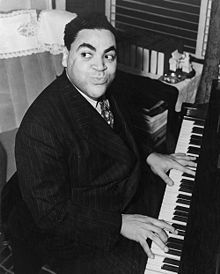
Thomas WrightFatsWaller (May 21, 1904 – December 15, 1943)

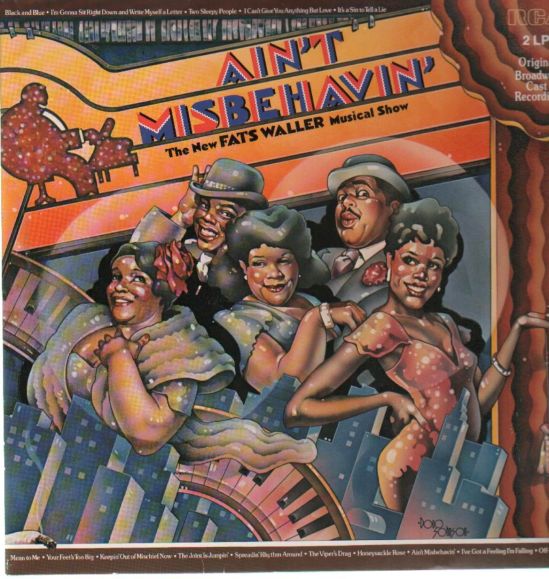
“Ain’t Misbehavin” is a musical tribute to the incomparable, Fats Waller. It originated at Broadway’s Longacre Theatre on May 9, 1978. The original cast included: Nell Carter, André DeShields, Armelia McQueen, Ken Page, and Charlayne Woodard. It ran for 1604 performances and closed on February 21, 1982. The book was by –  Murray Horwitz and Richard Maltby, Jr., and music by various composers and lyricists as arranged and orchestrated by Luther Henderson. It won the Tony Award for Best Musical.

On June 12, 1982, NBC broadcast the revue with the original Broadway cast and that’s what this post is about and how I experienced the production, which blew me away! Fats Waller songs are classic and give a jumpin’ snapshot of the 1920’s and 1930’s with the cast so brilliantly bringing his songs to life. His signature song was “Ain’t Misbehavin” which is the opening number for the 1982 production.

Waller was an American jazz pianist, organist, composer, singer, and comedic entertainer, whose innovations to the Harlem stride style laid the groundwork for modern jazz piano, and whose best-known compositions, “Ain’t Misbehavin” and “Honeysuckle Rose”, were inducted into the Grammy Hall of Fame in 1984 and 1999.

aintmisbehavinFats_Waller_edit

“Ain’t Misbehavin” was a feature number in the acclaimed 1943 film “Stormy Weather”.

Some of my favorite songs from the NBC production are: “Ain’t Misbehavin”, “The Joint is Jumpin”, and the hilarious”Your Feet’s too Big”.

There were plenty of awards for the 1978 production of “Ain’t Misbehavin” including:

Drama Desk Award

Award – Outstanding Musical

Won – Outstanding Actor in a MusicalKen Page. Won –André DeShields

Won –Outstanding Actress in a Musical –Nell Carter.

Theatre World Award

Won – Nell Carter. Won –Armelia McQueen

Tony Award

Won-Best Musical

Won-Best Performance by a Featured Actress in a Musical –Nell Carter.

Won –Best Direction of a Musical –Richard Maltby, Jr.

aintmisbehavinfats_waller-aint_misbehavin_-_the_new_f.w._musical_show


“Stormy Weather” – An African American Showcase 🎥 🎶

 In honor of Black History Month, I’ll be featuring films either starring or representing African American themes.

My next film for the month is “Stormy Weather (1943). An American musical film produced and released by 20th Century Fox. Considered one of the best Hollywood musicals with an all African-American cast, the other being MGM’s Cabin in the Sky. “Stormy Weather” is considered a brilliant showcase of some of the top African-American performers of the time, during an era when African-American actors and singers rarely appeared in lead roles in mainstream Hollywood productions, especially those of the musical genre.

Stormy Weather cast

This movie blew my mind!  I saw it as a kid in the early sixties having no idea that there had ever been an all Black cast in a Hollywood production. Most of the premier entertainers of the 1940’s appeared in this tour de force that still stands as one of the best musicals of all time!

Classic Cab Calloway – “Zoot Suiting” it!


Directed by Andrew L. Stone
Produced by William LeBaron
Written by Jerry Horwin, Seymour B. Robinson (story)
H.S. Kraft (adaptation)
Starring Lena Horne
Bill Robinson
Cab Calloway
Katherine Dunham
Fats Waller
Fayard Nicholas
Harold Nicholas
Ada Brown
Dooley Wilson
Music by Harold Arlen
Cinematography Leon Shamroy
Editing by James B. Clark
Distributed by 20th Century Fox
Release dates
  • July 21, 1943
Running time 78 minutes
Country United States
Language English

Lena’s rendition of “Stormy Weather”, featuring  African-American modern dance innovator Katherine Dunham and dancers.

Katherine Dunham and troupe’s “Stormy Weather” full dance sequence.

“Stormy Weather” was the 2nd all Black cast film made by a major studio in the 1940’s. “Cabin in the Sky” (1943) was the 1st, produced by MGM. Lena Horne starred in both and became famous for her rendition of “Stormy Weather” although Ethel Waters first performed the classic at The Cotton Club Nightclub in Harlem in 1933.

Ethel Waters was a famous blues, jazz, gospel vocalist and actress.  Her best-known recordings include “Dinah”, “Stormy Weather”, “Taking a Chance on Love” and “Cabin in the Sky” (She also starred in the film) Let’s enjoy her interpretation of the classic tune by Arlen and Koehler:

The song was written by Harold Arlen and Ted Koehler who worked as music composers at the renowned Cotton Club from 1930-1934. They wrote many of the jazz revue songs that were performed at the club and are still classics today. Harold Arlen wrote the music and Ted Koehler the lyrics.

Awards

“Stormy Weather” was selected in 2001 to The Library of Congress National Film Registry.


Stormy Weather 1

Get ready to have your “mind blown”!  This dance sequence by the Nicholas Brothers is unreal.  Check it out.  Holy crap!!