Better known for her work as a novelist, Zora Neale Hurston could be, according to an essay by academic Gloria Gibson, the first African-American woman filmmaker. The film footage, which includes Children’s Games (1928), Logging (1928), and Baptism (1929), appears to be from her work as a student of anthropology under the guidance of famed anthropologist, professor, and mentor, Dr. Franz Boas of Columbia University. (Wikipedia)
A graduate of Barnard College (B.A. in anthropology in 1928) and a Guggenheim fellow, Hurston traveled back to a South similar to her hometown of Eatonville, Florida (one of the first all-black towns to be incorporated in the United States) to capture a variety of short takes of African-American life. Ethnographic in nature, the films reflect a focus of folklorists of that time period who believed that “…cultural performance and beliefs must be expeditiously collected and documented because they would soon be gone forever” (Gloria Gibson).
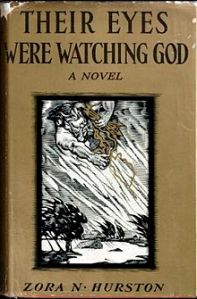
Hurston authored four novels and more than 50 published short stories, plays, and essays, she is best known for her 1937 novel Their Eyes Were Watching God.
In addition to new editions of her work being published after a revival of interest in her in 1975, her manuscript Every Tongue Got to Confess (2001), a collection of folktales gathered in the 1920s, was published posthumously after being discovered in the Smithsonian archives.
During a period of financial and medical difficulties, Hurston was forced to enter St. Lucie County Welfare Home, where she suffered a stroke. She died of hypertensive heart disease on January 28, 1960, and was buried at the Garden of Heavenly Rest in Fort Pierce, Florida. Sadly, her remains were in an unmarked grave until 1973 when novelist Alice Walker and literary scholar Charlotte Hunt found an unmarked grave in the general area where Hurston had been buried and decided to mark it as hers. (Wikipedia)
Both the Oscars and Black History Month are recognized in February which gives me the perfect opportunity to celebrate the accomplishments of Black Artists in Hollywood.
2015 and 2016 were standout years for the lack of Black filmmakers nominated for Oscars. However, 2017 breaks that record and will make African-American Oscar nominee history.
Janelle Monae, Taraji P. Henson, Octavia Spencer “Hidden Figures” (2016)
1. “Moonlight” director Barry Jenkins, 37, is the first African-American filmmaker to be nominated for Best Picture, Best Director, and Best Adapted Screenplay.
2. “Fences” star Viola Davis, 51, is the first Black actress to be nominated for an Oscar three times (Doubt in 2009, The Help in 2012) with her Best Supporting Actress nod.
3. “Arrival” cinematographer Bradford Young, 39, is the first African-American to be nominated for the Best Cinematography award. (Young is the second Black man; British cinematographer Remi Adefarasin was nominated for Elizabeth in 1998.)
Moonlight
4. A Black actor is nominated in all four acting categories for the first time in history:
✨Naomie Harris, Best Supporting Actress, “Moonlight”
5. This is the first time that six African-American actors and actresses have been nominated in total. (The previous record was five in 2005 and 2007.)
6. “Moonlight” editor Joi McMillon is the first Black woman to be nominated for film editing.
7. This is the first time that three Black people have been nominated within a single category (Best Supporting Actress, in this case):
Viola Davis in Fences, Naomie Harris in Moonlight, and Octavia Spencer in Hidden Figures. (Carolyn L. Todd)
Let’s keep up the good work Oscars!
History
✨
The 12th Academy Awards is historic for being the 1st Oscar nomination for an African-American and 1st Oscar win. In 1940, Hattie McDaniel accepted the Oscar for Best Actress in a Supporting Role in “Gone With the Wind” for the character – Mammy.
Hattie McDaniel
However, if David O. Selznick (Producer, film studio executive) hadn’t pulled a favor, she might not have been able to deliver her acceptance speech at all. At the time, the Cocoanut Grove nightclub (located in the Ambassador Hotel) was segregated so Ms. McDaniel wasn’t even allowed entrance. Selznick pulled another favor so she could be seated at a table at the very back of the room with her agent. To add insult to injury, Hattie McDaniel wasn’t allowed to speak her own words, the acceptance speech was written by the studio.
Despite all the prejudice, Hattie McDaniel – who at the time was one of the biggest African-American actors in the world -promoted herself for the nomination. After the release of the movie, she placed a stack of outstanding film reviews on O. Selznick’s desk and the rest is history. (Wikipedia)
First Best Actress Oscar
In 2002, Halle Berry became the 1st (and to date) only African-American to win the Academy Award for Best Actress. The Oscar was for the film “Monsters Ball”.
Halle Berry 2002 Best Actress
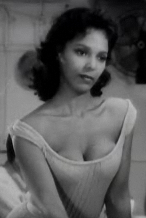
Dorothy Dandridge – (November 9, 1922 – September 8, 1965) is the 1st African-American actress to be nominated for a Best Actress Oscar in 1954 for her performance in “Carmen Jones.” She has been recognized with a star on the Hollywood Walk of Fame and was married to dancer Harold Nicholas. Check out my previous post on the Nicholas Brothers here.
Watching Halle’s acceptance speech again while researching this post, I burst into tears reliving her emotion as she tries to process the win and the historical significance of this moment. Looking forward to the acceptance speech of our second Best Actress Oscar Winner.
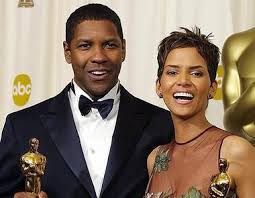
Halle and Denzel Oscars
This win also marked the 1st time two African-American performers won in leading role Oscars in the same year (Denzel Washington, Training Day).
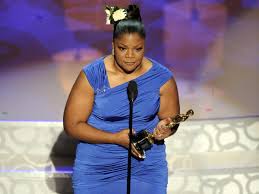
Best Supporting Actress
First to Win: Hattie McDaniel “Gone With the Wind” 1940
Hattie McDaniel 1940 Oscars
Although known as an actress she was a professional singer-songwriter, comedian, stage actress, radio performer, and television star; she was the first black woman to sing on the radio in the U.S. and has two stars on the Hollywood Walk of Fame. In 1975, she was inducted into the Black Filmmakers Hall of Fame and in 2006 became the first black Oscar winner honored with a US postage stamp.
Hattie McDaniel was also the oldest African-American actress to win an Academy Award (age 44).
“Lady Sings the Blues” (1972) is the biopic of the troubled life and career of the legendary Jazz singer, Billie Holiday. Loosely based on her 1956 autobiography which, in turn, took its title from one of Holiday’s most popular songs. It was produced by Motown Productions for Paramount Pictures and directed by Sidney J. Furie.
When I first heard Diana Ross had been cast as Billie Holiday I thought, she can’t act and will never pull it off. I wasn’t a big Diana Ross fan but when I saw the movie I had to give her credit for her phenomenal, Oscar-nominated performance. She lost to Liza Minnelli in “Cabaret”, but I thought Ross deserved the award.
The opening sequence (which was shot in black and white in still pictures) made me sit up and go, whoa, she’s serious. Diana Ross, the glamorous diva wore no makeup and looked the part of a heroin addict. The movie overall was a triumph not only for Ross but the incredible cast including – Billy Dee Williams as Holiday’s boyfriend Louis McKay, and Richard Pryor as Piano Man.
(In 1936, New York City, Billie Holiday (Diana Ross) is arrested on a drugs charge.)
The story takes us from Billie’s tumultuous youth when in 1928 she is raped in the Baltimore brothel where she works as a housekeeper. She runs away to her mother who proceeds to get her a job in another brothel in the Harlem section of New York where she becomes a prostitute. Seeing that her life is going nowhere, she quits and heads to a local nightclub to become a showgirl. Billie has always had a love of music and has a remarkable voice. After “Piano Man” (Richard Pryor) accompanies Billie on the song”All of Me“, Jerry, the club owner, books her as a singer in the show.
Billie Holiday
Eleanora Fagan (April 7, 1915 – July 17, 1959), professionally known as Billie Holiday lived a life that was an American tragedy full of turmoil, racism, and drug abuse. Despite all this we are left with her incredible song catalog and heartfelt performances.
Holiday had a tremendous influence on jazz music and pop singing. Her vocal style, strongly inspired by jazz instrumentalists, pioneered a new way of manipulating phrasing and tempo. “God Bless the Child” became Holiday’s most popular and covered record. It reached number 25 on the charts in 1941 and was third in Billboard’s songs of the year, selling over a million records. In 1976, the song was added to the Grammy Hall of Fame.
Billie Holiday died of cirrhosis of the liver in 1959 when she was 44. The biggest triumph of her career was her sold-out, standing ovation performance at Carnegie Hall.
Awards and Honors
“Lady Sings the Blues” was nominated for five Academy Awards. The nominations were for Best Actress in a Leading Role (Diana Ross), Best Art Direction-Set Decoration (Carl Anderson and Reg Allen), Best Costume Design (Norma Koch), Best Music, Original Song Score and Adaptation (Gil Askey & Michel Legrand) and Best Writing, Story and Screenplay Based on Factual Material or Material Not Previously Published or Produced.The film was also screened at the 1973 Cannes Film Festival but was not entered into the main competition.
Soundtrack
Motown released a hugely successful soundtrack double-album of Ross’ recordings of Billie Holiday songs from the film, also titled Lady Sings the Blues. The album went to number one on the Billboard Hot 200 Album Charts, for the week-ending dates of April 7 and 14, 1973.
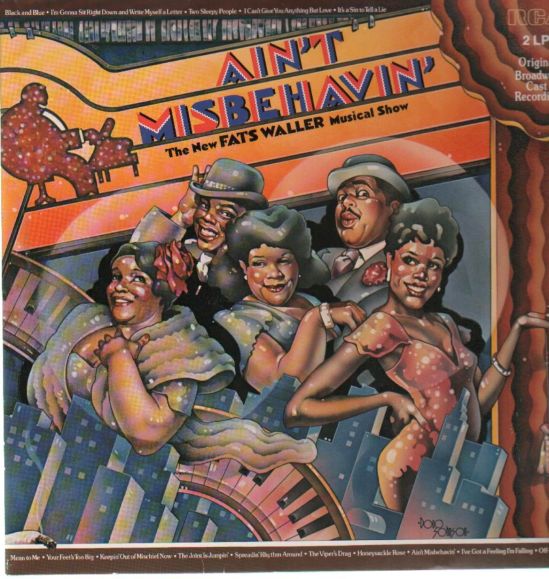
On June 12, 1982, NBC broadcast the revue with the original Broadway cast and that’s what this post is about and how I experienced the production, which blew me away! Fats Waller songs are classic and give a jumpin’ snapshot of the 1920’s and 1930’s with the cast so brilliantly bringing his songs to life. His signature song was “Ain’t Misbehavin” which is the opening number for the 1982 production.
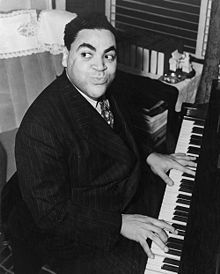
Waller was an American jazz pianist, organist, composer, singer, and comedic entertainer, whose innovations to the Harlem stride style laid the groundwork for modern jazz piano, and whose best-known compositions, “Ain’t Misbehavin‘” and “Honeysuckle Rose”, were inducted into the Grammy Hall of Fame in 1984 and 1999.
“Ain’t Misbehavin” was a feature number in the acclaimed 1943 film “Stormy Weather”.
Some of my favorite songs from the NBC production are: “Ain’t Misbehavin”, “The Joint is Jumpin”, and the hilarious”Your Feet’s too Big”.
There were plenty of awards for the 1978 production of “Ain’t Misbehavin” including:
In honor of Black History Month, I’ll be featuring films either starring or representing African American themes.
My next film for the month is “Stormy Weather (1943). An American musical film produced and released by 20th Century Fox. Considered one of the best Hollywood musicals with an all African-American cast, the other being MGM’s Cabin in the Sky. “Stormy Weather” is considered a brilliant showcase of some of the top African-American performers of the time, during an era when African-American actors and singers rarely appeared in lead roles in mainstream Hollywood productions, especially those of the musical genre.
This movie blew my mind! I saw it as a kid in the early sixties having no idea that there had ever been an all Black cast in a Hollywood production. Most of the premier entertainers of the 1940’s appeared in this tour de force that still stands as one of the best musicals of all time!
Katherine Dunham and troupe’s “Stormy Weather” full dance sequence.
“Stormy Weather” was the 2nd all Black cast film made by a major studio in the 1940’s. “Cabin in the Sky” (1943) was the 1st, produced by MGM. Lena Horne starred in both and became famous for her rendition of “Stormy Weather” although Ethel Waters first performed the classic at The Cotton Club Nightclub in Harlem in 1933.
Ethel Waters was a famous blues, jazz, gospel vocalist and actress. Her best-known recordings include “Dinah”, “Stormy Weather”, “Taking a Chance on Love” and “Cabin in the Sky” (She also starred in the film) Let’s enjoy her interpretation of the classic tune by Arlen and Koehler:
The song was written by Harold Arlen and Ted Koehler who worked as music composers at the renowned Cotton Club from 1930-1934. They wrote many of the jazz revue songs that were performed at the club and are still classics today. Harold Arlen wrote the music and Ted Koehler the lyrics.
Awards
“Stormy Weather” was selected in 2001 to The Library of Congress National Film Registry.
Get ready to have your “mind blown”! This dance sequence by the Nicholas Brothersis unreal. Check it out. Holy crap!!
In honor of Black History Month, I’ll be featuring films either starring or representing African American themes.
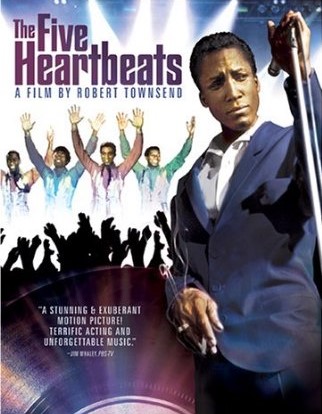
My second film, “The Five Heartbeats” (1991) is a rousing, slice of 60’s R&B music and reminiscent of groups like The Temptations and the Four Tops. Growing up in the 60’s in Motown, this film speaks to me and brings back wonderful memories of the times and the music. Another Robert Townsend production which he wrote directed and starred, it does not disappoint in energy or the drama of the music industry.
Inspired by the R&B group The Dells, it is co-written by Keenan Ivory Wayans and Robert Townsend. The movie also features 40’s tap dance icon Harold Nicholas (Nicholas Brothers) as Ernest “Sarge” Johnson in his final film as the group’s spunky choreographer.
After extensive research with R&B singing group The Dells, who were renowned for their four-decade career, Townsend used his film to depict a similar story, following the lives of five friends who aspire to musical stardom. Given the setting of the film, he was able to tie in other elements, such as race relations, as well.
The music (by Stanley Clarke) is phenomenal and a soundtrack for the film was released by Virgin Records, featuring original music by various artists. Both “Nights like This” and “A Heart Is a House for Love” became top 20 hits on the U.S. Billboard Hot R&B Singles chart. The film received an ASCAP award for Most Performed Songs in a Motion Picture for the song “Nights Like This.”
In honor of Black History Month, I’ll be featuring films either starring or representing African American themes.
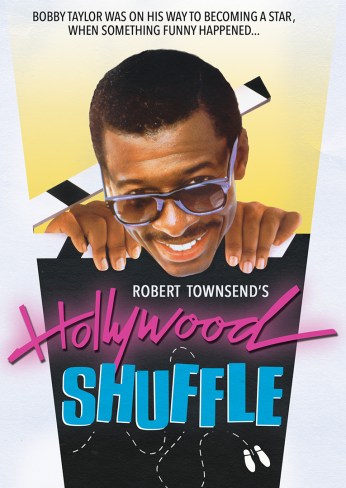
My first film for the month is “Hollywood Shuffle” (1987) directed by and starring Robert Townsend. More than 25 years ago, this small, low-budget movie caught the fascination of movie viewers across the country. And it just happens to be one of my favorite films.
The story revolves around aspiring actor Bobby Taylor (Robert Townsend) trying to break into Hollywood. His troubles lie not with his talent, but the stereotypical roles that he’s asked to play. “Hollywood Shuffle” takes a satiric look at African American actors in Hollywood.
Accepting the lead role in a typical blaxploitation movie, Bobby dreams about what it would be like if African Americans were respected as legitimate actors in roles from Sam Spade to Shakespeare to superheroes. He just has to convince Hollywood that gangstas, slaves and “Eddie Murphy-types” aren’t the sum of his talents.
With his little brother looking up to him and his grandmother proclaiming “there’s work at the post office”, Bobby faces the dilemma of, art or dignity.
For me, I have to go along with grandma, “there’s work at the post office”.
We’ve come a long way in 29 years but as I always say: “We’ve come a long way but we’ve still got a long way to go”!
Celebrating the accomplishments of Black Artists in Hollywood; especially in light of the lack of African-American nominations for this year’s 87th Academy Awards.
Oscars 2015: No black actors or female screenwriters, directors or cinematographers were nominated.
Our First Best Actor
In 1958, Sidney Poiter became the first black actor to be nominated for an Academy Award in the Best Actor category for “The Defiant Ones.” In 1963, he went on to make history and become the first to win the Oscar for Best Actor in “Lillies of the Field.” I saw the film as a kid and although it was quite popular never expected him to take home the statue.
However, Hollywood did love him. I believe they saw him as non-threatening due to his mild-mannered characterizations. He was quoted as saying he had concerns that he would be seen as a token and never given any substantial roles. Well, his Detective Virgil Tibbs in the film “In the Heat of the Night” sure put that fear to bed. Slapping a white man in racist Mississippi in 1967 was a bold and hand clapping moment in the theater. Poitier was nominated for a Golden Globe for Best Actor and the film won five Academy Awards, including the 1967 award for Best Picture.
Sidney Poiter 1963 Oscar for Best Actor
Oscar Accomplishments:
First African-American nominated for Best Actor award
First black male to win an Oscar
First black actor to win Best Actor
First to receive two acting nominations (Best Actor)
Youngest black actor to win Best Actor (37)
It took 36 years for another win in the Best Actor category, but finally Denzel Washington was recognized by the Academy for his portrayal of Alonso Harris in “Training Day” making him the second black actor to win the Oscar.
1999 also marked the first time two African-American performers won leading role Oscars in the same year. (Halle Berry, “Monster’s Ball“)
Denzel Washington and Halle Berry “Best Actors.”
Denzel Washington has the most nominations for an African-American Actor: Best Actor (4 nominations) and Best Supporting Actor (2 nominations).
Jamie Foxx 2004 Oscar Best Actor
Jamie Foxx was awarded the 2004 Oscar for Best Actor as Ray Charles in the biopic “Ray”. That same year, he was nominated for the Academy Award for Best Supporting Actor for his role in the action film Collateralmaking him the first African-American actor to receive two acting nominations in the same year.
Forest Whitaker Best Actor 2006
Forest Whitaker is the fourth and most recent African-American male to win the Academy Award for Best Actor for his performance as the Ugandan dictator Idi Amin in the 2006 film “The Last King of Scotland.”
This site is about how to live our life in a meaningful way by accepting complete surrender to the Almighty with purity of mind and character. It is about the eternal religion of the world i.e. Hinduism which is very liberal to anyone because there are many branches or methods to get the divinity to turn our life into an ever blissful one.
Free listening and free download (mp3) chill and down tempo music (album compilation ep single) for free (usually name your price). Full merged styles: trip-hop electro chill-hop instrumental hip-hop ambient lo-fi boombap beatmaking turntablism indie psy dub step d'n'b reggae wave sainte-pop rock alternative cinematic organic classical world jazz soul groove funk balkan .... Discover lots of underground and emerging artists from around the world.
















 iheartfilm