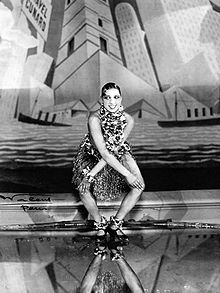
Josephine Baker is most celebrated as the “Bronze Venus” and her infamous “Banana Dance” in Paris c. 1927. However, the sum of her life is so much more! I was blown away by her boldness and sexual freedom, but it wasn’t until I saw the 1991 HBO movie starring Lynn Whitfield as Josephine Baker that I started doing research on her life. Whitfield won an Emmy Award for Outstanding Lead Actress in a Miniseries or a Special—becoming the first Black actress to win the award in this category which seems apropos since Josephine Baker was The Lady of firsts.
I’ve always been intrigued by Baker’s provocative reputation but had no idea of her involvement in the fight for justice, racial equality, and the civil-rights movement.
Born Freda Josephine McDonald in St. Louis, Missouri, (June 3, 1906 – April 12, 1975) she was an American-born French dancer, singer, and actress who came to be known in various circles as the “Black Pearl,” “Bronze Venus” and even the “Creole Goddess”. Her parents were Carrie McDonald and Vaudeville drummer Eddie Carson. Growing up poor she started working early cleaning homes and babysitting for wealthy white families.
Baker dropped out of school at the age of 13 and lived as a street child in the slums of St. Louis. Her street-corner dancing attracted attention from the Dixie Steppers which lead to her opportunity to appear in the groundbreaking and hugely successful Broadway revue Shuffle Along (1921). She performed as the last dancer in the chorus line, a position where, traditionally, the dancer performed in a comic manner, as if she were unable to remember the dance, until the encore, at which point she would perform it not only correctly but with additional complexity. Baker’s act set in motion the career which would make her an international star.
Josephine Baker dancing the Charleston, 1926
Josephine traveled to Paris, France, for a new venture, and opened in “La Revue Nègre” on October 2, 1925, at the Théâtre des Champs-Élysées. Her erotic dancing and performing in next to nothing made her a sensation in Paris. The bohemian culture of interwar Paris embraced Baker’s skin color, allowing her to catapult to stardom. At the Folies Bergère, she performed the Danse Sauvage, wearing a costume consisting of a skirt made of a string of artificial bananas – voila! – a star is born.
Josephine Baker became the most successful and highest paid American entertainer working in France and the first Black woman to star in a major motion picture. Baker starred in three films which found success only in Europe: the silent film Siren of the Tropics (1927), Zouzou (1934) and Princesse Tam Tam (1935). She also starred in Fausse Alerte in 1940.
However, despite her acclaim in Europe, upon returning to New York in 1936 to star in the Ziegfeld Follies, she walked right back into good ole American racism. Audiences rejected the idea that a black woman could be so sophisticated and she was replaced by stripper Gypsy Rose Lee later in the run. Time magazine referred to her as a “Negro wench”. She returned to Europe heartbroken.
Josephine Baker and the French Resistance of World War II
Josephine returned to Paris in 1937, married a Jewish Frenchman, Jean Lion, and became a French citizen. In September 1939, when France declared war on Germany she was recruited by Deuxième Bureau, French military intelligence, as an “honorable correspondent”. Baker collected what information she could about German troop locations from officials she met at parties. She was awarded the Legion of Honor and given a Medal of Resistance for her work during World War II. She was also the first American woman to receive the Croix du Guerre, a notable French military honor.
Josephine Baker Legion of Honor
Josephine Baker and the Civil Rights Movement
Though based in France, Baker fought for American civil rights in the 1950s and 1960s. When she arrived in New York with her fourth husband French composer and conductor Jo Bouillon, they were refused reservations at 36 hotels because she was black. In 1951 when the famous New York Stork Club refused to serve Baker because she was black, she wrote letters to President Truman and enlisted the aid of the NAACP which focused a spotlight on the issues of inequality and racism in popular establishments.
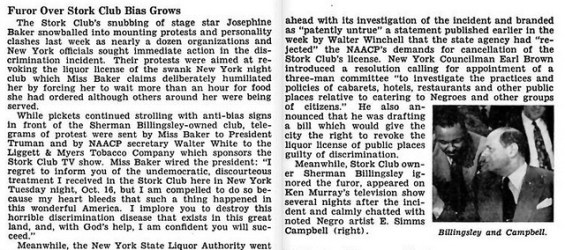
(Stork Club Controversy)
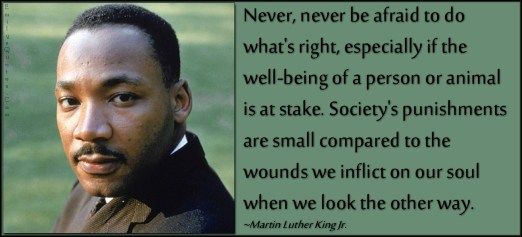
Josephine Baker was one of the few female speakers at the March on Washington for Jobs and Freedom on August 28, 1963, introducing “Negro Women Fighters for Freedom”, including Rosa Parks, Martin Luther King, Jr., and Congressman John Lewis. The NAACP, National Association for the Advancement of Colored People, named May 20th Josephine Baker Day in her honor.
Josephine Baker in French uniform March on Washington 1963
“The Rainbow Tribe”
Long before Angelina Jolie and Brad Pitt’s multicultural family, there was Josephine Baker and her “Rainbow Tribe”. Josephine wanted to prove that “children of different ethnicities and religions could still be brothers.” Baker raised two daughters, French-born Marianne and Moroccan-born Stellina, and ten sons; Korean-born Jeannot (or Janot), Japanese-born Akio, Colombian-born Luis, Finnish-born Jari (now Jarry), French-born Jean-Claude and Noël, Israeli-born Moïse, Algerian-born Brahim, Ivorian-born Koffi, and Venezuelan-born Mara.
Josephine Baker and “The Rainbow Tribe”
On April 12, 1975, we lost Josephine after she suffered a cerebral hemorrhage, she was 68 years old. She performed right up to her death, starring in a retrospective revue at the Bobino in Paris, Joséphine à Bobino 1975, celebrating her 50 years in show business. The opening night audience included Sophia Loren, Mick Jagger, Shirley Bassey, (best known for recording the theme song to the James Bond film Goldfinger (1964), Diana Ross, and Liza Minnelli.
20,000 people lined the streets of Paris to watch her funeral procession. She received a 21 gun salute, making her the first Black American female to be buried with military honors in France. Josephine Baker leaves behind a legacy of accomplishments including breaking color barriers and fighting for justice and equality around the world. I thank her for channeling her celebrity into championing the rights of all.
Josephine Baker is most celebrated as the “Bronze Venus” and her infamous “Banana Dance” in Paris c. 1927. However, the sum of her life is so much more! I was blown away by her boldness and sexual freedom, but it wasn’t until I saw the 1991 HBO movie starring Lynn Whitfield as Josephine Baker that I started doing research on her life. Whitfield won an Emmy Award for Outstanding Lead Actress in a Miniseries or a Special—becoming the first Black actress to win the award in this category which seems apropos since Josephine Baker was The Lady of firsts.
I’ve always been intrigued by Baker’s provocative reputation but had no idea of her involvement in the fight for justice, racial equality, and the civil-rights movement.
Born Freda Josephine McDonald in St. Louis, Missouri, (June 3, 1906 – April 12, 1975) she was an American-born French dancer, singer, and actress who came to be known in various circles as the “Black Pearl,” “Bronze Venus” and even the “Creole Goddess”. Her parents were Carrie McDonald and Vaudeville drummer Eddie Carson. Growing up poor she started working early cleaning homes and babysitting for wealthy white families.
Baker dropped out of school at the age of 13 and lived as a street child in the slums of St. Louis. Her street-corner dancing attracted attention from the Dixie Steppers which lead to her opportunity to appear in the groundbreaking and hugely successful Broadway revue Shuffle Along (1921). She performed as the last dancer in the chorus line, a position where, traditionally, the dancer performed in a comic manner, as if she were unable to remember the dance, until the encore, at which point she would perform it not only correctly but with additional complexity. Baker’s act set in motion the career which would make her an international star.
Josephine Baker dancing the Charleston, 1926
Josephine traveled to Paris, France, for a new venture, and opened in “La Revue Nègre” on October 2, 1925, at the Théâtre des Champs-Élysées. Her erotic dancing and performing in next to nothing made her a sensation in Paris. The bohemian culture of interwar Paris embraced Baker’s skin color, allowing her to catapult to stardom. At the Folies Bergère, she performed the Danse Sauvage, wearing a costume consisting of a skirt made of a string of artificial bananas – voila! – a star is born.
Josephine Baker became the most successful and highest paid American entertainer working in France and the first Black woman to star in a major motion picture. Baker starred in three films which found success only in Europe: the silent film Siren of the Tropics (1927), Zouzou (1934) and Princesse Tam Tam (1935). She also starred in Fausse Alerte in 1940.
However, despite her acclaim in Europe, upon returning to New York in 1936 to star in the Ziegfeld Follies, she walked right back into good ole American racism. Audiences rejected the idea that a black woman could be so sophisticated and she was replaced by stripper Gypsy Rose Lee later in the run. Time magazine referred to her as a “Negro wench”. She returned to Europe heartbroken.
Josephine Baker and the French Resistance of World War II
Josephine returned to Paris in 1937, married a Jewish Frenchman, Jean Lion, and became a French citizen. In September 1939, when France declared war on Germany she was recruited by Deuxième Bureau, French military intelligence, as an “honorable correspondent”. Baker collected what information she could about German troop locations from officials she met at parties. She was awarded the Legion of Honor and given a Medal of Resistance for her work during World War II. She was also the first American woman to receive the Croix du Guerre, a notable French military honor.
Josephine Baker Legion of Honor
Josephine Baker and the Civil Rights Movement
Though based in France, Baker fought for American civil rights in the 1950’s and 1960’s. When she arrived in New York with her fourth husband French composer and conductor Jo Bouillon, they were refused reservations at 36 hotels because she was black. In 1951 when the famous New York Stork Club refused to serve Baker because she was black, she wrote letters to President Truman and enlisted the aid of the NAACP which focused a spotlight on the issues of inequality and racism in popular establishments.
Stork Club Controversy
Josephine Baker was one of the few female speakers at the March on Washington for Jobs and Freedom on August 28, 1963, introducing “Negro Women Fighters for Freedom”, including Rosa Parks, Martin Luther King, Jr., and Congressman John Lewis. The NAACP, National Association for the Advancement of Colored People, named May 20th Josephine Baker Day in her honor.
Josephine Baker in French uniform March on Washington 1963
“The Rainbow Tribe”
Long before Angelina Jolie and Brad Pitt’s multicultural family, there was Josephine Baker and her “Rainbow Tribe”. Josephine wanted to prove that “children of different ethnicities and religions could still be brothers.” Baker raised two daughters, French-born Marianne and Moroccan-born Stellina, and ten sons; Korean-born Jeannot (or Janot), Japanese-born Akio, Colombian-born Luis, Finnish-born Jari (now Jarry), French-born Jean-Claude and Noël, Israeli-born Moïse, Algerian-born Brahim, Ivorian-born Koffi, and Venezuelan-born Mara.
Josephine Baker and “The Rainbow Tribe”
On April 12, 1975, we lost Josephine after she suffered a cerebral hemorrhage, she was 68 years old. She performed right up to her death, starring in a retrospective revue at the Bobino in Paris, Joséphine à Bobino 1975, celebrating her 50 years in show business.The opening night audience included Sophia Loren, Mick Jagger, Shirley Bassey, (best known for recording the theme song to the James Bond film Goldfinger (1964), Diana Ross, and Liza Minnelli.
20,000 people lined the streets of Paris to watch her funeral procession. She received a 21 gun salute, making her the first Black American female to be buried with military honors in France. Josephine Baker leaves behind a legacy of accomplishments including breaking color barriers and fighting for justice and equality around the world. I thank her for channeling her celebrity into championing the rights of all.
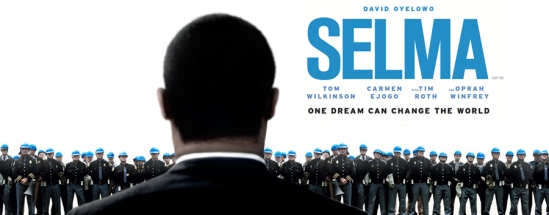
At first, I was skeptical on how this history would be portrayed. I didn’t want a melodrama about Bloody Sunday and those on the front lines of the Civil Rights Movement. But, Director, Ava DuVernay did an incredible job and for me, the film should be included as part of the historical record.
Selma was a turning point in the Civil Rights Movement. In your living room. In your face. The first march took place on March 7, 1965, organized locally by SCLC Director of Direct Action James Bevel, who was directing SCLC’s Selma Voting Rights Movement. State troopers and county posse men attacked the unarmed marchers with billy clubs and tear gas after they passed over the county line, and the event became known as Bloody Sunday. Law enforcement beat activist Amelia Boynton unconscious, and the media publicized worldwide a picture of her lying wounded on the bridge.
Selmahad four Golden Globe Award nominations, including Best Motion Picture – Drama, Best Director, and Best Actor, and won for Best Original Song. It was also nominated for Best Picture and won Best Original Song at the 87th Academy Awards.
Whether you know the history or just learning, I consider the film Selma essential viewing for a pivotal moment in the Civil Rights Movement. A Movement which we must always remember and never forget as …
At first, I was skeptical on how this history would be portrayed. I didn’t want a melodrama about Bloody Sunday and those on the front lines of the Civil Rights Movement. But, Director, Ava DuVernay did an incredible job and for me, the film should be included as part of the historical record.
Selma was a turning point in the Civil Rights Movement. In your living room. In your face. The first march took place on March 7, 1965, organized locally by SCLC Director of Direct Action James Bevel, who was directing SCLC’s Selma Voting Rights Movement. State troopers and county posse men attacked the unarmed marchers with billy clubs and tear gas after they passed over the county line, and the event became known as Bloody Sunday. Law enforcement beat activist Amelia Boynton unconscious, and the media publicized worldwide a picture of her lying wounded on the bridge.
Selmahad four Golden Globe Award nominations, including Best Motion Picture – Drama, Best Director, and Best Actor, and won for Best Original Song. It was also nominated for Best Picture and won Best Original Song at the 87th Academy Awards.
Whether you know the history or just learning, I consider the film Selma essential viewing for a pivotal moment in the Civil Rights Movement. A Movement which we must always remember and never forget as …
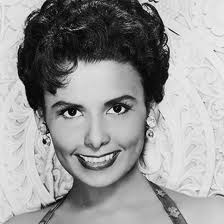
Lena Mary Calhoun Horne was a singer, dancer, actress, and activist whose 1957 live album entitled, Lena Horne at the Waldorf-Astoria, became the biggest-selling record by a female artist in the history of the RCA-Victor label. In 1958, this timeless beauty became the first African-American woman to be nominated for a Tony Award for “Best Actress in a Musical” (for her part in the “Calypso” musical Jamaica).
Lena Horne
I’m proud to say that Lena and I are sisters of Delta Sigma Theta Sorority, Inc. which in the summer of 1980 sponsored a 2-month series of benefit concerts for Soror Horne. Sixty-three years old and intent on retiring from show business, these concerts were represented as Soror Horne’s farewell tour, although her retirement lasted less than a year.
In May 1981, her one-woman show, Lena Horne: The Lady and Her Music became an instant success garnering Horne a special Tony award, and two Grammy Awards for the cast recording. The 333-performance Broadway run closed on her 65th birthday, June 30, 1982.
Lena Horne: The Lady and Her Music
In 1995, a “live” album capturing her Supper Club performance was released (winning a Grammy Award for Best Jazz Vocal Album). In 1998, Horne released another studio album, entitled Being Myself. Thereafter, Horne essentially retired from performing and largely retreated from public view.
In her personal life, Lena Horne married twice, Louis Jordan Jones in January 1937 (divorced in 1944). There were 2 children from that union – daughter, Gail (later known as Gail Lumet Buckley, a writer) and son, Edwin Jones (born February 7, 1940 – September 12, 1970) who died of kidney disease. Lena’s second husband, Lennie Hayton, was Music Director and one of the premier musical conductors and arrangers at MGM. They married in December 1947 in Paris and separated in the early 1960’s but never divorced. Hayton died in 1971.
Lena’s grandchildren include screenwriter Jenny Lumet, daughter of Horne’s daughter Gail and husband filmmaker, Sidney Lumet. Her other grandchildren include Gail’s other daughter, Amy Lumet, and her son’s three children, Thomas, William, and Lena. Horne also has a great-grandson, actor Jake Cannavale.
Lena was an activist in the Civil Rights Movement. During World War II she refused to perform before segregated audiences and at The March on Washington, she performed and spoke in association with the NAACP, SNCC, and the National Association of Negro Women. Ms. Horne also worked with Eleanor Roosevelt to help pass anti-lynching laws. In 1983, she was awarded the Spingarn Medal for outstanding achievement from the NAACP.
From her beginnings at The Cotton Club at age sixteen through her appearances in films, television, and on Broadway, Lena Horne’s career spanned over 70 years. Back in 2012 there were rumors about singer Alicia Keys portraying Lena in a biopic. Sounds interesting. What do you think? Guess we’ll just have to wait and see if it ever happens.
In honor of what would be Lena’s 98th birthday, I’m featuring her most notable film:
Lena Horne June 30, 1917– May 9, 2010
“Stormy Weather” (1943) American musical film produced and released by 20th Century Fox
This movie blew my mind! I saw it as a kid in the early sixties having no idea that there had ever been an all Black cast in a Hollywood production. Most of the premier entertainers of the 1940’s appeared in this tour de force that still stands as one of the best musicals of all time!
“Stormy Weather” was the 2nd all Black cast film made by a major studio in the 1940’s. “Cabin in the Sky” was the 1st, produced by MGM. Lena Horne starred in both and became famous for her rendition of “Stormy Weather” although Ethel Waters first performed the classic at The Cotton Club Nightclub in Harlem in 1933.
The song was written by Harold Arlen and Ted Koehler who worked as music composers at the renowned Cotton Club from 1930-1934. They wrote many of the jazz revue songs that were performed at the club and are still classics today. Harold Arlen wrote the music and Ted Koehler the lyrics.
Awards
“Stormy Weather” was selected in 2001 to The Library of Congress National Film Registry.
Get ready to have your “mind blown”! This dance sequence by the Nicholas Brothers is unreal. Check it out. Holy crap!!
Bill, Lena, Cab Calloway
Bill “Bojangles” Robinson, Lena Horne
Harold Nicholas, Cab Calloway, Fayard Nicholas
Dooley Wilson ; Stormy Girls
Fats Waller
Dance Off!
Nicholas Brothers – Jump!
Cab Calloway swings!
Katherine Dunham
Ethel Waters was a famous blues, jazz, gospel vocalist and actress. Her best-known recordings include “Dinah”, “Stormy Weather”, “Taking a Chance on Love” and “Cabin in the Sky” (She also starred in the film) Let’s enjoy her interpretation of the classic tune by Arlen and Koehler:
Josephine Baker is most celebrated as the “Bronze Venus” and her infamous “Banana Dance” in Paris c. 1927. However, the sum of her life is so much more! I was blown away by her boldness and sexual freedom, but it wasn’t until I saw the 1991 HBO movie starring Lynn Whitfield as Josephine Baker that I started doing research on her life. Whitfield won an Emmy Award for Outstanding Lead Actress in a Miniseries or a Special—becoming the first Black actress to win the award in this category which seems apropos since Josephine Baker was The Lady of firsts.
Lynn Whitfield – Josephine Baker Story 1991
I’ve always been intrigued by Baker’s provocative reputation but had no idea of her involvement in the fight for justice, racial equality and the civil-rights movement.
Born Freda Josephine McDonald in St. Louis, Missouri, (June 3, 1906 – April 12, 1975) she was an American-born French dancer, singer, and actress who came to be known in various circles as the “Black Pearl,” “Bronze Venus” and even the “Creole Goddess”. Her parents were Carrie McDonald and Vaudeville drummer Eddie Carson. Growing up poor she started working early cleaning homes and babysitting for wealthy white families.
Baby Josephine
Baker dropped out of school at the age of 13 and lived as a street child in the slums of St. Louis. Her street-corner dancing attracted attention from the Dixie Steppers which lead to her opportunity to appear in the groundbreaking and hugely successful Broadway revue Shuffle Along (1921). She performed as the last dancer in the chorus line, a position where, traditionally, the dancer performed in a comic manner, as if she were unable to remember the dance, until the encore, at which point she would perform it not only correctly but with additional complexity. Baker’s act set in motion the career which would make her an international star.
Josephine Baker dancing the Charleston, 1926
Josephine traveled to Paris, France, for a new venture, and opened in “La Revue Nègre” on October 2, 1925, at the Théâtre des Champs-Élysées. Her erotic dancing and performing in next to nothing made her a sensation in Paris. The bohemian culture of interwar Paris embraced Baker’s skin color, allowing her to catapult to stardom. At the Folies Bergère, she performed the Danse Sauvage, wearing a costume consisting of a skirt made of a string of artificial bananas – voila! – a star is born.
Josephine Baker became the most successful and highest paid American entertainer working in France and the first Black woman to star in a major motion picture. Baker starred in three films which found success only in Europe: the silent film Siren of the Tropics (1927), Zouzou (1934) and Princesse Tam Tam (1935). She also starred in Fausse Alerte in 1940.
However, despite her acclaim in Europe, upon returning to New York in 1936 to star in the Ziegfeld Follies, she walked right back into good ole American racism. Audiences rejected the idea that a black woman could be so sophisticated and she was replaced by stripper Gypsy Rose Lee later in the run. Time magazine referred to her as a “Negro wench”. She returned to Europe heartbroken.
Josephine Baker and the French Resistance of World War II
Josephine returned to Paris in 1937, married a Jewish Frenchman, Jean Lion, and became a French citizen. In September 1939, when France declared war on Germany she was recruited by Deuxième Bureau, French military intelligence, as an “honorable correspondent”. Baker collected what information she could about German troop locations from officials she met at parties. She was awarded the Legion of Honor and given a Medal of Resistance for her work during World War II. She was also the first American woman to receive the Croix du Guerre, a notable French military honor.
Josephine Baker Legion of Honor
Josephine Baker and the Civil Rights Movement
Though based in France, Baker fought for American civil rights in the 1950’s and 1960’s. When she arrived in New York with her fourth husband French composer and conductor Jo Bouillon, they were refused reservations at 36 hotels because she was black. In 1951 when the famous New York Stork Club refused to serve Baker because she was black, she wrote letters to President Truman and enlisted the aid of the NAACP which focused a spotlight on the issues of inequality and racism in popular establishments.
Stork Club Controversy
Josephine Baker was one of the few female speakers at the March on Washington for Jobs and Freedom on August 28, 1963 introducing “Negro Women Fighters for Freedom”, including Rosa Parks, Martin Luther King, Jr. and Congressman John Lewis. The NAACP, National Association for the Advancement of Colored People, named May 20th Josephine Baker Day in her honor.
Josephine Baker in French uniform – March on Washington 1963
“The Rainbow Tribe”
Long before Angelina Jolie and Brad Pitt’s multicultural family, there was Josephine Baker and her “Rainbow Tribe”. Josephine wanted to prove that “children of different ethnicities and religions could still be brothers.” Baker raised two daughters, French-born Marianne and Moroccan-born Stellina, and ten sons; Korean-born Jeannot (or Janot), Japanese-born Akio, Colombian-born Luis, Finnish-born Jari (now Jarry), French-born Jean-Claude and Noël, Israeli-born Moïse, Algerian-born Brahim, Ivorian-born Koffi, and Venezuelan-born Mara.
Josephine Baker and “The Rainbow Tribe”
On April 12, 1975 we lost Josephine after she suffered a cerebral hemorrhage, she was 68 years old. She performed right up to her death, starring in a retrospective revue at the Bobino in Paris, Joséphine à Bobino 1975, celebrating her 50 years in show business.The opening night audience included Sophia Loren, Mick Jagger, Shirley Bassey, (best known for recording the theme song to the James Bond film Goldfinger (1964), Diana Ross, and Liza Minnelli.
20,000 people lined the streets of Paris to watch her funeral procession. She received a 21 gun salute, making her the first Black American female to be buried with military honors in France. Josephine Baker leaves behind a legacy of accomplishments including breaking color barriers and fighting for justice and equality around the world. I thank her for channeling her celebrity into championing the rights of all.
This site is about how to live our life in a meaningful way by accepting complete surrender to the Almighty with purity of mind and character. It is about the eternal religion of the world i.e. Hinduism which is very liberal to anyone because there are many branches or methods to get the divinity to turn our life into an ever blissful one.
Free listening and free download (mp3) chill and down tempo music (album compilation ep single) for free (usually name your price). Full merged styles: trip-hop electro chill-hop instrumental hip-hop ambient lo-fi boombap beatmaking turntablism indie psy dub step d'n'b reggae wave sainte-pop rock alternative cinematic organic classical world jazz soul groove funk balkan .... Discover lots of underground and emerging artists from around the world.