“Batman” 🎬 Small Screen to Big Screen

I’ve been a tv and movie junkie since I was a kid and the intersection of movies and television got me thinking about what tv shows successfully made the leap to the big screen. In my previous post, I celebrated the 50th Anniversary of “Batman”– the classic 60’s  tv series. The eventual Warner Bros movie franchise that resulted made “Batman” one of the most accomplished superhero series to make that leap.

In 1989, Tim Burton set about the challenge of  retooling the DC Comics superhero, “Batman” – this update veered away from the “campy” Adam West version and set in motion the money-making Warner Bros Batman films, most notably the “Dark Knight” trilogy.
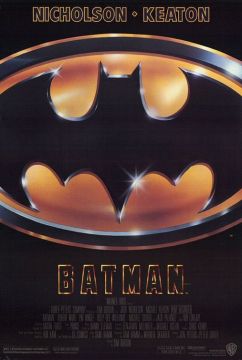
Batman Keaton

I remember being in the grocery store when “Batman” (1989) premiered. Standing in line overhearing the chit chat, some people were truly upset that the Keaton movie was nothing like the tv series. They wanted the “pow” and “bam” of the William Dozier inception. I didn’t say anything but my husband is a comic book geek so I knew the real story and it was nothing like the “dynamic duo” of Adam West and Burt Ward. The 60’s classic was based on light-hearted portrayals and over the top villains. The real “Batman” is so far from campy it’s funny.
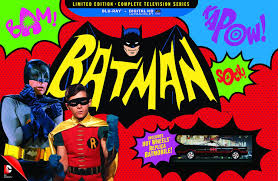
batman tv effects

The film, directed by Tim Burton and produced by Jon Peters was based on the DC Comics character of the same name. It is the first installment of Warner Bros.’ initial Batman film series. It stars Michael Keaton as Bruce Wayne/Batman, alongside Jack Nicholson, Kim Basinger, Robert Wuhl, Pat Hingle, Billy Dee Williams, Michael Gough, and Jack Palance. The plot is more closely aligned with the comic book as Batman, widely believed to be an urban legend goes to war with a rising criminal mastermind known as “the Joker” (Nicholson).

I felt Keaton brought a vulnerability to the role while focusing on the conflict within. I remember reading an article about Michael Keaton speaking to Jack Nicholson on how to approach the character. Jack being Jack told Keaton to let the mask do the work. Following Nicholson’s advice, Keaton played with his voice’s lower register so the character’s intensity was amplified.
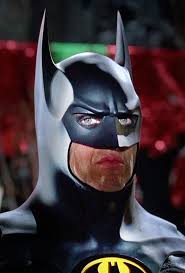
batmankeaton2

Michael Keaton as Batman (1989)

Director Tim Burton did a tremendous job bringing the “Batman series” back to life. The atmospheric presence of Gotham City created the perfect backdrop for the conflict between “good” vs “evil”. Along with Nicholson providing the maniacal humor,”Batman” couldn’t help but be a hit!
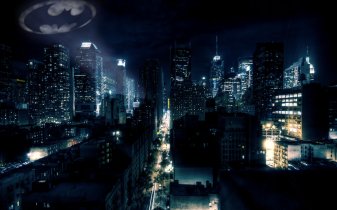
batman gotham city

Gotham City

“Batman” was one of the first films to spawn two soundtracks. One of them featured songs written by Prince while the other showcased Danny Elfman’s score. Both were extremely successful. Prince’s soundtrack album was No. 1 on the Billboard albums chart for six consecutive weeks. It has sold over eleven million copies worldwide.
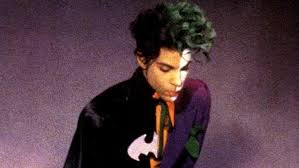
Prince

Prince

Burton explained the theme, “the whole film and mythology of the character is a complete duel of the freaks. It’s a fight between two disturbed people”, adding that “The Joker is such a great character because there’s a complete freedom to him. Any character who operates on the outside of society and is deemed a freak and an outcast then has the freedom to do what they want… They are the darker sides of freedom. Insanity is in some scary way the most freedom you can have because you’re not bound by the laws of society”. (Wikipedia)
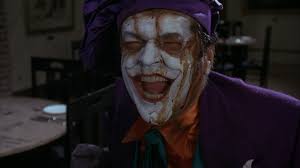
batmannicholson

Jack Nicholson as the “Joker”

The tone and themes of the film were influenced in part by  Frank Miller‘s The Dark Knight ReturnsBatman was a critical and financial success, earning over $400 million in box office totals. It was the fifth-highest grossing film in history at the time of its release. The film received several Saturn Award nominations and a Golden Globe nomination and won an Academy Award.

The American Film Institute anointed Batman the 46th greatest movie hero and the Joker the 45th greatest movie villain on AFI’s 100 Years…100 Heroes and Villains. In 2008, Batman was selected by Empire magazine as number 458 of The 500 Greatest Movies of All Time.
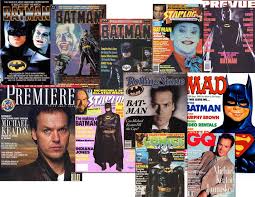
batman1989press

“Batman” initiated the original Batman film series and spawned three sequels: Batman Returns (1992), Batman Forever (1995) and Batman & Robin (1997); the latter two of which were directed by Joel Schumacher instead of Burton, and replaced Keaton as Batman with Val Kilmer and George Clooney, respectively.
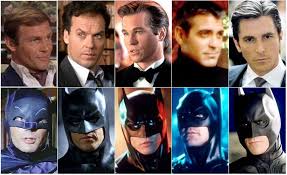
batmanall

Adam West, Michael Keaton, Val Killmer, George Clooney and Christian Bale

Personally, I feel the franchise wasn’t fully formed until “Batman Begins” (2005) with Christian Bale as the “dark knight”. This and the subsequent sequels delved even deeper into the dark and intense storyline of Bruce Wayne and his inner demons.
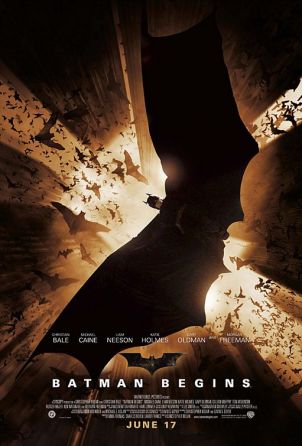
Batman Begins (2005)

Batman Begins was co-written and directed by Christopher Nolan and starred Christian Bale, Michael Caine, Liam Neeson, Katie Holmes, Gary Oldman, Cillian Murphy, and Morgan Freeman. The film reboots the Batman film series, telling the origin story of the title character (Bale), from his, alter ego Bruce Wayne’s initial fear of bats, the death of his parents, and his journey to become Batman. (Wikipedia)

The film was nominated for an Academy Award for Best Cinematography and three BAFTA awards. It is followed by The Dark Knight (2008) and The Dark Knight Rises (2012) in a continual story-arc, which has later been referred to as The Dark Knight Trilogy. Many consider “Batman Begins” to be one of the best superhero films of its decade.

The Dark Knight in 2008 and The Dark Knight Rises in 2012 (with Bale reprising his role in both films) earned over $1 billion worldwide, making “Batman” the second film franchise (and to date one of only five) to have two of its films earn more than $1 billion worldwide.

Well, I’m totally into this franchise and never miss a new installment in the series. Christian Bale is the man, he’s managed to capture Batman’s intensity with such vigor that the deeper he plunges, the deeper the journey we take with him.

Happy 50th Batman!

Holy Bat Years! I can’t believe Batman is celebrating its’ 50th Anniversary. Even though I’m a baby boomer it still blows my mind how long ago since my childhood. (some would say I’m still living it – including me) 😄

The campy series starred Adam West and Burt Ward as caped crusaders, Batman, and Robin. The television show was created by William Dozier and based on the DC comic book character of the same name. It took place in Gotham City and featured a plethora of villains including the Joker (Cesar Romero), the Penguin (Burgess Meredith), Riddler (Frank Gorshin) and my fave, Catwoman. (Eartha Kitt’s version – season 3) Catwoman was originally portrayed by Julie Newmar (seasons 1 &2) and Lee Meriwether (movie).  The series ran for one hundred and twenty episodes and aired on the ABC network for three seasons from January 12, 1966, to March 14, 1968, twice weekly for the first two and weekly for the third.

The “Dynamic Duo’s” alter-egos, Bruce Wayne (Adam West), and Dick Grayson (Burt Ward) usually only appeared to set up the caper for the episode. I always felt that Police Commissioner Gordon and Lieutenant O’Hara were worthless since they never solved a single crime, instead using the “caped crusaders” to do their jobs to defeat crime in Gotham City.

And let us not forget the keeper of the Batcave and ever faithful butler – Alfred. Where would the duo be without Alfred to answer the Batphone and cover for them with dear Aunt Harriet – who miraculously never caught on to the activities in her own home!

The other star of the show was the Batmobile!

batmobile

In late 1965 20th Century Fox Television and William Dozier‘s Greenway Productions contracted renowned Hollywood car customizer Dean Jeffries to design and build a “Batmobile” for their upcoming Batman TV series. He started customizing a 1959 Cadillac, but when the studio wanted the program on the air in January 1966, and therefore filming sooner than he could provide the car, Jeffries was paid off, and the project went to George Barris.

What became the iconic Batmobile used in the 1966–1968 live action television show and its film adaptation was a customized vehicle that originated as a one-off 1955 Lincoln Futura concept car, created by Ford Motor Company lead stylists Bill Schmidt, Doug Poole Sr., and John Najjar and their design team at the Lincoln Styling Department.

Batmobile_(FMC)

Batmobile

In November 2012 Barris Kustom and George Barris announced the sale of the Batmobile at the Barrett-Jackson car show and auction held in Scottsdale, Arizona. The vehicle fetched $4.2 million on January 19, 2013. (Wikipedia)

Where Are They Now?

Burt Ward by Gage Skidmore

Burt Ward (Robin)

In 1994, Ward and his wife, Tracy Posner Ward, founded a charitable organization called Gentle Giants Rescue and Adoptions, Inc., which rescues giant breed dogs such as Great Danes and some smaller breed dogs. Their work with the organization has been featured in such outlets as People magazine, ASPCA Animal Watch, Hard Copy, Inside Edition, and Entertainment Tonight. Burt Ward was also seen in an episode of Animal Planet’s Adoption Tales. (Wikipedia)

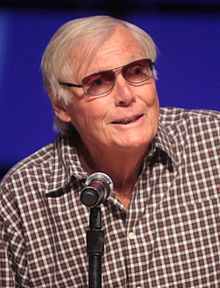
Adam West

Adam West

Having a distinctive voice, West has built a career doing voice-over work on a number of animated series (often as himself), including appearances on The Simpsons, and Futurama. Since 2000, West has made regular appearances on the animated series Family Guy, in which he plays Mayor Adam West, the lunatic mayor of Quahog, Rhode Island. His role has given him a new wave of popularity since Batman, and lead writer Seth MacFarlane claims to have gone out of his way to avoid typecasting West by deliberately not making any references to Batman. (Wikipedia)

So, let’s toast to the ’60’s, my childhood and tv classic  – Batman!


“Ferris Bueller’s Day Off” 30th Anniversary Event

fathomevents

turnerclassicmovieslogo

TCM Big Screen Classics
In Select Cinemas Nationwide

Take a day off with Ferris Bueller because you know “life can move pretty fast”. Celebrate the 30th Anniversary of the John Hughes cult hit with a special screening by Fathom Events in partnership with Turner Classic Movies as part of their TCM Big Screen Classics series.

“Ferris Bueller’s Day Off” (1986) will be accompanied by special commentary from TCM host Ben Mankiewicz, who will provide insight, background and more. The event also includes special interviews with the cast and director John Hughes about casting Matthew Broderick in the iconic role of Ferris Bueller.

“Ferris Bueller’s Day Off” 30th Anniversary

Sunday, May 15th & Wednesday, May 18th

Ferris

“Ferris Bueller’s Day Off” (1986)

Ferris is truly a “righteous dude”. I love his philosophy on life. It’s very simple – Live It! Treasure every moment and run like someone left the gate open.

I featured “Ferris Bueller’s Day Off” in a previous post about gratitude. I took the position that it was actually Ferris Bueller’s Day On!

Ferris is the type of person who lives in the moment and shows gratitude every day for his life and the endless adventures that it holds. He squeezes every last drop out of living, is grateful for it and is always thirsty for more!

As part of the TCM Big Screen Classics series, the film will be presented on Sunday, May 15th and Wednesday, May 18th at 2:00 p.m. and 7:00 p.m. (local time) each day. Tickets are available by clicking on the orange “Buy Tickets” button on the website.

I’ll give you a heads up about the other upcoming movies in the series so you don’t miss your chance to catch a classic film on the big screen every month in 2016!

As Ferris always says –

 Ferris-Bueller-Quotes-3

“The Addams Family” 🎬 Small Screen to Big Screen

tvsetkids

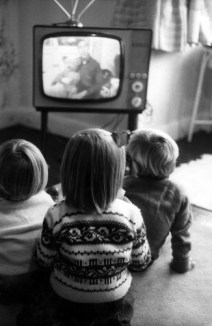
When I was a kid I was a tv junkie and a walking tv guide. Granted there were only 3 channels at the time and television actually went off the air at midnight, give me a time and a day and I could not only tell you what was airing but a synopsis of the program.
I also grew up loving movies of all types and even at a young age understood more about film than the average 7-year-old. My faves have always been Universal monster movies, black and white melodramas and musicals.

The intersection of movies and television got me thinking about what tv shows successfully made the leap to the big screen. The first two that came to mind are “The Addams Family” and the more famous and successful of the two – “Batman”.

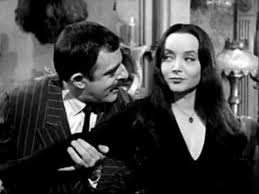
“The Addams Family” was one of my favorites from childhood. Morticia’s and Gomez’s marriage served as a blueprint for what I imaged mine would be. A husband with drawers full of money who’s totally head over heels about his wife. 😄🤑

Gomez and Morticia

Gomez and Morticia

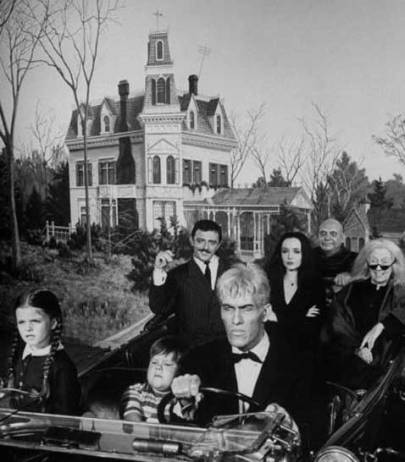
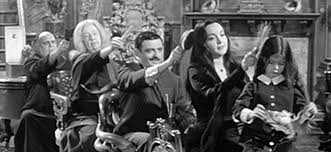
The wacky and macabre Addams family, created by American cartoonist Charles Addams, consisted of caring parents Morticia and Gomez. Children – melancholic Wednesday and not quite right Pugsley. Uncle Fester, Grandmama, a disembodied hand named Thing, Cousin It and their deadpan-faced butler, Lurch round out the bunch.

This delightfully ghoulish family takes pleasure in most of the things of which the average person would find weird. Gomez clears his throat with a sword, Uncle Fester sleeps on a bed of nails and Morticia lovingly cares for her carnivorous plants including the cooing venus flytrap, Cleopatra. Conversely, they’re a tight-knit, multi-generational family sending their children to public school, sharing candlelit picnics in the graveyard (okay that’s a little bizarre) and enjoying outings and family time together.

theaddamsfamilytogether

Uncle Fester, Grandmama, Gomez, Morticia and Wednesday

One of the reasons I was a big fan is because the show represented a break from the “ideal American family” mold that had previously dominated TV, especially since Gomez and Morticia often got very affectionate with each other whenever Morticia spoke French. (drove Gomez wild:)

The series ran from 1964-1966.

The Cast

Carolyn Jones Carolyn Jones
 Morticia Frump Addams / … (64 episodes, 1964-1966)
John Astin John Astin
 Gomez Addams (64 episodes, 1964-1966)
Ted Cassidy Ted Cassidy
 Lurch / … (64 episodes, 1964-1966)
Jackie Coogan Jackie Coogan
 Uncle Fester Frump (61 episodes, 1964-1966)
Ken Weatherwax Ken Weatherwax
 Pugsley Addams (39 episodes, 1964-1966)
Lisa Loring Lisa Loring
 Wednesday Addams (36 episodes, 1964-1966)
Marie Blake Marie Blake
 Grandmama Addams (35 episodes, 1964-1966)

The Addams Family was unique for the time and the episodes were hilarious!


“The Addams Family” Movie (1991)

Addams_Familyfilm

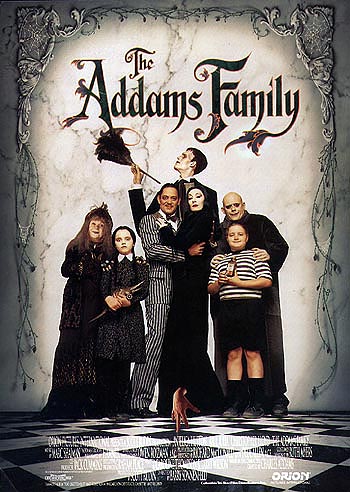
“The Addams Family”movie, directed by Barry Sonnenfeld, was a fabulous takeoff and homage to the original tv series. Anjelica Houston and Raul Julia were outstanding and completely embodied the affectionate couple to a tee. Anjelica Houston won a Golden Globe award for her performance. It made me smile and didn’t disappoint in content and feeling.

The entire family characterization was perfect. The cast really did their homework because not only did they represent the essence of the original tv characters but actually embellished them even more. Outstanding tv to film leap.

Gomez loves Morticia ♥

Family Dinner

Cast

Anjelica Huston Anjelica Huston
Raul Julia Raul Julia
Christopher Lloyd Christopher Lloyd
Uncle Fester Addams / Gordon Craven
Carel Struycken Carel Struycken
Christina Ricci Christina Ricci
Jimmy Workman Jimmy Workman
Christopher Hart Christopher Hart
John Franklin John Franklin

“The Addams Family” film from 1991 was so successful it resulted 2 years later in the sequel “Addams Family Values”. Once again we were treated to the escapes of this quirky family with the challenges of a new baby, Pubert, and Debbie, the nanny hired to care for Pubert but whose true intentions include landing Uncle Fester so she can partake of the Addams family riches. After all, “What about Debbie?”

To add to the family chaos, Wednesday and Pugsley are sent to summer camp (Camp Chippewa) at the urging of Debbie. (so her motives won’t be discovered) Morticia and Gomez are horrified but comply because Debbie assures them the kids want to go. (big lie!) With the addition of the Addams kids, this summer camp will never be the same.

Wednesday as Pocahontas and Pugsley as the turkey burning down the house!

It’s so satisfying to see the brilliant big screen version of a childhood favorite tv show. If you haven’t seen either the tv series or the movies, they’re definitely worth checking out for some hilarious and macabre fun!

Next post I’ll review “Batman” to see how the big screen version holds up against the original tv series.

batmanlogo


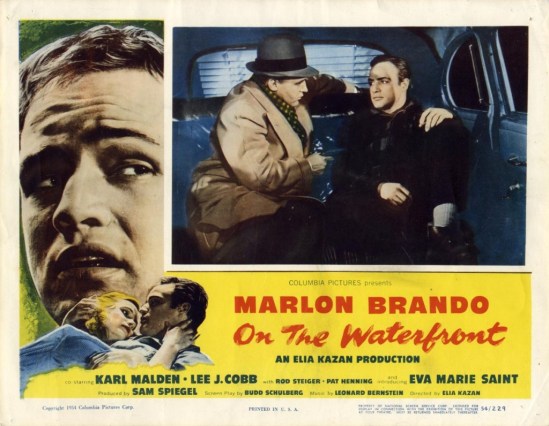
Brando Back on the Big Screen – “On the Waterfront”

On-The-Waterfront-Poster-1024x796

Fathom Events Presents:

“On the Waterfront” with exclusive commentary and a special glimpse behind the scenes from Turner Classic Movies host Ben Mankiewicz that will illustrate how this movie, which was filmed in only 36 days, made such a long-lasting cultural impact.

As a classic movie fan, seeing this Marlon Brando Academy Award winning film on the big screen is an opportunity not to be missed!

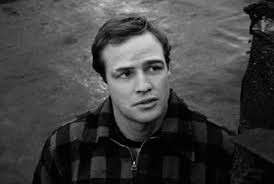
“You don’t understand! I coulda had class. I coulda been a contender. I could’ve been somebody, instead of a bum, which is what I am.” Watch Marlon Brando deliver those famous lines on the big screen when Fathom Events, Turner Classic Movies, and Sony Pictures Entertainment bring On the Waterfront (1954) back to select cinemas nationwide for a special two-day event on Sunday, April 24 and Wednesday, April 27.

brando

Marlon Brando

Marlon Brando stars as Terry Malloy, a washed-up prizefighter who, through the influence of his brother, Charley (Rod Steiger), a lawyer for a corrupt waterfront union, is employed as an errand boy for the mob. After luring a fellow dockworker and friend to his death to keep him from testifying against labor boss Johnny Friendly (Lee J. Cobb), the appeals of the dead man’s sister (Eva Marie Saint) and a crusading priest (Karl Malden) awaken Terry’s guilty conscience and love prompts Terry to seek redemption. (Fathom Events)

Do not miss the opportunity to see this classic, winner of eight Academy Awards including Best Picture in 1954, as it was meant to be seen – on the big screen!

fathomlogo


The Incredibles

The_Incredibles

“The Incredibles” is a 2004 American computer-animated superhero comedy film written and directed by Brad Bird, produced by Pixar Animation Studios, and released by Walt Disney Pictures.

theIncredibles_Bird

Brad Bird and Edna Mode

In this lauded Pixar production, married superheroes Mr. Incredible (Craig T. Nelson) and Elastigirl (Holly Hunter) are forced to assume mundane lives as Bob and Helen Parr after all super-powered activities have been banned by the government. While Mr. Incredible loves his wife and kids, he longs to return to a life of adventure and his desire to help people draws the entire family into a battle with superhero obsessed villain –

Syndrome (Jason Lee)

theincrediblesnemisis

and his killer robot. Omnidroid

theincrediblesomnibot

I must say that baby Jack-Jack is my favorite “Super”/Parr family member.

theincrediblesjackjack

Everyone thinks he has no powers and is “normal”. (which is so not true) When I saw this scene with Jack-Jack and his babysitter Kari, I would have spit milk out of my nose (if I was drinking milk😂) Too funny!!

When “The Incredibles” was released I felt it was the best-animated film I’d seen to date. It combined humor with drama and kept the audience engaged from start to finish. There was an audible gasp in the theater during the airplane sequence with Elastigirl and the kids (Dash and Violet).

The Incredibles was written and directed solely by Brad Bird, a departure from previous Pixar productions which typically had two or three directors and as many screenwriters. In addition, it would be the company’s first film in which all characters are human.

theincrediblesplain

Brad Bird came to Pixar with the lineup of the story’s family members worked out: a mom and dad, both suffering through the dad’s midlife crisis; a shy teenage girl; a cocky ten-year-old boy; and a baby. Bird had based their powers on family archetypes.

theincrediblesEdna_mode2

After several failed attempts to cast Edna Mode, Bird took on her voice role himself. It was an extension of the Pixar custom of tapping in-house staff whose voices came across particularly well on scratch dialogue tracks.

There were 781 visual effects shots in the film and the skin of the characters gained a new level of realism from a technology to produce what is known as “subsurface scattering.”

Critic Roger Ebert of the Chicago Sun-Times awarded the film 3½ stars out of 4, writing that the film “alternates breakneck action with satire of suburban sitcom life” and is “another example of Pixar’s mastery of popular animation.”

The film won the Academy Award for Best Animated Feature, beating two DreamWorks films, Shrek 2 and Shark Tale, as well as Best Sound Editing at the 77th Academy Awards. It also received nominations for Best Original Screenplay (for writer/director Brad Bird) and Best Sound Mixing (Randy Thom, Gary Rizzo, and Doc Kane). It was Pixar’s first feature film to win multiple Oscars, followed in 2010 by Up. (Wikipedia)

Edith Head – Dresser to the Stars ✨

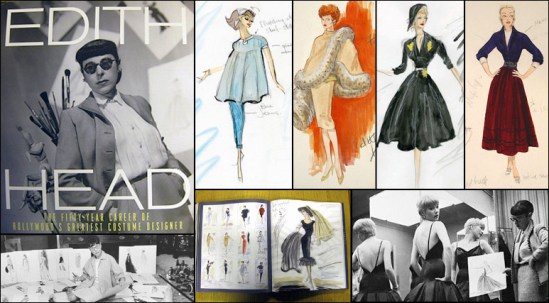
edithheaddesigns

As a classic movie lover, it seems every important film from the 1940’s until the 1970’s was dressed by Academy Award Winning Costume Designer Edith Head. The look of a film sets the tone which Ms. Head artfully conveyed with her iconic fashions, making her our next accomplished artist in “The Faces Behind the Camera” theme.

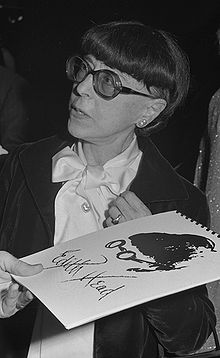
Edith Head in 1976

Edith Head in 1976

Born Edith Claire Posener in San Bernardino, California, Edith Head (October 28, 1897 – October 24, 1981) was an American costume designer who won a record eight Academy Awards for Best Costume Design, starting with The Heiress (1949) and ending with The Sting (1973).

Head’s designs were integral to the look and feel of a picture and she was considered exceptional for her close working relationships with her subjects, with whom she consulted extensively, and these included virtually every top female star in Hollywood.

Dorothy Lamour, Veronica Lake, Barbara Stanwyck, Ingrid Bergman, Bette Davis, Elizabeth Taylor, Grace Kelly, Kim Novack and Tippi Hendren to name a few.

Head received eight Academy Awards for Best Costume Design, more than any other person, from a total of 35 nominations. (Wikipedia)

Born and raised in California, Head managed to get a job as a costume sketch artist at Paramount Pictures, without any relevant training. She first acquired notability for Dorothy Lamour’s trademark sarong dress in Paramount’s, The Jungle Princess (1936) and then became a household name after the Academy Awards created a new category of Costume Designer in 1948.

In 1967, at the age of 70, she left Paramount Pictures and joined Universal Pictures to work with Alfred Hitchcock on such films as –Rear Window, 1954, To Catch a Thief, 1955, The Man Who Knew Too Much, 1956, Vertigo, 1958, The Birds, 1963, and Marnie, 1964, where she remained until her death in 1981.

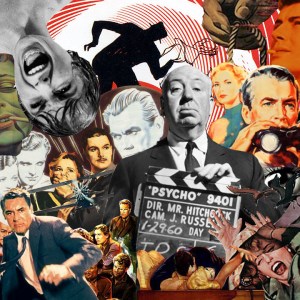
hitchcock_collage

An Edith Head costume collection from the Paramount Pictures Archive left Hollywood—for just the second time—to be shown exclusively at the Decorative Arts Center of Ohio in Lancaster in “Designing Woman: Edith Head at Paramount 1924-1967” as presented by the Fox Foundation from June 7 through August 17, 2014. (Wikipedia)

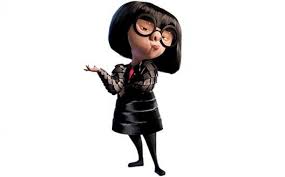
Trivia: The costume designer Edna Mode in the 2004 Pixar movie The Incredibles was largely based on Edith Head, according to director Brad Bird, who voiced the character.

Edna Mode - "The Incredibles"

Edna Mode – “The Incredibles”

Head died on October 24, 1981, four days before her 84th birthday, from myelofibrosis, an incurable bone marrow disease. She is interred at Forest Lawn Memorial Park in Glendale, California.

Edith Head’s star on the Hollywood Walk of Fame is located at 6504 Hollywood Boulevard.


Movie Music Magic – Danny Elfman 🎼

Danny Elfman

Danny Elfman

Music is essential to a film production. It sets the tone and mood and helps tell the movie’s story. A great musician “behind the camera” is Danny Elfman, who’s scored such film’s as “Pee-Wee’s Big Adventure”, “Batman”  and “The Nightmare Before Christmas”.

Daniel Robert Elfman (born May 29, 1953) is an American composer, singer, songwriter, and record producer. From 1976 to 1995 he was the lead singer and songwriter for the rock band Oingo Boingo.

In 1976, Elfman entered the film industry as an actor. In 1982, he scored his first film, Forbidden Zone, directed by his older brother Richard Elfman. Among his honors are four Academy Award nominations, a Grammy for Batman, an Emmy for Desperate Housewives, the 2002 Richard Kirk Award, and the Disney Legend Award.

I first became aware of Danny Elfman from his band, Oingo Boingo. Their ska driven music was freeing and fun.  Ska-influenced the new wave band in 1979, and then changed again towards a more guitar-oriented rock sound, in the late 1980s. The band’s appearance in Back to School energized the soundtrack with “Dead Man’s Party”.

Oingo Boingo Deadman's Party

“Back to School” (1986)

Some of Elfman’s music influences were Bernard Hermann, Franz Waxman, and Philip Glass. In 1985, Tim Burton and Paul Reubens invited Elfman to write the score for their first feature film, “Pee-wee’s Big Adventure”. Elfman was apprehensive at first, because of his lack of formal training, but with orchestration assistance from Oingo Boingo guitarist and arranger Steve Bartek, he achieved his goal of emulating the mood of such composers as Nino Rota and Bernard Herrmann.

Elfman immediately developed a rapport with Burton and has gone on to score all but three of Burton’s major studio releases. Elfman also provided the singing voice for Jack Skellington in Tim Burton’s The Nightmare Before Christmas and the voices of both Barrel and the “Clown with the Tear-Away Face”. Years later he provided the voice for Bonejangles the skeleton in Corpse Bride.

Trivia: Elfman also composed the theme to “The Simpsons”.

Burton has said of his relationship with Elfman: “We don’t even have to talk about the music. We don’t even have to intellectualize – which is good for both of us, we’re both similar that way. We’re very lucky to connect”. (Wikipedia)

Danny Elfman’s score of “Batman” (directed by Tim Burton) won him a Grammy Award.

Elfman admits his favorite movie to score was “Edward Scissorhands” (Tim Burton director).

edward scissor hands

Tim Burton, Winona Ryder, Johnny Depp and Danny Elfman in 1990.

Danny Elfman has three children: Lola (born 1979), Mali (born 1984), and Oliver (born 2005). On November 29, 2003, he married actress Bridget Fonda.

In October 2013, Elfman returned to the stage to sing his vocal parts to a handful of Nightmare Before Christmas songs as part of a concert titled Danny Elfman’s Music from the Films of Tim Burton. He composed the film score for Oz the Great and Powerful (2013), and composed additional music for Avengers: Age of Ultron (2015) together with Brian Tyler.


Academy Award Cinematographer – Ernest Laszlo 🎥

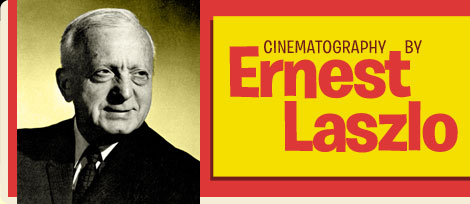
Ernest Laszlo

(April 23, 1898 – January 6, 1984)

Ernest Laszlo is our next artist for “The Faces Behind the Camera” theme. Best-known for his striking black-and-white cinematography, Laszlo was a painstaking technician and a true artist who rejected Hollywood glamour to bring a refreshing naturalism to his films.

Description: A cinematographer or director of photography (sometimes shortened to DP or DOP) is the chief over the camera crews working on a film, television production or other live action pieces and is responsible for achieving artistic and technical decisions related to the image. (Wikipedia)

Ernest Laszlo, A.S.C. was a Hungarian-American cinematographer for over 60 films and was known for his frequent collaborations with directors Robert Aldrich and Stanley Kramer. He was a member of the American Society of Cinematographers, and was its president from 1972 to 1974.

Laszlo emigrated to the United States and began working as a camera operator on such silent films as Wings (1927). Between 1927 and 1977, he served as cinematographer on sixty-nine films. Between 1961 and 1976 Laszlo was nominated for eight Academy Awards for Best Cinematography, and won the award in 1966 for Ship of Fools. He died in Los Angeles, California in 1984.

Some of my favorite films he shot are:

Directed by Stanley Kramer, “It’s a Mad, Mad, Mad, Mad World” (1963) was a scream! Every comic in the business appeared in this film. I’ve always said if you were a comedian during the filming and weren’t asked to participate, you just didn’t rate. 😟

There’s nothing more intriguing and hilarious than a bunch of strangers going on a treasure hunt and the lengths they will go through to retrieve the big prize. Dick Shawn stole the show with his portrayal of “Sylvester”, the not so bright hunk that’s determined to “save his mama”.

Filmed in Ultra Panavision 70 and presented in Cinerama (becoming one of the first single-camera Cinerama features produced), Mad World also had an all-star cast, with dozens of major comedy stars from all eras of cinema appearing in the film. It’s a Mad, Mad, Mad, Mad World rated #40 in the American Film Institute’s list – 100 Years…100 Laughs.

Spencer TracyEdie Adams, Milton Berle, Dick ShawnSid Caesar, Buddy Hackett, Ethel Merman, Mickey Rooney, Phil Silvers, Terry-Thomas, and Jonathan Winters.

A Little Cinematographer History

In the infancy of motion pictures, the cinematographer was usually also the director and the person physically handling the camera. Cinematography was key during the silent movie era; with no sound apart from background music and no dialogue, the films depended on lighting, acting, and set.

In 1919 Hollywood, the then-new motion picture capital of the world, one of the first (and still existing) trade societies was formed: the American Society of Cinematographers (ASC), which stood to recognize the cinematographer’s contribution to the art and science of motion picture making. (Wikipedia)

Some of Ernest Lazlo’s celebrated films

Ernest Laszlo, the trailblazing cinematographer whose body of work spans over 5 decades starting in the silent era with the first Academy Award winning film, Wings (1927) to his last film, The Domino Principle (1977). His visual style crossed all genres and he earned the accolade of being one of the best cinematographers in Hollywood.


The Faces Behind the Camera 📽


TCM movie lovers

If you’re a movie junkie like me you probably not only know the stars of the film but the Director, The Cinematographer, the Editor, Writers and possibly the Key Grip. The faces behind the camera.

If you attend a movie with me, be prepared to stay through the end credits. I feel it’s imperative to acknowledge those artists who are responsible for the project. Staying for the credits also gives you a foundation to critique a film based on the direction, writing, and editing. Whether or not to see a movie based on a Director’s previous track record or the Cinematographer’s eye for the visuals.

image

This month is dedicated to educating and paying homage to the artists who help put it all together. Let’s begin with one of the top 2 of my favorite Directors, Billy Wilder.

Billy Wilder

Billy Wilder

Billy Wilder (June 22, 1906 – March 27, 2002) was an Austrian-born American filmmaker, screenwriter, producer, artist and journalist, whose career spanned more than fifty years and sixty films. He is regarded as one of the most brilliant and versatile filmmakers of Hollywood’s golden age.

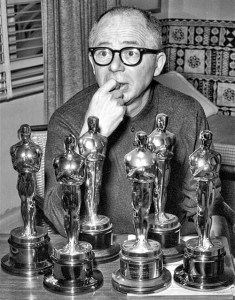
Billy Wilder with Oscars

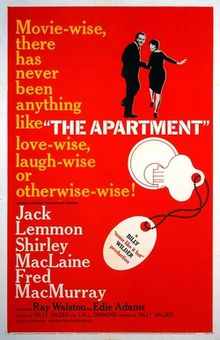
With The Apartment, (starring Jack Lemmon, Shirley MacLaine, and Fred MacMurray) Wilder became the first person to win Academy Awards as the producer, director, and screenwriter for the same film. “The Apartment” was nominated for ten Academy Awards and won five, including Best Picture.

The Apartment (1960)

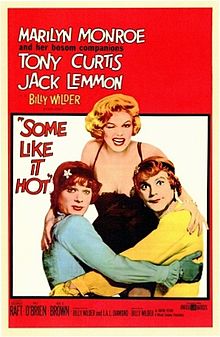
I love Billy Wilder because of his versatility in films and his testing the boundaries of societal norms. The first movie that comes to mind with his pushing the boundaries is “Some Like it Hot” 1959 starring Marilyn Monroe, Jack Lemmon, and Tony Curtis.

The plot revolves around two musicians who dress in drag in order to escape from mafia gangsters whom they witnessed commit the Saint Valentine’s Day Massacre. These are the final lines of the film delivered by (Daphne/Jerry) Lemmon and Joe E. Brown (Osgood) in regards to their pending marriage: Daphne/Jerry: But you don’t understand, Osgood! [Whips off his wig, exasperated, and changes to a manly voice] Uh, I’m a man! Osgood: [Looks at him then turns back, unperturbed] Well, nobody’s perfect!Wow! for 1959 that was pretty radical.

Some_Like_It_Hot_poster

“Some Like It Hot” is considered to be one of the greatest film comedies of all time. It was voted as the top comedy film by the American Film Institute on their list on AFI’s 100 Years… 100 Laughs poll in 2000. The film is also notable for featuring cross-dressing and homosexuality, which led to it being produced without approval from the Motion Picture Production Code. The Code was the set of industry moral guidelines that was applied to most American motion pictures released by major studios from 1930 to 1968. The Production Code had been gradually weakening in its scope during the early 1950s due to increasing societal tolerance for previously taboo topics in film, but it was still officially enforced. The overwhelming success of “Some Like It Hot” was a final nail in the coffin for the Hays Code.

Wilder became a screenwriter in the late 1920s while living in Berlin. After the rise of the Nazi Party, Wilder, who was Jewish, left for Paris, where he made his directorial debut. He moved to Hollywood in 1933, and in 1939, he had a hit when he co-wrote the screenplay for the screwball comedy Ninotchka. Wilder established his directorial reputation with Double Indemnity (1944), a film noir he co-wrote with crime novelist Raymond Chandler. Wilder earned the Best Director and Best Screenplay Academy Awards for the adaptation of a Charles R. Jackson story The Lost Weekend (1945), about alcoholism. In 1950, Wilder co-wrote and directed the critically acclaimed Sunset Boulevard.

Wilder was recognized with the American Film Institute (AFI) Life Achievement Award in 1986. In 1988, Wilder was awarded the Irving G. Thalberg Memorial Award. In 1993, he was awarded the National Medal of Arts.

Billy Wilder’s films:

Year Film Involvement
1934 Mauvaise Graine (also known as Bad Seed) Director/Writer
1942 The Major and the Minor Director/Writer
1943 Five Graves to Cairo Director/Writer
1944 Double Indemnity Director/Writer
1945 The Lost Weekend Director/Writer
1945 Death Mills Director
1948 The Emperor Waltz Director/Writer
1948 A Foreign Affair Director/Writer
1950 Sunset Boulevard Director/Writer
1951 Ace in the Hole Director/Writer/Producer
1953 Stalag 17 Director/Writer/Producer
1954 Sabrina Director/Writer/Producer
1955 The Seven Year Itch Director/Writer/Producer
1957 The Spirit of St. Louis Director/Writer
1957 Love in the Afternoon Director/Writer/Producer
1957 Witness for the Prosecution Director/Writer
1959 Some Like It Hot Director/Writer/Producer
1960 The Apartment Director/Writer/Producer
1961 One, Two, Three Director/Writer/Producer
1963 Irma la Douce Director/Writer/Producer
1964 Kiss Me, Stupid Director/Writer/Producer
1966 The Fortune Cookie Director/Writer/Producer
1970 The Private Life of Sherlock Holmes Director/Writer/Producer
1972 Avanti! Director/Writer/Producer
1974 The Front Page Director/Writer
1978 Fedora Director/Writer/Producer
1981 Buddy Buddy Director/Writer

Wilder received a total of twenty-one Academy Award nominations; eight for Best Director, twelve for writing, and one as the producer of Best Picture. With eight nominations for Academy Award for Best Director, Wilder is, together with Martin Scorsese, the second most nominated director in the history of the Academy Awards, behind William Wyler, and the second most nominated screenwriter behind Woody Allen.

Wilder won a total of six Oscars: Best Director for The Lost Weekend and The Apartment, Best Screenplay for The Lost Weekend, Sunset Blvd, The Apartment, and Best Picture for The Apartment. In addition, he received the Irving G. Thalberg Memorial Award in 1988.

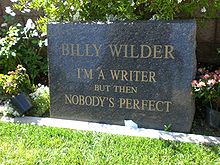
Billy Wilder"s grave

Wilder died in 2002 of pneumonia at the age of 95 after battling health problems, including cancer, in Los Angeles and was interred in the Westwood Village Memorial Park Cemetery in Westwood, Los Angeles near Jack Lemmon and Walter Matthau. Marilyn Monroe’s crypt is located in the same cemetery. Wilder died the same day as two other comedy legends: Milton Berle and Dudley Moore. The next day, French newspaper Le Monde titled its first-page obituary, “Billy Wilder dies. Nobody’s perfect”, quoting the final gag line in “Some Like It Hot”.