The Five Heartbeats 🎶


In honor of Black History Month, I’ll be featuring films either starring or representing African American themes.

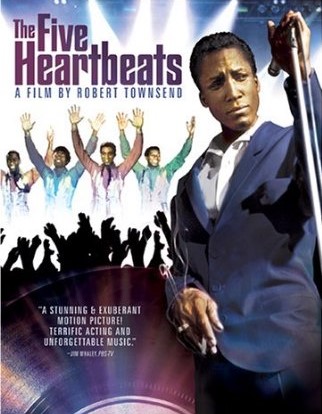
My second film, “The Five Heartbeats” (1991) is a rousing, slice of 60’s R&B music and reminiscent of groups like The Temptations and the Four Tops. Growing up in the 60’s in Motown, this film speaks to me and brings back wonderful memories of the times and the music. Another Robert Townsend production which he wrote directed and starred, it does not disappoint in energy or the drama of the music industry.


Inspired by the R&B group The Dells, it is co-written by Keenan Ivory Wayans and Robert Townsend. The movie also features 40’s tap dance icon Harold Nicholas (Nicholas Brothers) as Ernest “Sarge” Johnson in his final film as the group’s spunky choreographer.

After extensive research with R&B singing group The Dells, who were renowned for their four-decade career, Townsend used his film to depict a similar story, following the lives of five friends who aspire to musical stardom. Given the setting of the film, he was able to tie in other elements, such as race relations, as well.

The Five Heartbeats

The music (by Stanley Clarke) is phenomenal and a soundtrack for the film was released by Virgin Records, featuring original music by various artists. Both “Nights like This” and “A Heart Is a House for Love” became top 20 hits on the U.S. Billboard Hot R&B Singles chart. The film received an ASCAP award for Most Performed Songs in a Motion Picture for the song “Nights Like This.”

The Five Heartbeats:

For an evening of great R&B music and entertainment, grab some snacks and fire up “The Five Heartbeats”.


2nd Liebster Award Nomination!

Liebster Award

I was nominated by https://sindenlee3.wordpress.com/.  Thanks so much for the nomination! I am truly honored. This blog is lots of fun and great for movie junkies like me. Be sure to check him out.

Liebster Award

Here are the Rules:

  • Acknowledge the blog that nominated you and display the award!

  • Answer the 11 questions that the blog gives you.

  • Give 11 random facts about yourself.

  • Nominate 5-11 blogs that you think are deserving of the award that has less than 200 followers.

  • Let the bloggers know you nominated them.

  • Give them 11 questions to answer!

Don’t forget to let me know when you’re done answering your questions! I’d love to see your answers!

ALSO, IF YOU DON’T WANT TO PARTICIPATE IN THIS NOMINATION, I COMPLETELY UNDERSTAND! 

11 Random Facts about Myself:

  1. I am currently in Chemotherapy treatment fighting both Colon and Breast Cancer.

  2. I’ve performed in community theater and had the lead role in Neil Simon’s play – “Proposals”.

  3. I have 2 favorite directors – Alfred Hitchcock and Billy Wilder.

  4. Wow! I will have been married for 38 years on September 23, 2016.

  5. I love classic Universal Horror movies.

  6. My favorite book is “The Four Agreements” by Don Miguel Ruiz.

  7. I’m a member of Delta Sigma Theta, Incorporated Sorority.

  8. I’m a The University of Michigan Wolverine!

  9. My car was struck by lightning.

  10. I’m a music lover and fan of – Adele, The Beatles, and The Parliament/Funkadelic and many more.

  11. I love, love, love the Minions!

Blogs I nominated:

https://americaoncoffee.wordpress.com/

http://giggin.me/

http://www.juliannaricci.com/

https://anchorlessapparition.wordpress.com/

https://chloelcg.wordpress.com/

My Questions and Answers:

  1. What morals do you stand by? Do unto others as you would have them do unto you.

  2. What/ who is most important to you? My family.

  3. What is wrong with this world? Prejudice.

  4. Who do you look up to? My sisters.

  5. If you had a time machine where would you go? Back to my childhood.

  6. What part of your body are you pleased with? All the parts.

  7. Which actor/actress do you like most? I love Bette Davis.

  8. When were you last wrong? Earlier today.

  9. Why did you follow my blog? You’re a movie junkie like me.

  10. Where would you live in this world other than the country you live now and why? The British Virgin Islands. Why? Love the beaches.

  11. What makes you feel free? Nature.

Questions for you: 

  1. What’s your daily mission?

  2. Dogs or Cats?

  3. Favorite vacation?

  4. Favorite music genre?

  5. Favorite actor/actress?

  6. What makes you smile?

  7. Favorite movie?

  8. Stay in or go out on a Friday night?

  9. Favorite adult beverage?

  10. What would you like to accomplish?

  11. Favorite time of day?


Hollywood Shuffle

Hollywood Shuffle

(1987)

In honor of Black History Month, I’ll be featuring films either starring or representing African American themes.

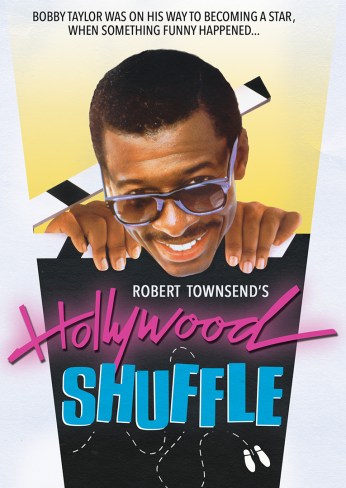
My first film for the month is “Hollywood Shuffle” (1987) directed by and starring Robert Townsend. More than 25 years ago, this small, low-budget movie caught the fascination of movie viewers across the country. And it just happens to be one of my favorite films.

The story revolves around aspiring actor Bobby Taylor (Robert Townsend) trying to break into Hollywood. His troubles lie not with his talent, but the stereotypical roles that he’s asked to play. “Hollywood Shuffle” takes a satiric look at African American actors in Hollywood.

Accepting the lead role in a typical blaxploitation movie, Bobby dreams about what it would be like if African Americans were respected as legitimate actors in roles from Sam Spade to Shakespeare to superheroes. He just has to convince Hollywood that gangstas, slaves and “Eddie Murphy-types” aren’t the sum of his talents.

With his little brother looking up to him and his grandmother proclaiming “there’s work at the post office”, Bobby faces the dilemma of, art or dignity.

For me, I have to go along with grandma, “there’s work at the post office”.

We’ve come a long way in 29 years but as I always say: “We’ve come a long way but we’ve still got a long way to go”!

In Robert Townsend’s own words:

https://soundcloud.com/taketwoshow/robert-townsend-on-paying-for-hollywood-shuffle-with-a-credit-card

https://soundcloud.com/taketwoshow/robert-townsend-on-auditioning-for-terrible-roles


Pioneering Women Filmmakers – A Series – Part 3

The Contemporary Visionaries of American Film

stars

A long time ago in a galaxy far, far away…Women were the driving force behind Hollywood and the movies. This is the third part of a series paying homage to contemporary women filmmakers who broke the glass ceiling and wrote and directed the films that took 86 years from pioneer Lois Weber’s day to achieve. Hollywood is still run by men but these women prove that it may be a man’s world but it would be nothing without a woman or a girl. Thanks, James Brown for the lyric.

  • In 86 years, only four women have been nominated for the Best Director Oscar. Only one, Kathryn Bigelow, has won.

  • Women filmmakers nominated for the Best Director: Lina Wertmüller for Seven Beauties (1976), Jane Campion for The Piano (1993), Sofia Coppola for Lost in Translation (2003), and Kathryn Bigelow for The Hurt Locker (2009).

  • Sofia Coppola was the first American woman to ever be nominated for Best Director for the 2003 movie, “Lost in Translation.”

◊◊◊◊◊◊

Kathryn Ann Bigelow ( born November 27, 1951) is an American director, producer, and writer. Her films include the vampire Western horror film Near Dark (1987), the action crime film Point Break (1991), the controversial science fiction action thriller Strange Days (1995), the mystery thriller The Weight of Water (2000), the submarine thriller K-19: The Widowmaker (2002), the war film The Hurt Locker (2009), the action thriller war film Zero Dark Thirty (2012), and the short film Last Days of Ivory (2014). The Hurt Locker won the 2009 Academy Award for Best Picture, won the BAFTA Award for Best Film, and was nominated for the 2009 Golden Globe Award for Best Drama.

Kathryn Bigelow

Kathryn Ann Bigelow

Bigelow’s trilogy of action films — Blue Steel, Point Break, and Strange Days —  are looked at by critics as rethinking the conventions of action cinema while exploring gendered and racial politics. In her career, Bigelow has become recognizable as both a Hollywood brand and an auteur.

Married to director James Cameron from 1989-1991, she and Cameron were both nominated for Best Director at the 2010 82nd Academy Awards, which Bigelow won. Yay, Kathryn!

Sofia Coppola

Sofia Coppola

Sofia Carmina Coppola (born May 14, 1971) is an American screenwriter, director, producer, and actress. In 2003, she received the Academy Award for Best Original Screenplay for the comedy-drama Lost in Translation and became the third woman to be nominated for an Academy Award for Best Director. Her nomination for Best Director made her the first American woman in history to be nominated in that category, and the third woman overall, after Lina Wertmüller and Jane Campion. In 2010, with the drama Somewhere, she became the first American woman (and fourth American filmmaker) to win the Golden Lion, the top prize at the Venice Film Festival. Her father is the director, producer, and screenwriter Francis Ford Coppola.

She made her feature film directing debut with The Virgin Suicides (1999). It received critical acclaim upon its premiere in North America at the 2000 Sundance Film Festival and was released later that year. If you haven’t seen it, check it out. It’s brilliant and makes you think about parenting skills or the lack thereof.

◊◊◊◊◊◊

African American Women Filmmakers

Zora Neale Hurston

Zora Neale Hurston

(January 7, 1891 – January 28, 1960)

Better known for her work as a novelist, Zora Neale Hurston could be, according to an essay by academic Gloria Gibson, the first African-American woman filmmaker. The film footage, which includes Children’s Games (1928), Logging (1928), and Baptism (1929), appears to be from her work as a student of anthropology under the guidance of famed anthropologist, professor, and mentor, Dr. Franz Boas of Columbia University.

A graduate of Barnard College (B.A. in anthropology in 1928) and a Guggenheim fellow, Hurston traveled back to a South similar to her hometown of Eatonville, Florida (one of the first all-black towns to be incorporated in the United States) to capture a variety of short takes of African-American life. Ethnographic in nature, the films reflect a focus of folklorists of that time period who believed that “…cultural performance and beliefs must be expeditiously collected and documented because they would soon be gone forever” (Gloria Gibson).

During a period of financial and medical difficulties, Hurston was forced to enter St. Lucie County Welfare Home, where she suffered a stroke. She died of hypertensive heart disease on January 28, 1960, and was buried at the Garden of Heavenly Rest in Fort Pierce, Florida. Sadly, her remains were in an unmarked grave until 1973 when novelist Alice Walker and literary scholar Charlotte Hunt found an unmarked grave in the general area where Hurston had been buried and decided to mark it as hers.

Our future:

Ava DuVernay – Current/future generation screenwriter/director – She would have been the first black woman nominated for best director in Oscar history, and just the fifth woman, following Lina Wertmüller for Seven Beauties, Jane Campion for The Piano, Sofia Coppola for Lost in Translation, and Kathryn Bigelow for The Hurt Locker. Instead, she’s been added to the list of female directors who have seen their films get nominated while they’ve been snubbed.

Ava DuVernay

Ava DuVernay

Ava Marie DuVernay (born August 24, 1972) is an American director, screenwriter, film marketer, and film distributor. At the 2012 Sundance Film Festival, DuVernay won the Best Director Prize for her second feature film Middle of Nowhere, becoming the first African-American woman to win the award. For her work in Selma, DuVernay is the first black woman director to be nominated for a Golden Globe Award. With Selma, she is also the first black woman director to have their film nominated for the Academy Award for Best Picture.

In 2015, it was announced that DuVernay would be writing, producing, and directing her next project, Queen Sugar which is an upcoming American drama television series, created, directed and executive produced by Ava DuVernay alongside Oprah Winfrey. The series is based on the novel of the same name by Natalie Baszile.The series is set to air on the Oprah Winfrey Network. 

Women filmmakers are essential to the stories and voices of Hollywood. We’ve made some progress but we still have a long way to go!

Pioneering Women Filmmakers – Lois Weber

The Early Visionaries of American Film: A Series – Part 2

star wars galaxy

A long time ago in a galaxy far, far away…Women were the driving force behind Hollywood and the movies. This is the second part of a series paying homage to the women who broke the glass ceiling and wrote and directed the films that gave birth to the “Golden Age” of cinema and the motion picture industry.  Unfortunately, when the men realized the gold mine films were becoming, the women faded away thanks to the Hollywood studio system. Well, as the saying goes, “that’s the way they do you.”

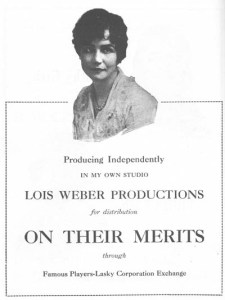
Lois Weber (June 13, 1879 – November 13, 1939)

Florence Lois Weber was an American silent film actress, screenwriter, producer, and director, who is considered the most important female director the American film industry has known and is one of the most important and prolific film directors in the era of silent films. Along with D.W. Griffith, Lois Weber was the American cinema’s first genuine auteur, “a filmmaker whose personal influence and artistic control over a movie are so great that the filmmaker is regarded as the author of the movie”. In that spirit, Lois Weber utilized the motion picture to put across her own ideas and philosophies.

Weber brought to the screen her concerns for humanity and social justice in an estimated 200 to 400 films, of which as few as twenty have been preserved, and she has been credited by IMDb with directing 135 films, writing 114, and acting in 100. Weber was also one of the first directors to come to the attention of the censors in Hollywood’s early years.

During the war years, Weber achieved tremendous success by combining commercially successful scripts with a rare vision of cinema as a moral tool. At her zenith, few men, before or since, have retained such absolute control over the films they have directed – and certainly no women directors have achieved the powerful status once held by Lois Weber. By 1920, Weber was considered the premier woman director of the screen and author and producer of the biggest money-making features in the history of the film business.

Among Weber’s notable films are the controversial “Hypocrites”, which featured the first full-frontal female nude scene in 1915; the 1916 film “Where Are My Children?”, which discussed abortion and birth control, and was added to the National Film Registry in 1993; and what is often considered her masterpiece, “The Blot” in 1921.

In 1913, Weber and husband Smalley collaborated in directing a ten-minute thriller, “Suspense”, based on the play Au Telephone by André de Lorde, which had been filmed in 1908 as “Heard over the ‘Phone” by Edwin S. Porter. Adapted by Weber, it used multiple images and mirror shots to tell the story of a woman (Weber) threatened by a burglar (Douglas Gerrard). Weber has been credited with pioneering the use of the split-screen technique to show simultaneous action in this film, According to film historian Tom Gunning, “No film made before WWI shows a stronger command of film style than “Suspense” which outdoes even Griffith for emotionally involved filmmaking”. “Suspense” was released on July 6, 1913.

loisweberSuspense_(1913_film)

Suspense” – Split Screen

In 1913 Weber was one of the first directors to experiment with sound, making the first sound films in the United States, and was also the first American woman to direct a full-length feature film when she and husband Phillips Smalley directed “The Merchant of Venice” in 1914, and in 1917 the first woman director to own her own film studio.

Lois_Weber_Productions

In Part 1 of this series we talked about the accomplishments of director Frances Marion. Lois Weber discovered and inspired director and screenwriter Frances Marion.

For her contribution to the motion picture industry, on February 8, 1960, Lois Weber was awarded a star on the Hollywood Walk of Fame.

In Part 3 of this series, we’ll discuss contemporary female filmmakers and their viewpoint on Hollywood and the world in which we live.

Oscar Michaeaux – The Czar of Black Hollywood 🎥

oscarmicheaux oscarmicheauxdirector

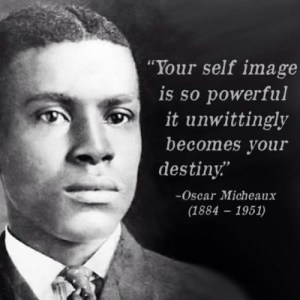
Oscar Devereaux Micheaux

January 2, 1884 – March 25, 1951

https://youtu.be/ao5V-XhXS-c

Probably not well known but a very important artist and groundbreaker in the early days of cinema, Oscar Micheaux was definitely a man ahead of his time. He was the most successful African-American filmmaker of the first half of the twentieth century and the most prominent producer of race films. He produced both silent films and “talkies” as a film director and independent producer of more than 44 films.

Micheaux’s movies were a challenge to racial segregation and an alternative outlet for black moviegoers. He is thought to have written, produced and directed more than 40 films from 1919 to 1948.

In response to D.W. Griffith’s outrageous and racist depiction of African-Americans in his landmark film“The Birth of a Nation” (1915) Micheaux produced “Within Our Gates” (1920). It is considered an important expression of African-American life in the years immediately following World War I when violent racist incidents occurred throughout the United States, but most frequently in the South. Produced, written and directed by Micheaux, it is his second and the oldest known surviving film made by an African-American director.

Lost for decades, a single print of the film, entitled La Negra (The Black Woman), was discovered in Spain in the 1970s. In 1992, “Within Our Gates” was selected by the Library of Congress for preservation in the United States National Film Registry as being “culturally, historically, and aesthetically significant”.

On his style:

Micheaux said,

“My results…might have been narrow at times, due perhaps to certain limited situations, which I endeavored to portray, but in those limited situations, the truth was the predominate characteristic. It is only by presenting those portions of the race portrayed in my pictures, in the light and background of their true state, that we can raise our people to greater heights. I am too imbued with the spirit of Booker T. Washington to engraft false virtues upon ourselves, to make ourselves that which we are not.”

◊◊◊◊◊◊

Micheaux died on March 25, 1951, in Charlotte, North Carolina, of heart failure. He is buried in Great Bend Cemetery in Great Bend, Kansas, the home of his youth. His gravestone reads: “A Man Ahead of His Time”.

Selma


Perserverance

January 15, 1929 – April 4, 1968

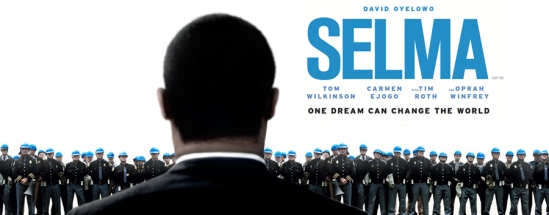
Selma is a 2014 American historical drama film directed by Ava DuVernay and written by Paul Webb. It is based on the 1965 Selma to Montgomery voting rights marches led by James BevelHosea Williams, Martin Luther King, Jr., and John Lewis. The film stars actors David Oyelowo as King, Tom Wilkinson as President Lyndon B. Johnson, Tim Roth as George Wallace, Carmen Ejogoas Coretta Scott King, and rapper and actor Common as Bevel.

Selma

At first, I was skeptical on how this history would be portrayed. I didn’t want a melodrama about Bloody Sunday and those on the front lines of the Civil Rights Movement. But, Director, Ava DuVernay did an incredible job and for me, the film should be included as part of the historical record.

Selma was a turning point in the Civil Rights Movement. In your living room. In your face. The first march took place on March 7, 1965, organized locally by SCLC Director of Direct Action James Bevel, who was directing SCLC’s Selma Voting Rights Movement. State troopers and county posse men attacked the unarmed marchers with billy clubs and tear gas after they passed over the county line, and the event became known as Bloody Sunday. Law enforcement beat activist Amelia Boynton unconscious, and the media publicized worldwide a picture of her lying wounded on the bridge.

Selma had four Golden Globe Award nominations, including Best Motion Picture – Drama, Best Director, and Best Actor, and won for Best Original Song. It was also nominated for Best Picture and won Best Original Song at the 87th Academy Awards.

Whether you know the history or just learning, I consider the film Selma essential viewing for a pivotal moment in the Civil Rights Movement.  A Movement which we must always remember and never forget as …

The Struggle Continues.

This slideshow requires JavaScript.


In Memoriam


R.I.P. David Bowie

The loss of David Bowie truly touched my heart. I’ve followed and loved his music since 1972 with the release of the album  – “The Rise and Fall of Ziggy Stardust and the Spiders from Mars”.

“Starman” from the 1972 album The Rise and Fall of Ziggy Stardust and the Spiders from Mars.

“If you’re sad today, just remember the world is over 4 billion years old and you somehow managed to exist at the same time as David Bowie”. – Dean Podesta

I’m appreciative of this tweet because I found it calming and it put Bowie’s passing in perspective. A true innovator. He will be missed.


image


Shining stars we lost in 2015.

R.I.P  All you shining stars!


Happy New Year! 🎊

Thinking about what film to feature for this post I posed the question, what movie could entertain and at the same time set a positive attitude for the new year?
positivestronger2

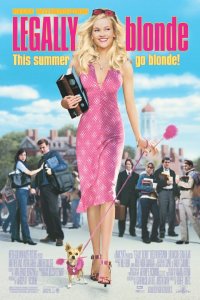
Looking through my film collection, I came across “Legally Blonde” (2001) and thought, yeah, this totally fits the bill. A fabulously positive tale about sorority queen Elle Woods (Reese Witherspoon) and her awesome dog “Bruiser”, who discovers her inner feminist and realizes she’s smarter, has her own power and possesses more heart than her stupid ex-boyfriend – Warner Huntington III (Matthew Davis).

Legally Blonde

I admit when I first heard of the film I figured it was light weight and would be so-so, but boy was I wrong. The message of “Legally Blonde” (Be True to Yourself) will always be relevant and the film can be an excellent opportunity to demonstrate to young girls and women the strength and determination of a focused woman!

Graduated Harvard Law with Honors

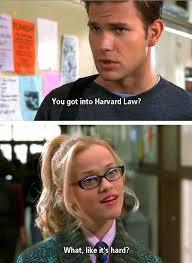
When Elle is dumped by Warner, (her stupid ex-boyfriend) she decides to apply to Harvard Law (where he’s attending) and win him back. This isn’t just some pipe dream. Although she graduated with a Fashion Merchandising degree from UCLA, she studies around the clock for her new goal, taking the Law School Admission Test which she scores 179 on, one point below the highest possible score.

legallyblondeharvard2

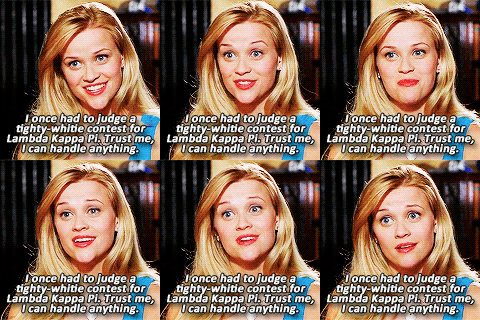
A perfect example of what I love about Elle’s style is that her law school application is chock full of personality. She creates a video essay demonstrating her unique qualifications (including, she was in a Ricky Martin video) and her resume is pink and sweetly scented. Proving you don’t have to change the essence of who you are to accomplish your goals.

Even though her initial motivation to attend Harward was wack, that path eventually led her to chart a new destiny for herself. Affecting how people perceived her (dumb blonde) into smart, original, diehard friend who doesn’t give up and encourages others to do the same. Like with her manicurist friend Paulette. Elle helps Paulette gain custody of her dog back from her ex-husband, and she also helps her seduce the delivery man on whom she has a crush.

Hadn’t watched “Legally Blonde” in quite some time so I’m so glad I posed the question to myself – what’s a good positive new year movie? This film definitely qualifies and I love Elle, Bruiser and the enduring message of empowerment and friendship!


Gotta Love Her!


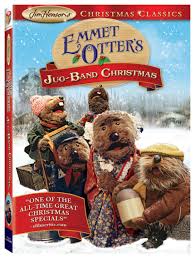
Emmet Otter’s Jug-Band Christmas 🎶🎄

A sweet little, probably lesser known Jim Henson (Muppets creator) gem – “Emmet Otter’s Jug-Band Christmas.”

Emmet Otter Jug-band Christmas

One of my favorite Christmas joys is watching and sharing my favorite animated Christmas specials. This month will be dedicated to these wonderful specials and films.

The story is based on the children’s story of the same name which was written by Russell and Lillian Hoban. Jim Henson’s production of Emmet Otter’s Jug-Band Christmas premiered on HBO on December 17, 1978, as an hour long TV presentation. It’s the charming tale of Emmet Otter and his loving mom’s dream of presenting each other with the perfect Christmas gift. But unfortunately, Emmet and his Mom, a widow, scrape by on the small amount of money she gets from doing laundry and that Emmet gets from doing odd jobs around their home in the town of Frogtown Hollow.

As Christmas approaches, they hear of a talent contest in the nearby town of Waterville and separately decide to enter to afford that perfect present: the guitar Emmet dreams of, and a beautiful piano for Ma. However, in a twist on The Gift of the Magi by O. Henry, they must sacrifice each other’s livelihood for the talent contest. Mom hocks Emmet’s tools for dress fabric while Emmet turns Ma’s washtub into a washtub bass for a jug band.

The special received a very positive review in The New York Times on December 15, 1980: “Jim Henson and the Muppets are on a dazzling winning streak these days… Mr. Henson has produced and directed one of the most charming Christmas specials of the last several years.

Emmet rehearses diligently for the contest with his bandmates and mom secretly practices her solo, However, a local band, Rivertown Nightmare Band enters the contest as well. I won’t spoil it, but the Nightmare Band is awesome!

The songs by singer/songwriter Paul Williams are wonderful and Jerry Juhl’s story is simple and sweet. I loved Jim Henson and miss him and his talent for capturing the imagination of not only children but of us all!

Jim Henson

Jim Henson