Gratitude and Miracles 💛


thanksgiving2012


iheartfilm is dedicating the month of November to the lesson of Gratitude in films; the quality of being thankful.

This is a re-post from last year. It so fits the theme of gratitude and is my official movie to kick-off the holiday season. We lost Maureen O’Hara (Doris) last month (more on the late actress here) so this is also a tribute to her career and role in this holiday classic. Enjoy!

Today marks the start of the holiday season, but it doesn’t officially kick off for me until I’ve watched the Thanksgiving Day Parade and one of my favorite holiday films, Miracle on 34th Street (1947).


Until I see Santa arrive at the end of the parade there can be no Christmas Tree, tinsel, ornaments or stockings. This has been a tradition of mine since I was a kid. Without a doubt, Edmund Gwenn is Santa Claus. No matter what other films he’s made, each character turns into Kris Kringle. (he won the Academy Award for Best Supporting Actor) Gwenn played a cockney assassin in Hitchcock’s Foreign Correspondent in 1940, but all I could scream was “Santa, don’t throw that man off the ledge!”


Edmund Gwenn

Miracle Kris

(September 26, 1877 – September 6, 1959)

Natalie Wood was precious as Susan, the precocious daughter of Maureen O’Hara (Doris) who doesn’t believe in fairy tales and attends a “progressive” school. Natalie Wood had an illustrious career until her death in 1981. She was able to make the transition from child star to ingenue starring opposite James Dean in Rebel Without a Cause (1955) and Warren Beatty in Splendor in the Grass (1961). Known as a loving, giving person, as well as a star, she’s always had a special place in my heart.

Natalie Wood

Miracle on i believe

(July 20, 1938 – November 29, 1981)

miracle DorisDoris is cynical as a result of a bitter divorce so she’s raising her daughter to be practical and sensible. None of this believing in fairy tales and Santa crap. All was going well until Doris – the Macy’s parade coordinator – asks Kris to replace the drunken Santa originally set for the Macy’s Thanksgiving Parade. Kris is a big hit and becomes Macy’s official Santa resulting in a personal relationship with Doris and Susan.

Maureen O’Hara (August 17, 1920 – October 24, 2015)


Kris is an immediate influence teaching Susan it’s okay to pretend after she tells him the other kids don’t play with her because she won’t join in their game and act like a zoo animal.

The production took flack from the Catholic League of Decency because how dare you depict a divorced woman with a successful career and a young child as a “normal family.” Yep, 1940’s mentality and morality were hard at work.

miracle susan at play

Susan learning to act like a monkey!

Just as Doris is learning to have more faith in life and Susan is embracing imagination, Kris’s sanity is questioned and a legal battle ensues to prove that not only is he sane but the one and only Santa Claus. Fred (John Payne) who is Kris’s lawyer and Doris’s boyfriend, understands the importance of the spirit of Santa especially in the lives of Susan and Doris.

John Payne (on left)

(May 23, 1912 – December 6, 1989)

miracle john

Kris is exonerated and Christmas day has arrived. Susan has asked for a very special present and is disappointed at the Christmas party to see it isn’t under the tree. Doris, in a refreshing change of heart, tells Susan she must have faith.

But, Santa Claus moves in mysterious ways and in the end teaches them both the true value of faith and miracles.
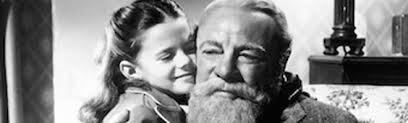


 miracle end

Cheers to Faith and Miracles!

Gratitude of the Heart

The Wizard of Oz (1939) – “There’s No Place Like Home”


WIZARD_OF_OZ_ORIGINAL_POSTER_1939

iheartfilm is dedicating the month of November to the lesson of Gratitude in films; the quality of being thankful.

To quote author Melody Beattie:

“Gratitude turns what we have into enough, and more. It turns denial into acceptance, chaos into order, confusion into clarity…it makes sense of our past, brings peace for today, and creates a vision for tomorrow.” 


My first pick, “The Wizard of Oz”, is overflowing with gratitude! Dorothy (Judy Garland) accompanied by her little dog Toto, seeking a better place in the world comes to understand what home really means and her compatriots – The Scarecrow (Ray Bolger), Tin Man (Jack Haley), and The Cowardly Lion (Bert Lahr) wishing to be more than they perceive themselves to be, learn to appreciate their unique gifts. The Great and Powerful Oz (Frank Morgan) realizes the blessing and value of truth and in his case the truth truly does set him free.


It all starts with a wish to be “Somewhere Over the Rainbow” and results in unexpected consequences – the terror of being caught up in a twister, inadvertently dropping a house on the sister of the Wicked Witch of the West (oops) and inheriting both the wrath of said Witch (Margaret Hamilton) and a pair of coveted ruby slippers.


Sadly, “Over the Rainbow” doesn’t materialize into the idyllic place of which Dorothy sings, which becomes her vision quest. Dorothy’s longing for home dovetails with the wishes of  The Scarecrow, Tin Man, and The Cowardly Lion. These three, also wishing for what they believe they don’t have – a brain, a heart, and courage – join the quest to the Emerald City to finally have their dreams realized through the power of the omnificent Wizard of Oz.

The trio’s perilous journey to get Dorothy home leads to the self-realization that they possessed the traits they sought all along and didn’t really need the wizard to bestow these attributes upon them.

Dorothy also learns a valuable lesson we all tend to forget, “there’s no place like home” and if we can’t find what we’re looking for there, then we won’t be able to find it anywhere. Home exists within us and it’s our outlook and attitude that dictates whether it’s a black and white existence filled with worries and that ole Gulch “heifer” or a technicolor world filled with musical munchkins and the love of three very special friends.


With Gratitude, we can appreciate and give thanks for the joys and blessings in our lives because the truth is we could be far worse off. My spiritual goal every day is to be mindful and thankful for the bounty which I’ve already received.


wizardofozhome


Always remember!


R.I.P Maureen O’Hara – “Queen of Technicolor”

image

Maureen O’Hara, ‘The Queen of Technicolor,’ Dies at 95

(August 17, 1920 – October  24, 2015)

I loved the feisty Irish attitude she embodied in the characters created starring opposite John Wayne, but my sentiments will always go to her role as 8-year old Natalie Wood’s mother in the Christmas Classic, “Miracle on 34th Street.” R.I.P. Maureen O’Hara

Maureen O’Hara, the Irish beauty whose striking red hair, crystal green eyes, and porcelain skin was so dazzling on the silver screen that she was dubbed “The Queen of Technicolor,” has died. She was 95.

O’Hara, who played the feisty wife to onscreen husband John Wayne in five films — three of them directed by John Ford — died Saturday at her home in Boise, Idaho, Johnny Nicoletti, her longtime manager, told the Associated Press.

“She passed peacefully surrounded by her loving family as they celebrated her life listening to music from her favorite movie, The Quiet Man,” said a statement from her family.

She moved to Idaho in 2013 to be closer to her relatives after spending four decades in Glengarriff, Ireland.

Although she was memorable in so many great Hollywood films — including The Hunchback of Notre Dame (1939), How Green Was My Valley (1941), Miracle on 34th Street (1947), Rio Grande (1950), The Quiet Man (1952), Our Man in Havana (1959) and The Parent Trap (1961) — the Dublin native never won an Academy Award, much less received an Oscar nomination.

That oversight was rectified when the Academy presented her with an honorary Oscar at the Governors Awards in November 2014.


Musing about what made her a star, O’Hara wrote: “I have always believed my most compelling quality to be my inner strength, something I am easily able to share with an audience. I’m very comfortable in my own skin. I never thought my looks would have anything to do with becoming a star. Yet it seems that in some ways they did.”

(Reposted from the Hollywood Reporter)

Scary Kids Halloween!

Countdown to Halloween!

halloweenkids

Getting closer to All Hallows Eve! Continuing my series of film recommendations for Turner Classic Movies Horror Fridays at 8:00 pm. This week’s DVR choice is “The Bad Seed” (1956). Talk about scary kids!  This flick is a cult classic that is truly shocking and begs the question – Is evil inherited? “The Bad Seed’s mother – Christine Penmark (Nancy Kelly) must confront that possibility as she begins to suspect that all is not quite right with Rhoda (Patty McCormack), her perpetually well-mannered child. Mom is finally forced to confront the possibility that her daughter may actually be a murderous sociopath after circumstances become too real to ignore.

“The Bad Seed” (1956)

Let’s start with our angelic, eight-year-old darling – Rhoda Penmark who oh so sweetly plays the French song “Au Clair de la lune” on her piano while screams emanate from the basement. Don’t ever threaten to narc on her. Looks like they’re going to be needing a new caretaker.

This child is cold blooded! In her case, trinkets are a girl’s best friend. So, when an old woman promises to leave Rhoda a gem, she – the old woman – apparently couldn’t die fast enough so our little darling volunteers to help the process along. Oh boy, a Penmanship Medal, a very tasty trinket indeed. But Rhoda loses out to classmate Claude Daigle and feels cheated so of course she takes matters into her own hands to acquire what she feels she deserves. Oh well, poor little Claude Daigle.


This film was the first of its kind since the censors forbade movies that featured children as killers. But Warner Bros.’ Studio was able to get away with it by adding an “adults only” tag to the film’s advertising and altering the original ending. The film is based upon a play (of the same name) by Maxwell Anderson, which in turn is based upon William March’s 1954 novel The Bad Seed. The play was adapted by John Lee Mahin for the screenplay of the film.


The play’s principal players, Nancy Kelly (Christine Penmark), Eileen Heckart (Mrs. Daigle), Henry Jones (LeRoy the caretaker) and Patty McCormack (Rhoda Penmark) all revised their roles in the film adaptation.


“The Bad Seed” was one of Warner Bros.’ biggest hits of the year, grossing $4.1 million and one the year’s top 20 at the box office. Academy Award Nominations were given to Nancy Kelly: Best Actress, Eileen Heckart: Best Actress in a Supporting Role, Patty McCormack: Best Actress in a Supporting Role and Best Cinematography (Black-White) Hal Rosson. Eileen Heckart won a Golden Globe Award for her performance.

Since I always follow the film fan rule, I won’t divulge the ending. Plus I promised Warner Bros.’ at the end of the movie.


Happy Viewing!

Turner Classic Movies – Host Robert Osbourne’s 20th Anniversary

image

Those of you who read my posts on a regular basis know I’m a big time fan of classic movies. My interests include all genres and typically those from legendary directors like Alfred Hitchcock and Billy Wilder. Melodrama and classic Sci-Fi rate high on my favorite movie lists and the best television source I’ve discovered and my go to for “all things film” is the Turner Classic Movies channel.


As program host, Robert Osbourne brings a style and wealth of cinema knowledge respected by both enthusiasts and Hollywood legends alike. Osbourne is a graduate of the University of Washington’s School of Journalism and has over 30 years experience writing about film and Hollywood. In 1977, he started his career as a columnist for The Hollywood Reporter and the following year published 50 Years of Oscar which won him the 1979 National Film Book award. He served as President of the Los Angeles Film Critics Association in 1981, a position he would be re-elected to for the next two years. In 1994, Ted Turner created Turner Classic Movies as a competitor to American Movie Classics (now known as AMC). Osborne was selected as the host of their nightly broadcasts as well as special one-on-one “Private Screening” interviews and the weekly feature “The Essentials.”

  • image

This month we celebrate Mr. Osbourne’s 20th Anniversary with a tribute to his memories and moments of sharing rare, golden Hollywood era and restored film classics from the TCM vault. For a retrospective of Mr. Osbourne’s beginnings as host, films and Hollywood legends that have visited and shared their stories, tune in on September 15th at 5:30am (I know, way too early – I’m going to DVR the special:) on your local cable channel or visit online at: http://www.tcm.com for complete details and the upcoming TCM schedule.


TCM 20 years of classic movies

TCM’s library of films spans several decades of cinema and includes thousands of film titles. The channel has licensing agreements with such studios as Metro-Goldwyn-Mayer and Warner Bros, Entertainment. They also have movie licensing rights with Universal Studios, Paramount, 20th Century Fox, Walt Disney Studios, Selznick International Pictures, Sony Pictures Entertainment, Studio Canal and Janus Films. With such an extensive collection, we are treated to program features such as “31 Days of Oscar”, “Star of the Month”, “Silent Sunday Night”, “TCM Remembers”and numerous original programming broadcast specials.


Twenty-Four Seven there’s always new movies to discover, old titles to revisit and an extensive background of cinema and film history. You can’t go wrong. Turner Classic Movies – For Movie Lovers Everywhere!


TCM logo


”Fame” – Movie that changed my life

Fameposter


Seems Facebook  has started an – “on this day 1 year ago memory” feature on my timeline. I look at this as either an opportunity to relive warm memories or regret an overshare posting that will follow me for eternity. Fortunately, my 1 year ago memory is one of my warmest; my observations of the movie that most influenced my life. So, in keeping with the spirit of retrospection, here’s “Fame” – Movie That Changed My Life, originally posted June 6, 2014.

♥♥♥ ♥♥♥ ♥♥♥ ♥♥♥ ♥♥♥ ♥♥♥ ♥♥♥

I was reading an article about music that influenced the author’s life.  Since my thing is film, I started thinking about movies that affected my life.  My very first thought was right on.  “Fame” – Released May 16, 1980. Directed by Alan Parker.  Screenplay by Christopher Gore. (Lyric:…baby remember my name.”)


The film chronicles the lives of aspiring students attending a New York High School for the Performing Arts. We follow their journey from auditioning to acceptance, through graduation. It won 2 Oscars – Best Music, Original Song -“Fame” and Best Music, Original Score.


Coming out of the theater that night my life had changed with the realization that I must pursue my lifetime love of music and performing.  Honor my spirit!

From birth, I was an artist.  Growing up in Motown there was music a plenty.  Listening to Smoky Robinson, The Temptations, The Supremes, you get the idea, I could visualize the movie behind the song lyrics.  I can’t prove it, but I believe I came up with the idea for the music video.  Thanks for the credit MTV:)

I also loved to sing and knew the words to any and every song.  Old or new, it didn’t matter.  Yes, I was the girl with the hairbrush microphone pouring my heart out to Lulu’s “To Sir With Love.”  My friends and I even got together forming our own girls group.  Look out Diana Ross, there’s a new diva in town.


Throughout my school years, I found my way into choirs and in college I took an acting class or two. However, as an adult I never actually took the leap to being an actress and vocalist.  Never declared, “I’m a performer.”  Until I heard “I Sing The Body Electric.” 

I sing the body electric.

I celebrate the me yet to come.

I toast to my own reunion.

When I become one with the sun.


Having left Motown in 1985 for Chi-town, my moment had arrived.  Chicago is an incredible city and the theater scene is amazing! The local park district had a theater group so I dared myself to audition for the musical Pal Joey. I did, got cast, and, as they say, the rest is history.  From that moment on I was either in a play, auditioning for a play or in rehearsals for a play.

I’ve performed in pretty much every musical you can think of:  Bye, Bye Birdie, West Side Story, Little Shop of Horrors, Cabaret. (You get the idea)  I found my theater family and my voice.  I realized that performing was the missing piece of my soul, my essence.  And it all started on that spring evening in May 1980 with Fame.  “I’m gonna live forever. Baby remember my name!”


fame_title


Dedicated to Anne Meara

(September 20, 1929 – May 23, 2015)

Anne Meara 1975

(Played English teacher Elizabeth Sherwood – Fame 1980)


Pioneering Women Filmmakers

The Early Visionaries of American Film: A Series – Part 1

star wars galaxy

A long time ago in a galaxy far, far away…Women were the driving force behind Hollywood and the movies. This is the first part in a series paying homage to the women who broke the glass ceiling and wrote and directed the films that gave birth to the “Golden Age” of cinema and the motion picture industry.  Unfortunately, when the men realized the gold mine films were becoming, the women faded away thanks to the Hollywood studio system. Well, as the saying goes, “that’s the way they do you.”


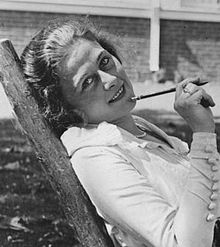
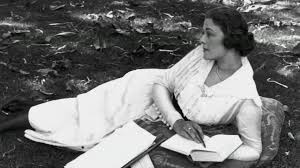
Frances Marion 1918

Frances Marion 1918


Frances Marion was a trailblazer. becoming one of the most powerful screenwriters of the 20th century. With a career that spanned decades, she became the first female to win an Academy Award for Best Adapted Screenplay in 1930 for the prison life film The Big House, starring Robert Montgomery, Wallace Beery and Chester Morris. Her research included visiting San Quentin for the atmosphere and lingo of the inmates. The movie gave audiences their first experience of hearing prison doors slam shut, tin cups clanking on mess-hall tables and prisoners’ feet shuffling down corridors.


Frances also received the Academy Award for Best Story for The Champ in 1932. The tearjerker chronicled the relationship between a washed out boxer (Wallace Beery) and his young son (Jackie Cooper). Marion was credited with writing 300 scripts and producing over 130 films.


Born Marion Benson Owens (November 18, 1888) in San Francisco, California, she worked as a journalist and served overseas as a combat correspondent during World War I. On her return home in 1910, she moved to Los Angeles and was hired as a writing assistant, an actress by “Lois Weber Productions”, a film company owned and operated by pioneer female film director Lois Weber. (more on Lois Weber in Part 2 of the series)


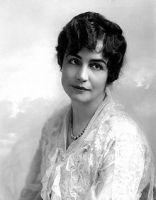
Lois Weber

Lois Weber – Film Director

Frances was quite beautiful and could have been an actress but preferred to work behind the camera. She learned screenwriting from Lois Weber and went on to become the highest paid screenwriter, woman or man. Hollywood moguls competed for her stories and stars of the day Mary Pickford, Lilian Gish, Greta Garbo and Rudolph Valentino brought her characters to life on the screen. From 1919 – 1939 her star was ascendant, born at the right place and the right time, honing her craft during one of the most liberating eras for women in film.


When Marion met Mary Pickford (actress, producer, screenwriter) they became best friends with Marion writing screen adaptations of Rebecca of Sunnybrook Farm and The Poor Little Rich Girl for Pickford. As a result of the commercial success of “The Poor Little Rich Girl” in 1917 Marion was signed as Pickford’s “exclusive writer” at the salary of $50,000 a year, an unprecedented arrangement for that time.

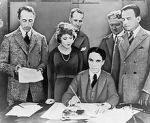
Pickford was the celebrated “America’s Sweetheart” and in 1919 together with her swashbuckler actor husband Douglas Fairbanks, Sr., director D.W. Griffith (Birth of a Nation) and “The Tramp” Charlie Chaplin established “United Artists” pictures. These four were the leading figures in early Hollywood and this was their stand for independence against the powerful studio system. Mary was also  one of the original 36 founders of the Academy of Motion Picture Arts and Sciences.


In 1921, Frances Marion directed a film for the first time with Just Around the Corner. That same year, she directed her friend Mary Pickford in one of her own scripts entitled The Love Light. Their relationship was more than just writer and star, they were collaborators and the friendship between Pickford and Marion lasted more than 50 years.

Married four times, Frances Marion had two children with third husband, actor Fred Thomson. This was her longest marriage, lasting from 1919 until Thomson’s sudden and tragic death from a Tetanus infection in 1928. Frances’ great friend Mary Pickford had introduced them. Frances said it was love at first sight.


Fred Thomson and Frances Marion

Fred Thomson and Frances Marion

For many years she was under contract to MGM Studios, but, independently wealthy, she left Hollywood in 1946 to devote more time to writing stage plays and novels. Frances Marion published a memoir Off With Their Heads: A Serio-Comic Tale of Hollywood in 1972.

Frances died on May 12, 1973 leaving a legacy of innovation, independence and inspiration for future aspiring female writers. The documentary, Frances Marion: Without Lying Down,” is an insightful profile of her life and achievements in Hollywood.


Without Lying Down

Mary Pickford and Frances Marion


Narrated by “Pulp Fiction” actress Uma Thurman and Oscar-winner Kathy Bates, who gives voice to the screenwriter’s own words taken from her letters, diaries. and memoirs. The documentary also features footage from more than twenty of Marion’s movies, with commentary by silent film historian Kevin Brownlow, and film critic Leonard Maltin.

I was fortunate enough to catch it on Turner Classic Movies recently and great news, it will be replayed on June 10th at 6:00 am (est). It’s also available for purchase at Amazon.com. I highly recommend checking it out!

  frances marion lying

“I’ve spent my life searching for a man to look up to without lying down.” Frances Marion


It’ll take more than 60 years before women are once again present in meaningful numbers at every level of film production.


Some Like it Hot! (1959)

Billy Wilder is one of my favorite directors because he’s not afraid to tackle controversial subject matters like alcoholism, adultery, and sexuality. His 1959 film Some Like it Hot is a fantastic example!  I love this film not only because it’s hilarious and Marilyn Monroe is at the height of her sexiness, but it addresses the issues of gender roles, cross-dressing and gay marriage head on!

United Artists released Wilder’s Prohibition-era farce Some Like It Hot without a Production Code seal of approval, withheld due to the film’s unabashed sexuality including a central cross-dressing theme.


Okay, so here’s the set-up:

2 speakeasy musicians (Joe and Jerry) in 1920’s Chicago witness the infamous St. Valentine’s Day Massacre. Obviously  – that’s a problem. Busted by the hitmen they try to talk their way out of the situation. However, the gangsters ain’t havin’ it so they do the next best thing – Run!

Okay, so now what? Go drag, book a gig with the all-girl band Sweet Sue and her Society Syncopaters. Hey, it could happen.


Introducing Josephine and Daphne


Now, let’s meet Joe and Jerry

somelikeithotjoeandgerry

Jerry: You’d bet my money on a dog? Joe: He’s a shoo-in. Max the waiter knows the electrician that wires the rabbit.


Joe ( Tony Curtis) is a saxophone playing womanizer who’s borrowed money from every girl on the chorus line at the speakeasy. Jerry (Jack Lemmon) plays the upright bass and is Joe’s best friend. Although tired of Joe’s crap, he covets his prowess with women while simultaneously desiring a stable relationship of his own.

Their bond is put to the test when Joe (as Josephine) zeros in on Sugar Kane (Marilyn Monroe) and her strut when they arrive at the train station. Sugar plays ukulele and sings with Sweet Sue (Joan Shawlee) and the Syncopaters. By the time they arrive at their destination in Florida, Joe has sweet talked his way into Sugar’s life and is bound and determined to have a taste. Daphne (Jerry) on the other hand has a different experience; dealing with his jealousy of Joe and Sugar’s relationship while maneuvering the advances and courtship of much-married and aging millionaire, Osgood Fielding III (Joe E. Brown).

First of all, Joe E. Brown is a scream! Second of all, check out his career along with this performance.


And here we go – into the land of whoa, stuff we don’t talk about in 1959 and are really just scratching the surface of today:

Cross Dressing: Designer Orry-Kelly won an Oscar for Best Costume Design for his work. Seeing Marilyn’s gowns, Curtis and Lemmon insisted on wearing Kelly’s designs as well to make them look good as females. They played it straight as Josephine and Daphne which I believe gave weight and merit to the film. They may have looked good, but Marilyn was hot! As a young girl, I went, yes – one day I wanna rock a dress like that!


Gender Roles: Challenging what is deemed to be male/female expectations. By embracing their personas, Joe and Jerry learn from Sugar and Osgood what it means to walk in another woman’s shoes and deal with the complexities of being a woman in a man’s world.


Gay Marriage: The right to love for love’s sake. This is undoubtedly my favorite scene!

Joe to Jerry/Daphne – “It’s just not being done.”

“I’m a Boy”


This final scene is pure – Subversive Brilliance!

Despite Joe’s argument to Jerry and Jerry’s argument to Osgood about how outrageous their marriage would be – in the end, love will not be denied.


Billy Wilder, the Austrian-born American filmmaker is regarded as one of the most brilliant and versatile filmmakers of Hollywood’s golden age. Wilder is one of only five people to have won Academy Awards as a producer, director and screenwriter for the same film (The Apartment). The American Film Institute has ranked these four Wilder films among their top 100 American films of the 20th century:

In 2001, AFI selected Some Like It Hot as the number one comedy film of all time.

BillyWilderParamountPubPhoto1942

Billy Wilder


Thank you, Billy Wilder for directing, producing and writing this screenplay. Art should be provocative, revolutionary; pushing the conversation forward. Humor and politics are not mutually exclusive. Question what is accepted. Fight for what is right.

African-American Oscar History Pt. 2

Last year’s 86th Academy Awards marked a historic night for black filmmakers at the Oscars. It’s the first time a black film – 12 Years a Slave — won best picture; the Academy’s most prestigious award. John Ridley won for Best Adapted Screenplay and Steve McQueen won as Producer.

But, as the 1959 Grammy Award winning vocalist Dinah Washington sang: “What a Difference a Day Makes.”

I’m recognizing and celebrating the accomplishments of Black Artists in Hollywood; especially considering the lack of African-American nominations for this year’s 87th Academy Awards.


 Oscars 2015: No black actors or female screenwriters, directors or cinematographers were nominated.


History

The 12th Academy Awards is historic for being the 1st Oscar nomination for an African-American and 1st Oscar win. Hattie McDaniel accepted her award in 1940 as Best Actress in a Supporting Role for “Gone With the Wind” as the character – Mammy.

hattie

Hattie McDaniel


However, if David O. Selznick (Producer, film studio executive) hadn’t pulled a favor, she might not have been able to deliver her acceptance speech at all. At the time, the Cocoanut Grove nightclub (located in the Ambassador Hotel) was segregated so Ms. McDaniel wasn’t even allowed entrance. Selznick pulled another favor so she could be seated at a table at the very back of the room with her agent. To add insult to injury, Hattie McDaniel wasn’t allowed to speak her own words, the acceptance speech was written by the studio.

Despite all the prejudice, Hattie McDaniel – who at the time was one of the biggest African-American actors in the world -promoted herself for the nomination. After the release of the movie, she placed a stack of outstanding film reviews on O. Selznick’s desk and the rest is history.


First Best Actress Oscar 

In 2002, Halle Berry became the 1st (and to date) only African-American to win the Academy Award for Best Actress. The Oscar was for the film “Monsters Ball”.


Halle Berry 2002 Best Actress

Halle Berry 2002 Best Actress

Dorothy Dandridge – (November 9, 1922 – September 8, 1965) is the 1st African-American actress to be nominated for a Best Actress Oscar in 1954 for her performance in “Carmen Jones.” She has been recognized with a star on the Hollywood Walk of Fame and was married to dancer Harold Nicholas. Check out my previous post on the Nicholas Brothers here.

Dorothy_Dandridge

Dorothy Dandridge

Halle Berry portrayed her life in the HBO biographical film “Introducing Dorothy Dandridge” in 1999.

Halle_Berry Introducing Dorothy Dandridge


Watching Halle’s acceptance speech again while researching this post, I burst into tears reliving her emotion as she tries to process the win and the historical significance of this moment. Looking forward to the acceptance speech of our second Best Actress Oscar Winner.


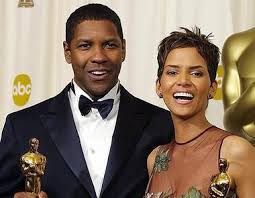
Halle and Denzel Oscars

Halle and Denzel Oscars

This win also marked the 1st time two African-American performers won in leading role Oscars in the same year (Denzel Washington, Training Day).


oscars 3

Best Supporting Actress

1st to Win: Hattie McDaniel “Gone With the Wind” 1940

Hattie McDaniel 1940 Oscars

Although known as an actress she was a professional singer-songwriter, comedian, stage actress, radio performer, and television star; she was the first black woman to sing on the radio in the U.S. and has two stars on the Hollywood Walk of Fame. In 1975, she was inducted into the Black Filmmakers Hall of Fame and in 2006 became the first black Oscar winner honored with a US postage stamp.

  • Hattie McDaniel was also the oldest African-American actress to win an Academy Award (age 44).

  Finally – 50 Years later the 2nd Winner!

Winner: Supporting Actress – Whoopi Goldberg “Ghost” 1990

  • First African-American actress to receive two acting nominations overall.

  • Second African-American actress to win Best Supporting Actress.

Whoopi oscar

Whoopi Goldberg 1990 Best Supporting Actress

 Winner: Supporting Actress – Jennifer Hudson “Dreamgirls” 2006

jennifer hudson

Jennifer Hudson 2006 Oscar

  •  First African-American actor (male or female) to win an Academy Award for a debut film performance.

  • Youngest African-American actress to win or be nominated for Best Supporting Actress.

  • Youngest African-American actor (male or female) to win an Academy Award (age 25).

  • First African-American actress to win an Academy Award for a musical film.

Oscar

Oldest African-American actress to be nominated for an Academy Award (age 83) – Ruby Dee “American Gangster” 2007.

Ruby Dee

Ruby Dee

For her life and career see my previous post here: Ruby Dee


oscar red

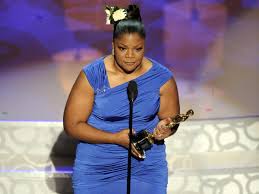
Winner: Supporting Actress – Mo’Nique “Precious” 2009

Mo'Nique

Mo’Nique

  • Second film to feature African-American nominees for both Best Actress and Best Supporting Actress.

Octavia Spencer

Octavia Spencer

Winner: Supporting Actress – Octavia Spencer  “The Help” 2011

  • Third film to feature African-American nominees for both Best Actress and Supporting Actress.

Lupita oscar 1

Winner: Supporting Actress – Lupita Nyong’o  “12 Years a Slave” 2013

  • First black African (Kenyan) actress to be nominated.

  • First black African to win in any category.

  • Second black actor to win for a debut performance.


  Congratulations and Cheers to these exceptional artists!


champagne cheers


We’ve come a long way, but we’ve still got a long way to go.


African-American Oscar History Pt. 1

In honor of Black History Month

Celebrating the accomplishments of Black Artists in Hollywood; especially in light of the lack of African-American nominations for this year’s 87th Academy Awards.


oscars logo


Oscars 2015: No black actors or female screenwriters, directors or cinematographers were nominated.

oscar stats

Our First Best Actor

In 1958, Sidney Poiter became the first black actor to be nominated for an Academy Award in the Best Actor category for “The Defiant Ones.” In 1963, he went on to make history and become the first to win the Oscar for Best Actor in “Lillies of the Field.” I saw the film as a kid and although it was quite popular never expected him to take home the statue.

However, Hollywood did love him. I believe they saw him as non-threatening due to his mild-mannered characterizations. He was quoted as saying he had concerns that he would be seen as a token and never given any substantial roles. Well, his Detective Virgil Tibbs in the film “In the Heat of the Night” sure put that fear to bed. Slapping a white man in racist Mississippi in 1967 was a bold and hand clapping moment in the theater. Poitier was nominated for a Golden Globe for Best Actor and the film won five Academy Awards, including the 1967 award for Best Picture.


Sidney Poiter

Sidney Poiter 1963 Oscar for Best Actor


Oscar Accomplishments:

  • First African-American nominated for Best Actor award

  • First black male to win an Oscar

  • First black actor to win Best Actor

  • First to receive two acting nominations (Best Actor)

  • Youngest black actor to win Best Actor (37)


It took 36 years for another win in the Best Actor category, but finally Denzel Washington was recognized by the Academy for his portrayal of Alonso Harris in “Training Day” making him the second black actor to win the Oscar.

1999 also marked the first time two African-American performers won leading role Oscars in the same year. (Halle Berry, “Monster’s Ball“)


Denzel and Halle

Denzel Washington and Halle Berry “Best Actors.”

Denzel Washington has the most nominations for an African-American Actor: Best Actor (4 nominations) and Best Supporting Actor (2 nominations).


Jamie Foxx 2004 Oscar Best Actor

Jamie Foxx 2004 Oscar Best Actor

Jamie Foxx was awarded the 2004 Oscar for Best Actor as Ray Charles in the biopic “Ray”.  That same year, he was nominated for the Academy Award for Best Supporting Actor for his role in the action film Collateral making him the first African-American actor to receive two acting nominations in the same year.


forest whitaker oscar

Forest Whitaker Best Actor 2006

Forest Whitaker is the fourth and most recent African-American male to win the Academy Award for Best Actor for his performance as the Ugandan dictator Idi Amin in the 2006 film “The Last King of Scotland.”


oscars 3

Best Supporting Actor

First Nominated:  Rupert Crosse“The Reivers” 1969

First to Win: Louis Gossett, Jr – “An Officer and a Gentleman” 1982

Winner: Supporting Actor – Denzel Washington “Glory” 1989

Youngest African-American male actor to win an Academy Award (age 29) – Cuba Gooding, Jr. “Jerry Maguire” 1996

Oldest African-American actor to win an Academy Award (age 67) – Morgan Freeman “Million Dollar Baby” 2004


 Congratulations and Cheers to these exceptional artists!

Part two in this series will focus on the achievements of African-American Women in film.