Long Live Rock Movies! 😎🎸

“School of Rock” (2003)

school of rock

Let’s start with our substitute teacher, Mr. Schneebly – what kid hasn’t wished for a sub like him?  No grades, being part of a kick butt rock band, defying parents, breaking the rules.  Good, right?

Jack Black’s character Dewey Finn is the forever loser and quintessential wanna be rock star, but when he steals his roommate’s identity as a substitute teacher, (Mr, Schneebly) he discovers he has a  class of very musically talented 5th-grade students. So, Dewey decides to turn his class into a rock band to potentially win the Battle of the Bands and $20,000.  I won’t spoil whether the kids win or don’t win the battle but as a result of the contest they gain self-confidence and continue to play rock in an after school program coached by Dewey.  Long live Rock!

This film totally tapped into my inner rocker!


“The Commitments” (1991)

commitments

What happens when a group of white working class Dubliners forms a soul band?  A rousing film with some great music inspired by legendary artists, Otis Redding, Aretha Franklin and Wilson Pickett.

The band nails the soul of the greats by immersing themselves 24/7 in classic soul standards:

  •     “In the Midnight Hour” – Wilson Pickett
  • “Try a Little Tenderness” – Otis Redding
  • “I Never Loved a Man” – Aretha Franklin
  • Whether on buses, hanging up laundry or in music store windows, they were feeling the soul.  In the words of  Félim Gormley (Dean Fay- Saxophone), “I’m black and I’m proud!”

I’m so glad the movie was authentic with the cast singing on the soundtrack.  (The actors were cast  for their musical abilities.) Lead singer (Andrew Strong “Deco”) was nuts but the standout talent of the band.

The Commitments was voted best Irish film of all time in a 2005 poll sponsored by Jameson Irish Whiskey and launched a generation of Irish musicians and actors.


 “This is Spinal Tap” (1984)


This is spinal tap poster

 OMG, the funniest, dead on satire of a rock metal band ever!

Classic in every sense of the word, Director/Writer Rob Reiner’s masterpiece was also written and scored by the stars:

Rob Reiner – (Marty D. Bergi) – Mokumentarian

Spinal Tap

Christopher Guest – (Nigel Tufnel)

Michael McKean- (David St. Hubbins)

Harry Shearer – (Derek Smalls)

This mockumentary feels so real that some moviegoers thought they were an actual group!

The “Stonehenge” number during the Smell the Glove tour is priceless.  Due to a mix up with size dimensions, the Stonehenge replica for their epic song is 18 inches instead of 18 feet tall.  The little people performers in the number were taller. And Derek Smalls getting stuck in the stage prop egg is hilarious!

 In 2002, This Is Spinal Tap was deemed “culturally, historically, or aesthetically significant” by the Library of Congress and was selected for preservation by the United States National Film Registry.


These are 3 of my favorite Rock Movies – Let me know yours in the comments!


Corporate Media in America-Good Night, and Good Luck 📺

Goodnightgoodluck_poster

Media Responsibility

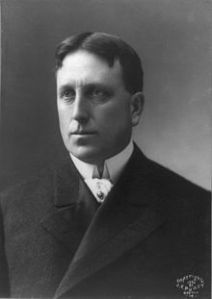
As a journalism student in college, I learned the role/responsibility of the press. I also studied the newspaper mogul, William Randolph Hurst, and yellow journalism (sensationalized stories of dubious veracity).

William Randolph Hearst

William Randolph Hearst

Civics class in high school informed me about the function of the press in the accountability of politicians and government. Well, today it seems all I’ve ever learned and understood about the role of journalists has been abdicated for full on “entertainment”.

Set in 1953, during the early days of television, “Good Night, and Good Luck” focuses on the potential of television to inform and educate the public, so that it doesn’t become, as Murrow put it, only “wires and lights in a box”.

“Good Night, and Good Luck” also portrays how CBS news broadcast journalist Edward R. Murrow (David Strathairn) and his dedicated staff — headed by his co-producer Fred Friendly (George Clooney) and reporter Joseph Wershba (Robert Downey, Jr.) defy corporate and sponsorship pressures, and discredit the tactics used by Joseph McCarthy during his crusade to root out Communist elements within the government.

Joseph McCarthy

Joseph McCarthy

This morality tale is as relevant today as it was in 2005 (if not more so). It seems that broadcast news has turned into entertainment television and lost it’s way as the checks and balances of politics and the government. The news media is supposed to be the Fourth Estate – the fourth estate is a term that positions the press (newspapers, news media) as the fourth branch of government and one that is important to a functioning democracy. In my high school Civics class, I learned that the First Amendment to the Constitution “frees” the press but also carries with it the responsibility to be the people’s watchdog.

fourth estate

In his fight against McCarthy, Murrow first defends Milo Radulovich, an American citizen (born in Detroit) of Serbian ethnicity and former reserve Air Force lieutenant who was accused of being a security risk for maintaining a “close and continuing relationship” with his father and sister, in violation of Air Force regulation 35-62 (a regulation which states that ‘A man may be regarded as a security risk if he has close and continuing associations with communists or people believed to have communist sympathies.’)

Radulovich’s case was publicized nationally by Edward Murrow on October 20, 1953, on Murrow’s program, See It Now: Murrow makes a show on McCarthy attacking him. A very public feud develops when McCarthy responds by accusing Murrow of being a communist. Murrow is accused of having been a member of the leftist union Industrial Workers of the World, which Murrow claimed was false. (Wikipedia)

George Clooney (Director), a journalism student in college, held this project close to his heart. In September 2005, Clooney explained his interest in the story to an audience at the New York Film Festival: “I thought it was a good time to raise the idea of using fear to stifle political debate.”

Clooney and producer Grant Heslov decided to use only archival footage of Joseph McCarthy in his depiction, demonstrating the furor with which McCarthy pressed his communist accusations.

The film was critically acclaimed upon release. It was named “Best Reviewed Film of 2005 in Limited Release” by Rotten Tomatoes, where it achieved a 93% positive review rating. The movie received six Academy Award nominations, including Best Picture, Director (Clooney), and Actor (Strathairn).

goodnightreviews

The late Roger Ebert, in his Chicago Sun-Times review, contends that “the movie is not really about the abuses of McCarthy, but about the process by which Murrow and his team eventually brought about his downfall (some would say his self-destruction). It is like a morality play, from which we learn how journalists should behave. It shows Murrow as fearless, but not flawless.”

So, the next time you’re watching the news on tv or reading your favorite print medium, ask yourself, is corporate media looking out for the people or profits for themselves.


Happy Birthday Marlon Brando!

Today we’re celebrating Brando’s 92th birthday. His style, his “method”, his talent. Truly an original. One of the greatest actors of all time!

“Listen to Me Marlon” is the outstanding, award-winning documentary airing on cable’s Showtime about Brando in his own words:


20140403-191528.jpg

April 3, 1924 – July 1, 2004

Marlon Brando, Jr. was an American actor, film director, and activist. He is hailed for bringing a gripping realism to film acting and is often cited as one of the greatest and most influential actors of all time.

The Wild One

“The Wild One”

Biography’s Documentary on Brando:

Brando is also credited with helping to popularize the Stanislavski system of acting, today more commonly referred to as method acting. A cultural icon, Brando is most famous for his Academy Award-winning performances as Terry Malloy in On the Waterfront (1954) and Vito Corleone in The Godfather (1972), as well as influential performances in A Streetcar Named Desire (1951), The Wild One (1953), Last Tango in Paris (1972), and Apocalypse Now (1979).

Marlon Brando initially gained acclaim and an Academy Award nomination for reprising the role of Stanley Kowalski in the 1951 film adaptation of Tennessee Williams’ play A Streetcar Named Desire, a role that he had originated successfully on Broadway.

On the Waterfront

“On the Waterfront”

20140403-192432.jpg

“The Godfather”

The sixties were an artistic bust for Brando but ten years later he made his successful and award-winning comeback with his portrayal of Vito Corleone in Francis Ford Coppola’s “The Godfather”. The studio was opposed to his casting so he had to audition for the role. He improvised with cotton in his mouth to come up with the mumbling sound of The Don. The studio relinquished and the rest is cinema history.

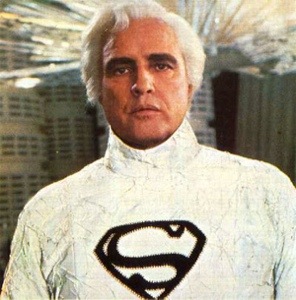
“Superman”

As a result of regaining his box office gravitas with “The Godfather” and “Last Tango in Paris”, Brando became a highly paid character actor with roles in films like “Superman” which according to the Guinness Book of World Records, Brando was paid a record $3.7 million ($14 million in inflation-adjusted dollars) and 11.75% of the gross profits for 13 days’ work.


20140403-192447.jpg

Brando was ranked by the American Film Institute as the fourth greatest movie star among male movie stars whose screen debuts occurred in or before 1950. He was one of only three professional actors, along with Charlie Chaplin and Marilyn Monroe, named in 1999 by Time magazine as one of its 100 Most Important People of the Century. He died of respiratory failure on July 1, 2004, at age 80. (Wikipedia)

The Incredibles

The_Incredibles

“The Incredibles” is a 2004 American computer-animated superhero comedy film written and directed by Brad Bird, produced by Pixar Animation Studios, and released by Walt Disney Pictures.

theIncredibles_Bird

Brad Bird and Edna Mode

In this lauded Pixar production, married superheroes Mr. Incredible (Craig T. Nelson) and Elastigirl (Holly Hunter) are forced to assume mundane lives as Bob and Helen Parr after all super-powered activities have been banned by the government. While Mr. Incredible loves his wife and kids, he longs to return to a life of adventure and his desire to help people draws the entire family into a battle with superhero obsessed villain –

Syndrome (Jason Lee)

theincrediblesnemisis

and his killer robot. Omnidroid

theincrediblesomnibot

I must say that baby Jack-Jack is my favorite “Super”/Parr family member.

theincrediblesjackjack

Everyone thinks he has no powers and is “normal”. (which is so not true) When I saw this scene with Jack-Jack and his babysitter Kari, I would have spit milk out of my nose (if I was drinking milk😂) Too funny!!

When “The Incredibles” was released I felt it was the best-animated film I’d seen to date. It combined humor with drama and kept the audience engaged from start to finish. There was an audible gasp in the theater during the airplane sequence with Elastigirl and the kids (Dash and Violet).

The Incredibles was written and directed solely by Brad Bird, a departure from previous Pixar productions which typically had two or three directors and as many screenwriters. In addition, it would be the company’s first film in which all characters are human.

theincrediblesplain

Brad Bird came to Pixar with the lineup of the story’s family members worked out: a mom and dad, both suffering through the dad’s midlife crisis; a shy teenage girl; a cocky ten-year-old boy; and a baby. Bird had based their powers on family archetypes.

theincrediblesEdna_mode2

After several failed attempts to cast Edna Mode, Bird took on her voice role himself. It was an extension of the Pixar custom of tapping in-house staff whose voices came across particularly well on scratch dialogue tracks.

There were 781 visual effects shots in the film and the skin of the characters gained a new level of realism from a technology to produce what is known as “subsurface scattering.”

Critic Roger Ebert of the Chicago Sun-Times awarded the film 3½ stars out of 4, writing that the film “alternates breakneck action with satire of suburban sitcom life” and is “another example of Pixar’s mastery of popular animation.”

The film won the Academy Award for Best Animated Feature, beating two DreamWorks films, Shrek 2 and Shark Tale, as well as Best Sound Editing at the 77th Academy Awards. It also received nominations for Best Original Screenplay (for writer/director Brad Bird) and Best Sound Mixing (Randy Thom, Gary Rizzo, and Doc Kane). It was Pixar’s first feature film to win multiple Oscars, followed in 2010 by Up. (Wikipedia)

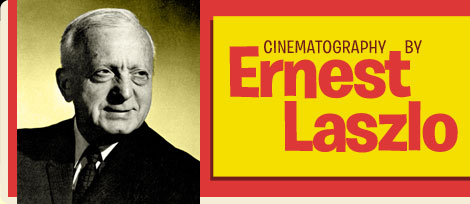
Academy Award Cinematographer – Ernest Laszlo 🎥

Ernest Laszlo

(April 23, 1898 – January 6, 1984)

Ernest Laszlo is our next artist for “The Faces Behind the Camera” theme. Best-known for his striking black-and-white cinematography, Laszlo was a painstaking technician and a true artist who rejected Hollywood glamour to bring a refreshing naturalism to his films.

Description: A cinematographer or director of photography (sometimes shortened to DP or DOP) is the chief over the camera crews working on a film, television production or other live action pieces and is responsible for achieving artistic and technical decisions related to the image. (Wikipedia)

Ernest Laszlo, A.S.C. was a Hungarian-American cinematographer for over 60 films and was known for his frequent collaborations with directors Robert Aldrich and Stanley Kramer. He was a member of the American Society of Cinematographers, and was its president from 1972 to 1974.

Laszlo emigrated to the United States and began working as a camera operator on such silent films as Wings (1927). Between 1927 and 1977, he served as cinematographer on sixty-nine films. Between 1961 and 1976 Laszlo was nominated for eight Academy Awards for Best Cinematography, and won the award in 1966 for Ship of Fools. He died in Los Angeles, California in 1984.

Some of my favorite films he shot are:

Directed by Stanley Kramer, “It’s a Mad, Mad, Mad, Mad World” (1963) was a scream! Every comic in the business appeared in this film. I’ve always said if you were a comedian during the filming and weren’t asked to participate, you just didn’t rate. 😟

There’s nothing more intriguing and hilarious than a bunch of strangers going on a treasure hunt and the lengths they will go through to retrieve the big prize. Dick Shawn stole the show with his portrayal of “Sylvester”, the not so bright hunk that’s determined to “save his mama”.

Filmed in Ultra Panavision 70 and presented in Cinerama (becoming one of the first single-camera Cinerama features produced), Mad World also had an all-star cast, with dozens of major comedy stars from all eras of cinema appearing in the film. It’s a Mad, Mad, Mad, Mad World rated #40 in the American Film Institute’s list – 100 Years…100 Laughs.

Spencer TracyEdie Adams, Milton Berle, Dick ShawnSid Caesar, Buddy Hackett, Ethel Merman, Mickey Rooney, Phil Silvers, Terry-Thomas, and Jonathan Winters.

A Little Cinematographer History

In the infancy of motion pictures, the cinematographer was usually also the director and the person physically handling the camera. Cinematography was key during the silent movie era; with no sound apart from background music and no dialogue, the films depended on lighting, acting, and set.

In 1919 Hollywood, the then-new motion picture capital of the world, one of the first (and still existing) trade societies was formed: the American Society of Cinematographers (ASC), which stood to recognize the cinematographer’s contribution to the art and science of motion picture making. (Wikipedia)

Some of Ernest Lazlo’s celebrated films

Ernest Laszlo, the trailblazing cinematographer whose body of work spans over 5 decades starting in the silent era with the first Academy Award winning film, Wings (1927) to his last film, The Domino Principle (1977). His visual style crossed all genres and he earned the accolade of being one of the best cinematographers in Hollywood.


Nora Ephron – “I’ll Have What She’s Having”

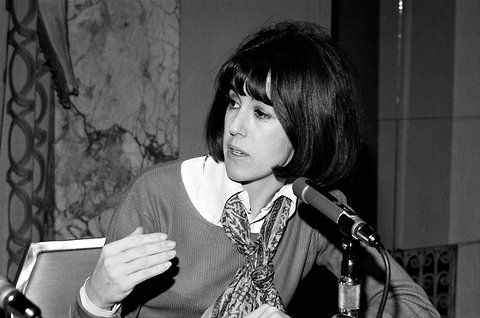
Nora Ephron

May 19, 1941 – June 26, 2012

Our next artist for “The Faces Behind the Camera” theme is Nora Ephron – writer,  journalist, essayist, playwright, screenwriter, novelist, producer, and director. Probably best known for her romantic comedies – “When Harry Met Sally”, “Sleepless in Seattle” and drama “Silkwood”. She was nominated three times for the Academy Award for Best Writing: for Silkwood, When Harry Met Sally, and Sleepless in Seattle. She won a BAFTA Award for Best Original Screenplay for “When Harry Met Sally”. Ephron received a posthumous Tony Award nomination for Best Play for her play “Lucky Guy” which starred Tom Hanks.


I love “Sleepless in Seattle” because of Nora Ephron’s smart writing, directing and the entire ensemble cast. This is one of the best scenes, comparing the tear-jerker “An Affair to Remember” versus “The Dirty Dozen” – Hilarious! Don’t get me wrong, both “You’ve Got Mail” and “Silkwood” are brilliant films. Right now “Sleepless” just resonates with me.

Ephron hails from a writing family starting with her stage and screenwriter parents – Henry and Phoebe Ephron. Her parents used her infancy as the subject of their play “Three’s a Family” and based their comedy Take Her, She’s Mine (1963) starring Jimmy Stewart and Sandra Dee on letters their 22-year-old daughter wrote them from college. Their screenplays include There’s No Business Like Show Business (1954), Carousel (1956) and Desk Set (1957). Nora is also eldest of four daughters – all writers.

Miss Ephron had a distinctive voice and didn’t shy away from controversy. She took on a satire lampooning the New York Post which actually resulted in a job offer as Reporter from The Post, a gig which lasted 5 years.


Nora Ephron 1972

Nora Ephron 1972


As a writer for Esquire magazine she took on her former boss – Dorothy Schiff, owner of the Post and also Betty Friedan for starting a feud with Gloria Steinem and her alma mater Wellesley, which Friedan said had turned out “a generation of docile and unadventurous women”.

Fun Fact: Nora Ephron was married to journalist Carl Bernstein (1976-1980) of Watergate fame and she correctly guessed the identity of “Deep Throat” (the source for news articles written by her ex-husband Carl Bernstein and Bob Woodward during the Watergate scandal) before his name was revealed in 2005.

On June 26, 2012, Ephron died from pneumonia, a complication resulting from acute myeloid leukemia, a condition with which she was diagnosed in 2006. In her final book, I Remember Nothing (2010), Ephron left clues that something was wrong with her or that she was ill, particularly in a list at the end of the book citing “things I won’t miss/things I’ll miss.”


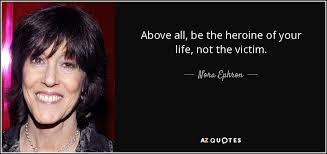
nora ephron quote


The Tribeca film festival established The Nora Ephron Prize which is a $25,000 award for a female writer or filmmaker “with a distinctive voice”. The first Nora Ephron Prize was awarded in 2013 to Meera Menon for her film Farah Goes Bang.

Her death was a shock to many as she didn’t reveal her illness. Her brilliant writing and filmmaking talents are a definite loss to the industry.


Filmography

Feature films

Year Title Credited as
Director Screenwriter Producer
1983 Silkwood Yes
1986 Heartburn Yes
1989 When Harry Met Sally… Yes Yes
Cookie Yes Yes
1990 My Blue Heaven Yes Yes
1991 The Super (uncredited)[20] Yes
1992 This Is My Life Yes Yes
1993 Sleepless in Seattle Yes Yes
1994 Mixed Nuts Yes Yes
1996 Michael Yes Yes Yes
1998 All I Wanna Do Yes
You’ve Got Mail Yes Yes Yes
2000 Hanging Up Yes Yes
Lucky Numbers Yes Yes
2005 Bewitched Yes Yes Yes
2009 Julie & Julia Yes Yes Yes


The Man with the “Touch” – Ernst Lubitsch 🎬🙌🎥

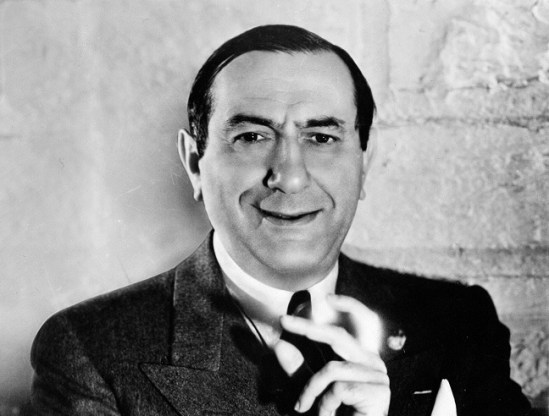
Ernst Lubitsch

Ernst Lubitsch (January 29, 1892 – November 30, 1947)

Keeping with the “Faces Behind the Camera” theme I’m spotlighting the saucy, bedroom comedies director Ernst Lubitsch and his famous “Lubitsch Touch”. This moniker was bestowed on him by other legendary filmmakers including Billy Wilder who was featured in the previous “Faces Behind the Camera” post. The phrase is used to describe the unique style and cinematic trademarks of director Ernst Lubitsch.

Hailed by the likes of Alfred Hitchcock (my other favorite director), Francois Truffaut and Orson Welles as a giant among filmmakers, Ernst Lubitsch was a preeminent figure in the history of cinema who directed some of Hollywood’s most sophisticated and enduring comedies.

Hollywood Sign

More than a great director of actors and action, he added his own personal signature – the “Lubitsch touch” – to all his work creating a sense of style and grace that was rarely duplicated on the screen.

After making a name as a director in his native Germany, Lubitsch was brought over at the behest of silent film star Mary Pickford to direct her in “Rosita” (1923). From there, he made comedies like “The Marriage Circle” (1924) and “Kiss Me Again” (1925), as well as dramas like “The Patriot” (1925). But with the advent of sound, the cigar-chomping director’s career took off with his fascination with a new genre, the musical comedy, and he began displaying his famed Lubitsch touch with classics like “Monte Carlo” (1930) and “One Hour with You” (1932).

He directed his first bona fide masterpiece, “Trouble in Paradise” (1932) later described as “truly amoral” by critic David Thomson (a British film critic and historian). The cynical comedy was popular both with critics and with audiences. But it was a project that could only have been made before the enforcement of the Production Code. After 1935, “Trouble in Paradise” was withdrawn from circulation. It was not seen again until 1968. The film was never available on videocassette and only became available on DVD in 2003.

Lubitsch later hit his stride full force with “Bluebeard’s Eighth Wife” (1938), “Ninotchka” (1939) co-written by Billy Wilder and “The Shop Around the Corner” (1940). Lubitsch reached great artistic heights with “To Be or Not to Be” (1942) and “Heaven Can Wait” (1943) before dying mid-career in 1947, leaving behind a legacy virtually unmatched by a filmmaker before or since.

In 1946, he received an Honorary Academy Award for his distinguished contributions to the art of the motion picture. He was also nominated three times for Best Director.

Lubitsch died of a heart attack on November 30, 1947, in Hollywood, and was buried at Glendale Forest Lawn in Glendale, CA. Leaving Lubitsch’s funeral, Billy Wilder ruefully said, “No more Lubitsch.” Lubitsch has a Star on the Hollywood Walk of Fame at 7040 Hollywood Blvd.


“Lady Sings the Blues” 🎤🎬

lady-sings-the-blues-(1972)

“Lady Sings the Blues” (1972) is the biopic of the troubled life and career of the legendary Jazz singer, Billie Holiday. Loosely based on her 1956 autobiography which, in turn, took its title from one of Holiday’s most popular songs. It was produced by Motown Productions for Paramount Pictures and directed by Sidney J. Furie.

When I first heard Diana Ross had been cast as Billie Holiday I thought, she can’t act and will never pull it off. I wasn’t a big Diana Ross fan but when I saw the movie I had to give her credit for her phenomenal, Oscar-nominated performance. She lost to Liza Minnelli in “Cabaret”, but I thought Ross deserved the award.

The opening sequence (which was shot in black and white in still pictures) made me sit up and go, whoa, she’s serious. Diana Ross, the glamorous diva wore no makeup and looked the part of a heroin addict. The movie overall was a triumph not only for Ross but the incredible cast including – Billy Dee Williams as Holiday’s boyfriend Louis McKay, and Richard Pryor as Piano Man.

ladysingsthebluesopeningscene

(In 1936, New York City, Billie Holiday (Diana Ross) is arrested on a drugs charge.)

The story takes us from Billie’s tumultuous youth when in 1928 she is raped in the Baltimore brothel where she works as a housekeeper. She runs away to her mother who proceeds to get her a job in another brothel in the Harlem section of New York where she becomes a prostitute. Seeing that her life is going nowhere, she quits and heads to a local nightclub to become a showgirl. Billie has always had a love of music and has a remarkable voice. After “Piano Man” (Richard Pryor) accompanies Billie on the song”All of Me“, Jerry, the club owner, books her as a singer in the show.

Billie Holiday

billie-holiday

Eleanora Fagan (April 7, 1915 – July 17, 1959), professionally known as Billie Holiday lived a life that was an American tragedy full of turmoil, racism, and drug abuse. Despite all this we are left with her incredible song catalog and heartfelt performances.

Holiday had a tremendous influence on jazz music and pop singing. Her vocal style, strongly inspired by jazz instrumentalists, pioneered a new way of manipulating phrasing and tempo. “God Bless the Child” became Holiday’s most popular and covered record. It reached number 25 on the charts in 1941 and was third in Billboard’s songs of the year, selling over a million records. In 1976, the song was added to the Grammy Hall of Fame.

Billie Holiday died of cirrhosis of the liver in 1959 when she was 44. The biggest triumph of her career was her sold-out, standing ovation performance at Carnegie Hall.

Awards and Honors

“Lady Sings the Blues” was nominated for five Academy Awards. The nominations were for Best Actress in a Leading Role (Diana Ross), Best Art Direction-Set Decoration (Carl Anderson and Reg Allen), Best Costume Design (Norma Koch), Best Music, Original Song Score and Adaptation (Gil Askey & Michel Legrand) and Best Writing, Story and Screenplay Based on Factual Material or Material Not Previously Published or Produced.The film was also screened at the 1973 Cannes Film Festival but was not entered into the main competition.

Soundtrack

Motown released a hugely successful soundtrack double-album of Ross’ recordings of Billie Holiday songs from the film, also titled Lady Sings the Blues. The album went to number one on the Billboard Hot 200 Album Charts, for the week-ending dates of April 7 and 14, 1973.


“Ain’t Misbehavin” – Fats Waller 🎹🎼

aintmisbehavinposter

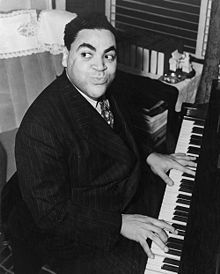
Thomas WrightFatsWaller (May 21, 1904 – December 15, 1943)

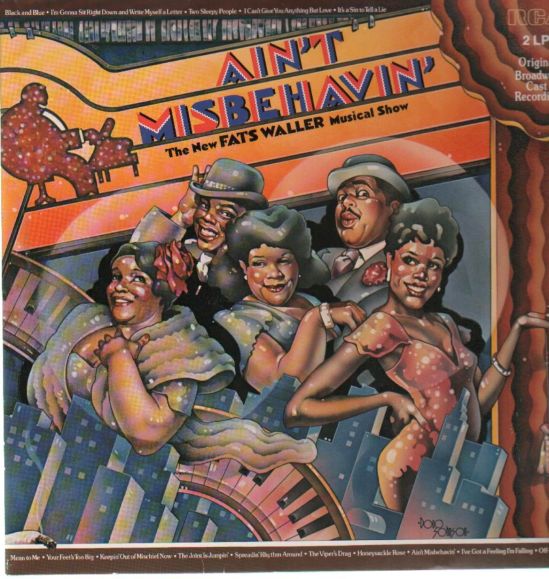
“Ain’t Misbehavin” is a musical tribute to the incomparable, Fats Waller. It originated at Broadway’s Longacre Theatre on May 9, 1978. The original cast included: Nell Carter, André DeShields, Armelia McQueen, Ken Page, and Charlayne Woodard. It ran for 1604 performances and closed on February 21, 1982. The book was by –  Murray Horwitz and Richard Maltby, Jr., and music by various composers and lyricists as arranged and orchestrated by Luther Henderson. It won the Tony Award for Best Musical.

On June 12, 1982, NBC broadcast the revue with the original Broadway cast and that’s what this post is about and how I experienced the production, which blew me away! Fats Waller songs are classic and give a jumpin’ snapshot of the 1920’s and 1930’s with the cast so brilliantly bringing his songs to life. His signature song was “Ain’t Misbehavin” which is the opening number for the 1982 production.

Waller was an American jazz pianist, organist, composer, singer, and comedic entertainer, whose innovations to the Harlem stride style laid the groundwork for modern jazz piano, and whose best-known compositions, “Ain’t Misbehavin” and “Honeysuckle Rose”, were inducted into the Grammy Hall of Fame in 1984 and 1999.

aintmisbehavinFats_Waller_edit

“Ain’t Misbehavin” was a feature number in the acclaimed 1943 film “Stormy Weather”.

Some of my favorite songs from the NBC production are: “Ain’t Misbehavin”, “The Joint is Jumpin”, and the hilarious”Your Feet’s too Big”.

There were plenty of awards for the 1978 production of “Ain’t Misbehavin” including:

Drama Desk Award

Award – Outstanding Musical

Won – Outstanding Actor in a MusicalKen Page. Won –André DeShields

Won –Outstanding Actress in a Musical –Nell Carter.

Theatre World Award

Won – Nell Carter. Won –Armelia McQueen

Tony Award

Won-Best Musical

Won-Best Performance by a Featured Actress in a Musical –Nell Carter.

Won –Best Direction of a Musical –Richard Maltby, Jr.

aintmisbehavinfats_waller-aint_misbehavin_-_the_new_f.w._musical_show


“Stormy Weather” – An African American Showcase 🎥 🎶

 In honor of Black History Month, I’ll be featuring films either starring or representing African American themes.

My next film for the month is “Stormy Weather (1943). An American musical film produced and released by 20th Century Fox. Considered one of the best Hollywood musicals with an all African-American cast, the other being MGM’s Cabin in the Sky. “Stormy Weather” is considered a brilliant showcase of some of the top African-American performers of the time, during an era when African-American actors and singers rarely appeared in lead roles in mainstream Hollywood productions, especially those of the musical genre.

Stormy Weather cast

This movie blew my mind!  I saw it as a kid in the early sixties having no idea that there had ever been an all Black cast in a Hollywood production. Most of the premier entertainers of the 1940’s appeared in this tour de force that still stands as one of the best musicals of all time!

Classic Cab Calloway – “Zoot Suiting” it!


Directed by Andrew L. Stone
Produced by William LeBaron
Written by Jerry Horwin, Seymour B. Robinson (story)
H.S. Kraft (adaptation)
Starring Lena Horne
Bill Robinson
Cab Calloway
Katherine Dunham
Fats Waller
Fayard Nicholas
Harold Nicholas
Ada Brown
Dooley Wilson
Music by Harold Arlen
Cinematography Leon Shamroy
Editing by James B. Clark
Distributed by 20th Century Fox
Release dates
  • July 21, 1943
Running time 78 minutes
Country United States
Language English

Lena’s rendition of “Stormy Weather”, featuring  African-American modern dance innovator Katherine Dunham and dancers.

Katherine Dunham and troupe’s “Stormy Weather” full dance sequence.

“Stormy Weather” was the 2nd all Black cast film made by a major studio in the 1940’s. “Cabin in the Sky” (1943) was the 1st, produced by MGM. Lena Horne starred in both and became famous for her rendition of “Stormy Weather” although Ethel Waters first performed the classic at The Cotton Club Nightclub in Harlem in 1933.

Ethel Waters was a famous blues, jazz, gospel vocalist and actress.  Her best-known recordings include “Dinah”, “Stormy Weather”, “Taking a Chance on Love” and “Cabin in the Sky” (She also starred in the film) Let’s enjoy her interpretation of the classic tune by Arlen and Koehler:

The song was written by Harold Arlen and Ted Koehler who worked as music composers at the renowned Cotton Club from 1930-1934. They wrote many of the jazz revue songs that were performed at the club and are still classics today. Harold Arlen wrote the music and Ted Koehler the lyrics.

Awards

“Stormy Weather” was selected in 2001 to The Library of Congress National Film Registry.


Stormy Weather 1

Get ready to have your “mind blown”!  This dance sequence by the Nicholas Brothers is unreal.  Check it out.  Holy crap!!