Trading Places in Gratitude 😎

tradingplacesposter

“Trading Places” (1983)


iheartfilm is dedicating the month of November to the lesson of Gratitude in films; the quality of being thankful.

“Trading Places” (1983) is a tour de force example of Gratitude meets “walk a mile in my shoes!” Dan Aykroyd is (Louis Winthorpe III) the typical “privileged” ivy leaguer with a twist. He’s not as “top drawer” as he thinks and his life is truly in the hands of the callous Duke brothers – Mortimer ((Don Ameche) and Randolph (Ralph Bellamy).
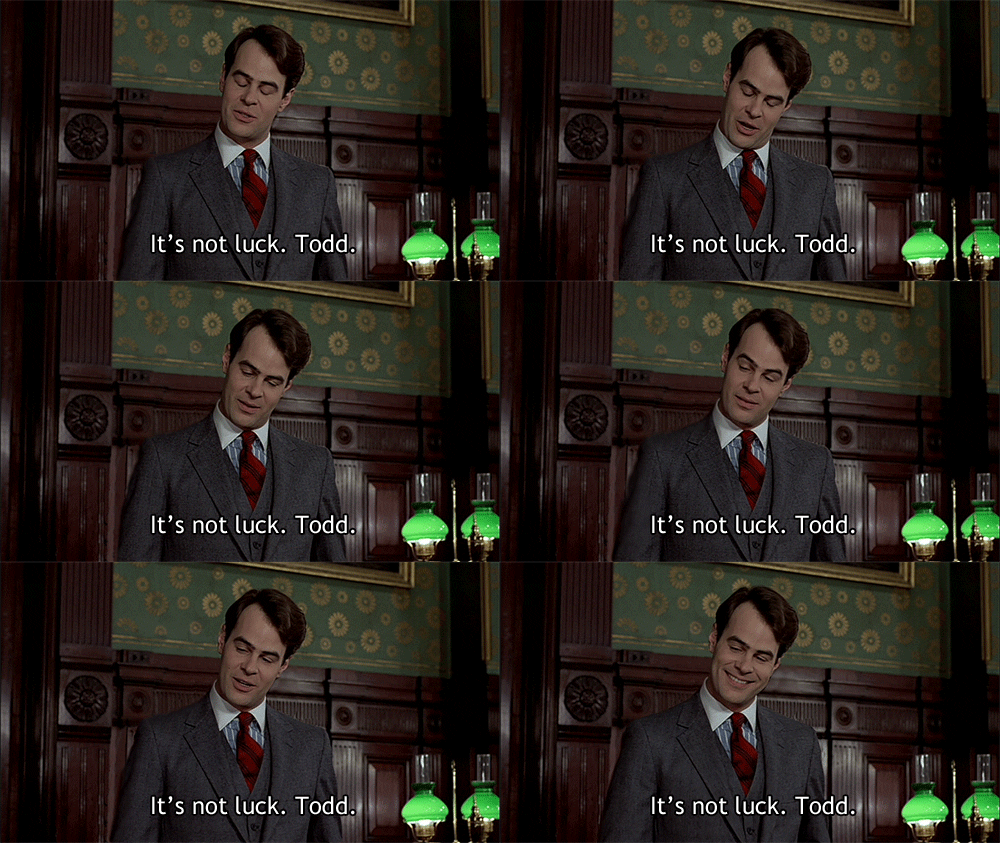
His perfect world is turned upside down by the $1 bet by the brothers to settle the debate of nature vs nurture. Because we’ve got nothing better to do, let’s strip Louis of everything he knows and see if he’ll sink or float.


Trading-Placesbrothers

Randolph and Mortimer Duke


What better “brother” switch than with (Billy Ray Valentine) Eddie Murphy, the wily con man who sees the brothers straight up for what they are – numbers runners.

billyray

“Billy Ray”


The parable wouldn’t be complete without the lovely damsel in distress (but in this case with a plan for her own escape). One of my favorite actresses, Jamie Lee Curtis plays “Ophelia”, the classy hooker with a heart of gold.


Jamie Lee Curtis - Ophelia

Jamie Lee Curtis – “Ophelia”


denholmtrading

Denholm Elliott – “Coleman”


Louis’s butler/valet, “Coleman” (Denholm Elliott) is hilarious trying to juggle the Duke brothers’ sick plan.


louisjail

Louis’s abrupt experiment in poverty forces him to get his nose out of the air and think twice about judging people based solely on their socio/economic situation.

tradingplacesanta


After a stint in jail, being reduced to stuffing a whole salmon into his Santa suit (don’t ask, you have to see) and attempting to take his own life, he realizes how shallow his life has been. By coming together with Billy Ray, Coleman and Ophelia he finds out it’s friends and the love of a good woman that really counts.

An incredibly important life and Gratitude lesson!

tradingplacesgratitude

However, if you can get rich with your friends and give payback to those who’ve done you wrong (Dukes) go for it! 😎


“Looking good Billy Ray!”


Buddy Love’s Gratitude

nuttyprofessorposter

“The Nutty Professor” (1963)

iheartfilm is dedicating the month of November to the lesson of Gratitude in films; the quality of being thankful.

“The Nutty Professor” (1963) (loosely based on Robert Louis Stevenson’s “Dr. Jekyll and Mr. Hyde”) is a classic tale of insecurity, social ineptitude and wanting to be somebody, anybody else. Professor Julius Kelp (Jerry Lewis) is a sweet but awkward, book type that is constantly blowing up his lab (and students) to the frustration of Professor Warfield (Kelp’s boss). Fed up with his lot in life, Kelp decides to take matters into his own hands. He has to learn the lesson of Gratitude the hard way.

kelppotion

Professor Kelp

Professor Kelp goes to extremes to become the “big man” someone no one would dare bully because he’s the typical “90-pound weakling” getting sand kicked in his face at the beach.

Being a Science Professor, he comes up with the ingenious idea to concoct a potion which will turn him into the suave, ladies man that commands a room. Enter alter ego, Buddy Love. Buddy is the complete opposite of Professor Kelp. He’s a rude, ego maniac who thrills the kids at their hangout the “Purple Pit” with his musical prowess singing and playing “That Old Black Magic” on the piano. There, as Buddy Love he can hook up with one of his students, Stella Purdy, (Stella Stevens) who he’s secretly had a thing for.

buddylove

Buddy Love

“The Purple Pit”

However, Kelp collides with his alter ego when his formula wears off while parked with Stella after they leave the “Purple Pit”. The next morning he’s left with the most horrific hangover in the annals of hangovers.

kelphangover

Kelp’s Hangover


Professor Kelp’s whole world comes crashing down when he’s told he must be a chaperone at the graduation dance while he’s also supposed to perform as Buddy Love.

This is when he publicly learns the lesson of Gratitude. His Buddy Love formula wears off at the beginning of his graduation performance and he’s forced to confess his deceit and mistake of trying to be someone else. He’s learned to be thankful and appreciative for his true self.

Moral of the story, love yourself. If you don’t, how can you expect anyone else to.

image


Scrooged and Grateful 😇

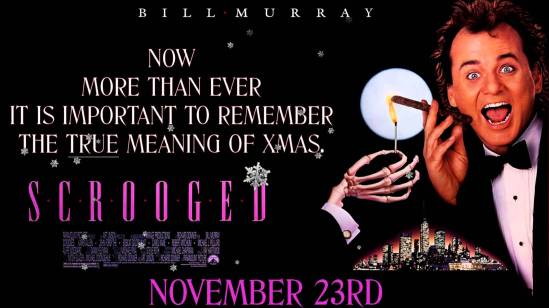
“Scrooged” (1988)

iheartfilm is dedicating the month of November to the lesson of Gratitude in films; the quality of being thankful.

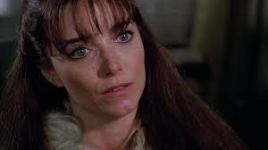
The Dickens’ classic, “A Christmas Carol” is brilliantly updated in this 1988 adaptation – “Scrooged.” The hilarious Bill Murray stars as the infamous”Scrooge” aka Frank Cross. “Scrooge” has messed over everyone in his life, his employees (Bobcat Goldthwait) (Alfre Woodard), his brother (John Murray – Bill’s real-life brother) and especially his one true love, Claire (Karen Allen).

Claire

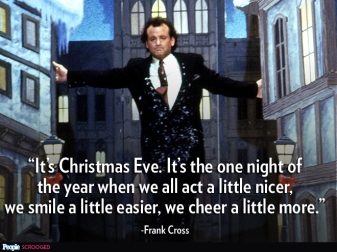
Frank Cross (“Scrooge”) represents everything that’s wrong with thoughtless people. He’s an angry, bitter, selfish a-hole. By grace, he’s given the opportunity for a second chance at life with the help of ghosts from “Christmas Past” (David Johansen), “Present” and “Future”, re-visiting the good, the bad and the ugly of his life. A hardcore lesson in Gratitude!

My favorite ghost has got to be (Carol Kane) as the “Ghost of Christmas Present,” When she knocks Bill Murray upside the head with that toaster, I’m cracking up right now just thinking about it!

The ghosts do a phenomenal job because ultimately Murray gives his testimony and not only feels Gratitude but tells people if you want to understand what being thankful is all about, give back, “make your miracle happen.” It’s an incredibly moving moment.

“God Bless Us Everyone” – Tiny Tim

scroogedend

“Think of your fellow man, put a little love in your heart.”


Forrest Gump Gratitude 🏃

Forrest_Gump_poster

“Forrest Gump” (1994)


iheartfilm is dedicating the month of November to the lesson of Gratitude in films; the quality of being thankful.

“Run Forrest, Run!”

forrestgumprunning

Every time I think of the movie “Forrest Gump”, that’s the first quote I hear. Then, “Life’s like a box of chocolates, you never know what you’re gonna get.”


forrestgumpchocolate


Quotes galore plus Lieutenant Dan (Gary Sinise) and Bubba (Mykelti Williamson). Love this movie!

Forrest Gump’s (Tom Hanks) life is a testimony to gratitude. He understands his challenges but is not hesitant to live his life to the fullest, including telling his childhood love, Jenny (Robin Wright) how he feels about her.

He gets it. Life gives you what you get, so don’t whine, go for it and make the most of your journey. Thank God for his mother, (Sally Field), she didn’t listen to what the”experts” had to say. She did whatever she had to do to provide Forrest with the foundation that he could do anything. With his braces, he had “magic” legs. Turn every so-called obstacle into an advantage. Once again, attitude is everything!


Forrest is a true inspiration and proof that with support and love we can overcome adversity. Love and compassion make the difference.

Mama, Jenny, Bubba, and Lieutenant Dan. Forrest loved and was deeply loved by those whose lives he touched.

forrestgumpallihavetosay

Gratitude of the Heart

The Wizard of Oz (1939) – “There’s No Place Like Home”


WIZARD_OF_OZ_ORIGINAL_POSTER_1939

iheartfilm is dedicating the month of November to the lesson of Gratitude in films; the quality of being thankful.

To quote author Melody Beattie:

“Gratitude turns what we have into enough, and more. It turns denial into acceptance, chaos into order, confusion into clarity…it makes sense of our past, brings peace for today, and creates a vision for tomorrow.” 


My first pick, “The Wizard of Oz”, is overflowing with gratitude! Dorothy (Judy Garland) accompanied by her little dog Toto, seeking a better place in the world comes to understand what home really means and her compatriots – The Scarecrow (Ray Bolger), Tin Man (Jack Haley), and The Cowardly Lion (Bert Lahr) wishing to be more than they perceive themselves to be, learn to appreciate their unique gifts. The Great and Powerful Oz (Frank Morgan) realizes the blessing and value of truth and in his case the truth truly does set him free.


It all starts with a wish to be “Somewhere Over the Rainbow” and results in unexpected consequences – the terror of being caught up in a twister, inadvertently dropping a house on the sister of the Wicked Witch of the West (oops) and inheriting both the wrath of said Witch (Margaret Hamilton) and a pair of coveted ruby slippers.


Sadly, “Over the Rainbow” doesn’t materialize into the idyllic place of which Dorothy sings, which becomes her vision quest. Dorothy’s longing for home dovetails with the wishes of  The Scarecrow, Tin Man, and The Cowardly Lion. These three, also wishing for what they believe they don’t have – a brain, a heart, and courage – join the quest to the Emerald City to finally have their dreams realized through the power of the omnificent Wizard of Oz.

The trio’s perilous journey to get Dorothy home leads to the self-realization that they possessed the traits they sought all along and didn’t really need the wizard to bestow these attributes upon them.

Dorothy also learns a valuable lesson we all tend to forget, “there’s no place like home” and if we can’t find what we’re looking for there, then we won’t be able to find it anywhere. Home exists within us and it’s our outlook and attitude that dictates whether it’s a black and white existence filled with worries and that ole Gulch “heifer” or a technicolor world filled with musical munchkins and the love of three very special friends.


With Gratitude, we can appreciate and give thanks for the joys and blessings in our lives because the truth is we could be far worse off. My spiritual goal every day is to be mindful and thankful for the bounty which I’ve already received.


wizardofozhome


Always remember!


Universal Horror – The Golden Age of Movie Monsters

Universal_monsters_logo


For a comprehensive and what I consider a definitive history of one of the original Hollywood Studios – Universal, check out the Documentary – “Universal Horror.”  Universal was founded in 1912 by Carl Laemmle and is the world’s fourth oldest major film studio.

Originally airing on Turner Classic Movies in 1998, “Universal Horror” showcases the golden age of 1930’s movie monsters. The film also highlights Carl Laemmle’s family and Carl Laemmle, Jr’s game-changing vision of producing films based on classic horror tales.


The studio is known for such horror classics as Frankenstein (1931) and Dracula (1931), the Universal monster franchise. Dracula is a 1931 American Pre-Code vampire-horror film directed by Tod Browning and starring Bela Lugosi as Count Dracula. The film was produced by Universal and was loosely based on the novel by Bram Stoker.

Casting for the film became problematic initially since Laemmle was not at all interested in Lugosi, in spite of good reviews for his stage portrayal. Laemmle instead considered other popular actors of the day, including Paul Muni and Chester Morris.


Frankenstein is a 1931 American Pre-Code horror monster film from Universal Pictures directed by James Whale. The film stars Colin Clive, Mae Clarke, John Boles and Boris Karloff and features Dwight Frye and Edward van Sloan. Trivia: Bela Lugosi turned down the role saying the monster was just a hulking beast.

In 1991, the Library of Congress selected Frankenstein for preservation in the United States National Film Registry as being “culturally, historically, or aesthetically significant.

Throughout the documentary, we hear personal accounts and behind-the-scene stories from early stars such as Rose Hobart – co-star in the original film version of Dr. Jekyll and Mr. Hyde (1931), Gloria Stuart – The Invisible Man (1933) and Lupita Tovar – Dracula (1931) Spanish Version.


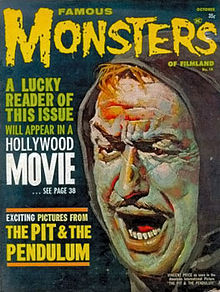
Forrest Ackerman, (November 24, 1916 – December 4, 2008) was editor and principal writer of the science fiction magazine Famous Monsters of Filmland and recalls his experiences in the documentary of seeing these films first hand. Ackerman’s magazine would provide inspiration to many who would later become successful artists, including Joe DantePeter Jackson, Steven Spielberg, Tim Burton, Stephen King, George LucasDanny ElfmanJohn Landis and countless other writers, directors, artists, and craftsmen.

Also affectionately called “Forry,” Ackerman was central to the formation, and spread of science fiction fandom, and a key figure in the wider awareness of science fiction as a literary, art and film genre. Famous for his wordplay he coined the genre nickname “sci-fi”.

FamousMonsters14


Universal Monsters Tribute


The end of Universal’s first run of horror films came in 1936 as the Laemmles were forced out of the studio after financial difficulties and a series of box office flops due partly to censorship and a temporary ban on American horror films in Britain. The release of MGM’s Mad Love and The Raven (both 1935) were the final nail in the coffin for monster movies, being too strong for 1935 tastes, with its themes of torture, disfigurement, and grisly revenge.


The monster movies were dropped from the production schedule altogether and would not re-emerge for another three years. In the meantime, a theater owner revived Dracula and Frankenstein as a double feature, resulting in an immediate smash hit and leading to the original movies being re-released by the studio to surprising success.

As I celebrate this Halloween, my film line-up would not be complete without those original horror classics from the original horror classics studio – Universal!

HAPPY HALLOWEEN!

13 Ghosts❗️ 👻👻👻👻👻👻👻👻👻👻👻👻👻

williamcastle


Let me start by saying, I absolutely love William Castle! His “effects”, and his campy, “spooky” movies made him the “Master of the Movie Gimmick”! He financed his first movie, Macabre (1958), by mortgaging his house and came up with the brilliant idea to give every movie-goer a certificate for a $1,000 life insurance policy from Lloyd’s of London in case they should die of fright during the film. He also stationed nurses in the lobbies with parked hearses outside the theaters. Macabre was a hit!


Each of his films featured an “effect” or gimmick. With “House on Haunted Hill,” it was “Emergo”, the “flying skeleton.” It didn’t always work, but the kids in the audience had a good time anyway trying to knock it down. (kids will be kids:) Trivia Fact: William Castle produced the Roman Polanski horror hit “Rosemary’s Baby.”

houseskeleton

“House on Haunted Hill” Skelton


  “13 Ghosts” is jammed packed with “effects” and filmed in “Illusion-O”. Knife-wielding ghosts, headless ghosts, and murderous ghost Emilio, who has a thing for totally destroying the kitchen. As Buck Zorba (Charles Herbert) tells the story, seems Emilio killed not only his wife but his mother-in-law as well. Whack, whack! (nice sound effect Buck)

The “13 Ghosts'” storyline begins with Dr. Plato Zorba dying and leaving his broke nephew, Professor Cyrus Zorba (Donald Woods), an old, rundown LA mansion. The catch is Cyrus, his wife Hilda,(Rosemary DeCamp), daughter Madea (Jo Morrow) and son Buck can’t sell the house so are forced to share the joint with the 13 ghosts. “They come with the house.”

Ghosts or not the family is so broke that it’s common place for their furniture to be repossessed on a regular basis. In fact, the night they receive a telegram (from a little person in the dark) to meet with Uncle Zorba’s attorney Benjamin Rush (Martin Milner), they’re sitting on the floor exchanging gifts and slicing birthday cake for their youngest son, Buck – Once again, the furniture’s been repossessed.

Move-in day at their new digs includes meeting their Uncle’s housekeeper who turns out to be the green one herself, the Wicked Witch of the West! (Margaret Hamilton)

ghostshamilton

Margaret Hamilton (Elaine the housekeeper)

The best is yet to come as attorney Benjamin Rush goes to extremes trying to find the supposed fortune in cash Uncle Zorba stashed somewhere in the house. Ghosts run wild and the ghost viewer lets you catch all the action. Here’s where Illusion-O comes in:

"Aahhhhh!"

“Aahhhhh!”

Audiences received viewers with red and blue cellophane filters. Choosing to look through the red filter intensified the images of the ghosts while the blue filter “removed” them. Being brave or coward, the choice was up to you.

ghostviewer2

“13 Ghosts” is the fourth collaboration from director William Castle and writer Robb White and lives up to the Castle touch. Two of his films were remade by his daughter Terry Ann Castle, who co-produced House on Haunted Hill in 1999, and Thirteen Ghosts in 2001 (the latter retitled Thir13en Ghosts).

A documentary focusing on Castle’s life, Spine Tingler! The William Castle Story, directed by Jeffrey Schwarz, had its premiere at AFI FEST 2007 in Los Angeles on November 8, 2007. It won the Audience Award for Best Documentary.

William Castle Spine Tingler

R.I.P Maureen O’Hara – “Queen of Technicolor”

image

Maureen O’Hara, ‘The Queen of Technicolor,’ Dies at 95

(August 17, 1920 – October  24, 2015)

I loved the feisty Irish attitude she embodied in the characters created starring opposite John Wayne, but my sentiments will always go to her role as 8-year old Natalie Wood’s mother in the Christmas Classic, “Miracle on 34th Street.” R.I.P. Maureen O’Hara

Maureen O’Hara, the Irish beauty whose striking red hair, crystal green eyes, and porcelain skin was so dazzling on the silver screen that she was dubbed “The Queen of Technicolor,” has died. She was 95.

O’Hara, who played the feisty wife to onscreen husband John Wayne in five films — three of them directed by John Ford — died Saturday at her home in Boise, Idaho, Johnny Nicoletti, her longtime manager, told the Associated Press.

“She passed peacefully surrounded by her loving family as they celebrated her life listening to music from her favorite movie, The Quiet Man,” said a statement from her family.

She moved to Idaho in 2013 to be closer to her relatives after spending four decades in Glengarriff, Ireland.

Although she was memorable in so many great Hollywood films — including The Hunchback of Notre Dame (1939), How Green Was My Valley (1941), Miracle on 34th Street (1947), Rio Grande (1950), The Quiet Man (1952), Our Man in Havana (1959) and The Parent Trap (1961) — the Dublin native never won an Academy Award, much less received an Oscar nomination.

That oversight was rectified when the Academy presented her with an honorary Oscar at the Governors Awards in November 2014.


Musing about what made her a star, O’Hara wrote: “I have always believed my most compelling quality to be my inner strength, something I am easily able to share with an audience. I’m very comfortable in my own skin. I never thought my looks would have anything to do with becoming a star. Yet it seems that in some ways they did.”

(Reposted from the Hollywood Reporter)

The Picture of Dorian Gray

dorian-gray-wallpaper_

The Picture of Dorian Gray (1945)

“I am jealous of everything whose beauty does not die. I am jealous of the portrait you have painted of me. Why should it keep what I must lose? Every moment that passes takes something from me and gives something to it. Oh, if it were only the other way! If the picture could change, and I could be always what I am now! Why did you paint it? It will mock me some day — mock me horribly!” The hot tears welled into his eyes; he tore his hand away and, flinging himself on the divan, he buried his face in the cushions, as though he was praying.”

“Dorian Gray” – Oscar Wilde’s -“The Picture of Dorian Gray”


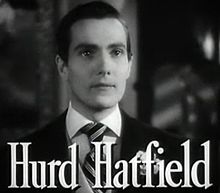
Hurd_Hatfield_in_The_Picture_of_Dorian_Gray_trailer

Dorian Gray

If you could, would you? Sell your soul for eternal youth.

That was the choice made by Dorian Gray. His story is a classic cautionary tale. Be careful what you wish for.

This week’s DVR recommendation for TCM Horror Fridays at 8:00 pm.

Dorian Gray (Hurd Hatfield) is a striking and wealthy young man living in 19th century London. While posing for his portrait with his artist friend Basil Hallward (Lowell Gilmore), he meets the cynical and audacious Lord Henry Wotton (George Sanders) who tells him that youth and beauty are fleeting and while he’s young he should entertain every worldly pleasure. Dorian is naive and in the presence of an enchanted Egyptian cat wishes he would stay forever young and only his portrait would age.


While visiting a local pub, The Two Turtles, he meets the beautiful and demure Sybil Vane. She sweetly sings “Goodbye Little Yellow Bird” and Dorian is totally enamored. Falling in love, he asks Miss Vale for her hand in marriage and invites both Basil and Lord Wotton to the pub to meet his love.

doriansybilbird2

Sybil Vane


When Dorian informs Lord Wotton of his intention to marry Sybil, Wotton suggests he tests her virtue by inviting her to spend the evening with him. If she rebukes him then she’s chaste if she accepts she’s a tramp and as the saying goes “why pay for the cow when you can have the milk for free.” Dorian buys into this plan thus beginning his downward spiral into narcissism and pleasures of the flesh.


Sybil accepts Dorian’s request to stay with him and the following day Dorian sends her a breakup letter expressing his disappointment in her. Heartbroken, Sybil is devastated and Dorian becomes aware of the first signs of cruelty to appear upon his portrait’s face.


Years pass with his peers aging, but Dorian’s youth remains. Gossip swirls and his friends begin to shun him; questioning why his appearance is the same. Dorian goes full tilt debauchery until he finally reaches rock bottom.

There are people today who could benefit from heeding the lesson in the “Picture of Dorian Gray.” The evil you do comes back to bite. Karma is a bitch.


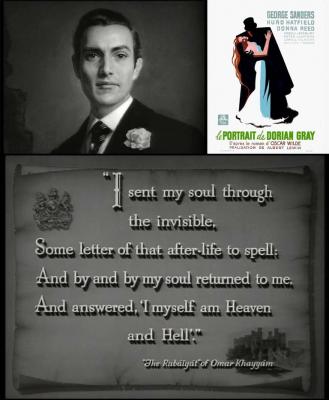
dorianGrayKhayyam


Scary Kids Halloween!

Countdown to Halloween!

halloweenkids

Getting closer to All Hallows Eve! Continuing my series of film recommendations for Turner Classic Movies Horror Fridays at 8:00 pm. This week’s DVR choice is “The Bad Seed” (1956). Talk about scary kids!  This flick is a cult classic that is truly shocking and begs the question – Is evil inherited? “The Bad Seed’s mother – Christine Penmark (Nancy Kelly) must confront that possibility as she begins to suspect that all is not quite right with Rhoda (Patty McCormack), her perpetually well-mannered child. Mom is finally forced to confront the possibility that her daughter may actually be a murderous sociopath after circumstances become too real to ignore.

“The Bad Seed” (1956)

Let’s start with our angelic, eight-year-old darling – Rhoda Penmark who oh so sweetly plays the French song “Au Clair de la lune” on her piano while screams emanate from the basement. Don’t ever threaten to narc on her. Looks like they’re going to be needing a new caretaker.

This child is cold blooded! In her case, trinkets are a girl’s best friend. So, when an old woman promises to leave Rhoda a gem, she – the old woman – apparently couldn’t die fast enough so our little darling volunteers to help the process along. Oh boy, a Penmanship Medal, a very tasty trinket indeed. But Rhoda loses out to classmate Claude Daigle and feels cheated so of course she takes matters into her own hands to acquire what she feels she deserves. Oh well, poor little Claude Daigle.


This film was the first of its kind since the censors forbade movies that featured children as killers. But Warner Bros.’ Studio was able to get away with it by adding an “adults only” tag to the film’s advertising and altering the original ending. The film is based upon a play (of the same name) by Maxwell Anderson, which in turn is based upon William March’s 1954 novel The Bad Seed. The play was adapted by John Lee Mahin for the screenplay of the film.


The play’s principal players, Nancy Kelly (Christine Penmark), Eileen Heckart (Mrs. Daigle), Henry Jones (LeRoy the caretaker) and Patty McCormack (Rhoda Penmark) all revised their roles in the film adaptation.


“The Bad Seed” was one of Warner Bros.’ biggest hits of the year, grossing $4.1 million and one the year’s top 20 at the box office. Academy Award Nominations were given to Nancy Kelly: Best Actress, Eileen Heckart: Best Actress in a Supporting Role, Patty McCormack: Best Actress in a Supporting Role and Best Cinematography (Black-White) Hal Rosson. Eileen Heckart won a Golden Globe Award for her performance.

Since I always follow the film fan rule, I won’t divulge the ending. Plus I promised Warner Bros.’ at the end of the movie.


Happy Viewing!