I was working on a post the other day and the TV show Nothing but Trailers was on in the background. It got me thinking about some of my all-time favorites and what constitutes a great trailer.
First of all, it can’t just be a series of scenes from the movie. That really irks me! What’s the point of me going if you’ve already given me your best shots? Just lazy.
An excellent trailer peaks your curiosity gets your heart-stirring and demands that you’re first in line to see it. An incredible trailer gives you minimal information but builds the anticipation with atmospheric music, punctuation shots, and an ending that elicits the core emotion of the film.
This is the criteria I applied to the following trailers and is the basis for them being some of the most memorable.
◊◊◊◊◊◊
Number One has got to be the 1979 sci-fi classic – Alien. “In space, no one can hear you scream.”
Starring Sigourney Weaver, director Ridley Scott scared the crap out of me and the little boy sitting in front of me at the theater. Oh, and to make matters worse, I was pregnant at the time. Yikes! (if you’ve seen it you understand if you haven’t, what?? You must!) And my girl Sigourney Weaver showed the world what a badass woman in space looks like.
Sigourney Weaver
This is the epitome of an incredible trailer. Little bits and moments and truly haunting music. My heart was racing and I had no idea of what I’d just seen.
The visuals were outstanding! There was absolutely nothing familiar in the images coming off the screen. The Alien and its accompanying elements were designed by Swiss surrealist artist H. R. Giger. (I don’t know how he slept with those images in his head) The film received both critical acclaim and box office success, receiving an Academy Award for Best Visual Effects.
◊◊◊◊◊◊
Number Two is the sci-fi thriller –The Dark Knight (2008) – “Why So Serious?”
First of all, Heath Ledger. Second of all, Heath Ledger!! Even in the trailer, his intensity shines thru. He draws you in and you’re compelled to see more. His Oscar-winning performance was incredible and the most talked about that year.
Ledger almost made a complete sweep of over twenty awards for acting, including the Academy Award for Best Supporting Actor, Screen Actors Guild Award for Best Supporting Actor, the Golden Globe Award for Best Supporting Actor – Motion Picture, and the BAFTA Award for Best Actor in a Supporting Role.
Heath Ledger
Unfortunately, we lost him, but his genius as The Joker lives on. Starring Christian Bale as the caped crusader and directed by Christopher Nolan, when I saw this trailer I knew where I was going to be on opening night. Totally lived up to the hype.
◊◊◊◊◊◊
And, Now Presenting… “The Master of Suspense”!
In 1960, Alfred Hitchcock shocked the world with his groundbreaking thriller. Unsuspecting moviegoers stood in lines that wrapped around the block with no one being allowed admittance after the movie began. Intensifying the anticipation, each patron’s directive was to NOT reveal the ending.
Watch this legend pull on your tension string. From the “Master of Suspense”, Sir Alfred Hitchcock’s – Psycho (1960) “…she just goes a little mad sometimes.”
This trailer shows Alfred Hitchcock taught the world just how horror is done. Fits all my criteria for an incredible movie trailer and then some. Starring Janet Leigh and Anthony Perkins, my heart is racing right now re-visiting this magnificent piece of cinema.
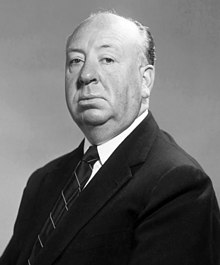
Sir Alfred Hitchcock – (13 August 1899 – 29 April 1980)
Hitch’s stylistic trademarks include the use of camera movement that mimics a person’s gaze, forcing viewers to engage in a form of voyeurism. In addition, he framed shots to maximize anxiety, fear, or empathy and used innovative forms of film editing. (Wikipedia)
To quote me, “An incredible trailer gives you minimal information but builds the anticipation with atmospheric music, punctuation shots, and an ending that elicits the core emotion of the film.”
An unquestionable classic!
◊◊◊◊◊◊◊◊◊
Now that I’ve shared some of my faves, I’d love to hear some of yours! 😎
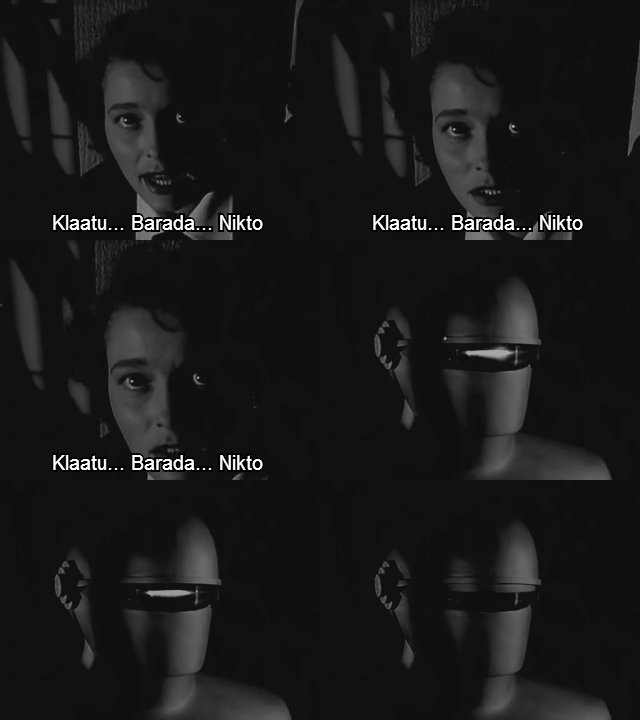
I love this film because of its unequivocal message to man. Earth, get your act together or you will be destroyed! If your inability to understand the gravity of your nuclear capability bleeds over into the galaxy, we will end this planet’s existence. Boom – Drop the mike!
The fact that humans continue to measure power by how many times over we can destroy the earth as if there’s a planet B never ceases to floor me!
Obviously, the need continues to heed Klaatu’s warning. “Your choice is simple: join us and live in peace, or pursue your present course and face obliteration”
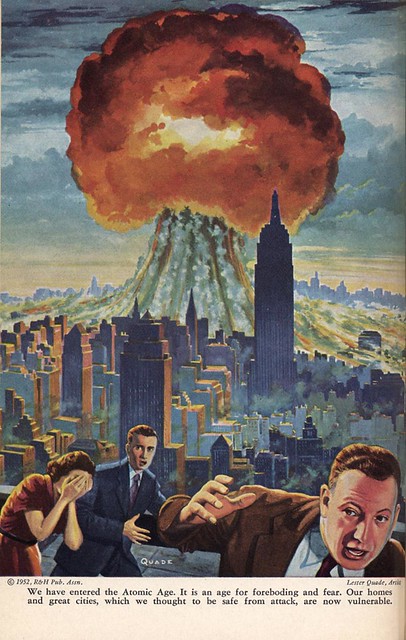
“The Day the Earth Stood Still” was released in 1951 during the Cold War period. (It could be argued that it never ended.) It stands as a classic sci-fi cautionary tale as relevant today as it was then, as we continue to deal with the tensions that arise daily by the ongoing threat of a nuclear war.
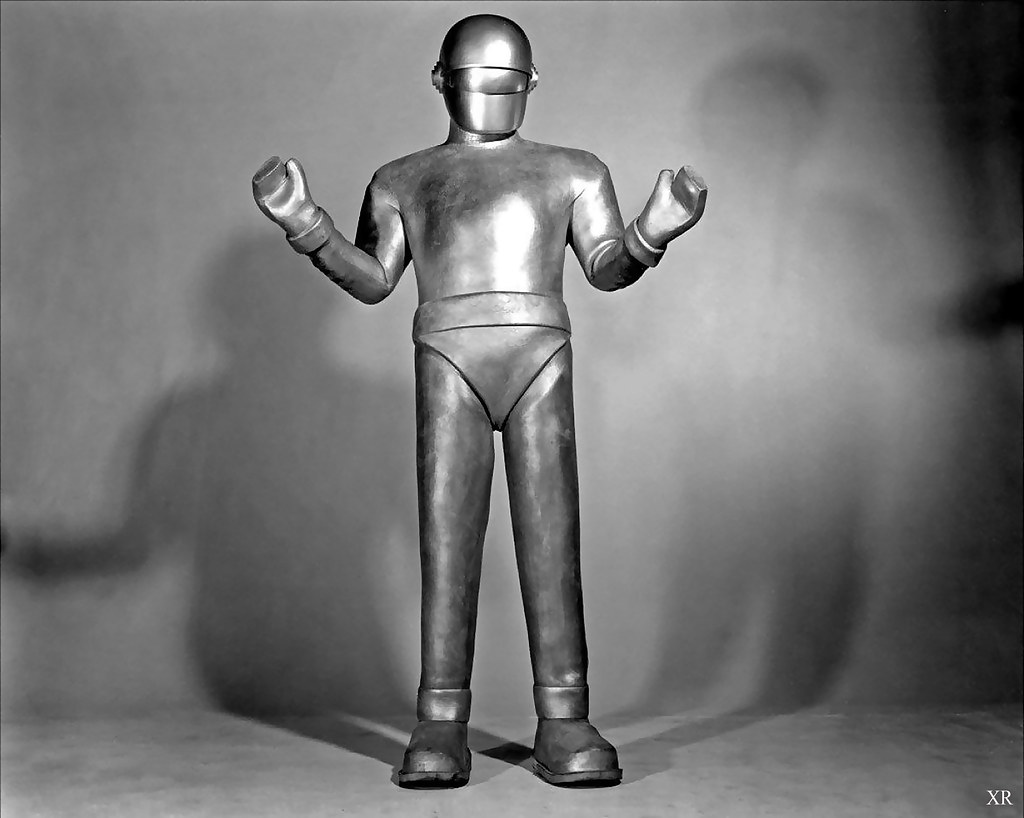
The plot involves a humanoid alien visitor named Klaatu who comes to Earth accompanied by a powerful eight-foot-tall robot, Gort, to deliver an important message that will affect the entire human race.
But, when Klaatu’s flying saucer lands, a nervous soldier mistakes a gift for the President as a weapon and fires, injuring Klaatu. Gort has his back and immediately begins to disintegrate the tanks and weapons. Cue the pandemonium!
Klaatu is taken to Walter Reed Hospital but escapes and lodges at a boarding house as “Mr. Carpenter”, the name on the dry cleaner’s tag on a suit he took. Among the residents include young widow Helen Benson (Patricia Neal) and her son Bobby (Billy Gray). The next morning, Klaatu overhears the boarders speculate about the alien’s motivations.
Not unexpectantly the talk turns to Communism and the “Red Scare”. And, of course, it’s a conspiracy because you can’t trust the government.
Producer Julian Blaustein set out to make a film under the working titles of Farewell to the Master and Journey to the World that illustrated the fear and suspicion that characterized the early Cold War and Atomic Age. He reviewed more than 200 science fiction short stories and novels in search of a storyline that could be used since this film genre was well suited for a metaphorical discussion of such grave issues.
Studio head Darryl F. Zanuck gave the go-ahead for this project, and Blaustein hired Edmund North to write the screenplay based on elements from Harry Bates’s 1940 short story “Farewell to the Master“. The revised final screenplay was completed on February 21, 1951. Science fiction writer Raymond F. Jones worked as an uncredited adviser. (Wikipedia)
Trivia:
The robot Gort, who serves Klaatu, was played by Lock Martin, who worked as an usher at Grauman’s Chinese Theater and stood seven feet, seven inches tall. Not used to being in such a confining, heat-inducing costume, he worked carefully when wearing the two oversize, laced-up-the-front or back, foamed neoprene suits needed for creating the illusion on the screen of a seamless metallic Gort.
Wise decided that Martin’s on-screen shooting time would be limited to half-hour intervals so Martin would face no more than minor discomfort. These segments, in turn, were then edited together into film’s final print. (Wikipedia)
In a commentary track on DVD, interviewed by fellow director Nicholas Meyer, Wise stated that he wanted the film to appear as realistic and believable as possible, in order to drive home the motion picture’s core message against armed conflict in the real world.
Also mentioned in the DVD’s documentary interview was the original title for the film, “The Day the World Stops”. Blaustein said his aim with the film was to promote a “strong United Nations“.
The Music:
The music score was composed by Bernard Herrmann in August 1951 and was his first score after he moved from New York to Hollywood. Herrmann chose unusual instrumentation for the film: violin, cello, and bass (all three electric), two theremin electronic instruments (played by Dr. Samuel Hoffman and Paul Shure).
By using the theremin, Herrmann made one of music’s first forays into electronic music.
The Day the Earth Stood Still was well received by critics and is widely regarded as one of the best films of 1951. The film is ranked seventh in Arthur C. Clarke‘s list of the best science fiction films of all time, just above Stanley Kubrick‘s 2001: A Space Odyssey, which Clarke himself co-wrote.
The Day the Earth Stood Still holds a 94% “Certified Fresh” rating at the film review aggregator website Rotten Tomatoes.
In 1995, the film was selected for preservation in the United States National Film Registry as “culturally, historically, or aesthetically significant”.
Klaatu made an excellent case for using Gort as the “interplanetary police” – accountability. Governments need to be held accountable for the death and destruction they are capable of wielding.
No individual has the right to take another’s life and no country or planet has the right to end our existence! I think we could use some Gort right about now!
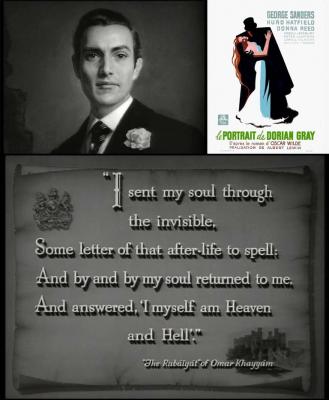
“I am jealous of everything whose beauty does not die. I am jealous of the portrait you have painted of me. Why should it keep what I must lose? Every moment that passes takes something from me and gives something to it. Oh, if it were only the other way! If the picture could change, and I could be always what I am now! Why did you paint it? It will mock me some day — mock me horribly!” The hot tears welled into his eyes; he tore his hand away and, flinging himself on the divan, he buried his face in the cushions, as though he was praying.”
“Dorian Gray” – Oscar Wilde’s -“The Picture of Dorian Gray”
Dorian Gray
If you could, would you, sell your soul for eternal youth?
That was the choice made by Dorian Gray. His story is a classic cautionary tale. Be careful what you wish for.
Dorian Gray (Hurd Hatfield) is a striking and wealthy young man living in 19th century London. While posing for his portrait with his artist friend Basil Hallward (Lowell Gilmore), he meets the cynical and audacious Lord Henry Wotton (George Sanders) who tells him that youth and beauty are fleeting and while he’s young he should entertain every worldly pleasure. Dorian is naive and in the presence of an enchanted Egyptian cat wishes he would stay forever young and only his portrait would age.
While visiting a local pub, The Two Turtles, he meets the beautiful and demure Sybil Vane. She sweetly sings “Goodbye Little Yellow Bird” and Dorian is totally enamored. Falling in love, he asks Miss Vale for her hand in marriage and invites both Basil and Lord Wotton to the pub to meet his love.
Sybil Vane
When Dorian informs Lord Wotton of his intention to marry Sybil, Wotton suggests he tests her virtue by inviting her to spend the evening with him. If she rebukes him then she’s chaste if she accepts she’s a tramp and as the saying goes “why pay for the cow when you can have the milk for free.” Dorian buys into this plan thus beginning his downward spiral into narcissism and pleasures of the flesh.
Sybil accepts Dorian’s request to stay with him and the following day Dorian sends her a breakup letter expressing his disappointment in her. Heartbroken, Sybil is devastated and Dorian becomes aware of the first signs of cruelty to appear upon his portrait’s face.
Years pass with his peers aging, but Dorian’s youth remains. Gossip swirls and his friends begin to shun him; questioning why his appearance is the same. Dorian goes full tilt debauchery until he finally reaches rock bottom.
There are people today who could benefit from heeding the lesson in the “Picture of Dorian Gray.” The evil you do comes back to bite. Karma is a bitch.
I usually hate remakes, check out a previous post on this very subject – “To Remake or Not to Remake, That is the Question” – especially when the original says it all, you can’t imagine any other actors (think Casablanca) and is iconic.
Or, the movie is just horrible, to begin with, and we don’t need to be put through that torture again. WHY??!!!
However, there are a few exceptions to this rule and I’m going to put the remake of the 1959 classic “House on Haunted Hill” by legendary film director, William Castle on the EXCEPTION list.
William Castle April 24, 1914 – May 31, 1977
The film was written by Robb White and stars the incomparable Vincent Price as eccentric millionaire Frederick Loren and (Carol Ohmart) as his wife Annabelle, who have invited five people to the house for a “haunted house” party. (Wikipedia)
Whoever stays in the house for one night will earn $10,000. As the night progresses, all the guests are trapped inside the house with ghosts, murderers, and other terrors.
Elisha Cook – Watson Pritchard
The owner of the house, Watson Pritchard’s vivid descriptions of all the deaths and heads in the house is awesome! The more he drinks the more colorful the tales become.
Vincent Price’s disembodied head narrating during the opening credits is (sorry, had to do it) Priceless! 😁
I’m a huge fan of the B-Movie Director because he personifies the “show” in show business. His movie gimmicks are legendary! In my favorite, “House on Haunted Hill”, it was Emergo (A skeleton with red lighted eye sockets that floated over the audience in the final moments of the film).
Once word spread about the skeleton, kids had to get in on the act by trying to knock it down with candy boxes, soda cups, or any other objects at hand.
I saw the film at a Halloween special performance and the skeleton floating across overhead was Fantastic! Classic Castle!
If it weren’t for my kids, I probably wouldn’t have sought out the remake but, when I walked into the family room and caught a glimpse of the action on the big screen, I was immediately drawn into the atmospheric effects.
Didn’t think I’d ever say this because William Castle films are sacred but, the remake is awesome, ratchets up the effects, and is creepy as HELL!!
Geoffrey Rush was fantastic as the sinister Steven Price (I believe the name change is an homage to Vincent), an amusement park mogul with a wicked sense of humor. As in the original, his spoiled trophy wife, Evelyn Stockard-Price (Famke Janssen), in a disintegrating marriage with Steven insists on a haunted house themed birthday party. Capitulating to his wife, Price leases the house from the owner, Watson Pritchett (Chris Kattan).
Geoffrey Rush
Evelyn gives Price a lengthy guest list which he promptly shreds to spite her and then creates one of his own. Five guests arrive for the party – Jennifer Jenzen (Ali Larter), Eddie Baker (super-fine Taye Diggs), Melissa Margaret Marr (Bridgette Wilson), Dr. Donald Blackburn (Peter Gallagher), and Pritchett himself. The guests are not those Price invited and neither Evelyn nor Price know who they are. (Wikipedia)
Despite this, Price continues the party’s theme, offering $1 million to each guest who stays in the house and survives until morning. Those who die forfeit the $1 million to the survivors.
Geoffrey Rush, Famke Janssen
Chris Kattan
Setting the house as a former insane asylum with a totally twisted Dr. at the helm, manifested a disturbing backdrop. Nothing worse than psycho ghosts trying to make you one of them.
With the remake of the 1963 haunted house classic, “The Haunting”, the 1999 version starring Liam Neeson, and Catherine Zeta-Jones, this updated “House on Haunted Hill” needed to insert a lot more horror and gore.
Produced by Robert Zemeckis and Joel Silver, it features special effects by famed make-up artists Gregory Nicotero and Dick Smith. Terry Castle (William Castle’s daughter) was also a co-producer on the project.
In keeping with the spirit of William Castle‘s tradition of releasing each of his films with a marketing gimmick, Warner Bros, and Dark Castle supplied movie theatres with scratch-off tickets that would be given to anyone who paid to see the film. The scratch-off ticket would give each movie patron a chance to win money much like the characters in the film. (Wikipedia)
Although not my beloved original, I found this remake to be a creepy fun time.
I joined the Turner Classic Movies Facebook group which I thoroughly enjoy. Talking about our favorite films, creepiest, classic vs. neoclassical films and which should be shown on TCM.
In our conversation on creepy movies, “The Black Cat”, Universal 1934, was mentioned and the fact that this member didn’t realize pre-code films had this type of content; mummified women’s bodies in the basement, the proposed torture of skinning Boris Karloff alive, etc. If you haven’t seen it, put it at the top of your must-see list.
In the comments, I suggested in addition to “The Black Cat” to also check out “Mad Love”, Universal, 1935. It stars Peter Lorre and is a total freak fest. Another must-see flick. It stars Peter Lorre as the mad Dr. Gogol who’s obsessed with the wife ( Frances Drake) of a renown pianist whose hands he’s transplanted after a train wreck. Gogol has a definite fetish side and will do anything to have Miss Frances Drake.
“Mad Love” – Peter Lorre (Dr. Gogol)
I love Pre-Code films because they had so much leeway in terms of subject matter, even wardrobe. I always recommend adding Pre-Code to your film history education. By definition Pre-Code films:
Refers to the brief era in the American film industry between the introduction of sound pictures in 1929 and the enforcement of the Motion Picture Production Code censorship guidelines, popularly known as the “Hays Code”, in mid-1934.
In 1922, after some risqué films and a series of off-screen scandals involving Hollywood stars, the studios enlisted Presbyterian elderWilliam H. “Will” Hays, a figure of “unblemished rectitude”, to rehabilitate Hollywood’s image. Hays, later nicknamed the motion picture “Czar”, was paid the then-lavish sum of $100,000 a year (equivalent to more than $1.4 million in 2015 dollars). (Wikipedia)
William “Will” Hays
As a result, films in the late 1920s and early 1930s included depictions of sexual innuendo, profanity, illegal drug use, promiscuity, prostitution, infidelity, abortion, intense violence, and homosexuality.
Film “Red Dust”
Myrna Loy
Jean Harlow
Unlike silent-era sex and crime pictures, silent horror movies, despite being produced in the hundreds, were never a major concern for censors or civic leaders. When sound horror films were released, however, they quickly caused controversy. Sound provided “atmospheric music and sound effects, creepy-voiced macabre dialogue and a liberal dose of blood-curdling screams” which intensified its effects on audiences, and consequently on moral crusaders.
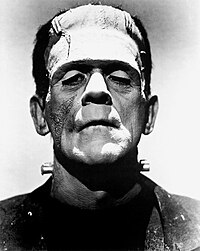
The monster’s brutality, and the doctor’s declaration that “”Now I know what it feels like to be God!”, shocked many moviegoers. By the time of Bride of Frankenstein(1935), the Code was in full effect.
The Hays Code did not mention gruesomeness, and filmmakers took advantage of this oversight. However, state boards usually had no set guidelines and could object to any material they found indecent. Although films such as Frankenstein and Freaks caused controversy when they were released, they had already been re-cut to comply with censors. (Wikipedia)
So, the next time you or anyone else believes that black and white films are a bore, remember to check out “The Black Cat”, or “Mad Love”. If you do, leave a comment; I’d be intrigued to read your thoughts.
I enjoy classic television just like classic films so I’m hooked on a tv station called METV. Perry Mason with Raymond Burr is one of my favorites so I usually catch an episode daily. I love the convoluted storylines and the less than plausible show ending of the murderer jumping up in court and hysterically coping to the charge; a full confession no less.
I say all this because an episode the other day featured the scenario of the rich father trying to eliminate his son’s less than a suitable new bride; “There’s $50,000 in the safe for you to fly to Paris and get a divorce.” That’s quite the offer.
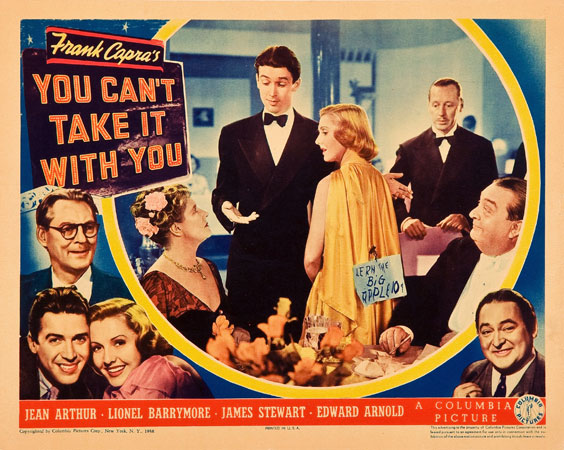
Adapted from the Pulitzer Prize-winning play of the same name by George S. Kaufman and Moss Hart, the film is about a man (Jimmy Stewart) from a family of rich snobs who becomes engaged to a woman (Jean Arthur) who speaks her mind and is from a good-natured but decidedly eccentric family.
The film received two Academy Awards from seven nominations: Best Picture and Best Director for Frank Capra. An iconic director, this was Capra’s third Oscar for Best Director in just five years, following It Happened One Night (1934) and Mr. Deeds Goes to Town (1936). It was also the highest-grossing picture of the year.
I love Jean Arthur’s character (Alice) because she is a strong woman who knows who she is and isn’t afraid to tell Jimmy Stewart (Tony) that his family can go to the blazes because they aren’t better than hers; as a matter of fact, her family understands what Jimmy’s doesn’t, that money isn’t everything and you can’t take it with you. Friends and family are what gives your life worth.
Jimmy Stewart and Jean Arthur
Alice, sensing that her engagement to Tony will not be well received by his parents informs Tony that if their engagement is to go forward, he must invite his parents to the house to meet her family. I’m not sure what Tony was trying to prove but, he gives his parents the wrong date so the house is in disarray with the usual family “madness” in full view. (I said they were eccentric.) 😁
Just another Tuesday night at the Sycamore house.
For me, the lesson of the movie is to live life to the fullest and cherish your family and friends. Don’t worry about being judged by others, they’re probably just jealous of how happy you are and how miserable they feel.
In the words of “Auntie Mame” from the 1958 movie.
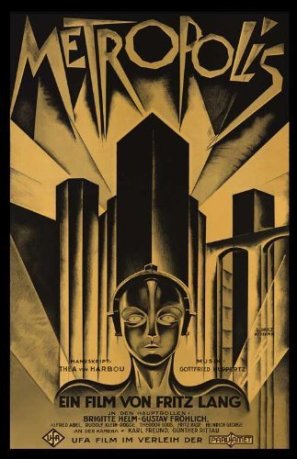
As a film student at The University of Michigan, I was exposed to the masters of cinema – Chaplin, Murnau, Kubrick, Lang, etc. There, we were challenged to critique and look beyond the surface to the underlying themes. “Metropolis” is supreme in incorporating intriguing layers of sub-texture and sub-plots.
Moloch Machine
Austrian director Fritz Lang’s German Expressionistic masterpiece helped to develop the science-fiction genre, with innovative imagery from cinematographer Karl Freund, art design by Otto Hunte, Erich Kettelhut, and Karl Vollbrecht and set design by Edgar Ulmer.(set designer for The Phantom of the Opera) It was the last of Lang’s silent films. (Filmsite Movie Review)
Friedrich Christian Anton “Fritz” Lang (December 5, 1890 – August 2, 1976)
“Metropolis” was not just some sci-fi flick from the silent era, it’s a visually-compelling allegory set in the dystopic, 21st-century city of Metropolis and represents a brilliant critique of the repercussions of man vs. machine and the brutality of the never-ending class struggle.
Establishing the tone of the film, this statement is presented following the opening credits.
THE MEDIATOR BETWEEN HEAD AND HANDS MUST BE THE HEART!
“Metropolis” took over 2 years to complete at ten times the budget for the usual Hollywood production of the time and influenced visuals associated with classic films such as; Chaplin’s war against the machines in Modern Times (1936), the mechanical hand of Dr. Strangelove in Stanley Kubrick’s Dr. Strangelove, Or: (1964), the resemblance between the Maria robot and the droid C-3PO in George Lucas’ Star Wars (1977) trilogy of films, and scenes of Los Angeles in Ridley Scott’s Blade Runner (1982) to name just a few.
Blade Runner
Modern Times
Dr. Strangelove
C 3-PO Star Wars
This symbolic tale was written by Lang’s wife Thea Von Harbou (from her own novel). Her vision detailed a self-indulgent, futuristic, industrial world built of skyscrapers and bridges incorporating the Art Deco style of the 20s for the 2026 city of Metropolis.
An ultra elite, 1% privileged class of powerful industrialists is juxtaposed with a subterranean environment of the nameless, oppressed and exploited drone-like slave labor class.
Made in Germany during the Weimar Period, Metropolis is set in a futuristic urban dystopia and follows the attempts of Freder (Gustav Fröhlich), the wealthy son of the city’s ruler, and Maria (Brigitte Helm), a poor worker, to overcome the vast gulf separating the classes of their city.
Brigitte Helm – Maria
Gustav Frohlich – Freder
Filming took place in 1925 at a cost of approximately five million Reichsmarks. The art direction draws influence from Bauhaus, Cubist, and Futurist design. (Wikipedia)
As with all great films, “Metropolis” was influenced by the historical events occurring during its time. Centered around the developing Industrial Revolution and depressed economic times, the film also incorporates the rise of fascism in a pre-Hitler Weimar Republic Germany following World War I.
Another influence of the movie’s themes was the rise of the American labor movement and unions during the 1920s due to oppressive working conditions. “Metropolis”, like the Progressive, investigative journalists of the day, took on corrupt politicians and the establishment in an effort to make people aware of the contrast of poverty with the upper-crust classes of the opulent Roaring 20s.
I’m a steadfast believer that understanding history is empowering. “Metropolis” tackles the rise of immigration into the US and exploitation of workers at the beginning of the 20th century along with Capitalists exploiting labor. It deals with the conversation of doing what’s right versus greed and the power of modern science.
The creation of the evil android Maria (Bridgitte Helm) was an abuse of science but that same knowledge powered the city in the sky and could have been used to enrich the lives of the subterranean slaves.
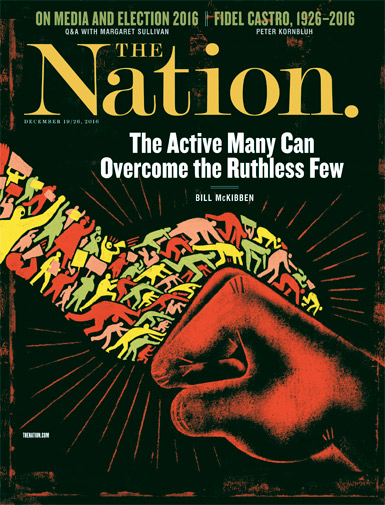
Describing these themes and comparisons in “Metropolis” is like writing a piece for The Nation magazine today. The similarities are frightening like George Orwell’s “1984” or H.G. Well’s “The Time Machine”. It’s incredible to think that a film I critiqued back in the 70’s which was made in the 20’s is actually unfolding in the year 2018; only 8 years away from the 2026 Art Deco Metropolis city in the sky.
Does art imitate life or life imitate art? I’m not sure, but in our “reality” tv driven news programming, a low information population and the “I don’t believe in science” faction, we might as well be living in the dystopian world of “Metropolis”.
Lest we forget.
THE MEDIATOR BETWEEN HEAD AND HANDS MUST BE THE HEART!
◊
This is a restored version of “Metropolis”
If you’ve never seen it, I highly recommend this viewing experience. But, lasting 2 1/2 hours, prepare to settle in with an extra large bag of popcorn.
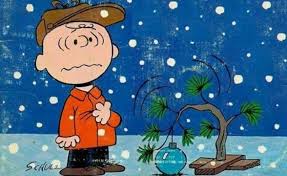
A Charlie Brown Christmas will always have a special place in my heart for its honesty, faith, humor, and appreciation of a child’s intelligence. I’ve watched every year since its premiere in 1965. I fell in love with Charlie and the Peanuts gang, relating to the familial relationships we all had as children.
Charlie’s sad little Christmas Tree
Charlie Brown is the quintessential “nice guy.” Sweet, awkward and sincere. All the traits that guarantee a life of hell for an 8-year-old boy on the playground. In this musical special, Charlie is depressed about the commercialism of Christmas and seeks ways to enjoy the true meaning of the season; the celebration of the birth of Jesus Christ. Charlie confides his feelings to his best friend Linus who’s also sweet, but also philosophical.
After Linus tells him to stop being so ” Charlie Brownie,” Chuck seeks the advice of his nemesis Lucy (aka Dr. Lucy). We’ve all had a Lucy in our lives. The kid who takes tremendous pleasure in the humiliation and torture of the sweet, awkward and sincere kid on the block. You know – Charlie Brown.
Charlie takes Lucy’s advice to become involved in a Christmas project and becomes the play’s director. However, his vision is the complete opposite of Lucy’s vision of becoming the Christmas Queen. (hey, don’t judge; what’s your fantasy?) The result, my favorite scene:
OMG!! The dance scene is hilarious. Everybody who’s ever seen this has their favorite dancer. I see myself as one of the twin girls with their head and individual hair strands swinging side to side. They look so happy and diggin’ the groove. I love it! My other fave is the little boy doing what I call the Frankenstein. His arms are out in front of him and he’s doing some sort of “running man” dance move. Go ahead baby, get your dance on!
For Charlie, the play’s a disaster. His decision for a Christmas tree being even worse; failing to bring any of the holiday spirit to Charlie Brown.
What a great tree!
I’ve killed it!
But ever faithful, his best friend Linus tells him what Christmas is all about and gives the most memorable soliloquy of my young life. (the Gospel of Luke, chapter 2, verses 8 through 14 from the Authorized King James Version)
I was raised in the church and heard this passage before but never in the context of a cartoon or animation. Quoting the bible in this realm was a bold move but is one of the reasons why I have such respect for the creator, Charles Schultz, and this project.
It reminds me, to this day, don’t forget the reason we celebrate Christmas; it’s the birth of Christ.
Even though Charlie’s day started with doom, gloom, and humiliation (including his dog Snoopy laughing in his face); in the end, he finds joy and empathy from his friends.
Let the choir sing:
“Hark the Herald Angels Sing”
I raised my children on this timeless classic and they continue the tradition. A Charlie Brown Christmas touches my heart in so many ways. The innocence of childhood, the unbridled excess of commercialism on what is a holy holiday. But also the friendships, experiences, and faith that shapes our lives forever.
A Christmas Miracle – The Making of a Charlie Brown Christmas
The Wizard of Oz (1939) – “There’s No Place Like Home”
Yes, it’s that time of year again with Black Friday, Cyber Monday, and everyone running around like crazy, gearing up for the big day – Christmas! But, it seems every year when I read about shoppers nearly killing each other over a 12-pack of socks or the last $10 cashmere sweater; my heart sinks with the realization that too many of us forget what the holidays should be about; Gratitude.
To quote author Melody Beattie:
“Gratitude turns what we have into enough, and more. It turns denial into acceptance, chaos into order, confusion into clarity…it makes sense of our past, brings peace for today, and creates a vision for tomorrow.”
A classic film I think represents gratitude and appreciation for what we already have is, “The Wizard of Oz”; it’s overflowing with gratitude! Dorothy (Judy Garland) accompanied by her little dog Toto, leaves home seeking a better place, but her journey becomes a revelation of what home really means.
Dorothy and her compatriots – The Scarecrow (Ray Bolger), Tin Man (Jack Haley), and The Cowardly Lion (Bert Lahr) wishing to be more than they perceive themselves to be, learn to appreciate their unique gifts. The Great and Powerful Oz (Frank Morgan) realizes the blessing and value of truth and in this case, the truth truly does set him free.
It all starts with a wish to be “Somewhere Over the Rainbow” and results in unexpected consequences – the terror of being caught up in a twister, inadvertently dropping a house on the sister of the Wicked Witch of the West (oops) and inheriting both the wrath of said Witch (Margaret Hamilton) and a pair of coveted ruby slippers.
Sadly, “Over the Rainbow” doesn’t materialize into the idyllic place of which Dorothy sings, her personal vision quest. Dorothy’s longing for home dovetails with the desires of The Scarecrow, Tin man, and The Cowardly Lion. These three, also wishing for what they believe they don’t have – a brain, a heart, and courage – join the quest to the Emerald City to finally have their dreams realized through the power of the omnificent Wizard of Oz.
The trio’s perilous journey to get Dorothy home leads to the self-realization that they possessed the traits they sought all along and didn’t really need the wizard to bestow these attributes upon them.
Dorothy also learns a valuable lesson we all tend to forget, “there’s no place like home” and if we can’t find what we’re looking for there, then we won’t be able to find it anywhere. Home exists within us and it’s our outlook and attitude that dictates whether it’s a black and white existence filled with worries and that ole Gulch “heifer” or a technicolor world filled with musical munchkins and the love of three very special friends.
With Gratitude, we can appreciate and give thanks for the joys and blessings in our lives because the truth is we could be far worse off. My spiritual goal every day is to be mindful and thankful for the bounty which I’ve already received.
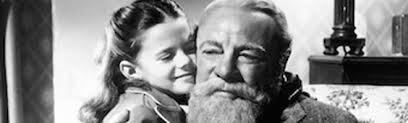
Today marks the start of the holiday season, but it doesn’t officially kick off for me until I’ve watched the Thanksgiving Day Parade and one of my favorite holiday films, Miracle on 34th Street (1947).
Until I see Santa arrive at the end of the parade there can be no Christmas Tree, tinsel, ornaments or stockings. This has been a tradition of mine since I was a kid. Without a doubt, Edmund Gwenn is Santa Claus. No matter what other films he’s made, each character turns into Kris Kringle. (he won the Academy Award for Best Supporting Actor) Gwenn played a cockney assassin in Hitchcock’s Foreign Correspondent in 1940, but all I could scream was “Santa, don’t throw that man off the ledge!”
Natalie Wood was precious as Susan, the precocious daughter of Maureen O’Hara (Doris) who doesn’t believe in fairy tales and attends a “progressive” school. Natalie Wood had an illustrious career until her death in 1981. She was able to make the transition from child star to ingenue starring opposite James Dean in Rebel Without a Cause (1955) and Warren Beatty in Splendor in the Grass (1961). Known as a loving, giving person, as well as a star, she’s always had a special place in my heart.
Doris is cynical as a result of a bitter divorce so she’s raising her daughter to be practical and sensible. None of this believing in fairy tales and Santa crap. All was going well until Doris – the parade coordinator asks Kris to replace the drunken Santa originally set for the Macy’s Thanksgiving Parade. Kris is a big hit and becomes Macy’s official Santa resulting in a personal relationship with Doris and Susan.
Kris is an immediate influence teaching Susan it’s okay to pretend after she tells him the other kids don’t play with her because she won’t join in their game and act like a zoo animal.
The production took flack from the Catholic League of Decency because how dare you to depict a divorced woman with a successful career and a young child as a “normal family.” Yep, 1940’s mentality and morality were hard at work.
Susan learning to act like a monkey!
Just as Doris is learning to have more faith in life and Susan is embracing imagination, Kris’s sanity is questioned and a legal battle ensues to prove that not only is he sane but the one and only Santa Claus. Fred (John Payne) who is Kris’s lawyer and Doris’s boyfriend, understands the importance of the spirit of Santa especially in the lives of Susan and Doris.
Kris is exonerated and Christmas day has arrived. Susan has asked for a very special present and is disappointed at the Christmas party to see it isn’t under the tree. Doris, in a refreshing change of heart, tells Susan she must have faith.
But, Santa Claus moves in mysterious ways and in the end teaches them both the true value of faith and miracles.
This site is about how to live our life in a meaningful way by accepting complete surrender to the Almighty with purity of mind and character. It is about the eternal religion of the world i.e. Hinduism which is very liberal to anyone because there are many branches or methods to get the divinity to turn our life into an ever blissful one.
Free listening and free download (mp3) chill and down tempo music (album compilation ep single) for free (usually name your price). Full merged styles: trip-hop electro chill-hop instrumental hip-hop ambient lo-fi boombap beatmaking turntablism indie psy dub step d'n'b reggae wave sainte-pop rock alternative cinematic organic classical world jazz soul groove funk balkan .... Discover lots of underground and emerging artists from around the world.