A long time ago in a galaxy far, far away…Women were the driving force behind Hollywood and the movies. Today we pay homage to the women who broke the glass ceiling and wrote and directed the films that gave birth to the “Golden Age” of cinema and the motion picture industry. Unfortunately, when the men realized the gold mine films were becoming, the women faded away thanks to the Hollywood studio system. Well, as the saying goes, “that’s the way they do you.”
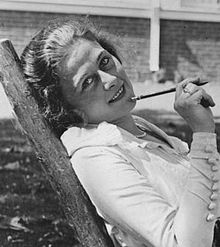
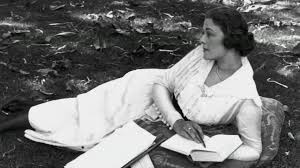
Frances Marion 1918
Frances Marion was a trailblazer. becoming one of the most powerful screenwriters of the 20th century. With a career that spanned decades, she became the first female to win an Academy Award for Best Adapted Screenplay in 1930 for the prison life film The Big House, starring Robert Montgomery, Wallace Beery and Chester Morris.
Marion’s research included visiting San Quentin to experience the atmosphere and lingo of the inmates. The movie gave audiences their first taste of hearing prison doors slam shut, tin cups clanking on mess-hall tables and prisoners’ feet shuffling down corridors.
Adding to her accolades, Frances received the Academy Award for Best Story for The Champ in 1932. The tearjerker chronicled the relationship between a washed out boxer (Wallace Beery) and his young son (Jackie Cooper). Marion was credited with writing 300 scripts and producing over 130 films.
Born Marion Benson Owens (November 18, 1888) in San Francisco, California, she worked as a journalist and served overseas as a combat correspondent during World War I. On her return home in 1910, she moved to Los Angeles and was hired as a writing assistant and actress by “Lois Weber Productions”, a film company owned and operated by another pioneer female film director Lois Weber.
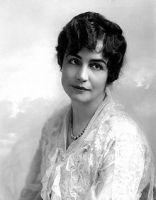
Lois Weber – Film Director
Frances was quite beautiful and could have continued as an actress but preferred to work behind the camera. She learned screenwriting from Lois Weber and went on to become the highest paid screenwriter, woman or man. Hollywood moguls competed for her stories and stars of the day Mary Pickford, Lillian Gish, Greta Garbo and Rudolph Valentino brought her characters to life on the screen.
From 1919 – 1939 her star was ascendant, born at the right place and the right time, honing her craft during one of the most liberating eras for women in film.
Mary Pickford
Lillian Gish
Greta Garbo
Rudolph Valentino
When Marion met Mary Pickford (actress, producer, screenwriter) they became best friends with Marion writing screen adaptations of Rebecca of Sunnybrook Farm and The Poor Little Rich Girl for Pickford. As a result of the commercial success of “The Poor Little Rich Girl” in 1917 Marion was signed as Pickford’s “exclusive writer” at the salary of $50,000 a year, an unprecedented arrangement for that time.
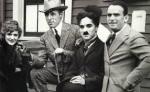
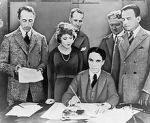
Pickford was the celebrated “America’s Sweetheart” and in 1919 together with her swashbuckler actor husband Douglas Fairbanks, Sr., director D.W. Griffith (Birth of a Nation) and “The Tramp” Charlie Chaplin established “United Artists” pictures.
These four were the leading figures in early Hollywood and this was their stand for independence against the powerful studio system. Mary Pickford was also one of the original 36 founders of the Academy of Motion Picture Arts and Sciences.
Mary Pickford, D.W. Griffith, Charlie Chaplin, Douglas Fairbanks
United Artists Logo 1919
Contract Signing 1919
In 1921, Frances Marion directed a film for the first time with Just Around the Corner. That same year, she directed her friend Mary Pickford in one of her own scripts entitled The Love Light. Their relationship was more than just writer and star, they were collaborators and the friendship between Pickford and Marion lasted more than 50 years.
Married four times, Frances Marion had two children with third husband, actor Fred Thomson. This was her longest marriage, lasting from 1919 until Thomson’s sudden and tragic death from a Tetanus infection in 1928. Frances’ great friend Mary Pickford had introduced them. Frances said it was love at first sight.
Fred Thomson and Frances Marion
For many years she was under contract to MGM Studios, but, independently wealthy, left Hollywood in 1946 to devote more time to writing stage plays and novels. Frances Marion published a memoir Off With Their Heads: A Serio-Comic Tale of Hollywood in 1972.
Frances died on May 12, 1973 leaving a legacy of innovation, independence and inspiration for future aspiring female writers. The documentary, Frances Marion: Without Lying Down,” is an insightful profile of her life and achievements in Hollywood.
Mary Pickford and Frances Marion
Narrated by “Pulp Fiction” actress Uma Thurman and Oscar-winner Kathy Bates, who gives voice to the screenwriter’s own words taken from her letters, diaries. and memoirs. The documentary also features footage from more than twenty of Marion’s movies, with commentary by silent film historian Kevin Brownlow, and film critic Leonard Maltin.
Available for purchase at Amazon.com, I highly recommend checking it out!
“I’ve spent my life searching for a man to look up to without lying down.” Frances Marion
It would take more than 60 years before women were once again present in meaningful numbers at every level of film production.
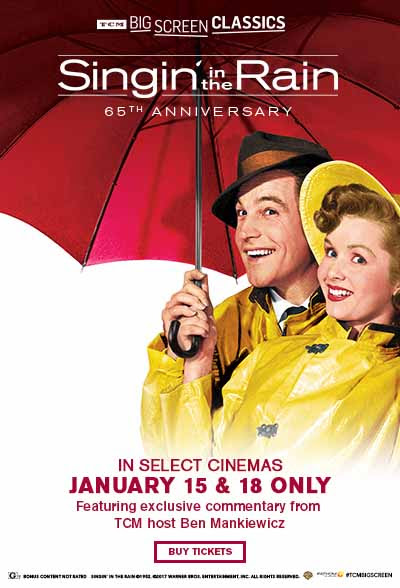
Fathom Events, Turner Classic Movies, and Warner Bros. Entertainment presents a special two-day event, Singin’ in the Rain 65th Anniversary, in select cinemas nationwide on Sunday, January 15 and Wednesday, January 18.
This special event also includes exclusive commentary fromTurner Classic Movies host Ben Mankiewicz,who will give insight into this classic film.
“Singin’ in the Rain” is on my list as one of the greatest musicals of all time! Funny with incredible dance numbers and a memorable score that will stand for generations.
A previous post on some of my favorite musical moments includes “nails on a chalkboard voice” Lina Lamont (Jean Hagen), who made Number One.
Gene Kelly, Debbie Reynolds and Donald O’Connor star in one of the greatest musicals ever filmed. Musician Don Lockwood (Kelly) rises to stardom during Hollywood’s silent-movie era–paired with the beautiful, jealous and dumb Lina Lamont (Jean Hagen).
Donald O’Connor, Debbie Reynolds, Gene Kelly
When Lockwood becomes attracted to young studio singer Kathy Selden (Reynolds), Lamont has her fired. But with the introduction of talking pictures, audiences laugh when they hear Lockwood speak for the first time–and the studio uses Selden to dub her voice.
Gene Kelly and Debbie Reynolds
This special 65th Anniversary Screening is a heartfelt dedication to Debbie Reynolds and in sympathy to the tragic loss of her daughter, actress, and writer Carrie Fisher.
Debbie was only 19 when she was cast in this classic but deftly held her own with the likes of legendary hoofers, Gene Kelly and Donald O’Connor!
Mary Frances “Debbie” Reynolds (April 1, 1932 – December 28, 2016)
In 2002, on the film’s 50th Anniversary, Debbie Reynolds shares her memories on the history and movie magic of “Singin’ in the Rain”.
Don’t miss this incredible opportunity to see “Singin’ in the Rain” on the big screen as it was originally shown.
“I’ll walk down the lane with a happy refrain…and singin’ just singin’ in the rain.” Gene Kelly
As a film student at The University of Michigan, I was exposed to the masters of cinema – Chaplin, Murnau, Kubrick, Lang, etc. There, we were challenged to critique and look beyond the surface to the underlying themes. “Metropolis” is supreme in incorporating intriguing layers of sub-texture and sub-plots.
Moloch Machine – (Power for the City)
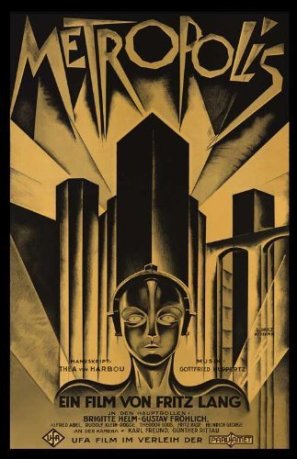
Austrian director Fritz Lang’s German Expressionistic masterpiece helped to develop the science-fiction genre, with innovative imagery from cinematographer Karl Freund, art design by Otto Hunte, Erich Kettelhut, and Karl Vollbrecht and set design by Edgar Ulmer.(set designer for The Phantom of the Opera) It was the last of Lang’s silent films. (Filmsite Movie Review)
Friedrich Christian Anton “Fritz” Lang (December 5, 1890 – August 2, 1976)
“Metropolis” was not just some sci-fi flick from the silent era, it’s a visually-compelling, allegory set in the dystopic, 21st-century city of Metropolis and represents a brilliant critique of the repercussions of man vs. machine and the brutality of the never-ending class struggle.
Establishing the tone of the film, this statement is presented following the opening credits.
THE MEDIATOR BETWEEN HEAD AND HANDS MUST BE THE HEART!
“Metropolis” took over 2 years to complete at ten times the budget for the usual Hollywood production of the time and influenced visuals associated with classic films such as; Chaplin’s war against the machines in Modern Times (1936), the mechanical hand of Dr. Strangelove in Stanley Kubrick’s Dr. Strangelove, Or: (1964), the resemblance between the Maria robot and the droid C-3PO in George Lucas’ Star Wars (1977) trilogy of films, and scenes of Los Angeles in Ridley Scott’s Blade Runner (1982) to name just a few.
Blade Runner
Modern Times
Dr. Strangelove
C 3-PO Star Wars
This symbolic tale was written by Lang’s wife Thea Von Harbou (from her own novel). Her vision detailed a self-indulgent, futuristic, industrial world built of skyscrapers and bridges incorporating the Art Deco style of the 20s for the 2026 city of Metropolis.
An ultra elite, 1% privileged class of powerful industrialists is juxtaposed with a subterranean environment of the nameless, oppressed and exploited drone-like slave labor class.
Made in Germany during the Weimar Period, Metropolis is set in a futuristic urban dystopia and follows the attempts of Freder (Gustav Fröhlich), the wealthy son of the city’s ruler, and Maria (Brigitte Helm), a poor worker, to overcome the vast gulf separating the classes of their city.
Brigitte Helm – Maria
Gustav Frohlich – Freder
Filming took place in 1925 at a cost of approximately five million Reichsmarks. The art direction draws influence from Bauhaus, Cubist, and Futurist design. (Wikipedia)
Fritz Lang directing the workers
As with all great films, “Metropolis” was influenced by the historical events occurring during its time. Centered around the developing Industrial Revolution and depressed economic times, the film also incorporates the rise of fascism in a pre-Hitler Weimar Republic Germany following World War I.
Another influence of the movie’s themes was the rise of the American labor movement and unions during the 1920s due to oppressive working conditions. “Metropolis”, like the Progressive, investigative journalists of the day, took on corrupt politicians and the establishment in an effort to make people aware of the contrast of poverty with the upper-crust classes of the opulent Roaring 20s.
I’m a steadfast believer that understanding history is empowering. “Metropolis” tackles the rise of immigration into the US and exploitation of workers at the beginning of the 20th century along with Capitalists exploiting labor. It deals with the conversation of doing what’s right versus greed and the power of modern science.
The creation of the evil android Maria (Bridgitte Helm) was an abuse of science but that same knowledge powered the city in the sky and could have been used to enrich the lives of the subterranean slaves.
Describing these themes and comparisons in “Metropolis” is like writing a piece for The Nation magazine today. The similarities are frightening like George Orwell’s “1984” or H.G. Well’s “The Time Machine”. It’s incredible to think that a film I critiqued back in the 70’s which was made in the 20’s is actually unfolding in the year 2016; only 10 years away from the 2026 Art Deco Metropolis city in the sky.
Does art imitate life or life imitate art? I’m not sure, but in our “reality” tv driven news programming, a low information population and the “I don’t believe in science” faction, we might as well be living in the dystopian world of “Metropolis”.
Lest we forget.
THE MEDIATOR BETWEEN HEAD AND HANDS MUST BE THE HEART!
◊
This is a restored version of “Metropolis”
If you’ve never seen it, I highly recommend this viewing experience. But, lasting 2 1/2 hours, prepare to settle in with an extra large bag of popcorn.
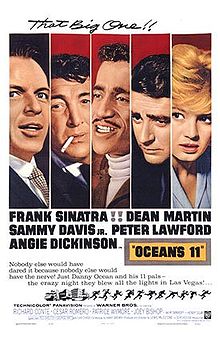
This New Year’s Eve some of us movie junkies are staying in for the festivities. If you’re doing the same, I recommend adding to your viewing list, “Ocean’s 11.” It’s a great New Year’s Eve, buddy movie and heist caper all in one. What better way to ring in the new year than with the coolest guys to ever hit the strip.
I can just hear Sinatra’s proposal. How about this, we’ll shoot a film during the day in Las Vegas then party and work the Sands Hotel at night. Unanimous vote. (EE-O-Eleven.)
Look out Vegas, here we come!
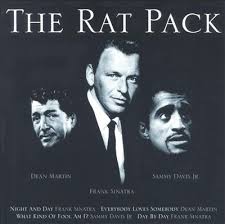
The Rat Pack: Frank Sinatra, Dean Martin and Sammy Davis, Jr.
Humphrey Bogart (regarded as the greatest male star by the American Film Institute in 1999) originated the concept of the “Rat Pack” with his “Clan.” He was “the man”, holding court nightly in the 50’s at Holmby Hills. (home of Bogey and his wife Lauren Bacall) He passed the torch to Frank Sinatra, (an original member of Bogart’s “Pack” who served as “pack master.”) After Bogey’s death in 1957, Frank’s boys became his “Rat Pack.”
Humphrey Bogart
Performers commonly associated with The Rat Pack: Joey Bishop and Peter Lawford.
Angie Dickinson and Shirley MacLaine were often referred to as the “Rat Pack Mascots.”
Peter Lawford, Sammy Davis, Jr, Frank Sinatra, Joey Bishop, Dean Martin
Danny Ocean isn’t really a fictional character, he IS Frank Sinatra. Believe it, his boys would do anything for him. Except for Dean, he was the only one who ever said no to old blue eyes. Frank really dug Dean’s truthfulness.
The plot revolves around a group of former World War II army buddies (under the command of Danny Ocean) conspiring to rob, on New Year’s Eve, five casinos on the Vegas strip. When Peter Lawford presented the story idea Frank Sinatra joked: “Forget the movie, let’s pull the job!”
Whenever one of the “Pack” was performing at a club in Vegas, the others would show up to support and usually put on an impromptu performance. While they were in town, Las Vegas was jam packed with admirers hoping to catch a show.
This performance was on June 20, 1965, featuring, Frank Sinatra, Dean Martin and Sammy Davis, Jr. Johnny Carson (known for The Tonight Show) served as the emcee, filling in for Joey Bishop who had hurt his back.
It would be their only televised concert together.
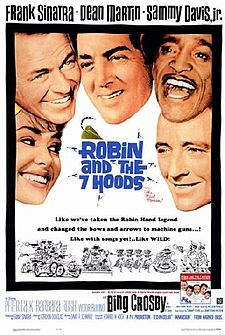
Set in Prohibition-era Chicago, the film is a take on the classic Robin Hood tale. This engaging musical features the Academy Award nominated song “My Kind of Town” sung by Frank Sinatra.
My favorite number is “Mr. Booze” sung by Bing Crosby. I love this scene because Robbo’s (Sinatra) club miraculously converts into a mission (due to some clever architectural tricks) to fool the police during a raid. Robbo’s gang breaks into the gospel version of “Mr. Booze” with Alan A Dale (Crosby) preaching and Little John (Dean) testifying on the lessons of temperance.
Peter Lawford was originally cast as Alan A. Dale, but due to a falling out with Frank Sinatra, Bing Crosby took over the role. At the time, Lawford’s brother-in-law was President John F. Kennedy and Lawford had arranged for The President to stay at Sinatra’s home. However, because of concerns over Frank’s ties to the “Mob”, the plans were scrapped.
“Mr. Booze, Mr. Booze, Mr. B double O, Z, E, don’t ever choose.”
Other numbers include:
“Don’t be a Do-Badder” sung by Bing Crosby
“Bang, Bang!” sung by Sammy Davis, Jr.
“Style” sung by Frank Sinatra, Dean Martin, Bing Crosby
My favorite Rat Pack movie reference line is from Clueless (1995).
Cher’s dad talking to her date who is dressed circa 60’s “Pack” style:
“What’s with you kid? You think the death of Sammy Davis, Jr. left an opening in The Rat Pack?” Too hilarious!!
Over 50 years later, Frank Sinatra, Dean Martin, and Sammy Davis, Jr. are still the coolest guys to ever hit the Vegas Strip!
2016 has been a challenging year in so many ways including the loss of some of our childhood idols and icons. As I reflect back on the year, these are some of my most heartbreaking moments.
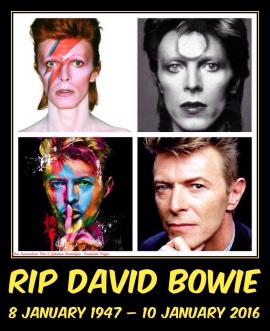
The loss of David Bowie truly touched my heart. I’ve followed and loved his music since 1972 with the release of the album – “The Rise and Fall of Ziggy Stardust and the Spiders from Mars”.
“Starman” from the 1972 album The Rise and Fall of Ziggy Stardust and the Spiders from Mars.
“If you’re sad today, just remember the world is over 4 billion years old and you somehow managed to exist at the same time as David Bowie”. – Dean Podesta
I’m appreciative of this tweet because I found it calming and it put Bowie’s passing in perspective. A true innovator. He will be missed.
Time reversed itself for a moment when I heard the news of Gene Wilder’s passing due to complications from Alzheimer’s Disease. He’s been a part of my life since “Willy Wonka” and his spirit helped me through the challenging and uncertain days of my fight against Colon and Breast Cancer.
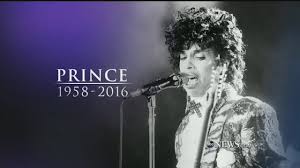
Our Prince is Gone – 1958-2016
Ever since Prince came on the scene his music has been such a vital part of my life. His passing is a tremendous loss personally and his enormous talent leaves a hole in our collective souls.
As the memories flood my mind I flashback to Prince and Morris Day with The Time performing at Hill Auditorium on the campus of my alma mater – The University of Michigan. This was 1978 before Prince was PRINCE. I can still see the audience swaying, fully in tune with Prince’s dynamic energy and saw a sea change, realizing this was the last time I would intimately see this badass, revolutionary genius.
It seems every time someone asks the question “What’s your favorite? (fill in the blank film) that’s what happens to me…BLANK; there are just too many. So, I decided to prep for the next occasion.
With the new film “La La Land” starring Ryan Gosling and Emma Stone being touted as this generation’s “Singing in the Rain”, I decided to start with the Musicals genre. These are some of my favorites that also made AFI’s list of the Top 5 Musicals of all time!
Lina: [with a voice to peel paint] And I cayn’t stand’im. Holy crap! This line makes the movie for me!!
This celebrated musical-comedy was directed and choreographed by Gene Kelly and Stanley Donen. Starring Kelly, Donald O’Connor, and Debbie Reynolds, it offers a lighthearted depiction of Hollywood in the late 1920s, with the three stars portraying performers caught up in the transition from silent films to “talkies.” (Wikipedia)
Ah, the Sharks and the Jets who turn a knife fight into the coolest, choreographed ballet I’ve ever seen. I also have a particular fondness for this film having performed in a community theater stage production.
Nominated for 11 Academy Awards and winning 10, including Best Picture (as well as a special award for Robbins), “West Side Story” is the record-holder for the most wins for a movie musical. (Wikipedia)
Cowardly Lion: ” Alright I’ll go in there for Dorothy. Wicked Witch or no Wicked Witch, guards or no guards, I’ll tear them apart. I may not come out alive, but I’m going in there. There’s only one thing I want you fellows to do.”
Notable for its use of Technicolor, fantasy storytelling, musical score, and unusual characters, over the years, it has become an icon of American popular culture. It was nominated for six Academy Awards, including Best Picture, but lost to “Gone with the Wind”. It did win in two other categories, including Best Original Song for “Over the Rainbow” and Best Original Score by Herbert Stothart. (Wikipedia)
Sally: ” I’m going to be a great film star! That is if booze and sex don’t get me first.”
This is a very prophetic quote considering the fate of many a would-be star.
This stylish, socially conscious musical drama was directed by the legendary choreographer Bob Fosse and stars Liza Minnelli, Michael York. and Joel Grey. The setting is Berlin in 1931 with the Nazis’ violent rise serving as a powerful, ever-present undercurrent in the film.
Liza Minnelli won the Best Actress Award for her portrayal of the flamboyant, cabaret performer, Sally Bowles, with the film also garnering Academy Awards for Best Supporting Actor (Joel Grey), Best Cinematography, Best Art Direction, Best Sound, Best Original Song Score and Adaptation, and Best Film Editing. It holds the record for most Oscars earned by a film not honored for Best Picture. “The Godfather” took the prize. (Wikipedia)
Although the stylized, Jazz Age hit “Chicago”(2002) didn’t make the AFI Top 5, (#12), I couldn’t omit this sizzling number, Cell Block Tango. “He had it comin'”☺☺
A film version of Chicago was to have been the next project for Bob Fosse, who had directed and choreographed the original 1975 Broadway production but he died before realizing his vision.
Fosse’s distinctive jazz choreography style is evident throughout and he is thanked in the credits. The movie explores the themes of celebrity, scandal, and corruption in Chicago during the Jazz Age. (Wikipedia)
Catherine Zeta-Jones, Richard Gere, Renée Zellweger
Starring Catherine Zeta-Jones, Renée Zellweger, and Richard Gere, “Chicago” centers on Velma Kelly (Zeta-Jones) and Roxie Hart (Zellweger), two murderesses who find themselves in jail together awaiting trial in 1920s Chicago.
Queen Latifah “Mama”
For her part, the multi-talented rapper, actress, producer, Queen Latifah’s role as Matron “Mama” Morton earned her a nomination for Best Supporting Actress. The movie was the winner of six Academy Awards in 2003, including Best Picture. The film was the first musical to win Best Picture since Oliver! in 1968.
There are definitely a lot more for the list so please, let me know some of your picks in the comments!
Kirk Douglas’s personality has always been larger than life; with an incredible presence and life that has spanned these 100 years.
Kirk Douglas (born Issur Danielovitch; December 9, 1916) is an American actor, producer, director, and author. He is one of the last survivors of Hollywood’s Golden Age.
Young Kirk Douglas
After an impoverished childhood with immigrant parents and six sisters, he had his film debut in “The Strange Love of Martha Ivers” (1946) with Barbara Stanwyck. Douglas soon developed into a leading box-office star throughout the 1950s and 1960s, known for serious dramas, including westerns and war movies. (Wikipedia)
During a 64-year acting career, he has appeared in more than 90 movies and in 1960 (through his production company – Bryna Productions) helped end the Hollywood Blacklist by hiring blacklisted writer Dalton Trumbo to write “Spartacus” (1960) with an official on-screen credit. I gained a lot of respect for Douglas when I learned of this decision.
Kirk Douglas as Spartacus
Screenwriter Dalton Trumbo was blacklisted at the time as one of the Hollywood Ten. The ten writers and directors who were cited for contempt of Congress and blacklisted after refusing to answer questions about their alleged involvement with the Communist Party.
Douglas publicly announced that Trumbo was the screenwriter of Spartacus, and President-elect John F. Kennedy crossed American Legion picket lines to view the film, helping to end blacklisting. The author of the novel on which it is based, Howard Fast, was also blacklisted, and originally had to self-publish it. (Wikipedia)
The film became the biggest moneymaker in Universal Studios’ history until it was surpassed by Airport (1970).
This scene from “Spartacus” is very apropos; rebels standing up for Spartacus the way Douglas stood up for Dalton Trumbo.
I love this cinematic moment reflecting the truth that when we stand together, we are a mighty force!
Douglas’s image as a tough guy and international star were established in his eighth film, “Champion” (1949) after producer Stanley Kramer chose him to play a selfish boxer. He received his first Academy Award nomination and the film earned six nominations in all. Variety magazine called it “a stark, realistic study of the boxing rackets.” (Wikipedia)
From that film on, Kirk decided that to succeed as a star, he needed to ramp up his intensity, overcome his natural shyness, and choose stronger roles.
Douglas’early films include Young Man with a Horn (1950), playing opposite Lauren Bacall and Doris Day; Ace in the Hole opposite Jan Sterling (1951); and Detective Story (1951). He received a second Oscar nomination for his dramatic role in The Bad and the Beautiful (1952), opposite Lana Turner, and his third nomination for portraying Vincent van Gogh in Lust for Life (1956). (Wikipedia)
As an actor and philanthropist, Douglas has received three Academy Award nominations, an Oscar for Lifetime Achievement, and the Presidential Medal of Freedom. As an author, he has written ten novels and memoirs. Currently, he is No. 17 on the American Film Institute’s list of the greatest male screen legends of classic Hollywood cinema, and the highest-ranked living person on the list.
Wife Anne and Kirk Douglas
A birthday gala was held for Douglas in the Sunset Room at the Beverly Hills Hotel on December 9th. In keeping with his larger than life persona, he entered the celebration with the theme from “Rocky” blaring over the speakers.
Son, Michael Douglas kicked off the proceedings, saying that it’s not just about age, but about the life he’s lived and what he’s accomplished.
Kirk Douglas, seated left, holds hands with his wife Anne Douglas, seated right, as they pose with family members, their son Michael, standing second left with his wife Catherine Zeta-Jones, and their children, Carys Zeta-Jones, left, and son DylanCREDIT:CHRIS PIZZELLO/INVISION/AP
As clips from Douglas’ films played in the background, fun and poignant stories were shared about the legend from Don Rickles, Steven Spielberg, friends, and family.
“My wife Anne and I always use these happy occasions to give presents to the institutions we support through our foundation,” he wrote. “Giving is a selfish act, I maintain because it makes you feel so good. I am always asked for advice on living a long and healthy life. I don’t have any. I do believe, however, that we have a purpose for being here. I was spared after a helicopter crash and a stroke to do more good in the world before I leave it.” Kirk Douglas
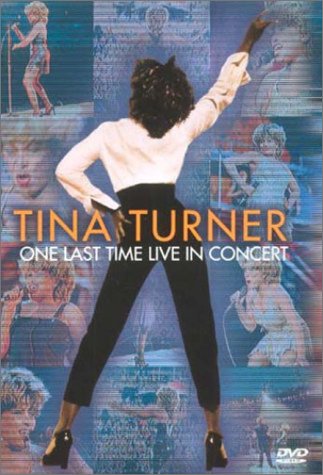
Anytime I feel I’m running on low energy I just channel Tina and my body can’t help but pulsate.
Today we celebrate Tina Turner’s 77th birthday and the life of an icon and true RockStar! I marvel at her eternal youth and vitality. I wanna be just like her when I grow up!
Tina Turner, born Anna Mae Bullock on November 26, 1939, is an acclaimed recording artist, dancer, actress, and author, whose career has spanned more than half a century, earning her widespread recognition and numerous awards.
Born and raised in Nutbush, Tennesse, she began her musical career in the mid-1950s as a featured singer with Ike Turner’s Kings of Rhythm, first recording in 1958 under the name “Little Ann.”
Anna Mae Bullock
Her introduction to the public as Tina Turner began in 1960 as a member of the Ike & Tina Turner Revue. Success followed with a string of notable hits credited to the duo, including “A Fool in Love”, “River Deep – Mountain High” (1966), “Proud Mary” (1971) and “Nutbush City Limits” (1973), a song which she herself wrote. (Wikipedia)
Ike & Tina Turner Revue – (Tina center)
Imitating Miss Tina was part of my childhood as my girlfriends and I would shake our booties whipping our hair and working it out with the ladies.
This is an early performance of the gift that is Miss Tina Turner!
In her autobiography, I, Tina, she revealed several instances of severe domestic abuse against her by Ike Turner prior to their 1976 split and subsequent 1978 divorce. Raised as a Baptist, she encountered faith with Nichiren Shoshu Buddhism in 1971, crediting the spiritual chant of Nam Myoho Renge Kyo, which Turner claims helped her to endure during difficult times. (Wikipedia)
This concert footage is part of Tina’s “comeback” tour after those early, disastrous years with Ike Turner. I wrote in a previous post about Tina’s life as portrayed by Angela Bassett in “What’s Love Got to Do With It?”and what a remarkable life Tina has endured.
Tina Turner (l) Angela Bassett (r) “What’s Love Got to Do With It”
She’s always been my idol since I was a child and after seeing Tina looking hot in this white leather outfit and her boundless energy I stopped boohooing about baby weight gained after my daughter and got my butt back into the gym.
Seeing her in concert was a night I’ll always treasure. That woman is all that and no one compares. If you haven’t had the pleasure.
Enjoy!
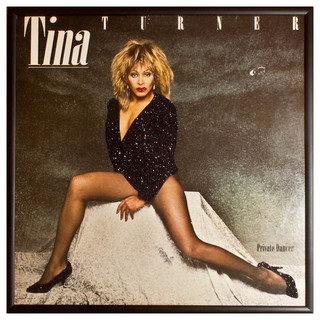
After her divorce from Ike Turner, Tina rebuilt her career through live performances. In the early 1980s, she launched a major comeback with another string of hits, starting in 1983 with the single “Let’s Stay Together” followed by the 1984 release of her fifth solo album Private Dancer which became a worldwide success. “What’s Love Got to Do with It”, the lead single won three Grammy Awards including Record of the Year. (Wikipedia)
Her solo success continued with the multi-platinum albums Break Every Rule and Foreign Affair and with singles such as “We Don’t Need Another Hero (Thunderdome)”, “The Best” and “GoldenEye” for the James Bond film of the same name. “What’s Love Got to Do with It” was later used as the title of a loosely based biographical film adapted from her autobiography.
In addition to her musical career, Tina has also experienced success in films, including the role of Acid Queen in the 1975 rock musical “Tommy”, a starring role alongside Mel Gibson in the 1985 action film Mad Max Beyond Thunderdome, and a cameo role in the 1993 film Last Action Hero. (Wikipedia)
Tina’s critically acclaimed role as “The Acid Queen” in The Who’s “Tommy” (1975) was outstanding! Still a classic today.
If you weren’t on acid, you sure felt like it!
One of the world’s best-selling music artists of all time, she has also been referred to as The Queen of Rock ‘n’ Roll. Tina has been called the most successful female Rock ‘n’ Roll artist, receiving eleven Grammy Awards, including eight competitive awards and three Grammy Hall of Fame awards.
Miss Turner has also sold more concert tickets than any other solo performer in history. Her combined album and single sales total approximately 180 million copies worldwide, making her one of the biggest selling females in music history.
Her Tina!: 50th Anniversary Tour became one of the highest selling ticketed shows of 2008–09. Rolling Stone ranked her no. 63 on their 100 greatest artists of all time and in 1991, she was inducted into the Rock and Roll Hall of Fame. (Wikipedia)
Tina Turner’s career has been a marvel to watch. Despite all odds, she brought herself up from Nutbush to the pentacle of success in music, film, and continues to be an inspirational figure.
Thank you, Tina, for uplifting my life and demonstrating that you can accomplish whatever you want with determination and faith. You are simply the best!
Today marks the start of the holiday season, but it doesn’t officially kick off for me until I’ve watched the Thanksgiving Day Parade and one of my favorite holiday films, Miracle on 34th Street (1947).
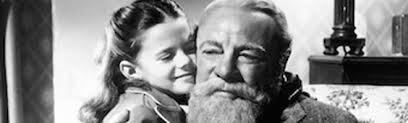
Until I see Santa arrive at the end of the parade there can be no Christmas Tree, tinsel, ornaments or stockings. This has been a tradition of mine since I was a kid. Without a doubt, Edmund Gwenn is Santa Claus. No matter what other films he’s made, each character turns into Kris Kringle. (he won the Academy Award for Best Supporting Actor) Gwenn played a cockney assassin in Hitchcock’s Foreign Correspondent in 1940, but all I could scream was “Santa, don’t throw that man off the ledge!”
Natalie Wood was precious as Susan, the precocious daughter of Maureen O’Hara (Doris) who doesn’t believe in fairy tales and attends a “progressive” school. Natalie Wood had an illustrious career until her death in 1981. She was able to make the transition from child star to ingenue starring opposite James Dean in Rebel Without a Cause (1955) and Warren Beatty in Splendor in the Grass (1961). Known as a loving, giving person, as well as a star, she’s always had a special place in my heart.
Doris is cynical as a result of a bitter divorce so she’s raising her daughter to be practical and sensible. None of this believing in fairy tales and Santa crap. All was going well until Doris – the parade coordinator asks Kris to replace the drunken Santa originally set for the Macy’s Thanksgiving Parade. Kris is a big hit and becomes Macy’s official Santa resulting in a personal relationship with Doris and Susan.
Kris is an immediate influence teaching Susan it’s okay to pretend after she tells him the other kids don’t play with her because she won’t join in their game and act like a zoo animal.
The production took flack from the Catholic League of Decency because how dare you depict a divorced woman with a successful career and a young child as a “normal family.” Yep, 1940’s mentality and morality were hard at work.
Susan learning to act like a monkey!
Just as Doris is learning to have more faith in life and Susan is embracing imagination, Kris’s sanity is questioned and a legal battle ensues to prove that not only is he sane but the one and only Santa Claus. Fred (John Payne) who is Kris’s lawyer and Doris’s boyfriend, understands the importance of the spirit of Santa especially in the lives of Susan and Doris.
Kris is exonerated and Christmas day has arrived. Susan has asked for a very special present and is disappointed at the Christmas party to see it isn’t under the tree. Doris, in a refreshing change of heart, tells Susan she must have faith.
But, Santa Claus moves in mysterious ways and in the end teaches them both the true value of faith and miracles.
I’m a lifelong fan of Halloween and Universal Horror films. From “The Phantom of the Opera”(1925) to “The Wolfman”(1941), I own the entire catalog.
And, when you take those classic monster movies and add in the hilarity of the top comedy duo of the day, you end up with the hit comedy-horror flick “Abbott and Costello Meet Frankenstein” (1948).
Starring the legendary comedy team of Bud Abbott and Lou Costello the production has the reputation of being the final nail in the coffin of taking seriously Universal Horror monsters. The film is also considered the swan song for the “Big Three” Universal horror monsters – Count Dracula (Bela Lugosi), Frankenstein’s monster played by (Glenn Strange), and the Wolf Man (Lon Chaney, Jr.), none of whom had appeared in a Universal film since 1945’s House of Dracula.
left to right – Bud Abbott, Lou Costello, Frankenstein (Glenn Strange), Dracula (Bela Lugosi), and The Wolfman (Lon Chaney, Jr.)
The movie makes glorious fun of the classic monsters, Dracula, Frankenstein, and The Wolfman and is one of my all-time favorites!
Bud Abbott and Lou Costello Meet Frankenstein (the film’s poster title), or Bud Abbott Lou Costello Meet Frankenstein (the onscreen title)—although the film is usually referred to as simply Abbott and Costello Meet Frankenstein—is a 1948 American horror comedy film directed by Charles Barton and starring the comedy team of Abbott and Costello. The picture is the first of several films where the comedy duo meets classic characters from Universal’s horror film stable. (Wikipedia)
The plot revolves around Lawrence Talbot-The Wolfman (Lon Chaney, Jr.) making an urgent call from London to a Florida railway station where Chick Young (Bud Abbott) and Wilbur Grey (Lou Costello) work as baggage clerks. Wilbur answers the phone, and Talbot tries to impart to him the danger of a shipment due to arrive for the “McDougal House Of Horrors”, a local wax museum, which purportedly contains the actual bodies of Count Dracula (Béla Lugosi) and the Frankenstein Monster (Glenn Strange).
Bud and Lou at work
However, before he is able to warn Wilbur, a full moon rises, and Talbot transforms into The Werewolf. Wilbur, thinking the call is a prank, hangs up and continues on with his work day. Later that night, Chick and Wilbur arrive at McDougal’s “House Of Horrors”, open the first crate and find a coffin with “Dracula” inscribed on the front.
When Chick leaves to retrieve the second crate, Wilbur witnesses Dracula awaken and he tries to get Chick’s attention. However, when Chick returns with the second crate, Dracula hides just in time to go unnoticed. Dracula hypnotizes Wilbur and re-animates Frankenstein’s Monster. The plot thickens as Dracula intends to transplant Wilbur’s brain into the Frankenstein Monster. What could possibly go wrong?
The film is peppered with classic Abbott and Costello humor. In a discussion whether Costello would share an extra female admirer of his:
Chick Young: You know the old saying? Everything comes in threes.Now suppose a third girl should fall in love with you?
Wilbur Grey: What’s her name?
Chick Young: We’ll say her name is Mary.
Wilbur Grey: Is she pretty?
Chick Young: Beautiful!
Wilbur Grey: Naturally, she’d have to be.
Chick Young: Now you have Mary, you have Joan, and you have Sandra. So, to prove to you that I’m your pal, your bosom friend, I’ll take one of the girls off your hands.
Wilbur Grey: Chick, you’re what I call a real pal… you take Mary.
Trivia:
The film was originally intended to be titled The Brain of Frankenstein, but its name was changed prior to the filming schedule, which ran from February 5 through March 20, 1948.
During filming, Glenn Strange found Costello so funny he would often break up laughing, requiring many retakes (this is readily apparent in the scene where Costello sits on the Monster’s lap).
Boris Karloff refused to actually see this film, although he did help promote the film and can be seen in several publicity photos, including one where he is buying a ticket. Karloff appeared with the duo the next year in Abbott and Costello Meet the Killer, Boris Karloff, and in 1953 in Abbott and Costello Meet Dr. Jekyll and Mr. Hyde.
During the scene in the laboratory where the Monster comes after Chick and Wilbur after throwing Sandra through the window, Glenn Strange stepped on a camera cable, causing the camera to fall and break some bones in his foot. Lon Chaney, Jr., who was not working that day and who had previously played the Monster in The Ghost of Frankenstein, took over the role of the Monster for that scene as well as the scene where the monster is throwing barrels and crates at Wilbur and Chick while they are trying to escape in a rowboat at the pier.
This was the only time Béla Lugosi reprised the role he had created in Dracula (1931). He had previously portrayed vampires in Mark of the Vampire (1935), The Return of the Vampire (1943) and would do so again in Mother Riley Meets the Vampire (1952) (and made a gag cameo as Dracula in a 1933 Hollywood on Parade short), but this was the only other time he played Dracula as a sustained role on film.
Abbott and Costello were a comedy double act during the early Classical Hollywood era of American cinema. The team was composed of William “Bud” Abbott and Lou Costello whose work in vaudeville and on stage, radio, film and television made them the most popular comedy team during the 1940s and early 1950s. Their patter routine “Who’s on First?” is one of the best-known comedy routines of all time and set the framework for many of their best-known comedy bits. (Wikipedia)
Bud Abbott and Lou Costello
In 2001, the United States Library of Congress deemed “Abbott and Costello Meet Frankenstein”culturally, historically, or aesthetically significant” and selected it for preservation in the National Film Registry, and in September 2007, Readers Digest selected the movie as one of the top 100 funniest films of all time. The film is number 56th on the list of the “American Film Institute’s 100 Funniest American Movies”. (Wikipedia)
“Abbott and Costello Meet Frankenstein” is a playful romp through the Universal Horror franchise and a great family movie to add to your Halloween viewing list.
This site is about how to live our life in a meaningful way by accepting complete surrender to the Almighty with purity of mind and character. It is about the eternal religion of the world i.e. Hinduism which is very liberal to anyone because there are many branches or methods to get the divinity to turn our life into an ever blissful one.
Free listening and free download (mp3) chill and down tempo music (album compilation ep single) for free (usually name your price). Full merged styles: trip-hop electro chill-hop instrumental hip-hop ambient lo-fi boombap beatmaking turntablism indie psy dub step d'n'b reggae wave sainte-pop rock alternative cinematic organic classical world jazz soul groove funk balkan .... Discover lots of underground and emerging artists from around the world.