“Stormy Weather” – An African American Showcase 🎥 🎶

 In honor of Black History Month, I’ll be featuring films either starring or representing African American themes.

My next film for the month is “Stormy Weather (1943). An American musical film produced and released by 20th Century Fox. Considered one of the best Hollywood musicals with an all African-American cast, the other being MGM’s Cabin in the Sky. “Stormy Weather” is considered a brilliant showcase of some of the top African-American performers of the time, during an era when African-American actors and singers rarely appeared in lead roles in mainstream Hollywood productions, especially those of the musical genre.

Stormy Weather cast

This movie blew my mind!  I saw it as a kid in the early sixties having no idea that there had ever been an all Black cast in a Hollywood production. Most of the premier entertainers of the 1940’s appeared in this tour de force that still stands as one of the best musicals of all time!

Classic Cab Calloway – “Zoot Suiting” it!


Directed by Andrew L. Stone
Produced by William LeBaron
Written by Jerry Horwin, Seymour B. Robinson (story)
H.S. Kraft (adaptation)
Starring Lena Horne
Bill Robinson
Cab Calloway
Katherine Dunham
Fats Waller
Fayard Nicholas
Harold Nicholas
Ada Brown
Dooley Wilson
Music by Harold Arlen
Cinematography Leon Shamroy
Editing by James B. Clark
Distributed by 20th Century Fox
Release dates
  • July 21, 1943
Running time 78 minutes
Country United States
Language English

Lena’s rendition of “Stormy Weather”, featuring  African-American modern dance innovator Katherine Dunham and dancers.

Katherine Dunham and troupe’s “Stormy Weather” full dance sequence.

“Stormy Weather” was the 2nd all Black cast film made by a major studio in the 1940’s. “Cabin in the Sky” (1943) was the 1st, produced by MGM. Lena Horne starred in both and became famous for her rendition of “Stormy Weather” although Ethel Waters first performed the classic at The Cotton Club Nightclub in Harlem in 1933.

Ethel Waters was a famous blues, jazz, gospel vocalist and actress.  Her best-known recordings include “Dinah”, “Stormy Weather”, “Taking a Chance on Love” and “Cabin in the Sky” (She also starred in the film) Let’s enjoy her interpretation of the classic tune by Arlen and Koehler:

The song was written by Harold Arlen and Ted Koehler who worked as music composers at the renowned Cotton Club from 1930-1934. They wrote many of the jazz revue songs that were performed at the club and are still classics today. Harold Arlen wrote the music and Ted Koehler the lyrics.

Awards

“Stormy Weather” was selected in 2001 to The Library of Congress National Film Registry.


Stormy Weather 1

Get ready to have your “mind blown”!  This dance sequence by the Nicholas Brothers is unreal.  Check it out.  Holy crap!!


Pioneering Women Filmmakers – Lois Weber

The Early Visionaries of American Film: A Series – Part 2

star wars galaxy

A long time ago in a galaxy far, far away…Women were the driving force behind Hollywood and the movies. This is the second part of a series paying homage to the women who broke the glass ceiling and wrote and directed the films that gave birth to the “Golden Age” of cinema and the motion picture industry.  Unfortunately, when the men realized the gold mine films were becoming, the women faded away thanks to the Hollywood studio system. Well, as the saying goes, “that’s the way they do you.”

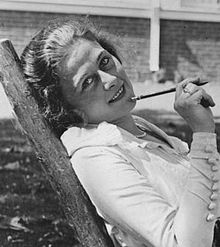
Lois Weber (June 13, 1879 – November 13, 1939)

Florence Lois Weber was an American silent film actress, screenwriter, producer, and director, who is considered the most important female director the American film industry has known and is one of the most important and prolific film directors in the era of silent films. Along with D.W. Griffith, Lois Weber was the American cinema’s first genuine auteur, “a filmmaker whose personal influence and artistic control over a movie are so great that the filmmaker is regarded as the author of the movie”. In that spirit, Lois Weber utilized the motion picture to put across her own ideas and philosophies.

Weber brought to the screen her concerns for humanity and social justice in an estimated 200 to 400 films, of which as few as twenty have been preserved, and she has been credited by IMDb with directing 135 films, writing 114, and acting in 100. Weber was also one of the first directors to come to the attention of the censors in Hollywood’s early years.

During the war years, Weber achieved tremendous success by combining commercially successful scripts with a rare vision of cinema as a moral tool. At her zenith, few men, before or since, have retained such absolute control over the films they have directed – and certainly no women directors have achieved the powerful status once held by Lois Weber. By 1920, Weber was considered the premier woman director of the screen and author and producer of the biggest money-making features in the history of the film business.

Among Weber’s notable films are the controversial “Hypocrites”, which featured the first full-frontal female nude scene in 1915; the 1916 film “Where Are My Children?”, which discussed abortion and birth control, and was added to the National Film Registry in 1993; and what is often considered her masterpiece, “The Blot” in 1921.

In 1913, Weber and husband Smalley collaborated in directing a ten-minute thriller, “Suspense”, based on the play Au Telephone by André de Lorde, which had been filmed in 1908 as “Heard over the ‘Phone” by Edwin S. Porter. Adapted by Weber, it used multiple images and mirror shots to tell the story of a woman (Weber) threatened by a burglar (Douglas Gerrard). Weber has been credited with pioneering the use of the split-screen technique to show simultaneous action in this film, According to film historian Tom Gunning, “No film made before WWI shows a stronger command of film style than “Suspense” which outdoes even Griffith for emotionally involved filmmaking”. “Suspense” was released on July 6, 1913.

loisweberSuspense_(1913_film)

Suspense” – Split Screen

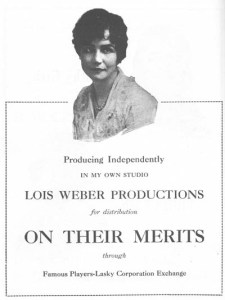
In 1913 Weber was one of the first directors to experiment with sound, making the first sound films in the United States, and was also the first American woman to direct a full-length feature film when she and husband Phillips Smalley directed “The Merchant of Venice” in 1914, and in 1917 the first woman director to own her own film studio.

Lois_Weber_Productions

In Part 1 of this series we talked about the accomplishments of director Frances Marion. Lois Weber discovered and inspired director and screenwriter Frances Marion.

For her contribution to the motion picture industry, on February 8, 1960, Lois Weber was awarded a star on the Hollywood Walk of Fame.

In Part 3 of this series, we’ll discuss contemporary female filmmakers and their viewpoint on Hollywood and the world in which we live.

Pioneering Women Filmmakers

The Early Visionaries of American Film: A Series – Part 1

star wars galaxy

A long time ago in a galaxy far, far away…Women were the driving force behind Hollywood and the movies. This is the first part in a series paying homage to the women who broke the glass ceiling and wrote and directed the films that gave birth to the “Golden Age” of cinema and the motion picture industry.  Unfortunately, when the men realized the gold mine films were becoming, the women faded away thanks to the Hollywood studio system. Well, as the saying goes, “that’s the way they do you.”


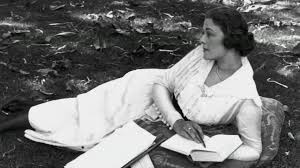
Frances Marion 1918

Frances Marion 1918


Frances Marion was a trailblazer. becoming one of the most powerful screenwriters of the 20th century. With a career that spanned decades, she became the first female to win an Academy Award for Best Adapted Screenplay in 1930 for the prison life film The Big House, starring Robert Montgomery, Wallace Beery, and Chester Morris. Her research included visiting San Quentin for the atmosphere and lingo of the inmates. The movie gave audiences their first experience of hearing prison doors slam shut, tin cups clanking on mess-hall tables and prisoners’ feet shuffling down corridors.


Frances also received the Academy Award for Best Story for The Champ in 1932. The tearjerker chronicled the relationship between a washed out boxer (Wallace Beery) and his young son (Jackie Cooper). Marion was credited with writing 300 scripts and producing over 130 films.


Born Marion Benson Owens (November 18, 1888) in San Francisco, California, she worked as a journalist and served overseas as a combat correspondent during World War I. On her return home in 1910, she moved to Los Angeles and was hired as a writing assistant, and actress by “Lois Weber Productions”, a film company owned and operated by pioneer female film director Lois Weber. (more on Lois Weber in Part 2 of the series)


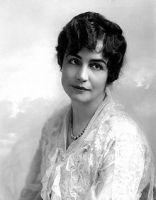
Lois Weber

Lois Weber – Film Director

Frances was quite beautiful and could have been an actress but preferred to work behind the camera. She learned screenwriting from Lois Weber and went on to become the highest paid screenwriter, woman or man. Hollywood moguls competed for her stories and stars of the day Mary Pickford, Lilian Gish, Greta Garbo and Rudolph Valentino brought her characters to life on the screen. From 1919 – 1939 her star was ascendant, born at the right place and the right time, honing her craft during one of the most liberating eras for women in film.


When Marion met Mary Pickford (actress, producer, screenwriter) they became best friends with Marion writing screen adaptations of Rebecca of Sunnybrook Farm and The Poor Little Rich Girl for Pickford. As a result of the commercial success of “The Poor Little Rich Girl” in 1917 Marion was signed as Pickford’s “exclusive writer” at the salary of $50,000 a year, an unprecedented arrangement for that time.

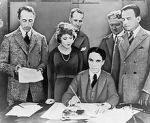
Pickford was the celebrated “America’s Sweetheart” and in 1919 together with her swashbuckler actor husband Douglas Fairbanks, Sr., director D.W. Griffith (Birth of a Nation) and “The Tramp” Charlie Chaplin established “United Artists” pictures. These four were the leading figures in early Hollywood and this was their stand for independence against the powerful studio system. Mary was also  one of the original 36 founders of the Academy of Motion Picture Arts and Sciences.


In 1921, Frances Marion directed a film for the first time with Just Around the Corner. That same year, she directed her friend Mary Pickford in one of her own scripts entitled The Love Light. Their relationship was more than just writer and star, they were collaborators and the friendship between Pickford and Marion lasted more than 50 years.

Married four times, Frances Marion had two children with third husband, actor Fred Thomson. This was her longest marriage, lasting from 1919 until Thomson’s sudden and tragic death from a Tetanus infection in 1928. Frances’ great friend Mary Pickford had introduced them. Frances said it was love at first sight.


Fred Thomson and Frances Marion

Fred Thomson and Frances Marion

For many years she was under contract to MGM Studios, but, independently wealthy, she left Hollywood in 1946 to devote more time to writing stage plays and novels. Frances Marion published a memoir Off With Their Heads: A Serio-Comic Tale of Hollywood in 1972.

Frances died on May 12, 1973 leaving a legacy of innovation, independence and inspiration for future aspiring female writers. The documentary, Frances Marion: Without Lying Down,” is an insightful profile of her life and achievements in Hollywood.


Without Lying Down

Mary Pickford and Frances Marion


Narrated by “Pulp Fiction” actress Uma Thurman and Oscar-winner Kathy Bates, who gives voice to the screenwriter’s own words taken from her letters, diaries. and memoirs. The documentary also features footage from more than twenty of Marion’s movies, with commentary by silent film historian Kevin Brownlow, and film critic Leonard Maltin.

I was fortunate enough to catch it on Turner Classic Movies and it was very enlightening on women’s roles in Hollywood. It’s also available for purchase at Amazon.com. I highly recommend checking it out!

  frances marion lying

“I’ve spent my life searching for a man to look up to without lying down.” Frances Marion


It took more than 60 years before women were once again present in meaningful numbers at every level of film production.


Oscar Michaeaux – The Czar of Black Hollywood 🎥

oscarmicheaux oscarmicheauxdirector

Oscar Devereaux Micheaux

January 2, 1884 – March 25, 1951

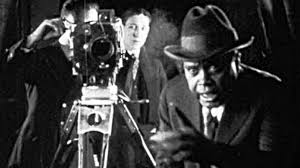
Probably not well known but a very important artist and groundbreaker in the early days of cinema, Oscar Micheaux was definitely a man ahead of his time. He was the most successful African-American filmmaker of the first half of the twentieth century and the most prominent producer of race films. He produced both silent films and “talkies” as a film director and independent producer of more than 44 films.

Micheaux’s movies were a challenge to racial segregation and an alternative outlet for black moviegoers. He is thought to have written, produced and directed more than 40 films from 1919 to 1948.

In response to D.W. Griffith’s outrageous and racist depiction of African-Americans in his landmark film“The Birth of a Nation” (1915) Micheaux produced “Within Our Gates” (1920). It is considered an important expression of African-American life in the years immediately following World War I when violent racist incidents occurred throughout the United States, but most frequently in the South. Produced, written and directed by Micheaux, it is his second and the oldest known surviving film made by an African-American director.

Lost for decades, a single print of the film, entitled La Negra (The Black Woman), was discovered in Spain in the 1970s. In 1992, “Within Our Gates” was selected by the Library of Congress for preservation in the United States National Film Registry as being “culturally, historically, and aesthetically significant”.

On his style:

Micheaux said,

“My results…might have been narrow at times, due perhaps to certain limited situations, which I endeavored to portray, but in those limited situations, the truth was the predominate characteristic. It is only by presenting those portions of the race portrayed in my pictures, in the light and background of their true state, that we can raise our people to greater heights. I am too imbued with the spirit of Booker T. Washington to engraft false virtues upon ourselves, to make ourselves that which we are not.”

◊◊◊◊◊◊

Micheaux died on March 25, 1951, in Charlotte, North Carolina, of heart failure. He is buried in Great Bend Cemetery in Great Bend, Kansas, the home of his youth. His gravestone reads: “A Man Ahead of His Time”.

In Memoriam


R.I.P. David Bowie

The loss of David Bowie truly touched my heart. I’ve followed and loved his music since 1972 with the release of the album  – “The Rise and Fall of Ziggy Stardust and the Spiders from Mars”.

“Starman” from the 1972 album The Rise and Fall of Ziggy Stardust and the Spiders from Mars.

“If you’re sad today, just remember the world is over 4 billion years old and you somehow managed to exist at the same time as David Bowie”. – Dean Podesta

I’m appreciative of this tweet because I found it calming and it put Bowie’s passing in perspective. A true innovator. He will be missed.


image


Shining stars we lost in 2015.

R.I.P  All you shining stars!


The Coolest Guys to Ever Hit the Vegas Strip! 😎

Frank Sinatra, Dean Martin and Sammy Davis, Jr.

The Rat Pack

This New Year’s Eve some of us movie junkies are staying in for the festivities. If you’re doing the same, I recommend adding to your viewing list, “Ocean’s 11.” It’s a great New Year’s Eve, buddy movie and heist caper all in one. What better way to ring in the new year than with the coolest guys to ever hit the strip. 

Ocean’s 11 (1960)

Ocean'sEleven(1960)Poster

I can just hear Sinatra’s proposal.  How about this, we’ll shoot a film during the day in Las Vegas then party and work the Sands Hotel at night.  Unanimous vote.  (EE-O-Eleven.)

 Look out Vegas, here we come!

The Rat Pack: Frank Sinatra, Dean Martin and Sammy Davis, Jr.

Humphrey Bogart (regarded as the greatest male star by the American Film Institute in 1999) originated the concept of the “Rat Pack” with his “Clan.”  He was “the man”, holding court nightly in the 50’s at Holmby Hills. (home of Bogey and his wife Lauren Bacall)  He passed the torch to Frank Sinatra, (an original member of Bogart’s “Pack” who served as “pack master.”)  After Bogey’s death in 1957,   Frank’s boys became his “Rat Pack.”

Humphrey Bogart

Bogart

Performers commonly associated with The Rat Pack:  Joey Bishop and Peter Lawford.

Angie Dickinson and Shirley MacLaine were often referred to as the “Rat Pack Mascots.”

Rat Pack all

(Peter Lawford, Sammy Davis, Jr, Frank Sinatra, Joey Bishop, Dean Martin)

Danny Ocean isn’t really a fictional character, he is Frank Sinatra.  You better believe his boys would do anything for him. Except Dean, he was the only one who ever said no to old blue eyes.  Frank really dug Dean’s truthfulness.

The plot revolves around a group of former World War II army buddies (under the command of Danny Ocean) conspiring to rob, on New Year’s Eve, five casinos on the Vegas strip.  When Peter Lawford presented the story idea Frank Sinatra joked: “Forget the movie, let’s pull the job!”


Whenever one of the “Pack” was performing at a club in Vegas, the others would show up to support and usually put on an impromptu performance.  While they were in town, Las Vegas was jam packed with admirers hoping to catch a show.

ratpack

 And, over 50 years later, Frank Sinatra, Dean Martin, and Sammy Davis, Jr. are still the coolest guys to ever hit the Vegas Strip!


A Red-Nosed Christmas ⛄🎄

Rudolph the Red-Nose Reindeer Poster

Premiered December 6, 1964

One of my favorite Christmas joys is watching and sharing my favorite animated Christmas specials. This month will be dedicated to these wonderful specials and films.

“Rudolph the Red-Nose Reindeer” is special to me for a couple of reasons. First, it’s a musical and I LOVE musicals. “There’s Always Tomorrow” sung by Clarice, Rudolph’s main squeeze (she thinks he’s cute), is top of my list because it’s such a sweet and tender song about pursuing your dreams. Plus, Clarice is a soprano like me – she may be the reason I started performing in Musical Theater.😀 “Rudolph the Red-Nose Reindeer” has been telecast every year since 1964, making it the longest running Christmas TV special in history

Favorite musical number? Who am I kidding, I love every number! “We’re a Couple of Misfits” sung by Rudolph and Hermey  – the elf who really wants to be a dentist – really sums up being different. And when Burl Ives (Snowman and Narrator) sings “Rudolph the Red-Nose Reindeer” you know the holidays have begun.

The other reason I enjoy “Rudolph” is because it teaches a great lesson; don’t treat people like lepers because they’re different. It’s a lesson Rudolph’s father (Donner) had to learn – he made Rudolph wear a fake nose so people wouldn’t see how his glows. Even Santa had to learn to appreciate Rudolph’s shiny nose – mainly because the snow storm of the century hits and Christmas gets canceled because the reindeer can’t see. Oh, now you need Rudolph!

Santa and Rudolph

To tug at your heart, the “The Island of Misfit Toys” is just sad. Perfectly good toys, except each, because of an anomaly are relegated to an isolated island (basically thrown away). Adding to their pain, Santa passes them by every year. Bad Santa.😒

"The Island of Misfit Toys"

Toys from”The Island of Misfit Toys”

It’s also a coming of age tale with Rudolph learning what he’s made of on his perilous quest to find his parents.

This is a fantastic movie for the entire family. Maybe it brings back childhood memories or making new memories with your children. I predict when you watch, you’ll fall in love with this timeless classic.

Happy Holidays!


A Charlie Brown Christmas ⛄🎁🎄

charlie brown christmas

Premiered December 9, 1965

One of my favorite Christmas joys is watching and sharing my favorite animated Christmas specials. This month will be dedicated to these wonderful specials and films.

A Charlie Brown Christmas is celebrating its’ 50th Anniversary this month and will always have a special place in my heart for its honesty, faith, humor and appreciation of a child’s intelligence. I’ve watched every year since its premier in 1965. I fell in love with Charlie and the Peanuts gang, relating to the familiar relationships we all had as children.


charlie brown

Charlie’s sad little Christmas Tree

Charlie Brown is the quintessential “nice guy.” Sweet, awkward and sincere. All the traits that guarantee a life of hell for an 8-year-old boy on the playground. In this musical special, Charlie is depressed about the commercialism of Christmas and seeks ways to enjoy the true meaning of the season; the celebration of the birth of Jesus Christ. Charlie confides his feelings to his best friend Linus who’s also sweet, but also philosophical.


After Linus tells him to stop being so ” Charlie Brownie,” Chuck seeks the advice of his nemesis Lucy (aka Dr. Lucy). We’ve all had a Lucy in our lives. The kid who takes tremendous pleasure in the humiliation and torture of the sweet, awkward and sincere kid on the block. You know – Charlie Brown.


Charlie takes Lucy’s advice to become involved in a Christmas project and becomes the play’s director. However, his vision is the complete opposite of Lucy’s vision of becoming the Christmas Queen. (hey, don’t judge; what’s your fantasy?)  Result, my favorite scene:


OMG!! The dance scene is hilarious. Everybody who’s ever seen this has their favorite dancer. I see myself as one of the twin girls with their head and individual hair strands swinging side to side. They look so happy and diggin’ the groove. I love it! My other fave is the little boy doing what I call the Frankenstein. His arms are out in front of him and he’s doing some sort of “running man” dance move. Go ahead baby, get your dance on!

charlie brown christmas dance

For Charlie, the play’s a disaster. His decision for a Christmas tree being even worse; failing to bring any of the holiday spirit to Charlie Brown.

But ever faithful, his best friend Linus tells him what Christmas is all about and gives the most memorable soliloquy of my young life. (the Gospel of Luke, chapter 2, verses 8 through 14 from the Authorized King James Version)

I was raised in the church and heard this passage before but never in the context of a cartoon or animation. Quoting the bible in this realm was a bold move but is one of the reasons why I have such respect for the creator, Charles Schultz, and this project.

It reminds me, to this day, don’t forget the reason we celebrate Christmas; it’s the birth of Christ.


Even though Charlie’s day started with doom, gloom, and humiliation (including his dog Snoopy laughing in his face); in the end he finds joy and empathy from his friends.

Let the choir sing:

“Hark the Heralded Angels Sing”


I raised my children on this timeless classic and they continue the tradition. A Charlie Brown Christmas touches my heart in so many ways. The innocence of childhood, the unbridled excess of commercialism on what is a holy holiday. But also the friendships, experiences, and faith that shapes our lives forever.


A Christmas Miracle – The Making of a Charlie Brown Christmas.

Happy Anniversary, Charlie Brown!

It’s a Wonderful Life!

wonderfullifeposter1

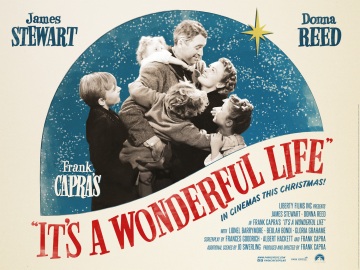
“It’s A Wonderful Life” (1946)

iheartfilm is dedicating the month of November to the lesson of Gratitude in films; the quality of being thankful.

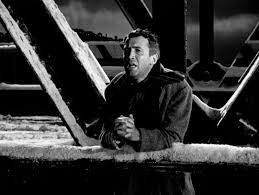
“It’s a Wonderful Life” is the ultimate gratitude film. George Bailey (James Stewart) facing jail and the demise of his beloved father’s savings and loan business, decides that his family would be better off without him so decides to take his life.

wonderfullifedesperation

George Bailey (James Stewart)

Thank goodness for the rookie guardian angel, Clarence ((Henry Travers) Love him! “Everytime a bell rings an angel gets his wings.” Clarence grants George’s wish to have never been born and shows him exactly how different life in his community of Bedford Falls would be had he never been born. In doing so, he teaches George a tremendous lesson on gratitude and helps him realize it is and he has a wonderful life.

Clarence (Henry Travers)

I bet we’ve all had that moment when we go, this is just too hard and messed up. Some come to the conclusion that life just isn’t worth living, and nobody would miss me anyway so what difference does it make.

wonderfullessons

Not everyone has a support person to hold them and say – it’s going to be alright – we can get through this together. I wrote a post about Robin Williams after he took his life because of how he touched me with his incredible talent. I cried not only for his family but for the countless others who’ve lost loved ones to the pain that is suicide.

wonderfulnotperfect

George Bailey’s pain was real. James Stewart’s portrayal felt real and no matter how many times I watch Frank Capra’s enduring classic, I ball at all the same scenes. The love and compassion of George’s wife Mary, (Donna Reed) family and friends lift us all to a level of gratitude that just can’t be contained.

Wow! Even just writing and remembering that final scene brings tears to my eyes. Sixty-nine years later this movie still tugs at the heart strings.

What a blessing!  What a Gift!  What a Wonderful Life!

Liebster Award Nomination!

liebsteraward


I am so honored that Affyyia – siuquxemovies.wordpress.com – thought enough of my blog to nominate me for this award. I enjoy and go back to read her posts often because of her passion for films and books. Make sure to check out her awesome blog!

The Rules: 

  1. Acknowledge the blog that nominated you and display the award.

  2. Answer 11 questions that the blogger gives you.

  3. Give 11 random facts about yourself.

  4. Nominate 5-11 blogs you think are deserving of the award that have less than 200 followers.

  5. Let the blogs know you have nominated them.

  6. Give them 11 questions to answer.

RULE 2: My 11 questions and answers are:

  1.  Who is your favorite actor or actress and why? Bette Davis because she was a ground breaker. Many actresses feared playing unsympathetic characters, but Bette viewed it as an opportunity to show the range of her acting skills. In “Of Human Bondage” (1934) she made herself look horrid because that’s what the role required. Other actresses didn’t want to do that kind of portrayal.

  2. Name two books you have read this year?  The Four Agreements and the Bible.

  3. What is the name of your best friend?  Carmen

  4. Mention about six blogs you visit often: 

    1. mixedgirlvibe.com

    2. Harsh Reality – aopinionatedman.com

    3, assholeswatchingmovies.com

    4. Live to Write – Write to Live – nhwn.wordpress.com

    5. fromthestickstothebricksandbackagain.wordpress.com

    6. empress2inspire.wordpress.com

  5. List four languages you wish to learn:  Spanish, French, Italian, Portuguese

  6. Movies and picnic, which one would you prefer?   Picnic

  7. Is this your first time of getting nominated for Liebster Award?   No

  8. Mention any African country you have visited before or wish to visit and why:  I’d like to visit Seychelles because of its’ luxurious beaches.

  9. What is your own personal definition of wealth?  The love of family and friends.

  10. Share with me any incident that happened in your high school days that you might never forget?  When my counselor told me I was accepted at The University of Michigan.

  11. Five things that inspired you to start  your own blog?  My passion for writing, the opportunity to share my love of film, designing a website,  sharing the history of film, feedback from the blogging community.

RULE 3: 11 Random Facts About Myself

  1. I love Minions

  2. I hate spiders

  3. I have to watch “Miracle on 34th Street” before any Christmas festivities can begin.

  4. I’m a clothes horse.

  5. I’m a stage actress.

  6. I’m a vocalist.

  7. I love film trivia.

  8. My car was struck by lightning.

  9. I’ve watched “A Charlie Brown Christmas” every year since it premiered.

  10. I’m known as the “human jukebox” because of my vast knowledge of music lyrics.

  11. I’m a Christmas Tree decorating master.😄

RULE 4: My nominees are:

RULE 5:  My 11 questions are: 

  1. What’s your favorite film and why?

  2. Tropical or Ski vacation?

  3. What inspired you to start your blog?

  4. What’s your favorite post?

  5. Pumpkin or Sweet Potato Pie?

  6. Favorite animated film.

  7. Where have you always wanted to visit but haven’t?

  8. Your best day?

  9. Dog or Cat?

  10. Five blogs you follow?

  11. Favorite cartoon?