Gratitude and Miracles 💛


thanksgiving2012


iheartfilm is dedicating the month of November to the lesson of Gratitude in films; the quality of being thankful.

This is a re-post from last year. It so fits the theme of gratitude and is my official movie to kick-off the holiday season. We lost Maureen O’Hara (Doris) last month (more on the late actress here) so this is also a tribute to her career and role in this holiday classic. Enjoy!

Today marks the start of the holiday season, but it doesn’t officially kick off for me until I’ve watched the Thanksgiving Day Parade and one of my favorite holiday films, Miracle on 34th Street (1947).


Until I see Santa arrive at the end of the parade there can be no Christmas Tree, tinsel, ornaments or stockings. This has been a tradition of mine since I was a kid. Without a doubt, Edmund Gwenn is Santa Claus. No matter what other films he’s made, each character turns into Kris Kringle. (he won the Academy Award for Best Supporting Actor) Gwenn played a cockney assassin in Hitchcock’s Foreign Correspondent in 1940, but all I could scream was “Santa, don’t throw that man off the ledge!”


Edmund Gwenn

Miracle Kris

(September 26, 1877 – September 6, 1959)

Natalie Wood was precious as Susan, the precocious daughter of Maureen O’Hara (Doris) who doesn’t believe in fairy tales and attends a “progressive” school. Natalie Wood had an illustrious career until her death in 1981. She was able to make the transition from child star to ingenue starring opposite James Dean in Rebel Without a Cause (1955) and Warren Beatty in Splendor in the Grass (1961). Known as a loving, giving person, as well as a star, she’s always had a special place in my heart.

Natalie Wood

Miracle on i believe

(July 20, 1938 – November 29, 1981)

miracle DorisDoris is cynical as a result of a bitter divorce so she’s raising her daughter to be practical and sensible. None of this believing in fairy tales and Santa crap. All was going well until Doris – the Macy’s parade coordinator – asks Kris to replace the drunken Santa originally set for the Macy’s Thanksgiving Parade. Kris is a big hit and becomes Macy’s official Santa resulting in a personal relationship with Doris and Susan.

Maureen O’Hara (August 17, 1920 – October 24, 2015)


Kris is an immediate influence teaching Susan it’s okay to pretend after she tells him the other kids don’t play with her because she won’t join in their game and act like a zoo animal.

The production took flack from the Catholic League of Decency because how dare you depict a divorced woman with a successful career and a young child as a “normal family.” Yep, 1940’s mentality and morality were hard at work.

miracle susan at play

Susan learning to act like a monkey!

Just as Doris is learning to have more faith in life and Susan is embracing imagination, Kris’s sanity is questioned and a legal battle ensues to prove that not only is he sane but the one and only Santa Claus. Fred (John Payne) who is Kris’s lawyer and Doris’s boyfriend, understands the importance of the spirit of Santa especially in the lives of Susan and Doris.

John Payne (on left)

(May 23, 1912 – December 6, 1989)

miracle john

Kris is exonerated and Christmas day has arrived. Susan has asked for a very special present and is disappointed at the Christmas party to see it isn’t under the tree. Doris, in a refreshing change of heart, tells Susan she must have faith.

But, Santa Claus moves in mysterious ways and in the end teaches them both the true value of faith and miracles.
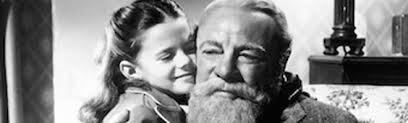


 miracle end

Cheers to Faith and Miracles!

Gratitude of the Heart

The Wizard of Oz (1939) – “There’s No Place Like Home”


WIZARD_OF_OZ_ORIGINAL_POSTER_1939

iheartfilm is dedicating the month of November to the lesson of Gratitude in films; the quality of being thankful.

To quote author Melody Beattie:

“Gratitude turns what we have into enough, and more. It turns denial into acceptance, chaos into order, confusion into clarity…it makes sense of our past, brings peace for today, and creates a vision for tomorrow.” 


My first pick, “The Wizard of Oz”, is overflowing with gratitude! Dorothy (Judy Garland) accompanied by her little dog Toto, seeking a better place in the world comes to understand what home really means and her compatriots – The Scarecrow (Ray Bolger), Tin Man (Jack Haley), and The Cowardly Lion (Bert Lahr) wishing to be more than they perceive themselves to be, learn to appreciate their unique gifts. The Great and Powerful Oz (Frank Morgan) realizes the blessing and value of truth and in his case the truth truly does set him free.


It all starts with a wish to be “Somewhere Over the Rainbow” and results in unexpected consequences – the terror of being caught up in a twister, inadvertently dropping a house on the sister of the Wicked Witch of the West (oops) and inheriting both the wrath of said Witch (Margaret Hamilton) and a pair of coveted ruby slippers.


Sadly, “Over the Rainbow” doesn’t materialize into the idyllic place of which Dorothy sings, which becomes her vision quest. Dorothy’s longing for home dovetails with the wishes of  The Scarecrow, Tin Man, and The Cowardly Lion. These three, also wishing for what they believe they don’t have – a brain, a heart, and courage – join the quest to the Emerald City to finally have their dreams realized through the power of the omnificent Wizard of Oz.

The trio’s perilous journey to get Dorothy home leads to the self-realization that they possessed the traits they sought all along and didn’t really need the wizard to bestow these attributes upon them.

Dorothy also learns a valuable lesson we all tend to forget, “there’s no place like home” and if we can’t find what we’re looking for there, then we won’t be able to find it anywhere. Home exists within us and it’s our outlook and attitude that dictates whether it’s a black and white existence filled with worries and that ole Gulch “heifer” or a technicolor world filled with musical munchkins and the love of three very special friends.


With Gratitude, we can appreciate and give thanks for the joys and blessings in our lives because the truth is we could be far worse off. My spiritual goal every day is to be mindful and thankful for the bounty which I’ve already received.


wizardofozhome


Always remember!


Universal Horror – The Golden Age of Movie Monsters

Universal_monsters_logo


For a comprehensive and what I consider a definitive history of one of the original Hollywood Studios – Universal, check out the Documentary – “Universal Horror.”  Universal was founded in 1912 by Carl Laemmle and is the world’s fourth oldest major film studio.

Originally airing on Turner Classic Movies in 1998, “Universal Horror” showcases the golden age of 1930’s movie monsters. The film also highlights Carl Laemmle’s family and Carl Laemmle, Jr’s game-changing vision of producing films based on classic horror tales.


The studio is known for such horror classics as Frankenstein (1931) and Dracula (1931), the Universal monster franchise. Dracula is a 1931 American Pre-Code vampire-horror film directed by Tod Browning and starring Bela Lugosi as Count Dracula. The film was produced by Universal and was loosely based on the novel by Bram Stoker.

Casting for the film became problematic initially since Laemmle was not at all interested in Lugosi, in spite of good reviews for his stage portrayal. Laemmle instead considered other popular actors of the day, including Paul Muni and Chester Morris.


Frankenstein is a 1931 American Pre-Code horror monster film from Universal Pictures directed by James Whale. The film stars Colin Clive, Mae Clarke, John Boles and Boris Karloff and features Dwight Frye and Edward van Sloan. Trivia: Bela Lugosi turned down the role saying the monster was just a hulking beast.

In 1991, the Library of Congress selected Frankenstein for preservation in the United States National Film Registry as being “culturally, historically, or aesthetically significant.

Throughout the documentary, we hear personal accounts and behind-the-scene stories from early stars such as Rose Hobart – co-star in the original film version of Dr. Jekyll and Mr. Hyde (1931), Gloria Stuart – The Invisible Man (1933) and Lupita Tovar – Dracula (1931) Spanish Version.


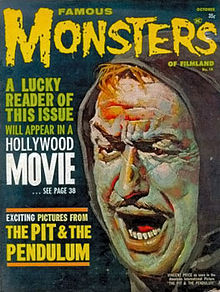
Forrest Ackerman, (November 24, 1916 – December 4, 2008) was editor and principal writer of the science fiction magazine Famous Monsters of Filmland and recalls his experiences in the documentary of seeing these films first hand. Ackerman’s magazine would provide inspiration to many who would later become successful artists, including Joe DantePeter Jackson, Steven Spielberg, Tim Burton, Stephen King, George LucasDanny ElfmanJohn Landis and countless other writers, directors, artists, and craftsmen.

Also affectionately called “Forry,” Ackerman was central to the formation, and spread of science fiction fandom, and a key figure in the wider awareness of science fiction as a literary, art and film genre. Famous for his wordplay he coined the genre nickname “sci-fi”.

FamousMonsters14


Universal Monsters Tribute


The end of Universal’s first run of horror films came in 1936 as the Laemmles were forced out of the studio after financial difficulties and a series of box office flops due partly to censorship and a temporary ban on American horror films in Britain. The release of MGM’s Mad Love and The Raven (both 1935) were the final nail in the coffin for monster movies, being too strong for 1935 tastes, with its themes of torture, disfigurement, and grisly revenge.


The monster movies were dropped from the production schedule altogether and would not re-emerge for another three years. In the meantime, a theater owner revived Dracula and Frankenstein as a double feature, resulting in an immediate smash hit and leading to the original movies being re-released by the studio to surprising success.

As I celebrate this Halloween, my film line-up would not be complete without those original horror classics from the original horror classics studio – Universal!

HAPPY HALLOWEEN!

R.I.P Maureen O’Hara – “Queen of Technicolor”

image

Maureen O’Hara, ‘The Queen of Technicolor,’ Dies at 95

(August 17, 1920 – October  24, 2015)

I loved the feisty Irish attitude she embodied in the characters created starring opposite John Wayne, but my sentiments will always go to her role as 8-year old Natalie Wood’s mother in the Christmas Classic, “Miracle on 34th Street.” R.I.P. Maureen O’Hara

Maureen O’Hara, the Irish beauty whose striking red hair, crystal green eyes, and porcelain skin was so dazzling on the silver screen that she was dubbed “The Queen of Technicolor,” has died. She was 95.

O’Hara, who played the feisty wife to onscreen husband John Wayne in five films — three of them directed by John Ford — died Saturday at her home in Boise, Idaho, Johnny Nicoletti, her longtime manager, told the Associated Press.

“She passed peacefully surrounded by her loving family as they celebrated her life listening to music from her favorite movie, The Quiet Man,” said a statement from her family.

She moved to Idaho in 2013 to be closer to her relatives after spending four decades in Glengarriff, Ireland.

Although she was memorable in so many great Hollywood films — including The Hunchback of Notre Dame (1939), How Green Was My Valley (1941), Miracle on 34th Street (1947), Rio Grande (1950), The Quiet Man (1952), Our Man in Havana (1959) and The Parent Trap (1961) — the Dublin native never won an Academy Award, much less received an Oscar nomination.

That oversight was rectified when the Academy presented her with an honorary Oscar at the Governors Awards in November 2014.


Musing about what made her a star, O’Hara wrote: “I have always believed my most compelling quality to be my inner strength, something I am easily able to share with an audience. I’m very comfortable in my own skin. I never thought my looks would have anything to do with becoming a star. Yet it seems that in some ways they did.”

(Reposted from the Hollywood Reporter)

The Picture of Dorian Gray

dorian-gray-wallpaper_

The Picture of Dorian Gray (1945)

“I am jealous of everything whose beauty does not die. I am jealous of the portrait you have painted of me. Why should it keep what I must lose? Every moment that passes takes something from me and gives something to it. Oh, if it were only the other way! If the picture could change, and I could be always what I am now! Why did you paint it? It will mock me some day — mock me horribly!” The hot tears welled into his eyes; he tore his hand away and, flinging himself on the divan, he buried his face in the cushions, as though he was praying.”

“Dorian Gray” – Oscar Wilde’s -“The Picture of Dorian Gray”


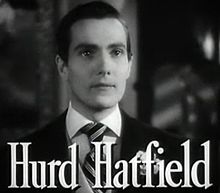
Hurd_Hatfield_in_The_Picture_of_Dorian_Gray_trailer

Dorian Gray

If you could, would you? Sell your soul for eternal youth.

That was the choice made by Dorian Gray. His story is a classic cautionary tale. Be careful what you wish for.

This week’s DVR recommendation for TCM Horror Fridays at 8:00 pm.

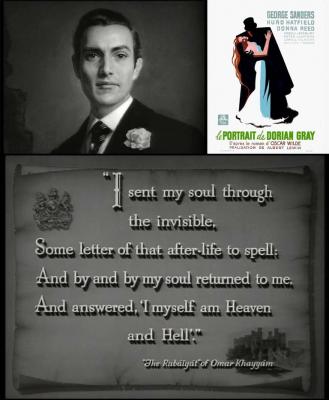
Dorian Gray (Hurd Hatfield) is a striking and wealthy young man living in 19th century London. While posing for his portrait with his artist friend Basil Hallward (Lowell Gilmore), he meets the cynical and audacious Lord Henry Wotton (George Sanders) who tells him that youth and beauty are fleeting and while he’s young he should entertain every worldly pleasure. Dorian is naive and in the presence of an enchanted Egyptian cat wishes he would stay forever young and only his portrait would age.


While visiting a local pub, The Two Turtles, he meets the beautiful and demure Sybil Vane. She sweetly sings “Goodbye Little Yellow Bird” and Dorian is totally enamored. Falling in love, he asks Miss Vale for her hand in marriage and invites both Basil and Lord Wotton to the pub to meet his love.

doriansybilbird2

Sybil Vane


When Dorian informs Lord Wotton of his intention to marry Sybil, Wotton suggests he tests her virtue by inviting her to spend the evening with him. If she rebukes him then she’s chaste if she accepts she’s a tramp and as the saying goes “why pay for the cow when you can have the milk for free.” Dorian buys into this plan thus beginning his downward spiral into narcissism and pleasures of the flesh.


Sybil accepts Dorian’s request to stay with him and the following day Dorian sends her a breakup letter expressing his disappointment in her. Heartbroken, Sybil is devastated and Dorian becomes aware of the first signs of cruelty to appear upon his portrait’s face.


Years pass with his peers aging, but Dorian’s youth remains. Gossip swirls and his friends begin to shun him; questioning why his appearance is the same. Dorian goes full tilt debauchery until he finally reaches rock bottom.

There are people today who could benefit from heeding the lesson in the “Picture of Dorian Gray.” The evil you do comes back to bite. Karma is a bitch.


dorianGrayKhayyam


Dark Comedy Halloween Laughs:)

Arsenic and Old Lace_01

Most people think of Cary Grant as a suave leading man, but he is also an incredible physical comic. The dark comedy “Arsenic and Old Lace”(1944) directed by Frank Capra is the perfect vehicle for his slapstick comedic style. Grant plays Mortimer Brewster who, to his horror, discovers that his two darling elderly aunts (Abby (Josephine Hull) and Martha (Jean Adair) are in fact serial killers, bumping off those who they perceive as “lonely bachelor” men.

arsenicauntsvictim

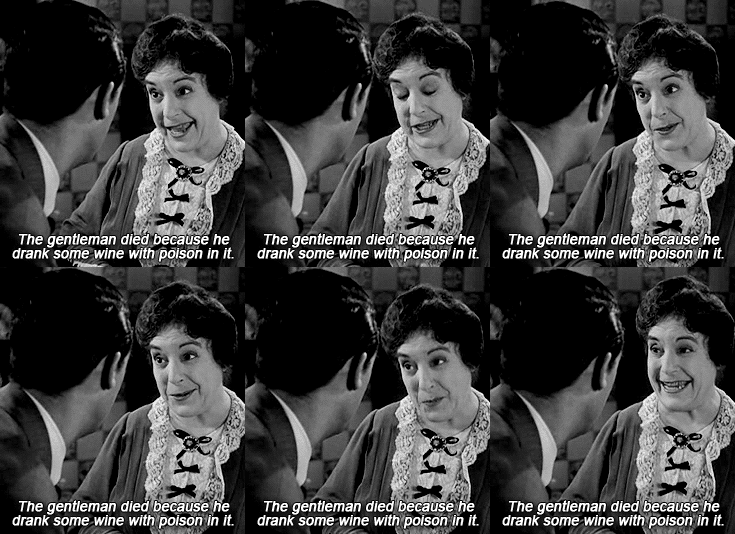
Mortimer’s aunts epitomize the idea of sweet little old ladies. They can preserves, donate toys to the policeman’s children’s fund, make Elderberry wine. The problem is that their tasty Elderberry wine is spiked with arsenic, strychnine and “just a pinch of cyanide”.

After Mortimer discovers a dead body hidden in the window seat he assumes that Teddy (John Alexander) – Abby and Martha’s brother – has committed murder under some delusion, (he believes he’s Theodore Roosevelt).

But the aunts are quite sincere when they explain to Mortimer that they are responsible (“It’s one of our charities”).

arsenicinsanity


The look on Cary’s face when he discovers one of the bodies in the window seat is priceless. The classic double take.


Abby and Martha have the perfect set-up. The cellar of the family home becomes the burial ground for their victims with their brother Teddy aka Theodore Roosevelt digging the graves convinced he’s digging locks for the Panama Canal and burying yellow fever victims.

And, as if his murderous aunts weren’t enough on Mortimer’s plate, enter long, lost brother Jonathan (Raymond Massey). Jonathon is a psychotic killer looking to stash a body of his own (Mr. Spenalzo). Also, to his annoyance, Jonathan is in need of another plastic surgery because his face bears a striking resemblance to Frankenstein thanks to his alcoholic plastic surgeon and accomplice Dr. Herman Einstein (Peter Lorre).

Oh, did I mention the reason why Mortimer was actually visiting his aunts? Well, despite having written several books ridiculing marriage as an “old-fashioned superstition”, Mortimer has fallen in love and has just married the irresistible next door neighbor, Elaine Harper (Priscilla Lane). The wedding took place that morning which is (and this is too perfect) Halloween day.


When Jonathan discovers his aunts’ secret, he threatens to expose them if they try to turn him into the police. When the police come to the house to pick up Abby and Martha’s donation to the policeman’s children’s fund, Mortimer tries to hip them to Jonathan’s identify but it doesn’t go as smoothly as he’d planned. Chaos and hilarity ensue and this is where the monster mash fun begins.


And with that, I’ll let the opening credits speak for itself…

Happy Viewing!

Countdown to Halloween!

image

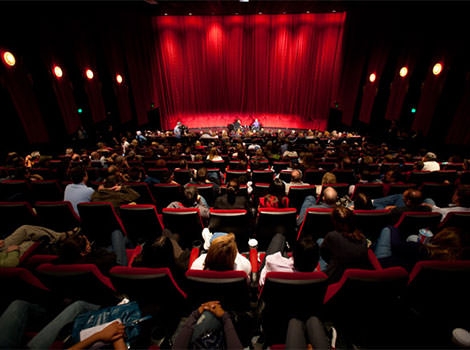
October holds a special place in my holiday heart because I get to celebrate my favorite day of the year, Halloween. Just picture it. A darkened theater, a bucket of popcorn, sitting terrified and curled up in a ball;  just for the scare of it!

image

‘Cause this is thriller, thriller night.’

An essential part of the ritual is breaking out my awesome Halloween decorations and filling up the trick or treater candy bowl with first-class, yummy confections. Envisioning kid’s faces as I proudly hand out M&M’s, Reese Cups, Skittles and no candy bowl would be complete without my personal choice – Snickers! As a seasoned Halloween aficionado, the mood wouldn’t be complete without a spooktacular horror classic marathon streaming on the big screen TV!

image

The ultimate Halloween night experience would include waiting in line with fellow enthusiasts to enjoy a horror classic on the big screen. The first scary movie I remember seeing as a kid is William Castle’s “House on Haunted Hill” and man was I thrilled to be able to re-live my first time when a friend told me a neighborhood theater had a special Halloween presentation of my beloved “House on Haunted Hill”. Cherry on the top was that they also sponsored a Best Costume competition and Best Scream Award. It was everything I could hope for; even performing the movie’s gimmick, the flying skeleton!

image

Vincent Price in ‘House on Haunted Hill’

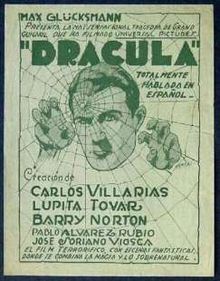
This Halloween, movie friends, Turner Classic Movies and Fathom Events is presenting in select theaters nationwide, a special double feature screening of the 1931 Universal Horror Classic, Dracula starring Bela Lugosi and Helen Chandler as Mina Harker. Based on the novel Dracula by Bram Stoker. In addition to the original, moviegoers will also enjoy the added treat of the Spanish version starring Carlos Villarías as Conde Drácula and Lupita Tovar as Eva Seward.


Long thought lost, a print of Spanish Dracula was discovered in the 1970s and restored. I own and love my Legacy Collection DVD which was released in 2004 and contains both versions. The collection also includes – Dracula’s Daughter (1936) Son of Dracula (1943) starring Universal’s Wolfman, Lon Chaney, Jr. and House of Dracula (1945). A must-own addition for every classic horror movie fan’s collection. For ticket information about the Dracula Double Feature, check out Fathom Events or your local theater.

Trivia: For a period of time in Hollywood, studios would produce Spanish language version films for overseas distribution, using the same sets. Tod Browning directed the English production which was shot during the day. George Melford (who did not speak Spanish) was the director for the Spanish version, filming during the evening. The Spanish crew had the advantage of watching the English dailies when they came in for the evening, and they would figure out better camera angles and more effective use of lighting in an attempt to “top” it. There are critics who believe the Spanish production was better, incorporating more interesting and varied camera angles and perspective. I agree with the critics point that this production explored more visual dimensions and created more overall excitement. It also had a sexier edge.

dracula_spanish_big

Dracula 1931 – Spanish Version

So, if you have the opportunity, I highly recommend adding this special event to your calendar. If you do attend, let me know your reaction in the comments.

Happy Viewing!


Turner Classic Movies – Host Robert Osbourne’s 20th Anniversary

image

Those of you who read my posts on a regular basis know I’m a big time fan of classic movies. My interests include all genres and typically those from legendary directors like Alfred Hitchcock and Billy Wilder. Melodrama and classic Sci-Fi rate high on my favorite movie lists and the best television source I’ve discovered and my go to for “all things film” is the Turner Classic Movies channel.


As program host, Robert Osbourne brings a style and wealth of cinema knowledge respected by both enthusiasts and Hollywood legends alike. Osbourne is a graduate of the University of Washington’s School of Journalism and has over 30 years experience writing about film and Hollywood. In 1977, he started his career as a columnist for The Hollywood Reporter and the following year published 50 Years of Oscar which won him the 1979 National Film Book award. He served as President of the Los Angeles Film Critics Association in 1981, a position he would be re-elected to for the next two years. In 1994, Ted Turner created Turner Classic Movies as a competitor to American Movie Classics (now known as AMC). Osborne was selected as the host of their nightly broadcasts as well as special one-on-one “Private Screening” interviews and the weekly feature “The Essentials.”

  • image

This month we celebrate Mr. Osbourne’s 20th Anniversary with a tribute to his memories and moments of sharing rare, golden Hollywood era and restored film classics from the TCM vault. For a retrospective of Mr. Osbourne’s beginnings as host, films and Hollywood legends that have visited and shared their stories, tune in on September 15th at 5:30am (I know, way too early – I’m going to DVR the special:) on your local cable channel or visit online at: http://www.tcm.com for complete details and the upcoming TCM schedule.


TCM 20 years of classic movies

TCM’s library of films spans several decades of cinema and includes thousands of film titles. The channel has licensing agreements with such studios as Metro-Goldwyn-Mayer and Warner Bros, Entertainment. They also have movie licensing rights with Universal Studios, Paramount, 20th Century Fox, Walt Disney Studios, Selznick International Pictures, Sony Pictures Entertainment, Studio Canal and Janus Films. With such an extensive collection, we are treated to program features such as “31 Days of Oscar”, “Star of the Month”, “Silent Sunday Night”, “TCM Remembers”and numerous original programming broadcast specials.


Twenty-Four Seven there’s always new movies to discover, old titles to revisit and an extensive background of cinema and film history. You can’t go wrong. Turner Classic Movies – For Movie Lovers Everywhere!


TCM logo


If it’s Sunday, breakout the hankies!

Cinema sign

Melodrama Sunday Movie Classics

In a previous post I talked about maybe being a little anal about the rules for Saturday and Sunday afternoon movie watching. I shared my rules for Saturday afternoon movie viewing which is B-horror and science fiction. I also shared 3 of my favorite flicks. The Blob (1958), The Incredible Shrinking Man (1957) and The Tingler (1959). (hope you check ’em out)

So, for Part 2 I’m showcasing Sunday and my criteria for some great classic melodrama.

I love melodramas because they can be so over the top and cathartic (think movie therapy) and there’s no better day to indulge than on a lazy Sunday, vegging on the couch, better yet if it’s a rainy day.

According to dictionary.com:

Melodrama – Exaggerated and emotional or sentimental, sensational or sensationalized: over dramatic.

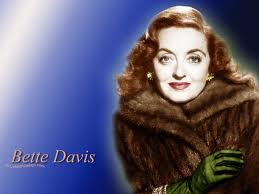
Bette Davis is my favorite Melodrama Diva! Talk about emotional and dramatic, she had those attitudes down pat. With her I find myself either talking back to my TV screen or weeping. (this is why rain helps) So, let’s find out about “The First Lady of the American Screen:

Bette Davis

Bette Davis color

 Ruth Elizabeth Davis (April 5, 1908 – October 6, 1989) known as Bette Davis

Born in Lowell, Massachusetts, Ms. Davis is regarded as one of the greatest actors in cinema history. Bette Davis was the first female president of the Academy of Motion Picture Arts and Sciences and won the Academy Award for Best Actress twice. She was also the first person to receive 10 Academy Award nominations for acting, and was the first woman to receive a Lifetime Achievement Award from the American Film Institute. With more than 100 films, television and theater roles to her credit, in 1999, Davis placed second on the American Film Institute’s list of the greatest female stars of all time.

Bette was known for her no-nonsense, no-holds barred personality and wasn’t afraid to take on unsympathetic character roles. In the RKO film Of Human Bondage (1934), she played such a character as Mildred, the cruel and vicious waitress.  A film adaptation of the 1915 novel of the same name by W. Somerset Maugham. This melodramatic adaptation about a crippled doctor’s destructive and compulsive passion for this coarse waitress was advertised with the tagline on one of its posters: “The Love That Lifted a Man to Paradise…and Hurled Him Back to Earth Again.”
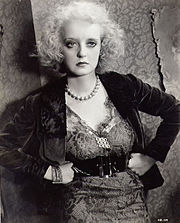
In her 1st major, critically acclaimed part she insisted on looking hideous to depict the ravages of the disease tuberculosis on the human body. She wasn’t nominated for an Oscar but so impressed fellow artists that they insisted she be a write-in on the ballot.

Bette_davis_of_human_bondage

Bette as “Mildred” in Of Human Bondage 1934

A little bit of Mildred’s charm:

 Let’s take a look at her 10 Oscar nominations and 2 wins:

  • 1935: Won for Dangerous, as a self-destructive, alcoholic actress (really a make-up for not winning Of Human Bondage)


  • 1938: Won for Jezebel, as a self absorbed 1850’s southern belle whose insistence on wearing a red-dress to a formal affair (white = chaste) brings scandal and disapproval. Her man “Pres” Henry Fonda was too through with her.


  • 1939: Nominated for Dark Victory, as Judith Traherne, an impetuous, terminally ill Long Island socialite. (yes that’s Bette with a drunken Ronald Reagan) Big time tear-jerker! – Bette’s favorite!  


  • 1940: Nominated for The Letter, as a low-down, adulterous murderer who has absolutely no remorse for blowing her lover away. However, karma is a bitch.


  • 1941: Nominated for The Little Foxes, as Southern aristocrat Regina Giddens – that girl put the cold in cold-blooded.  


  •  1942: Nominated for Now, Voyager, as Charlotte Vale – a dowdy, overweight, spinster, abused by her mother but fights back and achieves a starling transformation in body and spirit. An incredible performance! My absolute favorite Bette Davis role! 

Charlotte on the edge of a well deserved nervous breakdown:


Charlotte’s journey:


  • 1944: Nominated for Mr. Skeffington, as Fanny Skeffington, a woman so conceited that she tries to steal her daughter’s boyfriend, loses her looks after an illness but still has the nerve to treat her husband like dirt and still believe she can have any man – no way. In the end she learns the hard way that “a woman is beautiful when she’s loved and only then.” (too bad it’s after her husband goes blind in a concentration camp)


  • 1950: Nominated for All About Eve, as Margo Channing  an insecure Broadway star challenged by the younger, conniving Eve – “Fasten your seat-belts, it’s going to be a bumpy night.”  It was selected in 1990 for preservation in the United States National Film Registry and was among the first 50 films to be registered.

  • 1952: Nominated for The Star, as Maggie, a washed-up actress trying to revive her career. Notably, at this time in Bette Davis’ career, she was struggling for roles despite her body of work. Bette’s ego was blamed.


  • 1962: Nominated for What Ever Happened to Baby Jane?, as the demented Baby Jane Hudson who tortures and terrorizes her sister Blanche (Joan Crawford)  Much like their real life rivalry. This role renewed her success and paved the way for other deranged characters in such films as: Hush, Hush Sweet Charlotte (1964) and The Nanny (1965)

 ♦♦♦♦

Bette continued to perform in film and on television in the 70’s and 80’s. In 1983 at the age of 75 she had a mastectomy as a result of breast cancer. Nine days later she suffered a stroke. Despite her failing health she continued to work until her death in 1989.

This is an in-depth retrospect of “The First Lady of the American Screen”

Enjoy! Don’t forget to bring your hankie.


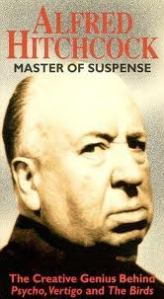
Master of Suspense?

Master of Suspense

Sir Alfred Joseph Hitchcock  (August 13, 1899 – April 29,  1980)

Sir Alfred Joseph Hitchcock aka “Master of Suspense” was a British born director known for his mastery of the suspense and psychological thriller.  He was an innovator using film editing (cuts) as the basis to construct a film. He poked, stabbed and forced us to face our fears, obsessions and compulsions.

Hitch is one of my favorite directors because of his fearlessness. He used a voyeuristic style and cuts to let you see inside the heads of his leading characters. Rear Window (1954) is a classic example of his style as the audience becomes the voyeur along with James Stewart’s character. We go along with Hitch and peer through the windows of Stewart’s neighbors and cross a line we otherwise wouldn’t.

In Psycho (1960) we peer through the peephole with “Norman Bates” (Anthony Perkins) and end up rooting for this very troubled individual. Not allowing patrons to enter the theater after Psycho started was a great gimmick. His most fearless move was what occurred in the first 45 minutes of the film. Now that’s risk and genius!

In 1992, the US Library of Congress deemed the film “culturally, historically, or aesthetically significant” and selected it for preservation in the National Film Registry.

Now, meet Hitchcock as he takes us through the Bates Motel and the events that occurred. This is Sir Alfred in all his shocking glory.

Although Hitchcock is legendary for his film editing genius, Rope (1948 ) proved to be his ultimate experiment. Instead of using film editing, he would shoot the movie in one long sequence. Stopping only to change the camera role. Like filming a play. Each role of camera film holds about 10-12 minutes of film.

The set was insane with flying walls and furniture. Jimmy Stewart once remarked about placing his drink on a table, turning back around and not only was the drink gone but the table it was sitting on. Everyone had to be on their mark and not drop a line because if anything went wrong they had to do everything  all over again. Hitchcock said the film just about killed him!

A Little Hitchcock History:

His first directing assignment, Number 13, began in 1922 but unfortunately wasn’t finished due to financial issues. His big break came in 1927 with the completion of his thriller The Lodger: A Story of the London Fog.  The plot revolved around a search for a Jack the Ripper type of serial killer and mistaken identity. Hitchcock’s first thriller is ripe with mood and the German Expressionist influence. A taste of things to come in Hitch’s repertoire, it was a commercial and critical success.

Hitchcock-The_Lodger_1927_Poster

Hitchcock’s tenth film, Blackmail was released in 1929 and considered Britain’s first talkie. It also starts his usage of landmarks as a tradition and appears in the longest cameo of all his films.

Hitchcock-Blackmail_1929_Poster

The 39 Steps (1935) is widely considered the best of Hitchcock’s early films and made him a star in the U.S.  It also branded Hitch’s obsession with the cold blonde, sophisticated leading lady which Grace Kelly would come to epitomize. Then there’s the infamous “MacGuffin.”  A reoccurring plot device that actually had no real significance to the story-line. A decoy. Just another Hitch thing.

The 39 Steps

Alfred Hitchcock’s films were produced in Britain until in 1939. When David O. Selznick signed him to a seven year contract, Hitch relocated to the United States with his wife Alma Reville (his closest collaborator) and his daughter Patricia Hitchcock.

Alma Reville was an accomplished director, writer, editor and producer in Britain before she met Hitch while working  at Paramount‘sFamous Players-Lasky studio in London, during the early 1920s. Patricia Hitchcock appeared in several of her dad’s films including: Psycho, Strangers on a Train and Stage Fright.

Rebecca (1940) was Hitchcock’s first American film. It won the Academy Award for Best Picture and Hitchcock was nominated for Best Director but did not win. In fact, although nominated five times, he would never be afforded that honor.

Alfred Hitchcock  became an American citizen in 1956 and was a multiple nominee and winner of a number of prestigious awards. Hithcock was the recipient of  two Golden Globes, eight Laurel Awards, and five lifetime achievement awards including the first BAFTA Academy Fellowship Award.

Hitchcock received a knighthood in 1980 when he was appointed a Knight Commander of the Most Excellent Order of the British Empire (KBE) by Queen Elizabeth II.

What’s your quintessential Hitchcock film?

  • Stage Fright (1950)
  • Saboteur (1942)
  • Strangers on a Train (1951)
  • The Birds (1963)
  • Spellbound (1945)
  • Shadow of a Doubt (1943)
  • Rebecca (1940)
  • Foreign Correspondent (1940)
  • The 39 Steps (1935)
  • Rope (1948)
  • Vertigo (1958)

Not here? Voice Your choice in the comments.

Check out Alfred Hitchcock’s substantial catalog.

The quintessential “Master of Suspense.”