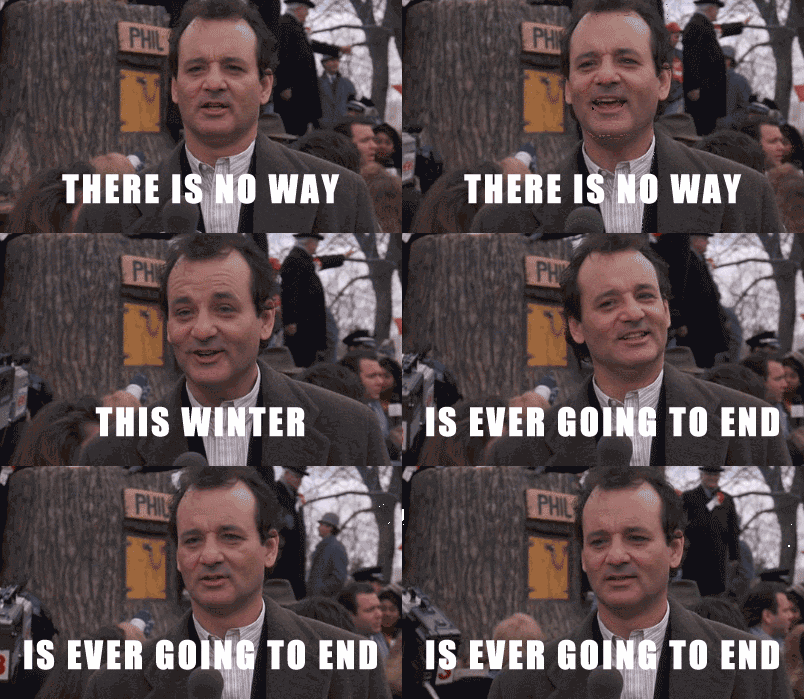
I’ve always believed that we can’t move on to the next level in our life’s journey until we learn the lessons we need to understand. In “Groundhog Day”, Bill Murray has the fortune or misfortune of repeating and repeating again a day which becomes his own private hell.
Groundhog Day (1993) is a hilarious look inside a day in the life of arrogant Pittsburgh TV weatherman Phil Connor (played by Bill Murray) who, during an assignment covering the annual Groundhog Day event in Punxsutawney, Pennsylvania, finds himself in a time loop, repeating the same day again and again.
This fantasy-comedy directed by Harold Ramis, stars Bill Murray, Andie MacDowell, and Chris Elliott. It was written by Ramis and Danny Rubin, based on a story by Rubin.
Andie MacDowell and Bill Murray
After indulging in hedonism and committing suicide numerous times, Phil begins to re-examine his life and priorities in his quest to end the tortuous nightmare of Groundhog’s Day.
The film is often considered an allegory of self-improvement, emphasizing that happiness comes from placing the needs of others above one’s own selfish desires; definitely, food for thought.
Doing my research I discovered that”Groundhog Day”, as an expression, has become shorthand for the concept of spiritual transcendence. As such, the film has become a favorite of some Buddhists who see its themes of selflessness and rebirth as reflections of their own spiritual messages. (Wikipedia)
Once Phil decides to use his knowledge of the day’s events to try to better himself and the lives of the townsfolks, over many loops, he learns how to play the piano, sculpt ice, and speak French. He even befriends the relentless, Ned Ryerson, and sets out to avert accidents and disastrous situations that otherwise would have occurred.
If you believe, you might see versions of reincarnation in the storyline and find great significance in the fact that Connors is saved only after he performs “good deeds” and is returned to earth, not heaven, to perform more.
Imagining German philosopher Nietzsche’s directive to imagine life—metaphorically or literally—as an endless repetition of events is intriguing. I wonder how would this viewpoint shape our actions?
What would we choose to live out for all eternity?
Awards
British Comedy Awards 1993 (Comedy Film)
Saturn Award for Best Actress (Film) (Andie MacDowell)
In June 2008, AFI revealed its “Ten Top Ten”—the best ten films in ten “classic” American film genres—after polling over 1,500 people from the creative community. Groundhog Day was acknowledged as the eighth best film in the fantasy genre.
The film is recognized by American Film Institute in these lists:
AFI’s 100 Years…100 Laughs – #34
AFI’s 100 Years…100 Passions – Nominated
AFI’s 100 Years…100 Movies (10th Anniversary Edition) – Nominated
As we journey into 2017, maybe we should take the events of “Groundhog Day” to heart and strive to be more loving and giving in the coming New Year.
It seems every time someone asks the question “What’s your favorite? (fill in the blank film) that’s what happens to me…BLANK; there are just too many. So, I decided to prep for the next occasion.
With the new film “La La Land” starring Ryan Gosling and Emma Stone being touted as this generation’s “Singing in the Rain”, I decided to start with the Musicals genre. These are some of my favorites that also made AFI’s list of the Top 5 Musicals of all time!
Lina: [with a voice to peel paint] And I cayn’t stand’im. Holy crap! This line makes the movie for me!!
This celebrated musical-comedy was directed and choreographed by Gene Kelly and Stanley Donen. Starring Kelly, Donald O’Connor, and Debbie Reynolds, it offers a lighthearted depiction of Hollywood in the late 1920s, with the three stars portraying performers caught up in the transition from silent films to “talkies.” (Wikipedia)
Ah, the Sharks and the Jets who turn a knife fight into the coolest, choreographed ballet I’ve ever seen. I also have a particular fondness for this film having performed in a community theater stage production.
Nominated for 11 Academy Awards and winning 10, including Best Picture (as well as a special award for Robbins), “West Side Story” is the record-holder for the most wins for a movie musical. (Wikipedia)
Cowardly Lion: ” Alright I’ll go in there for Dorothy. Wicked Witch or no Wicked Witch, guards or no guards, I’ll tear them apart. I may not come out alive, but I’m going in there. There’s only one thing I want you fellows to do.”
Notable for its use of Technicolor, fantasy storytelling, musical score, and unusual characters, over the years, it has become an icon of American popular culture. It was nominated for six Academy Awards, including Best Picture, but lost to “Gone with the Wind”. It did win in two other categories, including Best Original Song for “Over the Rainbow” and Best Original Score by Herbert Stothart. (Wikipedia)
Sally: ” I’m going to be a great film star! That is if booze and sex don’t get me first.”
This is a very prophetic quote considering the fate of many a would-be star.
This stylish, socially conscious musical drama was directed by the legendary choreographer Bob Fosse and stars Liza Minnelli, Michael York. and Joel Grey. The setting is Berlin in 1931 with the Nazis’ violent rise serving as a powerful, ever-present undercurrent in the film.
Liza Minnelli won the Best Actress Award for her portrayal of the flamboyant, cabaret performer, Sally Bowles, with the film also garnering Academy Awards for Best Supporting Actor (Joel Grey), Best Cinematography, Best Art Direction, Best Sound, Best Original Song Score and Adaptation, and Best Film Editing. It holds the record for most Oscars earned by a film not honored for Best Picture. “The Godfather” took the prize. (Wikipedia)
Although the stylized, Jazz Age hit “Chicago”(2002) didn’t make the AFI Top 5, (#12), I couldn’t omit this sizzling number, Cell Block Tango. “He had it comin'”☺☺
A film version of Chicago was to have been the next project for Bob Fosse, who had directed and choreographed the original 1975 Broadway production but he died before realizing his vision.
Fosse’s distinctive jazz choreography style is evident throughout and he is thanked in the credits. The movie explores the themes of celebrity, scandal, and corruption in Chicago during the Jazz Age. (Wikipedia)
Catherine Zeta-Jones, Richard Gere, Renée Zellweger
Starring Catherine Zeta-Jones, Renée Zellweger, and Richard Gere, “Chicago” centers on Velma Kelly (Zeta-Jones) and Roxie Hart (Zellweger), two murderesses who find themselves in jail together awaiting trial in 1920s Chicago.
Queen Latifah “Mama”
For her part, the multi-talented rapper, actress, producer, Queen Latifah’s role as Matron “Mama” Morton earned her a nomination for Best Supporting Actress. The movie was the winner of six Academy Awards in 2003, including Best Picture. The film was the first musical to win Best Picture since Oliver! in 1968.
There are definitely a lot more for the list so please, let me know some of your picks in the comments!
Kirk Douglas’s personality has always been larger than life; with an incredible presence and life that has spanned these 100 years.
Kirk Douglas (born Issur Danielovitch; December 9, 1916) is an American actor, producer, director, and author. He is one of the last survivors of Hollywood’s Golden Age.
Young Kirk Douglas
After an impoverished childhood with immigrant parents and six sisters, he had his film debut in “The Strange Love of Martha Ivers” (1946) with Barbara Stanwyck. Douglas soon developed into a leading box-office star throughout the 1950s and 1960s, known for serious dramas, including westerns and war movies. (Wikipedia)
During a 64-year acting career, he has appeared in more than 90 movies and in 1960 (through his production company – Bryna Productions) helped end the Hollywood Blacklist by hiring blacklisted writer Dalton Trumbo to write “Spartacus” (1960) with an official on-screen credit. I gained a lot of respect for Douglas when I learned of this decision.
Kirk Douglas as Spartacus
Screenwriter Dalton Trumbo was blacklisted at the time as one of the Hollywood Ten. The ten writers and directors who were cited for contempt of Congress and blacklisted after refusing to answer questions about their alleged involvement with the Communist Party.
Douglas publicly announced that Trumbo was the screenwriter of Spartacus, and President-elect John F. Kennedy crossed American Legion picket lines to view the film, helping to end blacklisting. The author of the novel on which it is based, Howard Fast, was also blacklisted, and originally had to self-publish it. (Wikipedia)
The film became the biggest moneymaker in Universal Studios’ history until it was surpassed by Airport (1970).
This scene from “Spartacus” is very apropos; rebels standing up for Spartacus the way Douglas stood up for Dalton Trumbo.
I love this cinematic moment reflecting the truth that when we stand together, we are a mighty force!
Douglas’s image as a tough guy and international star were established in his eighth film, “Champion” (1949) after producer Stanley Kramer chose him to play a selfish boxer. He received his first Academy Award nomination and the film earned six nominations in all. Variety magazine called it “a stark, realistic study of the boxing rackets.” (Wikipedia)
From that film on, Kirk decided that to succeed as a star, he needed to ramp up his intensity, overcome his natural shyness, and choose stronger roles.
Douglas’early films include Young Man with a Horn (1950), playing opposite Lauren Bacall and Doris Day; Ace in the Hole opposite Jan Sterling (1951); and Detective Story (1951). He received a second Oscar nomination for his dramatic role in The Bad and the Beautiful (1952), opposite Lana Turner, and his third nomination for portraying Vincent van Gogh in Lust for Life (1956). (Wikipedia)
As an actor and philanthropist, Douglas has received three Academy Award nominations, an Oscar for Lifetime Achievement, and the Presidential Medal of Freedom. As an author, he has written ten novels and memoirs. Currently, he is No. 17 on the American Film Institute’s list of the greatest male screen legends of classic Hollywood cinema, and the highest-ranked living person on the list.
Wife Anne and Kirk Douglas
A birthday gala was held for Douglas in the Sunset Room at the Beverly Hills Hotel on December 9th. In keeping with his larger than life persona, he entered the celebration with the theme from “Rocky” blaring over the speakers.
Son, Michael Douglas kicked off the proceedings, saying that it’s not just about age, but about the life he’s lived and what he’s accomplished.
Kirk Douglas, seated left, holds hands with his wife Anne Douglas, seated right, as they pose with family members, their son Michael, standing second left with his wife Catherine Zeta-Jones, and their children, Carys Zeta-Jones, left, and son DylanCREDIT:CHRIS PIZZELLO/INVISION/AP
As clips from Douglas’ films played in the background, fun and poignant stories were shared about the legend from Don Rickles, Steven Spielberg, friends, and family.
“My wife Anne and I always use these happy occasions to give presents to the institutions we support through our foundation,” he wrote. “Giving is a selfish act, I maintain because it makes you feel so good. I am always asked for advice on living a long and healthy life. I don’t have any. I do believe, however, that we have a purpose for being here. I was spared after a helicopter crash and a stroke to do more good in the world before I leave it.” Kirk Douglas
While watching Marlene Dietrich’s sultry performance of “The Laziest Gal in Town” in Alfred Hitchcock’s 1950 thriller,”Stage Fright”, I asked my husband if the song and performance seemed familiar. Because I’ve raised him right (on film history that is😎), he remarked, “of course, Madeline Kahn’s performance of “I’m Tired” in the Mel Brooks satirical Western comedy classic, “Blazing Saddles” (1974).
Marlene Dietrich “Laziest Gal in Town”
Madeline Kahn “I’m So Tired”
(Top) Marlene Dietrich (Bottom) Jane Wyman
I loved hearing his response because it’s the main reason I pen this post; for the history and appreciation of films. Understanding a writer or director’s references to past movies in theirs adds to the richness of the production. It helps young people comprehend that few things in life are original and imitation can be the sincerest form of flattery.
Sometimes the homage in a movie isn’t to a particular scene in a film but the music. I love Minions period but I especially enjoyed the “Minions” movie’s 1960’s soundtrack that made the perfect nod to James Bond type villains (“Minions”Scarlet Overkill) and the time period of the setting.
As a child of the ’60’s I remember turning to my husband in the theater saying, 99% of the people in here weren’t even born yet and I wonder if any of them appreciate the inclusion of the classic songs of this era.
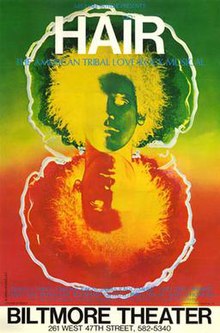
The song is “Hair” from the iconic 1968 counter-culture and controversial stage and film production “Hair”
I’ve spent my lifetime watching and loving the cinema and have educated my children with a more sophisticated palette for black and white films and how they just don’t make them like that anymore.😊
Hundreds of full-length films were produced during the decade of the 1940s; during Hollywood’s Golden Age. The great actor Humphrey Bogart made his most memorable films in this decade. Frank Capra’s masterpiece It’s a Wonderful Life and Orson Welles’s cinema genius production of Citizen Kane were released. The film noir genre was at its height. Alfred Hitchcock made his American debut with the film Rebecca and made many classics throughout the 1940s. (Wikipedia)
(Top) Cary Grant, Audrey Hepburn, Marlon Brando (Middle) Lauren Bacall, Marilyn Monroe, Grace Kelly (Bottom) Humphrey Bogart, Marlene Dietrich, Clark Gable
Movie Stars of the 1940’s & 1950’s
Of course, I want you to visit my website as a source of reference material, but if you want to see these full-length gems for free, I recommend tuning into the Turner Classic Movies channel. They show everything from the great silent films, Chaplin, Buster Keaton, etc. through Hollywood’s “Golden Age”.
These classic films bring me great joy and I hope you’ll find a special place in your heart for them, too!
Robert Vaughn was a cool, and debonair symbol of the 1960’s and will forever live on as the suave secret agent, Napoleon Solo. The iconic international spy tasked with saving the world on a weekly basis lost his battle with Acute Leukemia and died on Friday, November 11, 2016, in Danbury, Connecticut. He was 83.
Legacy of Robert Vaughn
Vaughn’s first film appearance was as an uncredited extra in “The Ten Commandments” (1956), playing a golden calf idolater also visible in a scene in a chariot behind that of Yul Brynner. His first credited movie role came the following year in the Western Hell’s Crossroads (1957), in which he played Bob Ford, the murderer of outlaw Jesse James.
Robert Vaughn, Paul Newman “The Young Philadelphians”
Robert Vaughn’s first notable appearance was his role as a man accused of murder in “The Young Philadelphians” (1959) staring Paul Newman and for which Vaughn received a nomination for both the Academy Award for Best Supporting Actor and the Golden Globe Award for Best Supporting Actor – Motion Picture. In his next role, he would portray the insecure gunman Lee in the Old West-style remake of Akira Kurosawa’s 1954 Japanese masterpiece Seven Samurai, “The Magnificent Seven” (1960). (Wikipedia)
When The Man From U.N.C.L.E. ended, Vaughn landed a major role playing Chalmers, an ambitious California politician in the mega box office hit Bullitt (1968) starring and produced by screen legend, Steve McQueen; Vaughn was nominated for a BAFTA Award for Best Supporting Actor for this role.
In 1978 he won a best supporting actor Emmy for his performance as a White House chief of staff in the miniseries “Washington: Behind Closed Doors.” (New York Times)
Robert Vaughn “The Magnificent Seven”
David McCallum, Vaughn, Leo G. Carroll
Steve McQueen and Vaughn “Bullitt”
However, the role he is most remembered and loved is Napoleon Solo, the dashing international spy for U.N.C.L.E. (United Network Command for Law Enforcement) Together with his laid back partner Illya Kuryakin (David McCallum), the enigmatic Russian spy, he battled T.H.R.U.S.H. (Technological Hierarchy for the Removal of Undesirables and the Subjugation of Humanity), a super secret organization intent on achieving world domination.
From 1964 to 1968, in the thick of the Cold War, millions of Americas tuned in weekly to check out the wit and cool of the unlikely duo (American and Russian) as they foiled the various diabolical schemes of the colorful T.H.R.U.S.H. villains.
Robert Vaughn (Napoleon Solo) and David McCallum (Illya Kuryakin)
The show was an obvious parody of Ian Fleming’s James Bond films and Mr. Fleming actually served as an advisor, which probably lent more authenticity to the characters and storylines. He is also widely credited with coining the name Napoleon Solo.
Robert Francis Vaughn was born on Nov. 22, 1932, in New York City into a theatrically inclined household. His father, Gerald Walter Vaughn, was heard on radio series like “Gangbusters” and “Crime Doctor,” and his mother, the former Marcella Gaudel, appeared in a 1931 Broadway production of “Dracula.” The couple divorced when Mr. Vaughn was an infant and he moved with his mother to Minneapolis, where he was partly reared by grandparents.
He was encouraged by his mother to pursue acting, starting with having him (at the age of 5) learn the soliloquy, “To Be or Not to Be..” from Hamlet. In 1952 he headed to Hollywood studying theater arts at Los Angeles City College during the day while pursuing bit-parts.
Earning a master’s degree in theater, he received a Ph.D. in communications from the University of Southern California in 1970. In 1972, he published his dissertation as the book Only Victims: A Study of Show Business Blacklisting. (Wikipedia)
He was known for hanging out at local Hollywood hot spots with the likes of Bette Davis and dated (a legend in her own right) actress Natalie Wood. After graduating from college in 1956, Mr. Vaughn signed with Columbia Pictures for $15,000 a role. However, his career was put on hold after he was drafted into the Army serving 18 months.
Robert Vaughn and Natalie Wood
Mr. Vaughn continued to work as an actor into his 80s. He appeared on the British television series “Hustle” from 2004 to 2012 and on another British show, “Coronation Street,” in 2012. He was seen on an episode of “Law & Order: Special Victims Unit” last year.
Caitlin Vaughn, wife Linda Staab, and son Cassidy
Robert Vaughn is survived by wife, actress Linda Staab, whom he married in 1974 and a daughter, Caitlin Vaughn; a son, Cassidy; and two grandchildren.
He will always be a fond reminder of my childhood and the swinging ’60s. Those days are gone, but Napoleon Solo will forever live on.
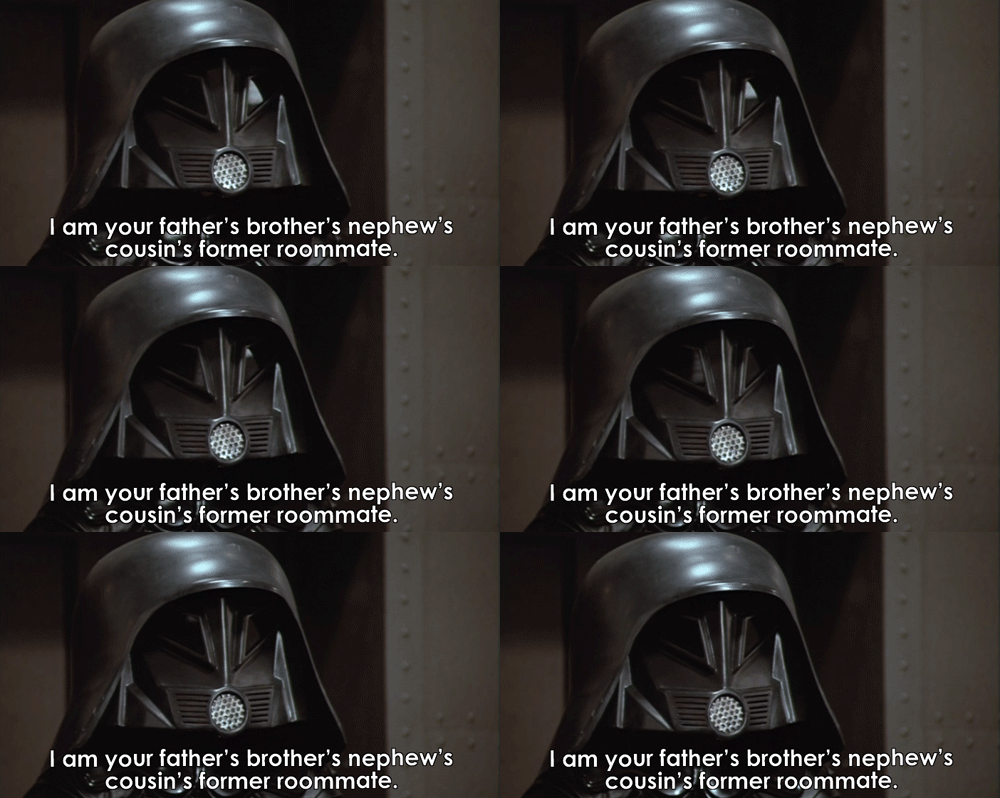
Like Galaxy Quest was an homage to Star Trek, Mel Brooks off-the-wall comedy Spaceballs (1987) was a send-off of Star Wars. Its setting and characters parody the original Star Wars trilogy, as well as other sci-fi franchises including Star Trek, Alien, and the Planet of the Apes films.
The plot is set in a distant galaxy, planet Spaceball which has depleted its air supply, leaving its citizens reliant on a product called “Perri-Air.” (See, I told you off-the-wall)
Mel Brooks
In desperation, Spaceball’s leader President Skroob (Mel Brooks) orders the evil Dark Helmet (Rick Moranis) to kidnap Princess Vespa (Daphne Zuniga) of oxygen-rich Druidia and hold her hostage in exchange for air.
Rick Moranis (Dark Helmet)
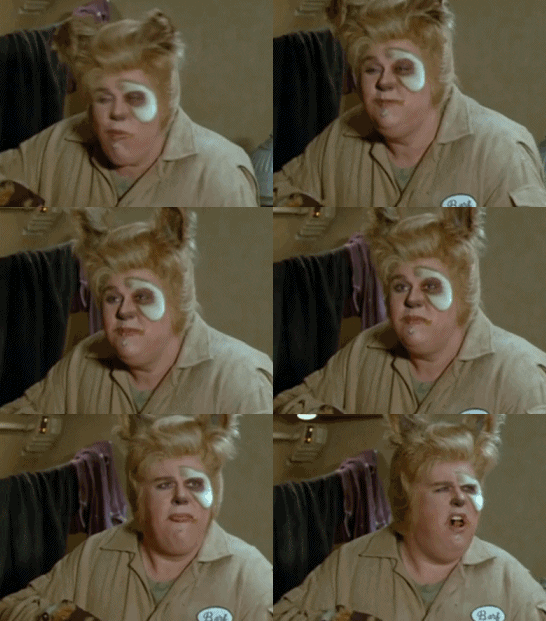
But help arrives for the Princess in the form of renegade space pilot Lone Starr (Bill Pullman) and his half-man, half-dog partner, Barf (John Candy). (IMDb)
Spaceballs is a 1987 American science fiction parody film co-written, produced and directed by Mel Brooks. Starring Brooks, Bill Pullman, John Candy, and Rick Moranis, the film also features Daphne Zuniga, Dick Van Patten, and the voice of Joan Rivers as Dot Matrix. (Wikipedia)
John Candy, Joan Rivers (Dot), Daphne Zuniga, Bill Pullman
Rick Moranis
John Candy – Barf
The film was met with a mixed reception but I think it can be classified as a cult classic, definitely an off the-wall-classic.
Going back and researching this film I almost forgot the funniest scene that had me on the floor. When I first saw this I literally screamed! Which I’m sure had the cleaning lady a the Residence Inn, where I was staying, shaking her head. (This chick is nuts!)
OMG, that was hilarious!! Who would have thought you could turn that incredibly terrifying moment in Alien into this “spit your milk out” moment.
Once again, Rick Moranis is absolutely brilliant! Just looking at him in that ginormous helmet, you can’t help but crack-up. Portraying the embodiment of the “Napoleon complex” his action playing with his dolls is too precious.
Trivia:
IT WASN’T THE FIRST STAR WARS PARODY FILM.
Amateur filmmaker, Ernie Fosselius was so enamored with Star Wars in 1977 that he cobbled together a 12-minute short, Hardware Wars, which he shot for just $8,000 in an abandoned laundromat. It was even declared a “cute little film” by George Lucas.
LUCAS GAVE HIS (CONDITIONAL) BLESSING.
Based on Brooks not doing any merchandising. The Lucas people were just upset about one aspect of Spaceballs,” Brooks told Starlog in 1987. “They didn’t think it was fair for us to do a take-off and then merchandise the characters.”
BILL PULLMAN WAS BROOKS’ THIRD CHOICE.
According to Pullman, the actor—who had not yet had a starring role—was approached by Brooks only after Tom Cruise and Tom Hanks turned down the role of Lone Starr, the Han Solo-esque lead of the film. Pullman said that hiring Rick Moranis and John Candy freed Brooks up to cast a relative unknown.
BARF’S EARS UPSTAGED THE ACTORS.
John Candy, who played half-dog/half-man Barf, was usually trailed on-set by Effects artist Rick Lazzarini and the effects crew, who had to control both his tail and his ears. At one point, Lazzarini was told by Brooks that he didn’t “have to move the ears so much!” They were too active in scenes focused on other characters. (Candy, incidentally, performed with a 40-pound battery backpack strapped to him to control the animatronics.)
(Jake Rossen-(mental_floss)
John Candy – Barf
So, if you’re looking for a good laugh and a total mind distraction, I recommend “Spaceballs” as the perfect gag-filled tonic.
I love quoting from my favorite movies. It’s like a secret language that only you and those who love that particular film can understand. The joy is one line can transport you back to that moment in time and creates an instant connection with fellow film lovers.
On a recent trip to visit family, watching the Michigan game and sharing stories, as usual, my cousin quipped, “the sheriff is near..” and we all broke out laughing visualizing the scene with Clevon Little from “Blazing Saddles”.
So, taking the secret language idea a little further, I decided to showcase some of my favorite monologues from some of my favorite films.
This was Ramis’ first feature film and was a major boost to Dangerfield’s film career; previously, he was known mostly for his stand-up comedy. Grossing nearly $40 million at the domestic box office (17th-highest of the year).
Caddyshack has garnered a large cult following and has been hailed by media outlets, such as Time and ESPN, as one of the funniest sports movies of all time. As of 2010, Caddyshack has been televised on the Golf Channel as one of its “Movies That Make the Cut.” (Wikipedia)
Chevy Chase, Bill Murray, Rodney Dangerfield, Ted Knight
In 2000, Caddyshack was placed at number 71 on the American Film Institute’s (AFI) list of the 100 funniest American films. In 2005, a line from the movie was chosen by AFI for their list of the top 100 movie quotes from U.S. films.
‘”Cinderella story. Outta nowhere. A former greenskeeper, now, about to become the Masters champion. It looks like a
mirac…
…It’s in the hole! It’s in the hole! It’s in the hole!”
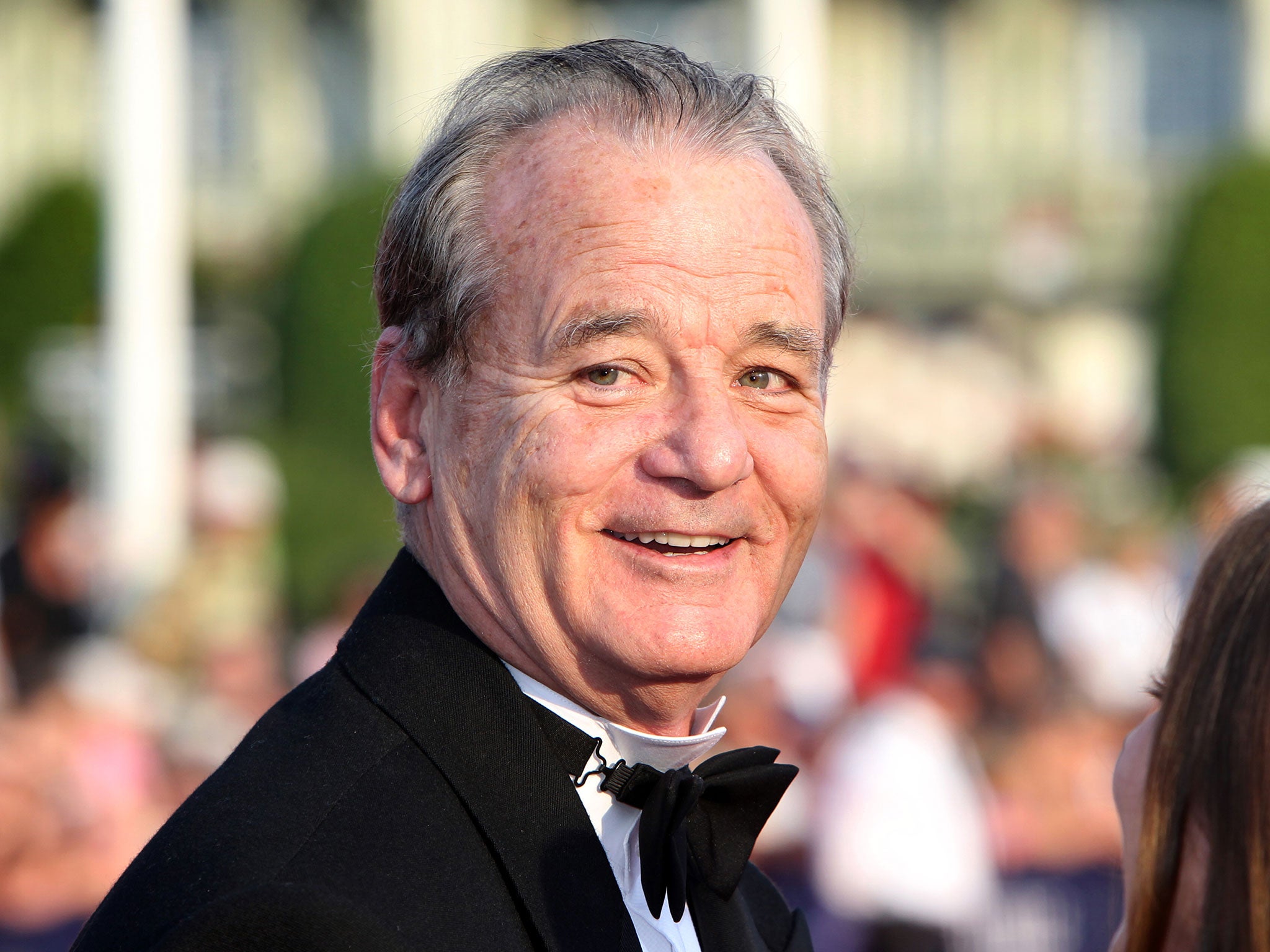
Bill Murray
On October 23, 2016, Bill Murray was the recipient of The Kennedy Center Mark Twain Prize for American Humor. From the stage of The John F. Kennedy Center, a star-studded lineup saluted the achievements of this brilliant comedic trailblazer.
There is no doubt that Gene Wilder was a brilliant writer and one of the funniest actors of our time. His role as Victor Frankenstein is a standout. His timing is perfect and this monologue is priceless.
Mel Brooks, Kenneth Mars, Marty Feldman, Gene Wilder, Teri Garr
The film is an affectionate parody of the classic horror film genre, in particular, the various film adaptations of Mary Shelley’s novel Frankenstein produced by Universal in the 1930s.
Brooks adapted the film into a musical of the same name which premiered in Seattle at the Paramount Theatre and ran from August 7 to September 1, 2007. The musical opened on Broadway at the Foxwoods Theatre (then the Hilton Theatre) on November 8, 2007, and closed on January 4, 2009.
It was nominated for three Tony Awards and starred Tony winner Roger Bart, two-time Tony winner Sutton Foster, Tony & Olivier winner Shuler Hensley, two-time Emmy winner Megan Mullally (Will & Grace), three-time Tony nominee Christopher Fitzgerald, and two-time Tony & Emmy winner Andrea Martin (Saturday Night Live veteran).
Megan Mullally
A critical favorite and box office smash, Young Frankenstein ranks No. 28 on Total Film magazine’s readers’ “List of the 50 Greatest Comedy Films of All Time”, No. 56 on Bravo TV’s list of the “100 Funniest Movies”, and No. 13 on the American Film Institute’s list of the 100 funniest American movies.
In 2003, it was deemed “culturally, historically or aesthetically significant” by the United States National Film Preservation Board, and selected for preservation in the Library of Congress National Film Registry. On its 40th anniversary, Brooks considered it by far his finest (though not his funniest) film as a writer-director.
I still find myself holding my breath listening to Quint’s (Robert Shaw) story. His vivid recount of his nightmare of the death with his shipmates is absolutely riveting! Wow, one of the most frightening scenes in the film.
Jaws is the 1975 American thriller film directed by Steven Spielberg and based on Peter Benchley‘s 1974 novel of the same name. The film stars Roy Scheider as police chief Martin Brody, Robert Shaw as shark hunter Quint, and Richard Dreyfuss as oceanographer Matt Hooper. (Wikipedia)
Now considered one of the greatest films ever made, Jaws was the prototypical summer blockbuster, with its release regarded as a watershed moment in motion picture history.
Robert Shaw, Roy Scheider, Richard Dreyfuss
Jaws became the highest-grossing film of all time until the release of Star Wars (1977). It won several awards for its soundtrack and editing. In 2001, Jaws was selected by the Library of Congress for preservation in the United States National Film Registry, being deemed “culturally, historically, or aesthetically significant”. (Wikipedia)
This classic won three Academy Awards for Best Film Editing, Best Original Dramatic Score, and Best Sound (Robert Hoyt, Roger Heman, Earl Madery and John Carter). It was also nominated for Best Picture, losing to One Flew Over the Cuckoo’s Nest.
Spielberg greatly resented the fact that he was not nominated for Best Director. Along with the Oscar, John Williams’s score won the Grammy Award, the BAFTA Award for Best Film Music, and the Golden Globe Award. To her Academy Award, Verna Fields added the American Cinema Editors’ Eddie Award for Best Edited Feature Film.
This is the scene that not only features the memorable monologue but, introspection of just what it means. This reflection made the speech even more impactful for me. Stop and think about it.
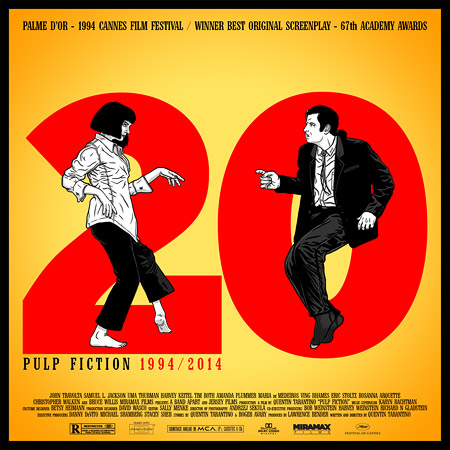
Pulp Fiction is the 1994 American neo-noir crime black comedy film written and directed by Quentin Tarantino, from a story by Tarantino and Roger Avary. Tarantino’s second feature film, it is iconic for its eclectic dialogue, ironic mix of humor and violence, nonlinear storyline, and a host of cinematic allusions and pop culture references.
Uma Thurman, John Travolta
The film was nominated for seven Oscars, including Best Picture; Tarantino and Avary won for Best Original Screenplay. It was also awarded the Palme d’Or at the 1994 Cannes Film Festival. A major critical and commercial success, it revitalized the career of its leading man, John Travolta, who received an Academy Award nomination, as did co-stars Samuel L. Jackson and Uma Thurman. (Wikipedia)
John Travolta, Samuel L. Jackson
The music is as much a character in the movie as the actors. No film score was composed for Pulp Fiction; Quentin Tarantino instead used an eclectic assortment of surf music, rock and roll, soul, and pop songs.
Dick Dale’s rendition of “Misirlou” plays during the opening credits. Tarantino chose surf music as the basic musical style for the film, but not, he insists, because of its association with surfing culture: “To me, it sounds like rock and roll spaghetti Western music.” (Wikipedia)
The soundtrack album, Music from the Motion Picture Pulp Fiction, was released along with the film in 1994. The album peaked on the Billboard 200 chart at number 21. The single, Urge Overkill’s cover of the Neil Diamond song “Girl, You’ll Be a Woman Soon”, reached number 59.
The film has been called a “terminally hip postmodern collage” and in 2013, selected for preservation in the United States National Film Registry by the Library of Congress as being “culturally, historically, or aesthetically significant”. (Wikipedia)
These are some of my top classic movie moments. In the Comments, let me know some of yours!
Originally this film was going to be part of a favorite monologues piece. However, after watching Howard Beale’s (Peter Finch) speech on the state of the world, I felt the need to turn it into a full blown post on its own.
This prophetic monologue is incredible! It could very well have been given today. His truth and passion still hit hard. Politically, I feel this way most days.
When I saw this movie at its premiere I thought it was pinpoint accurate as a representation of the industry and the direction it was going. Today’s corporate media has even surpassed the foretold death of true journalism that “Network” showcased.
Entertainment television was the news style of the film and parrots the absurdity of what passes for the Fourth Estate today.
As a journalism student in the ’70s, I’ve been outraged over time witnessing the demise and bastardization of the reason for journalism, to begin with. The news is supposed to inform the public of what is going on in Washington and globally. It’s supposed to be impartial, probing and take seriously the consequences of misleading and misinforming the American people of information needed to make informed decisions on our public servants and events.
I often think of the Watergate scandal and how very differently it would have emerged in today’s news environment. Bob Woodward and Carl Bernstein from the Washington Post represented the best of journalism and the importance of separating news from entertainment; digging deep and not letting up until all the facts had been revealed.
Chilling commentary and viewpoint from the Corporate Chairman (Ned Beatty)
Allegedly, part of the inspiration for Chayefsky’s script came from the on-air suicide of television news reporter Christine Chubbuck in Sarasota, Florida two years earlier. The anchorwoman was suffering from depression and battles with her editors, and unable to keep going, she shot herself on camera as stunned viewers watched on July 15, 1974. Chayefsky used the incident to set up his film’s focal point. As he would say later in an interview, “Television will do anything for a rating… anything!”
However, Dave Itzkoff’s book Mad as Hell: The Making of Network and the Fateful Vision of the Angriest Man in Movies disputes this, asserting that Chayefsky actually began writing “Network” months before Chubbuck’s death and already planned for Howard Beale to vow to kill himself on air; Chubbuck’s suicide was an eerie parallel. (Wikipedia)
Whatever the order of events, Paddy Chayefsky’s intuition and writing are inspired! Words we should never take lightly and always remember.
In 2000, the film was selected for preservation in the United States National Film Registry by the Library of Congress as being “culturally, historically, or aesthetically significant”. In 2002, it was inducted into the Producers Guild of America Hall of Fame as a film that has “set an enduring standard for U.S. American entertainment”. (Wikipedia)
In 2006, the two Writers Guilds of America voted Chayefsky’s script one of the 10 greatest screenplays in the history of cinema. In 2007, the film was 64th among the 100 greatest American films as chosen by the American Film Institute, a ranking slightly higher than the one AFI had given it ten years earlier.
The role of Howard Beale earned him a posthumous Academy Award for Best Actor, his fifth Best Actor award from the British Academy of Film and Television Arts, and a Best Actor award from the Golden Globes. He was the first person to win a posthumous Academy Award in an acting category.
Although Finch didn’t live to receive the Academy Award for Best Actor, his performance as Howard Beale will never leave the memories of those who witnessed it.
So, in honor of Howard Beale let’s all get up off our chairs, go to the window and yell – “I’m mad as hell and I’m not going to take this anymore!”
And, after you’re done, make sure you stay up and go out and VOTE!
A funny thing happened at my 6-month dental check-up. Sitting in the dentist’s chair a lightbulb came on and the idea for this post hit me square in the mouth, “The Little Shop of Horrors”(1960)!
The 1986 film is a remake of the hit Broadway stage production which was a remake of the 1960 movie. (Phew, that took the long way around)
I had the fantastic experience of performing in a stage production as one of the street urchins. Chiffon, Crystal, and Ronette are fashioned after girl groups from the 1960’s. It was one of my favorite shows and roles in my community theater career.
The original 1960 film was a black comedy horror film directed by Detroit-born (my hometown) and celebrated B-movie legend, Roger Corman and written by Charles B. Griffith. The film is a farce about an inadequate florist’s assistant (Jonathan Haze) who cultivates a plant that feeds on human flesh and blood.
The film stars Jonathan Haze (Seymour), Jackie Joseph (Audrey), Mel Welles (Mr. Mushnick), and Dick Miller, all of whom had worked for Corman on previous films. Produced under the title “The Passionate People Eater”. It was a lot creepier and darker than either the 1986 film or Broadway production.
The film’s concept is thought to be based on a 1932 story called “Green Thoughts”, by John Collier, about a man-eating plant. However, author Dennis McDougal in Jack Nicholson‘s biography suggests that Griffith may have been influenced by Arthur C. Clarke’s sci-fi short story ‘The Reluctant Orchid’. (Wikipedia)
The film also garnered attention as a movie that was made into a Broadway production; it’s usually the other way around.
Writer, Charles B. Griffith, was the voice of Audrey 2 in 1960 film.
Levi Stubbs (lead singer of The Four Tops-Motown group) was the voice of Audrey II in 1986 movie.
Ellen Greene played Audrey in the Off-Broadway Production.
The gleefully masochistic dental patient, originally played by Jack Nicholson, is not in the musical but is in the 1986 film, played by Bill Murray.
Off-Broadway Production of “Little Shop of Horrors” 1982 with Ellen Greene immediately right of Audrey 2
A young Jack Nicholson‘s small role as the masochistic dental patient in the 1960 film was a hysterical standout. At the time of filming, Jack Nicholson had appeared in two films and had worked with Roger Corman as the lead in “The Cry Baby Killer”.
Roger Corman
According to Nicholson, “I went into the shoot knowing I had to be very quirky because Roger originally hadn’t wanted me. In other words, I couldn’t play it straight. So I just did a lot of weird shit that I thought would make it funny.”
Even though this was only his third film you could see that his talent was something quite special.
Because I’m a big-time musical theater lover, my affinity is for the 1986 film. The musical numbers were fabulous, the performances outstanding, and the memories lasting.
I loved performing the opening “Urchin” musical number “Little Shop of Horrors” which was also from the Off-Broadway stage production:
The film, directed by Frank Oz (Muppets), differs only slightly from the stage play. The title song is expanded to include an additional verse to allow for more opening credits. The song “Ya Never Know” was re-written into a calypso-style song called “Some Fun Now”, although some of the lyrics were retained.
Four other songs (“Closed for Renovation”, “Mushnik and Son”, “Now (It’s Just the Gas)”, as well as “Call Back in the Morning”) were cut from the original production score. An original song was written by Ashman and Menken, “Mean Green Mother from Outer Space”, was created for the film.
For a fun and dark Halloween double feature, I highly recommend checking out “The Little Shop of Horrors” (1960) and the remake, “Little Shop of Horrors” (1986). A little something for everyone.
Charlie Chaplin is one of the greatest filmmakers in motion picture history. Robert Downey, Jr. brilliantly portrayed his tremendous talent and career in the 1992 film “Chaplin”. I’ve always loved Chaplin not just because of his comedic gifts but like myself, he stood firm in the belief that art is political. A position which caused him to be kicked out of the United States for “subversive” beliefs.
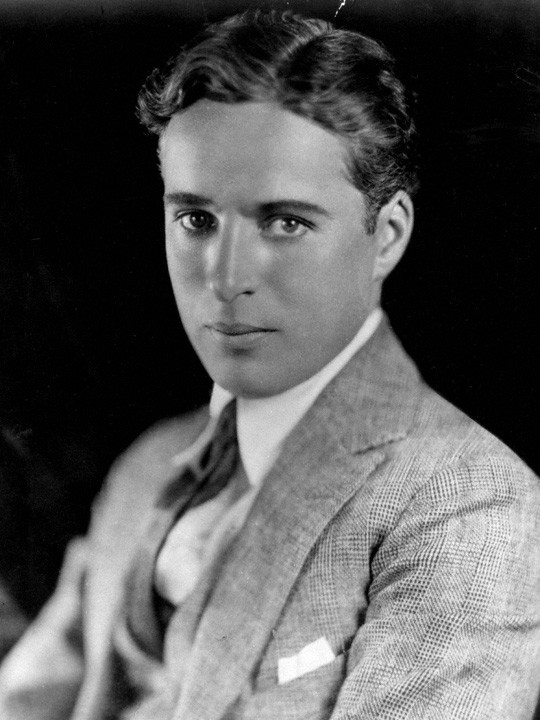
Sir Charles Spencer “Charlie” Chaplin, (16 April 1889 – 25 December 1977) was an English comic actor, filmmaker, and composer who rose to fame during the era of silent film. Chaplin became a worldwide icon through his screen persona “the Tramp” and is considered one of the most important figures in the history of the film industry.
His career spanned more than 75 years, from childhood in the Victorian era until a year before his death in 1977, and encompassed both adulation and controversy. (Wikipedia)
Charlie Chaplin
Probably the most prophetic film of his extraordinary career was “The Great Dictator” (1940). Chaplin’s final speech resonates at the core of what it means to be human today just as it did over 75 years ago. Written by Chaplin, it emphasizes just how vital it is to know your history because those who don’t are doomed to repeat it.
Created in direct opposition to Hitler’s reign of terror, Chaplin warns of the devastation of giving up our humanity and implores us to love each other.
The Great Dictator is the 1940 American political satire comedy-drama film written, directed, produced, scored by and starring Charlie Chaplin. Charlie Chaplin was unique because he was the only Hollywood filmmaker to continue to make silent films well into the period of sound films, this was Chaplin’s first true sound film.
This scene is so beautiful in its simplicity and elegance; while at the same time mocking the hubris of Hitler, the genocide, antisemitic dictator.
Language similar to a candidate running for President in 2016. Same delusional dream.
Chaplin’s film is a scathing and controversial condemnation of Adolf Hitler, Benito Mussolini, fascism, antisemitism, and the Nazis. At the time the film was released, the United States hadn’t entered into World War II and the fight against Nazi Germany.
After seeing this masterpiece, my respect and admiration for Chaplin grew even more. He spoke up when others wouldn’t. That’s the kind of morality and integrity that seems to be sorely lacking in today’s politics.
Chaplin was so talented, and for even more contrast, played both leading roles: a ruthless fascist dictator, and a persecuted Jewish barber.
Charlie Chaplin as Adenoid Hynkel (Hitler) and the Jewish Barber
The Great Dictator was popular with audiences, becoming Chaplin’s most commercially successful film. Modern critics have also praised it as a historically significant film and an important work of satire. (Wikipedia)
The Great Dictator was nominated for five Academy Awards – Outstanding Production, Best Actor, Best Writing (Original Screenplay), Best Supporting Actor for Jack Oakie, and Best Music (Original Score).
In his 1964 autobiography, Chaplin stated that he could not have made the film if he had known about the true extent of the horrors of the Nazi concentration camps at the time. (Wikipedia)
At the end of his life, Chaplin was finally awarded the respect and accolades befitting of his expansive career and achievements. This is Sir Charles accepting his honorary Academy Award in 1972. I watched this presentation and cried with admiration the entire time.
This site is about how to live our life in a meaningful way by accepting complete surrender to the Almighty with purity of mind and character. It is about the eternal religion of the world i.e. Hinduism which is very liberal to anyone because there are many branches or methods to get the divinity to turn our life into an ever blissful one.
Free listening and free download (mp3) chill and down tempo music (album compilation ep single) for free (usually name your price). Full merged styles: trip-hop electro chill-hop instrumental hip-hop ambient lo-fi boombap beatmaking turntablism indie psy dub step d'n'b reggae wave sainte-pop rock alternative cinematic organic classical world jazz soul groove funk balkan .... Discover lots of underground and emerging artists from around the world.






 Robert Vaughn and Natalie Wood






 On a recent trip to visit family, watching the Michigan game and sharing stories, as usual, my cousin quipped, “the sheriff is near..” and we all broke out laughing visualizing the scene with Clevon Little from







 iheartfilm