Those of you who read my posts on a regular basis know I’m a big time fan of classic movies. My interests include all genres and typically those from legendary directors like Alfred Hitchcock and Billy Wilder. Melodrama and classic Sci-Fi rate high on my favorite movie lists and the best television source I’ve discovered and my go to for “all things film” is the Turner Classic Movies channel.
As program host, Robert Osbourne brings a style and wealth of cinema knowledge respected by both enthusiasts and Hollywood legends alike. Osbourne is a graduate of the University of Washington’s School of Journalism and has over 30 years experience writing about film and Hollywood. In 1977, he started his career as a columnist for The Hollywood Reporter and the following year published 50 Years of Oscar which won him the 1979 National Film Book award. He served as President of the Los Angeles Film Critics Association in 1981, a position he would be re-elected to for the next two years. In 1994, Ted Turner created Turner Classic Movies as a competitor to American Movie Classics (now known as AMC). Osborne was selected as the host of their nightly broadcasts as well as special one-on-one “Private Screening” interviews and the weekly feature “The Essentials.”
This month we celebrate Mr. Osbourne’s 20th Anniversary with a tribute to his memories and moments of sharing rare, golden Hollywood era and restored film classics from the TCM vault. For a retrospective of Mr. Osbourne’s beginnings as host, films and Hollywood legends that have visited and shared their stories, tune in on September 15th at 5:30am (I know, way too early – I’m going to DVR the special:) on your local cable channel or visit online at: http://www.tcm.com for complete details and the upcoming TCM schedule.
TCM’s library of films spans several decades of cinema and includes thousands of film titles. The channel has licensing agreements with such studios as Metro-Goldwyn-Mayer and Warner Bros, Entertainment. They also have movie licensing rights with Universal Studios, Paramount, 20th Century Fox, Walt Disney Studios, Selznick International Pictures, Sony Pictures Entertainment, Studio Canal and Janus Films. With such an extensive collection, we are treated to program features such as “31 Days of Oscar”, “Star of the Month”, “Silent Sunday Night”, “TCM Remembers”and numerous original programming broadcast specials.
Twenty-Four Seven there’s always new movies to discover, old titles to revisit and an extensive background of cinema and film history. You can’t go wrong. Turner Classic Movies – For Movie Lovers Everywhere!
In a previous post I talked about maybe being a little anal about the rules for Saturday and Sunday afternoon movie watching. I shared my rules for Saturday afternoon movie viewing which is B-horror and science fiction. I also shared 3 of my favorite flicks. The Blob (1958), The Incredible Shrinking Man (1957) and The Tingler (1959). (hope you check ’em out)
So, for Part 2 I’m showcasing Sunday and my criteria for some great classic melodrama.
I love melodramas because they can be so over the top and cathartic (think movie therapy) and there’s no better day to indulge than on a lazy Sunday, vegging on the couch, better yet if it’s a rainy day.
According to dictionary.com:
Melodrama – Exaggerated and emotional or sentimental, sensational or sensationalized: over dramatic.
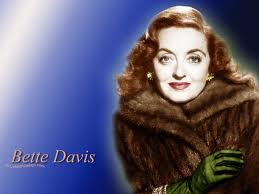
Bette Davis is my favorite Melodrama Diva! Talk about emotional and dramatic, she had those attitudes down pat. With her I find myself either talking back to my TV screen or weeping. (this is why rain helps) So, let’s find out about “The First Lady of the American Screen:
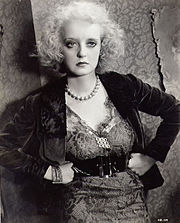
Bette was known for her no-nonsense, no-holds barred personality and wasn’t afraid to take on unsympathetic character roles. In the RKO film Of Human Bondage (1934), she played such a character as Mildred, the cruel and vicious waitress. A film adaptation of the 1915 novel of the same name by W. Somerset Maugham. This melodramatic adaptation about a crippled doctor’s destructive and compulsive passion for this coarse waitress was advertised with the tagline on one of its posters: “The Love That Lifted a Man to Paradise…and Hurled Him Back to Earth Again.”
In her 1st major, critically acclaimed part she insisted on looking hideous to depict the ravages of the disease tuberculosis on the human body. She wasn’t nominated for an Oscar but so impressed fellow artists that they insisted she be a write-in on the ballot.
Let’s take a look at her 10 Oscar nominations and 2 wins:
1935: Won for Dangerous, as a self-destructive, alcoholic actress (really a make-up for not winning Of Human Bondage)
1938: Won for Jezebel, as a self absorbed 1850’s southern belle whose insistence on wearing a red-dress to a formal affair (white = chaste) brings scandal and disapproval. Her man “Pres” Henry Fonda was too through with her.
1939: Nominated for Dark Victory, as Judith Traherne, an impetuous, terminally ill Long Island socialite. (yes that’s Bette with a drunken Ronald Reagan) Big time tear-jerker! – Bette’s favorite!
1940: Nominated for The Letter, as a low-down, adulterous murderer who has absolutely no remorse for blowing her lover away. However, karma is a bitch.
1941: Nominated for The Little Foxes, as Southern aristocrat Regina Giddens – that girl put the cold in cold-blooded.
1942: Nominated for Now, Voyager, as Charlotte Vale – a dowdy, overweight, spinster, abused by her mother but fights back and achieves a starling transformation in body and spirit. An incredible performance! My absolute favorite Bette Davis role!
Charlotte on the edge of a well deserved nervous breakdown:
Charlotte’s journey:
1944: Nominated for Mr. Skeffington, as Fanny Skeffington, a woman so conceited that she tries to steal her daughter’s boyfriend, loses her looks after an illness but still has the nerve to treat her husband like dirt and still believe she can have any man – no way. In the end she learns the hard way that “a woman is beautiful when she’s loved and only then.” (too bad it’s after her husband goes blind in a concentration camp)
1950: Nominated for All About Eve, as Margo Channing an insecure Broadway star challenged by the younger, conniving Eve – “Fasten your seat-belts, it’s going to be a bumpy night.” It was selected in 1990 for preservation in the United States National Film Registry and was among the first 50 films to be registered.
1952: Nominated for The Star, as Maggie, a washed-up actress trying to revive her career. Notably, at this time in Bette Davis’ career, she was struggling for roles despite her body of work. Bette’s ego was blamed.
1962: Nominated for What Ever Happened to Baby Jane?, as the demented Baby Jane Hudson who tortures and terrorizes her sister Blanche (Joan Crawford) Much like their real life rivalry. This role renewed her success and paved the way for other deranged characters in such films as: Hush, Hush Sweet Charlotte (1964) and The Nanny (1965)
♦♦♦♦
Bette continued to perform in film and on television in the 70’s and 80’s. In 1983 at the age of 75 she had a mastectomy as a result of breast cancer. Nine days later she suffered a stroke. Despite her failing health she continued to work until her death in 1989.
This is an in-depth retrospect of “The First Lady of the American Screen”
Sir Alfred Joseph Hitchcock (August 13, 1899 – April 29, 1980)
Sir Alfred Joseph Hitchcock aka “Master of Suspense” was a British born director known for his mastery of the suspense and psychological thriller. He was an innovator using film editing (cuts) as the basis to construct a film. He poked, stabbed and forced us to face our fears, obsessions and compulsions.
Hitch is one of my favorite directors because of his fearlessness. He used a voyeuristic style and cuts to let you see inside the heads of his leading characters. Rear Window (1954) is a classic example of his style as the audience becomes the voyeur along with James Stewart’s character. We go along with Hitch and peer through the windows of Stewart’s neighbors and cross a line we otherwise wouldn’t.
In Psycho (1960) we peer through the peephole with “Norman Bates” (Anthony Perkins) and end up rooting for this very troubled individual. Not allowing patrons to enter the theater after Psycho started was a great gimmick. His most fearless move was what occurred in the first 45 minutes of the film. Now that’s risk and genius!
In 1992, the US Library of Congress deemed the film “culturally, historically, or aesthetically significant” and selected it for preservation in the National Film Registry.
Now, meet Hitchcock as he takes us through the Bates Motel and the events that occurred. This is Sir Alfred in all his shocking glory.
Although Hitchcock is legendary for his film editing genius, Rope (1948 ) proved to be his ultimate experiment. Instead of using film editing, he would shoot the movie in one long sequence. Stopping only to change the camera role. Like filming a play. Each role of camera film holds about 10-12 minutes of film.
The set was insane with flying walls and furniture. Jimmy Stewart once remarked about placing his drink on a table, turning back around and not only was the drink gone but the table it was sitting on. Everyone had to be on their mark and not drop a line because if anything went wrong they had to do everything all over again. Hitchcock said the film just about killed him!
A Little Hitchcock History:
His first directing assignment, Number 13, began in 1922 but unfortunately wasn’t finished due to financial issues. His big break came in 1927 with the completion of his thriller The Lodger: A Story of the London Fog. The plot revolved around a search for a Jack the Ripper type of serial killer and mistaken identity. Hitchcock’s first thriller is ripe with mood and the German Expressionist influence. A taste of things to come in Hitch’s repertoire, it was a commercial and critical success.
Hitchcock’s tenth film, Blackmail was released in 1929 and considered Britain’s first talkie. It also starts his usage of landmarks as a tradition and appears in the longest cameo of all his films.
The 39 Steps (1935) is widely considered the best of Hitchcock’s early films and made him a star in the U.S. It also branded Hitch’s obsession with the cold blonde, sophisticated leading lady which Grace Kelly would come to epitomize. Then there’s the infamous “MacGuffin.” A reoccurring plot device that actually had no real significance to the story-line. A decoy. Just another Hitch thing.
Alfred Hitchcock’s films were produced in Britain until in 1939. When David O. Selznick signed him to a seven year contract, Hitch relocated to the United States with his wife Alma Reville (his closest collaborator) and his daughter Patricia Hitchcock.
Alma Reville was an accomplished director, writer, editor and producer in Britain before she met Hitch while working at Paramount‘sFamous Players-Lasky studio in London, during the early 1920s. Patricia Hitchcock appeared in several of her dad’s films including: Psycho, Strangers on a Train and Stage Fright.
Rebecca (1940) was Hitchcock’s first American film. It won the Academy Award for Best Picture and Hitchcock was nominated for Best Director but did not win. In fact, although nominated five times, he would never be afforded that honor.
In honor of the 1 year anniversary of Robin Williams passing, my original post tribute.
My heart was deeply saddened by the news of Robin Williams’ passing. Even though we’d never met, the news hit like losing an old friend. He made me laugh in ways and places that were utterly unique and hilarious! Listening to tributes not just from Hollywood but from my own friends, it’s stunning how his genius and sincerity as a human being reached beyond the stratosphere. His true gift was being able to listen, internalize and transform his energy into a non-stop series of humor and insights that no one has ever done before. I’ve followed his career from the beginning in the late 1970’s with his stand-up routines. His first TV performance as “Mork” from Ork on Happy Days resulted in his own series Mork and Mindy in 1978. His subsequent films and stand-up performances were the ultimate proof of his unlimited talents and abilities.
In celebration of his genius and the man, here are some of my favorite Robin Williams moments:
Thanks so much Robin for all the joy, laughter and love you shared with us all.
Set in Erie, Pennsylvania 1964, Tom Hanks‘ film – “That Thing You Do” chronicles the road to fame escapades of the fictional one-hit wonder group – “The Wonders” (the original spelling was “Oneders”, often mispronounced, The” O-need-ers”, a running gag in the movie. 🙂 This was Hank’s directorial debut and was written by and co-starred Hanks who plays the band’s manager, Mr. White. It was produced by Jonathan Demme, Academy Award winning director of The Silence of the Lambs (1991).
The plot involves drummer Guy Patterson (Tom Everett Scott) sitting in with the band after their regular drummer, Chad (Giovanni Rabisi) breaks his arm leap frogging over a parking meter before the annual Mercyhurst College talent show. Really?! At the show, Guy’s feeling good and goes with his gut, making one little alteration to “That Thing You Do”, the number they’re performing at the show. And we’re off and running!
Guy’s drumming is awesome, he changes the song tempo of “That Thing You Do” from ballad to upbeat, Faye calls Guy’s playing “wonderful” hence band’s name, teen girls dance, Villapiano restaurant gig, Tom Hanks signs the band changing the spelling from “The Oneders” to The Wonders. Boom! Number 1 hit record!
The rest, as they say, is one-hit wonder history.
Lenny (Steve Zahn) by far is my favorite Wonder! He gets it. Enjoy the moment. He’s relaxed, funny and always the life of the party. When asked a question by a reporter during their State Fair Tour he replies with a sorta crazy nasally sounding voice: “Oh I’m not here with these fellas, I gotta pig in competition over at the livestock pavilion and I am gonna win that blue ribbon!” Leaving the reporter with a stupefied look on his face. Classic Lenny. Priceless!
It’s a fun-filled musical ride well worth the viewing!
See the Cast of ‘That Thing You Do!’ Then and Now
Front Row: Tom Hanks, Liv Tyler, Tom Everett Scott. Back Row: Jonathon Schaech, Ethan Emery, Steve Zahn.
The Nicholas Brothers were a famous African American team of dancing brothers, Fayard (1914–2006) and Harold (1921–2000). Their highly acrobatic technique (“flash dancing“), demonstrated such a high level of artistry and daring innovations that they were considered by many to be the greatest tap dancers of their day.
Growing up with musician parents (mother played piano and father drums) who had their own band, the brothers were surrounded by some of the best Vaudeville acts of the time and became stars of the jazz circuit during the heyday of the Harlem Renaissance . Fayard and Harold went on to have successful careers performing on stage, film, and television well into the 1990s.
Their signature move was to leapfrog down a long, broad flight of stairs, while completing each step with a split. This move was performed to perfection in the finale of the movie, Stormy Weather . In my humble opinion, the “Jumpin’ Jive” dance number in Stormy Weather was the greatest movie musical sequence of all time!
Nicholas Brothers – Jump!
Another signature move was to arise from a split without using their hands.Gregory Hines (with brother Maurice – tap dancing brother and father team Hines, Hines and Dad) declared that if their biography were ever filmed, their dance numbers would have to be computer generated because no one now could emulate them. Ballet legend Mikhail Baryshnikov once called them the most amazing dancers he had ever seen in his life.
The Nicholas Brothers influenced every dancer that came after. Including Michael Jackson. Here they are together on the Jackson’s TV Show.
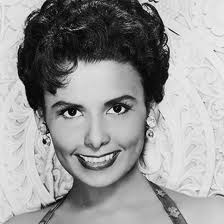
Lena Mary Calhoun Horne was a singer, dancer, actress, and activist whose 1957 live album entitled, Lena Horne at the Waldorf-Astoria, became the biggest-selling record by a female artist in the history of the RCA-Victor label. In 1958, this timeless beauty became the first African-American woman to be nominated for a Tony Award for “Best Actress in a Musical” (for her part in the “Calypso” musical Jamaica).
Lena Horne
I’m proud to say that Lena and I are sisters of Delta Sigma Theta Sorority, Inc. which in the summer of 1980 sponsored a 2-month series of benefit concerts for Soror Horne. Sixty-three years old and intent on retiring from show business, these concerts were represented as Soror Horne’s farewell tour, although her retirement lasted less than a year.
In May 1981, her one-woman show, Lena Horne: The Lady and Her Music became an instant success garnering Horne a special Tony award, and two Grammy Awards for the cast recording. The 333-performance Broadway run closed on her 65th birthday, June 30, 1982.
Lena Horne: The Lady and Her Music
In 1995, a “live” album capturing her Supper Club performance was released (winning a Grammy Award for Best Jazz Vocal Album). In 1998, Horne released another studio album, entitled Being Myself. Thereafter, Horne essentially retired from performing and largely retreated from public view.
In her personal life, Lena Horne married twice, Louis Jordan Jones in January 1937 (divorced in 1944). There were 2 children from that union – daughter, Gail (later known as Gail Lumet Buckley, a writer) and son, Edwin Jones (born February 7, 1940 – September 12, 1970) who died of kidney disease. Lena’s second husband, Lennie Hayton, was Music Director and one of the premier musical conductors and arrangers at MGM. They married in December 1947 in Paris and separated in the early 1960’s but never divorced. Hayton died in 1971.
Lena’s grandchildren include screenwriter Jenny Lumet, daughter of Horne’s daughter Gail and husband filmmaker, Sidney Lumet. Her other grandchildren include Gail’s other daughter, Amy Lumet, and her son’s three children, Thomas, William, and Lena. Horne also has a great-grandson, actor Jake Cannavale.
Lena was an activist in the Civil Rights Movement. During World War II she refused to perform before segregated audiences and at The March on Washington, she performed and spoke in association with the NAACP, SNCC, and the National Association of Negro Women. Ms. Horne also worked with Eleanor Roosevelt to help pass anti-lynching laws. In 1983, she was awarded the Spingarn Medal for outstanding achievement from the NAACP.
From her beginnings at The Cotton Club at age sixteen through her appearances in films, television, and on Broadway, Lena Horne’s career spanned over 70 years. Back in 2012 there were rumors about singer Alicia Keys portraying Lena in a biopic. Sounds interesting. What do you think? Guess we’ll just have to wait and see if it ever happens.
In honor of what would be Lena’s 98th birthday, I’m featuring her most notable film:
Lena Horne June 30, 1917– May 9, 2010
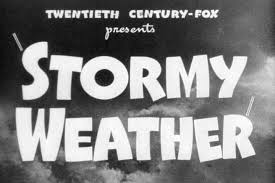
“Stormy Weather” (1943) American musical film produced and released by 20th Century Fox
This movie blew my mind! I saw it as a kid in the early sixties having no idea that there had ever been an all Black cast in a Hollywood production. Most of the premier entertainers of the 1940’s appeared in this tour de force that still stands as one of the best musicals of all time!
“Stormy Weather” was the 2nd all Black cast film made by a major studio in the 1940’s. “Cabin in the Sky” was the 1st, produced by MGM. Lena Horne starred in both and became famous for her rendition of “Stormy Weather” although Ethel Waters first performed the classic at The Cotton Club Nightclub in Harlem in 1933.
The song was written by Harold Arlen and Ted Koehler who worked as music composers at the renowned Cotton Club from 1930-1934. They wrote many of the jazz revue songs that were performed at the club and are still classics today. Harold Arlen wrote the music and Ted Koehler the lyrics.
Awards
“Stormy Weather” was selected in 2001 to The Library of Congress National Film Registry.
Get ready to have your “mind blown”! This dance sequence by the Nicholas Brothers is unreal. Check it out. Holy crap!!
Bill, Lena, Cab Calloway
Bill “Bojangles” Robinson, Lena Horne
Harold Nicholas, Cab Calloway, Fayard Nicholas
Dooley Wilson ; Stormy Girls
Fats Waller
Dance Off!
Nicholas Brothers – Jump!
Cab Calloway swings!
Katherine Dunham
Ethel Waters was a famous blues, jazz, gospel vocalist and actress. Her best-known recordings include “Dinah”, “Stormy Weather”, “Taking a Chance on Love” and “Cabin in the Sky” (She also starred in the film) Let’s enjoy her interpretation of the classic tune by Arlen and Koehler:
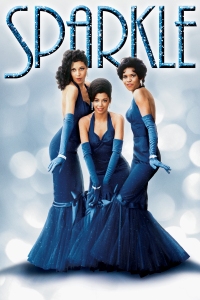
April 7, 1976, marked the film premiere of “Sparkle” and my introduction to the young, up and coming star, Irene Cara. “Sparkle” is the story of 3 sisters (Lonette McKee “Sister”, Dwan Smith “Delores”, and Irene Cara “Sparkle”) growing up in 1950’s Harlem. They become “Sister and the Sisters” girl group (formerly The Hearts) and we journey into their lives as their mother “Effie” (Mary Alice) struggles to raise the girls and reign in the “spirited” “Sister.” Along with Styx (Phillip Michael Thomas) and Levi (Dorian Harewood) the girls face and deal with the trials and realities of life.
I have 2 sisters and always wanted us to be a hot girl group. (Unfortunately I was the only one who sang:(
Cara also went on to star in “Fame” 1980, the “movie that changed my life” and brought her superstardom. Irene’s voice would later influence my own performances. Young, beautiful and talented, she had it all! Her voice cut through me like a knife. I believed every word she sang and the lyrics seemed to sync up with the dreams I held in my heart.
Fame –” You ain’t seen the best of me yet. Give me time I’ll make you forget the rest.”
Flashdance – “What a Feeling” started the clarion call to believethat “I can have it all.” And in 1984 the song “Flashdance” won Irene Cara an Oscar for Best Music, Original Song.
What’s she doing now?
From Stardom to seeming obscurity.
I hope this piece has introduced or reintroduced this accomplished artist back into our cultural landscape.
Irene Cara has won an Academy Award, 2 Grammy awards, Golden Globe and numerous other awards.
It seems every time someone asks the question “What’s your favorite? (fill in the blank) that’s what happens to me…BLANK. So, I decided to prep for the next occasion. Here’s the American Film Institute’s list of the Top 5 Musicals of All time! West Side Story and Cabaret have already made the list on my Songbird Oscar Winners post. I think I got this!
Cowardly Lion: ” Alright I’ll go in there for Dorothy. Wicked Witch or no Wicked Witch, guards or no guards, I’ll tear them apart. I may not come out alive, but I’m going in there. There’s only one thing I want you fellows to do.”
Hard to believe but this year marks the 30th Anniversary of The Goonies and the “Truffle Shuffle”. I love this film! Buddies on a treasure hunt adventure to help their parents and save their neighborhood while along the way encountering pirates (one-eyed Willie), escaping from gangster family – the Fratelli’s and by the end forging a special friendship with the one-eyed, Baby Ruth eating, and ever lovable – Sloth. Sounds good to me! The Goonies got their nickname from the “Goon Docks” which is the neighborhood in which they live.
The movie was filmed in Astoria, Oregon which held a big four-day event that kicked off on Thursday, June 4th, running until Sunday, June 7th. Goonies fans were able to tour film locations, go to film screenings and even go on a treasure hunt. The actor who plays Chunk, Jeff Cohen, took part in the celebration signing autographs for fans on Friday at the Liberty Theater.
My favorite character is the klutzy Chunk. He has the best scenes and is absolutely hilarious. Getting into a little bit of everything he has lots of stories and confessions to share.
And what would the movie be without the theme song from Cyndi Lauper – The Goonies ‘R’ Good Enough:
Robert Davi-Jake Fratelli, Joe Pantoliano- Francis Fratelli
Anne Ramsey (“Mama” Fratelli)
Chunk Confesses
Goonie Trouble
John Matuszak (Sloth)
The Goonies Then and Now
The Breakfast Club
John Hughes films really have a knack for capturing the teenage angst and The Breakfast Club stands out as one of the best. The movie is engaging, funny and poignant and by the end you understand and care about each one of the characters. It may have been 30 years ago. but the themes still stand the test of time. We can all relate to the jungle called high school. For many it was the best of times and for others the worst of times.
Anthony Michael Hall, Molly Ringwald, Ally Sheedy and Judd Nelson then and now.
Directed, written and produced by John Hughes, the coming of age storyline follows five teenagers, each a member of a different high school clique, who spend a Saturday in detention together and come to realize that they’ve bought into their respective stereotypes from peer pressure but are more complex than the labels they wear. They also deal with the pressures and expectations of their parents, teachers, and other authority figures. Critics consider it to be one of the great high school films as well as one of Hughes’ most memorable and recognizable works.
This site is about how to live our life in a meaningful way by accepting complete surrender to the Almighty with purity of mind and character. It is about the eternal religion of the world i.e. Hinduism which is very liberal to anyone because there are many branches or methods to get the divinity to turn our life into an ever blissful one.
Free listening and free download (mp3) chill and down tempo music (album compilation ep single) for free (usually name your price). Full merged styles: trip-hop electro chill-hop instrumental hip-hop ambient lo-fi boombap beatmaking turntablism indie psy dub step d'n'b reggae wave sainte-pop rock alternative cinematic organic classical world jazz soul groove funk balkan .... Discover lots of underground and emerging artists from around the world.


















 iheartfilm