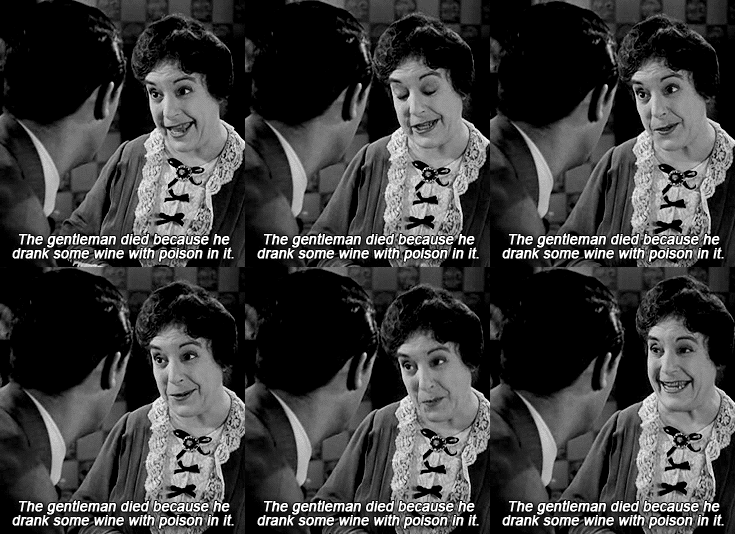
Most people think of Cary Grant as a suave leading man, but he is also an incredible physical comic. The dark comedy “Arsenic and Old Lace”(1944) directed by Frank Capra is the perfect vehicle for his slapstick comedic style. Grant plays Mortimer Brewster who, to his horror, discovers that his two darling elderly aunts (Abby (Josephine Hull) and Martha (Jean Adair) are in fact serial killers, bumping off those who they perceive as “lonely bachelor” men.
Mortimer’s aunts epitomize the idea of sweet little old ladies. They can preserves, donate toys to the policeman’s children’s fund, make Elderberry wine. The problem is that their tasty Elderberry wine is spiked with arsenic, strychnine and “just a pinch of cyanide”.
After Mortimer discovers a dead body hidden in the window seat he assumes that Teddy (John Alexander) – Abby and Martha’s brother – has committed murder under some delusion, (he believes he’s Theodore Roosevelt).
But the aunts are quite sincere when they explain to Mortimer that they are responsible (“It’s one of our charities”).
The look on Cary’s face when he discovers one of the bodies in the window seat is priceless. The classic double take.
Abby and Martha have the perfect set-up. The cellar of the family home becomes the burial ground for their victims with their brother Teddy aka Theodore Roosevelt digging the graves convinced he’s digging locks for the Panama Canal and burying yellow fever victims.
And, as if his murderous aunts weren’t enough on Mortimer’s plate, enter long, lost brother Jonathan (Raymond Massey). Jonathon is a psychotic killer looking to stash a body of his own (Mr. Spenalzo). Also, to his annoyance, Jonathan is in need of another plastic surgery because his face bears a striking resemblance to Frankenstein thanks to his alcoholic plastic surgeon and accomplice Dr. Herman Einstein (Peter Lorre).
Oh, did I mention the reason why Mortimer was actually visiting his aunts? Well, despite having written several books ridiculing marriage as an “old-fashioned superstition”, Mortimer has fallen in love and has just married the irresistible next door neighbor, Elaine Harper (Priscilla Lane). The wedding took place that morning which is (and this is too perfect) Halloween day.
When Jonathan discovers his aunts’ secret, he threatens to expose them if they try to turn him into the police. When the police come to the house to pick up Abby and Martha’s donation to the policeman’s children’s fund, Mortimer tries to hip them to Jonathan’s identify but it doesn’t go as smoothly as he’d planned. Chaos and hilarity ensue and this is where the monster mash fun begins.
And with that, I’ll let the opening credits speak for itself…
In my countdown to Halloween, I’ve already started watching my Friday night fright movies with help from my favorite classic film channel Turner Classic Movies. Fridays in October at 8:00 pm, they’re featuring theme-based horror flicks. The theme for Friday, October 9th is ‘Rogue Body Parts’. (sounds like fun!) To help other fans with fright flick selections, I’ll be recommending my DVR worthy choices for the TCM Horror Fest. So fire up the DVR, grab your favorite go-to snack and settle into the Halloween spirit!
“Mad Love” was so disturbing for the time that the studio released the film with an opening disclaimer that began, “Ladies and Gentlemen, Metro-Goldwyn-Mayer feels that it would be a little unkind to present this picture without just a word of friendly warning….” The Hays censorship office had objections to the showing of the train wreck or any “gruesome” images. It also had issues with the torture scenes and a shot of Dr. Gogol fondling the wax replica of Yvonne. Oops!
This movie is Lorre’s American film debut and he portrays the strange Dr. Gogol – his name alone evokes an unsettling mood. Well, Gogol seems to have a thing for sadomasochism which he enjoys at the ‘Théâtre des Horreurs’. Actress Yvonne Orlac (Frances Drake) is the object of Dr. Gogol’s obsession as she embodies his fantasy on stage in the theater company’s latest torture production.
Torture
Theater of Horrors
Inquisition
So sorry Dr. Gogol but Yvonne is married to Stephen Orlac (Colin Clive) – accomplished concert pianist – but anyway, she is so NOT into this creepy little man who has a standing box seat and has attended every performance. Gogol is so obsessed with Yvonne that he buys the wax figure of her after the show’s final performance. Mind you this is a life-size replica that he enshrines in his home so he can “always possess her.” Told you he was creepy.
Yvonne Orlac in wax – Dr. Gogol
The brilliant Dr. Gogol is a renowned surgeon with whom Yvonne, in desperation, must plead with to save her successful pianist husband’s hands and career after a gruesome train wreck. Well, of course, he’ll help his love but during emergency surgery on Stephen he comes up with the twisted idea to graft the hands of a knife-wielding killer who has just been put to death on the guillotine. (And of course, Gogol attended the decapitation.) However, soon afterward Stephen begins to suspect that something is seriously wrong with his new found extremities.
Dr. Gogol w/ assistant in Surgery
Operation complete
Stephen Orlac – Colin Clive
This is where we add another level of freaky to the plot. I’m not going to give anything away – that goes against every film fan rule. So, check it out and let me know on a scale of 1 – 10 the creep/freak factor in the comments. Also, be sure to stay tuned for next week’s DVR worthy fright flick. Theme – ‘Scary Kids’.
In honor of the 1 year anniversary of Robin Williams passing, my original post tribute.
My heart was deeply saddened by the news of Robin Williams’ passing. Even though we’d never met, the news hit like losing an old friend. He made me laugh in ways and places that were utterly unique and hilarious! Listening to tributes not just from Hollywood but from my own friends, it’s stunning how his genius and sincerity as a human being reached beyond the stratosphere. His true gift was being able to listen, internalize and transform his energy into a non-stop series of humor and insights that no one has ever done before. I’ve followed his career from the beginning in the late 1970’s with his stand-up routines. His first TV performance as “Mork” from Ork on Happy Days resulted in his own series Mork and Mindy in 1978. His subsequent films and stand-up performances were the ultimate proof of his unlimited talents and abilities.
In celebration of his genius and the man, here are some of my favorite Robin Williams moments:
Thanks so much Robin for all the joy, laughter and love you shared with us all.
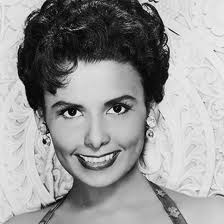
Lena Mary Calhoun Horne was a singer, dancer, actress, and activist whose 1957 live album entitled, Lena Horne at the Waldorf-Astoria, became the biggest-selling record by a female artist in the history of the RCA-Victor label. In 1958, this timeless beauty became the first African-American woman to be nominated for a Tony Award for “Best Actress in a Musical” (for her part in the “Calypso” musical Jamaica).
Lena Horne
I’m proud to say that Lena and I are sisters of Delta Sigma Theta Sorority, Inc. which in the summer of 1980 sponsored a 2-month series of benefit concerts for Soror Horne. Sixty-three years old and intent on retiring from show business, these concerts were represented as Soror Horne’s farewell tour, although her retirement lasted less than a year.
In May 1981, her one-woman show, Lena Horne: The Lady and Her Music became an instant success garnering Horne a special Tony award, and two Grammy Awards for the cast recording. The 333-performance Broadway run closed on her 65th birthday, June 30, 1982.
Lena Horne: The Lady and Her Music
In 1995, a “live” album capturing her Supper Club performance was released (winning a Grammy Award for Best Jazz Vocal Album). In 1998, Horne released another studio album, entitled Being Myself. Thereafter, Horne essentially retired from performing and largely retreated from public view.
In her personal life, Lena Horne married twice, Louis Jordan Jones in January 1937 (divorced in 1944). There were 2 children from that union – daughter, Gail (later known as Gail Lumet Buckley, a writer) and son, Edwin Jones (born February 7, 1940 – September 12, 1970) who died of kidney disease. Lena’s second husband, Lennie Hayton, was Music Director and one of the premier musical conductors and arrangers at MGM. They married in December 1947 in Paris and separated in the early 1960’s but never divorced. Hayton died in 1971.
Lena’s grandchildren include screenwriter Jenny Lumet, daughter of Horne’s daughter Gail and husband filmmaker, Sidney Lumet. Her other grandchildren include Gail’s other daughter, Amy Lumet, and her son’s three children, Thomas, William, and Lena. Horne also has a great-grandson, actor Jake Cannavale.
Lena was an activist in the Civil Rights Movement. During World War II she refused to perform before segregated audiences and at The March on Washington, she performed and spoke in association with the NAACP, SNCC, and the National Association of Negro Women. Ms. Horne also worked with Eleanor Roosevelt to help pass anti-lynching laws. In 1983, she was awarded the Spingarn Medal for outstanding achievement from the NAACP.
From her beginnings at The Cotton Club at age sixteen through her appearances in films, television, and on Broadway, Lena Horne’s career spanned over 70 years. Back in 2012 there were rumors about singer Alicia Keys portraying Lena in a biopic. Sounds interesting. What do you think? Guess we’ll just have to wait and see if it ever happens.
In honor of what would be Lena’s 98th birthday, I’m featuring her most notable film:
Lena Horne June 30, 1917– May 9, 2010
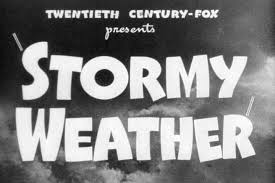
“Stormy Weather” (1943) American musical film produced and released by 20th Century Fox
This movie blew my mind! I saw it as a kid in the early sixties having no idea that there had ever been an all Black cast in a Hollywood production. Most of the premier entertainers of the 1940’s appeared in this tour de force that still stands as one of the best musicals of all time!
“Stormy Weather” was the 2nd all Black cast film made by a major studio in the 1940’s. “Cabin in the Sky” was the 1st, produced by MGM. Lena Horne starred in both and became famous for her rendition of “Stormy Weather” although Ethel Waters first performed the classic at The Cotton Club Nightclub in Harlem in 1933.
The song was written by Harold Arlen and Ted Koehler who worked as music composers at the renowned Cotton Club from 1930-1934. They wrote many of the jazz revue songs that were performed at the club and are still classics today. Harold Arlen wrote the music and Ted Koehler the lyrics.
Awards
“Stormy Weather” was selected in 2001 to The Library of Congress National Film Registry.
Get ready to have your “mind blown”! This dance sequence by the Nicholas Brothers is unreal. Check it out. Holy crap!!
Bill, Lena, Cab Calloway
Bill “Bojangles” Robinson, Lena Horne
Harold Nicholas, Cab Calloway, Fayard Nicholas
Dooley Wilson ; Stormy Girls
Fats Waller
Dance Off!
Nicholas Brothers – Jump!
Cab Calloway swings!
Katherine Dunham
Ethel Waters was a famous blues, jazz, gospel vocalist and actress. Her best-known recordings include “Dinah”, “Stormy Weather”, “Taking a Chance on Love” and “Cabin in the Sky” (She also starred in the film) Let’s enjoy her interpretation of the classic tune by Arlen and Koehler:
Hard to believe but this year marks the 30th Anniversary of The Goonies and the “Truffle Shuffle”. I love this film! Buddies on a treasure hunt adventure to help their parents and save their neighborhood while along the way encountering pirates (one-eyed Willie), escaping from gangster family – the Fratelli’s and by the end forging a special friendship with the one-eyed, Baby Ruth eating, and ever lovable – Sloth. Sounds good to me! The Goonies got their nickname from the “Goon Docks” which is the neighborhood in which they live.
The movie was filmed in Astoria, Oregon which held a big four-day event that kicked off on Thursday, June 4th, running until Sunday, June 7th. Goonies fans were able to tour film locations, go to film screenings and even go on a treasure hunt. The actor who plays Chunk, Jeff Cohen, took part in the celebration signing autographs for fans on Friday at the Liberty Theater.
My favorite character is the klutzy Chunk. He has the best scenes and is absolutely hilarious. Getting into a little bit of everything he has lots of stories and confessions to share.
And what would the movie be without the theme song from Cyndi Lauper – The Goonies ‘R’ Good Enough:
Robert Davi-Jake Fratelli, Joe Pantoliano- Francis Fratelli
Anne Ramsey (“Mama” Fratelli)
Chunk Confesses
Goonie Trouble
John Matuszak (Sloth)
The Goonies Then and Now
The Breakfast Club
John Hughes films really have a knack for capturing the teenage angst and The Breakfast Club stands out as one of the best. The movie is engaging, funny and poignant and by the end you understand and care about each one of the characters. It may have been 30 years ago. but the themes still stand the test of time. We can all relate to the jungle called high school. For many it was the best of times and for others the worst of times.
Anthony Michael Hall, Molly Ringwald, Ally Sheedy and Judd Nelson then and now.
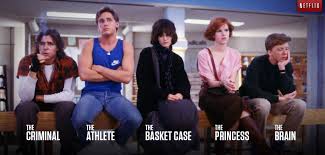
Directed, written and produced by John Hughes, the coming of age storyline follows five teenagers, each a member of a different high school clique, who spend a Saturday in detention together and come to realize that they’ve bought into their respective stereotypes from peer pressure but are more complex than the labels they wear. They also deal with the pressures and expectations of their parents, teachers, and other authority figures. Critics consider it to be one of the great high school films as well as one of Hughes’ most memorable and recognizable works.
The Early Visionaries of American Film: A Series – Part 1
A long time ago in a galaxy far, far away…Women were the driving force behind Hollywood and the movies. This is the first part in a series paying homage to the women who broke the glass ceiling and wrote and directed the films that gave birth to the “Golden Age” of cinema and the motion picture industry. Unfortunately, when the men realized the gold mine films were becoming, the women faded away thanks to the Hollywood studio system. Well, as the saying goes, “that’s the way they do you.”
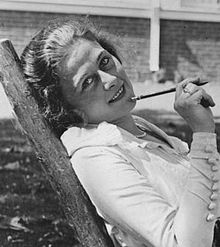
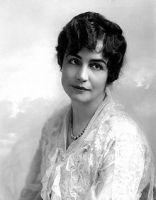
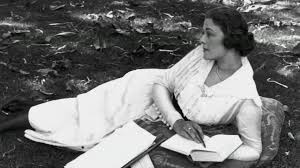
Frances Marion 1918
Frances Marion was a trailblazer. becoming one of the most powerful screenwriters of the 20th century. With a career that spanned decades, she became the first female to win an Academy Award for Best Adapted Screenplay in 1930 for the prison life film The Big House, starring Robert Montgomery, Wallace Beery and Chester Morris. Her research included visiting San Quentin for the atmosphere and lingo of the inmates. The movie gave audiences their first experience of hearing prison doors slam shut, tin cups clanking on mess-hall tables and prisoners’ feet shuffling down corridors.
Frances also received the Academy Award for Best Story for The Champ in 1932. The tearjerker chronicled the relationship between a washed out boxer (Wallace Beery) and his young son (Jackie Cooper). Marion was credited with writing 300 scripts and producing over 130 films.
Born Marion Benson Owens (November 18, 1888) in San Francisco, California, she worked as a journalist and served overseas as a combat correspondent during World War I. On her return home in 1910, she moved to Los Angeles and was hired as a writing assistant, an actress by “Lois Weber Productions”, a film company owned and operated by pioneer female film director Lois Weber. (more on Lois Weber in Part 2 of the series)
Lois Weber – Film Director
Frances was quite beautiful and could have been an actress but preferred to work behind the camera. She learned screenwriting from Lois Weber and went on to become the highest paid screenwriter, woman or man. Hollywood moguls competed for her stories and stars of the day Mary Pickford, Lilian Gish, Greta Garbo and Rudolph Valentino brought her characters to life on the screen. From 1919 – 1939 her star was ascendant, born at the right place and the right time, honing her craft during one of the most liberating eras for women in film.
Mary Pickford
Lillian Gish
Greta Garbo
Rudolph Valentino
When Marion met Mary Pickford (actress, producer, screenwriter) they became best friends with Marion writing screen adaptations of Rebecca of Sunnybrook Farm and The Poor Little Rich Girl for Pickford. As a result of the commercial success of “The Poor Little Rich Girl” in 1917 Marion was signed as Pickford’s “exclusive writer” at the salary of $50,000 a year, an unprecedented arrangement for that time.
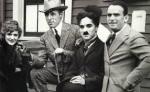
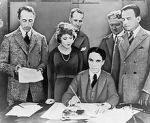
Pickford was the celebrated “America’s Sweetheart” and in 1919 together with her swashbuckler actor husband Douglas Fairbanks, Sr., director D.W. Griffith (Birth of a Nation) and “The Tramp” Charlie Chaplin established “United Artists” pictures. These four were the leading figures in early Hollywood and this was their stand for independence against the powerful studio system. Mary was also one of the original 36 founders of the Academy of Motion Picture Arts and Sciences.
Mary Pickford, D.W. Griffith, Charlie Chaplin, Douglas Fairbanks
United Artists Logo 1919
Contract Signing 1919
In 1921, Frances Marion directed a film for the first time with Just Around the Corner. That same year, she directed her friend Mary Pickford in one of her own scripts entitled The Love Light. Their relationship was more than just writer and star, they were collaborators and the friendship between Pickford and Marion lasted more than 50 years.
Married four times, Frances Marion had two children with third husband, actor Fred Thomson. This was her longest marriage, lasting from 1919 until Thomson’s sudden and tragic death from a Tetanus infection in 1928. Frances’ great friend Mary Pickford had introduced them. Frances said it was love at first sight.
Fred Thomson and Frances Marion
For many years she was under contract to MGM Studios, but, independently wealthy, she left Hollywood in 1946 to devote more time to writing stage plays and novels. Frances Marion published a memoir Off With Their Heads: A Serio-Comic Tale of Hollywood in 1972.
Frances died on May 12, 1973 leaving a legacy of innovation, independence and inspiration for future aspiring female writers. The documentary, Frances Marion: Without Lying Down,” is an insightful profile of her life and achievements in Hollywood.
Mary Pickford and Frances Marion
Narrated by “Pulp Fiction” actress Uma Thurman and Oscar-winner Kathy Bates, who gives voice to the screenwriter’s own words taken from her letters, diaries. and memoirs. The documentary also features footage from more than twenty of Marion’s movies, with commentary by silent film historian Kevin Brownlow, and film critic Leonard Maltin.
I was fortunate enough to catch it on Turner Classic Movies recently and great news, it will be replayed on June 10th at 6:00 am (est). It’s also available for purchase at Amazon.com. I highly recommend checking it out!
“I’ve spent my life searching for a man to look up to without lying down.” Frances Marion
It’ll take more than 60 years before women are once again present in meaningful numbers at every level of film production.
The 2015 Billboard Music Awards reminded me it’s been 30 years since the premiere of Director John Hughes‘ “The Breakfast Club”. Molly Ringwald was on hand (she looked good) to reminisce and introduce the band Simple Minds (except not really – it was just the lead singer who wasn’t looking or singing so hot) performing “Don’t You Forget About Me” which coincidentally hit on the Billboard Top 100 – 30 years ago this week.
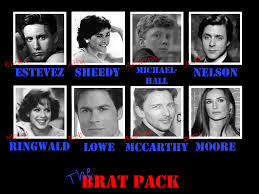
I did a post a few months back on the original “Rat Pack” – Frank Sinatra, Dean Martin, and Sammy Davis, Jr. Not the same as the ultra cool “Pack” from the 60’s, this new generation was crowned by the media in the 80’s as the new “Pack” – The “Brat Pack.”
“The Brat” Members were:
Emilio Estevez, Ally Sheedy, Molly Ringwald, Judd Nelson, Anthony Michael Hall,
Rob Lowe, Demi Moore, and Andrew McCarthy
St. Elmo’s Fire
Prerequisite to becoming a member of the “Pack” was being cast in either St. Elmo’s Fire or The Breakfast Club.
The Breakfast Club 1985
Directed and written by John Hughes, the coming of age storyline follows five teenagers, each a member of a different high school clique, who spend a Saturday in detention together and come to realize that they’ve bought into their respective stereotypes from peer pressure but are more complex than the labels they wear. They also deal with the pressures and expectations of their parents, teachers, and other authority figures. Critics consider it to be one of the great high school films as well as one of Hughes’ most memorable and recognizable works. Although I love The Breakfast Club, my heart will always belong to Hughes’ other classic – Sixteen Candles (1984). (but that’s another story)
Theatrical release poster
The Breakfast Club made the “Brat Pack” icons of their generation and forever associated with the films that we still celebrate and reminisce with each viewing. Although it’s been 30 years the themes still hold true. I don’t think we’ll be forgetting anytime soon the connection and memories of those characters.
Director John Hughes had a knack for tapping into teen angst and connecting with his audience. Some of his other memorable classics include – Sixteen Candles (1984), Pretty in Pink (1986), Ferris Bueller’s Day Off (1986), and Home Alone (1990).
John Hughes
John Wilden Hughes, Jr. (February 18, 1950 – August 6, 2009) was honored at the 82nd Academy Awards (March 7, 2010), by Sheedy, Hall, Ringwald, and Nelson who all appeared in a tribute along with other actors who had worked with him including Jon Cryer (Pretty in Pink), Matthew Broderick (Ferris Bueller’s Day Off), and Macaulay Culkin (Home Alone).
Nicolas Cage was considered for the role of John Bender (Judd Nelson won the part)
John Cusack was also considered for Bender, but Hughes didn’t feel he looked threatening enough.
Rick Moranis was originally cast as the janitor but left due to creative differences and was replaced by John Kapelos
So, tomorrow in honor of John Hughes and the anniversary of the film, I’m going to break out my Breakfast Club DVD and celebrate 30 years of loving this film and bonding forever with “The Pack”.
Billy Wilder is one of my favorite directors because he’s not afraid to tackle controversial subject matters like alcoholism, adultery, and sexuality. His 1959 film Some Like it Hot is a fantastic example! I love this film not only because it’s hilarious and Marilyn Monroe is at the height of her sexiness, but it addresses the issues of gender roles, cross-dressing and gay marriage head on!
United Artists released Wilder’s Prohibition-era farce Some Like It Hot without a Production Code seal of approval, withheld due to the film’s unabashed sexuality including a central cross-dressing theme.
Okay, so here’s the set-up:
2 speakeasy musicians (Joe and Jerry) in 1920’s Chicago witness the infamous St. Valentine’s Day Massacre. Obviously – that’s a problem. Busted by the hitmen they try to talk their way out of the situation. However, the gangsters ain’t havin’ it so they do the next best thing – Run!
Okay, so now what? Go drag, book a gig with the all-girl band Sweet Sue and her Society Syncopaters. Hey, it could happen.
Introducing Josephine and Daphne
Now, let’s meet Joe and Jerry
Jerry: You’d bet my money on a dog? Joe: He’s a shoo-in. Max the waiter knows the electrician that wires the rabbit.
Joe ( Tony Curtis) is a saxophone playing womanizer who’s borrowed money from every girl on the chorus line at the speakeasy. Jerry (Jack Lemmon) plays the upright bass and is Joe’s best friend. Although tired of Joe’s crap, he covets his prowess with women while simultaneously desiring a stable relationship of his own.
Their bond is put to the test when Joe (as Josephine) zeros in on Sugar Kane (Marilyn Monroe) and her strut when they arrive at the train station. Sugar plays ukulele and sings with Sweet Sue (Joan Shawlee) and the Syncopaters. By the time they arrive at their destination in Florida, Joe has sweet talked his way into Sugar’s life and is bound and determined to have a taste. Daphne (Jerry) on the other hand has a different experience; dealing with his jealousy of Joe and Sugar’s relationship while maneuvering the advances and courtship of much-married and aging millionaire, Osgood Fielding III (Joe E. Brown).
First of all, Joe E. Brown is a scream! Second of all, check out his career along with this performance.
And here we go – into the land of whoa, stuff we don’t talk about in 1959 and are really just scratching the surface of today:
Cross Dressing: Designer Orry-Kelly won an Oscar for Best Costume Design for his work. Seeing Marilyn’s gowns, Curtis and Lemmon insisted on wearing Kelly’s designs as well to make them look good as females. They played it straight as Josephine and Daphne which I believe gave weight and merit to the film. They may have looked good, but Marilyn was hot! As a young girl, I went, yes – one day I wanna rock a dress like that!
Gender Roles: Challenging what is deemed to be male/female expectations. By embracing their personas, Joe and Jerry learn from Sugar and Osgood what it means to walk in another woman’s shoes and deal with the complexities of being a woman in a man’s world.
Gay Marriage: The right to love for love’s sake. This is undoubtedly my favorite scene!
Joe to Jerry/Daphne – “It’s just not being done.”
“I’m a Boy”
This final scene is pure – Subversive Brilliance!
Despite Joe’s argument to Jerry and Jerry’s argument to Osgood about how outrageous their marriage would be – in the end, love will not be denied.
Billy Wilder, the Austrian-born American filmmaker is regarded as one of the most brilliant and versatile filmmakers of Hollywood’s golden age. Wilder is one of only five people to have won Academy Awards as a producer, director and screenwriter for the same film (The Apartment). The American Film Institute has ranked these four Wilder films among their top 100 American films of the 20th century:
In 2001, AFIselectedSomeLikeIt Hot as the number one comedy film of all time.
Billy Wilder
Thank you, Billy Wilder for directing, producing and writing this screenplay. Art should be provocative, revolutionary; pushing the conversation forward. Humor and politics are not mutually exclusive. Question what is accepted. Fight for what is right.
As many of us have experienced, writer’s block can be the ultimate frustration. Have I really run out of ideas to express? Excitement to share? What the heck am I actually trying to write about?
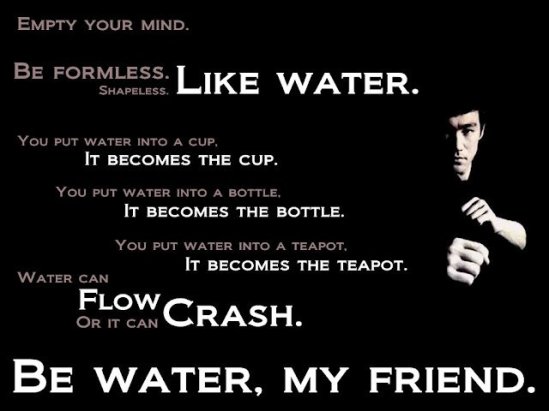
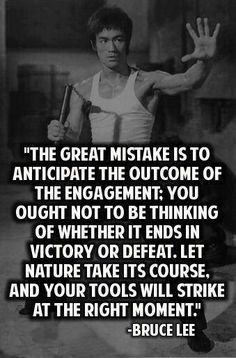
The more I focused on my block, the more aimlessly my mind wandered attempting to find some spark of inspiration. Until, hallelujah Bruce Lee! Still wandering but this time on YouTube, I came across this video of the incomparable martial arts genius sharing his philosophical thoughts on life, love and growth.
I fell in love with Bruce Lee in 1974 after experiencing his unfathomable skill in the classic Enter the Dragon (1973) starring Bruce Lee, John Saxon and Jim Kelly. Lee was also one of the film’s writers. This was Bruce Lee’s final film appearance before his death from cerebral edema (swelling of the brain) at the age of 32 on July 20, 1973. The movie was released six days later. Although he had passed before I’d discovered him, and there’d be no future projects to come, I could still immerse myself in his work and cherish his memory.
He epitomized badass with his fine, muscle ripped bod and his “put my foot in your behind” attitude. Considered one of the greatest martial arts films of all-time, in 2004 Enter the Dragon was deemed “culturally significant” in the United States and selected for preservation in the National Film Registry of the Library of Congress.
Enter the Dragon – July 26, 1973
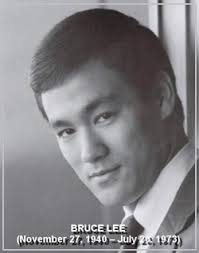
Born Lee Jun-fan (November 27, 1940 – July 20, 1973) Bruce Lee was a Hong Kong American martial artist, actor, teacher, philosopher, and filmmaker who is widely regarded as the most influential martial artist of all-time; founder of Jeet Kune Do (The Way of the Intercepting Fist). A cultural icon of the 20th century, he’s credited with changing the way Asians are perceived in American films.
In March 1961 Lee enrolled at the University of Washington where he studied drama, philosophy, and psychology. There he met his future wife Linda Emery. They had two children, Brandon Lee (1965–93) and Shannon Lee (born 1969). Brandon followed in his father’s footsteps as a martial arts actor. It was crushing to learn that he was accidentally killed in a firearms accident on the set of his fifth film, The Crow (1993). The movie was completed and released in 1994 using a stunt double and effects.
Enter the Dragon made Bruce Lee an international star and cemented his legacy as an innovator in both martial arts and the martial arts film genre. This scene showcases his agility, strength and quiet contemplation.
He didn’t subscribe to the dogma of fighting styles but instead believed the moves should be fluid, not set positions. Those ideas were met with resistance from the sport but soon became respected after Lee proved his approach, not with words but with his emphasis on “practicality, flexibility, speed, and efficiency”; resulting in moves which had never been seen at that time.
Bruce Lee was truly ahead of his time and a soul taken from us too soon.
Thanks, Bruce for making myself and the world marvel and smile. Next time I’m faced with writer’s block I’ll think back on your philosophy and remember your words.
Gene Roddenberry had a vision of a time and space where all races, nationalities and creeds would work together with a common purpose. “…to explore strange new worlds, to seek out new life and new civilizations, to boldly go where no man has gone before.” He set precedence with an African-American woman, and Asian not only a part of the crew, but officers on a Starship. Roddenberry also tackled issues of class warfare, economics, racism, religion, human rights, sexism, feminism, and the role of technology.
Gene Roddenberry also imagined Spock. Half human, half Vulcan. Although Spock embraces his Vulcan, void of emotion logical side, he at times also has to deal with his less logical, emotional, human side. These are some of his best episodes. My favorite is “Amok Time.” Spock goes straight up “anger man” slamming dishes, changing ship’s course and going into blind “kill mode” against Kirk in the “koon-ut-kal-if-fee” fight. Awesome!
I saw an interview with Leonard Nimoy talking about his stint as The Great Paris on “Mission Impossible” and how that experience made him appreciate the complexity of Mr. Spock. As Paris, his character didn’t have those layers. As Spock, he had to balance keeping that stoic face and rational demeanor with storylines that required his ability to convey love, compassion and occasionally frustration in what I like to call his “Menage a trois” relationship with Kirk and Bones. A much more complicated approach to storytelling than the usual TV fare of 1966.
Thankfully we have the Star Trek series, the movies and his body of work to continue to revisit and enjoy. But the fact still remains, we’ll miss you Spock.
R.I.P – You’ll forever “Live Long and Prosper” in our hearts.
This site is about how to live our life in a meaningful way by accepting complete surrender to the Almighty with purity of mind and character. It is about the eternal religion of the world i.e. Hinduism which is very liberal to anyone because there are many branches or methods to get the divinity to turn our life into an ever blissful one.
Free listening and free download (mp3) chill and down tempo music (album compilation ep single) for free (usually name your price). Full merged styles: trip-hop electro chill-hop instrumental hip-hop ambient lo-fi boombap beatmaking turntablism indie psy dub step d'n'b reggae wave sainte-pop rock alternative cinematic organic classical world jazz soul groove funk balkan .... Discover lots of underground and emerging artists from around the world.






























 iheartfilm