Josephine Baker – Beyond “Bronze Venus”

josephine baker tiger

Josephine Baker 1920’s

Josephine Baker is most celebrated as the “Bronze Venus” and her infamous “Banana Dance” in Paris c. 1927. However, the sum of her life is so much more! I was blown away by her boldness and sexual freedom, but it wasn’t until I saw the 1991 HBO movie starring Lynn Whitfield as Josephine Baker that I started doing research on her life. Whitfield won an Emmy Award for Outstanding Lead Actress in a Miniseries or a Special—becoming the first Black actress to win the award in this category which seems apropos since Josephine Baker was The Lady of firsts.


Lynn Whitfield - Josephine Baker Story 1991

I’ve always been intrigued by Baker’s provocative reputation but had no idea of her involvement in the fight for justice, racial equality, and the civil-rights movement.

Born  Freda Josephine McDonald in St. Louis, Missouri, (June 3, 1906 – April 12, 1975) she was an American-born French dancer, singer, and actress who came to be known in various circles as the “Black Pearl,” “Bronze Venus” and even the “Creole Goddess”. Her parents were Carrie McDonald and Vaudeville drummer Eddie Carson. Growing up poor she started working early cleaning homes and babysitting for wealthy white families.

josephine baker baby

Baker dropped out of school at the age of 13 and lived as a street child in the slums of St. Louis. Her street-corner dancing attracted attention from the Dixie Steppers which lead to her opportunity to appear in the groundbreaking and hugely successful Broadway revue Shuffle Along (1921). She performed as the last dancer in the chorus line, a position where, traditionally, the dancer performed in a comic manner, as if she were unable to remember the dance, until the encore, at which point she would perform it not only correctly but with additional complexity. Baker’s act set in motion the career which would make her an international star.


Josephine Baker_Charleston

Josephine Baker dancing the Charleston, 1926


Josephine traveled to Paris, France, for a new venture, and opened in “La Revue Nègre” on October 2, 1925, at the Théâtre des Champs-Élysées. Her erotic dancing and performing in next to nothing made her a sensation in Paris. The bohemian culture of interwar Paris embraced Baker’s skin color, allowing her to catapult to stardom. At the Folies Bergère, she performed the Danse Sauvage, wearing a costume consisting of a skirt made of a string of artificial bananas – voila! – a star is born.


Josephine Baker became the most successful and highest paid American entertainer working in France and the first Black woman to star in a major motion picture. Baker starred in three films which found success only in Europe: the silent film Siren of the Tropics (1927), Zouzou (1934) and Princesse Tam Tam (1935). She also starred in Fausse Alerte in 1940.

However, despite her acclaim in Europe, upon returning to New York in 1936  to star in the Ziegfeld Follies, she walked right back into good ole American racism. Audiences rejected the idea that a black woman could be so sophisticated and she was replaced by stripper Gypsy Rose Lee later in the run. Time magazine referred to her as a “Negro wench”. She returned to Europe heartbroken.


Josephine Baker and the French Resistance of World War II

Josephine returned to Paris in 1937, married a Jewish Frenchman, Jean Lion, and became a French citizen. In September 1939, when France declared war on Germany she was recruited by Deuxième Bureau, French military intelligence, as an “honorable correspondent”. Baker collected what information she could about German troop locations from officials she met at parties. She was awarded the Legion of Honor and given a Medal of Resistance for her work during World War II. She was also the first American woman to receive the Croix du Guerre, a notable French military honor.

josephine baker french 2

Josephine Baker Legion of Honor


 Josephine Baker and the Civil Rights Movement

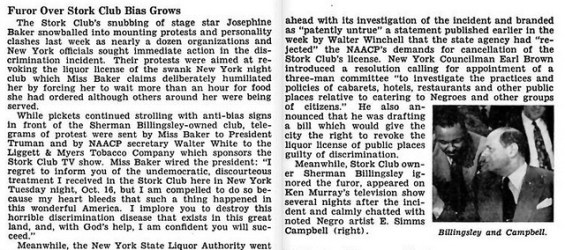
Though based in France, Baker fought for American civil rights in the 1950’s and 1960’s. When she arrived in New York with her fourth husband French composer and conductor Jo Bouillon, they were refused reservations at 36 hotels because she was black. In 1951 when the famous New York Stork Club refused to serve Baker because she was black, she wrote letters to President Truman and enlisted the aid of the NAACP which focused a spotlight on the issues of inequality and racism in popular establishments.
josephine bakerstork-club-furor

Stork Club Controversy

Josephine Baker was one of the few female speakers at the March on Washington for Jobs and Freedom on August 28, 1963, introducing “Negro Women Fighters for Freedom”, including Rosa Parks, Martin Luther King, Jr., and Congressman John Lewis. The NAACP, National Association for the Advancement of Colored People, named May 20th Josephine Baker Day in her honor.


josephine_baker march on washington

Josephine Baker in French uniform March on Washington 1963


“The Rainbow Tribe”

Long before Angelina Jolie and Brad Pitt’s multicultural family, there was Josephine Baker and her “Rainbow Tribe”. Josephine wanted to prove that “children of different ethnicities and religions could still be brothers.” Baker raised two daughters, French-born Marianne and Moroccan-born Stellina, and ten sons; Korean-born Jeannot (or Janot), Japanese-born Akio, Colombian-born Luis, Finnish-born Jari (now Jarry), French-born Jean-Claude and Noël, Israeli-born Moïse, Algerian-born Brahim, Ivorian-born Koffi, and Venezuelan-born Mara.


josephine-baker-children

Josephine Baker and “The Rainbow Tribe”


On April 12, 1975, we lost Josephine after she suffered a cerebral hemorrhage, she was 68 years old. She performed right up to her death, starring in a retrospective revue at the Bobino in Paris, Joséphine à Bobino 1975, celebrating her 50 years in show business.The opening night audience included Sophia Loren, Mick Jagger, Shirley Bassey, (best known for recording the theme song to the James Bond film Goldfinger (1964), Diana Ross, and Liza Minnelli.

20,000 people lined the streets of Paris to watch her funeral procession. She received a 21 gun salute, making her the first Black American female to be buried with military honors in France. Josephine Baker leaves behind a legacy of accomplishments including breaking color barriers and fighting for justice and equality around the world. I thank her for channeling her celebrity into championing the rights of all.


Celebration of Josephine’s Life and Legacy

The Political ’60’s -“Wild in the Streets”

Wild in the Streets

“Wild in the Streets”

A fascinating rock n roll politico film from 1968. I’ve been intrigued by “Wild in the Streets” since I was a 9 year-old kid, I totally related to the concept of the film that the “younger generation” should be running things and not the “old cats” who always mess things up in this country. “Thirty and out” was my mantra. “Old fat cats” only in the game for their own personal gain. Yeah, I was a bit of a rebel. (or so my sisters always say:)


What resonated with me then and now are the political implications of organizing and using that voice and numbers to effect change. But also the nightmare when ideologies take a turn for the extreme.

Wild in the Streets was first released to theaters in 1968. Its storyline was a “reduction to absurdity” projection of contemporary issues of the time, taken to extremes, and played poignantly during 1968 —an election year with many controversies (the Vietnam War, the draft, civil rights, the population explosion, rioting and assassinations, and the baby boomer generation coming of age). (Wikipedia)

“Fourteen or Fight” is a perfect example of the youth movement of the sixties. This was the first time teens were a bigger block than their parents. Baby Boomers exerting power in numbers.


Richard Pryor’s appearance in this film is amazing! One of the most controversial comedians of our time, it was hilarious watching him fake playing the drums as a member of Max Frost’s “Troopers”.

Christopher Jones  had the perfect swag for his character. He had that whole brooding, tortured vibe like Marlon Brando in “The Wild One”and James Dean in “Rebel Without a Cause”.  The Christopher Jones’ character Max Frost was a pop star millionaire who gets “turned on” to the 60’s political scene and decides to exercise his views on free love, youth is the majority in the U.S., women’ rights and ultimately runs for President of the United States.  Let the absurdities begin!


Related image


 The Music

The soundtrack is the backdrop for the politics in the film as well as real life. Max and The Troopers deal with current issues of the time (’67).  Voting age: “14 or Fight”.”If I can fight I can vote”.   Ageism: If you’re 50 does that make you more competent?  The 25 and under age group is the majority.  “We have the power”.  Women’s rights: “Chicks would have killed for the vote”.

Cast

Max Frost – Christopher Jones

Sally LeRoy Diane Varsi

Stanley XRichard Pryor

Max Frost’s Mother – Shelley Winters 

Senator Fergus – Hal Holbrook


 In 1968, “The Shape of Things to Come”, written by Barry Mann and Cynthia Weil, was a #22 chart hit for Max Frost and the Troopers. (a “studio group”, made up of session musicians)

Nominated for Oscars:

Best Film Editing
Fred R. Feitshans Jr.
Eve Newman

Best Film
Barry Shear


This flick was over the top but had its pulse on the fears of the 60’s and a possible dysfunctional future. Growing up in the sixties I see a lot of similarities to today. “The Shape of Things to Come” was very prophetic.

American International  founders Samuel Z. Arkoff and James H. Nicholson were genius! They were one of the first production companies to recognize and capitalize on the growing teen market. Think beach, biker, monster, drive-in movies. Think American International.


C Jones

 Christopher Jones


After “Wild in the Streets” Christopher Jones only made a couple more films, “Three in the Attic” 1968. Classic 60’s love in fest. The big studios took notice and David Lean offered him the romantic lead in the big budget drama “Ryan’s Daughter” 1970. Reportedly it was on the set of the film he had a nervous breakdown after hearing of Sharon Tate’s murder and shortly after left the Hollywood scene.

His last appearance was in the 1996 crime comedy “Mad Dog Time” opposite Richard Dreyfuss.  In his later years he had a career as an artist and sculptor. He died from cancer on January 31, 2014 at the age of 72.


Experience Universal Horror – The Golden Age of Movie Monsters!

Universal_monsters_logo


For a comprehensive and what I consider a definitive history of one of the original Hollywood Studios – Universal, check out the Documentary – “Universal Horror.”  Universal was founded in 1912 by Carl Laemmle and is the world’s fourth oldest major film studio.

Originally airing on Turner Classic Movies in 1998, “Universal Horror” showcases the golden age of 1930’s movie monsters. The film also highlights Carl Laemmle’s family and Carl Laemmle, Jr’s game-changing vision of producing films based on classic horror tales.


The studio is known for such horror classics as Frankenstein (1931) and Dracula (1931), the Universal monster franchise. Dracula is a 1931 American Pre-Code vampire-horror film directed by Tod Browning and starring Bela Lugosi as Count Dracula. The film was produced by Universal and was loosely based on the novel by Bram Stoker.

Casting for the film became problematic initially since Laemmle was not at all interested in Lugosi, in spite of good reviews for his stage portrayal. Laemmle instead considered other popular actors of the day, including Paul Muni and Chester Morris.


Frankenstein is a 1931 American Pre-Code horror monster film from Universal Pictures directed by James Whale. The film stars Colin Clive, Mae Clarke, John Boles and Boris Karloff and features Dwight Frye and Edward van Sloan. Trivia: Bela Lugosi turned down the role saying the monster was just a hulking beast.

In 1991, the Library of Congress selected Frankenstein for preservation in the United States National Film Registry as being “culturally, historically, or aesthetically significant.

Throughout the documentary, we hear personal accounts and behind-the-scene stories from early stars such as Rose Hobart – co-star in the original film version of Dr. Jekyll and Mr. Hyde (1931), Gloria Stuart – The Invisible Man (1933) and Lupita Tovar – Dracula (1931) Spanish Version.


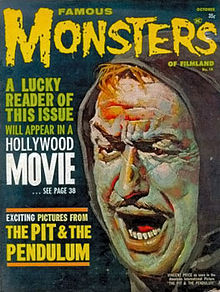
Forrest Ackerman, (November 24, 1916 – December 4, 2008) was editor and principal writer of the science fiction magazine Famous Monsters of Filmland and recalls his experiences in the documentary of seeing these films first hand. Ackerman’s magazine would provide inspiration to many who would later become successful artists, including Joe DantePeter Jackson, Steven Spielberg, Tim Burton, Stephen King, George LucasDanny ElfmanJohn Landis and countless other writers, directors, artists, and craftsmen.

Also affectionately called “Forry,” Ackerman was central to the formation, and spread of science fiction fandom, and a key figure in the wider awareness of science fiction as a literary, art and film genre. Famous for his wordplay he coined the genre nickname “sci-fi”.

FamousMonsters14


Universal Monsters Tribute


The end of Universal’s first run of horror films came in 1936 as the Laemmles were forced out of the studio after financial difficulties and a series of box office flops due partly to censorship and a temporary ban on American horror films in Britain. The release of MGM’s Mad Love and The Raven (both 1935) were the final nail in the coffin for monster movies, being too strong for 1935 tastes, with its themes of torture, disfigurement, and grisly revenge.


The monster movies were dropped from the production schedule altogether and would not re-emerge for another three years. In the meantime, a theater owner revived Dracula and Frankenstein as a double feature, resulting in an immediate smash hit and leading to the original movies being re-released by the studio to surprising success.

Be sure to checkout these films and experience the original horror classics from the original horror classics studio – Universal!


The Greatest Scandal in American History…Until Now

All The Presidents Men (1976) – A Look Back 🗓


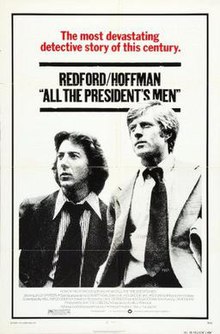
The Academy Award winning film, “All the President’s Men” is the 1976 American political thriller directed by Alan J. Pakula and starring Robert Redford and Dustin Hoffman. I believe it’s the best film on the Watergate scandal and the incredible journalism of Carl Bernstein and Bob Woodward.  The gold standard of journalists, their hard work ultimately uncovered the truth of the events that changed the course of American history; the first time ever that an American President resigned from office.

The Plot: On June 17, 1972, a security guard (Frank Wills) at the Watergate complex finds a door kept unlocked with tape. He calls the police, who find and arrest five burglars in the Democratic National Committee headquarters within the complex. The next morning, The Washington Post assigns new reporter Bob Woodward (Robert Redford) to the local courthouse to cover the story, which is thought to be of minor importance.

Woodward learns that the five men, four Cuban-Americans from Miami and James W. McCord, Jr., had bugging equipment and have their own “country club” attorney. At the arraignment, McCord identifies himself in court as having recently left the Central Intelligence Agency and the others also have CIA ties. Woodward connects the burglars to E. Howard Hunt, a former employee of the CIA, and President Richard Nixon‘s Special Counsel Charles Colson. (Wikipedia)
 

Carl Bernstein (Dustin Hoffman), another Post reporter, is assigned to cover the Watergate story with Woodward. The two are reluctant partners but work well together. Executive editor Benjamin Bradlee (Jason Robards) believes their work is incomplete, however, and not worthy of the Post’s front page. He encourages them to continue to gather information.

Woodward contacts “Deep Throat” (Hal Holbrook), a senior government official, an anonymous source he has used in the past. Communicating through copies of The New York Times and a balcony flowerpot, they meet in a parking garage in the middle of the night. Deep Throat speaks in riddles and metaphors about the Watergate break-in, but advises Woodward to “follow the money.” (Wikipedia)

All the president's men.jpg

Theatrical Release Poster


Yes, “follow the money” indeed.

I was in high school when the Washington Post reporters Carl Bernstein and Bob Woodward uncovered the historic Watergate scandal and I have never forgotten the outrage and for some disbelief that the President of the United States was guilty of a cover-up; it shook American politics to its core.

Carl Bernstein, Bob Woodward

Carl Bernstein, Bob Woodward


However, it was true and instead of being impeached Nixon resigned his office. That is why the overwhelming evidence against the current resident of 1600 Pennsylvania Ave is so very shocking; Richard Nixon did far less and with a bi-partisan agreement, Articles of Impeachment were drawn.

“All the President’s Men” is the 1974 non-fiction book by Carl Bernstein and Bob Woodward, that was subsequently made into the motion picture starring Dustin Hoffman and Robert Redford. The book chronicles the investigative reporting of Woodward and Bernstein from Woodward’s initial report on the Watergate break-in through the resignations of H. R. Haldeman and John Ehrlichman, and the revelation of the Nixon tapes by Alexander Butterfield in 1973. (Wikipedia)


All the President's Men book 1974.jpg

The cover of the 1974 first edition.

It relates the events behind the major stories the duo wrote for the Post, naming some sources who had previously refused to be identified for their initial articles, notably Hugh Sloan. It also gives detailed accounts of Woodward’s secret meetings with his source Deep Throat whose identity was kept hidden for over 30 years. Gene Roberts, the former executive editor of The Philadelphia Inquirer and former managing editor of The New York Times, has called the work of Woodward and Bernstein “maybe the single greatest reporting effort of all time.” (Wikipedia)

To hear more about the history of Watergate from the words of the reporters themselves: Bob Woodward and Carl Bernstein.


How Understanding Film History Impacts Your Film Appreciation

film history

Hollywood’s Golden Age


While watching Marlene Dietrich’s sultry performance of “The Laziest Gal in Town” in Alfred Hitchcock’s 1950 thriller,”Stage Fright”, I asked my husband if the song and performance seemed familiar. Because I’ve raised him right (on film history that is😎), he remarked, “of course, Madeline Kahn’s performance of “I’m Tired” in the Mel Brooks satirical Western comedy classic, “Blazing Saddles” (1974).

Marlene Dietrich “Laziest Gal in Town”

Madeline Khan

Madeline Kahn “I’m So Tired”

I loved hearing his response because it’s the main reason I pen this post; for the history and appreciation of films. Understanding a writer or director’s references to past movies in theirs adds to the richness of the production. It helps young people comprehend that few things in life are original and imitation can be the sincerest form of flattery.


film-history-the-history-of-cinema-

History of Film


Sometimes the homage in a movie isn’t to a particular scene in a film but the music. I love Minions period but I especially enjoyed the “Minions” movie’s 1960’s soundtrack that made the perfect nod to James Bond type villains (“Minions” Scarlet Overkill) and the time period of the setting.


Related image


As a child of the ’60’s I remember turning to my husband in the theater saying, 99% of the people in here weren’t even born yet and I wonder if any of them appreciate the inclusion of the classic songs of this era.


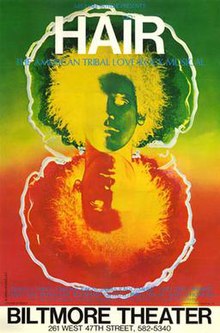
The song is “Hair” from the iconic 1968 counter-culture and controversial stage and film production “Hair”


Hair poster.jpg


I’ve spent my lifetime watching and loving the cinema and have educated my children with a more sophisticated palette for black and white films and how they just don’t make them like that anymore.😊

Hundreds of full-length films were produced during the decade of the 1940s; during Hollywood’s Golden Age. The great actor Humphrey Bogart made his most memorable films in this decade. Frank Capra’s masterpiece It’s a Wonderful Life and Orson Welles’s cinema genius production of Citizen Kane were released. The film noir genre was at its height. Alfred Hitchcock made his American debut with the film Rebecca and made many classics throughout the 1940s. (Wikipedia)


1940's/ 1950's Movie Stars

(Top) Cary Grant, Audrey Hepburn, Marlon Brando (Middle) Lauren Bacall, Marilyn Monroe, Grace Kelly (Bottom) Humphrey Bogart, Marlene Dietrich, Clark Gable

Movie Stars of the 1940’s & 1950’s


Of course, I want you to visit my website as a source of reference material, but if you want to see these full-length gems for free, I recommend tuning into the Turner Classic Movies channel. They show everything from the great silent films, Chaplin, Buster Keaton, etc. through Hollywood’s “Golden Age”.


turner classic movies


These classic films bring me great joy and I hope you’ll find a special place in your heart for them, too!


Related image


Jazz, Booze, and Drag – Some Like it Hot!


The Comedy Classic Some Like It Hot (1959)

BACK IN THEATERS JUNE 11th and 14th


Experience one of Marilyn Monroe’s most iconic roles as it was always meant to be seen.

Special commentary from TCM host Tiffany Vazquez.


Some Like It Hot


TCM Big Screen Classics Presents

Some Like It Hot (1959)

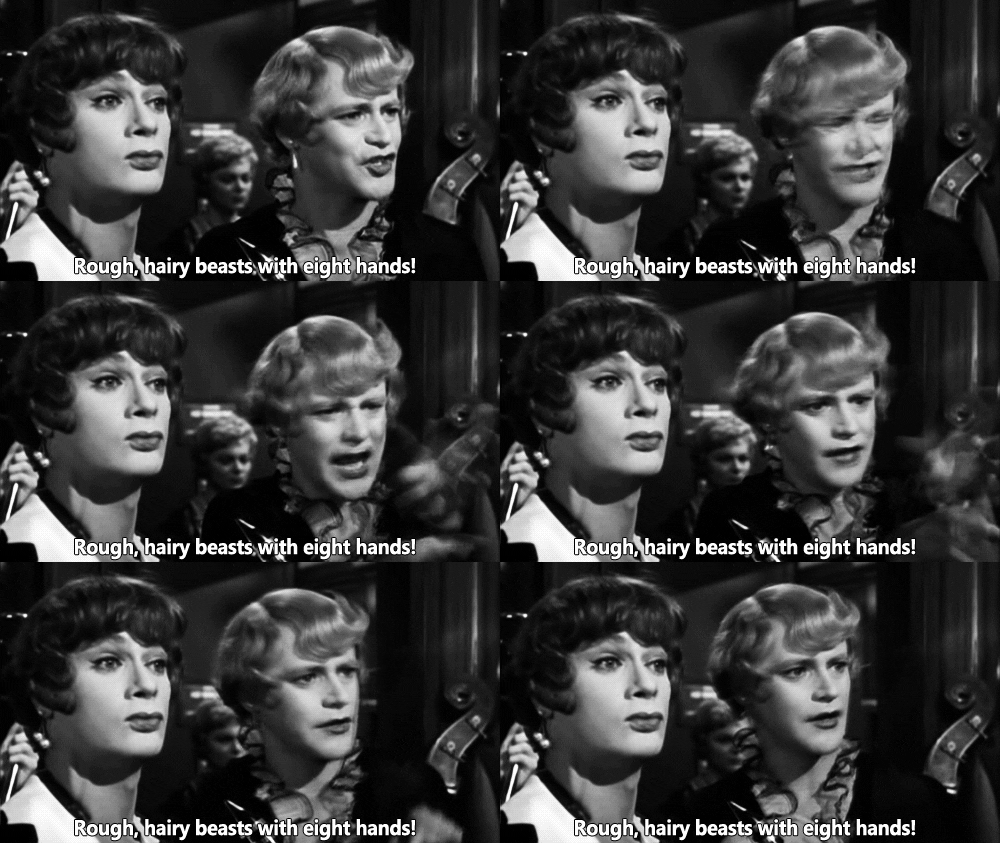
With no money and nowhere to hide, two down on their luck jazz musicians (Tony Curtis and Jack Lemmon) masquerade as members of an all-girl band, leading to a number of romantic complications when one falls for the band’s lead singer (Sugar Cane) played by Marilyn Monroe.


some like it hot

Tony Curtis, Jack Lemmon, Marilyn Monroe


Some Like It Hot is a 1959 American romantic comedy film set in 1929, directed and produced by Billy Wilder, starring Marilyn Monroe, Tony Curtis, and Jack Lemmon. The supporting cast includes George Raft, Pat O’Brien, Joe E. Brown, Joan Shawlee, and Nehemiah Persoff.


The plot is based on a screenplay by Billy Wilder and Michael Logan from the French film Fanfare of Love. The film is about two musicians who dress in drag in order to escape from mafia gangsters whom they witnessed commit a crime inspired by the Saint Valentine’s Day Massacre. The film was produced in black and white, even though color films were increasing in popularity. (Wikipedia)


Image result for some like it hot


Some Like It Hot opened to largely positive reviews and is today considered to be one of the greatest film comedies of all time. It was voted as the top comedy film by the American Film Institute on their list on AFI’s 100 Years… 100 Laughs poll in 2000. The film is also notable for featuring cross-dressing, and for playing with the idea of homosexuality, which led to it being produced without approval from the Motion Picture Production Code.

The code had been gradually weakening in its scope during the early 1950s, due to increasing social tolerance for previously taboo topics in film, but it was still officially enforced. The overwhelming success of Some Like It Hot was a final nail in the coffin for the Hays Code. (Wikipedia)


Image result for some like it hot

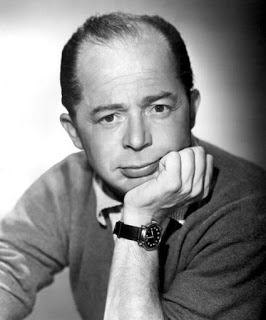
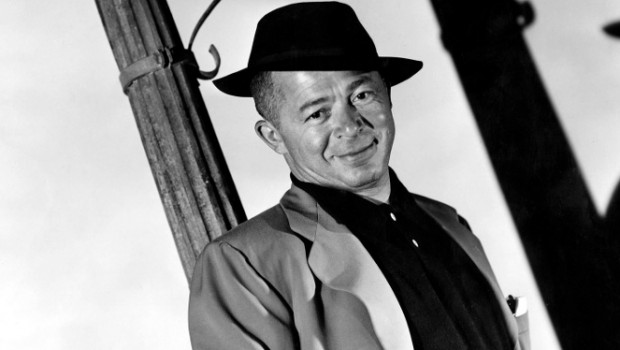
I love Billy Wilder because of his versatility in films and his testing the boundaries of societal norms. To that end, the first movie that always comes to mind is “Some Like it Hot”. To find out more about Billy Wilder and his films, check out my post – The Faces Behind the Camera.


Billy Wilder

Billy Wilder


I highly recommend taking advantage of this opportunity to see “Some Like it Hot” on the big screen!

Get tickets here.


“I’ll Make Him an Offer He Can’t Refuse”🐴


IN THEATERS JUNE 4th and JUNE 7th

TCM Big Screen Classics Presents

“The Godfather”

A Special 45th Anniversary Event


The Godfather


This iconic film about a New York mafia family’s rise to power in the years following World War II stars Marlon Brando as the family’s patriarch, Don Corleone, and features career-making performances by Al Pacino, James Caan, and Robert Duvall. Directed by Francis Ford Coppola, it’s based on Mario Puzo‘s best-selling novel. This searing and brilliant film garnered seven Academy Award nominations and won three, including Best Picture of 1972.


I’ve stated for years that if you want a blueprint for the rules of life, a screening of “The Godfather” is mandatory. In an interview about the making of the film, Coppola revealed that his idea was to approach the Corleone family like a king and his sons. I believe focusing on the family dynamics versus “the mob” gave more depth and layers to the characters and the audience’s involvement in the film.


Image result for the godfather cast


Cinematographer Gordon Willis initially turned down the opportunity to film The Godfather because the production seemed “chaotic” to him. After Willis later accepted the offer, he and Coppola agreed to not use any modern filming devices, helicopters, or zoom lenses. Willis and Coppola chose to use a “tableau format” of filming to make it seem if it was viewed like a painting. He made use of shadows and low light levels throughout the film to showcase psychological developments.

Willis and Coppola agreed to interplay light and dark scenes throughout the film. Willis underexposed the film in order to create a “yellow tone.” The scenes in Sicily were shot to display the countryside and “display a more romantic land,” giving these scenes a “softer, more romantic” feel than the New York scenes. (Wikipedia)


Image result for the godfather cast


Although many films about gangsters preceded “The Godfather”, Coppola’s heavy infusion of Italian culture and stereotypes, and his portrayal of mobsters as characters of considerable psychological depth and complexity was unprecedented.


Related image


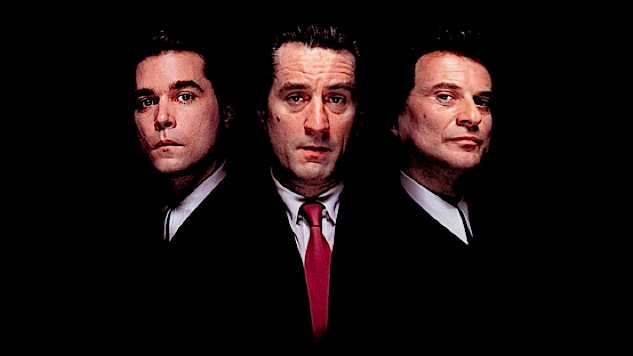
Coppola took it further with The Godfather Part II, and Part III. The success of those films, critically, artistically and financially, opened the doors for numerous other depictions of Italian Americans as mobsters, including films such as Martin Scorsese‘s Goodfellas and TV series such as David Chase‘s The Sopranos.

Goodfellas 1990

Ray Liotta, Robert De Niro, Joe Pesci

“Goodfellas” (1990)


“The Godfather” is widely regarded as one of the greatest films in world cinema and one of the most influential, especially in the gangster genre. It was selected for preservation in the U.S. National Film Registry of the Library of Congress in 1990, being deemed “culturally, historically, or aesthetically significant” and is ranked the second greatest film in American cinema (behind Citizen Kane) by the American Film Institute. (Wikipedia)


So, whether this would be your first viewing or you’re a lifelong fan, get your tickets here and check out “The Godfather” on the big screen for this special, limited-time performance!


Long Live Rock Movies! 😎🎸

“School of Rock” (2003)

school of rock

Let’s start with our substitute teacher, Mr. Schneebly – what kid hasn’t wished for a sub like him?  No grades, being part of a kick butt rock band, defying parents, breaking the rules.  Good, right?

Jack Black’s character Dewey Finn is the forever loser and quintessential wanna be rock star, but when he steals his roommate’s identity as a substitute teacher, (Mr, Schneebly) he discovers he has a  class of very musically talented 5th-grade students. So, Dewey decides to turn his class into a rock band to potentially win the Battle of the Bands and $20,000.  I won’t spoil whether the kids win or don’t win the battle but as a result of the contest they gain self-confidence and continue to play rock in an after school program coached by Dewey.  Long live Rock!

This film totally tapped into my inner rocker!


“The Commitments” (1991)

commitments

What happens when a group of white working class Dubliners forms a soul band?  A rousing film with some great music inspired by legendary artists, Otis Redding, Aretha Franklin and Wilson Pickett.

The band nails the soul of the greats by immersing themselves 24/7 in classic soul standards:

  •     “In the Midnight Hour” – Wilson Pickett
  • “Try a Little Tenderness” – Otis Redding
  • “I Never Loved a Man” – Aretha Franklin

Whether on buses, hanging up laundry or in music store windows, they were feeling the soul.  In the words of  Félim Gormley (Dean Fay- Saxophone), “I’m black and I’m proud!”

I’m so glad the movie was authentic with the cast singing on the soundtrack.  (The actors were cast  for their musical abilities.) Lead singer (Andrew Strong “Deco”) was nuts but the standout talent of the band.

The Commitments was voted best Irish film of all time in a 2005 poll sponsored by Jameson Irish Whiskey and launched a generation of Irish musicians and actors.


 “This is Spinal Tap” (1984)


This is spinal tap poster

 OMG, the funniest, dead on satire of a rock metal band ever!

Classic in every sense of the word, Director/Writer Rob Reiner’s masterpiece was also written and scored by the stars:

Rob Reiner – (Marty D. Bergi) – Mokumentarian

Spinal Tap

Christopher Guest – (Nigel Tufnel)

Michael McKean- (David St. Hubbins)

Harry Shearer – (Derek Smalls)

This mockumentary feels so real that some moviegoers thought they were an actual group!

The “Stonehenge” number during the Smell the Glove tour is priceless.  Due to a mix up with size dimensions, the Stonehenge replica for their epic song is 18 inches instead of 18 feet tall.  The little people performers in the number were taller. And Derek Smalls getting stuck in the stage prop egg is hilarious!

 In 2002, This Is Spinal Tap was deemed “culturally, historically, or aesthetically significant” by the Library of Congress and was selected for preservation by the United States National Film Registry.


These are 3 of my favorite Rock Movies – Let me know yours in the comments!


What We Do in the Dark!

Related image

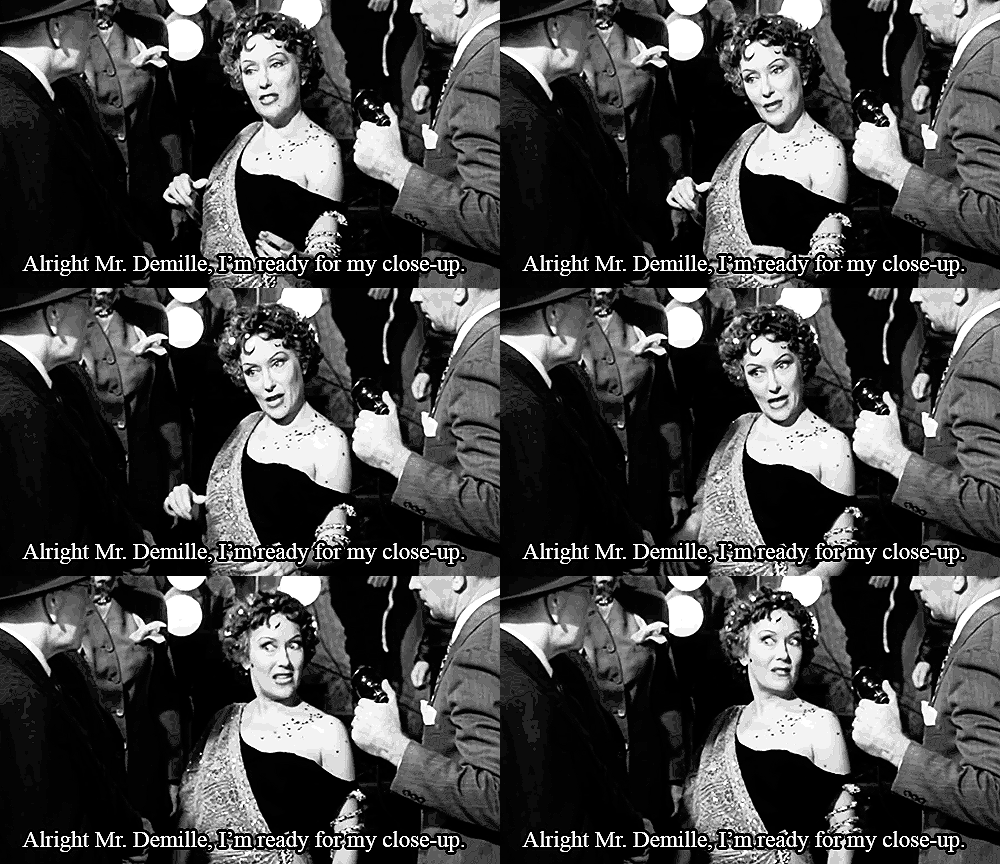
“We didn’t need dialogue. We had faces!” Norma Desmond


image


As she descended the well-worn stairs of her aged and decadent mansion steeped in long past memories, Norma Desmond uttered the declaration that forever remains in the memories of those who witnessed her performance in the 1950 classic, “Sunset Boulevard.” It’s impossible to forget those delusional words spoken by the creepy Norma Desmond as she is escorted through the end scene for her deadly deed; not surprisingly surrounded by gawkers vying for a tiny glimpse of the reclusive silent film star.


Before the film, I had only heard of Gloria Swanson but hadn’t seen any of her films. After witnessing her tour-de-force performance as the legendary diva, Norma Desmond, I sought out every movie of hers that I could. Wow, she inhabited the role of Norma Desmond with intimate knowledge of the silent film era since those were Swanson’s actual glory days. By the way, the dialogue is both fantastic and hilarious.


Gloria May Josephine Swanson (March 27, 1899 – April 4, 1983)


“Sunset Boulevard” (stylized onscreen as SUNSET BLVD.) is a 1950 American film noir directed and co-written by Billy Wilder and produced and co-written by Charles Brackett. It was named after the boulevard that runs through Los Angeles and Beverly Hills, California. (Wikipedia)


The film stars William Holden as Joe Gillis, an unsuccessful screenwriter, and Gloria Swanson as Norma Desmond, a faded silent film star who draws him into her fantasy world where she dreams of making a triumphant return to the screen, with Erich von Stroheim as Max Von Mayerling, her devoted servant.


sunset boulevard

Erich von Stroheim, William Holden, Gloria Swanson


Nancy Olson, Fred Clark, Lloyd Gough and Jack Webb play supporting roles. Director Cecil B. DeMille and gossip columnist Hedda Hopper play themselves, and the film includes cameo appearances by leading silent film actors Buster Keaton, H. B. Warner, and Anna Q. Nilsson.


Praised by many critics when first released, Sunset Boulevard was nominated for eleven Academy Awards (including nominations in all four acting categories) and won three. Deemed “culturally, historically, or aesthetically significant” by the U.S. Library of Congress in 1989, Sunset Boulevard was included in the first group of films selected for preservation in the National Film Registry. In 1998, it was ranked number twelve on the American Film Institute‘s list of the 100 best American films of the 20th century, and in 2007, it was 16th on their 10th Anniversary list. (Wikipedia)


Image result for sunset boulevard


I’ve never been a famous movie star (maybe stage😎) But God help me if I ever get that Norma Desmond look in my eyes, dial 911!

Image result for sunset boulevard oscars