Nicholas Brothers – Flash! (So You Think You Can Dance?)

The Nicholas Brothers were a famous African American team of dancing brothers, Fayard (1914–2006) and Harold (1921–2000). Their highly acrobatic technique (“flash dancing“), demonstrated such a high level of artistry and daring innovations that they were considered by many to be the greatest tap dancers of their day.

Growing up with musician parents (mother played piano and father drums) who had their own band, the brothers were surrounded by some of the best Vaudeville acts of the time and became stars of the jazz circuit during the heyday of the Harlem Renaissance . Fayard and Harold went on to have successful careers performing on stage, film, and television well into the 1990s.


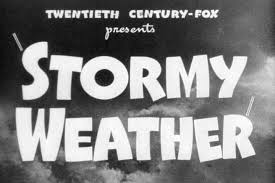
Their signature move was to leapfrog down a long, broad flight of stairs, while completing each step with a split. This move was performed to perfection in the finale of the movie, Stormy Weather . In my humble opinion, the “Jumpin’ Jive” dance number in Stormy Weather was the greatest movie musical sequence of all time!

Nicholas Brothers - Jump!

Nicholas Brothers – Jump!

Another signature move was to arise from a split without using their hands. Gregory Hines (with brother Maurice – tap dancing brother and father team Hines, Hines and Dad) declared that if their biography were ever filmed, their dance numbers would have to be computer generated because no one now could emulate them. Ballet legend Mikhail Baryshnikov once called them the most amazing dancers he had ever seen in his life.


The Nicholas Brothers influenced every dancer that came after. Including Michael Jackson. Here they are together on the Jackson’s TV Show.
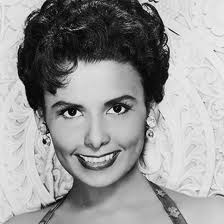
Happy Birthday, Ms. Lena Horne!

Lena Mary Calhoun Horne was a singer, dancer, actress, and activist whose 1957 live album entitled, Lena Horne at the Waldorf-Astoria, became the biggest-selling record by a female artist in the history of the RCA-Victor label. In 1958, this timeless beauty became the first African-American woman to be nominated for a Tony Award for “Best Actress in a Musical” (for her part in the “Calypso” musical Jamaica).

Lena Horne

Lena Horne

I’m proud to say that Lena and I are sisters of Delta Sigma Theta Sorority, Inc. which in the summer of 1980 sponsored a 2-month series of benefit concerts for Soror Horne. Sixty-three years old and intent on retiring from show business, these concerts were represented as Soror Horne’s farewell tour, although her retirement lasted less than a year.

In May 1981, her one-woman show, Lena Horne: The Lady and Her Music became an instant success garnering Horne a special Tony award, and two Grammy Awards for the cast recording. The 333-performance Broadway run closed on her 65th birthday, June 30, 1982.


Lena Horne: The Lady and Her Music

Lena Horne: The Lady and Her Music


In 1995, a “live” album capturing her Supper Club performance was released (winning a Grammy Award for Best Jazz Vocal Album). In 1998, Horne released another studio album, entitled Being Myself. Thereafter, Horne essentially retired from performing and largely retreated from public view.


In her personal life, Lena Horne married twice, Louis Jordan Jones in January 1937 (divorced in 1944). There were 2 children from that union – daughter, Gail (later known as Gail Lumet Buckley, a writer) and son, Edwin Jones (born February 7, 1940 – September 12, 1970) who died of kidney disease. Lena’s second husband,  Lennie Hayton, was Music Director and one of the premier musical conductors and arrangers at MGM. They married in December 1947 in Paris and separated in the early 1960’s but never divorced. Hayton died in 1971.

Lena’s grandchildren include screenwriter Jenny Lumet, daughter of Horne’s daughter Gail and husband filmmaker, Sidney Lumet. Her other grandchildren include Gail’s other daughter, Amy Lumet, and her son’s three children, Thomas, William, and Lena. Horne also has a great-grandson, actor Jake Cannavale.

Lena was an activist in the Civil Rights Movement. During World War II she refused to perform before segregated audiences and at The March on Washington, she performed and spoke in association with the NAACP, SNCC, and the National Association of Negro Women. Ms. Horne also worked with Eleanor Roosevelt to help pass anti-lynching laws. In 1983, she was awarded the Spingarn Medal for outstanding achievement from the NAACP.


From her beginnings at The Cotton Club at age sixteen through her appearances in films, television, and on Broadway, Lena Horne’s career spanned over 70 years. Back in 2012 there were rumors about singer Alicia Keys portraying Lena in a biopic. Sounds interesting. What do you think? Guess we’ll just have to wait and see if it ever happens.


Lena Alicia 2


In honor of what would be Lena’s 98th birthday, I’m featuring her most notable film:

Lena Horne  June 30, 1917– May 9, 2010

Lena Horne
June 30, 1917– May 9, 2010

“Stormy Weather” (1943) American musical film produced and released by 20th Century Fox

This movie blew my mind!  I saw it as a kid in the early sixties having no idea that there had ever been an all Black cast in a Hollywood production. Most of the premier entertainers of the 1940’s appeared in this tour de force that still stands as one of the best musicals of all time!


Stormy Weather poster

Directed by Andrew L. Stone
Produced by William LeBaron
Written by Jerry Horwin, Seymour B. Robinson (story)
H.S. Kraft (adaptation)
Starring Lena Horne
Bill Robinson
Cab Calloway
Katherine Dunham
Fats Waller
Fayard Nicholas
Harold Nicholas
Ada Brown
Dooley Wilson
Music by Harold Arlen
Cinematography Leon Shamroy
Editing by James B. Clark
Distributed by 20th Century Fox
Release dates
  • July 21, 1943
Running time 78 minutes
Country United States
Language English

“Stormy Weather” was the 2nd all Black cast film made by a major studio in the 1940’s. “Cabin in the Sky” was the 1st, produced by MGM. Lena Horne starred in both and became famous for her rendition of “Stormy Weather” although Ethel Waters first performed the classic at The Cotton Club Nightclub in Harlem in 1933.

The song was written by Harold Arlen and Ted Koehler who worked as music composers at the renowned Cotton Club from 1930-1934. They wrote many of the jazz revue songs that were performed at the club and are still classics today. Harold Arlen wrote the music and Ted Koehler the lyrics.

Awards

“Stormy Weather” was selected in 2001 to The Library of Congress National Film Registry.


Stormy Weather 1

Get ready to have your “mind blown”!  This dance sequence by the Nicholas Brothers is unreal.  Check it out.  Holy crap!!


Ethel Waters was a famous blues, jazz, gospel vocalist and actress.  Her best-known recordings include “Dinah”, “Stormy Weather”, “Taking a Chance on Love” and “Cabin in the Sky” (She also starred in the film) Let’s enjoy her interpretation of the classic tune by Arlen and Koehler:

“Stormy Weather”


Happy Birthday, Ms. Lena!

Lena Horne 2


Pioneering Women Filmmakers

The Early Visionaries of American Film: A Series – Part 1

star wars galaxy

A long time ago in a galaxy far, far away…Women were the driving force behind Hollywood and the movies. This is the first part in a series paying homage to the women who broke the glass ceiling and wrote and directed the films that gave birth to the “Golden Age” of cinema and the motion picture industry.  Unfortunately, when the men realized the gold mine films were becoming, the women faded away thanks to the Hollywood studio system. Well, as the saying goes, “that’s the way they do you.”


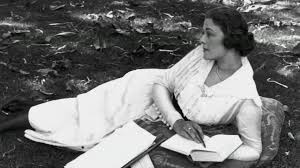
Frances Marion 1918

Frances Marion 1918


Frances Marion was a trailblazer. becoming one of the most powerful screenwriters of the 20th century. With a career that spanned decades, she became the first female to win an Academy Award for Best Adapted Screenplay in 1930 for the prison life film The Big House, starring Robert Montgomery, Wallace Beery and Chester Morris. Her research included visiting San Quentin for the atmosphere and lingo of the inmates. The movie gave audiences their first experience of hearing prison doors slam shut, tin cups clanking on mess-hall tables and prisoners’ feet shuffling down corridors.


Frances also received the Academy Award for Best Story for The Champ in 1932. The tearjerker chronicled the relationship between a washed out boxer (Wallace Beery) and his young son (Jackie Cooper). Marion was credited with writing 300 scripts and producing over 130 films.


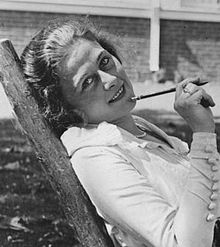
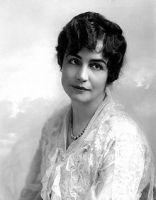
Born Marion Benson Owens (November 18, 1888) in San Francisco, California, she worked as a journalist and served overseas as a combat correspondent during World War I. On her return home in 1910, she moved to Los Angeles and was hired as a writing assistant, an actress by “Lois Weber Productions”, a film company owned and operated by pioneer female film director Lois Weber. (more on Lois Weber in Part 2 of the series)


Lois Weber

Lois Weber – Film Director

Frances was quite beautiful and could have been an actress but preferred to work behind the camera. She learned screenwriting from Lois Weber and went on to become the highest paid screenwriter, woman or man. Hollywood moguls competed for her stories and stars of the day Mary Pickford, Lilian Gish, Greta Garbo and Rudolph Valentino brought her characters to life on the screen. From 1919 – 1939 her star was ascendant, born at the right place and the right time, honing her craft during one of the most liberating eras for women in film.


When Marion met Mary Pickford (actress, producer, screenwriter) they became best friends with Marion writing screen adaptations of Rebecca of Sunnybrook Farm and The Poor Little Rich Girl for Pickford. As a result of the commercial success of “The Poor Little Rich Girl” in 1917 Marion was signed as Pickford’s “exclusive writer” at the salary of $50,000 a year, an unprecedented arrangement for that time.

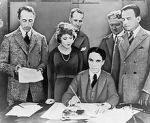
Pickford was the celebrated “America’s Sweetheart” and in 1919 together with her swashbuckler actor husband Douglas Fairbanks, Sr., director D.W. Griffith (Birth of a Nation) and “The Tramp” Charlie Chaplin established “United Artists” pictures. These four were the leading figures in early Hollywood and this was their stand for independence against the powerful studio system. Mary was also  one of the original 36 founders of the Academy of Motion Picture Arts and Sciences.


In 1921, Frances Marion directed a film for the first time with Just Around the Corner. That same year, she directed her friend Mary Pickford in one of her own scripts entitled The Love Light. Their relationship was more than just writer and star, they were collaborators and the friendship between Pickford and Marion lasted more than 50 years.

Married four times, Frances Marion had two children with third husband, actor Fred Thomson. This was her longest marriage, lasting from 1919 until Thomson’s sudden and tragic death from a Tetanus infection in 1928. Frances’ great friend Mary Pickford had introduced them. Frances said it was love at first sight.


Fred Thomson and Frances Marion

Fred Thomson and Frances Marion

For many years she was under contract to MGM Studios, but, independently wealthy, she left Hollywood in 1946 to devote more time to writing stage plays and novels. Frances Marion published a memoir Off With Their Heads: A Serio-Comic Tale of Hollywood in 1972.

Frances died on May 12, 1973 leaving a legacy of innovation, independence and inspiration for future aspiring female writers. The documentary, Frances Marion: Without Lying Down,” is an insightful profile of her life and achievements in Hollywood.


Without Lying Down

Mary Pickford and Frances Marion


Narrated by “Pulp Fiction” actress Uma Thurman and Oscar-winner Kathy Bates, who gives voice to the screenwriter’s own words taken from her letters, diaries. and memoirs. The documentary also features footage from more than twenty of Marion’s movies, with commentary by silent film historian Kevin Brownlow, and film critic Leonard Maltin.

I was fortunate enough to catch it on Turner Classic Movies recently and great news, it will be replayed on June 10th at 6:00 am (est). It’s also available for purchase at Amazon.com. I highly recommend checking it out!

  frances marion lying

“I’ve spent my life searching for a man to look up to without lying down.” Frances Marion


It’ll take more than 60 years before women are once again present in meaningful numbers at every level of film production.


Josephine Baker – Beyond “Bronze Venus”

josephine baker tiger

Josephine Baker 1920’s

Josephine Baker is most celebrated as the “Bronze Venus” and her infamous “Banana Dance” in Paris c. 1927. However, the sum of her life is so much more! I was blown away by her boldness and sexual freedom, but it wasn’t until I saw the 1991 HBO movie starring Lynn Whitfield as Josephine Baker that I started doing research on her life. Whitfield won an Emmy Award for Outstanding Lead Actress in a Miniseries or a Special—becoming the first Black actress to win the award in this category which seems apropos since Josephine Baker was The Lady of firsts.

Lynn Whitfield - Josephine Baker Story 1991

Lynn Whitfield – Josephine Baker Story 1991

I’ve always been intrigued by Baker’s provocative reputation but had no idea of her involvement in the fight for justice, racial equality and the civil-rights movement.

Born  Freda Josephine McDonald in St. Louis, Missouri, (June 3, 1906 – April 12, 1975) she was an American-born French dancer, singer, and actress who came to be known in various circles as the “Black Pearl,” “Bronze Venus” and even the “Creole Goddess”. Her parents were Carrie McDonald and Vaudeville drummer Eddie Carson. Growing up poor she started working early cleaning homes and babysitting for wealthy white families.

josephine baker baby

Baby Josephine

Baker dropped out of school at the age of 13 and lived as a street child in the slums of St. Louis. Her street-corner dancing attracted attention from the Dixie Steppers which lead to her opportunity to appear in the groundbreaking and hugely successful Broadway revue Shuffle Along (1921). She performed as the last dancer in the chorus line, a position where, traditionally, the dancer performed in a comic manner, as if she were unable to remember the dance, until the encore, at which point she would perform it not only correctly but with additional complexity. Baker’s act set in motion the career which would make her an international star.


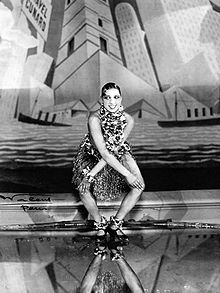
Josephine Baker_Charleston

Josephine Baker dancing the Charleston, 1926


Josephine traveled to Paris, France, for a new venture, and opened in “La Revue Nègre” on October 2, 1925, at the Théâtre des Champs-Élysées. Her erotic dancing and performing in next to nothing made her a sensation in Paris. The bohemian culture of interwar Paris embraced Baker’s skin color, allowing her to catapult to stardom. At the Folies Bergère, she performed the Danse Sauvage, wearing a costume consisting of a skirt made of a string of artificial bananas – voila! – a star is born.


Josephine Baker became the most successful and highest paid American entertainer working in France and the first Black woman to star in a major motion picture. Baker starred in three films which found success only in Europe: the silent film Siren of the Tropics (1927), Zouzou (1934) and Princesse Tam Tam (1935). She also starred in Fausse Alerte in 1940.

However, despite her acclaim in Europe, upon returning to New York in 1936  to star in the Ziegfeld Follies, she walked right back into good ole American racism. Audiences rejected the idea that a black woman could be so sophisticated and she was replaced by stripper Gypsy Rose Lee later in the run. Time magazine referred to her as a “Negro wench”. She returned to Europe heartbroken.


Josephine Baker and the French Resistance of World War II

Josephine returned to Paris in 1937, married a Jewish Frenchman, Jean Lion, and became a French citizen. In September 1939, when France declared war on Germany she was recruited by Deuxième Bureau, French military intelligence, as an “honorable correspondent”. Baker collected what information she could about German troop locations from officials she met at parties. She was awarded the Legion of Honor and given a Medal of Resistance for her work during World War II. She was also the first American woman to receive the Croix du Guerre, a notable French military honor.

josephine baker french 2

Josephine Baker Legion of Honor


 Josephine Baker and the Civil Rights Movement

Though based in France, Baker fought for American civil rights in the 1950’s and 1960’s. When she arrived in New York with her fourth husband French composer and conductor Jo Bouillon, they were refused reservations at 36 hotels because she was black. In 1951 when the famous New York Stork Club refused to serve Baker because she was black, she wrote letters to President Truman and enlisted the aid of the NAACP which focused a spotlight on the issues of inequality and racism in popular establishments.


josephine bakerstork-club-furor

Stork Club Controversy


Josephine Baker was one of the few female speakers at the March on Washington for Jobs and Freedom on August 28, 1963 introducing “Negro Women Fighters for Freedom”, including Rosa Parks, Martin Luther King, Jr. and Congressman John Lewis. The NAACP, National Association for the Advancement of Colored People, named May 20th Josephine Baker Day in her honor.

josephine_baker march on washington

Josephine Baker in French uniform – March on Washington 1963

“The Rainbow Tribe”

Long before Angelina Jolie and Brad Pitt’s multicultural family, there was Josephine Baker and her “Rainbow Tribe”. Josephine wanted to prove that “children of different ethnicities and religions could still be brothers.” Baker raised two daughters, French-born Marianne and Moroccan-born Stellina, and ten sons; Korean-born Jeannot (or Janot), Japanese-born Akio, Colombian-born Luis, Finnish-born Jari (now Jarry), French-born Jean-Claude and Noël, Israeli-born Moïse, Algerian-born Brahim, Ivorian-born Koffi, and Venezuelan-born Mara.


josephine-baker-children

Josephine Baker and “The Rainbow Tribe”


On April 12, 1975 we lost Josephine after she suffered a cerebral hemorrhage, she was 68 years old. She performed right up to her death, starring in a retrospective revue at the Bobino in Paris, Joséphine à Bobino 1975, celebrating her 50 years in show business.The opening night audience included Sophia Loren, Mick Jagger, Shirley Bassey, (best known for recording the theme song to the James Bond film Goldfinger (1964), Diana Ross, and Liza Minnelli.

20,000 people lined the streets of Paris to watch her funeral procession. She received a 21 gun salute, making her the first Black American female to be buried with military honors in France. Josephine Baker leaves behind a legacy of accomplishments including breaking color barriers and fighting for justice and equality around the world. I thank her for channeling her celebrity into championing the rights of all.


Celebration of Josephine’s Life and Legacy

Some Like it Hot! (1959)

Billy Wilder is one of my favorite directors because he’s not afraid to tackle controversial subject matters like alcoholism, adultery, and sexuality. His 1959 film Some Like it Hot is a fantastic example!  I love this film not only because it’s hilarious and Marilyn Monroe is at the height of her sexiness, but it addresses the issues of gender roles, cross-dressing and gay marriage head on!

United Artists released Wilder’s Prohibition-era farce Some Like It Hot without a Production Code seal of approval, withheld due to the film’s unabashed sexuality including a central cross-dressing theme.


Okay, so here’s the set-up:

2 speakeasy musicians (Joe and Jerry) in 1920’s Chicago witness the infamous St. Valentine’s Day Massacre. Obviously  – that’s a problem. Busted by the hitmen they try to talk their way out of the situation. However, the gangsters ain’t havin’ it so they do the next best thing – Run!

Okay, so now what? Go drag, book a gig with the all-girl band Sweet Sue and her Society Syncopaters. Hey, it could happen.


Introducing Josephine and Daphne


Now, let’s meet Joe and Jerry

somelikeithotjoeandgerry

Jerry: You’d bet my money on a dog? Joe: He’s a shoo-in. Max the waiter knows the electrician that wires the rabbit.


Joe ( Tony Curtis) is a saxophone playing womanizer who’s borrowed money from every girl on the chorus line at the speakeasy. Jerry (Jack Lemmon) plays the upright bass and is Joe’s best friend. Although tired of Joe’s crap, he covets his prowess with women while simultaneously desiring a stable relationship of his own.

Their bond is put to the test when Joe (as Josephine) zeros in on Sugar Kane (Marilyn Monroe) and her strut when they arrive at the train station. Sugar plays ukulele and sings with Sweet Sue (Joan Shawlee) and the Syncopaters. By the time they arrive at their destination in Florida, Joe has sweet talked his way into Sugar’s life and is bound and determined to have a taste. Daphne (Jerry) on the other hand has a different experience; dealing with his jealousy of Joe and Sugar’s relationship while maneuvering the advances and courtship of much-married and aging millionaire, Osgood Fielding III (Joe E. Brown).

First of all, Joe E. Brown is a scream! Second of all, check out his career along with this performance.


And here we go – into the land of whoa, stuff we don’t talk about in 1959 and are really just scratching the surface of today:

Cross Dressing: Designer Orry-Kelly won an Oscar for Best Costume Design for his work. Seeing Marilyn’s gowns, Curtis and Lemmon insisted on wearing Kelly’s designs as well to make them look good as females. They played it straight as Josephine and Daphne which I believe gave weight and merit to the film. They may have looked good, but Marilyn was hot! As a young girl, I went, yes – one day I wanna rock a dress like that!


Gender Roles: Challenging what is deemed to be male/female expectations. By embracing their personas, Joe and Jerry learn from Sugar and Osgood what it means to walk in another woman’s shoes and deal with the complexities of being a woman in a man’s world.


Gay Marriage: The right to love for love’s sake. This is undoubtedly my favorite scene!

Joe to Jerry/Daphne – “It’s just not being done.”

“I’m a Boy”


This final scene is pure – Subversive Brilliance!

Despite Joe’s argument to Jerry and Jerry’s argument to Osgood about how outrageous their marriage would be – in the end, love will not be denied.


Billy Wilder, the Austrian-born American filmmaker is regarded as one of the most brilliant and versatile filmmakers of Hollywood’s golden age. Wilder is one of only five people to have won Academy Awards as a producer, director and screenwriter for the same film (The Apartment). The American Film Institute has ranked these four Wilder films among their top 100 American films of the 20th century:

In 2001, AFI selected Some Like It Hot as the number one comedy film of all time.

BillyWilderParamountPubPhoto1942

Billy Wilder


Thank you, Billy Wilder for directing, producing and writing this screenplay. Art should be provocative, revolutionary; pushing the conversation forward. Humor and politics are not mutually exclusive. Question what is accepted. Fight for what is right.

Souls of 2014

white roses

It’s hard for me to believe we’re at the end of another year. Looking back at 2014 and the artistic souls we’ve lost, I re-live joy, sorrow, wonderment, and childhood. Lost a little of my soul in 2014 but gained a new appreciation for what those souls gave to my life and the lives of others.

This retrospect is a beautiful reminder of the dedication, love and craftsmanship that goes into the creation of a film and the experiences we share sitting in a darkened theater. I love the movies (even built a website to celebrate) and the honesty of great actors.

Thank you so much for sharing your gift.


Souls of 2014 shared here at iheartfilmblog.com

Robin Williams

Ruby Dee

Maya Angelou

Lauren Bacall

white roses star yes

A Charlie Brown Christmas

charlie brown christmas

Premiered December 9, 1965

A Charlie Brown Christmas will always have a special place in my heart for its honesty, faith, humor and appreciation of a child’s intelligence. I’ve watched every year since its premier in 1965. I fell in love with Charlie and the Peanuts gang, relating to the familiar relationships we all had as children.


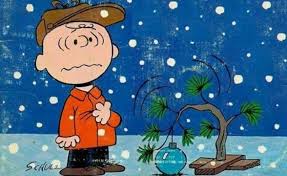
charlie brown

Charlie’s sad little Christmas Tree

Charlie Brown is the quintessential “nice guy.” Sweet, awkward and sincere. All the traits that guarantee a life of hell for an 8-year-old boy on the playground. In this musical special, Charlie is depressed about the commercialism of Christmas and seeks ways to enjoy the true meaning of the season; the celebration of the birth of Jesus Christ. Charlie confides his feelings to his best friend Linus who’s also sweet, but also philosophical.


After Linus tells him to stop being so ” Charlie Brownie,” Chuck seeks the advice of his nemesis Lucy (aka Dr. Lucy). We’ve all had a Lucy in our lives. The kid who takes tremendous pleasure in the humiliation and torture of the sweet, awkward and sincere kid on the block. You know – Charlie Brown.


Charlie takes Lucy’s advice to become involved in a Christmas project and becomes the play’s director. However, his vision is the complete opposite of Lucy’s vision of becoming the Christmas Queen. (hey, don’t judge; what’s your fantasy?)  Result, my favorite scene:


OMG!! The dance scene is hilarious. Everybody who’s ever seen this has their favorite dancer. I see myself as one of the twin girls with their head and individual hair strands swinging side to side. They look so happy and diggin’ the groove. I love it! My other fave is the little boy doing what I call the Frankenstein. His arms are out in front of him and he’s doing some sort of “running man” dance move. Go ahead baby, get your dance on!

charlie brown christmas dance

For Charlie, the play’s a disaster. His decision for a Christmas tree being even worse; failing to bring any of the holiday spirit to Charlie Brown.

But ever faithful, his best friend Linus tells him what Christmas is all about and gives the most memorable soliloquy of my young life. (the Gospel of Luke, chapter 2, verses 8 through 14 from the Authorized King James Version)

I was raised in the church and heard this passage before but never in the context of a cartoon or animation. Quoting the bible in this realm was a bold move but is one of the reasons why I have such respect for the creator, Charles Schultz, and this project.

It reminds me, to this day, don’t forget the reason we celebrate Christmas; it’s the birth of Christ.


Even though Charlie’s day started with doom, gloom, and humiliation (including his dog Snoopy laughing in his face); in the end he finds joy and empathy from his friends.

Let the choir sing:

“Hark the Heralded Angels Sing”


I raised my children on this timeless classic and they continue the tradition. A Charlie Brown Christmas touches my heart in so many ways. The innocence of childhood, the unbridled excess of commercialism on what is a holy holiday. But also the friendships, experiences, and faith that shapes our lives forever.


 A Christmas Miracle – The Making of a Charlie Brown Christmas

Gratitude and Miracles


thanksgiving2012


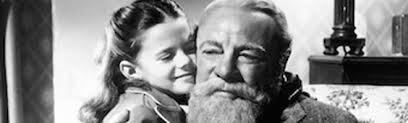
Today marks the start of the holiday season, but it doesn’t officially kick off for me until I’ve watched the Thanksgiving Day Parade and one of my favorite holiday films, Miracle on 34th Street (1947).


Until I see Santa arrive at the end of the parade there can be no Christmas Tree, tinsel, ornaments or stockings. This has been a tradition of mine since I was a kid. Without a doubt, Edmund Gwenn is Santa Claus. No matter what other films he’s made, each character turns into Kris Kringle. (he won the Academy Award for Best Supporting Actor) Gwenn played a cockney assassin in Hitchcock’s Foreign Correspondent in 1940, but all I could scream was “Santa, don’t throw that man off the ledge!”


Edmund Gwenn

Miracle Kris

(September 26, 1877 – September 6, 1959)

Natalie Wood was precious as Susan, the precocious daughter of Maureen O’Hara (Doris) who doesn’t believe in fairy tales and attends a “progressive” school. Natalie Wood had an illustrious career until her death in 1981. She was able to make the transition from child star to ingenue starring opposite James Dean in Rebel Without a Cause (1955) and Warren Beatty in Splendor in the Grass (1961). Known as a loving, giving person, as well as a star, she’s always had a special place in my heart.

Natalie Wood

Miracle on i believe

(July 20, 1938 – November 29, 1981)

miracle DorisDoris is cynical as a result of a bitter divorce so she’s raising her daughter to be practical and sensible. None of this believing in fairy tales and Santa crap. All was going well until Doris – the parade coordinator asks Kris to replace the drunken Santa originally set for the Macy’s Thanksgiving Parade. Kris is a big hit and becomes Macy’s official Santa resulting in a personal relationship with Doris and Susan.

Maureen O’Hara (born August 17, 1920)


Kris is an immediate influence teaching Susan it’s okay to pretend after she tells him the other kids don’t play with her because she won’t join in their game and act like a zoo animal.

The production took flack from the Catholic League of Decency because how dare you depict a divorced woman with a successful career and a young child as a “normal family.” Yep, 1940’s mentality and morality were hard at work.

miracle susan at play

Susan learning to act like a monkey!

Just as Doris is learning to have more faith in life and Susan is embracing imagination, Kris’s sanity is questioned and a legal battle ensues to prove that not only is he sane but the one and only Santa Claus. Fred (John Payne) who is Kris’s lawyer and Doris’s boyfriend, understands the importance of the spirit of Santa especially in the lives of Susan and Doris.

John Payne (on left)

(May 23, 1912 – December 6, 1989)

miracle john

Kris is exonerated and Christmas day has arrived. Susan has asked for a very special present and is disappointed at the Christmas party to see it isn’t under the tree. Doris, in a refreshing change of heart, tells Susan she must have faith.

miracle on faith

But, Santa Claus moves in mysterious ways and in the end teaches them both the true value of faith and miracles.


http://dai.ly/xg9vqw

 miracle end

Here’s to Faith and Miracles!

Legendary Director of “The Birdcage” Dies

  Mike Nichols, Acclaimed Director of ‘The Graduate,’ Dies at 83

mike nichols-master675

(November 6, 1931 – November 19, 2014)

New York (AP) Mike Nichols, one of America’s most celebrated directors, died on Wednesday from cardiac arrest. He was married to ABC’s news anchor Diane Sawyer. The family will hold a private service this week; a memorial will be held at a later date.

Dryly urbane, Mr. Nichols had a gift for communicating with actors and a keen comic timing, which he honed early in his career as half of the popular sketch comedy team Nichols and May. In films like “The Graduate,” “Who’s Afraid of Virginia Woolf?” and “Carnal Knowledge” and in comedies and dramas on stage, he accomplished what Orson Welles and Elia Kazan but few if any other directors have: achieving popular and artistic success in both film and theater. He was among the most decorated people in the history of show business, one of only a dozen or so to have won an Oscar, a Tony, an Emmy and a Grammy.

For more of his legacy click here:

READ MORE »

http://www.nytimes.com/2014/11/21/obituaries/mike-nichols-celebrated-director-dies-at-83.html?emc=edit_na_20141120


R.I.P.


My absolute favorite of his films!


The Birdcage (1996)


What’s not to love about this film? Starring Robin Williams and Nathan Lane the pairing is perfect and the performances are brilliant!

Here’s the plot:

Meet Armand, Albert and their son Val who’s engaged to Barbara Keeley and the rip-roaring evening when their families meet.

Val’s father, Armand, owns The Birdcage, a drag club in South Beach. His domestic partner is Albert, who appears regularly as “Starina”, the show’s star drag queen. Barbara’s father is ultraconservative Republican Senator Kevin Keeley of Stow, Ohio. He is up for reelection and is also co-founder of the “Coalition for Moral Order”.

Fearing the Keeleys reaction if they learn the truth about Val’s parents, Barbara tells her parents that Armand is a cultural attaché to Greece, that Albert is a housewife, and that they divide their time between Greece and Florida; she also changes the family’s last name from Goldman to Coleman to hide their Jewish background.

What could go wrong?

Based on the 1973 stage play by Jean Poiret and the 1978 French-Italian film la Cage aux Folles co-written and directed by Édouard Molinaro; it starred Ugo Tognazzi and Michel Serrault. In Italian, it is known as Il vizietto. An excellent flick definitely worth checking out.


Love the scene with Renaldo teaching Albin to act “straight.”  La Cage vs. Birdcage. What do you think?

(Sorry, no subtitles for the trailer but they are available on the DVD)


The Birdcage pays homage but definitely brings its own attitude and flair.


the Birdcage_imp


And Hank Azaria as Agador Spartacus is too hilarious!!!!


Directed by

Mike Nichols

Produced by

Mike Nichols

Neil A. Machlis

Screenplay by

Elaine May

Based on

La Cage aux Folles

by Jean Poiret

Francis Veber

Starring

Robin Williams

Gene Hackman

Nathan Lane

Dianne Wiest

Music by

Stephen Sondheim

Cinematography

Emmanuel Lubezki

Edited by

Arthur Schmidt

Production

company

Nichols Film Company

Distributed by

United Artists

Release dates

  • March 8, 1996


Boo! Don’t Turn Off the Lights

halloween boo 1

Happy Halloween!


In anticipation of the big day, I thought I’d share some of my Halloween Day viewing quirks. “Boo, Don’t Turn off the Lights” reveals what films I can watch only while it’s still light outside.

My top 2 are Psycho (1960) and Halloween (1978). If you haven’t experienced them you should and here’s why:


Psycho (1960)

Psycho_(1960)

Directed by the “Master of Suspense”, Sir Alfred Hitchcock, it turned the audience perception of a movie plot on its head. There were lines wrapped around the block and absolutely NO ADMISSION after the movie began. Sir Alfred, such a tease. For more on Al, please click here. A previous post tribute.


Starring Anthony Perkins and Janet Leigh, the screenplay is by Joseph Stefano and based on the 1959 novel of the same name by Robert Bloch. To fully appreciate the creepy effect of the film understand that the character of Norman Bates is loosely inspired by the crimes of Wisconsin murderer and grave robber Ed Gein.

Norman Bates

Norman Bates (Anthony Perkins)

I can’t give anything away, but the shower scene is legendary and a reason to watch with the lights on!

Janet Leigh Marion

Marion Crane (Janet Leigh)


Halloween (1978)

Halloween_1978

Directed by John Carpenter and the debut of Jamie Lee Curtis (Janet Leigh’s daughter), this film is inspired by and born from the masterwork Psycho (1960) bringing a fresh, 1978 twist on the horror genre. Void of a lot of blood and gore the focus becomes a child’s question: “What’s the “boogeyman?” and the response, “I believe that was.”

OMG, I add extra lighting when watching this definitive Halloween classic!


The unrelenting Michael Myers character is the scariest psycho of all time! 

Michael myers2007

This quote sums up Michael:

Dr. Sam Loomis: (Donald PleasenceI met him, fifteen years ago; I was told there was nothing left; no reason, no conscience, no understanding; and even the most rudimentary sense of life or death, of good or evil, right or wrong. I met this six-year-old child, with this blank, pale, emotionless face, and the blackest eyes… the devil’s eyes. I spent eight years trying to reach him, and then another seven trying to keep him locked up because I realized that what was living behind that boy’s eyes was purely and simply… evil.

Michael Myers young

6-year-old Michael Myers

The cinematic significance of this film is unlike other slasher movies of the day, the heroine is intelligent and continually devising ways to get away from the killer. Jamie Lee as Laurie is sweet, compassionate and determined to save the kids she’s babysitting and herself from death and live through Halloween night.


Shout out to the first horror “Scream Queen! (for you trivia buffs check-out Wes Craven’s Scream (1996) for a movie reference). Halloween (1978) was the film’s inspiration.

Laurie strong

Laurie Strode (Jamie Lee Curtis)


Halloween’s opening sequence is disturbing and reason for exclaiming:


Boo! Don’t Turn Off the Lights!