The Wizard of Oz (1939) – “There’s No Place Like Home”
Yes, it’s that time of year again with Black Friday, Cyber Monday, and everyone running around like crazy, gearing up for the big day – Christmas! But, it seems every year when I read about shoppers nearly killing each other over a 12-pack of socks or the last $10 cashmere sweater; my heart sinks with the realization that too many of us forget what the holidays should be about; Gratitude.
To quote author Melody Beattie:
“Gratitude turns what we have into enough, and more. It turns denial into acceptance, chaos into order, confusion into clarity…it makes sense of our past, brings peace for today, and creates a vision for tomorrow.”
A classic film I think represents gratitude and appreciation for what we already have is, “The Wizard of Oz”; it’s overflowing with gratitude! Dorothy (Judy Garland) accompanied by her little dog Toto, leaves home seeking a better place, but her journey becomes a revelation of what home really means.
Dorothy and her compatriots – The Scarecrow (Ray Bolger), Tin Man (Jack Haley), and The Cowardly Lion (Bert Lahr) wishing to be more than they perceive themselves to be, learn to appreciate their unique gifts. The Great and Powerful Oz (Frank Morgan) realizes the blessing and value of truth and in this case, the truth truly does set him free.
It all starts with a wish to be “Somewhere Over the Rainbow” and results in unexpected consequences – the terror of being caught up in a twister, inadvertently dropping a house on the sister of the Wicked Witch of the West (oops) and inheriting both the wrath of said Witch (Margaret Hamilton) and a pair of coveted ruby slippers.
Sadly, “Over the Rainbow” doesn’t materialize into the idyllic place of which Dorothy sings, her personal vision quest. Dorothy’s longing for home dovetails with the desires of The Scarecrow, Tin man, and The Cowardly Lion. These three, also wishing for what they believe they don’t have – a brain, a heart, and courage – join the quest to the Emerald City to finally have their dreams realized through the power of the omnificent Wizard of Oz.
The trio’s perilous journey to get Dorothy home leads to the self-realization that they possessed the traits they sought all along and didn’t really need the wizard to bestow these attributes upon them.
Dorothy also learns a valuable lesson we all tend to forget, “there’s no place like home” and if we can’t find what we’re looking for there, then we won’t be able to find it anywhere. Home exists within us and it’s our outlook and attitude that dictates whether it’s a black and white existence filled with worries and that ole Gulch “heifer” or a technicolor world filled with musical munchkins and the love of three very special friends.
With Gratitude, we can appreciate and give thanks for the joys and blessings in our lives because the truth is we could be far worse off. My spiritual goal every day is to be mindful and thankful for the bounty which I’ve already received.
Business is bad at Mushnick’s Flower shop. Shy Seymour and brave Audrey will soon be unemployed. That is until Seymour pricks his finger and a sickly little exotic plant gets its first taste of human blood. The plant spurts ten feet tall. As horticultural interest in “Audrey II” sprouts, Mushnick’s business takes off. But fresh blood must be found—and people start disappearing. Love and business bloom at a hilarious yet bloody cost. (Fathom Events)
I’m so excited to see one of my Halloween favorites back on the big screen. And, fascinated to see Frank Oz’s restored original dark ending, staying true to the play.
“It will be very interesting to see if, in this new political and cultural climate, if there will be any association with that, with the plant. Let’s just say that,” says Oz. The original ending, he acknowledges, “may still be too dark for people, and I accept that.
It may not be as satisfying emotionally, and I accept that. But on the other hand, the reason screenwriter Howard Ashman and I wanted it was that it is the Faustian legend. Seymour does have consequences for his actions. We needed to omit those consequences to keep the audience happy, which I agreed with, by the way. I think we had to do it. But now it will be very interesting to see.” (Yahoo Entertainment)
Fans will not want to miss Little Shop of Horrors: The Director’s Cut, which features the rarely-seen original ending and an exclusive introduction from Frank Oz.
The 1986 Frank Oz film is a remake of the hit Broadway stage production which was a remake of the 1960 movie.
The original 1960 film was a black comedy horror film directed by Detroit-born (my hometown) and celebrated B-movie legend, Roger Corman and written by Charles B. Griffith. The film is a farce about an inadequate florist’s assistant (Jonathan Haze) who cultivates a plant that feeds on human flesh and blood.
The film stars Jonathan Haze (Seymour), Jackie Joseph (Audrey), Mel Welles (Mr. Mushnick), and Dick Miller, all of whom had worked for Corman on previous films. Produced under the title “The Passionate People Eater”. It was a lot creepier and darker than either the 1986 film or Broadway production.
For a true Halloween treat, I highly recommend screening the original! Check out Jack Nicholson in one of his first film roles.
Check out this previous post for background and trivia on the Broadway stage production and the original 1960 film.
I was thinking the other day, Halloween is one of my favorite holidays but, with the horrors I see every day on my television, I’m not sure I want to watch my top-pick scary movies this year to celebrate. Funny thing is I’ve always looked at Halloween as an exercise and opportunity to face your fears and take control of how you deal with life.
In giving in to my apprehension, I was letting the nightmare in the White House affect my joy and alter my attitude and behavior. But, then I remembered the classic film “A Nightmare on Elm Street” and the leverage that Heather Langenkamp’s character (Nancy) discovered she had against Freddy Krueger when she turned her back on him. In that moment, he disappeared and she took back her power over her attitude and commitment to fighting his evil.
In my opinion, “A Nightmare on Elm Street” is an allegory for our pent-up fears which prevent us from fighting through obstacles and taking ownership of our own happiness. Dreams are supposed to be representative of our true thoughts and understanding said dreams can help us understand what makes us tick.
Because Nancy’s mom ( Ronee Blakley) lives in a constant state of agitation over her part in the death of Freddy Krueger, she projects these feelings of anxiety on her daughter. She drinks heavily in an attempt to deal with her overwhelming sense of guilt and terror and even goes so far as to putting bars on the windows of the house to protect her daughter’s life.
When she eventually tells Nancy the truth about the legend of Freddy, Nancy understands her mom’s frenzy and Freddy’s desire to kill the children of those involved in his demise. Nancy decides to break through this paralyze by trying to save her friends, learning how to defend herself and eventually discovering the means to take away Freddy’s control over her, her friends, and by extension, her mom.
Freddy, Nancy
Nancy could have taken on her mom’s constant state of panic, but instead chose to break the cycle.
I’m taking Nancy’s lead and turning my back on the paralysis and dread that the malice in the White House has managed to wreak on our country and the world.
So, in the spirit of Halloween, the celebration has begun with decorations and the enjoyment of my choice best of the best as I turn my back on evil and continue the battle against a madness greater than any horror film I’ve ever seen.
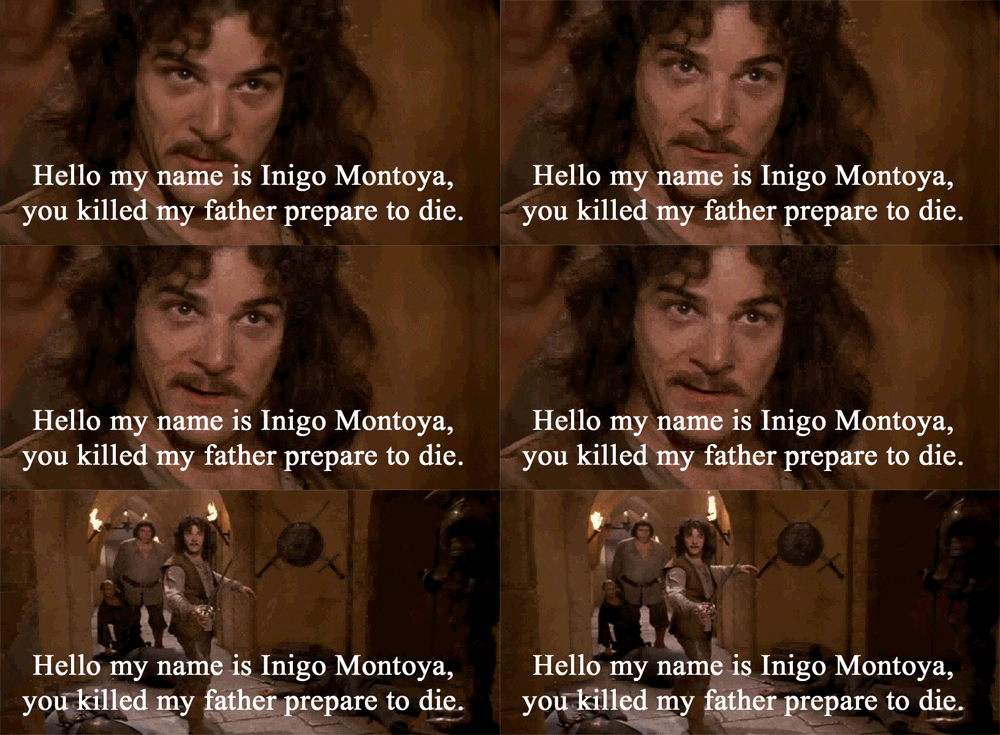
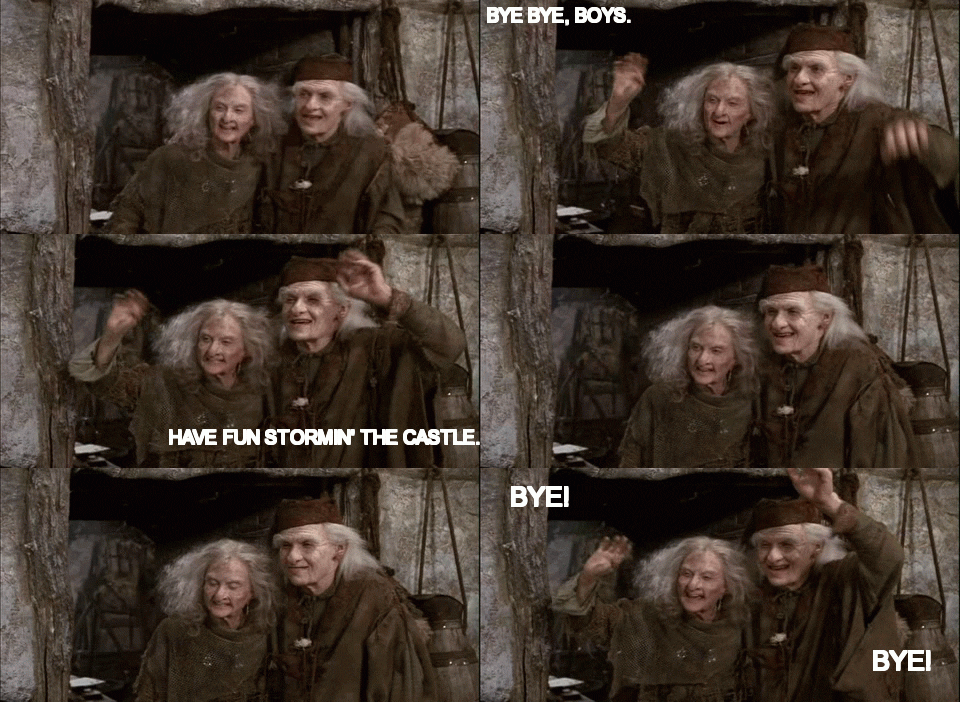
One of my favorite and definitely most quotable films, “The Princess Bride”(1987) brings together all the classic elements of the damsel in distress story and style of the irreverent and hilarious Monty Python franchise to the 1980’s generation.
It’s back in the theaters and even if you’ve quoted it a thousand times, there’s nothing like sharing the laughter in the theater with fellow “Princess Bride” aficionados!
The film was adapted by William Goldman from his 1973 novel of the same name and tells the story of a farmhand named Westley, accompanied by befriended companions along the way, who must rescue his true love Princess Buttercup from the odious Prince Humperdinck.
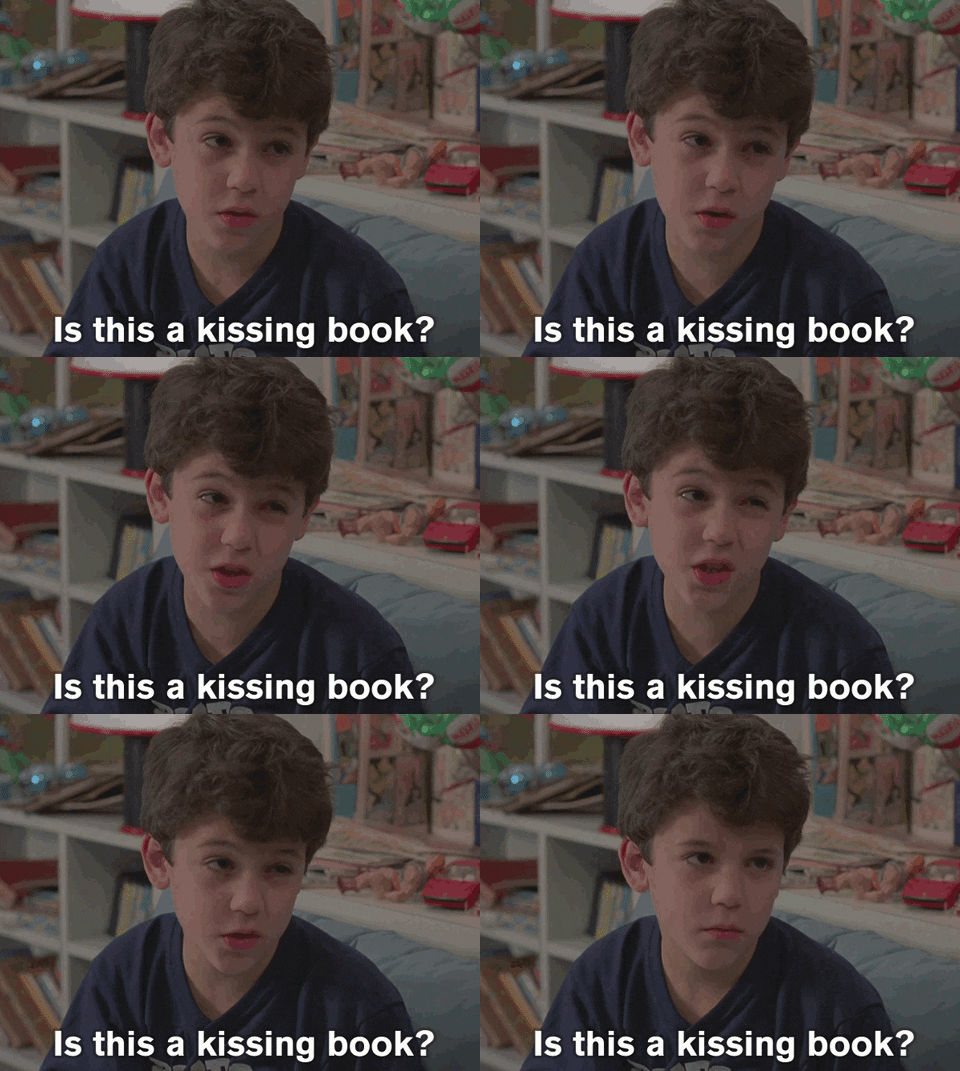
The story is presented in the film as a book being read by a grandfather (Peter Falk) to his sick grandson (Fred Savage), thus effectively preserving the novel’s narrative style. (Wikipedia)
Fred Savage
This 30th-anniversary event includes a specially produced interview with Ben Mankiewicz and Rob Reiner.
Awards:
*1992: Best Picture (David Brown, Rob Reiner and Andrew Scheinman, Producers), A Few Good Men. **1976: Adapted Screenplay, All the President’s Men; 1969, Original Screenplay, Butch Cassidy and the Sundance Kid.
Cast now: Cary Elwes, Robin Wright, Mandy Patinkin, Chris Sarandon, Wallace Shawn, Carol Kane, and Billy Crystal
Make sure to mark your calendar, buy your ticketand get ready to enjoy this classic on the big screen. Relive this epic adventure filled with fencing, fighting, giants, monsters, Miracle Max, and true love!
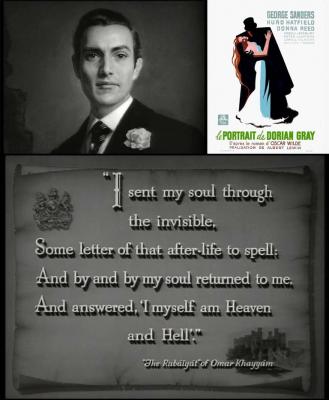
“I am jealous of everything whose beauty does not die. I am jealous of the portrait you have painted of me. Why should it keep what I must lose? Every moment that passes takes something from me and gives something to it. Oh, if it were only the other way! If the picture could change, and I could be always what I am now! Why did you paint it? It will mock me some day — mock me horribly!” The hot tears welled into his eyes; he tore his hand away and, flinging himself on the divan, he buried his face in the cushions, as though he was praying.”
“Dorian Gray” – Oscar Wilde’s -“The Picture of Dorian Gray”
Dorian Gray
If you could, would you, sell your soul for eternal youth?
That was the choice made by Dorian Gray. His story is a classic cautionary tale. Be careful what you wish for.
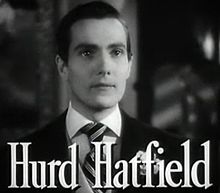
Dorian Gray (Hurd Hatfield) is a striking and wealthy young man living in 19th century London. While posing for his portrait with his artist friend Basil Hallward (Lowell Gilmore), he meets the cynical and audacious Lord Henry Wotton (George Sanders) who tells him that youth and beauty are fleeting and while he’s young he should entertain every worldly pleasure. Dorian is naive and in the presence of an enchanted Egyptian cat wishes he would stay forever young and only his portrait would age.
While visiting a local pub, The Two Turtles, he meets the beautiful and demure Sybil Vane. She sweetly sings “Goodbye Little Yellow Bird” and Dorian is totally enamored. Falling in love, he asks Miss Vale for her hand in marriage and invites both Basil and Lord Wotton to the pub to meet his love.
Sybil Vane
When Dorian informs Lord Wotton of his intention to marry Sybil, Wotton suggests he tests her virtue by inviting her to spend the evening with him. If she rebukes him then she’s chaste if she accepts she’s a tramp and as the saying goes “why pay for the cow when you can have the milk for free.” Dorian buys into this plan thus beginning his downward spiral into narcissism and pleasures of the flesh.
Sybil accepts Dorian’s request to stay with him and the following day Dorian sends her a breakup letter expressing his disappointment in her. Heartbroken, Sybil is devastated and Dorian becomes aware of the first signs of cruelty to appear upon his portrait’s face.
Years pass with his peers aging, but Dorian’s youth remains. Gossip swirls and his friends begin to shun him; questioning why his appearance is the same. Dorian goes full tilt debauchery until he finally reaches rock bottom.
There are people today who could benefit from heeding the lesson in the “Picture of Dorian Gray.” The evil you do comes back to bite. Karma is a bitch.
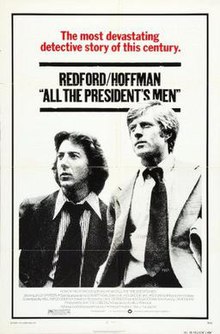
The Academy Award winning film, “All the President’s Men” is the 1976 American political thriller directed by Alan J. Pakula and starring Robert Redford and Dustin Hoffman. I believe it’s the best film on the Watergate scandal and the incredible journalism of Carl Bernstein and Bob Woodward. The gold standard of journalists, their hard work ultimately uncovered the truth of the events that changed the course of American history; the first time ever that an American President resigned from office.
The Plot: On June 17, 1972, a security guard (Frank Wills) at the Watergate complex finds a door kept unlocked with tape. He calls the police, who find and arrest five burglars in the Democratic National Committee headquarters within the complex. The next morning, The Washington Post assigns new reporter Bob Woodward (Robert Redford) to the local courthouse to cover the story, which is thought to be of minor importance.
Woodward learns that the five men, four Cuban-Americans from Miami and James W. McCord, Jr., had bugging equipment and have their own “country club” attorney. At the arraignment, McCord identifies himself in court as having recently left the Central Intelligence Agency and the others also have CIA ties. Woodward connects the burglars to E. Howard Hunt, a former employee of the CIA, and President Richard Nixon‘s Special CounselCharles Colson. (Wikipedia)
Carl Bernstein (Dustin Hoffman), another Post reporter, is assigned to cover the Watergate story with Woodward. The two are reluctant partners but work well together. Executive editor Benjamin Bradlee (Jason Robards) believes their work is incomplete, however, and not worthy of the Post’s front page. He encourages them to continue to gather information.
Woodward contacts “Deep Throat” (Hal Holbrook), a senior government official, an anonymous source he has used in the past. Communicating through copies of The New York Times and a balcony flowerpot, they meet in a parking garage in the middle of the night. Deep Throat speaks in riddles and metaphors about the Watergate break-in, but advises Woodward to “follow the money.” (Wikipedia)
Theatrical Release Poster
Yes, “follow the money” indeed.
I was in high school when the Washington Post reporters Carl Bernstein and Bob Woodward uncovered the historic Watergate scandal and I have never forgotten the outrage and for some disbelief that the President of the United States was guilty of a cover-up; it shook American politics to its core.
Carl Bernstein, Bob Woodward
However, it was true and instead of being impeached Nixon resigned his office. That is why the overwhelming evidence against the current resident of 1600 Pennsylvania Ave is so very shocking; Richard Nixon did far less and with a bi-partisan agreement, Articles of Impeachment were drawn.
“All the President’s Men” is the 1974 non-fiction book by Carl Bernstein and Bob Woodward, that was subsequently made into the motion picture starring Dustin Hoffman and Robert Redford. The book chronicles the investigative reporting of Woodward and Bernstein from Woodward’s initial report on the Watergate break-in through the resignations of H. R. Haldeman and John Ehrlichman, and the revelation of the Nixon tapes by Alexander Butterfield in 1973. (Wikipedia)
The cover of the 1974 first edition.
It relates the events behind the major stories the duo wrote for the Post, naming some sources who had previously refused to be identified for their initial articles, notably Hugh Sloan. It also gives detailed accounts of Woodward’s secret meetings with his source Deep Throat whose identity was kept hidden for over 30 years.Gene Roberts, the former executive editor of The Philadelphia Inquirer and former managing editor of The New York Times, has called the work of Woodward and Bernstein “maybe the single greatest reporting effort of all time.” (Wikipedia)
To hear more about the history of Watergate from the words of the reporters themselves: Bob Woodward and Carl Bernstein.
While watching Marlene Dietrich’s sultry performance of “The Laziest Gal in Town” in Alfred Hitchcock’s 1950 thriller,”Stage Fright”, I asked my husband if the song and performance seemed familiar. Because I’ve raised him right (on film history that is😎), he remarked, “of course, Madeline Kahn’s performance of “I’m Tired” in the Mel Brooks satirical Western comedy classic, “Blazing Saddles” (1974).
Marlene Dietrich “Laziest Gal in Town”
Madeline Kahn “I’m So Tired”
(Top) Marlene Dietrich (Bottom) Jane Wyman
I loved hearing his response because it’s the main reason I pen this post; for the history and appreciation of films. Understanding a writer or director’s references to past movies in theirs adds to the richness of the production. It helps young people comprehend that few things in life are original and imitation can be the sincerest form of flattery.
Sometimes the homage in a movie isn’t to a particular scene in a film but the music. I love Minions period but I especially enjoyed the “Minions” movie’s 1960’s soundtrack that made the perfect nod to James Bond type villains (“Minions” Scarlet Overkill) and the time period of the setting.
As a child of the ’60’s I remember turning to my husband in the theater saying, 99% of the people in here weren’t even born yet and I wonder if any of them appreciate the inclusion of the classic songs of this era.
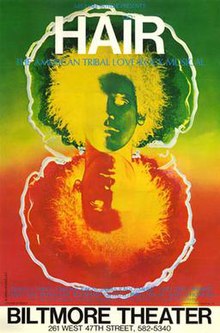
The song is “Hair” from the iconic 1968 counter-culture and controversial stage and film production “Hair”
I’ve spent my lifetime watching and loving the cinema and have educated my children with a more sophisticated palette for black and white films and how they just don’t make them like that anymore.😊
Hundreds of full-length films were produced during the decade of the 1940s; during Hollywood’s Golden Age. The great actor Humphrey Bogart made his most memorable films in this decade. Frank Capra’s masterpiece It’s a Wonderful Life and Orson Welles’s cinema genius production of Citizen Kane were released. The film noir genre was at its height. Alfred Hitchcock made his American debut with the film Rebecca and made many classics throughout the 1940s. (Wikipedia)
(Top) Cary Grant, Audrey Hepburn, Marlon Brando (Middle) Lauren Bacall, Marilyn Monroe, Grace Kelly (Bottom) Humphrey Bogart, Marlene Dietrich, Clark Gable
Movie Stars of the 1940’s & 1950’s
Of course, I want you to visit my website as a source of reference material, but if you want to see these full-length gems for free, I recommend tuning into the Turner Classic Movies channel. They show everything from the great silent films, Chaplin, Buster Keaton, etc. through Hollywood’s “Golden Age”.
These classic films bring me great joy and I hope you’ll find a special place in your heart for them, too!
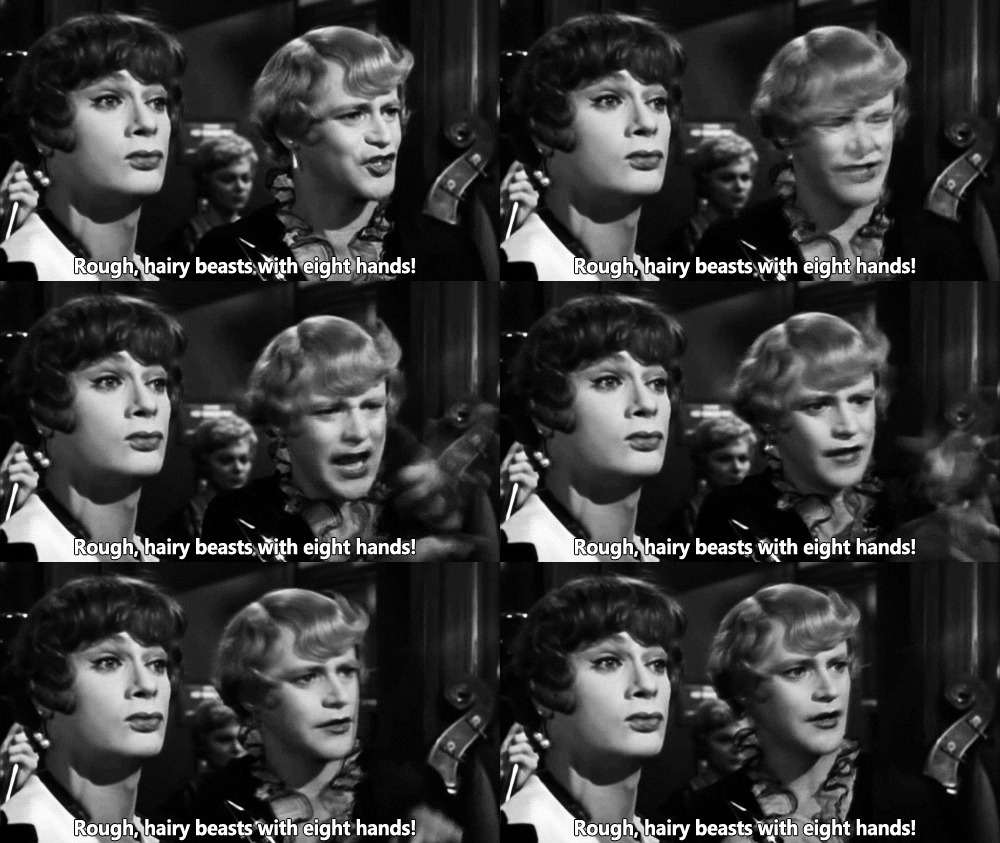
With no money and nowhere to hide, two down on their luck jazz musicians (Tony Curtis and Jack Lemmon) masquerade as members of an all-girl band, leading to a number of romantic complications when one falls for the band’s lead singer (Sugar Cane) played by Marilyn Monroe.
Tony Curtis, Jack Lemmon, Marilyn Monroe
Some Like It Hot is a 1959 American romantic comedy film set in 1929, directed and produced by Billy Wilder, starring Marilyn Monroe, Tony Curtis, and Jack Lemmon. The supporting cast includes George Raft, Pat O’Brien, Joe E. Brown, Joan Shawlee, and Nehemiah Persoff.
The plot is based on a screenplay by Billy Wilder and Michael Logan from the French film Fanfare of Love. The film is about two musicians who dress in drag in order to escape from mafia gangsters whom they witnessed commit a crime inspired by the Saint Valentine’s Day Massacre. The film was produced in black and white, even though color films were increasing in popularity. (Wikipedia)
Some Like It Hot opened to largely positive reviews and is today considered to be one of the greatest film comedies of all time. It was voted as the top comedy film by the American Film Institute on their list on AFI’s 100 Years… 100 Laughs poll in 2000. The film is also notable for featuring cross-dressing, and for playing with the idea of homosexuality, which led to it being produced without approval from the Motion Picture Production Code.
The code had been gradually weakening in its scope during the early 1950s, due to increasing social tolerance for previously taboo topics in film, but it was still officially enforced. The overwhelming success of Some Like It Hot was a final nail in the coffin for the Hays Code. (Wikipedia)
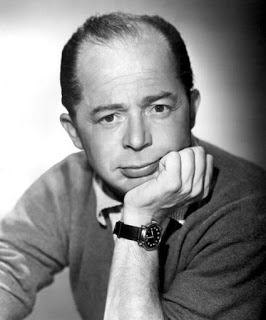
I love Billy Wilder because of his versatility in films and his testing the boundaries of societal norms. To that end, the first movie that always comes to mind is “Some Like it Hot”. To find out more about Billy Wilder and his films, check out my post – The Faces Behind the Camera.
Billy Wilder
I highly recommend taking advantage of this opportunity to see “Some Like it Hot” on the big screen!
“Listen to them, children of the night; what music they make.” Count Dracula
Dracula is the immortal 1897 Gothic horror novel by Irish author Bram Stoker. It introduced the famous character Count Dracula and established many conventions of subsequent vampire fantasy.
The first edition cover of Dracula
Of all the film adaptations of the classic novel, the 1931 Dracula directed by Tod Browning and starring Bela Lugosi is most synonymous with Stoker’s legendary character, Count Dracula of Transylvania.
The film was produced by Universal and is based on the 1924 stage play Dracula by Hamilton Deane and John L. Balderston, which in turn is loosely based on the novel Dracula by Bram Stoker. The 1924 stage play was substantially revised in 1927 and was the first authorized adaptation of Bram Stoker‘s novel Dracula, and has influenced many subsequent adaptations.
The 1927 Broadway production starred Bela Lugosi in his first major English-speaking role, which he reprised in the 1931 film adaptation of the play. A 1977 Broadway revival designed by Edward Gorey, starring Frank Langella, won the Tony Award for Best Revival.
Bram Stoker’s novel had already been filmed without permission as Nosferatu in 1922 by German expressionist filmmaker F. W. Murnau. Bram Stoker’s widow sued for plagiarism and copyright infringement, and the courts decided in her favor, essentially ordering that all prints of Nosferatu be destroyed.
Nosferatu
Enthusiastic young Hollywood producer Carl Laemmle, Jr. also saw the box office potential in Stoker’s gothic chiller, and he legally acquired the novel’s film rights. Initially, he wanted Dracula to be a spectacle on a scale with the lavish silent films The Hunchback of Notre Dame (1923) and The Phantom of the Opera (1925). (Wikipedia)
The decision on casting the title role proved problematic. Initially, Laemmle was not at all interested in Lugosi, in spite of good reviews for his stage portrayal. Laemmle instead considered other actors, including Paul Muni, Chester Morris, and Ian Keith.
Today, Dracula is widely regarded as a classic of the era and of its genre. In 2000, it was selected for preservation in the United States National Film Registry by the Library of Congress as being “culturally, historically, or aesthetically significant”.
To many film lovers and critics alike, Lugosi’s portrayal is widely regarded as the definitive Dracula. Lugosi had a powerful presence and authority on-screen. The slow, deliberate pacing of his performance (“I bid you… welcome!” and “I never drink… wine!”) gave his Dracula the air of a walking, talking corpse, which terrified 1931 movie audiences.
He was just as compelling with no dialogue, and the many close-ups of Lugosi’s face in icy silence jumped off the screen. With this mesmerizing performance, Dracula became Bela Lugosi’s signature role, his Dracula a cultural icon, and he himself a legend in the classic Universal Horror film series.
Stoker’s visit to the English coastal town of Whitby in 1890 is said to be part of the inspiration for Dracula. He began writing novels while a manager for Henry Irving, as well as, director of London’s Lyceum Theatre, beginning with The Snake’s Pass in 1890 and Dracula in 1897.
During this period, Stoker was part of the literary staff of the The Daily Telegraph in London, and he wrote other fiction, including the horror novels The Lady of the Shroud (1909) and The Lair of the White Worm (1911). (Wikipedia)
Stoker was bedridden with an unknown illness until he started school at the age of seven when he made a complete recovery. Of this time, Stoker wrote, “I was naturally thoughtful, and the leisure of long illness gave the opportunity for many thoughts which were fruitful according to their kind in later years.”
Before writing Dracula, Stoker met Ármin Vámbéry, a Hungarian writer, and traveler. Dracula likely emerged from Vámbéry’s dark stories of the Carpathian mountains. Stoker then spent several years researching European folklore and mythological stories of vampires.
Dracula is an epistolary novel, written as a collection of realistic but completely fictional diary entries, telegrams, letters, ship’s logs, and newspaper clippings, all of which added a level of detailed realism to the story, a skill which Stoker had developed as a newspaper writer.
At the time of its publication, Dracula was considered a “straightforward horror novel” based on imaginary creations of supernatural life.”It gave form to a universal fantasy . . and became a part of popular culture.” (Wikipedia)
After suffering a number of strokes, Stoker died at No. 26 St George’s Square, London on 20 April 1912. He was cremated, and his ashes were placed in a display urn at Golders Green Crematorium in north London.
This iconic film about a New York mafia family’s rise to power in the years following World War II stars Marlon Brando as the family’s patriarch, Don Corleone, and features career-making performances by Al Pacino, James Caan, and Robert Duvall. Directed by Francis Ford Coppola, it’s based on Mario Puzo‘s best-selling novel. This searing and brilliant film garnered seven Academy Award nominations and won three, including Best Picture of 1972.
I’ve stated for years that if you want a blueprint for the rules of life, a screening of “The Godfather” is mandatory. In an interview about the making of the film, Coppola revealed that his idea was to approach the Corleone family like a king and his sons. I believe focusing on the family dynamics versus “the mob” gave more depth and layers to the characters and the audience’s involvement in the film.
Cinematographer Gordon Willis initially turned down the opportunity to film The Godfather because the production seemed “chaotic” to him. After Willis later accepted the offer, he and Coppola agreed to not use any modern filming devices, helicopters, or zoom lenses. Willis and Coppola chose to use a “tableau format” of filming to make it seem if it was viewed like a painting. He made use of shadows and low light levels throughout the film to showcase psychological developments.
Willis and Coppola agreed to interplay light and dark scenes throughout the film. Willis underexposed the film in order to create a “yellow tone.” The scenes in Sicily were shot to display the countryside and “display a more romantic land,” giving these scenes a “softer, more romantic” feel than the New York scenes. (Wikipedia)
Although many films about gangsters preceded “The Godfather”, Coppola’s heavy infusion of Italian culture and stereotypes, and his portrayal of mobsters as characters of considerable psychological depth and complexity was unprecedented.
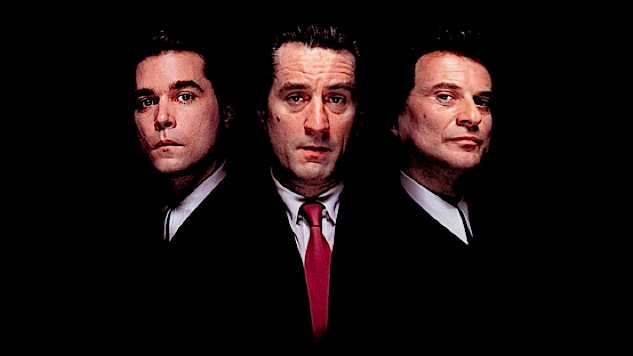
Coppola took it further with The Godfather Part II, and Part III. The success of those films, critically, artistically and financially, opened the doors for numerous other depictions of Italian Americans as mobsters, including films such as Martin Scorsese‘s Goodfellas and TV series such as David Chase‘s The Sopranos.
Ray Liotta, Robert De Niro, Joe Pesci
“Goodfellas” (1990)
“The Godfather” is widely regarded as one of the greatest films in world cinema and one of the most influential, especially in the gangster genre. It was selected for preservation in the U.S. National Film Registry of the Library of Congress in 1990, being deemed “culturally, historically, or aesthetically significant” and is ranked the second greatest film in American cinema (behind Citizen Kane) by the American Film Institute. (Wikipedia)
So, whether this would be your first viewing or you’re a lifelong fan, get your tickets here and check out “The Godfather” on the big screen for this special, limited-time performance!
This site is about how to live our life in a meaningful way by accepting complete surrender to the Almighty with purity of mind and character. It is about the eternal religion of the world i.e. Hinduism which is very liberal to anyone because there are many branches or methods to get the divinity to turn our life into an ever blissful one.
Free listening and free download (mp3) chill and down tempo music (album compilation ep single) for free (usually name your price). Full merged styles: trip-hop electro chill-hop instrumental hip-hop ambient lo-fi boombap beatmaking turntablism indie psy dub step d'n'b reggae wave sainte-pop rock alternative cinematic organic classical world jazz soul groove funk balkan .... Discover lots of underground and emerging artists from around the world.






















 iheartfilm