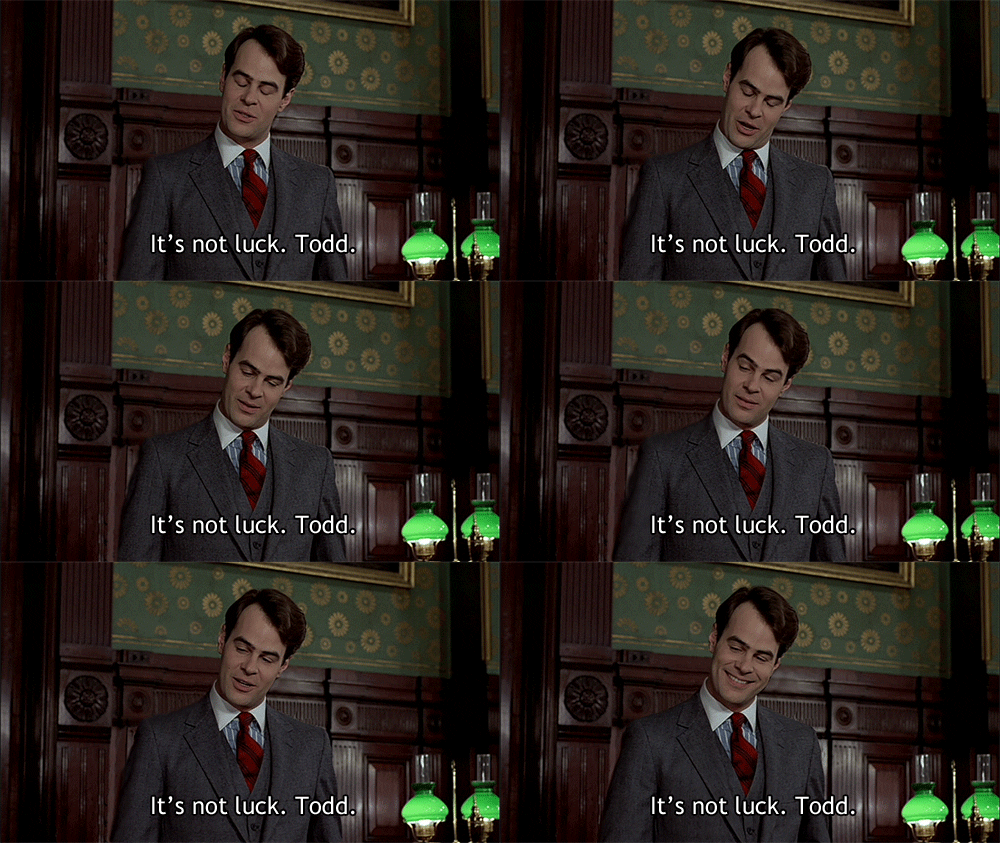
“Trading Places” (1983) is a tour de force example of Gratitude meets “walk a mile in my shoes!” Dan Aykroyd is (Louis Winthorpe III) the typical “privileged” ivy leaguer with a twist. He’s not as “top drawer” as he thinks and his life is truly in the hands of the callous Duke brothers – Mortimer ((Don Ameche) and Randolph (Ralph Bellamy).
His perfect world is turned upside down by the $1 bet by the brothers to settle the debate of nature vs nurture. Because we’ve got nothing better to do, let’s strip Louis of everything he knows and see if he’ll sink or float.
Randolph and Mortimer Duke
What better “brother” switch than with (Billy Ray Valentine) Eddie Murphy, the wily con man who sees the brothers straight up for what they are – numbers runners.
“Billy Ray”
The parable wouldn’t be complete without the lovely damsel in distress (but in this case with a plan for her own escape). One of my favorite actresses, Jamie Lee Curtis plays “Ophelia”, the classy hooker with a heart of gold.
Jamie Lee Curtis – “Ophelia”
Denholm Elliott – “Coleman”
Louis’s butler/valet, “Coleman” (Denholm Elliott) is hilarious trying to juggle the Duke brothers’ sick plan.
Dan Aykroyd – “Louis”
Louis’s abrupt experiment in poverty forces him to get his nose out of the air and think twice about judging people based solely on their socio/economic situation.
After a stint in jail, being reduced to stuffing a whole salmon into his Santa suit (don’t ask, you have to see) and attempting to take his own life, he realizes how shallow his life has been. By coming together with Billy Ray, Coleman and Ophelia he finds out that it’s friends and the love of a good woman that really counts.
An incredibly important life and Gratitude lesson!
However, if you can get rich with your friends and give payback to those who’ve done you wrong (Dukes) go for it! 😎
New York City Detective John McClane becomes the only hope for a small group of hostages, trapped in a Los Angeles high-rise office building when it is seized by terrorists on Christmas Eve. This 30th Anniversary event includes exclusive insight from Turner Classic Movies.
I have fond memories of the energy and excitement in the theater upon Die Hard’s release and it has remained one of my favorite movies of all time. Although premiering on July 12th,1988, it’s the perfect Christmas themed movie which our family always ends up watching during the Holidays.
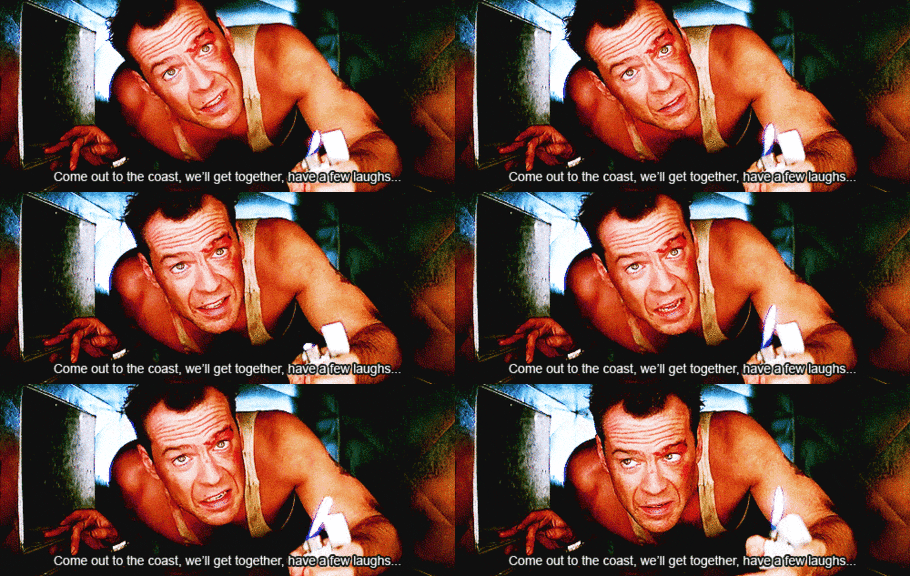
The plot of the story takes place on Christmas Eve with NYPD detective John McClane (Bruce Willis) arriving in Los Angeles, intending to reconcile with his estranged wife, Holly (Bonnie Bedelia), at the Christmas party of her employer, the Nakatomi Corporation.
While McClane changes clothes at the festivities, the party is disrupted by the arrival of a German terrorist, Hans Gruber (Alan Rickman), and his heavily armed team: Karl, Tony, Franco, Theo, Alexander, Marco, Kristoff, Eddie, Uli, Heinrich, Fritz, and James. The group seizes the tower and secures those inside as hostages except for McClane, who slips away, and Argyle, (his limo driver) who gets trapped in the garage. (Wikipedia)
Let the games begin because McClane is a tough New York cop to his very core and is bound and determined to foil the terrorist takeover as captioned on the movie poster.
“Twelve terrorists. One cop. The odds are against John McClane…That’s just the way he likes it.”
Made for $28 million, Die Hard grossed over $140 million theatrically worldwide, with the film turning Willis into an action star, and became a metonym for an action film in which a lone hero fights overwhelming odds. The film’s success created the Die Hard franchise, which includes four sequels, a number of video games, and a comic book, and later in 2017 was selected for preservation in the United States National Film Registry. Die Hard has been named one of the best action and Christmas-themed films ever made. The film also ranks No. 20 on Empire‘s 2017 list of the 100 greatest movies of all time. (Wikipedia)
Alan Rickman
Rickman Bonnie Bedelia
I didn’t really care for the sequels, but I highly recommend checking out the original on the big screen at this 30th Anniversary screening. Find out where it’s showing in your area here.
Halloween is my favorite holiday! It’s a day for self-expression. A day for fun and fantasy. A day for taking control of phobias and fears and turning your back on Freddy Krueger from A Nightmare on Elm Street (1984). Where’s your power now Fred? Way to shut that mess down.
It’s also a day to indulge in all your favorite classic, creepy, monster, sci-fi horror films.
Therefore, in the spirit of Halloween, let’s pay homage to the original man of horror. The “Man of a Thousand Faces”- Lon Chaney.
Lon Chaney (April 1, 1883 – August 26, 1930), born Leonidas Frank Chaney
Born to deaf parents, Lon learned to express himself and communicate visually. He took his desire to become an actor and created an art form and space for himself that was revolutionary to the motion picture industry. His makeup artistry allowed him to transform and become grotesque characters in films like The Hunchback of Notre Dame (1923) and The Phantom of the Opera (1925). He’s regarded as one of the most important character actors of the silent film era.
The original “monster maker”, he would scout out the daily call sheets for a studio finding out what types of extras were needed for that day’s shoot. He created a make-up toolbox of possibilities for him to achieve the look and characterizations needed to be chosen for a role. This talent was the impetus for his unparalleled reputation in the burgeoning film industry.
Chaney’s alliance with Director Tod Browning was inspired! Browning was into the macabre and best known for his films Dracula (1931) and the cult classic Freaks (1932) and Lon Chaney had the acting and makeup skills to realize any twisted character the director could come up with.
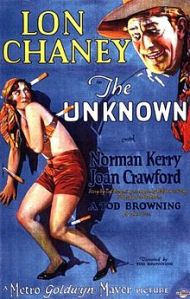
My favorite movie line is from their 1927 silent film The Unknown – “crack of your ass”. (okay, I can’t swear that’s what he said) But, seriously, as Alonzo the Armless, he threatened his co-star Joan Crawford with bodily harm if she did not bend to his will. Remember Grandma Klump from Eddie Murphy’s The Nutty Professor(1996)? “You might walk over, but you limpin’ back! “Chaney totally went there. Check it out:
Let’s talk about the level of twisted in this movie:
A word of advice, if you’ve got a thing about someone that’s all consuming and you’d do anything to get with that person, forget about it!
Plot: This crazy man, Alonzo the Armless (Lon Chaney) has a knife throwing act using only his feet and is in love with Nanon (Joan Crawford) who”can’t bear to be touched.” He has arms but pretends not to for his act and so Nanon will talk to him. When it’s discovered that he indeed has arms, he blackmails a low-rent surgeon to amputate them. Sick!
Nanon and Alonzo
After his surgery, Alonzo returns to the circus and his knife throwing act. Hoping to rekindle his relationship, he strolls over to Nanon’s circus wagon to see his rival Malabar, the circus strongman, (Norman Kerry) with his hands all over his love. Holy crap, it’s on! Alonzo schemes to get his girl back by rigging the speed of Malabar’s horses in his act which will dislocate and sever his arms during the live circus performance.
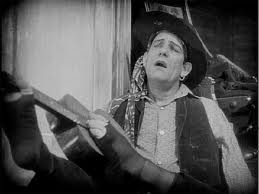
Alonzo
Alonzo’s sick plan is working until Nanon realizes what is happening and tries to stop the performance. And then boom! The”crack of your ass” line. As you saw in the clip, things didn’t really work out the way he saw it play out in his mind.
Malabar
This documentary, Lon Chaney: A Thousand Faces is a great biography for more in-depth background information and presents a great opportunity to discover your own Lon Chaney gem.
Here it is, Lon Chaney: A Thousand Faces
Lon Chaney is also the father of Lon Chaney, Jr best known for his role in Universal’s The Wolfman (1941).
Way to turn the classic “Dracula” on its’ head! I think the idea to present Blacula as an 18th Century African prince during the slave trade was historical and topical. Although considered a Blaxploitation horror film, it was taken with a serious approach and hits the mark on the classic Universal horror flick.
This trailer is so typical of an American International Picture, high on exploitation and drama. Formed on April 2, 1954, from American Releasing Corporation (ARC) by James H. Nicholson, former Sales Manager of Realart Pictures, and Samuel Z. Arkoff, an entertainment lawyer. It was dedicated to releasing independently produced, low-budget films.
Samuel Zachary Arkoff (June 12,1918 – September 16, 2001)
The ARKOFF formula:
Action (exciting, entertaining drama)
Revolution (novel or controversial themes and ideas)
Killing (a modicum of violence)
Oratory (notable dialogue and speeches)
Fantasy (acted-out fantasies common to the audience)
Fornication (sex appeal, for young adults)
The plot of Blacula is the story of Manuwalde (William Marshall), an African Prince. It’s a modern twist on the classic Dracula legend and is told in a very compelling and chilling way.
William Marshall “Blacula”
In the year 1780, while on a goodwill visit to ask Count Dracula (Charles Macaulay) to help him suppress the slave trade, (which existed in parts of Africa, like the rest of the world, and was a part of the economic structure of some societies for many centuries), he is refused by the Count. Instead, Manuwalde is turned into a vampire by Count Dracula and wife, Luva (Vonetta McGee) is killed.
Quote – Dracula: You shall pay, black prince. I shall place a curse of suffering on you that will doom you to a living hell. I curse you with my name. You shall be… Blacula!
The scene then shifts to the year 1972 with two interior decorators from modern-day Los Angeles California traveling to Castle Dracula in Transylvania and unknowingly purchasing the now-undead Mamuwalde’s coffin, which they ship to Los Angeles.
One of the interior decorators – Could he be Richard Simmons’ twin or what?😄
Later unlocking the coffin, the decorators release Mamuwalde, becoming his first two victims, turning them and the others he encounters into vampires like himself in his bloodthirsty reign of terror. (Wikipedia)
Blacula was released on August 25, 1972, to mixed reviews. American International Pictures’ marketing department in an effort to ensure that black audiences would be interested in Blacula; created posters for the film including references to slavery, hence, blaxploitation.
Noted for creating the Blaxploitation horror genre, Blacula debuted at #24 on Variety’s list of top films. It eventually grossed over a million dollars, making it one of the highest-grossing films of 1972. A sequel to the film titled Scream Blacula Scream was released in 1973 by American International. The film also stars William Marshall in the title role along with actress and star of (“Foxy Brown” 1974) Pam Grier.
Classic Draculas
Charles Macaulay – Count Dracula
William Marshall
Sequel Poster
Prince Mamuwalde / Blacula
Scream Blacula Scream was released in 1973
Trivia:
Blacula was in production between late January and late March 1972. While Blacula was in its production stages, William Marshall worked with the film producers to make sure his character had some dignity.
His character name was changed from Andrew Brown to Mamuwalde and his character received a background story about being an African prince who had succumbed to vampirism.
Blacula was shot on location in Los Angeles, with some scenes shot in the Watts neighborhood and the final scenes taken at the Hyperion Outfall Treatment Plant in the beachside, west Los Angeles Playa del Rey.
The Hues Corporation 1972
The music for Blacula is unlike that of most horror films as it uses rhythm and blues as opposed to haunting classical music. The film’s soundtrack features a score by Gene Page, who was one of the most prolific arrangers/conductors of popular music during his time and worked on more than 200 gold and platinum records.
Music on the soundtrack also included contributions by The Hues Corporation. They are best known for their 1974 single “Rock the Boat”, which sold over 2 million copies. (Wikipedia)
In the spirit of Halloween and Throwback ’70’s, check it out. I think you’ll “Dig it”!
I was first introduced to the Marx Brothers (Groucho, Harpo, Chico, and Zeppo) in one of my favorite classes at The University of Michigan – Cinema. It was more like an afternoon of fun at the movies since in our lecture all we did was analyze and critique classic films.
(top to bottom) Chico, Harpo, Groucho, and Zeppo 1931
◊◊◊
The Marx Brothers laugh riot film, “Duck Soup”, has to go down as one of the best and most hilarious political films of the century! Pure anarchy reigned as the idiocy of war was laid bare and Rufus T. Firefly’s (Groucho Marx) rapid-fire one-liners were pure genius.
Enter Rufus T.
On days we screened The Marx Brothers films, the lecture hall seemed a little bit fuller. I was also guilty of padding the room since I would tell my boyfriend what movie we were reviewing and the Marx Brothers quickly became his and my favorites. “Whatever it is, I’m against it.” Groucho in (“Horse Feathers”1932)
◊
Directed by Leo McCarey and written by Bert Kalmar and Harry Ruby, the film was first released theatrically by Paramount Pictures on November 17, 1933. The storyline of “Duck Soup” involves the wealthy Mrs. Teasdale (Margaret Dumont) insisting that Rufus T. Firefly (Groucho) be appointed the leader of the small, bankrupt country of Freedonia before she will continue to provide their much-needed financial aid. (Wikipedia)
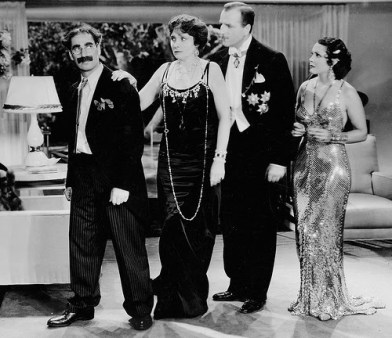
Groucho, Margaret Dumont, Louis Calhern, and Raquel Torres
◊◊◊
Meanwhile, neighboring country Sylvania is attempting to annex Freedonia. Sylvanian ambassador Trentino (Louis Calhern) tries to instigate a revolution while attempting to woo Mrs. Teasdale. To further tip the scale in his favor, he also tries to dig up dirt on Firefly by sending in bumbling spies Chicolini (Chico) and Pinky (Harpo).
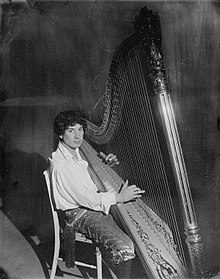
I adore Harpo (Arthur Duer Marx born Adolph Marx; November 23, 1888 – September 28, 1964), he is totally off the wall with his facial expressions and his manic pantomime sight gags! Harpo actually played the harp (hence his nickname) and there was usually a scene in the Marx Brothers movies that featured Harpo playing a beautiful piece on the harp.
Harpo playing the harp.
Margaret Dumont is often described as not getting the Brothers humor. In fact, she did. In a 1940 interview, Dumont said, “Scriptwriters build up to a laugh, but they don’t allow any pause for it. That’s where I come in. I ad lib—it doesn’t matter what I say—just to kill a few seconds so you can enjoy the gag”.
Personally, I don’t know how she could keep a straight face working with Groucho.
Margaret Dumont would typically portray the rich widow that Groucho was always trying to dupe. He could simultaneously insult and make advances towards her. It was fabulous to watch since his wit and timing were impeccable.
Julius Henry Marx (October 2, 1890 – August 19, 1977)
◊◊◊
Premiering during The Depression, “Duck Soup” was not initially received as well as their previous films. However, critical opinion has evolved and the film has since achieved the status of a classic. “Duck Soup“ is now widely considered by critics to be a masterpiece of comedy and the Marx Brothers’ finest film. (Wikipedia)
In 1990 the United States Library of Congress deemed Duck Soup “culturally, historically, or aesthetically significant” and selected it for preservation in the National Film Registry.
Chico and Zeppo round out the troupe. Chico was known for being the crafty con artist (who was usually teamed with Harpo) and for his broken Italian accent (although the Brothers were Jewish) and Zeppo, who always played the straight man. (This was also Zeppo’s last film with his brothers)
In the famous “mirror scene,” Pinky, dressed as Firefly, pretends to be Firefly’s reflection in a missing mirror, matching his every move—including absurd ones that begin out of sight—to near perfection. In one particularly surreal moment, the two men swap positions, and thus the idea of which is a reflection of the other. Eventually, and to their misfortune, Chicolini, also disguised as Firefly, enters the frame and collides with both of them.
Although its appearance in Duck Soup is the best-known instance, the concept of the mirror scene did not originate in this film. Max Linder included it in Seven Years Bad Luck (1921), where a man’s servants have accidentally broken a mirror and attempt to hide the fact by imitating his actions in the mirror’s frame. Charlie Chaplin used a similar joke in The Floorwalker (1916), though it did not involve a mirror. (Wikipedia)
◊◊◊
“Just Wait ‘Til I Get Through With It” parodies the ridiculous state of politics and sounds all too familiar.
I admit to being a political junkie and the Marx Brothers humor and point of view ring true in how ludicrous and corrupt the political system is. We know it’s a racket, the Brothers know it’s a racket and they have no compunction with sticking that fact right in your face.
Bravo!
If you’re interested in binge-watching The Marx Brothers, Universal Home Video has released Duck Soup on DVD, unrestored but uncut, as part of a six-disc box set The Marx Brothers: Silver Screen Collection, which includes the Brothers’ other Paramount films, The Cocoanuts, Animal Crackers, Monkey Business, and Horse Feathers. Definitely worthy of the buy.
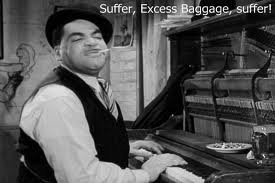
The title sums it up. “Jam, Jive and Everything!.” Thomas Wright “Fats” Waller is one of the most charming, talented and prolific artists to ever tickle the ivories of a stride piano.
We share a birthday – May 21st. His last recording session was in Detroit, Michigan – home of my birth. I guess it was destiny that his music and spirit would come to bring me such joy!
What excites me about Fats?
When I was a kid and first saw the groundbreaking musical Stormy Weather (1943) I was familiar with its star Lena Horne because my father loved him some Miss Lena. But for me, the wonderful surprise of the film was Fats Waller.
Fats Waller and Lena Horne
When you see him you’re totally invested. His personality jumps off the screen. People talk about presence. Fats created “presence!”
Fats is credited with advancing the musical style – stride piano. Although known for his two most famous compositions: “Ain’t Misbehavin'” and “Honeysuckle Rose”, he penned many more uncredited hits such as “I Can’t Give You Anything but love, Baby” and “On the Sunny Side of the Street”.
Waller copyrighted over 400 songs and began his professional career as a pianist at the age of 15, working in cabarets and theaters.
His life and artistry became the Broadway musical revue “Ain’t Misbehavin‘ produced in 1978. (The show and star Nell Carter won Tony Awards.)
Recordings of Fats Waller were inducted into the Grammy Hall of Fame which is a special Grammy Award established in 1973 to honor recordings that are at least 25 years old and that have “qualitative or historical significance”.
Here ’tis, a tribute to Fats’ brilliance and charm:
Growing up in Detroit, Michigan in the 1960’s, every day on my radio I jammed to the greatest music of all time; Motown, Sam Cooke, the Godfather of Soul James Brown, and, the incomparable Aretha Franklin. She sang from the very depths of her soul becoming an icon and forever soundtrack of our lives.
Aretha began her career as a child singing gospel at New Bethel Baptist Church in Detroit, where her father, C. L. Franklin, was the minister. In 1960, at the age of 18, she embarked on a secular career, recording for Columbia Records.
After signing to Atlantic Records in 1967, Ms. Franklin achieved commercial acclaim and success with songs such as “Respect”, “(You Make Me Feel Like) A Natural Woman”, “Spanish Harlem” and “Think”. By the end of the 1960s, she was being called “the Queen of Soul“.
Recording 112 charted singles on Billboard, including 77 Hot 100 entries, 17 top ten pop singles, 100 R&B entries and 20 number-one R&B singles, Aretha became the most charted female artist in the chart’s history. She won 18 Grammy Awards and is one of the best-selling musical artists of all time, having sold over 75 million records worldwide.
Aretha received numerous honors throughout her career including a 1987 induction into the Rock and Roll Hall of Fame, in which she became the first female performer to be inducted. She was inducted to the UK Music Hall of Fame in 2005.
In August 2012, Aretha was inducted into the GMA Gospel Music Hall of Fame and listed in at least two all-time lists on Rolling Stone magazine, including the 100 Greatest Artists of All Time, and the 100 Greatest Singers of All Time.
Today we both mourn and celebrate the life of a musical pioneer, Civil Rights Activist, and without dispute the reigning Queen of Soul.
Let’s take a look back at her remarkable career and journey through the soul-stirring music of Ms. Aretha “Queen of Soul” Franklin.
This collection of the works of America’s legendary first African-American filmmakers is the only one of its kind. Funded in part by a highly successful Kickstarter campaign, the packaged set includes no fewer than a dozen feature-length films and nearly twice as many shorts and rare fragments. Subject matter includes race issues that went unaddressed by Hollywood for decades.
Spencer Williams (July 14, 1893 – December 13, 1969) was an American actor and filmmaker. He was best known for playing Andy in the Amos ‘n Andy television show and for directing the 1941 race film “The Blood of Jesus”. Williams was a pioneer African-American film producer and director. (Wikipedia)
The Pioneers of African-American Cinema collection includes new digital restorations of over a dozen feature films, plus shorts, fragments, trailers, documentary footage, archival interviews, and audio recordings.
This clip is a scene from Richard Maurice’s ELEVEN P.M. (circa 1928). It is regarded by historian Henry T. Sampson as one of the most outstanding black films of the silent era and is Maurice’s second and only surviving film.
Eleven P. M is one of more than a dozen feature films showcased in Kino Lorber’s five-disc collection PIONEERS OF AFRICAN-AMERICAN CINEMA, now available at KinoLorber.com and Amazon.com. Music is by Rob Gal. Mastered from 35mm film elements preserved by the Library of Congress.
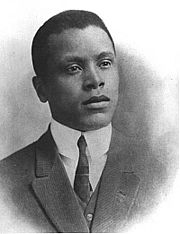
Oscar Micheaux
Oscar Devereaux Micheaux(January 2, 1884 – March 25, 1951) was an African American author, film director and independent producer of more than 44 films. Although the short-lived Micheaux Book & Film Company produced some films, he is regarded as the first major African-American feature filmmaker, the most successful African-American filmmaker of the first half of the 20th century and the most prominent producer of race films. He produced both silent films and sound films when the industry changed to incorporate speaking actors. (Wikipedia)
These films and filmmakers deserve to be remembered, honored and explored. Their contributions play a significant role in the development of the American cinema.
For more on the history of African-American Cinema:
Like Galaxy Quest was an homage to Star Trek, Mel Brooks off-the-wall comedy Spaceballs (1987) was a send-off of Star Wars. Its setting and characters parody the original Star Wars trilogy, as well as other sci-fi franchises including Star Trek, Alien, and the Planet of the Apes films.
The plot is set in a distant galaxy, planet Spaceball which has depleted its air supply, leaving its citizens reliant on a product called “Perri-Air.” (See, I told you off-the-wall)
Mel Brooks
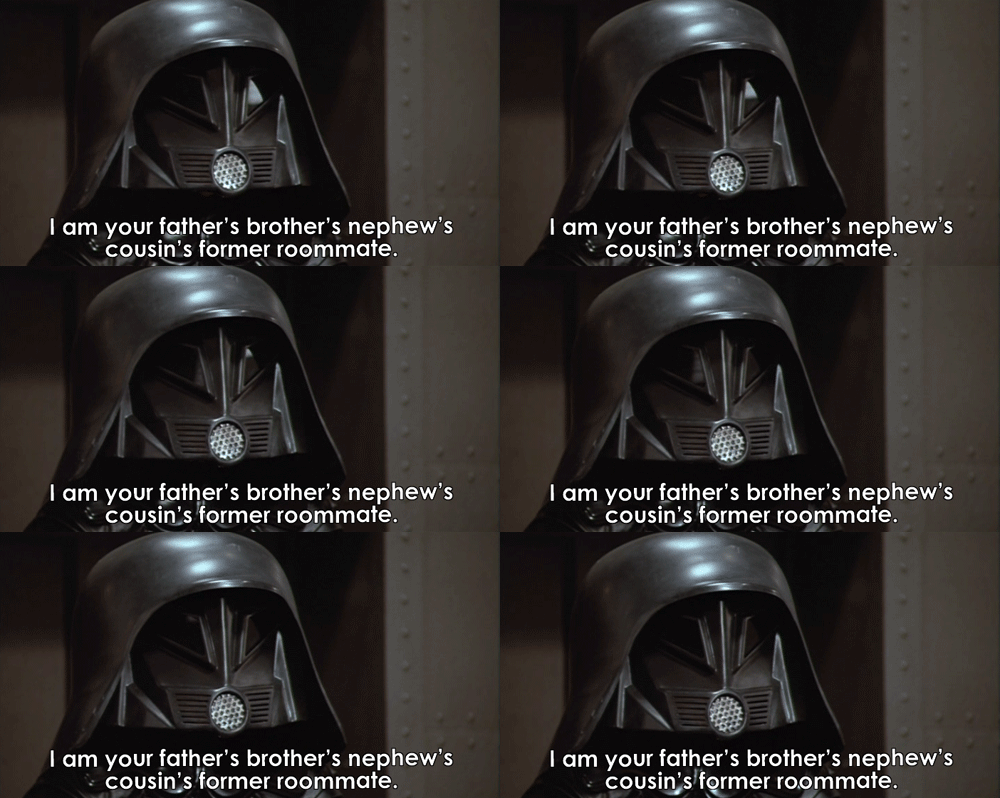
In desperation, Spaceball’s leader President Skroob (Mel Brooks) orders the evil Dark Helmet (Rick Moranis) to kidnap Princess Vespa (Daphne Zuniga) of oxygen-rich Druidia and hold her hostage in exchange for air.
Rick Moranis (Dark Helmet)
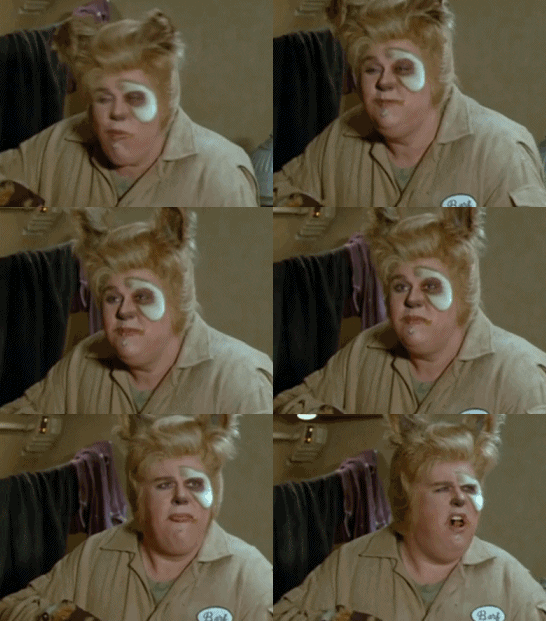
But help arrives for the Princess in the form of renegade space pilot Lone Starr (Bill Pullman) and his half-man, half-dog partner, Barf (John Candy). (IMDb)
Spaceballs is a 1987 American science fiction parody film co-written, produced and directed by Mel Brooks. Starring Brooks, Bill Pullman, John Candy, and Rick Moranis, the film also features Daphne Zuniga, Dick Van Patten, and the voice of Joan Rivers as Dot Matrix. (Wikipedia)
John Candy, Joan Rivers (Dot), Daphne Zuniga, Bill Pullman
Rick Moranis
John Candy – Barf
The film was met with a mixed reception but I think it can be classified as a cult classic, definitely an off the-wall-classic.
Going back and researching this film I almost forgot the funniest scene that had me on the floor. When I first saw this I literally screamed! Which I’m sure had the cleaning lady a the Residence Inn, where I was staying, shaking her head. (This chick is nuts!)
OMG, that was hilarious!! Who would have thought you could turn that incredibly terrifying moment in Alien into this “spit your milk out” moment.
Once again, Rick Moranis is absolutely brilliant! Just looking at him in that ginormous helmet, you can’t help but crack-up. Portraying the embodiment of the “Napoleon complex” his action playing with his dolls is too precious.
Trivia:
IT WASN’T THE FIRST STAR WARS PARODY FILM.
Amateur filmmaker, Ernie Fosselius was so enamored with Star Wars in 1977 that he cobbled together a 12-minute short, Hardware Wars, which he shot for just $8,000 in an abandoned laundromat. It was even declared a “cute little film” by George Lucas.
LUCAS GAVE HIS (CONDITIONAL) BLESSING.
Based on Brooks not doing any merchandising. The Lucas people were just upset about one aspect of Spaceballs,” Brooks told Starlog in 1987. “They didn’t think it was fair for us to do a take-off and then merchandise the characters.”
BILL PULLMAN WAS BROOKS’ THIRD CHOICE.
According to Pullman, the actor—who had not yet had a starring role—was approached by Brooks only after Tom Cruise and Tom Hanks turned down the role of Lone Starr, the Han Solo-esque lead of the film. Pullman said that hiring Rick Moranis and John Candy freed Brooks up to cast a relative unknown.
BARF’S EARS UPSTAGED THE ACTORS.
John Candy, who played half-dog/half-man Barf, was usually trailed on-set by Effects artist Rick Lazzarini and the effects crew, who had to control both his tail and his ears. At one point, Lazzarini was told by Brooks that he didn’t “have to move the ears so much!” They were too active in scenes focused on other characters. (Candy, incidentally, performed with a 40-pound battery backpack strapped to him to control the animatronics.)
(Jake Rossen-(mental_floss)
John Candy – Barf
So, if you’re looking for a good laugh and a total mind distraction, I recommend “Spaceballs” as the perfect gag-filled tonic.
Maybe I’m just a wee bit set in my ways, but the day of the week dictates the genre that I watch. Monday thru Friday are pretty wide open, however, Saturday and Sunday must stick to my criteria. Saturday afternoon is definitely B-horror/Sci-fi flicks and Sunday is reserved for Melodrama film classics.
If you’ve read my About Page you know that as a kid the Saturday Matinee had a big influence on my love of B-horror/Sci-fi movies and William Castle.
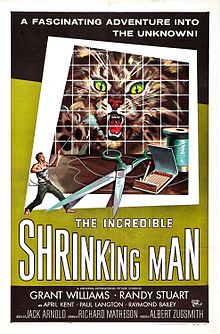
The Blob, The Incredible Shrinking Man and The Tingler. Now that’s good stuff!
The Blob, directed by Irvin Yeaworth, was Steve McQueen’s first leading role before he got his own TV series – Wanted: Dead or Alive (1959). McQueen was called “The King of Cool” and starred in such popular films as The Magnificent Seven and The Thomas Crown Affair. He received an Academy Award nomination for his role as Jake Holman in The Sand Pebbles.
The Blob plot revolves around what happens when an old man pokes a stick at a piece of a meteor and it cracks open releasing an oozy substance that starts to crawl up the stick. He tries to shake it off but ends up with “the blob” all over his hand. (This is why you don’t poke at things that drop from the sky. Yeesh!)
Steve (also his character name) and his girl Jane, after almost hitting the old man who has run onto the road, take him to the local doctor. Cutting to the chase: while Steve and Jane ( Aneta Corsaut, who eventually plays Andy Griffith’s TV girlfriend Helen) leave the doc’s office to look for clues to what’s on the old man’s hand, The Blob absorbs the old man, the doc and his nurse. Next thing you know it’s at the midnight horror movie. Cue the fleeing and screaming and holy crap how do we stop it. Phew, that was exhausting.
The theme song, written by Burt Bacharach and Mack David (who wrote some of the top hits of the sixties) is a catchy little gem. “It creeps and leaps and glides and slides across the floor…beware of the blob.” Catchy😊
I’ve watched this movie a hundred times and the ending always makes me cry. This thought-provoking Science Fiction classic taps into an anxiety of our purpose and what exactly is the meaning of life. Scott Carey (Grant Williams) is dusted by a radioactive mist while on a boating vacation with his wife Louise (Randy Stuart). A few weeks later he starts to notice his clothes are fitting looser and he also appears to be losing height. After visiting a specialist, it is confirmed that he is indeed shrinking.
Reduced to living in a dollhouse and eventually fighting for his life against the family cat and then battling it out with a big, hairy tarantula living in the basement, Scott finally shrinks to an infinitesimal size, entering the realm of the unknown.
For me, this movie is so much more than just another Saturday afternoon B-Movie flick. The closing monologue makes the point by concluding that no matter how small, we still matter in the universe because, to God, “there is no zero.”
Producer/Director William Castle delivers his finest in The Tingler (1959), his third collaboration with writer Robb White. The film stars the incomparable Vincent Price as Pathologist, Dr. Warren Chapin who researches and discovers the existence of The Tingler.
Percepto is my favorite William Castle gimmick. There comes a time in the movie when the Tingler (a parasite that feeds on fear) is loose in the theater and to save your life you need to scream! For grins, in select seats in the theaters, Castle placed the Percepto system which made the seat vibrate to simulate the feeling of fear you feel in your body when The Tingler strikes.
Man do I wish I could have been there in 1959 when The Tingler attacks the projectionist, the film strip breaks and The Tingler appears on the screen. If that’s not enough, the lights go out and you hear the voice of Vincent Price declaring that The Tingler is loose in the theater so scream, scream for your life! Awesome!!
Just think of it, being in the movie theater watching The Tingler scene and ending up participating in the experience in your Percepto seat, with lights out and the sound of Price’s voice. I love it!!!
Break out the popcorn and let me know your faves in the comments! 🍿🍿🍿🍿🍿
This site is about how to live our life in a meaningful way by accepting complete surrender to the Almighty with purity of mind and character. It is about the eternal religion of the world i.e. Hinduism which is very liberal to anyone because there are many branches or methods to get the divinity to turn our life into an ever blissful one.
Free listening and free download (mp3) chill and down tempo music (album compilation ep single) for free (usually name your price). Full merged styles: trip-hop electro chill-hop instrumental hip-hop ambient lo-fi boombap beatmaking turntablism indie psy dub step d'n'b reggae wave sainte-pop rock alternative cinematic organic classical world jazz soul groove funk balkan .... Discover lots of underground and emerging artists from around the world.




















 iheartfilm