Forrest Gump Gratitude πŸƒ

Forrest_Gump_poster

“Forrest Gump” (1994)


iheartfilm is dedicating the month of November to the lesson of Gratitude in films; the quality of being thankful.


“Run Forrest, Run!”

forrestgumprunning

Every time I think of the movie “Forrest Gump”, that’s the first quote I hear. Then, “Life’s like a box of chocolates, you never know what you’re gonna get.”


forrestgumpchocolate


Quotes galore plus Lieutenant Dan (Gary Sinise) and Bubba (Mykelti Williamson). Love this movie!

Forrest Gump’s (Tom Hanks) life is a testimony to gratitude. He understands his challenges but is not hesitant to live his life to the fullest, including telling his childhood love, Jenny (Robin Wright) how he feels about her.

He gets it. Life gives you what you get, so don’t whine, go for it and make the most of your journey. Thank God for his mother, (Sally Field), she didn’t listen to what the”experts” had to say. She did whatever she had to do to provide Forrest with the foundation that he could do anything. With his braces,Β he had “magic” legs. Turn every so-called obstacle into an advantage. Once again, attitude is everything!


Forrest is a true inspiration and proof that with support and love we can overcome adversity. Love and compassion make the difference.

Mama, Jenny, Bubba, and Lieutenant Dan. Forrest loved and was deeply loved by those whose lives he touched.

forrestgumpallihavetosay

iheart Halloween!πŸ‘»

Image result for halloween

Halloween is my favorite holiday! It’s a day for self-expression. A day for fun and fantasy. A day for taking control of phobias and fears and turning your back on Freddy Krueger from A Nightmare on Elm Street (1984). Where’s your power now Fred? Way to shut that mess down.

It’s also a day to indulge in all your favorite classic, creepy, monster, sci-fi horror films.

Therefore, in the spirit of Halloween, let’s pay homage to the original man of horror. The “Man of a Thousand Faces”- Lon Chaney.

Β Man of a Thousand Faces – Lon Chaney

lon chaney man of a

Lon Chaney (April 1, 1883 – August 26, 1930), born Leonidas Frank Chaney

Born to deaf parents, Lon learned to express himself and communicate visually. He took his desire to become an actor and created an art form and space for himself that was revolutionary to the motion picture industry. His makeup artistry allowed him to transform and become grotesque characters in films like The Hunchback of Notre Dame (1923) and The Phantom of the Opera (1925). He’s regarded as one of the most important character actors of the silent film era. (Wikipedia)

lon chaney headshot

The original “monster maker”, he would scout out the daily call sheets for a studio finding out what types of extras were needed for that day’s shoot. He created a make-up toolbox of possibilities for him to achieve the look and characterizations needed to be chosen for a role. This talent was the impetus for his unparalleled reputation in the burgeoning film industry.

Β lon unknown poster

This flick is by far my favorite Lon Chaney!Β 

Chaney’s alliance with Director Tod Browning was inspired! Browning was into the macabre and best known for his films Dracula (1931) and the cult classic Freaks (1932) and Lon Chaney had the acting and makeup skills to realize any twisted characterΒ the director could come up with.

My favorite movie line is from their 1927 silent film The Unknown – “crack of your ass”. (okay, I can’t swear that’s what heΒ said) But, seriously, as Alonzo the Armless, he threatened his co-star Joan Crawford with bodily harm if she did not bend to his will. Remember Grandma Klump from Eddie Murphy’s The Nutty Professor(1996)? “You might walk over, but you limpin’ back! “Chaney totally went there. Check it out:

Let’s talk about the level of twisted in this movie:

A word of advice, if you’ve got a thing about someone that’s all-consuming and you’d do anything to get with that person, forget about it!

Plot: This crazy man, Alonzo the Armless (Lon Chaney) has a knife-throwing act using only his feet and is in love with Nanon (Joan Crawford) who”can’t bear to be touched.” He has armsΒ but pretends not to for his circusΒ act and so Nanon will talk to him. When it’s discovered that he indeed has arms, he blackmails a low-rent surgeon to amputate them. Sick!

Nanon and Alonzo

lon and nanon

After his surgery, Alonzo returns to the circus and his knife throwing act. Hoping to rekindle his relationship, he strolls over to Nanon’s circus wagon to see his rival Malabar, the circus strongman, (Norman Kerry) with his hands all over his love. Holy crap, it’s on! Alonzo schemes to get his girl back by rigging the speed of Malabar’s horses in his act which will dislocate and sever his arms during the live circus performance.

Alonzo

lon feet

Alonzo’s sick plan is working until Nanon realizes what is happening and tries to stop the performance. And then boom! The”crack of your ass” line. As you saw in the clip, things didn’t really work out the way he saw it play out in his mind.

Malabar

lon malabar stretch

This documentary, The Many Faces of Lon Cheney, is a great biography for more in-depth background information and presents a great opportunity to discover your own Lon Chaney gem.


Lon Chaney is also the father of Lon Chaney, Jr who was best knownΒ for his role in Universal’s “The Wolfman” (1941). The Wolfman is part of the original Universal Monster Franchise including “Dracula” (1931), and “Frankenstein” (1931).

Lon Jr always lived in his father’s shadow and in later years he battledΒ throat cancerΒ and chronicΒ heart diseaseΒ among other ailments after decades of heavy drinking and smoking. In his final horror film,Β Dracula vs. FrankensteinΒ (1971), directed byΒ Al Adamson, he played Groton,Β Dr. Frankenstein’s mute henchman.

Β Chaney’s career in movies and television spanned four decades, from 1931 to 1971.

Make sure to add Lon Chaney, Sr. and Jr. films to your Halloween lineup. Classics!

Β Image result for halloween

Director’s Cut – The Little Shop Of Horrors (1986)πŸŽƒπŸŒ·


IN THEATERS OCT 29th, OCT 31st


Warner Bros. Entertainment Presents


Little Shop of Horrors: The Director’s Cut

Little Shop of Horrors: The Director’s Cut


Business is bad at Mushnick’s Flower shop. Shy Seymour and brave Audrey will soon be unemployed. That is until Seymour pricks his finger and a sickly little exotic plant gets its first taste of human blood. The plant spurts ten feet tall. As horticultural interest in β€œAudrey II” sprouts, Mushnick’s business takes off. But fresh blood must be foundβ€”and people start disappearing. Love and business bloom at a hilarious yet bloody cost. (Fathom Events)
I’m so excited to see one of my Halloween favorites back on the big screen. And, fascinated to see Β Frank Oz’s restored original dark ending, staying true to the play.


β€œIt will be very interesting to see if, in this new political and cultural climate, if there will be any association with that, with the plant. Let’s just say that,” says Oz. The original ending, he acknowledges, β€œmay still be too dark for people, and I accept that.

It may not be as satisfying emotionally, and I accept that. But on the other hand, the reason Β screenwriter Howard Ashman and I wanted it was that it is the Faustian legend. Seymour does have consequences for his actions. We needed to omit those consequences to keep the audience happy, which I agreed with, by the way. I think we had to do it. But now it will be very interesting to see.” (Yahoo Entertainment)

Fans will not want to miss Little Shop of Horrors: The Director’s Cut, which features the rarely-seen original ending and an exclusive introduction from Frank Oz.

Purchase Tickets here.


The 1986 Frank Oz film is a remake of the hit Broadway stage production which was a remake of the 1960 movie.


Image result for little shop of horrors


The original 1960 film was a Β black comedy horror film directed by Detroit-born (my hometown) and celebratedΒ B-movie legend, Roger CormanΒ and written by Charles B. Griffith. The film is a farce about an inadequate florist’s assistant (Jonathan Haze) who cultivates a plant that feeds on human flesh and blood.

The film stars Jonathan HazeΒ (Seymour), Jackie JosephΒ (Audrey), Mel WellesΒ (Mr. Mushnick), and Dick Miller, all of whom had worked for Corman on previous films. Produced under the title “The Passionate People Eater”.Β It was a lot creepier and darker than either the 1986 film or Broadway production.


For a true Halloween treat, I highly recommend screening the original! Check out Jack Nicholson in one of his first film roles.

Check out this previous post for background and trivia on the Broadway stage production and the original 1960 film.


Image result for little shop of horrors

Happy Halloween!

Turn Your Back on Evil😈

Image result for a nightmare on elm street

I was thinking the other day, Halloween is one of my favoriteΒ holidays but, with the horrors I see every day on my television, I’m not sure I want to watch my top-pick scary movies this year to celebrate.Β  Funny thing is I’ve always looked at Halloween as an exercise and opportunity to face your fears and take control of how you deal with life.

In giving in to my apprehension, I was letting the nightmare in the White House affect my joy and alter my attitude and behavior. But, then I remembered the classic film “A Nightmare on Elm Street” and the leverage that Heather Langenkamp’s character (Nancy) discovered she had against Freddy Krueger when she turned her back on him. In that moment, he disappeared and she took back her power over her attitude and commitmentΒ to fighting his evil.

In my opinion, “A Nightmare on Elm Street” is an allegory for our pent-up fears which prevent us from fighting through obstacles and taking ownership of our own happiness. Dreams are supposed to be representative of our true thoughts and understanding said dreams can help us understand what makes us tick.


“A Nightmare on Elm Street”Β is a 1984 AmericanΒ slasher filmΒ written and directed byΒ Wes Craven, and the first film of theΒ Nightmare on Elm StreetΒ franchise. The film starsΒ Heather Langenkamp,Β John Saxon,Β Ronee Blakley,Β Amanda Wyss,Β Jsu Garcia,Β Robert Englund, andΒ Johnny DeppΒ in his feature film debut. The plot revolves around four teenagers who are stalked and killed in their dreams (and thus killed in reality) byΒ Freddy Krueger. The teenagers are unaware of the cause of this strange phenomenon, but their parents hold a dark secret from long ago. (Wikipedia)

Image result for a nightmare on elm street

Nancy confronting her mom.

Because Nancy’s mom ( Ronee Blakley) lives in a constant state of agitation over her part in the death of Freddy Krueger, she projects these feelings of anxiety on her daughter. She drinks heavily in an attempt to deal with her overwhelming sense of guilt and terror and even goes so far as to putting bars on the windows of the house to protect her daughter’s life.

When she eventually tells Nancy the truth about the legend of Freddy, Nancy understands her mom’s frenzy and Freddy’s desire to kill the children of those involved in his demise. Nancy decides to break through this paralyzeΒ by trying to save her friends, learning how to defend herself and eventually discovering the means to take away Freddy’s control over her, her friends, and by extension, her mom.

Image result for a nightmare on elm street

Freddy, Nancy

Nancy could have taken on her mom’s constant state of panic, but instead chose to break the cycle.

I’m taking Nancy’s lead and turning my back on the paralysis and dread that the malice in the White House has managed to wreak on our country and the world.

Image result for a nightmare on elm street

So, in the spirit of Halloween, the celebration has begun with decorations and the enjoyment of my choice best of the best as I turn my back on evil and continueΒ the battle against a madness greater than any horror film I’ve ever seen.


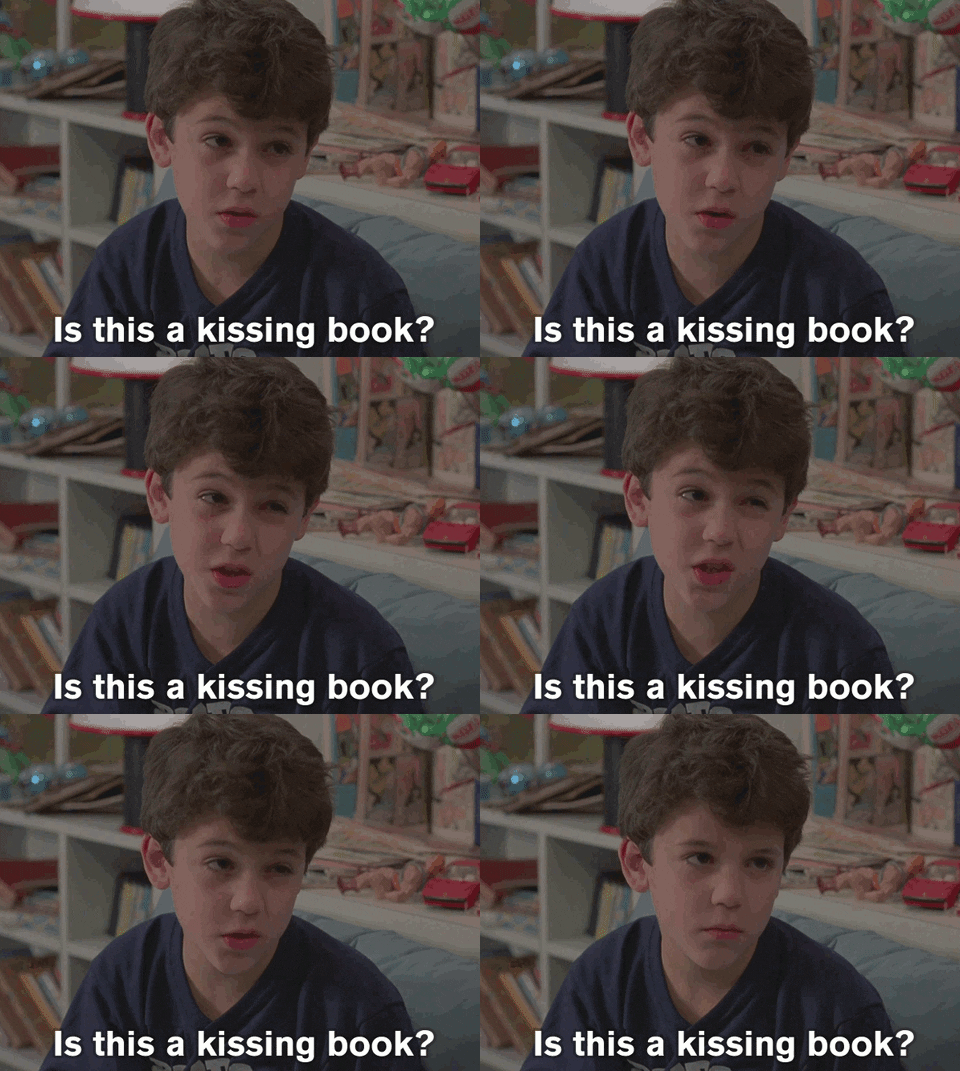
“Is This a Kissing Book?” Princess Bride (1987)πŸ‘Έ

TCM Big Screen Classics Presents

The Princess Bride


A Special 30th-Anniversary Event

Image result for the princess bride


IN THEATERS OCT 15th and OCT 18th


One of my favorite and definitely most quotable films, “The Princess Bride”(1987) brings together all the classic elements of the damsel in distressΒ story and style of the irreverent and hilarious Monty Python franchise to the 1980’s generation.

It’s back in the theaters and even if you’ve quoted it a thousand times, there’s nothing like sharing the laughter in the theater with fellow “Princess Bride” aficionados!


“The Princess Bride”Β is a 1987 AmericanΒ romanticΒ fantasyΒ adventureΒ comedy-drama filmΒ directed and co-produced byΒ Rob Reiner, and starringΒ Cary Elwes,Β Robin Wright,Β Mandy Patinkin,Β Chris Sarandon,Β Wallace Shawn,Β AndrΓ© the GiantΒ andΒ Christopher Guest.


Image result for the princess bride


The film was adapted byΒ William GoldmanΒ from his 1973Β novel of the same name and tells the story of a farmhand named Westley, accompanied by befriended companions along the way, who must rescue his true love Princess Buttercup from the odious Prince Humperdinck.

The story is presented in the film as a book being read by a grandfather (Peter Falk) to his sick grandson (Fred Savage), thus effectively preserving the novel’s narrative style. (Wikipedia)


Fred Savage


This 30th-anniversary event includes a specially produced interview with Ben Mankiewicz and Rob Reiner.


Awards:

*1992: Best Picture (David Brown, Rob Reiner and Andrew Scheinman, Producers), A Few Good Men. **1976: Adapted Screenplay, All the President’s Men; 1969, Original Screenplay, Butch Cassidy and the Sundance Kid.


Image result for the princess bride

Cast now: Cary Elwes, Robin Wright, Mandy Patinkin, Chris Sarandon, Wallace Shawn, Carol Kane, and Billy Crystal


Make sure to mark your calendar, buy your ticket and get ready to enjoy this classic on the big screen. Relive this epic adventure filled with fencing, fighting, giants, monsters, Miracle Max, and true love!


“God bless us, everyone.” Quotable Closing Lines

Image result for movies

I can appreciate there are those who don’t like Top 10 lists but I tend to enjoy them because of getting to find out the favorites of fellow film lovers. Also, reminiscing about my best-loved movies that perhaps I haven’t thought about for a while.


Closing lines can serve as punctuation, theΒ cherry on top. They can also, wrap up the film. One-linersΒ that recall the movie all over again. Often times these are the quotes we remember most and become representative of the movie’s theme.

There are way too many movies to choose from so these are just a sampling that made this particular list. I love the Top 2 but as I was watching so many other films came to mind.

Please, let me know in the comments some of your best quotes. I’m looking forward to reading them.

∴∴∴∴∴∴

Spoiler Alert: I make it a point to never reveal a film’s ending because it’s a matter of courtesy. Don’t spoil the movie!


Although not closing, a few choice quotes:

Charlie Chaplin – The Great Dictator (1940)

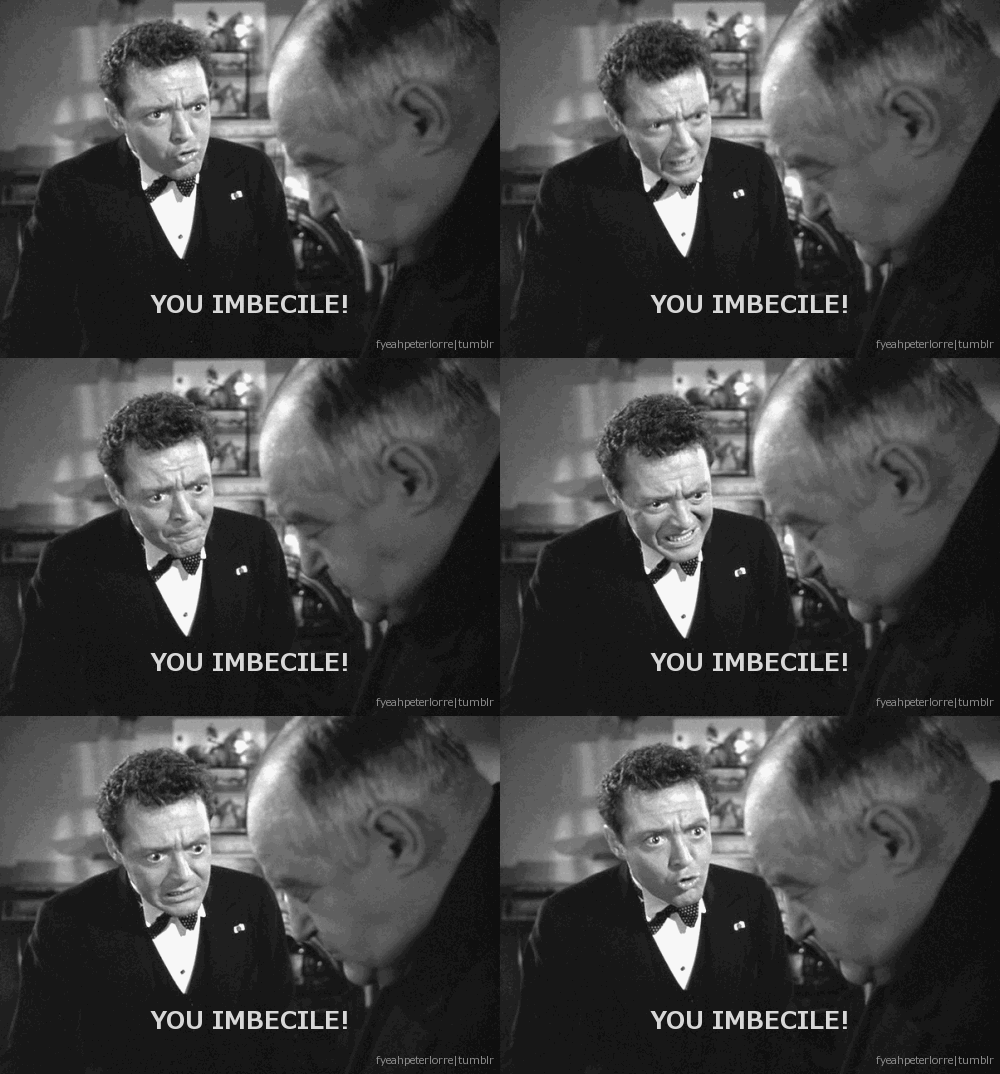
Peter Lorre – Maltese Falcon (1941)


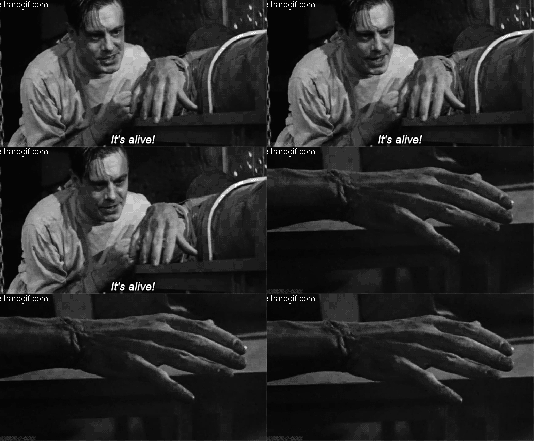
Colin Clive -Frankenstein (1931)


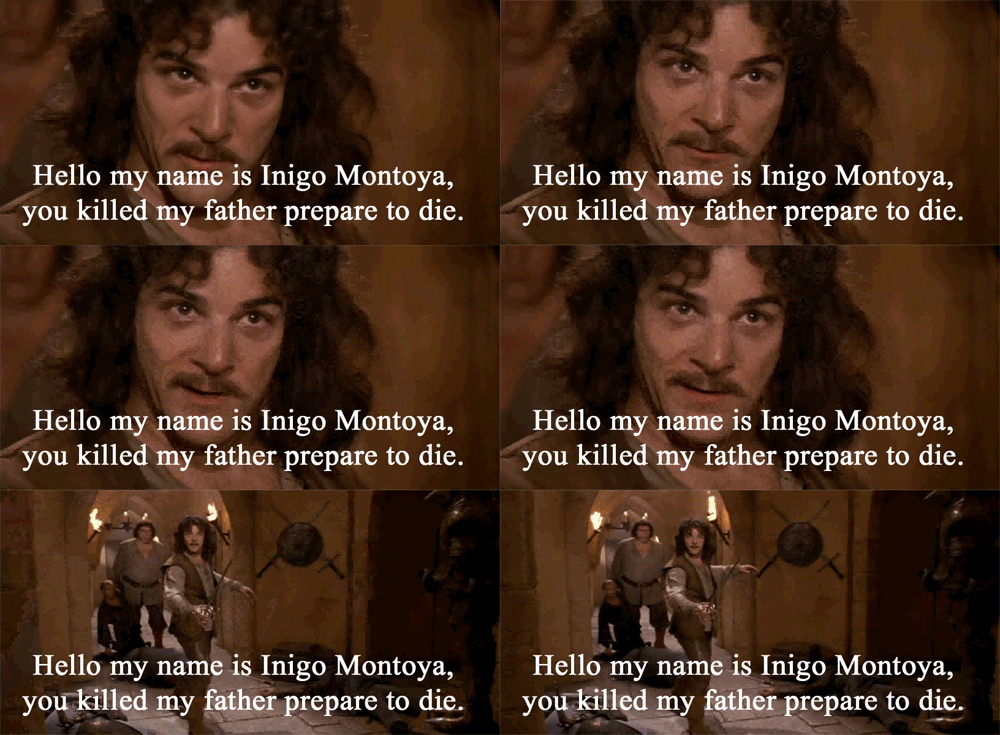
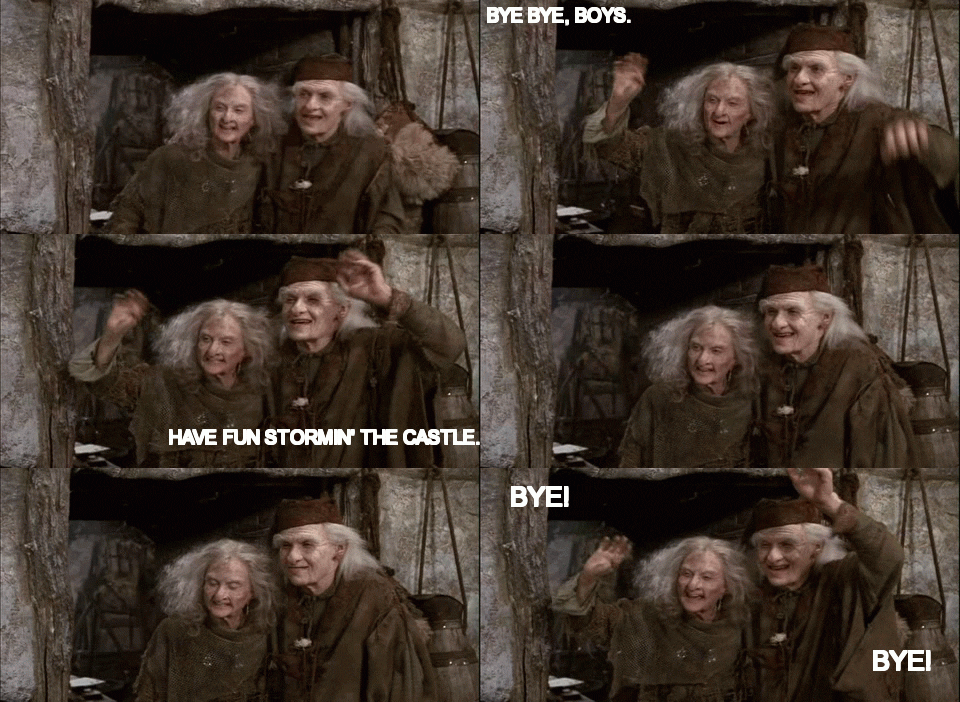
Wallace Shawn – Princess Bride (1987)


Paul Reubens- Pee-Wee’s Big Adventure (1985)


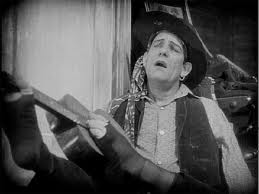
Clevon Little – Blazing Saddles (1974)

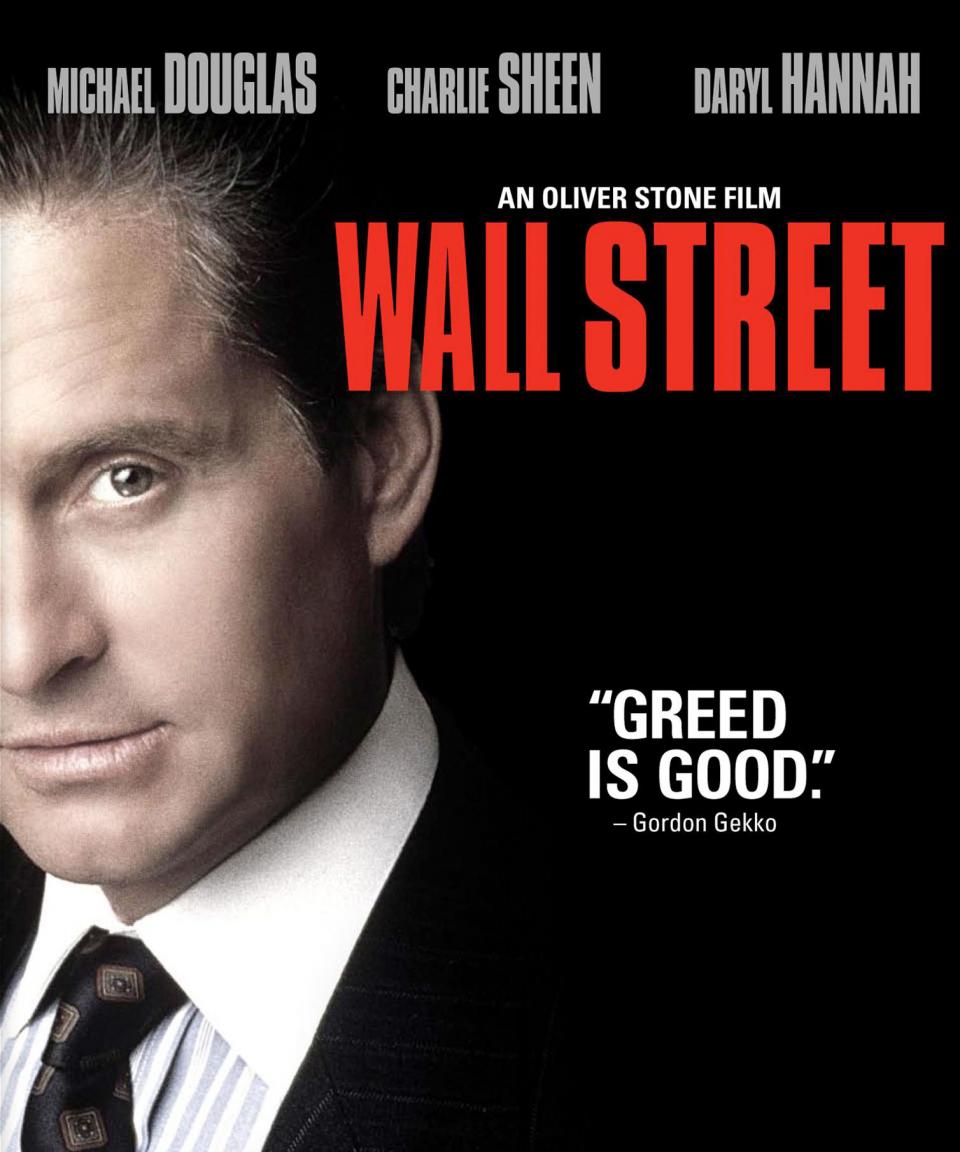
For the 1 Percent, “Greed is Still Good”

Image result for wall street film

“Wall Street” (1987)


BACK IN THEATERS

SEPTEMBER 24th and SEPTEMBER 27th

Twentieth Century Fox Presents

Wall Street 30th Anniversary


Image result for wall street film

In this riveting behind-the-scenes look at big business in the 1980s, an ambitious young broker (Charlie Sheen) is lured into the illegal, lucrative world of corporate espionage when he is seduced by the power, status and financial wizardry of Wall Street legend Gordon Gekko (Β Michael Douglas in his Oscar-winning performance).

But, he soon discovers that the pursuit of overnight riches comes at a price that’s too high to pay. Daryl Hannah and (Martin Sheen‘s) co-star in Oliver Stone’s gripping morality tale about the American dream gone wrong. (Fathom Events)

This special 30th-Anniversary event also includes a unique look at ‘Greed is Good”, a retrospective.

When I experienced “Wall Street” at its release I thought it hit the nail on the head as far as the state of Ronald Reagan’s America. All about the Benjamins, this country ventured down a road we continue to travel, with even more disastrousΒ results – “Citizens United”, “Corporations are People”, “Enron”, “The Worse Recession since the Great Depression”, all in the name of “Greed is Good”.


Stone made the film as a tribute to his father, Lou Stone, a stockbroker during theΒ Great Depression. The character of Gekko is said to be a composite of several people, includingΒ Dennis Levine,Β Ivan Boesky,Β Carl Icahn, (endorsed TrumpΒ for theΒ 2016 U.S. presidential election)Β Asher Edelman,Β Michael Ovitz,Β Michael Milken, and Stone himself. The character of Sir Lawrence Wildman, meanwhile, was modeled on the prominent British financier and corporate raiderΒ Sir James Goldsmith. (Wikipedia)


Check out “Wall Street” in a theater near you and take a look back at the not so distant past to fully understand why the rich get richer and the poor beg for healthcare. Brilliantly directed by Oliver Stone, it reminds us that if we don’t know our history we are bound to repeat it.


Click here to purchase tickets.


Before “Cabin in the Sky” – Early Black Films of the 1920’s


Believe it or not, I appreciate being corrected and kept on my toes about the facts and details of film history.

Thanks to the observant eye of one of my fabulous readers, I’m making a correction to a previous post aboutΒ “Cabin in the Sky”. I labeled it as the first all black cast and musical which it was not.


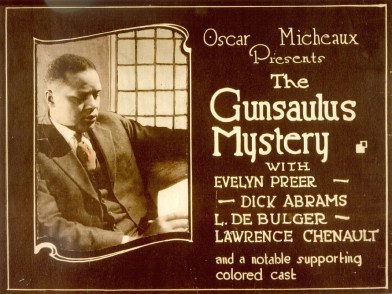
To make sure of my facts, I did some digging and discovered that the first all black sound film was The MelancholyΒ Dame (1929). An early two-reeler, it starred Evelyn PreerΒ (known for her 1920 role of Sylvia Landry in Oscar Micheaux’s “Within Our Gates”), Roberta Hyson, Edward Thompson, and Spencer Williams.

Spencer Williams was an American actor, writer, director, and producer whose early pioneering work in African-American or “race” films was eclipsed in fame by his role as one of the title characters in the equally pioneering and also controversial 1950s sitcomΒ The Amos ‘n Andy ShowΒ (1951). (IMDb)

Directed by Arvid E. Gillstrom, the plot of “The Melancholy Dame” involves a nightclub owner’s wife (Evelyn Preer), jealous of his attentions to his star singer, scheming to get her fired. The look on the wife’s face from the opening frame says it all!


I can’t believe I found a copy of the film (20 min.) on YouTube.

The first two full-length films with all black casts were “Hearts in Dixie” (1929) starring Daniel Haynes, Nina Mae McKinney, and Victoria Spivey and “Hallelujah” (1929) which starred Clarence Muse, Stepin’ Fetchit, and Mildred Washington. “Hearts in Dixie” was also the first all black-oriented all-talking film from a major company. (The Chronical History of the Negro in America)


“Hearts in Dixie” celebrates African-American music and dance and was released by Fox Film Corporation just months before Hallelujah,Β producedΒ byΒ competitorΒ Metro-Goldwyn-Mayer. The director ofΒ Hearts in DixieΒ wasΒ Paul Sloane. Walter Weems wrote the screenplay, andΒ William FoxΒ was the producer. (Wikipedia)

“Hearts in Dixie”Β unfolds as a series of sketches of life among American blacks. It featured characters with dignity, who took action on their own, and who were not slaves.Β The plot focuses on Grandfather Nappus (Clarence Muse), his daughter, Chloe (Bernice Pilot), her young son, Chinaquapin (Eugene Jackson), and her husband, Gummy (Stepin Fetchit).

To make certain his grandson Chinaquapin does not end up like his father or become tainted by the superstitions that dominate the community, the grandfather decides to send the boy away.


“Hallelujah”(1929), was the first all black musical and was directed by King Vidor and produced by MGM studios. It was intended for a general audience and was considered so risky a venture byΒ MGMΒ that they required King Vidor to invest his own salary in the production.

Vidor expressed an interest in “showing the Southern Negro as he is”(whatever that means)Β and attempted to present a relatively non-stereotyped view of African-American life.

“Hallelujah!”Β was King Vidor’s first sound film, and combined sound recorded on location and sound recorded post-production in Hollywood.Β King Vidor was nominated for a Best DirectorΒ OscarΒ for the film.

It was the first major studio musical and the first of its kind in Hollywood history.Β In 2008, “Hallelujah!”Β was selected for preservation in the United StatesΒ National Film RegistryΒ by theΒ Library of CongressΒ as being “culturally, historically, or aesthetically significant.”


Vidor thought the time was right to test the waters of racial tolerance with a tale of sex, murder, religion, and music enacted by a black cast. He also wanted to take advantage of the emerging sound technology that was revolutionizing the film industry.

ΔΔΔΔΔ

These 3 films were some of the first race talkies ever and despite the stereotypes, these films are important as they were made with black actors for black audiences (thus ‘race films’).

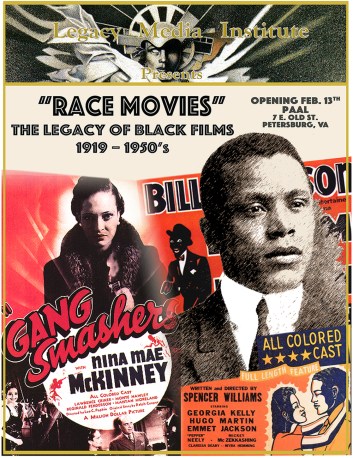
African Americans produced films for black audiences as early as 1905, but most race films were produced after 1915.Β As many as 500 race films were produced in the United States between 1915 and 1952.Β As happened later with the earlyΒ black sitcomsΒ on television, race movies were most often financed by white-owned companies, such asΒ Leo Popkin, and scripted and directed by whites, although one producer,Β Alfred N. Sack, made some films written and directed by black talent such asΒ Spencer Williams (actor).


Many race films were produced by white-owned film companies outside theΒ Hollywood-centered American film industry such asΒ Million Dollar ProductionsΒ in the 1930s andΒ Toddy PicturesΒ in the 1940s. One of the earliest surviving examples of a black cast film aimed at a black audience isΒ A Fool and His MoneyΒ (1912), directed by French emigreeΒ Alice GuyΒ for the Solax Film Company.Β The Ebony Film Company ofΒ Chicago, created specifically to produce black-cast films, was also headed by a white production team.

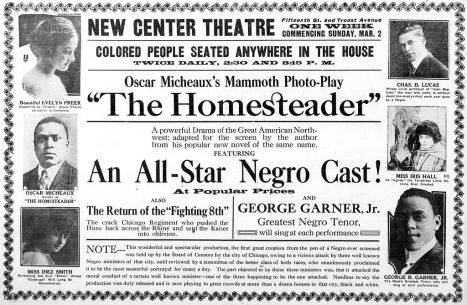
Some black-owned studios existed, includingΒ Lincoln Motion Picture CompanyΒ (1916–1921), and most notablyΒ Oscar Micheaux‘s Chicago-based Micheaux Film Corporation, which operated fromΒ 1918–1940. On his posters, Micheaux advertised that his films were scripted and produced exclusively by African Americans.Β Astor PicturesΒ also released several race films and producedΒ BewareΒ withΒ Louis Jordan.


Race films vanished during the early 1950s after African-American participation inΒ World War IIΒ contributed to black actors in leading roles in severalΒ HollywoodΒ major productions, which focussed on the serious problems of integration and racism, such asΒ PinkyΒ withΒ Ethel Waters;Β Home of the BraveΒ withΒ James Edwards; andΒ Intruder in the Dust, all in 1949; andΒ No Way OutΒ (1950), which was the debut of the notable actorΒ Sidney Poitier. The last known race film appears to have been an obscure adventure film of 1954 calledΒ Carib Gold. (Wikipedia)

Thanks to my original error, I ended up learning so much more about the history of black ‘race’ films and the long, rich history of African American artists.


Khan!!!!!! “Star Trek II: The Wrath of Khan” πŸ––πŸΌ


SPECIAL 35TH ANNIVERSARY SCREENING

Star Trek II: The Wrath of Khan 35th Anniversary

Back on the Big Screen Sept 10th and Sept 13th!

My favorite classic Star Trek movie –


“Star Trek II: The Wrath of Khan”.Β 


A tremendous treat for Star Trek fans like myself and one of the most celebrated and essential chapters in Star Trek lore, Star Trek II: The Wrath of Khan is now presented in this spectacular Director’s Cut from legendary filmmaker Β Nicholas Meyer.

On routine training maneuvers, Admiral James T. Kirk (William Shatner) seems resigned that this may be the last space mission of his career. But Khan is back, with a vengeance!

Aided by his exiled band of genetic supermen, Khan ((Ricardo MontalbΓ‘n) brilliant renegade of 20th century Earth-has raided Space Station Regula One, stolen the top-secret device called Project Genesis, wrested control of another Federation starship, and now schemes to set a most deadly trap for his old enemy Kirk…with the threat of a universal Armageddon! (Fathom Events)

Star Trek II: The Wrath of KhanΒ is a 1982 AmericanΒ science fiction filmΒ directed byΒ Nicholas MeyerΒ and based on the 1960s television seriesΒ Star TrekΒ created byΒ Gene Roddenberry. It is the second film in theΒ Star TrekΒ film seriesΒ and is aΒ stand-alone sequelΒ toΒ Star Trek: The Motion PictureΒ (1979). (Wikipedia)

I’ve shared memories of my favorite Star Trek movie before, celebrating the adversarial reunion of Kirk and Khan in this next chapter and look back at the outstanding tv series episode, Β “The Space Seed” on which the movie is based. Ricardo Montalban is mesmerizing as the “super-man” Khan Noonien Singh!

Fans won’t want to miss this special 35th-anniversary screening that includes an exclusive introduction from William Shatner.

William Shatner

Save the date and order tickets here.

See you at the movies! 🍿

First All Black Film – Cabin in the Sky (1943)

Cabin in the Sky

Produced in 1943 at MGM by Arthur Freed and directed by Vincent Minnelli, “Cabin in the Sky” is the 1st all Black film produced by a major studio in Hollywood. “Happiness is a Thing Called Joe” was nominated for an Academy Award for Best Original Song and sung by the film’s star, Ethel Waters.

This musical take on Faust pits Little Joe (Eddie “Rochester” Anderson) against Luther Jr. (Lucifer’s baby boy). Enter temptress Georgia Brown (Lena Horne). Does Little Joe’s wife, Petunia (Ethel Waters) even stand a chance or will Joe be condemned to Hell?


“Cabin in the Sky”Β in featuring an all-African AmericanΒ cast was an unusual production for its time. In the 1940s, movie theaters in many cities, particularly in the southernΒ United States, refused to show films with prominent black performers, so MGM took a considerable financial risk by approving the film. (Wikipedia)

Some remember “Cabin in the Sky”Β for its intelligent and witty script, which some claimed treated its characters and their race with a dignity rare in American films of the time. Others describedΒ Cabin in the Sky’s racial politics as the same “old stereotypes of Negro caricatures”.

Cabin in the Sky

Ethel Waters, Kenneth Spencer, Eddie “Rochester” Anderson, Lena Horne, Rex Ingram

According to liner notes in the CD reissue of the film’s soundtrack, Freed and Minnelli sought input from black leaders before production began on the film.

When I first saw this film as a kid in the 60’s I was absolutely floored. This was during the civil rights era and I had no idea that in the 1940’s a major production company had taken on the issue of the lack of black representation in film. I understand the point about the stereotypical characterizations – Lena Horne, the aggressive, hypersexual black woman. Ethel Waters, the dutiful, prayerful housewife and “Rochester”, the buffoonish and no account lazy black man.

My feelings of the film are mixed because to some extent, it feeds into the political narrative that some black folks aren’t worthy of equality because they wouldn’t know what to do with it if they had it. But on the other hand, there was finally a film with all black faces, the most gifted entertainers of all-time – Cab Calloway, Lena Horne, Ethel Waters, Duke Ellington, Louis Armstrong and their stories. These characters weren’t just sprinkled in, they were integral to the plot and couldn’t be cut out in racist southern theaters.

As a blackΒ woman, it both breaks my heart and angers me that we even needed to have this conversation, not only in the ’40’s but as an ongoing fight for all aspects of African-American representation on-screen.


After years of unavailability,Β Warner Home VideoΒ and Turner Entertainment released “Cabin in the Sky”Β on DVD on January 10, 2006. I recommend checking it out with this backstory in mind. These legendary artists deserved to have worldwide exposure the same as their white counterparts of the day.


We’ve come along way, but the truth is we still have a long way to go.


Directed by Vincente Minnelli
Busby BerkeleyΒ (“Shine” sequence, uncredited)
Produced by Arthur Freed
Albert Lewis
Written by Marc Connelly(uncredited)
Lynn RootΒ (play)
Joseph Schrank
Based on Cabin in the SkyΒ (play)
Starring Ethel Waters
Eddie “Rochester” Anderson
Lena Horne
Louis Armstrong
Music by Harold Arlen
Vernon Duke
George Bassman
Roger Edens
Cinematography Sidney Wagner
Editing by Harold F. Kress
Distributed by Metro-Goldwyn-Mayer
Release dates
  • AprilΒ 9,Β 1943
Running time 98 minutes