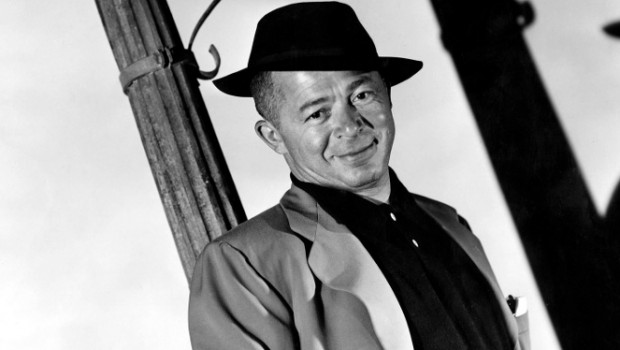
Oscar Devereaux Micheaux was an American author, film director and independent producer of more than 44 films.
Filmmaker, Screenwriter, Journalist (1884–1951)
QUOTES
“Your self-image is so powerful, it unwittingly becomes your destiny.”
—Oscar Micheaux
Oscar Devereaux Micheaux (January 2, 1884 – March 25, 1951) was an African American author, film director and independent producer of more than 44 films. Although the short-lived Micheaux Book & Film Company produced some films, he is regarded as the first major African-American feature filmmaker, the most successful African-American filmmaker of the first half of the 20th century and the most prominent producer of race films. He produced both silent films and sound films when the industry changed to incorporate speaking actors. (Wikipedia)
I studied the “Godfather” of black filmmakers as a film student at the University of Michigan. Micheaux was a contemporary of D.W.Griffith, the director of the controversial 1915 “Birth of a Nation” which in my opinion set the blueprint for race relations in America that we still fight today. Griffith’s film depicted black people as violent and shiftless and a direct threat to whites.
Micheaux’s second silent film was “Within Our Gates“, produced in 1920. Although sometimes considered his response to the film “Birth of a Nation“, Micheaux said that he created it independently as a response to the widespread social instability following World War I.
In 1913, 1,000 copies of Micheaux’s first book, The Conquest: The Story of a Negro Homesteader, were printed anonymously, for unknown reasons. It was dedicated to Booker T. Washington (an American educator, author, orator, and advisor to presidents of the United States.) Based on his experiences as a homesteader and the failure of his first marriage, it was largely autobiographical. Although character names have been changed, the protagonist is named Oscar Devereaux.
In “The Conquest” Micheaux discusses the culture of doers who want to accomplish and those who see themselves as victims of injustice and hopelessness and who do not want to try to succeed but instead like to pretend to be successful while living the city lifestyle in poverty. One of Micheaux’s fundamental beliefs is that hard work and enterprise will make any person rise to respect and prominence no matter his or her race. (Wikipedia)
In 1918, his novel The Conquest (re-titled The Homesteader for the film) attracted the attention of George Johnson, the manager of the Lincoln Motion Picture Company in Los Angeles. After Johnson offered to make The Homesteader into a new feature film, negotiations and paperwork became contentious between Micheaux and him.
Micheaux wanted to be directly involved in the adaptation of his book as a movie, but Johnson resisted and never produced the film. Instead, Micheaux founded the Micheaux Film & Book Company of Sioux City in Chicago; its first project was the production of The Homesteader as a feature film. (Wikipedia)
Micheaux had a major career as a film producer and director: He produced over 40 films, which drew audiences throughout the U.S. as well as internationally. Micheaux contacted wealthy white connections from his earlier career as a porter and sold stock for his company at $75 to $100 a share.
Premiering in Chicago, Micheaux received high praise from film critics. One article credited Micheaux with “a historic breakthrough, a credible, dignified achievement”. Some members of the Chicago clergy criticized the film as libelous. The Homesteader became known as Micheaux’s breakout film; it helped him become widely known as a writer and a filmmaker. (Wikipedia)
Micheaux’s films were coined during a time of great change in the African-American community. His films featured contemporary black life. He dealt with racial relationships between blacks and whites, and the challenges for blacks when trying to achieve success in the larger society.
Micheaux films were used to oppose and discuss the racial injustice that African Americans received. Topics such as lynching, job discrimination, rape, mob violence, and economic exploitation were depicted in his films. These films also reflect his ideologies and autobiographical experiences. The journalist Richard Gehr said, “Micheaux appears to have only one story to tell, his own, and he tells it repeatedly”. (Wikipedia)
Micheaux sought to create films that would counter white portrayals of African Americans, which tended to emphasize inferior stereotypes. He created complex characters of different classes. His films questioned the value system of both African American and white communities as well as caused problems with the press and state censors. (Wikipedia)
His gravestone reads:
“A man ahead of his time”
Oscar Micheaux died on March 25, 1951, in Charlotte, North Carolina, of heart failure. He is buried in Great Bend Cemetery in Great Bend, Kansas, the home of his youth.
Let’s start with our substitute teacher, Mr. Schneebly – what kid hasn’t wished for a sub like him? No grades, being part of a kick butt rock band, defying parents, breaking the rules. Good, right?
Jack Black’s character Dewey Finn is the forever loser and quintessential wanna be rock star, but when he steals his roommate’s identity as a substitute teacher, (Mr, Schneebly) he discovers he has a class of very musically talented 5th-grade students. So, Dewey decides to turn his class into a rock band to potentially win the Battle of the Bands and $20,000. I won’t spoil whether the kids win or don’t win the battle but as a result of the contest they gain self-confidence and continue to play rock in an after school program coached by Dewey. Long live Rock!
This film totally tapped into my inner rocker!
“The Commitments” (1991)
What happens when a group of white working class Dubliners forms a soul band? A rousing film with some great music inspired by legendary artists, Otis Redding, Aretha Franklin and Wilson Pickett.
The band nails the soul of the greats by immersing themselves 24/7 in classic soul standards:
“In the Midnight Hour” – Wilson Pickett
“Try a Little Tenderness” – Otis Redding
“I Never Loved a Man” – Aretha Franklin
Whether on buses, hanging up laundry or in music store windows, they were feeling the soul. In the words of Félim Gormley (Dean Fay- Saxophone), “I’m black and I’m proud!”
I’m so glad the movie was authentic with the cast singing on the soundtrack. (The actors were cast for their musical abilities.) Lead singer (Andrew Strong “Deco”) was nuts but the standout talent of the band.
The Commitments was voted best Irish film of all time in a 2005 poll sponsored by Jameson Irish Whiskey and launched a generation of Irish musicians and actors.
“This is Spinal Tap” (1984)
OMG, the funniest, dead on satire of a rock metal band ever!
Classic in every sense of the word, Director/Writer Rob Reiner’s masterpiece was also written and scored by the stars:
Rob Reiner – (Marty D. Bergi) – Mokumentarian
Spinal Tap
Christopher Guest – (Nigel Tufnel)
Michael McKean- (David St. Hubbins)
Harry Shearer – (Derek Smalls)
This mockumentary feels so real that some moviegoers thought they were an actual group!
The “Stonehenge” number during the Smell the Glove tour is priceless. Due to a mix up with size dimensions, the Stonehenge replica for their epic song is 18 inches instead of 18 feet tall. The little people performers in the number were taller. And Derek Smalls getting stuck in the stage prop egg is hilarious!
In 2002, This Is Spinal Tap was deemed “culturally, historically, or aesthetically significant” by the Library of Congress and was selected for preservation by the United States National Film Registry.
These are 3 of my favorite Rock Movies – Let me know yours in the comments!
Two unstable people with access to nuclear bombs is a serious recipe for disaster! One mad man got elected President. The other is the supreme ruler of N. Korea.
Kim Jung-Un, Trump
This is strikingly close to the storyline of Dr. Strangelove and in reality my daily nightmare!
“Dr. Strangelove” is the 1964 political satire black comedy film that satirizes the Cold War fears of a nuclear conflict between the Soviet Union and the United States. The film was directed, produced, and co-written by Stanley Kubrick, stars Peter Sellers and George C. Scott, and features Sterling Hayden, Keenan Wynn, and Slim Pickens. Production took place in the United Kingdom. The film is loosely based on Peter George‘s thriller novel Red Alert (1958). (Wikipedia)
(“Red Alert” originally published in the UK as Two Hours to Doom, with George using the pseudonym “Peter Bryant”)
The story concerns an unhinged United States Air Force general who orders a first strike nuclear attack on the Soviet Union. It follows the President of the United States, his advisers, the Joint Chiefs of Staff, and a Royal Air Force (RAF) officer as they try to recall the bombers to prevent a nuclear apocalypse. It separately follows the crew of one B-52 bomber as they try to deliver their payload.
“Dr. Strangelove” is Stanley Kubrick’s masterpiece about the absurdity of war that nevertheless is a daily possibility!
Kubrick filmology
Peter Sellers is at his over the top best with his performance as nutcase Dr. Strangelove. (and a few other characters) A wheelchair-bound nuclear scientist with bizarre ideas about man’s future. The entire war room scene totally represents the lunacy of nuclear war.
Columbia Pictures agreed to finance the film if Peter Sellers played at least four major roles. The condition stemmed from the studio’s opinion that much of the success of Kubrick’s previous film Lolita (1962) was based on Sellers’s performance in which his single character assumes a number of identities.
Peter Sellers as – President Merkin Muffley, Dr. Strangelove, and Captain Lionel Mandrake
Sellers is said to have improvised much of his dialogue, with Kubrick incorporating the ad-libs into the written screenplay so the improvised lines became part of the official screenplay.
Awards and honors
The film was nominated for four Academy Awards and also seven BAFTA Awards, of which it won four.
Kubrick won two awards for best director, from the New York Film Critics Circle and the Italian National Syndicate of Film Journalists, and was nominated for one by the Directors Guild of America.
In 1989 the United States Library of Congress included it in the first group of films selected for preservation in the National Film Registry. It was listed as number three on AFI’s 100 Years…100 Laughs list.
Ye Ha! Slim Pickens as Aircraft commander Major T. J. “King” Kong riding the bomb down.
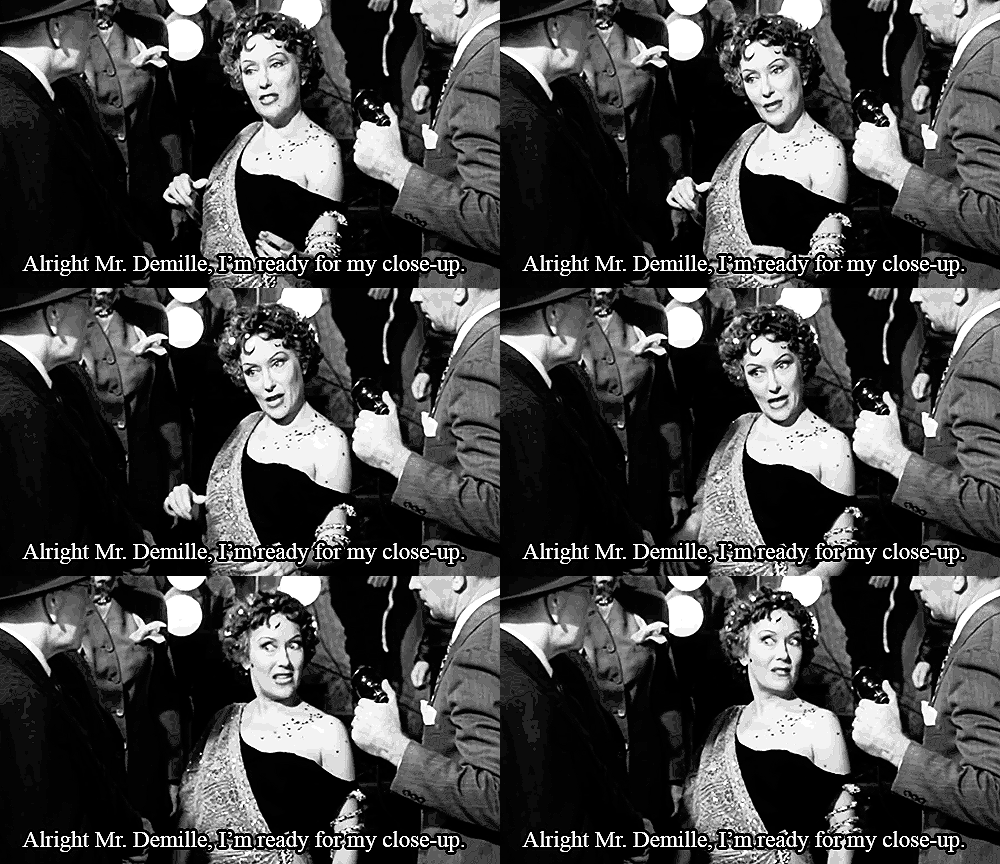
“We didn’t need dialogue. We had faces!” Norma Desmond
As she descended the well-worn stairs of her aged and decadent mansion steeped in long past memories, Norma Desmond uttered the declaration that forever remains in the memories of those who witnessed her performance in the 1950 classic, “Sunset Boulevard.” It’s impossible to forget those delusional words spoken by the creepy Norma Desmond as she is escorted through the end scene for her deadly deed; not surprisingly surrounded by gawkers vying for a tiny glimpse of the reclusive silent film star.
Before the film, I had only heard of Gloria Swanson but hadn’t seen any of her films. After witnessing her tour-de-force performance as the legendary diva, Norma Desmond, I sought out every movie of hers that I could. Wow, she inhabited the role of Norma Desmond with intimate knowledge of the silent film era since those were Swanson’s actual glory days. By the way, the dialogue is both fantastic and hilarious.
“Sunset Boulevard” (stylized onscreen as SUNSET BLVD.) is a 1950 American film noir directed and co-written by Billy Wilder and produced and co-written by Charles Brackett. It was named after the boulevard that runs through Los Angeles and Beverly Hills, California. (Wikipedia)
The film stars William Holden as Joe Gillis, an unsuccessful screenwriter, and Gloria Swanson as Norma Desmond, a faded silent film star who draws him into her fantasy world where she dreams of making a triumphant return to the screen, with Erich von Stroheim as Max Von Mayerling, her devoted servant.
Erich von Stroheim, William Holden, Gloria Swanson
Praised by many critics when first released, Sunset Boulevard was nominated for eleven Academy Awards (including nominations in all four acting categories) and won three. Deemed “culturally, historically, or aesthetically significant” by the U.S. Library of Congress in 1989, Sunset Boulevard was included in the first group of films selected for preservation in the National Film Registry. In 1998, it was ranked number twelve on the American Film Institute‘s list of the 100 best American films of the 20th century, and in 2007, it was 16th on their 10th Anniversary list. (Wikipedia)
I’ve never been a famous movie star (maybe stage😎) But God help me if I ever get that Norma Desmond look in my eyes, dial 911!
Palpable heartbeats, breath quickening, anticipation almost unbearable; these are just a few of the emotions I recall standing in line awaiting the darkened theater, warm buttery popcorn in hand, and the unforgettable opening credits of the film that changed the Hollywood landscape, “Star Wars.”
This weekend, excited fans decked out as their favorite Star Wars character are celebrating the 40th Anniversary of the vision changing film “Star Wars” in Orlando, Florida. The life-long aficionados were treated to a panel discussion featuring Mark Hamill, George Lucas, and the late Carrie Fisher’s daughter Lourd who spoke the line which made her mom famous, “Help me Obi-wan Kenobi. You’re my only hope.” To further amplify the day, followers were treated to the yet to be seen anticipated trailer for the new Star Wars film opening on December 15th, “The Last Jedi.”
Wow, what an experience the convention goers must be having! I wish I could be there sharing my precious memories and love for this film of the ages. In my mind’s eye, I see fellow fans geeked like I was, sharing their anticipation of this remarkable saga. It’d be great if I had a photo marking the day that I could share on Facebook, however, back in 1977 the cell phone, as well as Facebook, did not yet exist.😊
Despite performing poorly at the box office, the film was nominated for several awards, including Golden Globes for Best Director and Best Picture (Drama) and Oscars for Best Art Direction (Richard Sylbert, George Gaines) and Film Editing. (Wikipedia)
Francis Ford Coppola (R)
Diane Lane
Richard Gere
Gregory Hines and Lonette McKee
Maurice and Gregory Hines
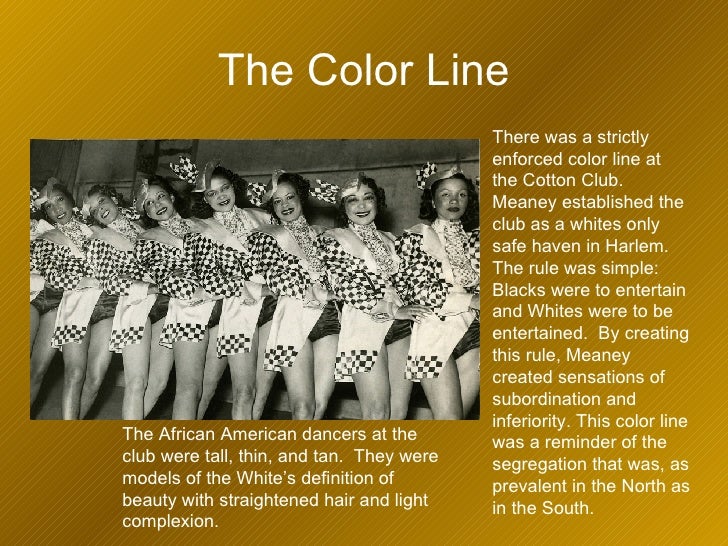
I remember looking forward to screening this film. I understood the significance of The Cotton Club during the Harlem Renaissance of the 20’s and 30’s and wanted the 1980’s audience to be curious about the history of the real club and incredible level of talent that appeared there between 1923 – 1940.
Some of the original performers at The Cotton Club included:
The movie is intense. Producer Robert Evans originally wanted to direct the project but later asked Coppola. There are definite similarities to “The Godfather” in the film due to its violent nature and also the fact that Mario Puzo (author of The Godfather) wrote the original story and screenplay.
Gangsters, racism and love, this film exposes them all. I do, however, wish more of the movie focus was on The Cotton Club itself and the lives of those characters.
The story centers around the dangerous love affair of Dixie Dwyer (Richard Gere) and Vera Cicero (Diane Lane). She “belongs” to mobster Dutch Schultz (James Remar). Dutch is a straight up psychopath We also follow the budding romance between Sandman Williams (Gregory Hines) and Lila Rose Oliver (Lonette McKee). He wants to get married. She wants to be a “Star.” (She’s also hiding a secret about her “other life.”)
Watch and listen as Lonette McKee, also from the movie (“Sparkle”), delivers a taste of the film’s 1930’s Harlem.
One of the most memorable scenes is between the real life and onscreen brothers – Maurice and Gregory Hines. Clay (Maurice Hines) and Sandman (Gregory Hines) have had a major falling out and at this moment we get to share in their reunion.
Growing up, this old school tap dancing duo was compared to The Nicholas Brothers. Gregory Hines remarked in an interview that after seeing The Nicholas Brothers perform that “nobody was going to be the next Nicholas Brothers, least of all my brother and I.”
Explore the 1984 film but more importantly explore the controversial history of The Cotton Club and the entertainers and music that fueled the Jazz generation.
“All creatures great and small, Welcome.” Buster Moon
I just finished watching the outstanding Illumination Entertainment hit “Sing” (2016) for the 3rd time and cried again for the 3rd time. I always seek to understand my emotions and the source of my feelings, with “Sing” it was all about the exhilaration of doing what you love and the boundless joy that comes with honoring your spirit.
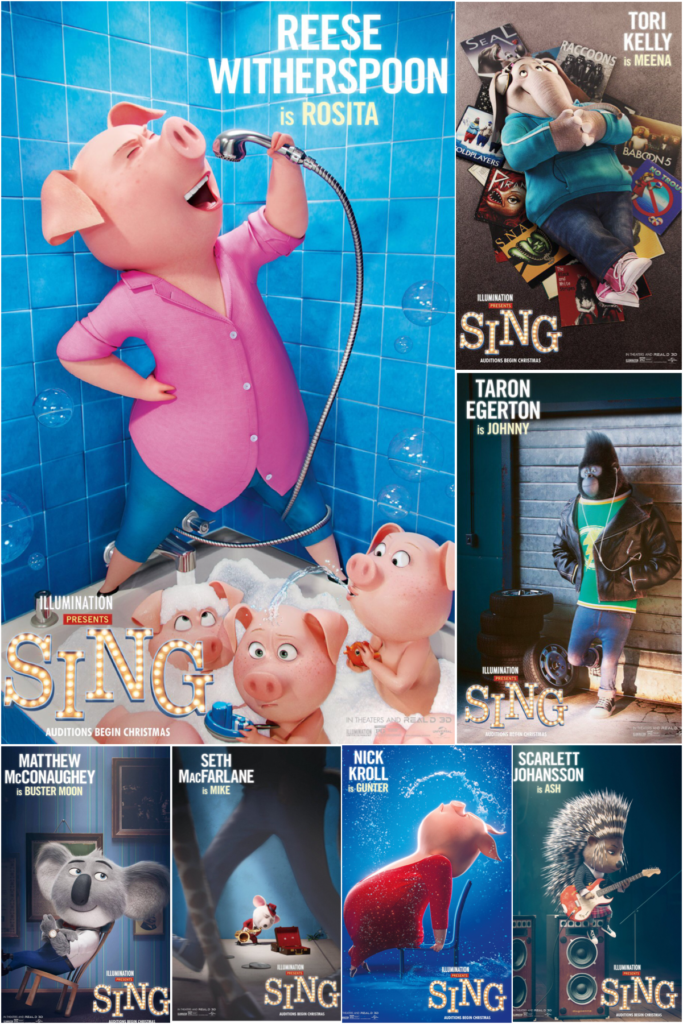
I shed tears of joy during and after the movie for having the opportunity to share my passion for singing and performing, honoring my spirit. I shed tears of joy for Rosita (Reese Witherspoon) who despite the 25 or if you count her husband Norman, 26 obstacles before her that she would not let deter her, coming up with the most creative plan to make sure she could take her shot.
And then, tears of joy for both Ash (Scarlet Johannson who was incredible!) and Johnny (Taron Egerton-fabulous voice!) for refusing to give up on their dreams despite dealing with disappointment and heartbreak.
I absolutely love Gunter and his infectious exuberance and living out loud attitude on life. Some may see him as self-absorbed but he was compassionate enough to want to help Rosita fulfill her dreams and showcase her true talents.
Gunter
Talk about self-absorbed, Mike (Seth MacFarlane) is his own biggest fan! Even though most of the time you want to choke him, his smooth, docile toned voice wraps you up in his effortless performance which you have to give him credit for.
Mike
At one point in the film, the performers are waiting to go on stage and theater owner and entrepreneur Buster Moon (Matthew McConaughey) gives them a pep talk telling them it’s a small audience but that’s okay, go out there and perform for yourself. His words so reminded me of my days on the stage and directors imparting the same edict. Have fun, share your passion, and be present in the moment!
My favorite performer is Meena, that’s why I saved her for last. She touches my heart the most and moves me with the powerfulness of her voice. In the final scene, she literally brings down the house.
Tori Kelly as Meena
First of all, Tori Kelly’s voice is out of this world!! Her final number showcases the power of joy; how it feels to release and give your all and see how that is received. Secondly, witnessing the sheer magic of Meena truly being in the moment and finally coming into her own.
I didn’t include that lovable Koala, Buster Moon with the performers although he too realized his dream of being successful; like his motto says, “When you reach rock bottom there’s no place to go but up.” Buster was finally able to pay respect to his dad and their mutual love of the Moon Theater.
Even Miss Crawly and Buster’s best friend Eddie got to be a part of the rebirth of the Moon Theater. And, of course, I can’t leave out Nana who is a serious diva and former star of the Moon Theater. In their totality, Rosita, Ash, Johnny, Mike, Gunter, and Meena all moved her heart and brought back warm memories of her glory days.
Johnny
Meena and Ash
Buster Moon
Miss Crawly
Mike
Nana Noodleman
Eddie
Buster
Rosita
Crooner Mike
Gunter and Rosita
One of the more impressive features of this film is that the cast did all their own singing. I’m of the mind that if an actor can’t both sing and act, don’t hire them for a musical role. I own the soundtrack which is both upbeat and heart-pumping.
The movie includes more than 60 songs from various artists and also has an original song by Stevie Wonder and Ariana Grande called “Faith“, which was nominated for a Golden Globe. I can’t get it out of my head and danced my way out the theater!
The studio’s highest-grossing films are Minions (2015), which has grossed $1.159 billion worldwide; Despicable Me 2 (2013), which has grossed $970.8 million worldwide; and The Secret Life of Pets (2016), which grossed $875.5 million worldwide. (Wikipedia)
Illumination knocked it out of the park with this production. I’ve said it before and I’ll say it again, animated films these days have come a long way since Bambi and aren’t just for kids. The plots, characterizations, and execution are outstanding!
Hopefuls seeking their place in the limelight.
Voice Cast
Matthew McConaughey as Buster Moon, an optimistic koala who plans to save his theater from closure by holding a singing competition.
Reese Witherspoon as Rosita, a pig who gave up her teenage music dreams to become a devoted wife to Norman, and mother to their 25 piglets.
Bette Davis is at the top of my list of incredible actresses of classic film and her infamous relationship with Joan Crawford is legendary. So, when I heard Ryan Murphy’s 2017 series “Feud” was recreating their tumultuous battles in the film “Whatever Happened to Baby Jane?” I had to check it out. Susan Sarandon (Davis) and Jessica Lange (Crawford) bring back old Hollywood and pull back the layers of the complexity between Bette Davis and Joan Crawford.
Director Robert Aldrich’s cult classic “Whatever Happened to Baby Jane” (1962) is brilliant! It’s not fair, but to the powers that be, women in Hollywood age but men are considered “salt n pepper” hot. Aldrich’s production capitalized on the star power of the “past their prime” celebrated divas and the result is a glimpse into the real-life feud between the stars.
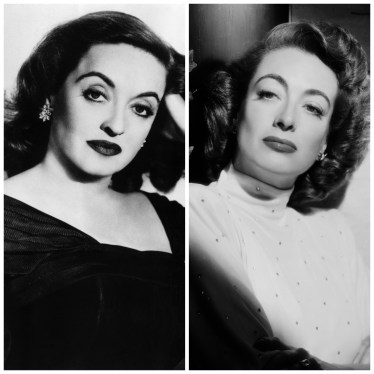
Bette Davis (L) Joan Crawford (R)
Not to be too biased😄 but, Ms. Davis literally kicked Joan’s behind! Crawford was way over her head onscreen and off as Bette outperformed and out strategized her nemesis. Bette is my hero because she took on roles other actresses wouldn’t touch because of their image.
Bette Davis in “Of Human Bondage”
She wasn’t afraid to go there and if the role required her to look unattractive she was game. An original in a class by herself, in “Of Human Bondage” (1934) her appearance was shocking to audiences of the time as she portrayed a callous woman dying of tuberculosis; not a pretty sight.
“What Ever Happened to Baby Jane?” is a 1962 American psychological thriller-horror film produced and directed by Robert Aldrich, starring Bette Davis and Joan Crawford, about an aging actress who holds her paraplegic sister captive in an old Hollywood mansion.
Alfred Molina as Aldrich (L) Robert Aldrich (R)
The screenplay by Lukas Heller is based on the 1960 novel of the same name by Henry Farrell. Upon the film’s release, it was met with widespread critical and box office acclaim and was later nominated for five Academy Awards, winning one for Best Costume Design, Black and White. (Wikipedia)
Bette Davis (L) Joan Crawford (R)
Susan Sarandon (L) Jessica Lange (R)
In true Bette Davis fashion, she came up with her own makeup for the role. She said that Jane was someone who never washed her face but just added more makeup.
In “Whatever Happened…” The young neighbor was played by Davis’ daughter B. D. Merrill who, followed in the footsteps of Joan Crawford’s daughter Christina, and wrote a scathing memoir, “My Mother’s Keeper”, that depicted her mother in a harsh light. However, unlike Christina who waited until after Crawford’s death to publish “Mommie Dearest”, B.D. published hers in 1985 while Davis was still alive but in poor health.
B.D (Davis’ daughter-L) Kiernan Shipka portrays B.D in “Feud”
It was an open secret that Davis and Crawford loathed each other, and filming was contentious as their real-life hatred for one another spilled over into the production, and even after filming had wrapped.
The film’s success spawned a succession of horror/thriller films featuring psychotic older women, later dubbed the psycho-biddy subgenre, among them Aldrich’s Hush… Hush, Sweet Charlotte, What Ever Happened to Aunt Alice? and What’s the Matter with Helen?. It was parodied by the Italian comedy film What Ever Happened to Baby Toto? (Wikipedia)
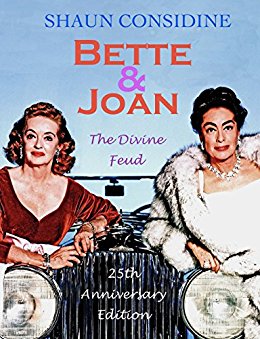
Shaun Considine’s 1989 book Bette and Joan: The Divine Feud chronicles the actresses’ rivalry, including their experience shooting this film.
Both Bette Davis and Joan Crawford had incredible and challenging careers and personal lives. If I’ve peaked your interest and you’d like to learn more, check out this eye-opening documentary.
My question is, would you? If you could? Drop out of this life and assume another; start a new journey as a “Second”. Arthur makes the decision to do just that and enters a psychedelic world of appropriating another’s reality, someone else’s truth so, be careful what you wish for, some dreams can become your nightmare.
“Seconds” is a 1966 American science fiction drama film directed by John Frankenheimer and starring Rock Hudson. The screenplay by Lewis John Carlino was based on Seconds, a novel by David Ely. The film was entered into the 1966 Cannes Film Festival and released by Paramount Pictures. The cinematography by James Wong Howe was nominated for an Academy Award. (Wikipedia)
“Seconds” is a mystery dealing with the obsession with eternal youth and a mysterious organization which gives people a second chance in life.
Arthur Hamilton (John Randolph) is a middle-aged man whose life has lost purpose. He’s achieved success but finds it unfulfilling. His love for his wife has dwindled and he seldom sees his only child. Through a friend, a man he thought was dead, Hamilton is approached by a secret organization, known simply as the “Company” which offers him a new life. (Wikipedia)
Arthur (John Randolph)
Arthur (Rock Hudson)
When much of American pop culture was infatuated with the swinging, psychedelic 1960s, Director John Frankenheimer was focused on the decade’s darker side—the sour aftertaste of McCarthyism, the expanding military-industrial complex, the growing sense that technology might be controlling us instead of the other way around.
John Frankenheimer
Of his eleven theatrical films made during this period, none is more chilling or prescient than 1966’s “Seconds”, the third and crowning chapter of what’s now known as Frankenheimer’s paranoia trilogy.
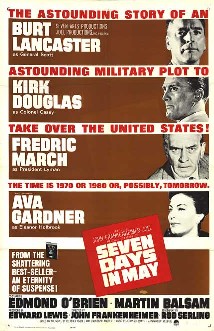
Frankenheimer had a gift for capturing the zeitgeist, and in the first two installments of his paranoia trilogy, he had already taken on some of postwar America’s most emotionally charged topics: brainwashing, commie-bashing, and political assassination in The Manchurian Candidate (1962), about a man hypnotically programmed to kill, and then nuclear dread, Cold War anxiety, and neofascist skullduggery in Seven Days in May (1964), about a military plot to seize the American government. (David Sterritt)
From the surreal opening titles designed by Saul Bass, atmospheric soundtrack by Jerry Goldsmith to the terrifying horror ending, “Seconds” feels queasy with a very real sense of paranoia evoked by James Wong Howe’s vision of a fantasy turned on its end.
Audiences weren’t ready for it in 1966 but the film has since become a cult classic. I highly recommend checking it out; a whole lotta food for thought.
In 2015, the United States Library of Congress selected the film for preservation in the National Film Registry, finding it “culturally, historically, or aesthetically significant.”
This site is about how to live our life in a meaningful way by accepting complete surrender to the Almighty with purity of mind and character. It is about the eternal religion of the world i.e. Hinduism which is very liberal to anyone because there are many branches or methods to get the divinity to turn our life into an ever blissful one.
Free listening and free download (mp3) chill and down tempo music (album compilation ep single) for free (usually name your price). Full merged styles: trip-hop electro chill-hop instrumental hip-hop ambient lo-fi boombap beatmaking turntablism indie psy dub step d'n'b reggae wave sainte-pop rock alternative cinematic organic classical world jazz soul groove funk balkan .... Discover lots of underground and emerging artists from around the world.













.jpg)















 iheartfilm