Before “Cabin in the Sky” – Early Black Films of the 1920’s


Believe it or not, I appreciate being corrected and kept on my toes about the facts and details of film history.

Thanks to the observant eye of one of my fabulous readers, I’m making a correction to a previous post about “Cabin in the Sky”. I labeled it as the first all black cast and musical which it was not.


To make sure of my facts, I did some digging and discovered that the first all black sound film was The Melancholy Dame (1929). An early two-reeler, it starred Evelyn Preer (known for her 1920 role of Sylvia Landry in Oscar Micheaux’s “Within Our Gates”), Roberta Hyson, Edward Thompson, and Spencer Williams.

Spencer Williams was an American actor, writer, director, and producer whose early pioneering work in African-American or “race” films was eclipsed in fame by his role as one of the title characters in the equally pioneering and also controversial 1950s sitcom The Amos ‘n Andy Show (1951). (IMDb)

Directed by Arvid E. Gillstrom, the plot of “The Melancholy Dame” involves a nightclub owner’s wife (Evelyn Preer), jealous of his attentions to his star singer, scheming to get her fired. The look on the wife’s face from the opening frame says it all!


I can’t believe I found a copy of the film (20 min.) on YouTube.

The first two full-length films with all black casts were “Hearts in Dixie” (1929) starring Daniel Haynes, Nina Mae McKinney, and Victoria Spivey and “Hallelujah” (1929) which starred Clarence Muse, Stepin’ Fetchit, and Mildred Washington. “Hearts in Dixie” was also the first all black-oriented all-talking film from a major company. (The Chronical History of the Negro in America)


“Hearts in Dixie” celebrates African-American music and dance and was released by Fox Film Corporation just months before Hallelujah, produced by competitor Metro-Goldwyn-Mayer. The director of Hearts in Dixie was Paul Sloane. Walter Weems wrote the screenplay, and William Fox was the producer. (Wikipedia)

“Hearts in Dixie” unfolds as a series of sketches of life among American blacks. It featured characters with dignity, who took action on their own, and who were not slaves. The plot focuses on Grandfather Nappus (Clarence Muse), his daughter, Chloe (Bernice Pilot), her young son, Chinaquapin (Eugene Jackson), and her husband, Gummy (Stepin Fetchit).

To make certain his grandson Chinaquapin does not end up like his father or become tainted by the superstitions that dominate the community, the grandfather decides to send the boy away.


“Hallelujah”(1929), was the first all black musical and was directed by King Vidor and produced by MGM studios. It was intended for a general audience and was considered so risky a venture by MGM that they required King Vidor to invest his own salary in the production.

Vidor expressed an interest in “showing the Southern Negro as he is”(whatever that means) and attempted to present a relatively non-stereotyped view of African-American life.

“Hallelujah!” was King Vidor’s first sound film, and combined sound recorded on location and sound recorded post-production in Hollywood. King Vidor was nominated for a Best Director Oscar for the film.

It was the first major studio musical and the first of its kind in Hollywood history. In 2008, “Hallelujah!” was selected for preservation in the United States National Film Registry by the Library of Congress as being “culturally, historically, or aesthetically significant.”


Vidor thought the time was right to test the waters of racial tolerance with a tale of sex, murder, religion, and music enacted by a black cast. He also wanted to take advantage of the emerging sound technology that was revolutionizing the film industry.

ΔΔΔΔΔ

These 3 films were some of the first race talkies ever and despite the stereotypes, these films are important as they were made with black actors for black audiences (thus ‘race films’).

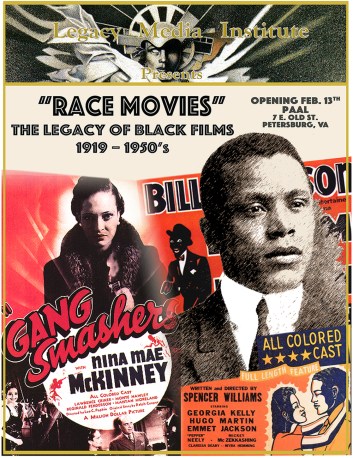
African Americans produced films for black audiences as early as 1905, but most race films were produced after 1915. As many as 500 race films were produced in the United States between 1915 and 1952. As happened later with the early black sitcoms on television, race movies were most often financed by white-owned companies, such as Leo Popkin, and scripted and directed by whites, although one producer, Alfred N. Sack, made some films written and directed by black talent such as Spencer Williams (actor).
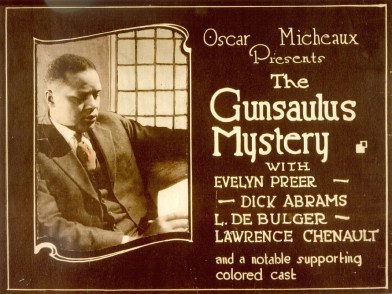
 

Many race films were produced by white-owned film companies outside the Hollywood-centered American film industry such as Million Dollar Productions in the 1930s and Toddy Pictures in the 1940s. One of the earliest surviving examples of a black cast film aimed at a black audience is A Fool and His Money (1912), directed by French emigree Alice Guy for the Solax Film Company. The Ebony Film Company of Chicago, created specifically to produce black-cast films, was also headed by a white production team.

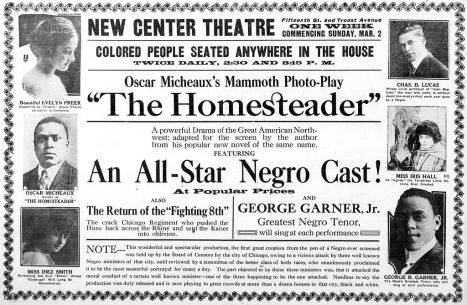
Some black-owned studios existed, including Lincoln Motion Picture Company (19161921), and most notably Oscar Micheaux‘s Chicago-based Micheaux Film Corporation, which operated from 19181940. On his posters, Micheaux advertised that his films were scripted and produced exclusively by African Americans. Astor Pictures also released several race films and produced Beware with Louis Jordan.


Race films vanished during the early 1950s after African-American participation in World War II contributed to black actors in leading roles in several Hollywood major productions, which focussed on the serious problems of integration and racism, such as Pinky with Ethel WatersHome of the Brave with James Edwards; and Intruder in the Dust, all in 1949; and No Way Out (1950), which was the debut of the notable actor Sidney Poitier. The last known race film appears to have been an obscure adventure film of 1954 called Carib Gold. (Wikipedia)

Thanks to my original error, I ended up learning so much more about the history of black ‘race’ films and the long, rich history of African American artists.


First All Black Film – Cabin in the Sky (1943)

Cabin in the Sky

Produced in 1943 at MGM by Arthur Freed and directed by Vincent Minnelli, “Cabin in the Sky” is the 1st all Black film produced by a major studio in Hollywood. “Happiness is a Thing Called Joe” was nominated for an Academy Award for Best Original Song and sung by the film’s star, Ethel Waters.

This musical take on Faust pits Little Joe (Eddie “Rochester” Anderson) against Luther Jr. (Lucifer’s baby boy). Enter temptress Georgia Brown (Lena Horne). Does Little Joe’s wife, Petunia (Ethel Waters) even stand a chance or will Joe be condemned to Hell?


“Cabin in the Sky” in featuring an all-African American cast was an unusual production for its time. In the 1940s, movie theaters in many cities, particularly in the southern United States, refused to show films with prominent black performers, so MGM took a considerable financial risk by approving the film. (Wikipedia)

Some remember “Cabin in the Sky” for its intelligent and witty script, which some claimed treated its characters and their race with a dignity rare in American films of the time. Others described Cabin in the Sky’s racial politics as the same “old stereotypes of Negro caricatures”.

Cabin in the Sky

Ethel Waters, Kenneth Spencer, Eddie “Rochester” Anderson, Lena Horne, Rex Ingram

According to liner notes in the CD reissue of the film’s soundtrack, Freed and Minnelli sought input from black leaders before production began on the film.

When I first saw this film as a kid in the 60’s I was absolutely floored. This was during the civil rights era and I had no idea that in the 1940’s a major production company had taken on the issue of the lack of black representation in film. I understand the point about the stereotypical characterizations – Lena Horne, the aggressive, hypersexual black woman. Ethel Waters, the dutiful, prayerful housewife and “Rochester”, the buffoonish and no account lazy black man.

My feelings of the film are mixed because to some extent, it feeds into the political narrative that some black folks aren’t worthy of equality because they wouldn’t know what to do with it if they had it. But on the other hand, there was finally a film with all black faces, the most gifted entertainers of all-time – Cab Calloway, Lena Horne, Ethel Waters, Duke Ellington, Louis Armstrong and their stories. These characters weren’t just sprinkled in, they were integral to the plot and couldn’t be cut out in racist southern theaters.

As a black woman, it both breaks my heart and angers me that we even needed to have this conversation, not only in the ’40’s but as an ongoing fight for all aspects of African-American representation on-screen.


After years of unavailability, Warner Home Video and Turner Entertainment released “Cabin in the Sky” on DVD on January 10, 2006. I recommend checking it out with this backstory in mind. These legendary artists deserved to have worldwide exposure the same as their white counterparts of the day.


We’ve come along way, but the truth is we still have a long way to go.


Directed by Vincente Minnelli
Busby Berkeley (“Shine” sequence, uncredited)
Produced by Arthur Freed
Albert Lewis
Written by Marc Connelly(uncredited)
Lynn Root (play)
Joseph Schrank
Based on Cabin in the Sky (play)
Starring Ethel Waters
Eddie “Rochester” Anderson
Lena Horne
Louis Armstrong
Music by Harold Arlen
Vernon Duke
George Bassman
Roger Edens
Cinematography Sidney Wagner
Editing by Harold F. Kress
Distributed by Metro-Goldwyn-Mayer
Release dates
  • April 9, 1943
Running time 98 minutes


The Political ’60’s -“Wild in the Streets”

Wild in the Streets

“Wild in the Streets”

A fascinating rock n roll politico film from 1968. I’ve been intrigued by “Wild in the Streets” since I was a 9 year-old kid, I totally related to the concept of the film that the “younger generation” should be running things and not the “old cats” who always mess things up in this country. “Thirty and out” was my mantra. “Old fat cats” only in the game for their own personal gain. Yeah, I was a bit of a rebel. (or so my sisters always say:)


What resonated with me then and now are the political implications of organizing and using that voice and numbers to effect change. But also the nightmare when ideologies take a turn for the extreme.

Wild in the Streets was first released to theaters in 1968. Its storyline was a “reduction to absurdity” projection of contemporary issues of the time, taken to extremes, and played poignantly during 1968 —an election year with many controversies (the Vietnam War, the draft, civil rights, the population explosion, rioting and assassinations, and the baby boomer generation coming of age). (Wikipedia)

“Fourteen or Fight” is a perfect example of the youth movement of the sixties. This was the first time teens were a bigger block than their parents. Baby Boomers exerting power in numbers.


Richard Pryor’s appearance in this film is amazing! One of the most controversial comedians of our time, it was hilarious watching him fake playing the drums as a member of Max Frost’s “Troopers”.

Christopher Jones  had the perfect swag for his character. He had that whole brooding, tortured vibe like Marlon Brando in “The Wild One”and James Dean in “Rebel Without a Cause”.  The Christopher Jones’ character Max Frost was a pop star millionaire who gets “turned on” to the 60’s political scene and decides to exercise his views on free love, youth is the majority in the U.S., women’ rights and ultimately runs for President of the United States.  Let the absurdities begin!


Related image


 The Music

The soundtrack is the backdrop for the politics in the film as well as real life. Max and The Troopers deal with current issues of the time (’67).  Voting age: “14 or Fight”.”If I can fight I can vote”.   Ageism: If you’re 50 does that make you more competent?  The 25 and under age group is the majority.  “We have the power”.  Women’s rights: “Chicks would have killed for the vote”.

Cast

Max Frost – Christopher Jones

Sally LeRoy Diane Varsi

Stanley XRichard Pryor

Max Frost’s Mother – Shelley Winters 

Senator Fergus – Hal Holbrook


 In 1968, “The Shape of Things to Come”, written by Barry Mann and Cynthia Weil, was a #22 chart hit for Max Frost and the Troopers. (a “studio group”, made up of session musicians)
Nominated for Oscars:

Best Film Editing
Fred R. Feitshans Jr.
Eve Newman

Best Film
Barry Shear


This flick was over the top but had its pulse on the fears of the 60’s and a possible dysfunctional future. Growing up in the sixties I see a lot of similarities to today. “The Shape of Things to Come” was very prophetic.

American International  founders Samuel Z. Arkoff and James H. Nicholson were genius! They were one of the first production companies to recognize and capitalize on the growing teen market. Think beach, biker, monster, drive-in movies. Think American International.


C Jones

 Christopher Jones


After “Wild in the Streets” Christopher Jones only made a couple more films, “Three in the Attic” 1968. Classic 60’s love in fest. The big studios took notice and David Lean offered him the romantic lead in the big budget drama “Ryan’s Daughter” 1970. Reportedly it was on the set of the film he had a nervous breakdown after hearing of Sharon Tate’s murder and shortly after left the Hollywood scene.

His last appearance was in the 1996 crime comedy “Mad Dog Time” opposite Richard Dreyfuss.  In his later years he had a career as an artist and sculptor. He died from cancer on January 31, 2014 at the age of 72.


The Greatest Scandal in American History…Until Now

All The Presidents Men (1976) – A Look Back 🗓


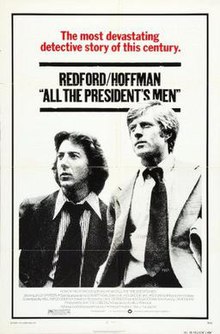
The Academy Award winning film, “All the President’s Men” is the 1976 American political thriller directed by Alan J. Pakula and starring Robert Redford and Dustin Hoffman. I believe it’s the best film on the Watergate scandal and the incredible journalism of Carl Bernstein and Bob Woodward.  The gold standard of journalists, their hard work ultimately uncovered the truth of the events that changed the course of American history; the first time ever that an American President resigned from office.

The Plot: On June 17, 1972, a security guard (Frank Wills) at the Watergate complex finds a door kept unlocked with tape. He calls the police, who find and arrest five burglars in the Democratic National Committee headquarters within the complex. The next morning, The Washington Post assigns new reporter Bob Woodward (Robert Redford) to the local courthouse to cover the story, which is thought to be of minor importance.

Woodward learns that the five men, four Cuban-Americans from Miami and James W. McCord, Jr., had bugging equipment and have their own “country club” attorney. At the arraignment, McCord identifies himself in court as having recently left the Central Intelligence Agency and the others also have CIA ties. Woodward connects the burglars to E. Howard Hunt, a former employee of the CIA, and President Richard Nixon‘s Special Counsel Charles Colson. (Wikipedia)


Carl Bernstein (Dustin Hoffman), another Post reporter, is assigned to cover the Watergate story with Woodward. The two are reluctant partners but work well together. Executive editor Benjamin Bradlee (Jason Robards) believes their work is incomplete, however, and not worthy of the Post’s front page. He encourages them to continue to gather information.

Woodward contacts “Deep Throat” (Hal Holbrook), a senior government official, an anonymous source he has used in the past. Communicating through copies of The New York Times and a balcony flowerpot, they meet in a parking garage in the middle of the night. Deep Throat speaks in riddles and metaphors about the Watergate break-in, but advises Woodward to “follow the money.” (Wikipedia)

All the president's men.jpg

Theatrical Release Poster


Yes, “follow the money” indeed.

I was in high school when the Washington Post reporters Carl Bernstein and Bob Woodward uncovered the historic Watergate scandal and I have never forgotten the outrage and for some disbelief that the President of the United States was guilty of a cover-up; it shook American politics to its core.

Carl Bernstein, Bob Woodward

Carl Bernstein, Bob Woodward


However, it was true and instead of being impeached Nixon resigned his office. That is why the overwhelming evidence against the current resident of 1600 Pennsylvania Ave is so very shocking; Richard Nixon did far less and with a bi-partisan agreement, Articles of Impeachment were drawn.

“All the President’s Men” is the 1974 non-fiction book by Carl Bernstein and Bob Woodward, that was subsequently made into the motion picture starring Dustin Hoffman and Robert Redford. The book chronicles the investigative reporting of Woodward and Bernstein from Woodward’s initial report on the Watergate break-in through the resignations of H. R. Haldeman and John Ehrlichman, and the revelation of the Nixon tapes by Alexander Butterfield in 1973. (Wikipedia)


All the President's Men book 1974.jpg

The cover of the 1974 first edition.

It relates the events behind the major stories the duo wrote for the Post, naming some sources who had previously refused to be identified for their initial articles, notably Hugh Sloan. It also gives detailed accounts of Woodward’s secret meetings with his source Deep Throat whose identity was kept hidden for over 30 years. Gene Roberts, the former executive editor of The Philadelphia Inquirer and former managing editor of The New York Times, has called the work of Woodward and Bernstein “maybe the single greatest reporting effort of all time.” (Wikipedia)

To hear more about the history of Watergate from the words of the reporters themselves: Bob Woodward and Carl Bernstein.


Oscar Micheaux – First Black Independent Filmmaker

Oscar Devereaux Micheaux was an American author, film director and independent producer of more than 44 films.


Image result for oscar micheaux


FilmmakerScreenwriterJournalist (1884–1951)


Oscar Devereaux Micheaux (January 2, 1884 – March 25, 1951) was an African American author, film director and independent producer of more than 44 films. Although the short-lived Micheaux Book & Film Company produced some films, he is regarded as the first major African-American feature filmmaker, the most successful African-American filmmaker of the first half of the 20th century and the most prominent producer of race films. He produced both silent films and sound films when the industry changed to incorporate speaking actors. (Wikipedia)


Image result for oscar micheaux quotes


I studied the “Godfather” of black filmmakers as a film student at the University of Michigan. Micheaux was a contemporary of D.W.Griffith, the director of the controversial 1915 “Birth of a Nation” which in my opinion set the blueprint for race relations in America that we still fight today. Griffith’s film depicted black people as violent and shiftless and a direct threat to whites.

Micheaux’s second silent film was “Within Our Gates, produced in 1920. Although sometimes considered his response to the film “Birth of a Nation, Micheaux said that he created it independently as a response to the widespread social instability following World War I.


Related image


 In 1913, 1,000 copies of  Micheaux’s first book, The Conquest: The Story of a Negro Homesteader, were printed anonymously, for unknown reasons. It was dedicated to Booker T. Washington (an American educator, author, orator, and advisor to presidents of the United States.) Based on his experiences as a homesteader and the failure of his first marriage, it was largely autobiographical. Although character names have been changed, the protagonist is named Oscar Devereaux.

In “The Conquest” Micheaux discusses the culture of doers who want to accomplish and those who see themselves as victims of injustice and hopelessness and who do not want to try to succeed but instead like to pretend to be successful while living the city lifestyle in poverty. One of Micheaux’s fundamental beliefs is that hard work and enterprise will make any person rise to respect and prominence no matter his or her race. (Wikipedia)


Image result for oscar micheaux quotes


In 1918, his novel The Conquest (re-titled The Homesteader for the film) attracted the attention of George Johnson, the manager of the Lincoln Motion Picture Company in Los Angeles. After Johnson offered to make The Homesteader into a new feature film, negotiations and paperwork became contentious between Micheaux and him.

Micheaux wanted to be directly involved in the adaptation of his book as a movie, but Johnson resisted and never produced the film. Instead, Micheaux founded the Micheaux Film & Book Company of Sioux City in Chicago; its first project was the production of The Homesteader as a feature film. (Wikipedia)


Image result for oscar micheaux quotes


Micheaux had a major career as a film producer and director: He produced over 40 films, which drew audiences throughout the U.S. as well as internationally. Micheaux contacted wealthy white connections from his earlier career as a porter and sold stock for his company at $75 to $100 a share.

Premiering in Chicago, Micheaux received high praise from film critics. One article credited Micheaux with “a historic breakthrough, a credible, dignified achievement”. Some members of the Chicago clergy criticized the film as libelous. The Homesteader became known as Micheaux’s breakout film; it helped him become widely known as a writer and a filmmaker. (Wikipedia)


Image result for oscar micheaux quotes


Micheaux’s films were coined during a time of great change in the African-American community. His films featured contemporary black life. He dealt with racial relationships between blacks and whites, and the challenges for blacks when trying to achieve success in the larger society.

Micheaux films were used to oppose and discuss the racial injustice that African Americans received. Topics such as lynching, job discrimination, rape, mob violence, and economic exploitation were depicted in his films. These films also reflect his ideologies and autobiographical experiences. The journalist Richard Gehr said, “Micheaux appears to have only one story to tell, his own, and he tells it repeatedly”. (Wikipedia)


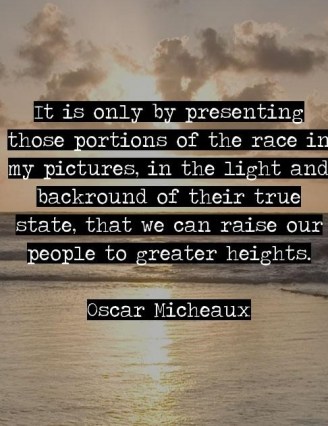
Micheaux sought to create films that would counter white portrayals of African Americans, which tended to emphasize inferior stereotypes. He created complex characters of different classes. His films questioned the value system of both African American and white communities as well as caused problems with the press and state censors. (Wikipedia)


Image result for oscar micheaux

His gravestone reads:

“A man ahead of his time”


Oscar Micheaux died on March 25, 1951, in Charlotte, North Carolina, of heart failure. He is buried in Great Bend Cemetery in Great Bend, Kansas, the home of his youth.


Which One is Bigger? Really?!!

Two unstable people with access to nuclear bombs is a serious recipe for disaster! One mad man got elected President. The other is the supreme ruler of N. Korea.  


n. korea news

Kim Jung-Un, Trump


This is strikingly close to the storyline of Dr. Strangelove and in reality my daily nightmare!

“Dr. Strangelove” is the 1964 political satire black comedy film that satirizes the Cold War fears of a nuclear conflict between the Soviet Union and the United States. The film was directed, produced, and co-written by Stanley Kubrick, stars Peter Sellers and George C. Scott, and features Sterling Hayden, Keenan Wynn, and Slim Pickens. Production took place in the United Kingdom. The film is loosely based on Peter George‘s thriller novel Red Alert (1958). (Wikipedia)


Red alert novel two hours of doom 1st edition 1958.jpg

(“Red Alert” originally published in the UK as Two Hours to Doom, with George using the pseudonym “Peter Bryant”)


nuclear war


The story concerns an unhinged United States Air Force general who orders a first strike nuclear attack on the Soviet Union. It follows the President of the United States, his advisers, the Joint Chiefs of Staff, and a Royal Air Force (RAF) officer as they try to recall the bombers to prevent a nuclear apocalypse. It separately follows the crew of one B-52 bomber as they try to deliver their payload.


Image result for dr. strangelove

Dr. Strangelove or: How I Learned to Stop Worrying and Love the Bomb (1964)


“Dr. Strangelove” is Stanley Kubrick’s masterpiece about the absurdity of war that nevertheless is a daily possibility!


Kubrick filmology


Peter Sellers is at his over the top best with his performance as nutcase Dr. Strangelove. (and a few other characters) A wheelchair-bound nuclear scientist with bizarre ideas about man’s future. The entire war room scene totally represents the lunacy of nuclear war.


Image result for dr strangelove cast


Columbia Pictures agreed to finance the film if Peter Sellers played at least four major roles. The condition stemmed from the studio’s opinion that much of the success of Kubrick’s previous film Lolita (1962) was based on Sellers’s performance in which his single character assumes a number of identities.


Peter Sellers as – President Merkin Muffley, Dr. Strangelove, and Captain Lionel Mandrake


Sellers is said to have improvised much of his dialogue, with Kubrick incorporating the ad-libs into the written screenplay so the improvised lines became part of the official screenplay.


Awards and honors

The film was nominated for four Academy Awards and also seven BAFTA Awards, of which it won four.


Kubrick won two awards for best director, from the New York Film Critics Circle and the Italian National Syndicate of Film Journalists, and was nominated for one by the Directors Guild of America.

In 1989 the United States Library of Congress included it in the first group of films selected for preservation in the National Film Registry. It was listed as number three on AFI’s 100 Years…100 Laughs list.


Slim Pickens

Ye Ha! Slim Pickens as Aircraft commander Major T. J. “King” Kong riding the bomb down.

Let us pray this nightmare doesn’t come true! 


Khan Noonien Singh – 50th Anniversary of “Space Seed”


Image result for original star trek images


Space: the final frontier. These are the voyages of the starship Enterprise. Its five-year mission: to explore strange new worlds, to seek out new life and new civilizations, to boldly go where no man has gone before.


This week we celebrate the 50th Anniversary of my favorite Star Trek episode, “Space Seed”  (Season 1, Episode 22) with Ricardo Montalbán as Khan Noonien Singh.


Broadcast on February 16, 1967, the storyline was written by Gene L. Coon and Carey Wilber, and directed by Marc Daniels. The plot explored the concept of Eugenics,”super-intelligence and the result of creating a group of “super people” (from Earth’s past) bred to conquer the world. 


Image result for space seed


The subsequent 1982 film Star Trek II: The Wrath of Khan was a brilliant sequel to “Space Seed” as we find out what subsequently happened to Khan and his people on the planet to which Kirk banished them.


Image result for space seed star trek


The film ratcheted up the intensity of the television episode proving to be a full-out sci-fi thriller which I give two, very enthusiast, thumbs up!👍🏼👍🏼


Khan: To the last, I grapple with thee. From hell’s heart, I stab at thee. For hate’s sake, I spit my last breath at thee. 


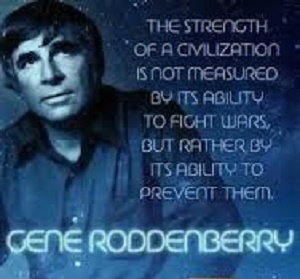
Wow, what a statement! In 1966, an authentic representation of an international crew. Radical stuff which showed the brilliance and social awareness of creator, the late Gene Roddenberry.


Image result for diversity


Set in the 23rd century, the series would evolve to follow the adventures of Captain James T. Kirk (William Shatner) and his crew who were charged with solving intergalactic conflicts without interfering in the planet’s culture. This vehicle was Gene Roddenberry’s method of initiating dialogue around controversial human and sometimes not so human, issues such as racism, technology, war.


(Front to back – William Shatner (center) DeForrest Kelly (L) Leonard Nimoy (R) James Doohan (back L), Walter Koenig, Majel Barrett, Nichelle Nichols, George Takei)

I’ve always been of the mind that art is revolutionary. The great Renaissance masters like DaVinci, and Michelangelo, were considered subversives in their time. They had to hide their political messages inside their remarkable works to keep from being prosecuted. In his way, Gene Roddenberry could be considered a “Renaissance Man”.


star trek roddenberry

(August 19, 1921 – October 24, 1991)

Roddenberry had a vision that we can co-exist in a multicultural, multinational world and, as an eleven-year-old black girl from the east side of Detroit, I was right there with him. I had the same dreams and beliefs for my future.


Related image


The series was produced from September 1966–December 1967 by Norway Productions and Desilu Productions, and by Paramount Television from January 1968–June 1969. Star Trek aired on NBC from September 8, 1966, to June 3, 1969, and was actually seen first on September 6, 1966, on Canada’s CTVnetwork.


original star trek images

“Trouble with Tribbles”

Star Treks Nielsen ratings while on NBC were low, and the network canceled the show after three seasons and 79 episodes. Several years later, the series became a bona fide hit in broadcast syndication, remaining so throughout the 1970s, achieving cult classic status and a developing influence on popular culture.


Image result for star trek


Star Trek eventually spawned a franchise, consisting of five additional television series, thirteen feature films, numerous books, games, toys, and is now widely considered one of the most popular and influential television series of all time. (Wikipedia)


Related image

Live Long and Prosper

Ethel Waters – Forgotten Star ✨

Image result for ethel waters biography

Ethel Waters (October 31, 1896 – September 1, 1977)

Ethel Waters was American blues, jazz and gospel singer, and actress. Her best-known recordings include “Dinah,” “Stormy Weather,” “Taking a Chance on Love,” “Heat Wave,” “Supper Time,” “Am I Blue?” and “Cabin in the Sky,” as well as her version of the spiritual “His Eye Is on the Sparrow.”

Waters was the second African American, after Hattie McDaniel, to be nominated for an Academy Award. She was also the first African-American woman to be nominated for an Emmy Award, in 1962. (Wikipedia)


Waters was born in Chester, Pennsylvania, on October 31, 1896, and by the age of 17 was singing professionally in Baltimore. It was there that she became the first woman to sing “St. Louis Blues” on the stage. In 1925 she appeared at the Plantation Club in Harlem, and her performance there led to Broadway. In 1927 she appeared in an all-black revue Africana. Thereafter she divided her time between the stage, nightclubs, and eventually movies. (Wikipedia)

Ms. Waters had a troubled childhood. Born as the result of rape, she was raised in poverty and never lived in the same place for more than 15 months. Waters said of her difficult upbringing, “I never was a child. I never was cuddled, or liked, or understood by my family.”


Image result for ethel waters biography


After her start in Baltimore, Waters toured on the black vaudeville circuit. As she described it later, “I used to work from nine until unconscious.” Despite her early success, she fell on hard times and joined a carnival, traveling in freight cars along the carnival circuit and eventually reaching Chicago.

Around 1919, Waters moved to Harlem and there became a celebrity performer in the Harlem Renaissance of the 1920s. In 1921, women blues singers were among the most powerful entertainers in the country and Waters became the fifth black woman to make a record, on the tiny Cardinal Records label.


As her career continued, she evolved into a blues and Broadway singer, performing with artists such as Duke Ellington and starring at the Cotton Club.

She had a featured role in the wildly successful Irving Berlin Broadway musical revue As Thousands Cheer in 1933, in which she was the first black woman in an otherwise white show. She had three gigs at this point; in addition to the show, she starred in a national radio program and continued to work in nightclubs. (Wikipedia)


Ms. Waters was the highest-paid performer on Broadway starring as Petunia in the all-black musical Cabin in the Sky. In 1942 Ms. Waters reprised her stage role of 1940 in the film, directed by Vincente Minnelli; it was a huge success.


ethel-waters-cabin-in-sky-ad-m-story-3-43


Adding to her list of accomplishments, Ms. Waters was nominated for an Academy Award for Best Supporting Actress for the controversial film “Pinky (1949) about a light-skinned black woman passing for white; directed by Elia Kazan.

In 1950, she won the New York Drama Critics Circle Award for her performance opposite Julie Harris in the play The Member of the Wedding. Waters and Harris reprised their roles in the 1952 film version, Member of the Wedding.


ethel-waters-member-of-the-wedding

Ethel Waters, Julie Harris


In 1950, Waters starred in the television series Beulah, becoming the first African-American actress to have a lead role in a television series. However, she quit after complaining that the portrayal of blacks was “degrading.” She later guest-starred in 1957 and 1959 on NBC’s The Ford Show, Starring Tennessee Ernie Ford. In the 1957 episode, she sang “Cabin in the Sky”. (Wikipedia)

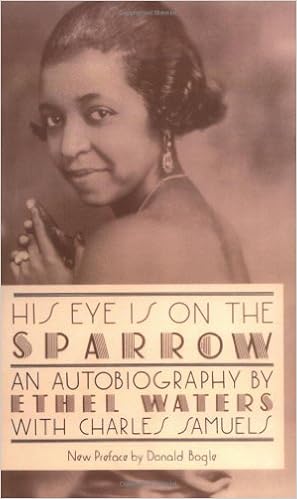
Despite her earlier successes, by the 1950’s Ms. Waters remarkable career was fading. As her health suffered, she worked only sporadically. In 1950–51 she wrote her autobiography His Eye Is on the Sparrow with Charles Samuels, in which she wrote candidly about her life.


ethel-waters-portrait

His Eye Is on the Sparrow was adapted for a stage production in which she was portrayed by Ernestine Jackson. Her second autobiography was titled – To Me, It’s Wonderful.

American feminist and jazz historian Rosetta Reitz called Waters “a natural … [Her] songs are enriching, nourishing. You will want to play them over and over again, idling in their warmth and swing. Though many of them are more than 50 years old, the music and the feeling are still there.”


ethel-waters-i-sing

“His Eye is on the Sparrow”


Is 2017 Our 1984?

1984 movie

John Hurt passed on January 25th and with him a tremendous body of work worth celebrating. “The Elephant Man” (John Merrick), (Kane) “Alien”, “Harry Potter” (Garrick Ollivander), (Max) “Midnight Express” and two of his most prophetic roles – (Chancelor Sutler) “V for Vendetta” and as (Winston Smith) – in director Michael Radford‘s remarkable film, “1984”.

John Hurt 1984 movie

John Hurt (Winston Smith)

Nineteen Eighty-Four, also known as 1984, is the British dystopian drama film written for the screen and directed by Michael Radford, based on George Orwell‘s novel of the same name. Starring John Hurt, Richard Burton, Suzanna Hamilton, and Cyril Cusack, the film follows the life of Winston Smith in Oceania, a country run by a totalitarian government. (Wikipedia)

George Orwell’s terrifying vision comes to 2017.

Winston endures a squalid existence under the constant surveillance of the Thought Police. Winston works in a small office cubicle at the Ministry of Truth, rewriting history (aka Alternate Facts) in accordance with the dictates of the Party and its supreme figurehead, Big Brother. A man haunted by painful memories and restless desires, Winston is an everyman who keeps a secret diary of his private thoughts, thus creating evidence of his thoughtcrime. (Wikipedia)

As a result of his resistance, Winston is tortured and learns about the state’s true purpose, the principles of doublethink — the practice of holding two contradictory thoughts in the mind simultaneously.


Right now our country is rapidly becoming Orwell’s vision of a country co-opted by tyranny. From Alternative Facts to out and out lies about events we witness with our own eyes; the parallels are stunning.

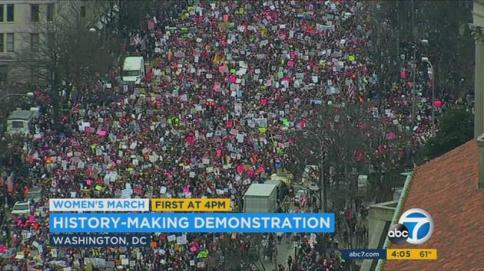
Watching and participating in the Women’s March and rallies, I’m heartened with the energy of this movement of 21-century change.

If the past is prolog, we already know what lies ahead if we aren’t resilient. But, our fate rests in our own hands and we can alter the ending of our “1984″ by fighting back against those who would be Kings and Dictators.


womens-march-2017


Another brilliant John Hurt performance and cautionary tale “V for Vendetta” stares back at me as truth. Just turn on your television.


https://youtu.be/2djw1EZ4cTs

Thank you, Sir John for sharing your gifts and revealing truths of the human condition.


Image result for john hurt

Sir John Vincent Hurt (22 January 1940 – 25 January 2017)


white roses star yes