To celebrate Father’s Day I’m sharing 3 of my favorite father and child scenes in a film. These movies demonstrate that there’s nothing like that sense of protection and endearing love from your dad. 💞
Gru’s Dad Skills Tested
Gru discovers that it’s hard to be both a super villain and a dad! This scene from “Despicable Me” is awesome and sometimes true. Even when you’re crazy about your kids, sometimes a trip to “Super Silly Funland” is the last thing you want to do. Poor Gru, a new, reluctant dad who thinks he’s stumbled upon the “perfect” way to get rid of these kids learns that hangin’ with the “rugrats” doesn’t have to be a day at the dentist but actually a lot of fun! Good for you Poppa Gru!
Unconditional Love!
Holy crap! Who knew that Olive’s grampa taught her to “super freak” for her “Little Miss Sunshine” Competition dance routine. However, dad isn’t havin’ it when they try to drag his little girl off the stage and even better, he joins in her act; how you like me now?! This scene from “Little Miss Sunshine” is one of my favorites, ever! Unconditional love and support. That’s what I call a super dad!
Atticus Comforts Scout
The character of Atticus Finch from “To Kill a Mockingbird” has become the icon of the ultimate father and human being. His strength of character and tender heart makes every scene with his children so very precious. He loves them with all he is and all he has and they admire, respect, and treasure his love and affection. Fiercely loyal love!
The Children Save Atticus
I love how innocently and tenderly Scout shows that it’s hard to hate someone when you talk to them and realize that we are a community.
Dad’s are so important and it always warms my heart when I see the truth in that forever bond. So, for all the dads with us and watching over us.
While watching Marlene Dietrich’s sultry performance of “The Laziest Gal in Town” in Alfred Hitchcock’s 1950 thriller,”Stage Fright”, I asked my husband if the song and performance seemed familiar. Because I’ve raised him right (on film history that is😎), he remarked, “of course, Madeline Kahn’s performance of “I’m Tired” in the Mel Brooks satirical Western comedy classic, “Blazing Saddles” (1974).
Marlene Dietrich “Laziest Gal in Town”
Madeline Kahn “I’m So Tired”
(Top) Marlene Dietrich (Bottom) Jane Wyman
I loved hearing his response because it’s the main reason I pen this post; for the history and appreciation of films. Understanding a writer or director’s references to past movies in theirs adds to the richness of the production. It helps young people comprehend that few things in life are original and imitation can be the sincerest form of flattery.
Sometimes the homage in a movie isn’t to a particular scene in a film but the music. I love Minions period but I especially enjoyed the “Minions” movie’s 1960’s soundtrack that made the perfect nod to James Bond type villains (“Minions” Scarlet Overkill) and the time period of the setting.
As a child of the ’60’s I remember turning to my husband in the theater saying, 99% of the people in here weren’t even born yet and I wonder if any of them appreciate the inclusion of the classic songs of this era.
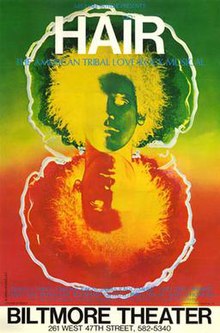
The song is “Hair” from the iconic 1968 counter-culture and controversial stage and film production “Hair”
I’ve spent my lifetime watching and loving the cinema and have educated my children with a more sophisticated palette for black and white films and how they just don’t make them like that anymore.😊
Hundreds of full-length films were produced during the decade of the 1940s; during Hollywood’s Golden Age. The great actor Humphrey Bogart made his most memorable films in this decade. Frank Capra’s masterpiece It’s a Wonderful Life and Orson Welles’s cinema genius production of Citizen Kane were released. The film noir genre was at its height. Alfred Hitchcock made his American debut with the film Rebecca and made many classics throughout the 1940s. (Wikipedia)
(Top) Cary Grant, Audrey Hepburn, Marlon Brando (Middle) Lauren Bacall, Marilyn Monroe, Grace Kelly (Bottom) Humphrey Bogart, Marlene Dietrich, Clark Gable
Movie Stars of the 1940’s & 1950’s
Of course, I want you to visit my website as a source of reference material, but if you want to see these full-length gems for free, I recommend tuning into the Turner Classic Movies channel. They show everything from the great silent films, Chaplin, Buster Keaton, etc. through Hollywood’s “Golden Age”.
These classic films bring me great joy and I hope you’ll find a special place in your heart for them, too!
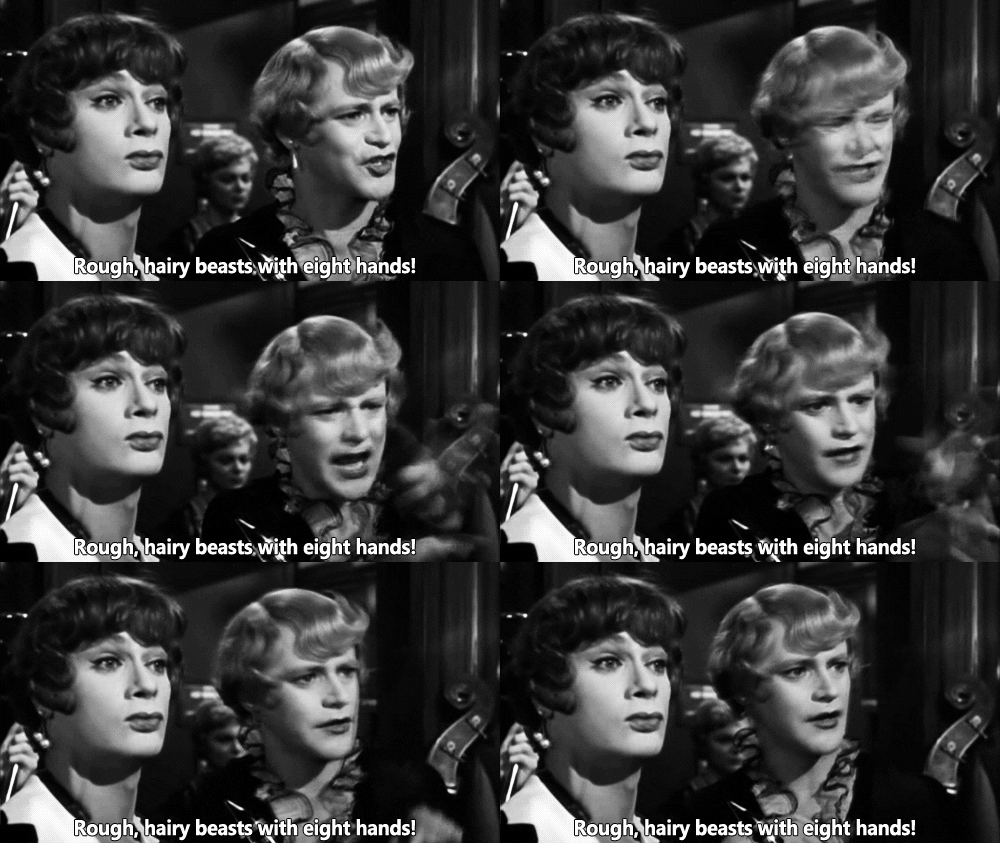
With no money and nowhere to hide, two down on their luck jazz musicians (Tony Curtis and Jack Lemmon) masquerade as members of an all-girl band, leading to a number of romantic complications when one falls for the band’s lead singer (Sugar Cane) played by Marilyn Monroe.
Tony Curtis, Jack Lemmon, Marilyn Monroe
Some Like It Hot is a 1959 American romantic comedy film set in 1929, directed and produced by Billy Wilder, starring Marilyn Monroe, Tony Curtis, and Jack Lemmon. The supporting cast includes George Raft, Pat O’Brien, Joe E. Brown, Joan Shawlee, and Nehemiah Persoff.
The plot is based on a screenplay by Billy Wilder and Michael Logan from the French film Fanfare of Love. The film is about two musicians who dress in drag in order to escape from mafia gangsters whom they witnessed commit a crime inspired by the Saint Valentine’s Day Massacre. The film was produced in black and white, even though color films were increasing in popularity. (Wikipedia)
Some Like It Hot opened to largely positive reviews and is today considered to be one of the greatest film comedies of all time. It was voted as the top comedy film by the American Film Institute on their list on AFI’s 100 Years… 100 Laughs poll in 2000. The film is also notable for featuring cross-dressing, and for playing with the idea of homosexuality, which led to it being produced without approval from the Motion Picture Production Code.
The code had been gradually weakening in its scope during the early 1950s, due to increasing social tolerance for previously taboo topics in film, but it was still officially enforced. The overwhelming success of Some Like It Hot was a final nail in the coffin for the Hays Code. (Wikipedia)
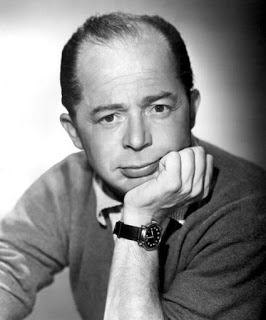
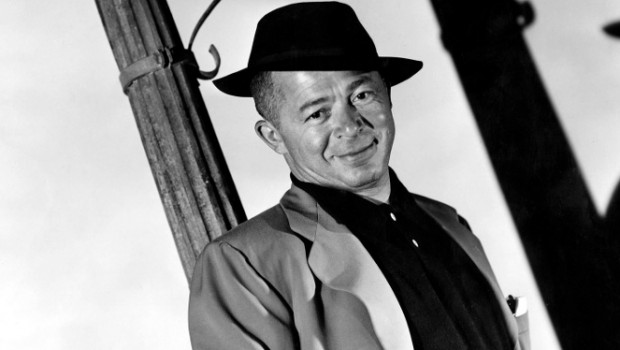
I love Billy Wilder because of his versatility in films and his testing the boundaries of societal norms. To that end, the first movie that always comes to mind is “Some Like it Hot”. To find out more about Billy Wilder and his films, check out my post – The Faces Behind the Camera.
Billy Wilder
I highly recommend taking advantage of this opportunity to see “Some Like it Hot” on the big screen!
“Listen to them, children of the night; what music they make.” Count Dracula
Dracula is the immortal 1897 Gothic horror novel by Irish author Bram Stoker. It introduced the famous character Count Dracula and established many conventions of subsequent vampire fantasy.
The first edition cover of Dracula
Of all the film adaptations of the classic novel, the 1931 Dracula directed by Tod Browning and starring Bela Lugosi is most synonymous with Stoker’s legendary character, Count Dracula of Transylvania.
The film was produced by Universal and is based on the 1924 stage play Dracula by Hamilton Deane and John L. Balderston, which in turn is loosely based on the novel Dracula by Bram Stoker. The 1924 stage play was substantially revised in 1927 and was the first authorized adaptation of Bram Stoker‘s novel Dracula, and has influenced many subsequent adaptations.
The 1927 Broadway production starred Bela Lugosi in his first major English-speaking role, which he reprised in the 1931 film adaptation of the play. A 1977 Broadway revival designed by Edward Gorey, starring Frank Langella, won the Tony Award for Best Revival.
Bram Stoker’s novel had already been filmed without permission as Nosferatu in 1922 by German expressionist filmmaker F. W. Murnau. Bram Stoker’s widow sued for plagiarism and copyright infringement, and the courts decided in her favor, essentially ordering that all prints of Nosferatu be destroyed.
Nosferatu
Enthusiastic young Hollywood producer Carl Laemmle, Jr. also saw the box office potential in Stoker’s gothic chiller, and he legally acquired the novel’s film rights. Initially, he wanted Dracula to be a spectacle on a scale with the lavish silent films The Hunchback of Notre Dame (1923) and The Phantom of the Opera (1925). (Wikipedia)
The decision on casting the title role proved problematic. Initially, Laemmle was not at all interested in Lugosi, in spite of good reviews for his stage portrayal. Laemmle instead considered other actors, including Paul Muni, Chester Morris, and Ian Keith.
Today, Dracula is widely regarded as a classic of the era and of its genre. In 2000, it was selected for preservation in the United States National Film Registry by the Library of Congress as being “culturally, historically, or aesthetically significant”.
To many film lovers and critics alike, Lugosi’s portrayal is widely regarded as the definitive Dracula. Lugosi had a powerful presence and authority on-screen. The slow, deliberate pacing of his performance (“I bid you… welcome!” and “I never drink… wine!”) gave his Dracula the air of a walking, talking corpse, which terrified 1931 movie audiences.
He was just as compelling with no dialogue, and the many close-ups of Lugosi’s face in icy silence jumped off the screen. With this mesmerizing performance, Dracula became Bela Lugosi’s signature role, his Dracula a cultural icon, and he himself a legend in the classic Universal Horror film series.
Stoker’s visit to the English coastal town of Whitby in 1890 is said to be part of the inspiration for Dracula. He began writing novels while a manager for Henry Irving, as well as, director of London’s Lyceum Theatre, beginning with The Snake’s Pass in 1890 and Dracula in 1897.
During this period, Stoker was part of the literary staff of the The Daily Telegraph in London, and he wrote other fiction, including the horror novels The Lady of the Shroud (1909) and The Lair of the White Worm (1911). (Wikipedia)
Stoker was bedridden with an unknown illness until he started school at the age of seven when he made a complete recovery. Of this time, Stoker wrote, “I was naturally thoughtful, and the leisure of long illness gave the opportunity for many thoughts which were fruitful according to their kind in later years.”
Before writing Dracula, Stoker met Ármin Vámbéry, a Hungarian writer, and traveler. Dracula likely emerged from Vámbéry’s dark stories of the Carpathian mountains. Stoker then spent several years researching European folklore and mythological stories of vampires.
Dracula is an epistolary novel, written as a collection of realistic but completely fictional diary entries, telegrams, letters, ship’s logs, and newspaper clippings, all of which added a level of detailed realism to the story, a skill which Stoker had developed as a newspaper writer.
At the time of its publication, Dracula was considered a “straightforward horror novel” based on imaginary creations of supernatural life.”It gave form to a universal fantasy . . and became a part of popular culture.” (Wikipedia)
After suffering a number of strokes, Stoker died at No. 26 St George’s Square, London on 20 April 1912. He was cremated, and his ashes were placed in a display urn at Golders Green Crematorium in north London.
This iconic film about a New York mafia family’s rise to power in the years following World War II stars Marlon Brando as the family’s patriarch, Don Corleone, and features career-making performances by Al Pacino, James Caan, and Robert Duvall. Directed by Francis Ford Coppola, it’s based on Mario Puzo‘s best-selling novel. This searing and brilliant film garnered seven Academy Award nominations and won three, including Best Picture of 1972.
I’ve stated for years that if you want a blueprint for the rules of life, a screening of “The Godfather” is mandatory. In an interview about the making of the film, Coppola revealed that his idea was to approach the Corleone family like a king and his sons. I believe focusing on the family dynamics versus “the mob” gave more depth and layers to the characters and the audience’s involvement in the film.
Cinematographer Gordon Willis initially turned down the opportunity to film The Godfather because the production seemed “chaotic” to him. After Willis later accepted the offer, he and Coppola agreed to not use any modern filming devices, helicopters, or zoom lenses. Willis and Coppola chose to use a “tableau format” of filming to make it seem if it was viewed like a painting. He made use of shadows and low light levels throughout the film to showcase psychological developments.
Willis and Coppola agreed to interplay light and dark scenes throughout the film. Willis underexposed the film in order to create a “yellow tone.” The scenes in Sicily were shot to display the countryside and “display a more romantic land,” giving these scenes a “softer, more romantic” feel than the New York scenes. (Wikipedia)
Although many films about gangsters preceded “The Godfather”, Coppola’s heavy infusion of Italian culture and stereotypes, and his portrayal of mobsters as characters of considerable psychological depth and complexity was unprecedented.
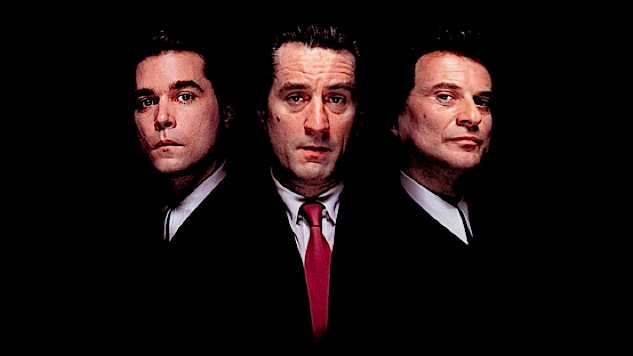
Coppola took it further with The Godfather Part II, and Part III. The success of those films, critically, artistically and financially, opened the doors for numerous other depictions of Italian Americans as mobsters, including films such as Martin Scorsese‘s Goodfellas and TV series such as David Chase‘s The Sopranos.
Ray Liotta, Robert De Niro, Joe Pesci
“Goodfellas” (1990)
“The Godfather” is widely regarded as one of the greatest films in world cinema and one of the most influential, especially in the gangster genre. It was selected for preservation in the U.S. National Film Registry of the Library of Congress in 1990, being deemed “culturally, historically, or aesthetically significant” and is ranked the second greatest film in American cinema (behind Citizen Kane) by the American Film Institute. (Wikipedia)
So, whether this would be your first viewing or you’re a lifelong fan, get your tickets here and check out “The Godfather” on the big screen for this special, limited-time performance!
Oscar Devereaux Micheaux was an American author, film director and independent producer of more than 44 films.
Filmmaker, Screenwriter, Journalist (1884–1951)
QUOTES
“Your self-image is so powerful, it unwittingly becomes your destiny.”
—Oscar Micheaux
Oscar Devereaux Micheaux (January 2, 1884 – March 25, 1951) was an African American author, film director and independent producer of more than 44 films. Although the short-lived Micheaux Book & Film Company produced some films, he is regarded as the first major African-American feature filmmaker, the most successful African-American filmmaker of the first half of the 20th century and the most prominent producer of race films. He produced both silent films and sound films when the industry changed to incorporate speaking actors. (Wikipedia)
I studied the “Godfather” of black filmmakers as a film student at the University of Michigan. Micheaux was a contemporary of D.W.Griffith, the director of the controversial 1915 “Birth of a Nation” which in my opinion set the blueprint for race relations in America that we still fight today. Griffith’s film depicted black people as violent and shiftless and a direct threat to whites.
Micheaux’s second silent film was “Within Our Gates“, produced in 1920. Although sometimes considered his response to the film “Birth of a Nation“, Micheaux said that he created it independently as a response to the widespread social instability following World War I.
In 1913, 1,000 copies of Micheaux’s first book, The Conquest: The Story of a Negro Homesteader, were printed anonymously, for unknown reasons. It was dedicated to Booker T. Washington (an American educator, author, orator, and advisor to presidents of the United States.) Based on his experiences as a homesteader and the failure of his first marriage, it was largely autobiographical. Although character names have been changed, the protagonist is named Oscar Devereaux.
In “The Conquest” Micheaux discusses the culture of doers who want to accomplish and those who see themselves as victims of injustice and hopelessness and who do not want to try to succeed but instead like to pretend to be successful while living the city lifestyle in poverty. One of Micheaux’s fundamental beliefs is that hard work and enterprise will make any person rise to respect and prominence no matter his or her race. (Wikipedia)
In 1918, his novel The Conquest (re-titled The Homesteader for the film) attracted the attention of George Johnson, the manager of the Lincoln Motion Picture Company in Los Angeles. After Johnson offered to make The Homesteader into a new feature film, negotiations and paperwork became contentious between Micheaux and him.
Micheaux wanted to be directly involved in the adaptation of his book as a movie, but Johnson resisted and never produced the film. Instead, Micheaux founded the Micheaux Film & Book Company of Sioux City in Chicago; its first project was the production of The Homesteader as a feature film. (Wikipedia)
Micheaux had a major career as a film producer and director: He produced over 40 films, which drew audiences throughout the U.S. as well as internationally. Micheaux contacted wealthy white connections from his earlier career as a porter and sold stock for his company at $75 to $100 a share.
Premiering in Chicago, Micheaux received high praise from film critics. One article credited Micheaux with “a historic breakthrough, a credible, dignified achievement”. Some members of the Chicago clergy criticized the film as libelous. The Homesteader became known as Micheaux’s breakout film; it helped him become widely known as a writer and a filmmaker. (Wikipedia)
Micheaux’s films were coined during a time of great change in the African-American community. His films featured contemporary black life. He dealt with racial relationships between blacks and whites, and the challenges for blacks when trying to achieve success in the larger society.
Micheaux films were used to oppose and discuss the racial injustice that African Americans received. Topics such as lynching, job discrimination, rape, mob violence, and economic exploitation were depicted in his films. These films also reflect his ideologies and autobiographical experiences. The journalist Richard Gehr said, “Micheaux appears to have only one story to tell, his own, and he tells it repeatedly”. (Wikipedia)
Micheaux sought to create films that would counter white portrayals of African Americans, which tended to emphasize inferior stereotypes. He created complex characters of different classes. His films questioned the value system of both African American and white communities as well as caused problems with the press and state censors. (Wikipedia)
His gravestone reads:
“A man ahead of his time”
Oscar Micheaux died on March 25, 1951, in Charlotte, North Carolina, of heart failure. He is buried in Great Bend Cemetery in Great Bend, Kansas, the home of his youth.
Let’s start with our substitute teacher, Mr. Schneebly – what kid hasn’t wished for a sub like him? No grades, being part of a kick butt rock band, defying parents, breaking the rules. Good, right?
Jack Black’s character Dewey Finn is the forever loser and quintessential wanna be rock star, but when he steals his roommate’s identity as a substitute teacher, (Mr, Schneebly) he discovers he has a class of very musically talented 5th-grade students. So, Dewey decides to turn his class into a rock band to potentially win the Battle of the Bands and $20,000. I won’t spoil whether the kids win or don’t win the battle but as a result of the contest they gain self-confidence and continue to play rock in an after school program coached by Dewey. Long live Rock!
This film totally tapped into my inner rocker!
“The Commitments” (1991)
What happens when a group of white working class Dubliners forms a soul band? A rousing film with some great music inspired by legendary artists, Otis Redding, Aretha Franklin and Wilson Pickett.
The band nails the soul of the greats by immersing themselves 24/7 in classic soul standards:
“In the Midnight Hour” – Wilson Pickett
“Try a Little Tenderness” – Otis Redding
“I Never Loved a Man” – Aretha Franklin
Whether on buses, hanging up laundry or in music store windows, they were feeling the soul. In the words of Félim Gormley (Dean Fay- Saxophone), “I’m black and I’m proud!”
I’m so glad the movie was authentic with the cast singing on the soundtrack. (The actors were cast for their musical abilities.) Lead singer (Andrew Strong “Deco”) was nuts but the standout talent of the band.
The Commitments was voted best Irish film of all time in a 2005 poll sponsored by Jameson Irish Whiskey and launched a generation of Irish musicians and actors.
“This is Spinal Tap” (1984)
OMG, the funniest, dead on satire of a rock metal band ever!
Classic in every sense of the word, Director/Writer Rob Reiner’s masterpiece was also written and scored by the stars:
Rob Reiner – (Marty D. Bergi) – Mokumentarian
Spinal Tap
Christopher Guest – (Nigel Tufnel)
Michael McKean- (David St. Hubbins)
Harry Shearer – (Derek Smalls)
This mockumentary feels so real that some moviegoers thought they were an actual group!
The “Stonehenge” number during the Smell the Glove tour is priceless. Due to a mix up with size dimensions, the Stonehenge replica for their epic song is 18 inches instead of 18 feet tall. The little people performers in the number were taller. And Derek Smalls getting stuck in the stage prop egg is hilarious!
In 2002, This Is Spinal Tap was deemed “culturally, historically, or aesthetically significant” by the Library of Congress and was selected for preservation by the United States National Film Registry.
These are 3 of my favorite Rock Movies – Let me know yours in the comments!
(Prince and Judith Hill.CreditPhotographs by Karrah Kobus/NPG Records, via Getty Images)
Mourning the 1 year passing of music legend Prince, I was amazed to learn about his relationship with the powerhouse singer-songwriter Judith Hill as her confidant and musical collaborator.
Ms. Hill was a contestant on the 2013 season of “The Voice” (the TV singing competition) and later that same year appeared in the Academy Award-winning documentary about backup singers, “20 Feet From Stardom” earning a Grammy for her performance.
(“I was with Prince the last two years of my life,” Judith Hill said. “Now he’s gone, and I realize I was leaning on him a lot,” she said. “And that’s what’s scary. I’m on my own.”Credit: Elizabeth Weinberg for The New York Times)
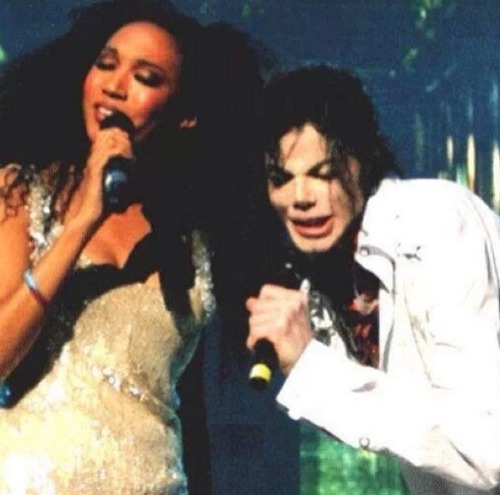
I cheered for Ms. Hill on “The Voice” and was shocked when she didn’t make the cut. Her voice is phenomenal and once before she had been so close to blowing up as a recording star when she was paired as a featured vocalist with Michael Jackson on his ill-fated tour “This is It”. On “The Voice” I thought, maybe this time she’ll get her shot.
And now, with the passing of Prince, Judith would once again be denied the major exposure that could have skyrocketed her to the top of the musical ladder instead of her forever feeling – “20 feet from stardom”.
Judith Hill, Michael Jackson
Here’s a look at the Oscar-winning documentary about the incredible backup singers and the travesty of how their careers have always been “20 Feet From Stardom”.
2014 Academy Award Winner for Best Documentary Feature, “20 Feet From Stardom” is directed by Morgan Neville and inspired by producer Gil Friesen’s quest to reveal the untold stories of the phenomenal voices behind some of the greatest artists in American music.
The Ladies Speak: Lisa Fischer, Darlene Love, Judith Hill
Merry Clayton performed that killer background vocal on The Rolling Stones’ classic “Gimme Shelter”
Millions know their voices, but no one knows their names. I was thrilled when this film was released to showcase these gifted women that for whatever reason remain in the shadows. It’s a sad fact but, nevertheless, they stayed in the game and they are legends!
Two unstable people with access to nuclear bombs is a serious recipe for disaster! One mad man got elected President. The other is the supreme ruler of N. Korea.
Kim Jung-Un, Trump
This is strikingly close to the storyline of Dr. Strangelove and in reality my daily nightmare!
“Dr. Strangelove” is the 1964 political satire black comedy film that satirizes the Cold War fears of a nuclear conflict between the Soviet Union and the United States. The film was directed, produced, and co-written by Stanley Kubrick, stars Peter Sellers and George C. Scott, and features Sterling Hayden, Keenan Wynn, and Slim Pickens. Production took place in the United Kingdom. The film is loosely based on Peter George‘s thriller novel Red Alert (1958). (Wikipedia)
(“Red Alert” originally published in the UK as Two Hours to Doom, with George using the pseudonym “Peter Bryant”)
The story concerns an unhinged United States Air Force general who orders a first strike nuclear attack on the Soviet Union. It follows the President of the United States, his advisers, the Joint Chiefs of Staff, and a Royal Air Force (RAF) officer as they try to recall the bombers to prevent a nuclear apocalypse. It separately follows the crew of one B-52 bomber as they try to deliver their payload.
“Dr. Strangelove” is Stanley Kubrick’s masterpiece about the absurdity of war that nevertheless is a daily possibility!
Kubrick filmology
Peter Sellers is at his over the top best with his performance as nutcase Dr. Strangelove. (and a few other characters) A wheelchair-bound nuclear scientist with bizarre ideas about man’s future. The entire war room scene totally represents the lunacy of nuclear war.
Columbia Pictures agreed to finance the film if Peter Sellers played at least four major roles. The condition stemmed from the studio’s opinion that much of the success of Kubrick’s previous film Lolita (1962) was based on Sellers’s performance in which his single character assumes a number of identities.
Peter Sellers as – President Merkin Muffley, Dr. Strangelove, and Captain Lionel Mandrake
Sellers is said to have improvised much of his dialogue, with Kubrick incorporating the ad-libs into the written screenplay so the improvised lines became part of the official screenplay.
Awards and honors
The film was nominated for four Academy Awards and also seven BAFTA Awards, of which it won four.
Kubrick won two awards for best director, from the New York Film Critics Circle and the Italian National Syndicate of Film Journalists, and was nominated for one by the Directors Guild of America.
In 1989 the United States Library of Congress included it in the first group of films selected for preservation in the National Film Registry. It was listed as number three on AFI’s 100 Years…100 Laughs list.
Ye Ha! Slim Pickens as Aircraft commander Major T. J. “King” Kong riding the bomb down.
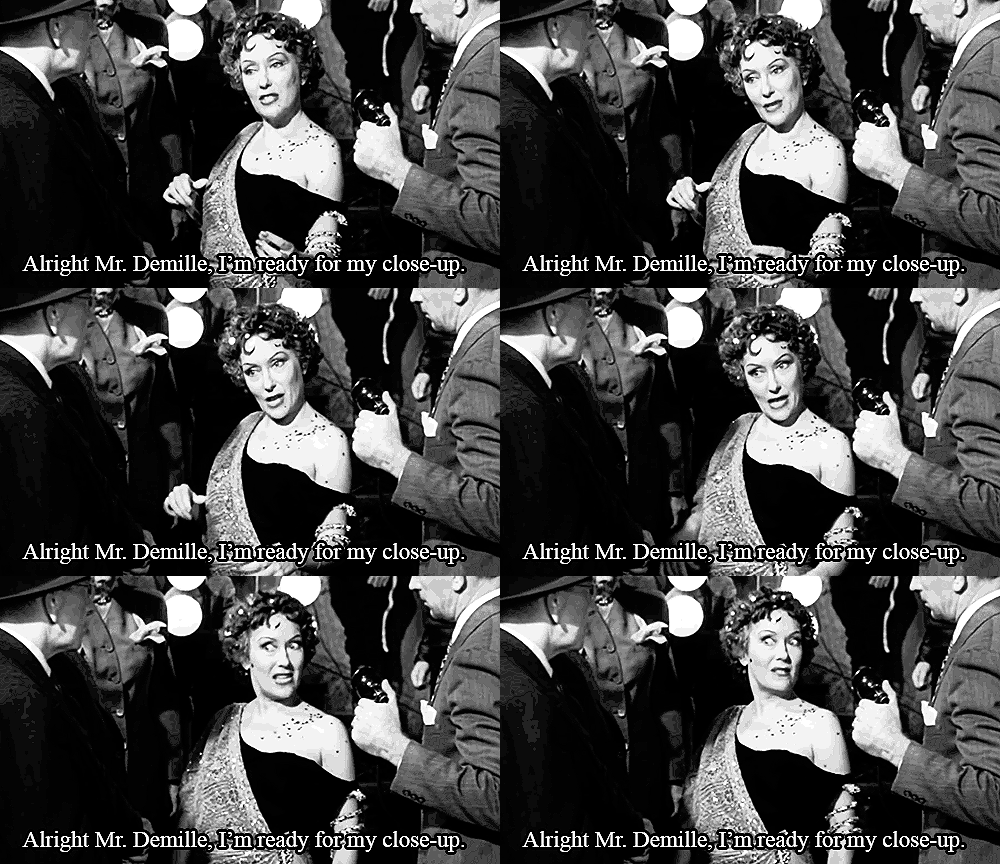
“We didn’t need dialogue. We had faces!” Norma Desmond
As she descended the well-worn stairs of her aged and decadent mansion steeped in long past memories, Norma Desmond uttered the declaration that forever remains in the memories of those who witnessed her performance in the 1950 classic, “Sunset Boulevard.” It’s impossible to forget those delusional words spoken by the creepy Norma Desmond as she is escorted through the end scene for her deadly deed; not surprisingly surrounded by gawkers vying for a tiny glimpse of the reclusive silent film star.
Before the film, I had only heard of Gloria Swanson but hadn’t seen any of her films. After witnessing her tour-de-force performance as the legendary diva, Norma Desmond, I sought out every movie of hers that I could. Wow, she inhabited the role of Norma Desmond with intimate knowledge of the silent film era since those were Swanson’s actual glory days. By the way, the dialogue is both fantastic and hilarious.
“Sunset Boulevard” (stylized onscreen as SUNSET BLVD.) is a 1950 American film noir directed and co-written by Billy Wilder and produced and co-written by Charles Brackett. It was named after the boulevard that runs through Los Angeles and Beverly Hills, California. (Wikipedia)
The film stars William Holden as Joe Gillis, an unsuccessful screenwriter, and Gloria Swanson as Norma Desmond, a faded silent film star who draws him into her fantasy world where she dreams of making a triumphant return to the screen, with Erich von Stroheim as Max Von Mayerling, her devoted servant.
Erich von Stroheim, William Holden, Gloria Swanson
Praised by many critics when first released, Sunset Boulevard was nominated for eleven Academy Awards (including nominations in all four acting categories) and won three. Deemed “culturally, historically, or aesthetically significant” by the U.S. Library of Congress in 1989, Sunset Boulevard was included in the first group of films selected for preservation in the National Film Registry. In 1998, it was ranked number twelve on the American Film Institute‘s list of the 100 best American films of the 20th century, and in 2007, it was 16th on their 10th Anniversary list. (Wikipedia)
I’ve never been a famous movie star (maybe stage😎) But God help me if I ever get that Norma Desmond look in my eyes, dial 911!
This site is about how to live our life in a meaningful way by accepting complete surrender to the Almighty with purity of mind and character. It is about the eternal religion of the world i.e. Hinduism which is very liberal to anyone because there are many branches or methods to get the divinity to turn our life into an ever blissful one.
Free listening and free download (mp3) chill and down tempo music (album compilation ep single) for free (usually name your price). Full merged styles: trip-hop electro chill-hop instrumental hip-hop ambient lo-fi boombap beatmaking turntablism indie psy dub step d'n'b reggae wave sainte-pop rock alternative cinematic organic classical world jazz soul groove funk balkan .... Discover lots of underground and emerging artists from around the world.


























 iheartfilm